Artwork
Circ
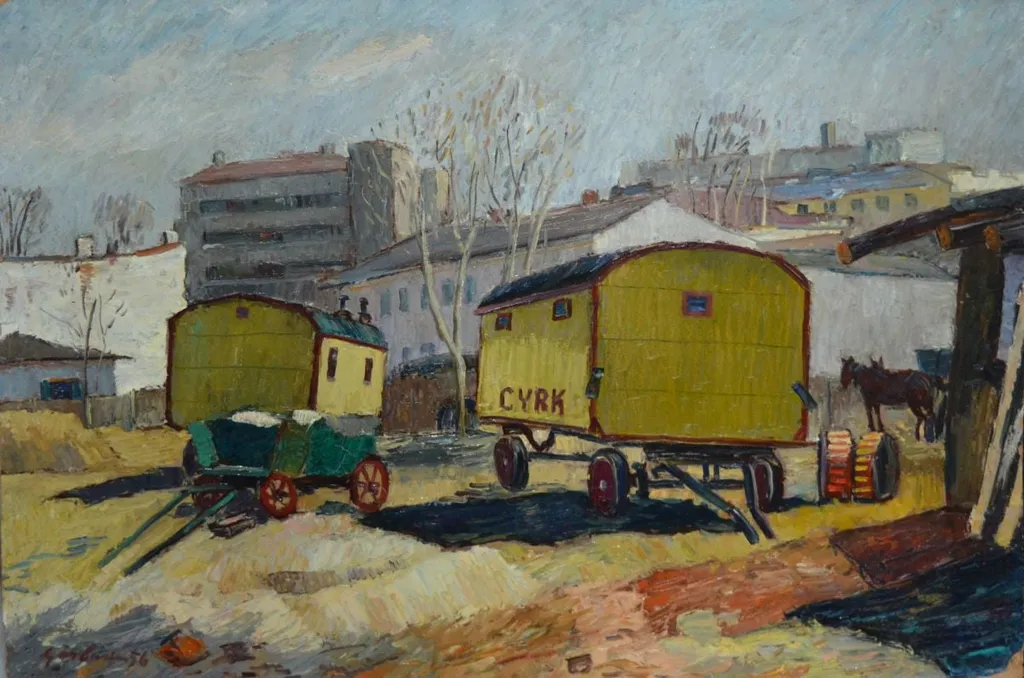
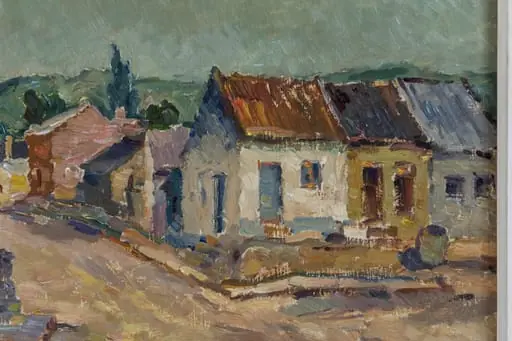
Circ is an unspecified painting by Nicolae Gârbaciu. It is held in the collection of the Bucharest Municipality Museum.
About this work
Overview
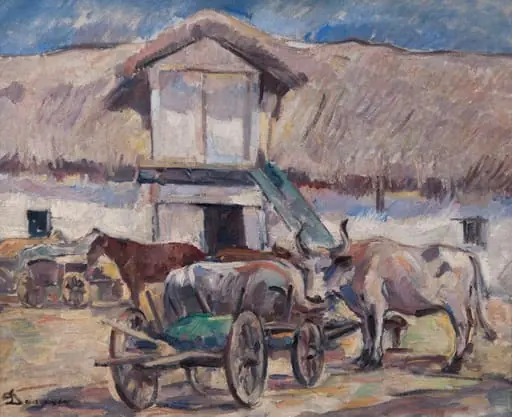
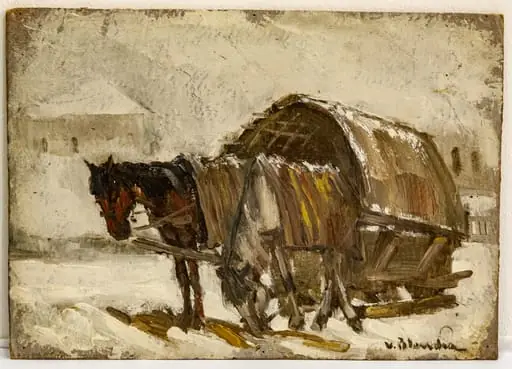
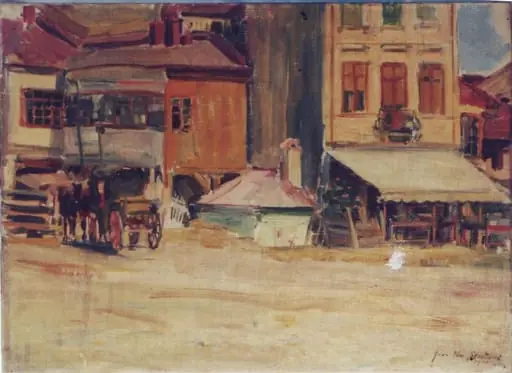
The painting depicts two wooden wagons on a rural road, one marked with the word 'CYRK,' suggesting a traveling circus.
The painting depicts two wooden wagons on a rural road, one marked with the word 'CYRK,' suggesting a traveling circus. A horse is tethered nearby, and a load of hay rests on the second wagon. Simple structures appear in the background beneath a muted, overcast sky.
Bare trees rise in the distance, emphasizing the quiet, off-season atmosphere. The surface is built up with thick, tactile brushwork, giving the scene a physical, almost sculptural presence.
Subject & Meaning
The wagons imply a transient, itinerant life, perhaps the pause between performances. 'CYRK,' meaning circus in several Slavic languages, anchors the scene in a folkloric tradition of traveling entertainers. The empty road and dormant landscape suggest a moment of stillness, not spectacle. The absence of people heightens the sense of anticipation or rest, turning the wagons into silent witnesses to a rhythm of departure and return.
Technique & Style
Thick layers of paint are applied with visible, directional strokes, creating a rough, tactile surface. The impasto technique emphasizes texture over detail, particularly in the wagons and ground. Colors are restrained, pale yellows, muted greens, and earth tones, contrasting with the heavy application. The brushwork is deliberate but unrefined, rejecting smooth finish in favor of raw, immediate expression.
History & Provenance
The work’s origin is undocumented, but its style aligns with early 20th-century regional painters who depicted rural and itinerant life. No known exhibition history or collector records exist prior to its recent appearance in private hands. Its attribution remains tentative, though the subject and technique suggest a connection to Eastern European or immigrant artistic traditions.
Context
In the early 1900s, traveling circuses were common in rural areas, bringing temporary entertainment to isolated communities. Artists often recorded these fleeting moments, capturing the dignity of ordinary life. This painting reflects that tradition, avoiding romanticism in favor of quiet observation. The lack of human figures echoes broader trends in modernist art that favored atmosphere over narrative.
Legacy
Though not widely known, the work contributes to a quieter strand of modernist rural imagery that values texture and mood over grandeur. Its emphasis on materiality and restraint anticipates later movements that valued process and surface. It remains a modest but resonant record of a vanishing way of life, preserved not through spectacle but through the weight of paint and the silence of an empty road.
Artist & collection
Artist
Nicolae Gârbaciu painted bold, flat-colored circus scenes that feel like posters nailed to an arena wall.