Artwork
Peisaj
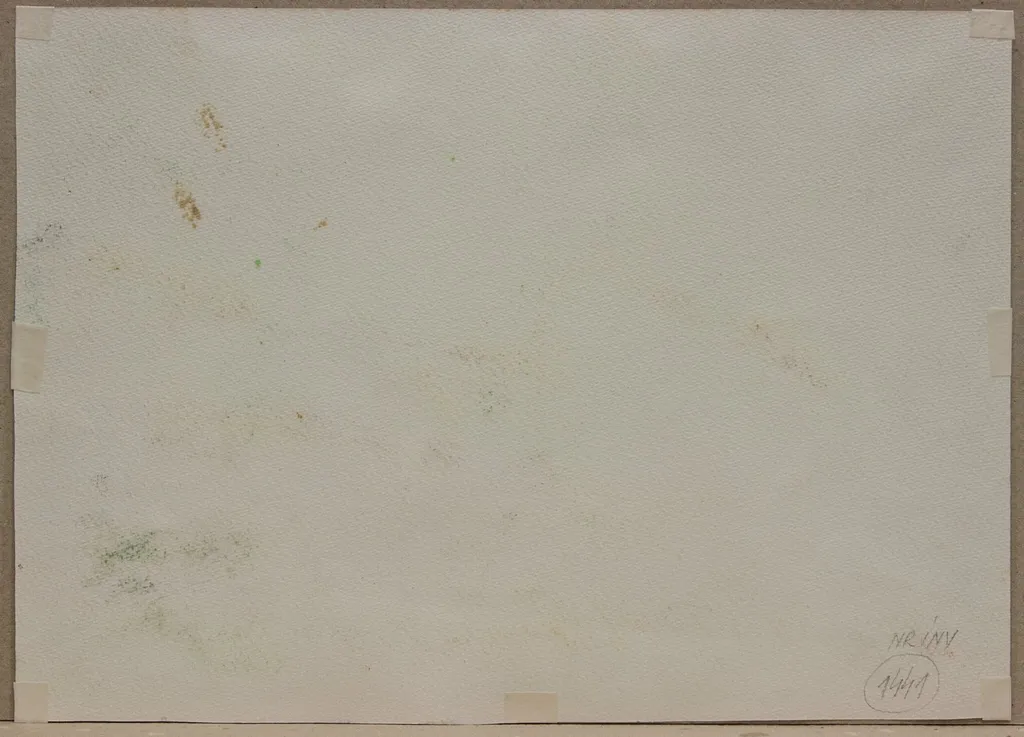
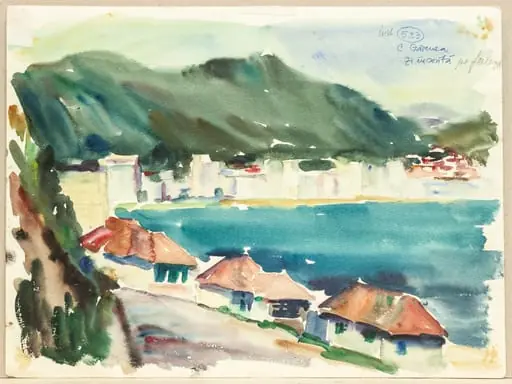
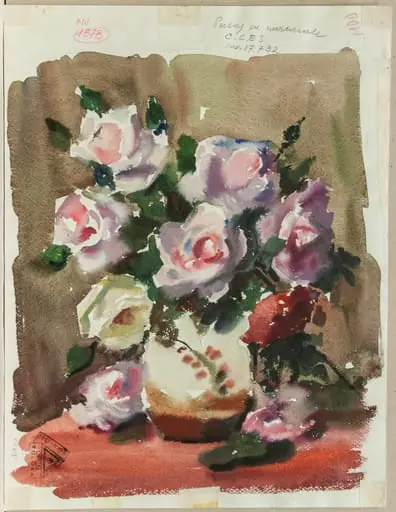
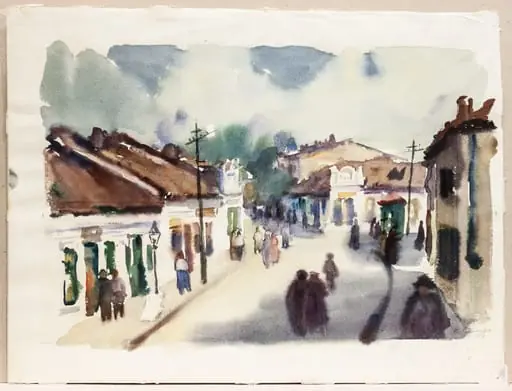
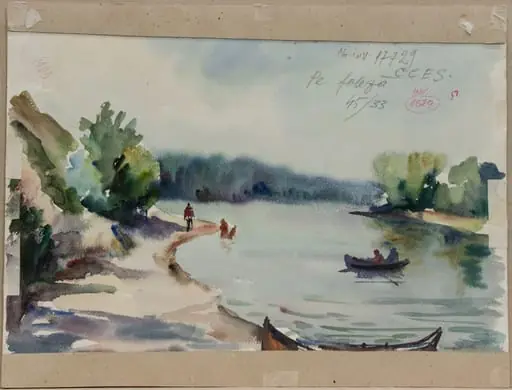
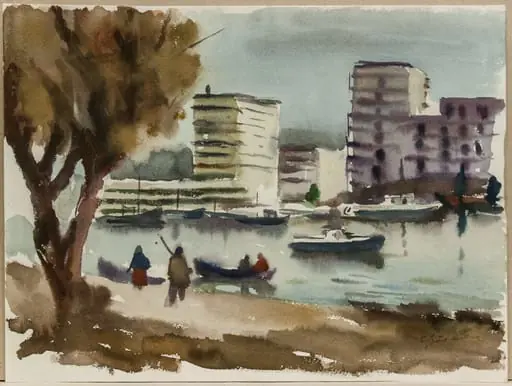
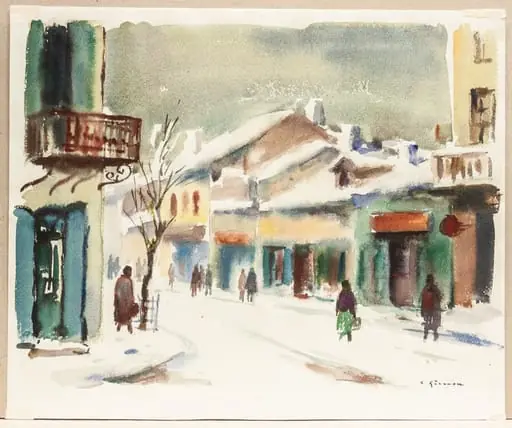
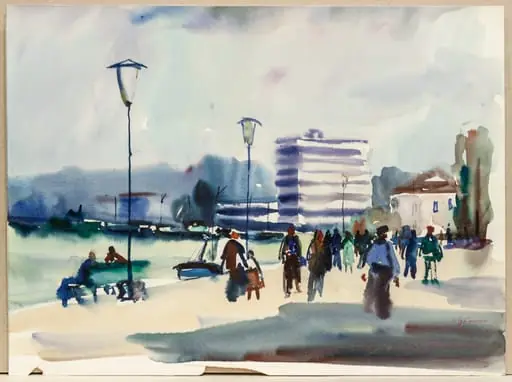
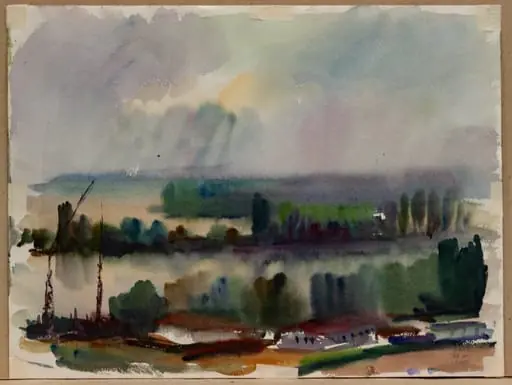
Peisaj is a print by Constantin Găvenea. It dates from 1950 and is held in the collection of the Gavrila Simion Eco-Museum Research Institute Tulcea.
About this work
The edges have a few small patches of tape, and there’s a handwritten note in the corner with the year "1941" and the name "Găvenea.
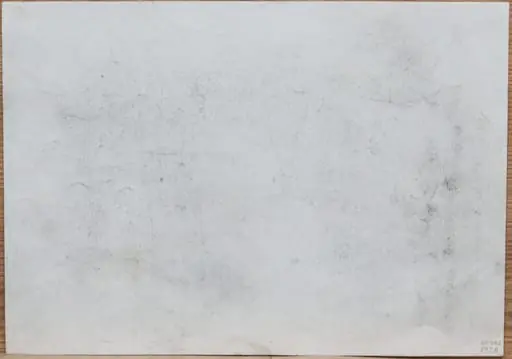
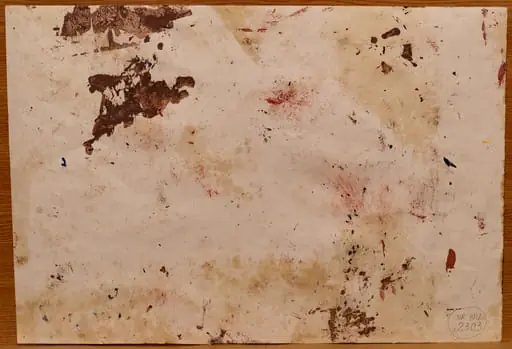
This print shows a pale, mostly empty background with faint, scattered marks. Some spots of green, brown, and blue are barely visible, like smudges or quick strokes. The edges have a few small patches of tape, and there’s a handwritten note in the corner with the year "1941" and the name "Găvenea."
The marks look like they might be sketches or notes rather than a finished scene. The paper itself is plain, with no clear shapes or details to make out.
If you’re curious about the artist behind this, look up Găvenea, Constantin.
Overview
Peisaj, attributed to Constantin Găvanea, dates from around 1950 and is part of the Museum of Ethnography’s collection. The work consists of a printed image on plain paper, dominated by a pale, nearly empty field. Subtle, scattered marks in muted greens, browns and blues appear as faint strokes or smudges, giving the piece an unfinished, exploratory quality.
Subject & Meaning
The composition lacks recognizable forms, suggesting the marks function more as sketches or visual notes than a completed landscape. The sparse arrangement invites viewers to contemplate the process of creation itself, emphasizing gesture and materiality over narrative content. The ambiguous marks encourage an open-ended interpretation of space and color.
Technique & Style
The piece employs a printmaking process that leaves the paper surface largely untouched, with only light ink applications. The faint coloration and minimal pressure produce a washed‑out effect, while small tape fragments at the edges hint at a collage element. Handwritten annotations in the corner, including the date "1941" and the artist’s name, further underscore its experimental nature.
History & Provenance
Although the image is dated circa 1950, a handwritten note on the work records the year 1941, indicating an earlier stage of conception or a possible reworking. The artwork has remained within the Museum of Ethnography’s holdings, where it is displayed as part of the institution’s representation of mid‑twentieth‑century Romanian visual culture.
Context
Created during a period of significant artistic transition in Romania, Peisaj reflects the broader shift toward abstraction and investigation of material processes. Găvanea’s practice, which often blended traditional ethnographic themes with modernist experimentation, situates this piece within a dialogue between folk visual heritage and contemporary avant‑garde techniques.
Artist & collection
Museum
Gavrila Simion Eco-Museum Research Institute Tulcea
Continue through works from the same source collection.