Artwork
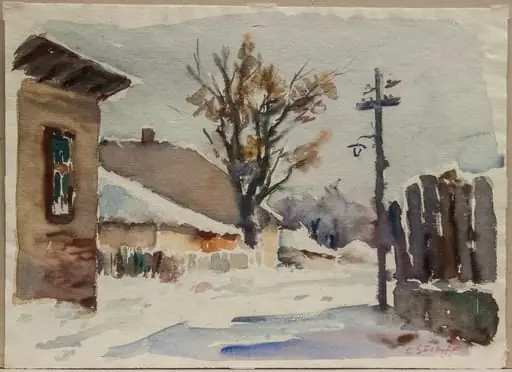
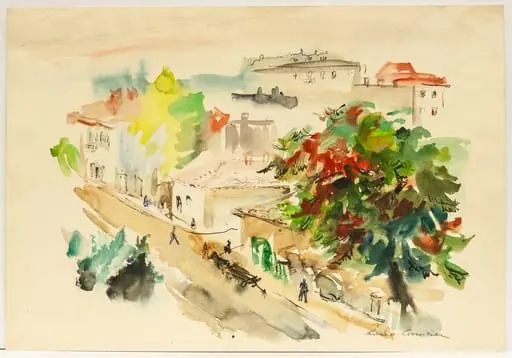
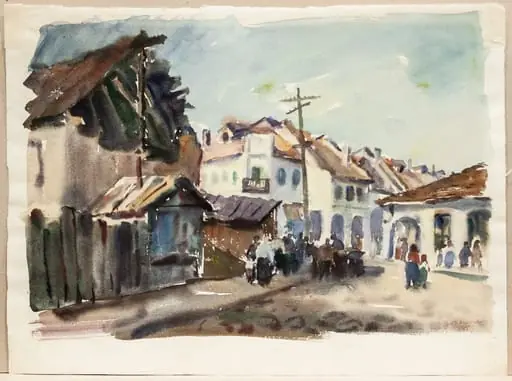
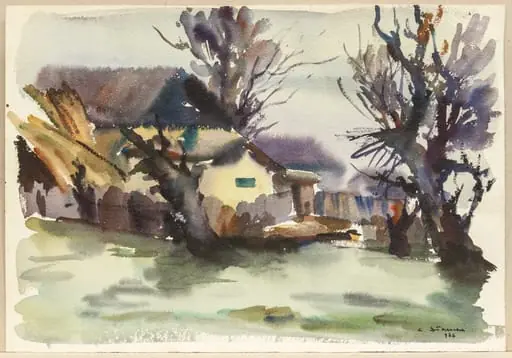
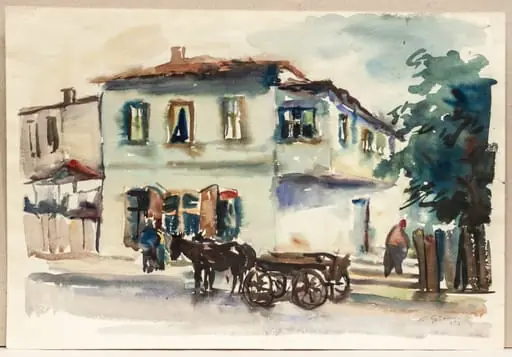
Centrul Tulcei Iarna
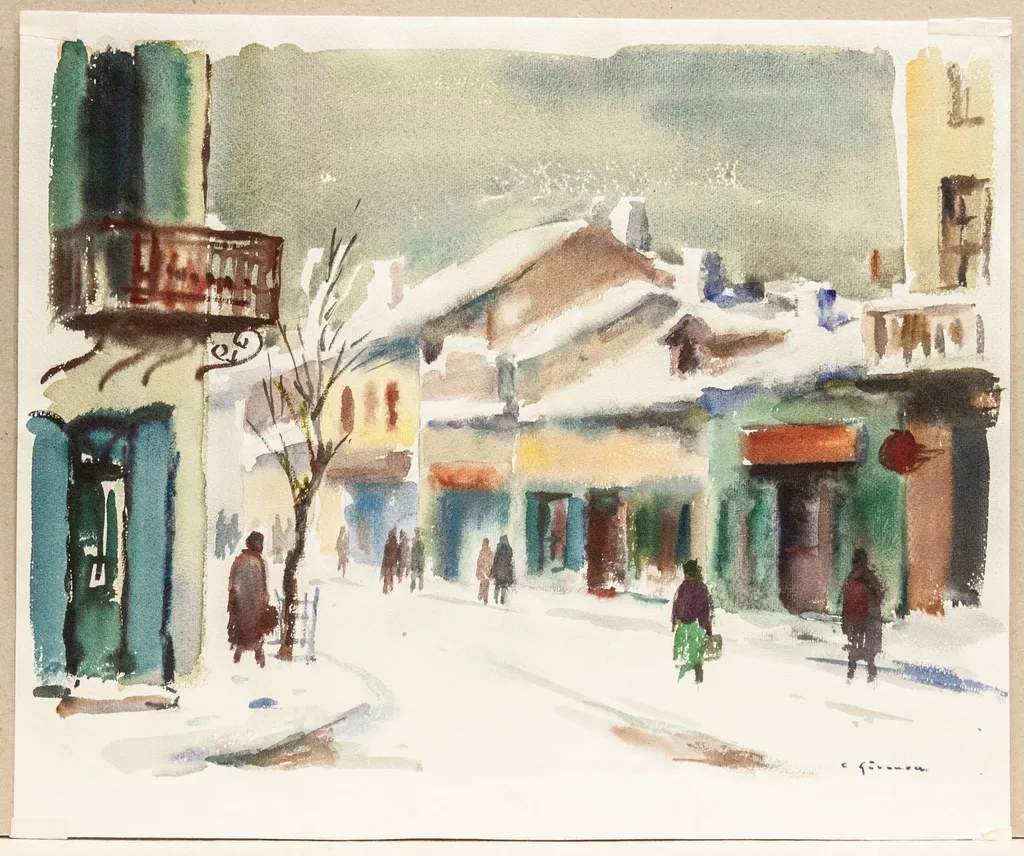
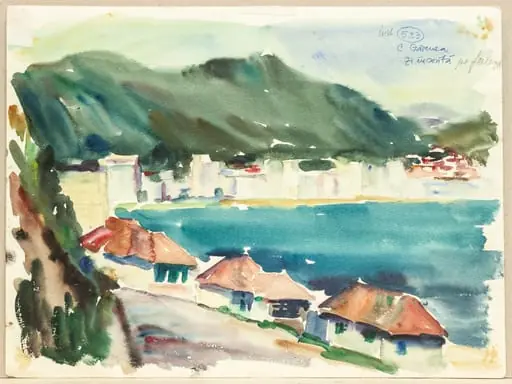
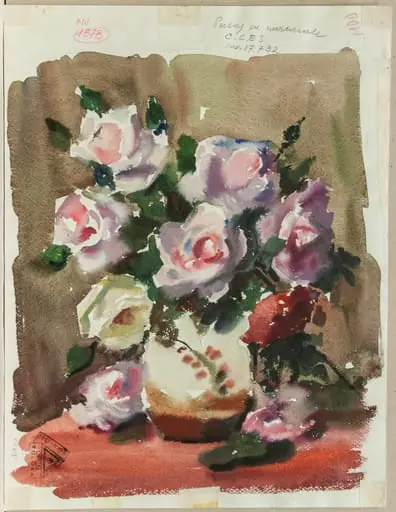
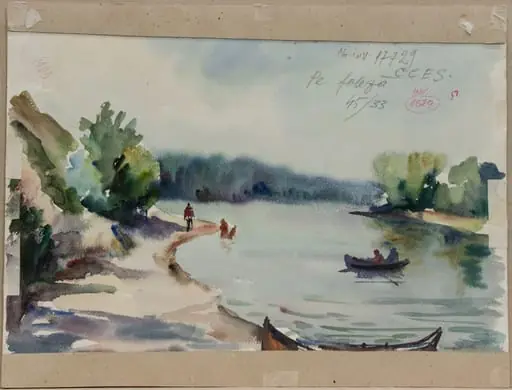
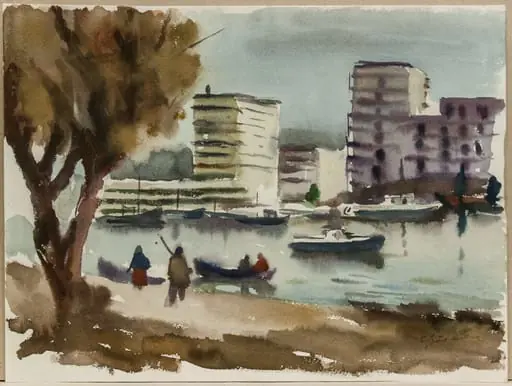
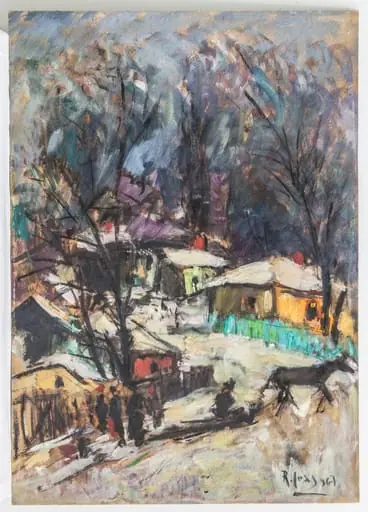
Centrul Tulcei Iarna is an unspecified painting by Constantin Găvenea. It dates from 1950 and is held in the collection of the Gavrila Simion Eco-Museum Research Institute Tulcea.
About this work
Overview
The work is part of the Museum of Ethnography’s collection, reflecting a focus on ordinary, regional life rather than monumental themes.
Created around 1950 by Romanian artist Constantin Găvenea, this painting captures a quiet winter scene in Tulcea. Rendered in oil or tempera, it depicts a modest urban street under snow, with minimal human activity. The work is part of the Museum of Ethnography’s collection, reflecting a focus on ordinary, regional life rather than monumental themes. Its subdued palette and sketch-like handling suggest an intimate, observational approach.
Subject & Meaning
The scene portrays a typical winter day in a Danube Delta town, emphasizing routine over spectacle. A few figures move along a snow-dusted street, their presence unremarkable, grounding the image in daily reality. The lone bare tree anchors the composition, symbolizing resilience amid stillness.
A single warm orange glow from a doorway introduces a subtle human note, suggesting shelter and quiet endurance in harsh conditions.
Technique & Style
Găvenea employs loose, rapid brushwork that evokes the immediacy of a sketch. Paint is applied thinly, allowing the surface to suggest texture rather than define it. Snow is rendered with soft washes of gray and blue, sparingly layered to imply freshness without heavy buildup.
The absence of impasto or thick pigment keeps the mood light and atmospheric, aligning with the painting’s restrained emotional tone.
History & Provenance
The painting entered the Museum of Ethnography’s holdings shortly after its creation, likely through institutional acquisition or donation. Its preservation within a collection dedicated to cultural documentation suggests it was valued for its ethnographic accuracy. No public record of prior ownership or exhibition exists, indicating it remained within Romania’s regional art circles during the early postwar period.
Context
Painted in the early 1950s, the work emerged during a time when Romanian art was increasingly directed toward socialist realism. Yet Găvenea’s focus on quiet, unidealized scenes of provincial life diverges from state-mandated grandeur. This quietude may reflect personal resistance or simply a commitment to local observation, placing the piece in tension with official artistic norms of the era.
Legacy
Though not widely exhibited beyond regional institutions, the painting endures as a quiet example of postwar Romanian realism that prioritizes atmosphere over narrative. It contributes to a lesser-known strand of art that documented everyday life without embellishment, offering a counterpoint to the dominant ideological imagery of its time. Its preservation underscores its value as a cultural record rather than an aesthetic landmark.
Artist & collection
Museum
Gavrila Simion Eco-Museum Research Institute Tulcea
Continue through works from the same source collection.