Artwork
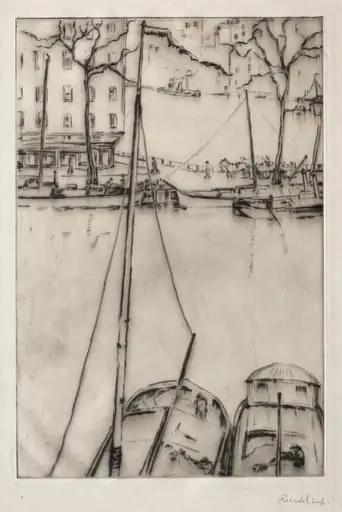
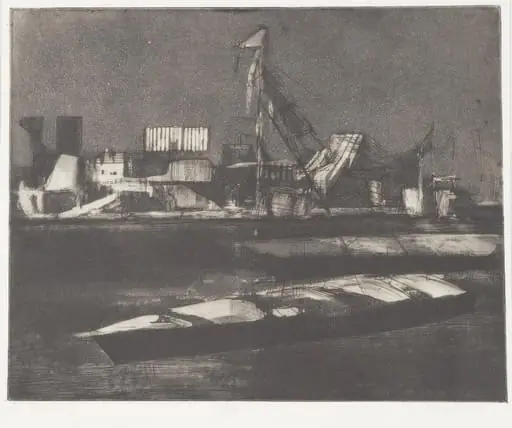
Petit Port--La Corniche, Marseilles
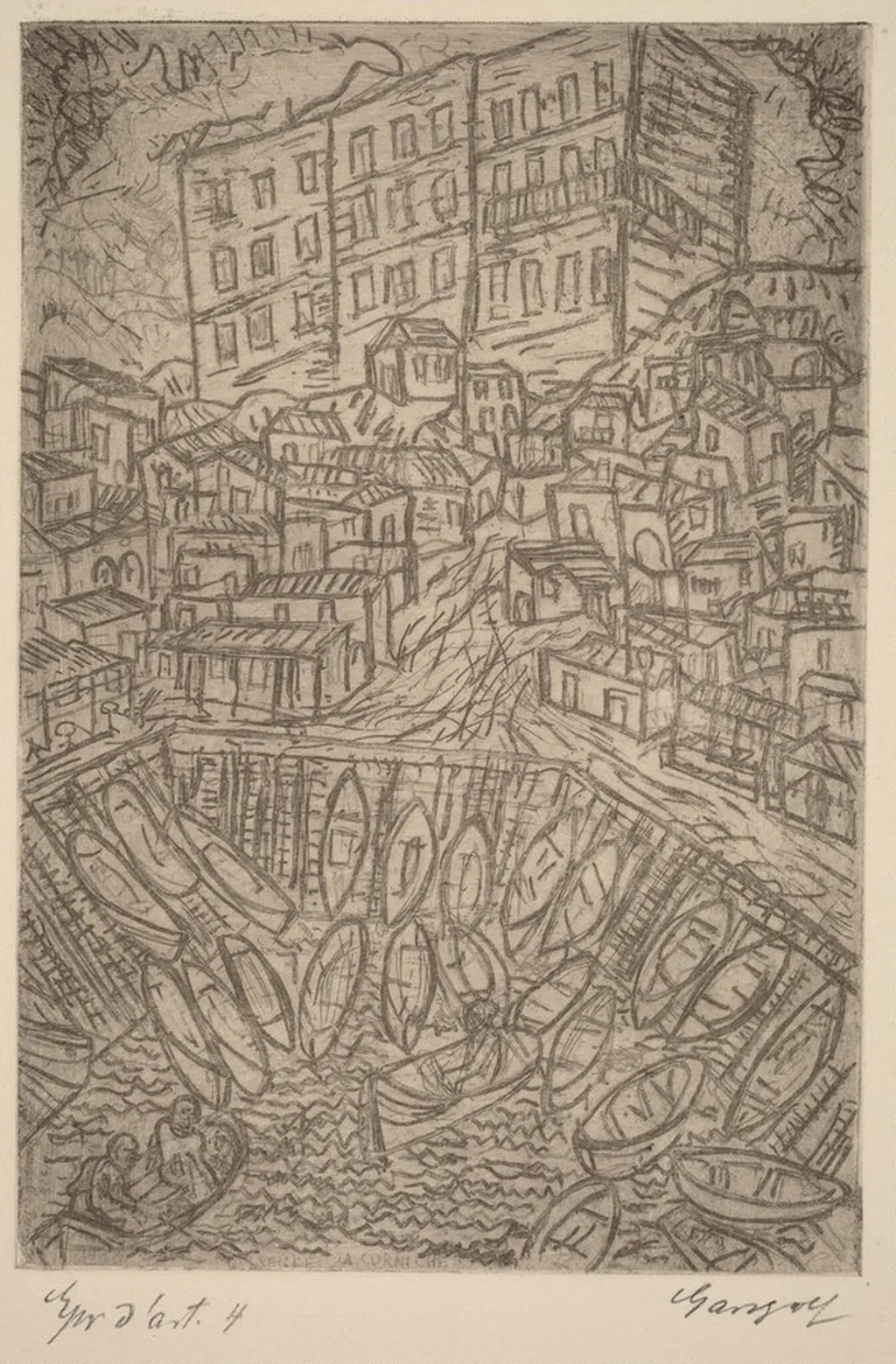
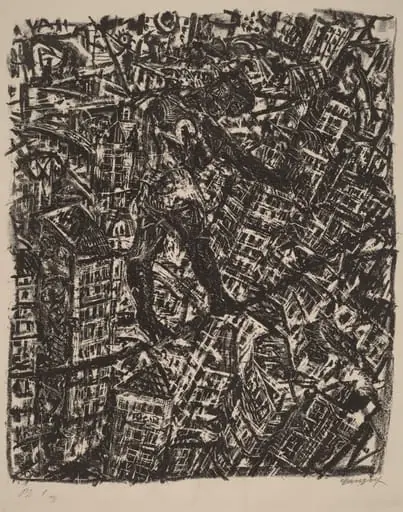
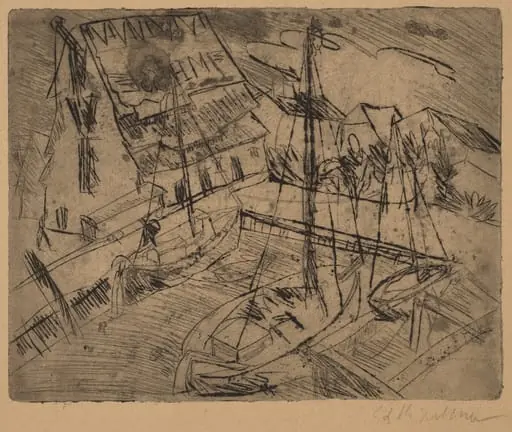
Petit Port--La Corniche, Marseilles is an ink print by Paul Gangolf. It dates from 1928 and is held in the collection of the National Gallery of Art.
- Inscription
- Inscribed:lower left in plate: 1928 / Gangolf, Paris 29 [?]; bottom margin in plate: MARSEILLE LA CORNICHE; signed by artist, lower right under platemark, in graphite: Gangolf; by artist, lower left under platemark, in graphite: Epr. d'art. 4
- Markings
- Marked:stamp, verso center, in black ink: R [twice]
About this work
Overview
Paul Gangolf’s 1928 soft‑ground etching titled Petit Port, La Corniche, Marseilles presents a compact view of the Marseille harbor district. Executed as a proof, the print offers a preliminary impression of the composition before a final edition was struck. The work measures the bustling urban fabric of the port, rendered in a densely packed arrangement of structures and streets.
Subject & Meaning
The image captures a tightly clustered cityscape where buildings appear to lean and intersect in a seemingly chaotic fashion. The composition emphasizes the vitality and disorder of a working harbor, suggesting the constant movement and layered history of Marseille’s waterfront. The tangled forms convey a sense of urban intensity rather than an idealized panorama.
Technique & Style
Created with soft‑ground etching, the artist applied a pliable ground to the plate, allowing textured lines to be drawn directly with a brush or stylus.
Created with soft‑ground etching, the artist applied a pliable ground to the plate, allowing textured lines to be drawn directly with a brush or stylus. The resulting marks are irregular and slightly wavering, giving the streets and façades a sketch‑like quality. The proof’s dark, densely inked areas contrast with the lighter, scratched‑out spaces, reinforcing the work’s rough, immediate character.
History & Provenance
This proof was produced in 1928, the same year Gangolf completed the plate. As a test impression, it was likely retained by the artist or his studio to assess the tonal balance before issuing a limited edition. The print has since entered private collections, documenting an early stage in Gangolf’s exploration of urban subjects through printmaking.
Artist & collection