Artist
George Loring Brown
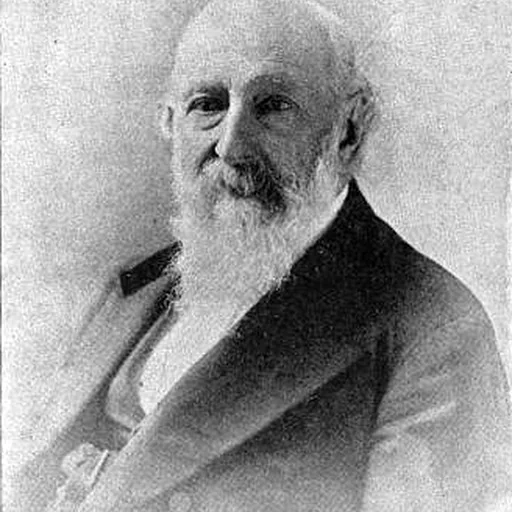
American, 1814–1889
George Loring Brown was an American Realism painter. 14 works are cataloged here, principally at Museum of Fine Arts Boston, most of them oil paintings. George Loring Brown was born in Boston.
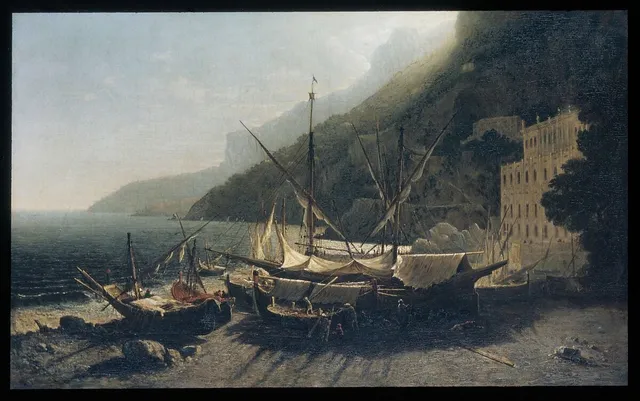
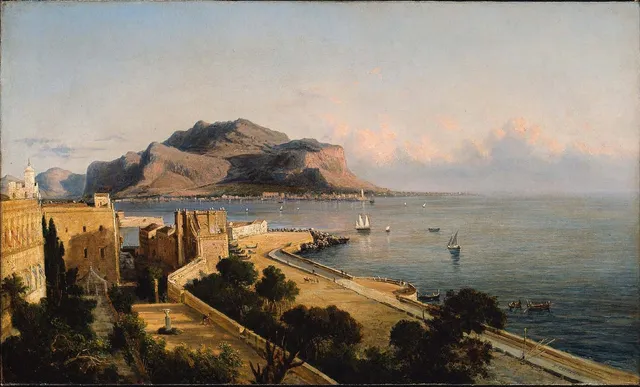
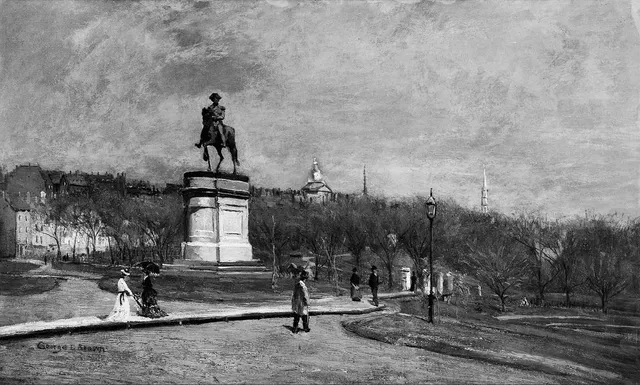
George Loring Brown was born in Boston on February 2, 1814, and began his career apprenticed to the wood engraver Alonzo Hartwell, later working as an illustrator of children's books. A sale of one of his early landscapes to a Boston merchant funded his first European voyage in 1832. In Paris he trained with Eugène Isabey, absorbing the Frenchman's loose brushwork and dramatic skies, while copying Claude Lorrain, Ruisdael, and Constable in the Louvre; the habit of imitating Lorrain earned him the lifelong sobriquet "Claude" Brown.
Back in Boston by 1834, he was encouraged by Washington Allston and exhibited regularly at the Boston Athenaeum. In 1840 Brown relocated to Rome, where he spent roughly twenty years painting Italian landscapes for the tourist market. A pivotal patron, George Tiffany, underwrote his studies, and Brown cultivated a method called macchiorelli, painting in color patches that emphasized tonal effects of light.
He returned to America in 1859, maintained a New York studio, and made repeated sketching trips to New Hampshire's White Mountains, where he produced The Crown of New England, a panoramic Mount Washington view bought by the Prince of Wales in 1861. He also taught younger painters such as Willard Leroy Metcalf. Despite these American interludes, the market preferred his European scenes, and he repeatedly sailed back to Italy, France, and England.
Brown exhibited at the National Academy of Design, the Pennsylvania Academy of the Fine Arts, and the Brooklyn Art Association, and his works entered collections including the Metropolitan Museum of Art and the Smithsonian American Art Museum. He died in Malden, Massachusetts, on June 25, 1889.
Works by George Loring Brown
Collections represented


Artists in a similar vein