Artwork
Saints Cyprian, Vitus, Stephan, and Cornelius
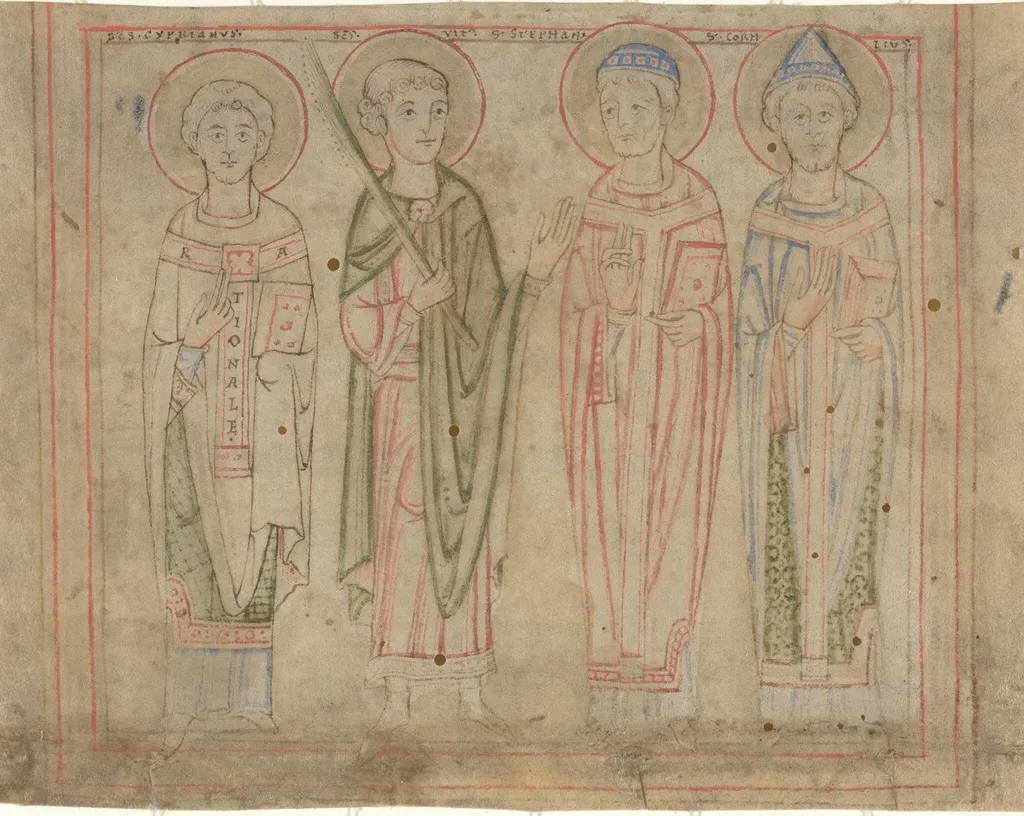
Saints Cyprian, Vitus, Stephan, and Cornelius is a drawing. It dates from 1101 and is held in the collection of the National Gallery of Art.
About this work
Subject & Meaning
Saint Stephen, the first Christian martyr, is shown alongside Vitus, a young martyr invoked against epilepsy, rabies, and other convulsive diseases.
The miniature depicts four early Christian saints venerated as intercessors against specific ailments and dangers. Cornelius, traditionally regarded as a pope, and Cyprian, a bishop and martyr, are frequently paired in medieval devotional imagery as powerful protectors against plague and witchcraft. Saint Stephen, the first Christian martyr, is shown alongside Vitus, a young martyr invoked against epilepsy, rabies, and other convulsive diseases.
The grouping of these four figures reflects a medieval practice of invoking multiple plague-saints together, combining Roman, North African, and Levantine holy men into a single protective composition.
Rendered as a miniature on vellum, the work would have functioned as a portable devotional image, likely intended for private prayer or as part of a devotional manuscript. The compact format, measuring 10.9 by 14.2 centimeters, suggests it served as a personal amulet-like object, allowing the patron to call upon these four saints collectively for protection against illness and spiritual peril.
Technique & Style
Created in 1101 by an anonymous German artist, this work is a miniature executed on a vellum support. Classified as a drawing, the piece measures 10.9 cm in height and 14.2 cm in width. The composition features the figures of Saints Cyprian, Vitus, Stephen, and Cornelius rendered in this specific medium.
The use of vellum as the primary material defines the handling and physical nature of the object, which is currently held in the collection of the National Gallery of Art in Washington, D.C.
History & Provenance
The drawing, a German work from the 12th century, was executed around 1101 on vellum and depicts the saints Cyprian, Vitus, Stephan and Cornelius. Its early ownership is recorded at the Parisian dealer L'Art Ancien S.A., after which the collector Lessing J. Rosenwald acquired it in 1962 and later gave the piece to the National Gallery of Art, where it remains on display in Washington, D.C. The work measures 10.9 × 14.2 cm and is catalogued in the Gallery’s collection of drawings (NGA 47231).
The drawing is housed in the National Gallery of Art in Washington, D.C.
Its accession number is NGA 47231, which identifies it within the museum’s collection of drawings.
The work is a miniature on vellum dated to 1101, depicting Saints Cyprian, Vitus, Stephan, and Cornelius.
Provenance notes that the piece was gifted to the gallery in 1864 after being acquired by collector Lessing J. Rosenwald in 1962.
No exhibition history is recorded in the available documentation.
Overview
This drawing, titled Saints Cyprian, Vitus, Stephan, and Cornelius, is a miniature executed on vellum. It presents a devotional image featuring four distinct holy figures. The work exemplifies a common artistic practice of its era, showcasing both simplicity in composition and meticulous attention to detail within its small scale.
Artist & collection

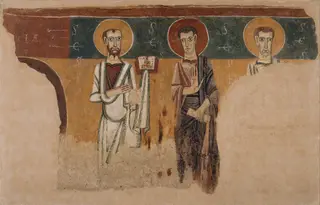
- The Apostles of Argolell
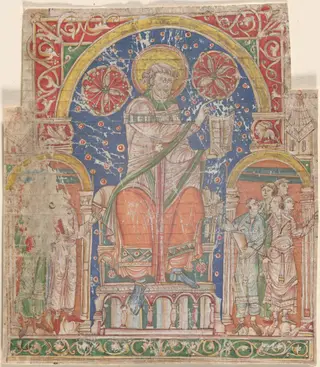 Saint Augustine
![Christ in Majesty [recto]](https://artifactworldgallery.com/img/christ-in-majesty-recto--312aa8dd5634bdac-w320.webp) Christ in Majesty [recto]
Christ in Majesty [recto]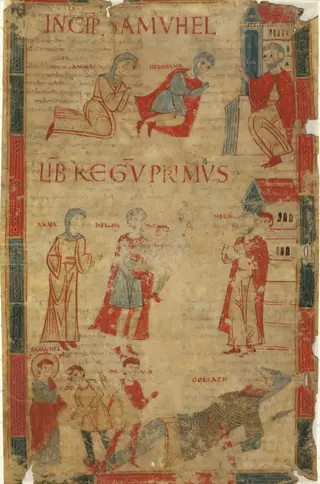 Four Scenes from the First Book of Samuel
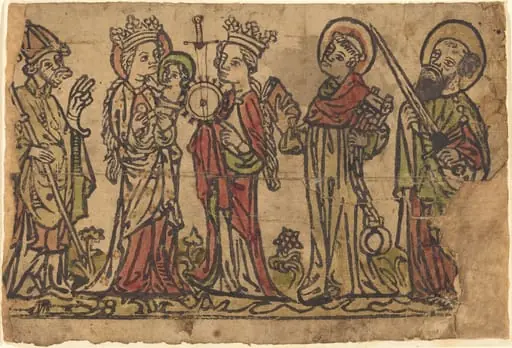 Madonna and Child with Four Saints
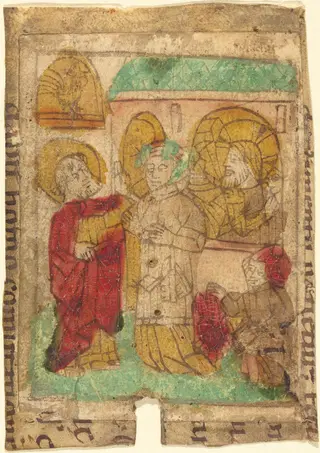 The Denial of Peter
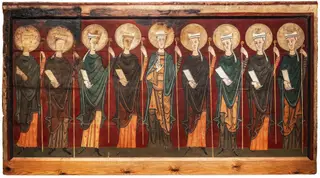 Altar frontal from Tavèrnoles
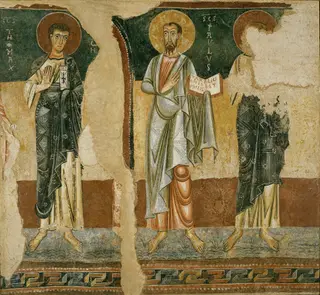 Apostles from Orcau
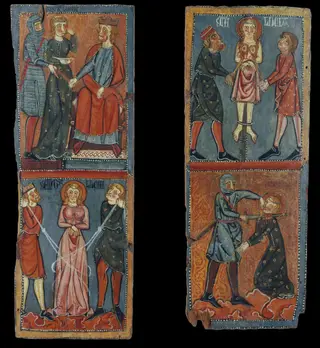 Panels with scenes of the Martyrdom of Saint Lucy
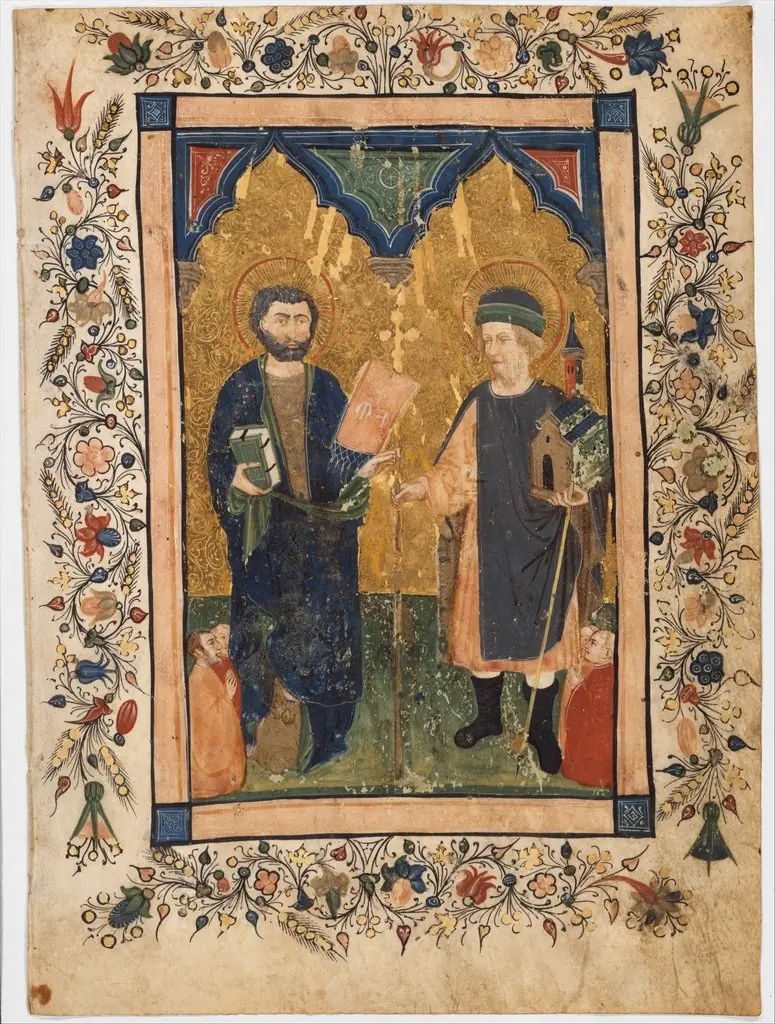 Saint Mark the Evangelist and Saint Sinibaldus Venerated by Members of a Lay Confraternity
 Altar frontal of Sant Pere de Boí
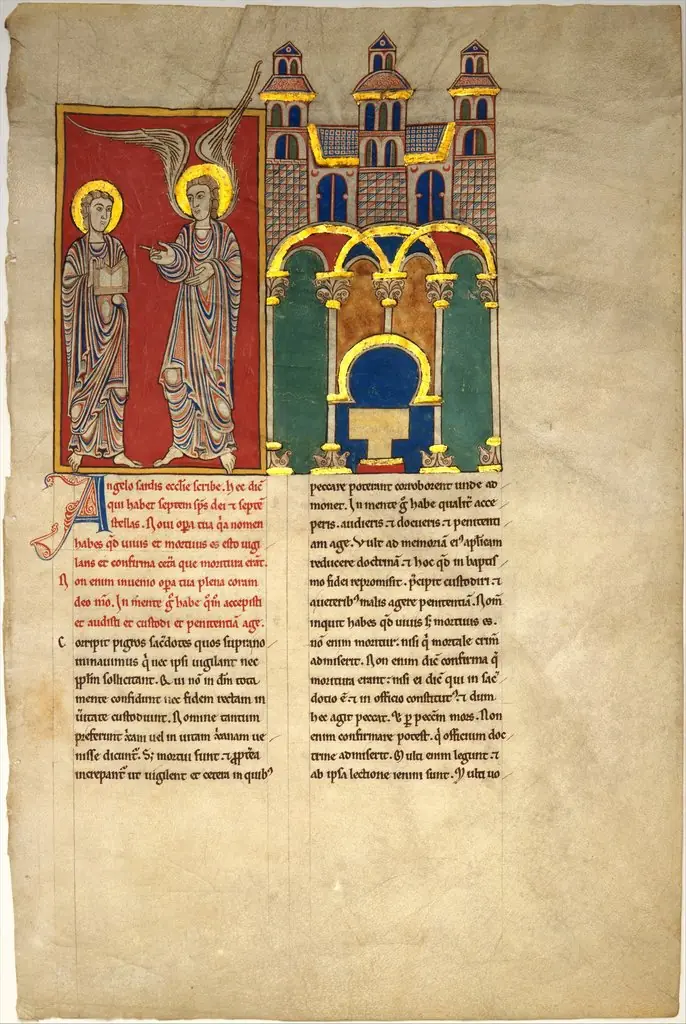 Leaf from a Beatus Manuscript: the Angel of the Church of Sardis with Saint John