Artwork
Allegory of the Eagle and Emperor Maximilian I
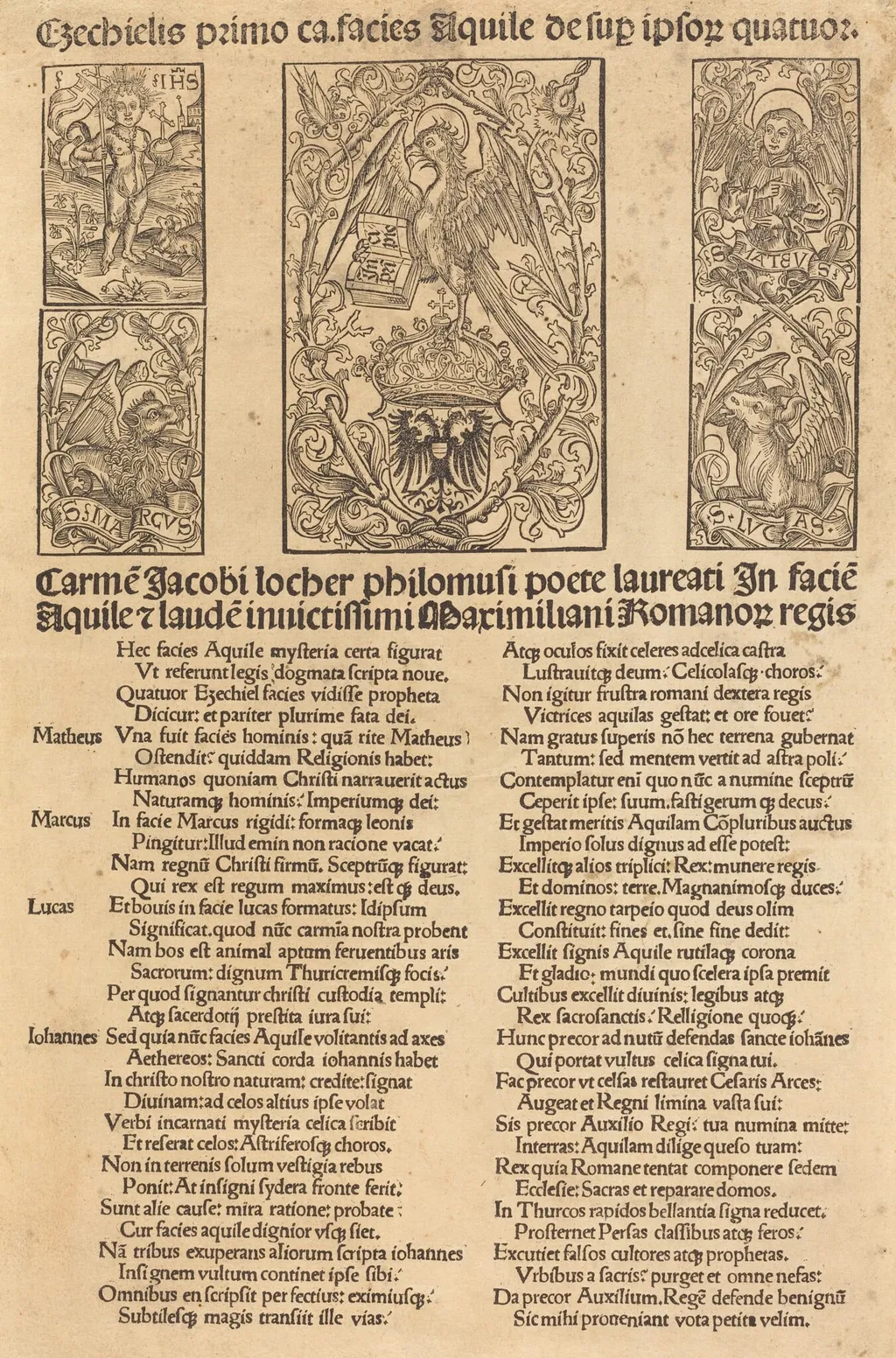
Allegory of the Eagle and Emperor Maximilian I is an ink print by the Renaissance artist German 15th Century. It dates from 1497 and is held in the collection of the National Gallery of Art.
About this work
Overview
The Allegory of the Eagle and Emperor Maximilian I is a woodcut print featuring three ornate frames with intricate carvings and Latin inscriptions.
Subject & Meaning
The central frame depicts a large eagle perched on a rock, symbolizing power and leadership, often associated with emperors. The eagle's pose and grasp of an object in its talons add to its symbolic significance.
Technique & Style
Created using the woodcut technique, the print was carved into wood and then printed, a common method during the 15th century. The intricate carvings and swirling patterns in the empty frames showcase the artist's skill with this medium.
Artist & collection

Artist
This 15th-century German artist carved vivid religious scenes into metal and wood, then hand-painted them in bright, symbolic colors.

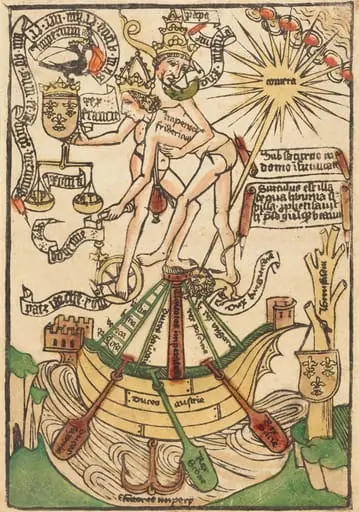 Allegory of the Meeting of Pope Paul II and Emperor Frederick III
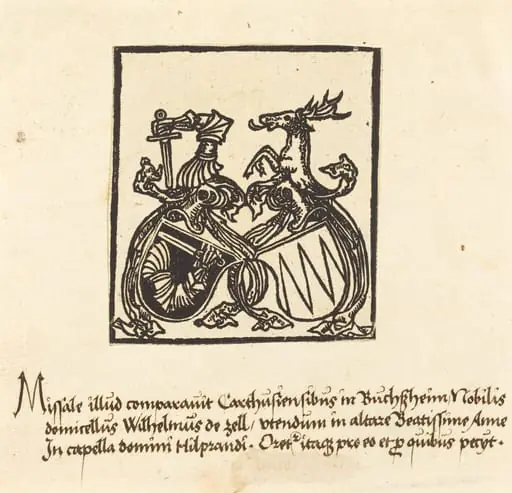 Bookplate of Wilhelm von Zell
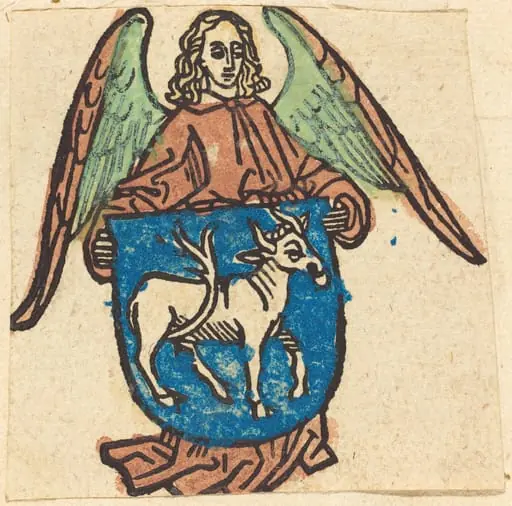 Bookplate of Hilprand Brandenburg of Bibrach
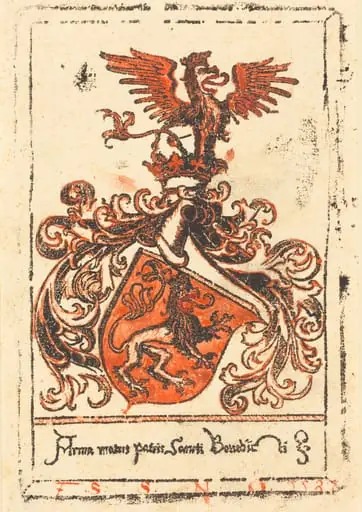 Bookplate of the Abbey of Ottobeuren
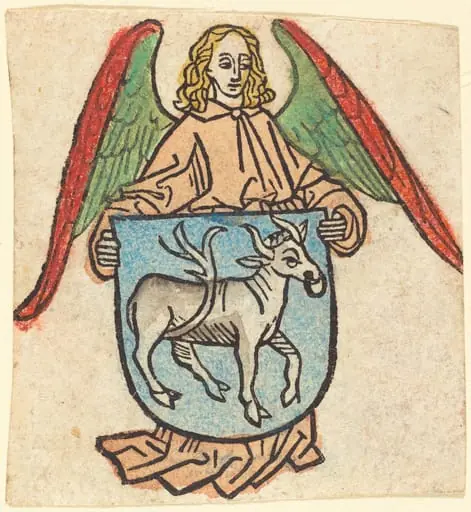 Bookplate of Hilprand Brandenburg of Bibrach
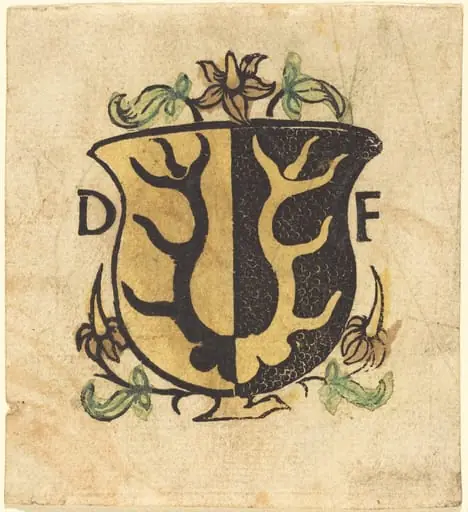 Bookplate of Dominicus Frauenfelder
![Studies for Six Figures (sheet from a model book) [recto], by German 15th Century](https://artifactworldgallery.com/img/german-15th-century--studies-for-six-figures-sheet-from-a-model-book-recto--4837429e0755bc3f-w320.webp) Studies for Six Figures (sheet from a model book) [recto]
Studies for Six Figures (sheet from a model book) [recto]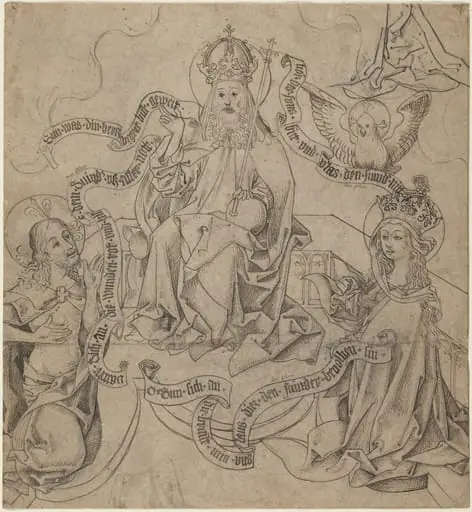 Christ and Mary Interceding with God the Father
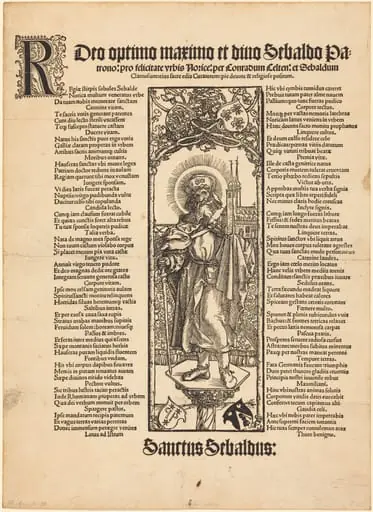
- Saint Sebaldus Standing on a Column
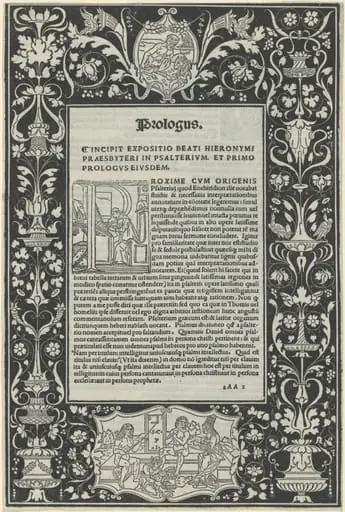 A White Line Border with Two Cartouches: "A Satyr Sacrificing a Ram," and "The Choice of Hercules"
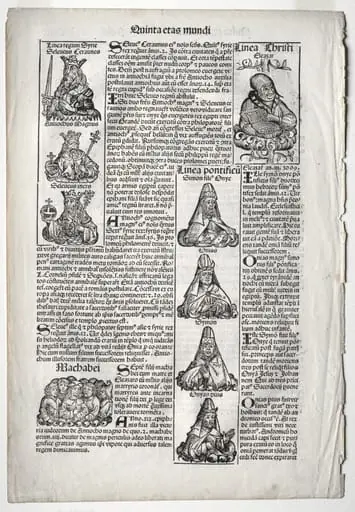 Genealogical Page; published in the Nuremberg Chronicle by Hartmann Schedel
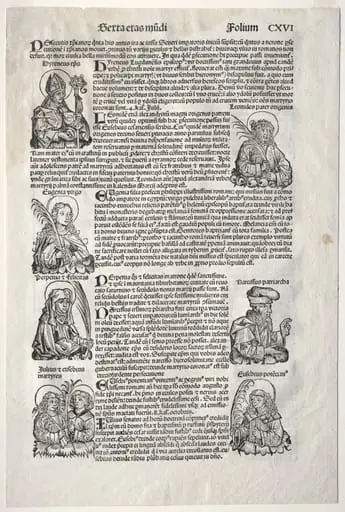 Nuremberg Chronicle
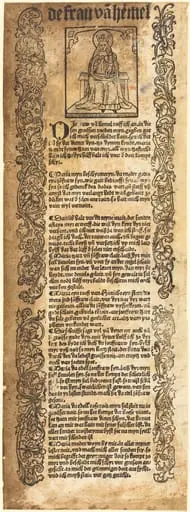 Song to the Madonna
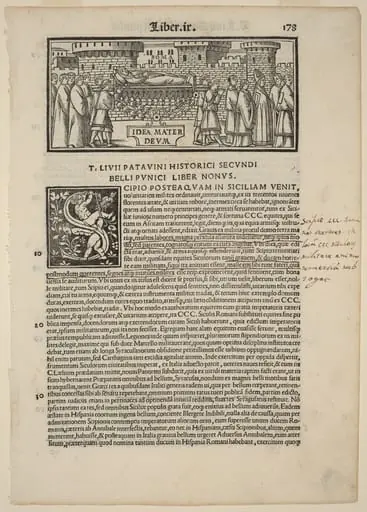 Page from Livius Historiabum Libri
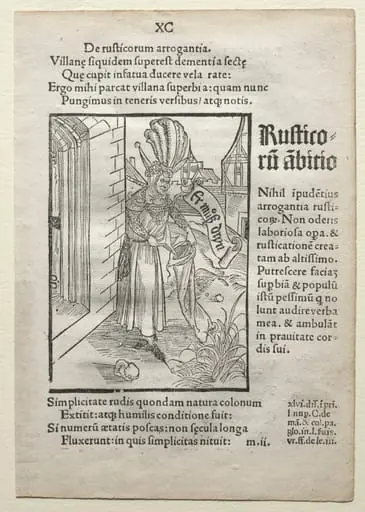 Ship of Fools
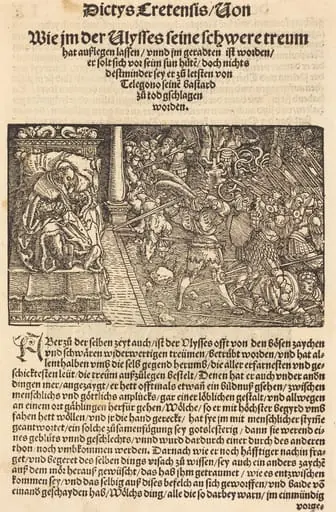 Page from Troianischen Kreig - Ausberg
 Border from an Almanac
 Christ as Salvator Mundi
 Purgatory
 The Emblem