Artwork
Christ as the Man of Sorrows
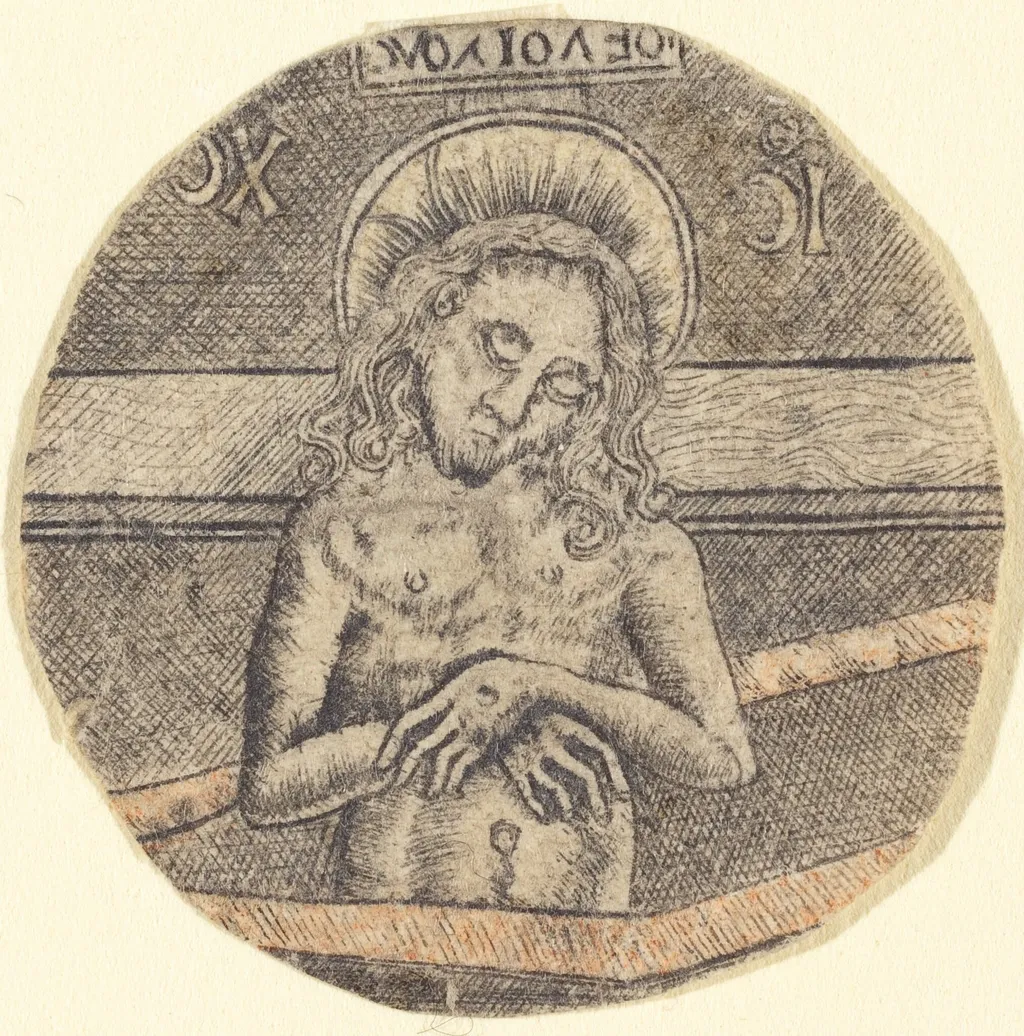
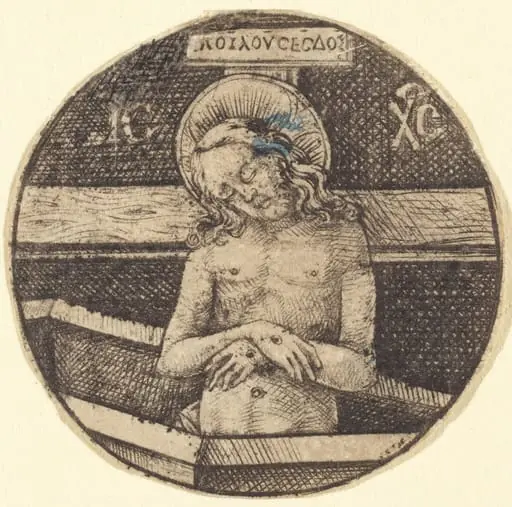
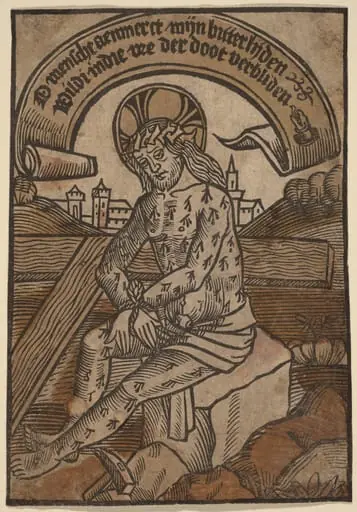
Christ as the Man of Sorrows is an ink print by the Renaissance artist German 15th Century. It dates from 1475 and is held in the collection of the National Gallery of Art.
About this work
Overview
As a product of the Northern Renaissance, it reflects the period's intense focus on the humanity of Christ and the emotional engagement of the viewer.
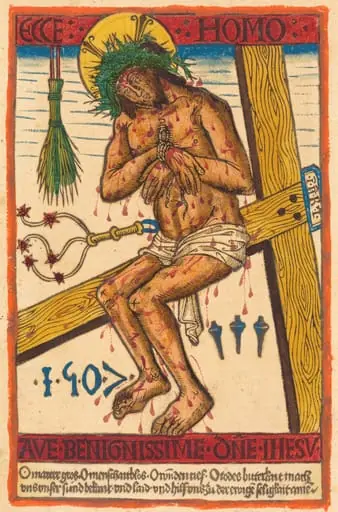
Created around 1475, this German engraving depicts Christ as the Man of Sorrows, a devotional subject emphasizing the suffering of Jesus. The composition presents a half-length figure of Christ standing frontally, his hands bound or folded before him, displaying the stigmata on his wrists and side. A crown of thorns encircles his head, and his expression conveys profound sorrow and resignation.
Executed with the sharp, precise line work characteristic of late 15th-century German printmaking, the image relies on dense hatching to model the figure's anatomy and the texture of the thorns against a plain background. This work functions as a reproductive print, translating a well-known painting into a format accessible for private devotion and wider dissemination. As a product of the Northern Renaissance, it reflects the period's intense focus on the humanity of Christ and the emotional engagement of the viewer.
The engraving exemplifies the technical maturity of German printmakers during this era, utilizing the medium to circulate established religious iconography beyond the confines of the original painted source.
Subject & Meaning
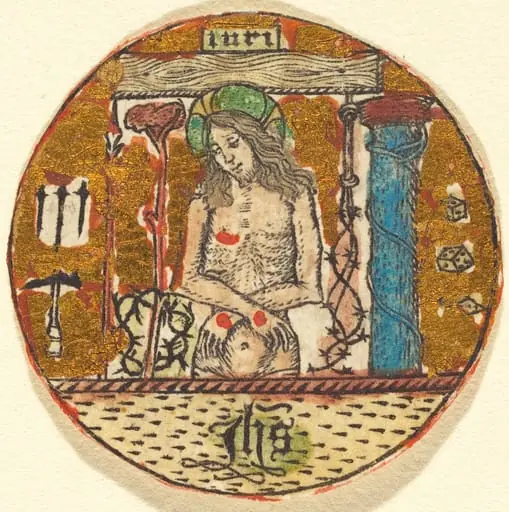
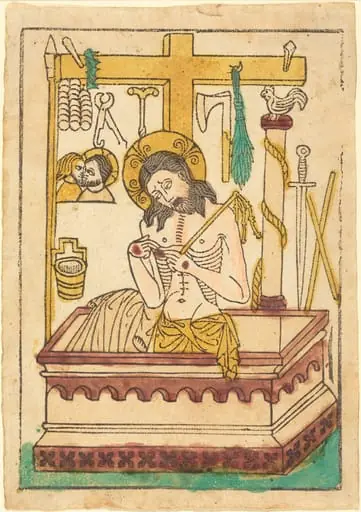
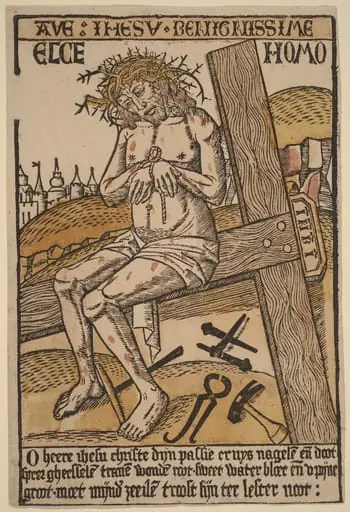
The work presents the traditional ‘Man of Sorrows’ motif, focusing on Christ’s suffering and humanity. By highlighting the wounds and the crown of thorns, the engraving invites viewers to contemplate the theological significance of sacrifice and redemption, encouraging personal reflection on the Passion narrative.
Technique & Style
Created through intaglio engraving, the artist incised the design onto a metal plate, applied ink, and pressed it onto paper. The resulting print is characterized by sharp, controlled lines that faithfully reproduce the details of the source composition, allowing for repeated distribution while preserving the clarity of the original drawing.
History & Provenance
The print is a reproductive copy of a well‑known painting, serving as a vehicle for disseminating the image beyond the original’s location. Such reproductions were common in the period as a means of spreading devotional imagery to a broader audience, often circulating among private collections and religious institutions.
Context
During its era, printed devotional images functioned as visual sermons, enabling the faithful to engage with sacred themes in domestic settings. The engraving’s straightforward composition and accessible format reflect the broader trend of using print technology to democratize religious art.
Artist & collection

Artist
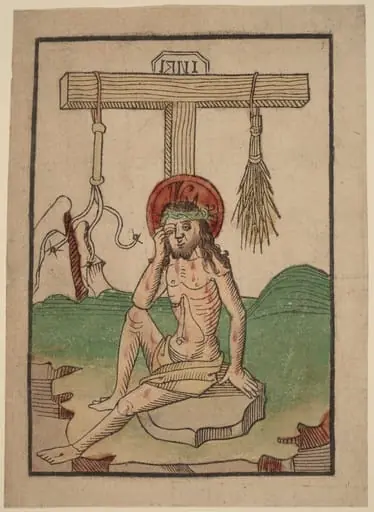
This 15th-century German artist carved vivid religious scenes into metal and wood, then hand-painted them in bright, symbolic colors.

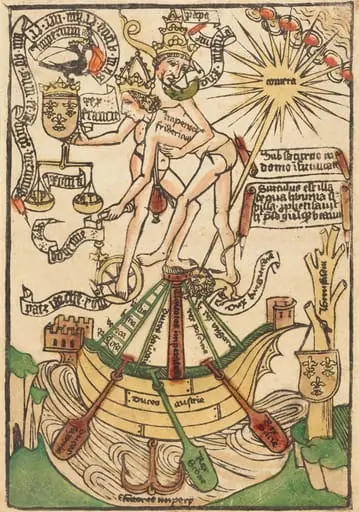 Allegory of the Meeting of Pope Paul II and Emperor Frederick III
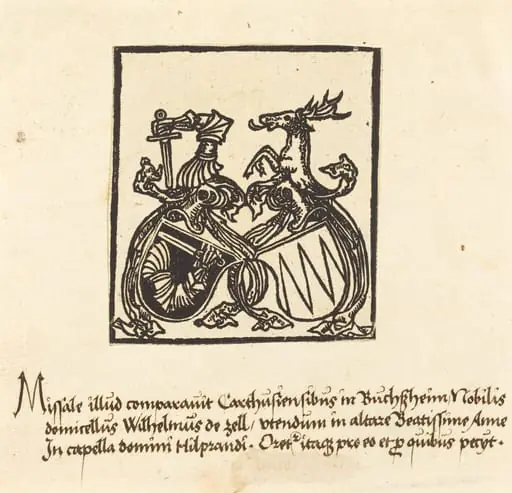 Bookplate of Wilhelm von Zell
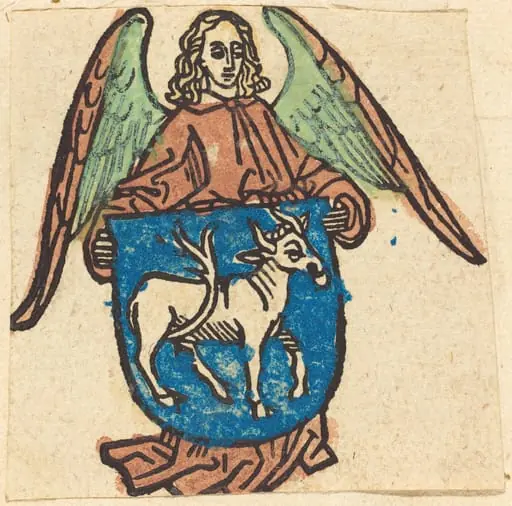 Bookplate of Hilprand Brandenburg of Bibrach
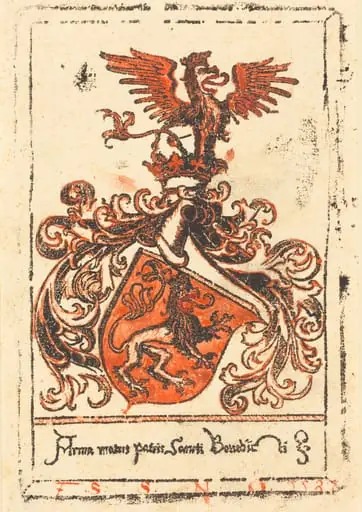 Bookplate of the Abbey of Ottobeuren
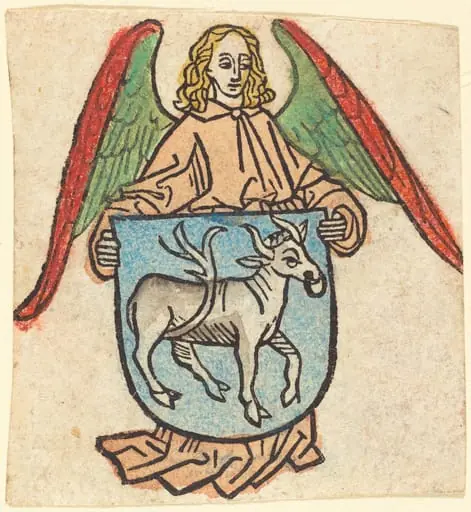 Bookplate of Hilprand Brandenburg of Bibrach
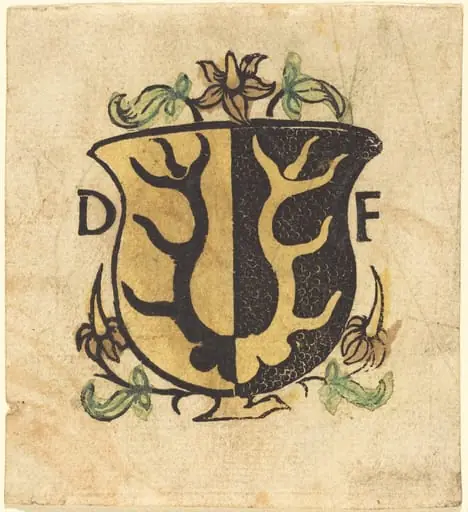 Bookplate of Dominicus Frauenfelder
![Studies for Six Figures (sheet from a model book) [recto], by German 15th Century](https://artifactworldgallery.com/img/german-15th-century--studies-for-six-figures-sheet-from-a-model-book-recto--4837429e0755bc3f-w320.webp) Studies for Six Figures (sheet from a model book) [recto]
Studies for Six Figures (sheet from a model book) [recto] Christ and Mary Interceding with God the Father