Artwork
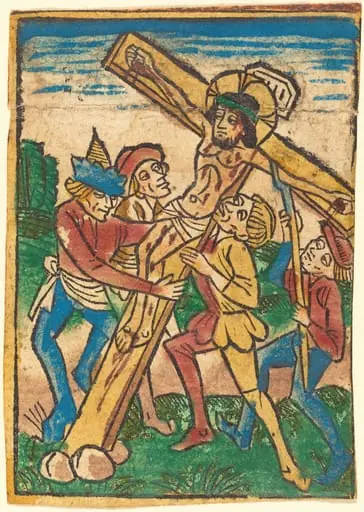
Christ Nailed to the Cross
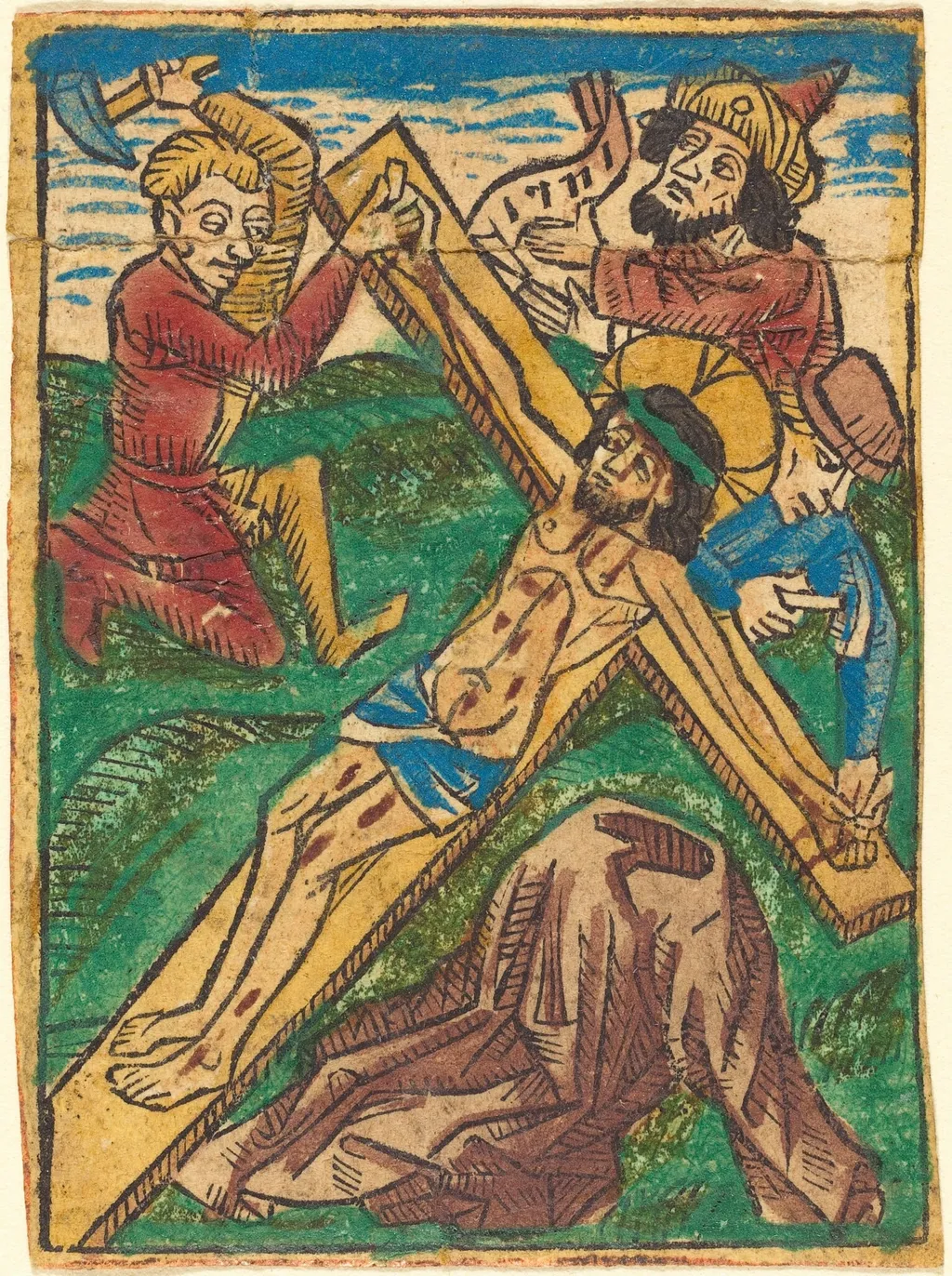
Christ Nailed to the Cross is an ink print by the Renaissance artist German 15th Century. It dates from 1490 and is held in the collection of the National Gallery of Art.
About this work
Overview
Three figures are shown laboring to lift the crucified Christ, whose naked body is stretched with arms extended and head tilted back in agony.
Christ Nailed to the Cross is a hand-colored woodcut created by an anonymous German artist circa 1490. The work depicts the moment of the Crucifixion, specifically the raising of the cross. Three figures are shown laboring to lift the crucified Christ, whose naked body is stretched with arms extended and head tilted back in agony.
Two executioners, distinguished by a red robe and a blue-and-brown cloak respectively, grip the vertical beam to hoist it upright. The composition utilizes a flat, two-dimensional aesthetic characteristic of late 15th-century German printmaking, set against a stylized background of a solid blue sky and green ground. As a hand-colored example, the work demonstrates the transition from monochrome printing to polychrome religious imagery, where color was applied manually to enhance devotional impact.
This piece reflects the intense emotional realism and graphic directness favored in German religious art of the period, serving as an accessible devotional object for private contemplation before the widespread adoption of oil painting techniques in the region.
Subject & Meaning
The image captures the physical act of raising Christ onto the cross, emphasizing the collaborative effort required for the execution. The nudity of the central figure underscores his vulnerability, while the contrasting garments of the assistants highlight their distinct roles. The stark, simplified setting focuses attention on the ritualistic violence and the theological significance of the crucifixion.
Technique & Style
Created as a woodcut, the work was produced by carving the design into a wooden block, inking the surface, and pressing it onto paper. After printing, the image was hand‑colored, giving it a vivid yet uneven palette. The lines appear rough and slightly irregular, a characteristic result of the carving process, while the faded colors suggest the passage of time and the fragility of the medium.
Context
Woodcut prints were a common means of reproducing religious imagery during the Renaissance, allowing broader dissemination of biblical scenes beyond painted altarpieces. This piece reflects that tradition, employing a straightforward visual language that could be easily understood by a largely illiterate audience, while also serving devotional purposes within private or communal settings.
Artist & collection

Artist
This 15th-century German artist carved vivid religious scenes into metal and wood, then hand-painted them in bright, symbolic colors.

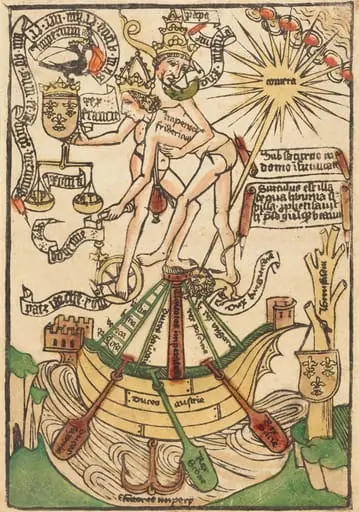 Allegory of the Meeting of Pope Paul II and Emperor Frederick III
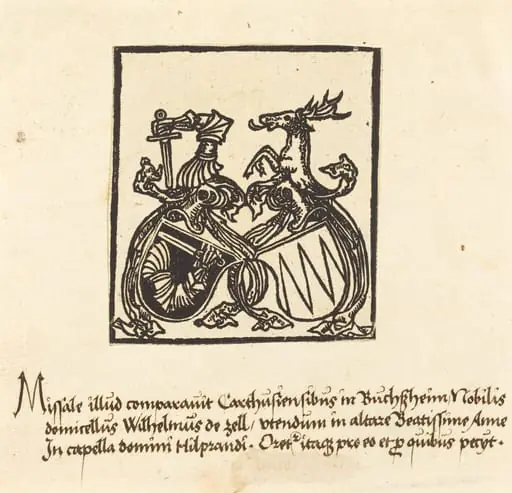 Bookplate of Wilhelm von Zell
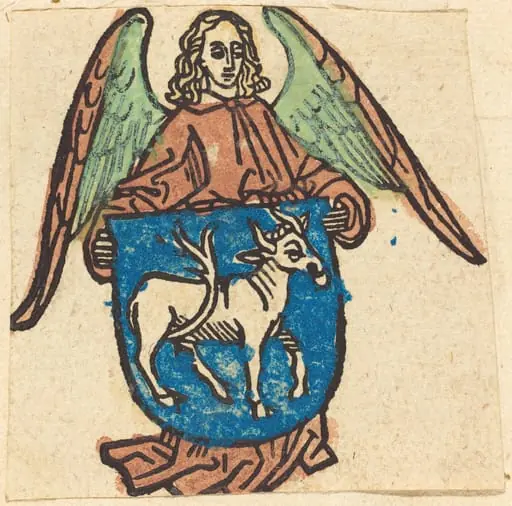 Bookplate of Hilprand Brandenburg of Bibrach
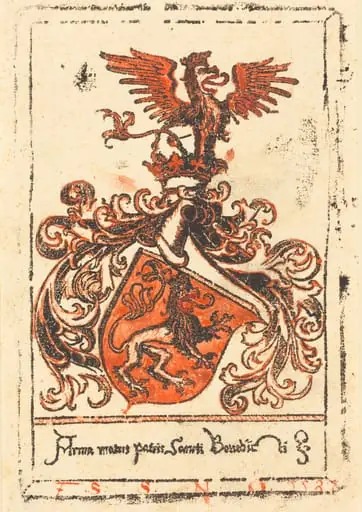 Bookplate of the Abbey of Ottobeuren
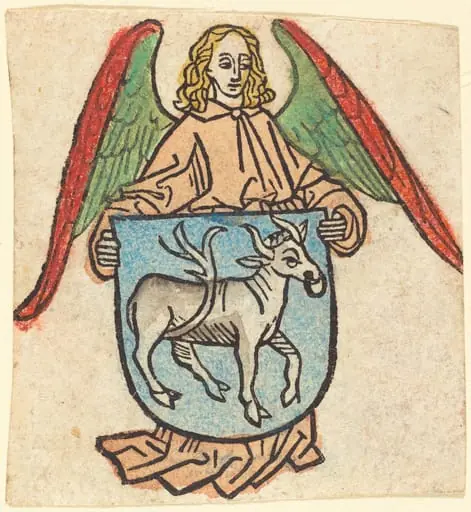 Bookplate of Hilprand Brandenburg of Bibrach
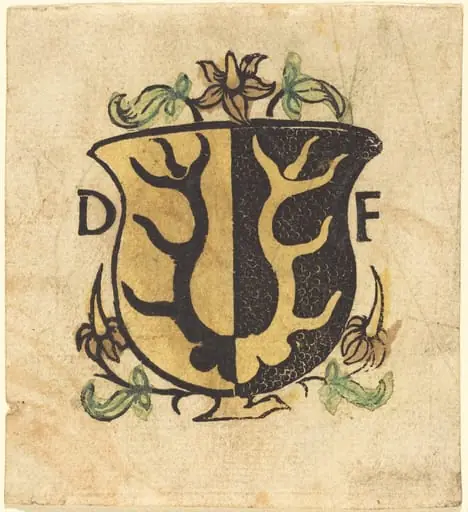 Bookplate of Dominicus Frauenfelder
![Studies for Six Figures (sheet from a model book) [recto], by German 15th Century](https://artifactworldgallery.com/img/german-15th-century--studies-for-six-figures-sheet-from-a-model-book-recto--4837429e0755bc3f-w320.webp) Studies for Six Figures (sheet from a model book) [recto]
Studies for Six Figures (sheet from a model book) [recto]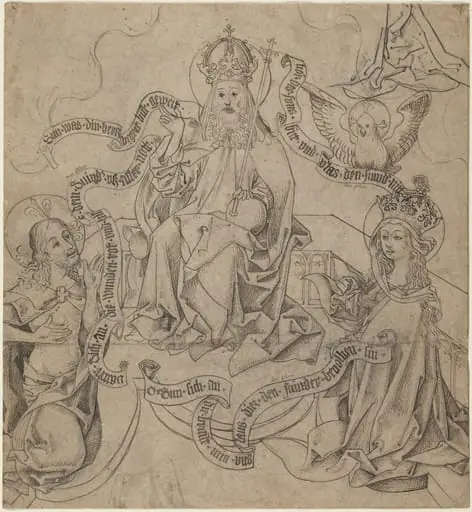 Christ and Mary Interceding with God the Father