Subject
Cross
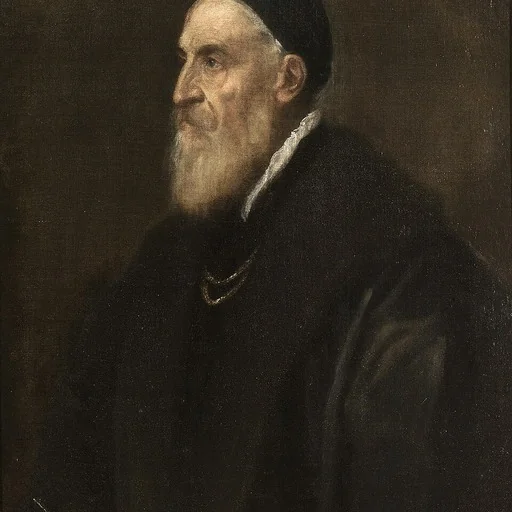
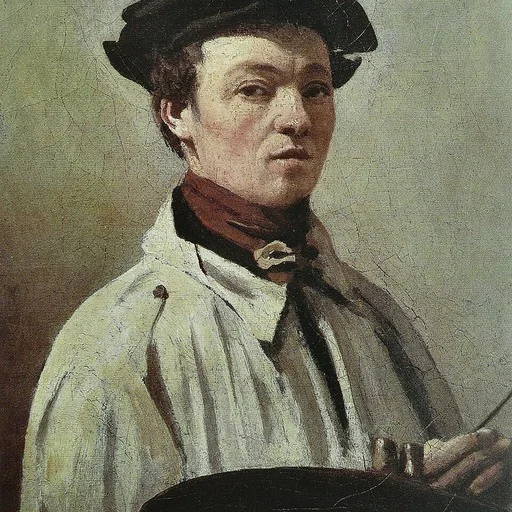
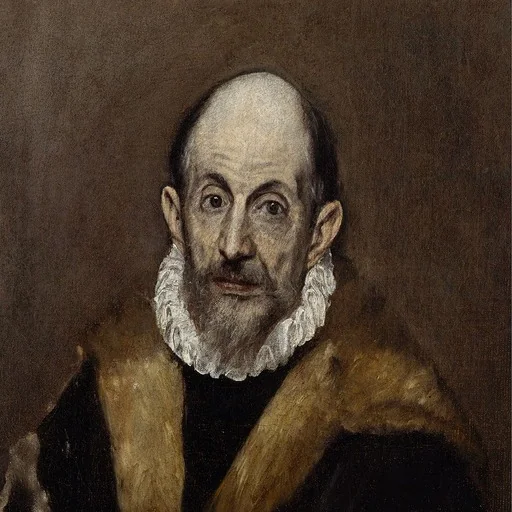
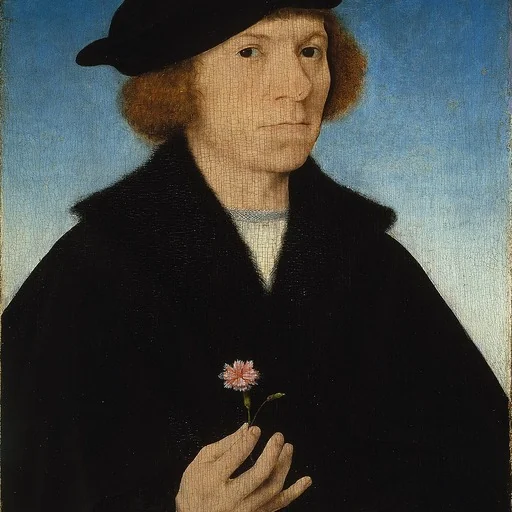
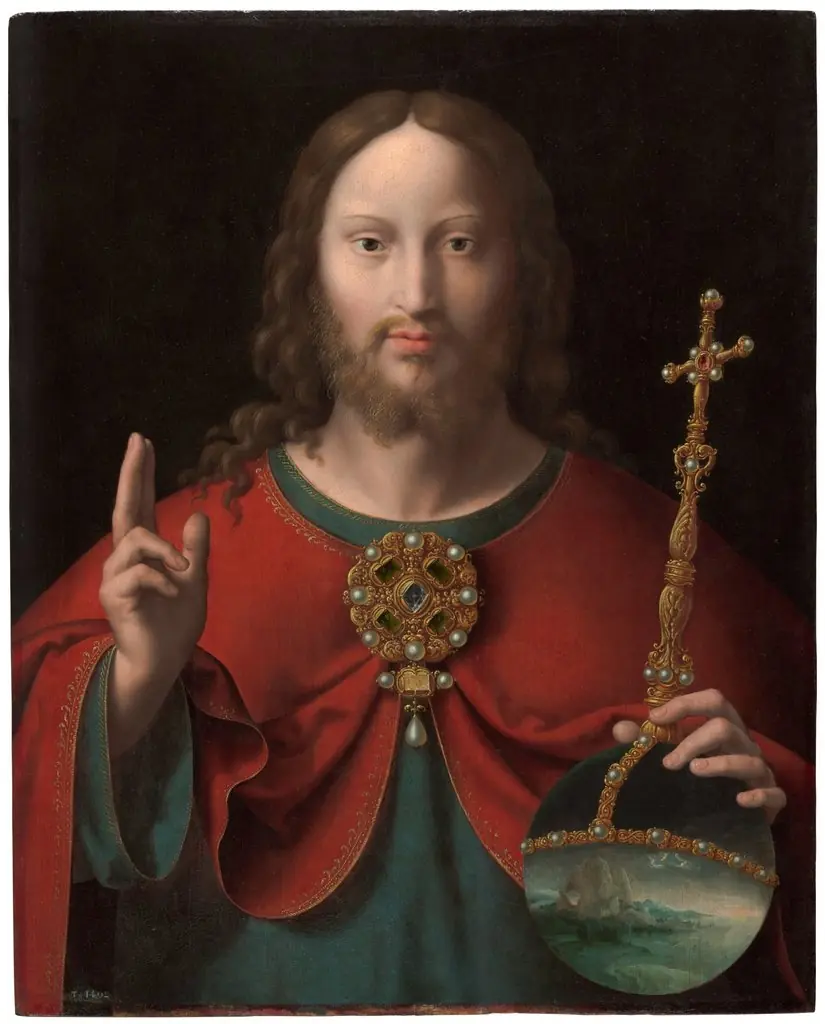
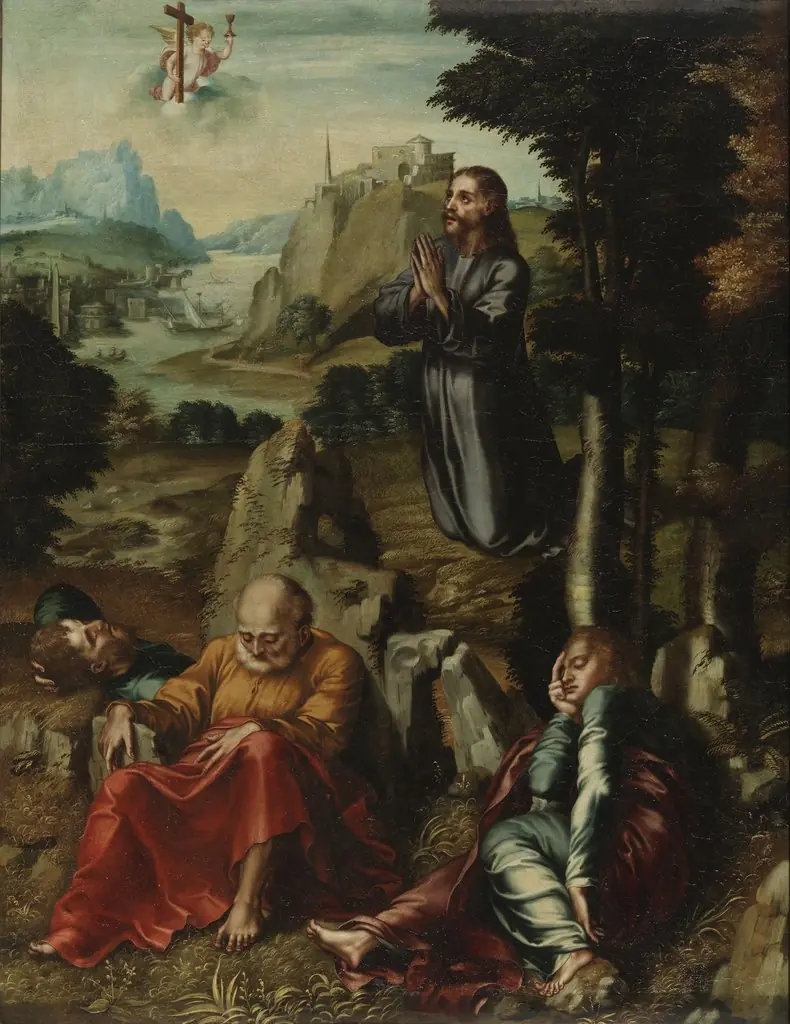
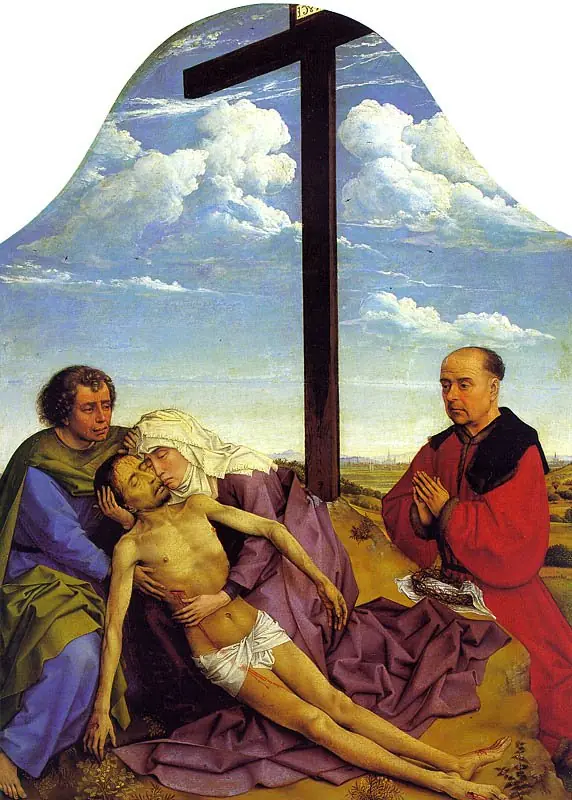
Cross is a subject in art. The gallery holds 158 works in this subject in art, including works by Titian, Jean Baptiste Camille Corot and El Greco.
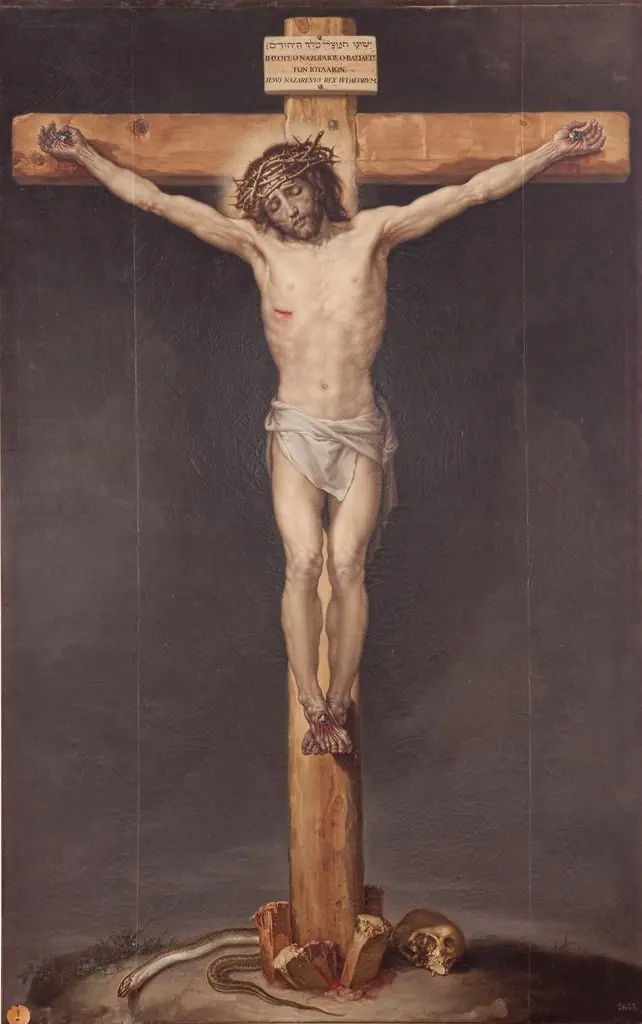
The Cross is the central symbol of Christianity and one of the most enduring subjects in Western art, yet its visual history began with hesitation. During the second and third centuries Christians were reluctant to depict the instrument of Jesus's execution, which Paul had called "a stumbling block to Jews and folly to Gentiles." The earliest sign was the abstract Staurogram—overlapping Greek letters—and explicit crosses only began to appear in the fifth century. The Quinisext Council of Constantinople (692) forbade representing Christ as a lamb and required him "in human form," cementing the figural crucifix that would dominate medieval art.
Two broad iconographic types emerged. The earlier *Christus triumphans* shows a living, open-eyed Christ reigning serenely from the cross, untouched by pain. From the late twelfth century the suffering *Christus patiens* gained ground, and by the mid-thirteenth century—epitomised by Cimabue's contorted, head-bowed *Crocifisso*—the dead, agonised Christ had largely replaced the triumphant one. Alongside the Crucifixion proper, artists developed the Legend of the True Cross, drawn from Jacobus de Voragine's *Golden Legend*; Piero della Francesca's fresco cycle at San Francesco in Arezzo (1452–1466) remains its supreme statement.
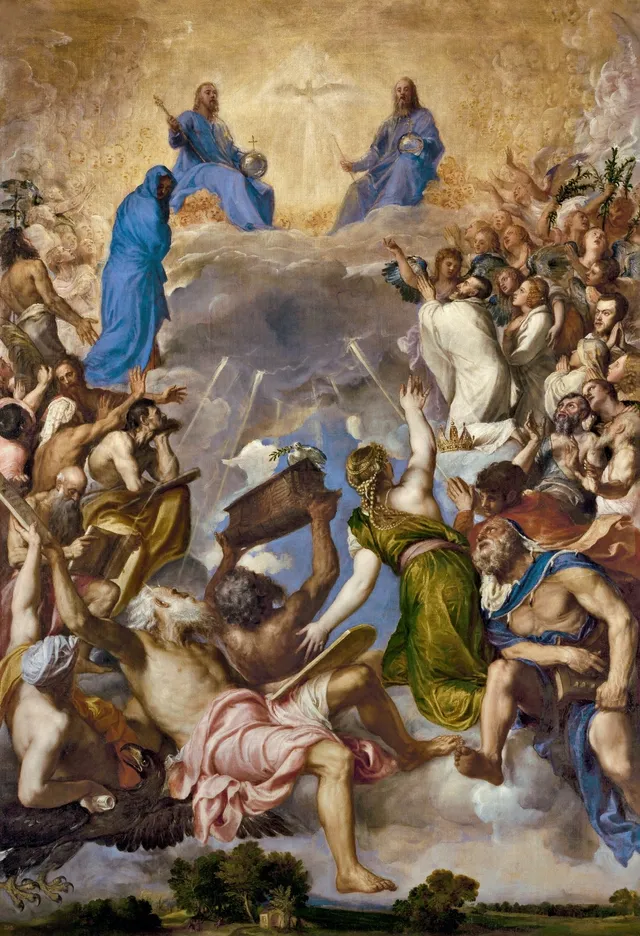
The theme's range is visible across our holdings. The *Pérussis Altarpiece* (1480), by the circle of Nicolas Froment, presents the unusual subject of the empty cross adored on Golgotha, set against a topographical view of Avignon. Titian's *La Gloria* (1551–1554), painted for Emperor Charles V and now in the Prado, places the redeeming Trinity at the summit of a celestial vision. Bartolomé Esteban Murillo, who painted Christ on the Cross several times in late-seventeenth-century Seville, charges the subject with smoky atmosphere and Van Dyck–derived pathos in *The Crucifixion*.
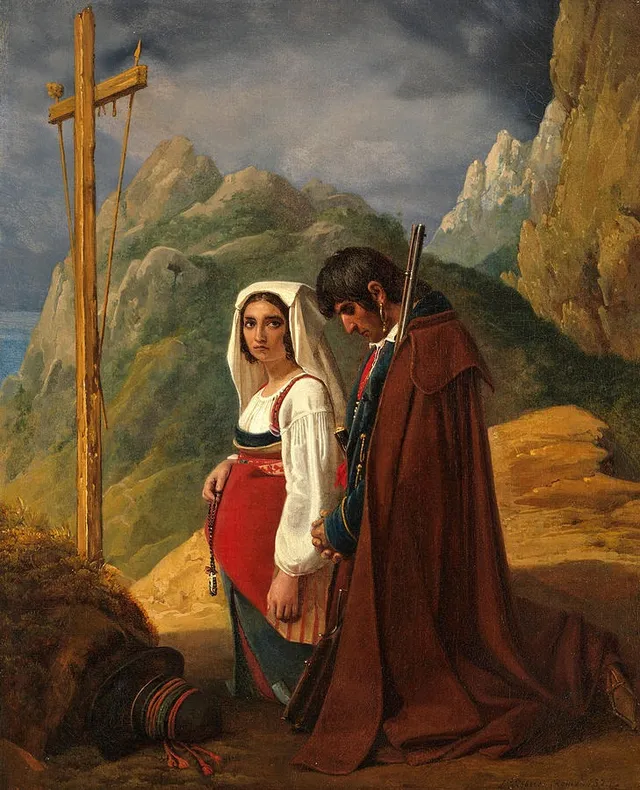
From Guercino's Baroque devotion in *The Vocation of Saint Aloysius Gonzaga* to Pietro di Francesco degli Orioli's *Processional Crucifix* and the humble piety of Léopold Robert's *Brigand and his wife in prayer*, the cross spans liturgical object, narrative cycle, and intimate emblem. Its iconography shaped Byzantine, Romanesque, Gothic, Renaissance, and Baroque art alike, and it remains the most reproduced motif in the Western tradition.
Key artists
Works
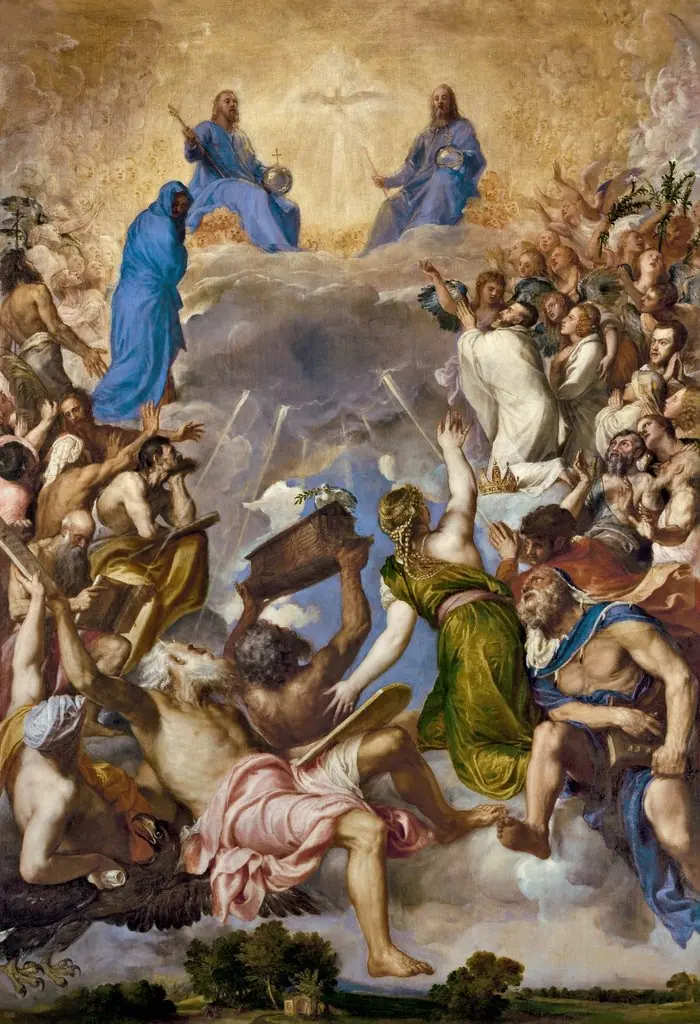 La Gloria
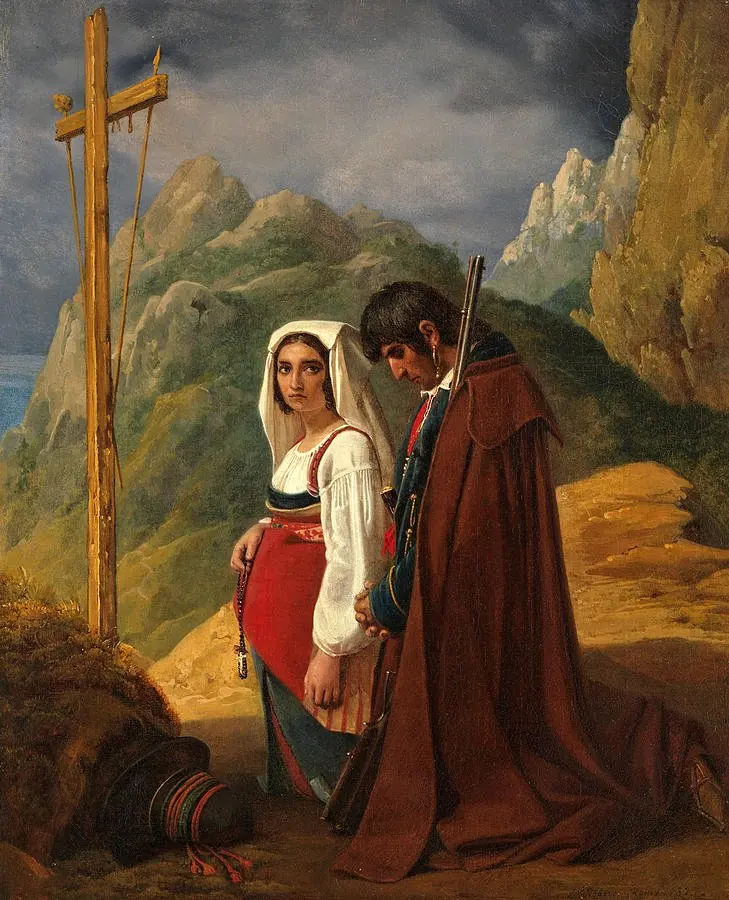 Brigand and his wife in prayer
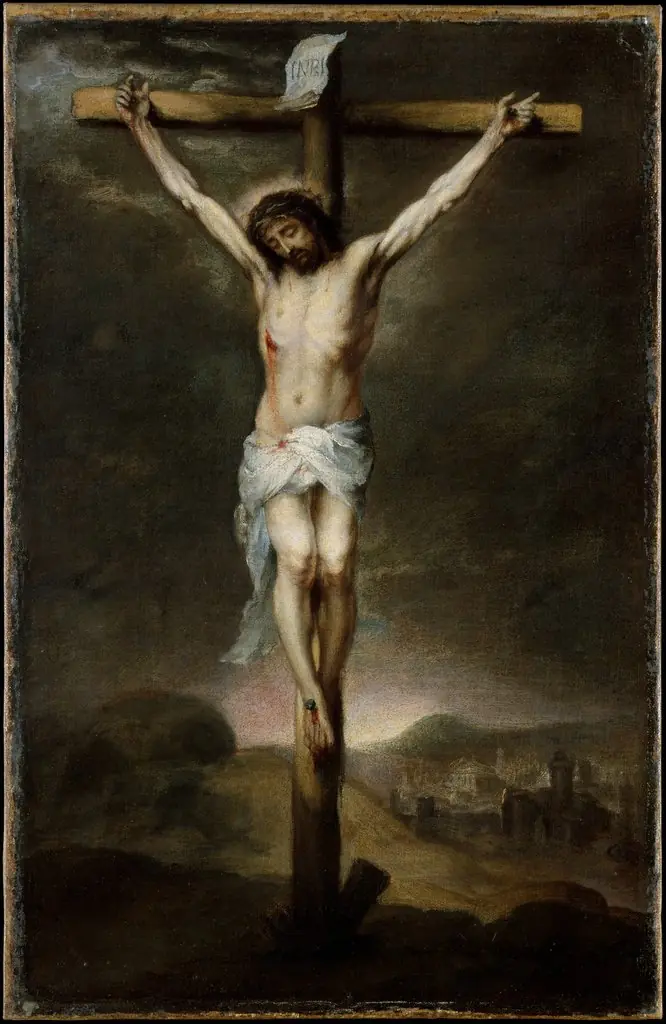 The Crucifixion
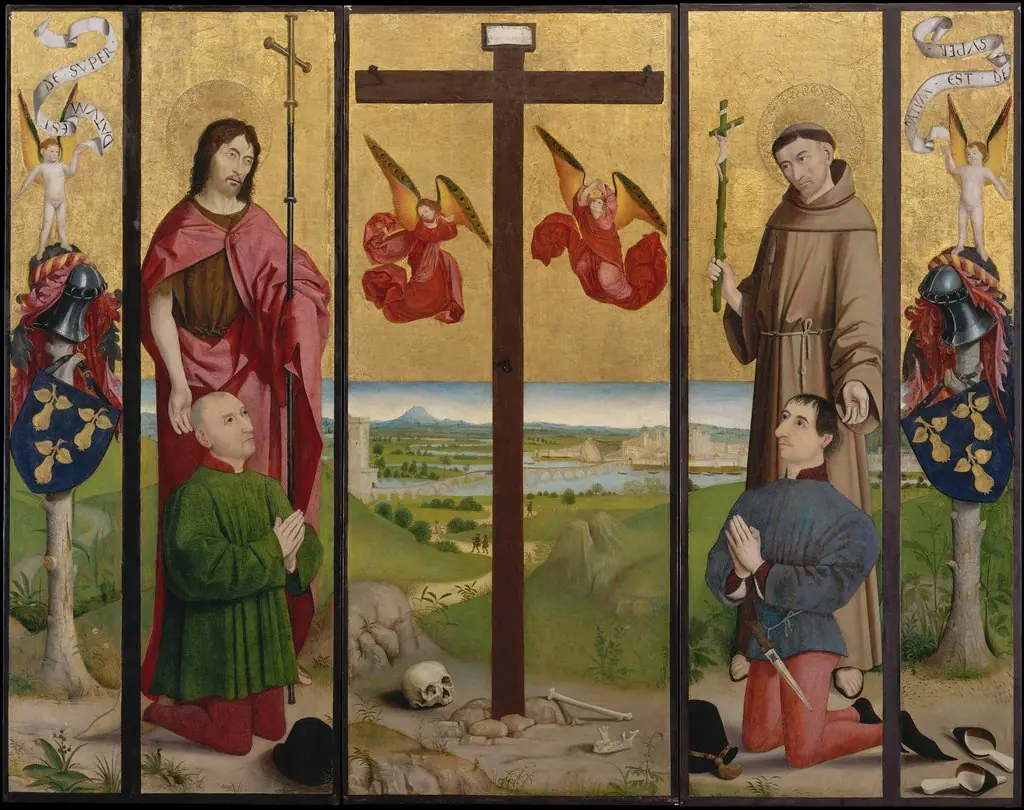 The Pérussis Altarpiece
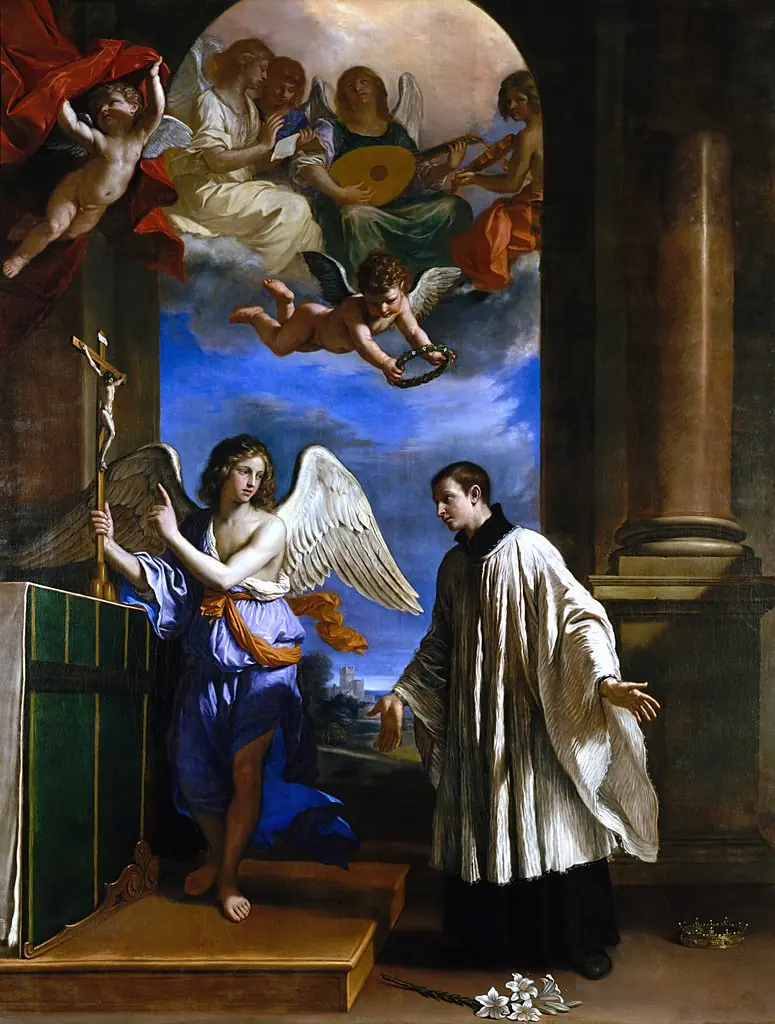 The Vocation of Saint Aloysius (Luigi) Gonzaga
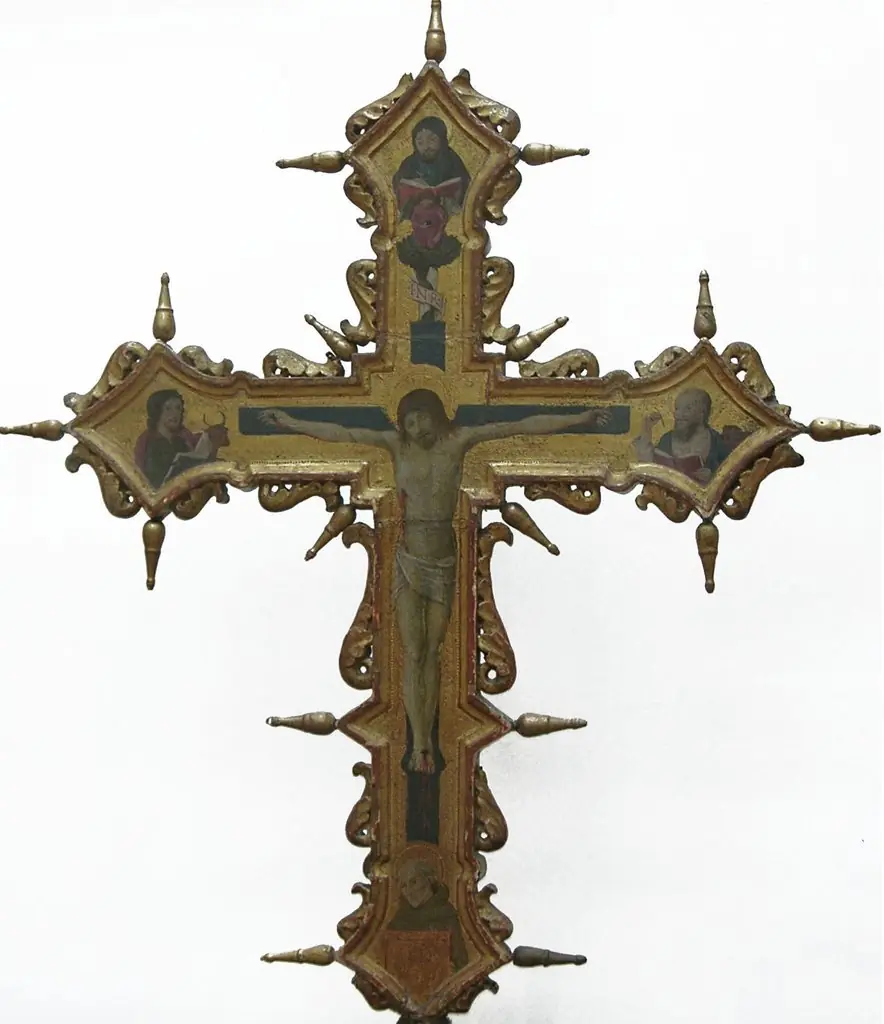 Processional Crucifix
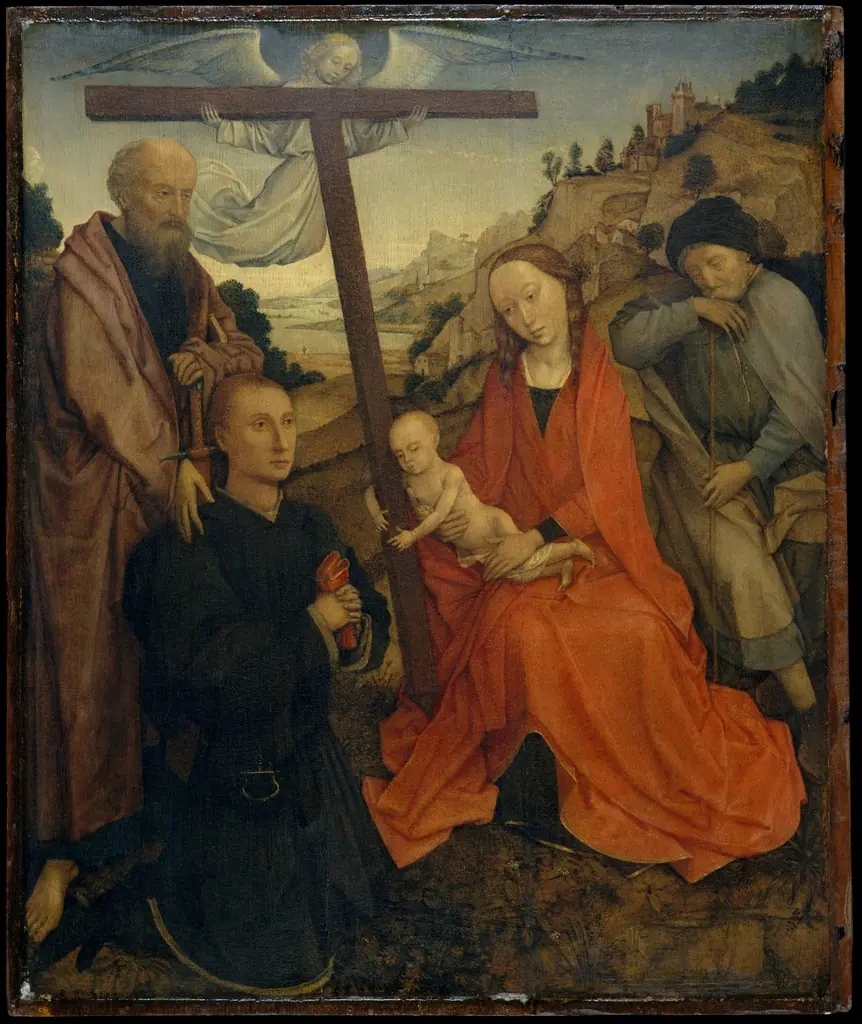 The Holy Family with Saint Paul and a Donor
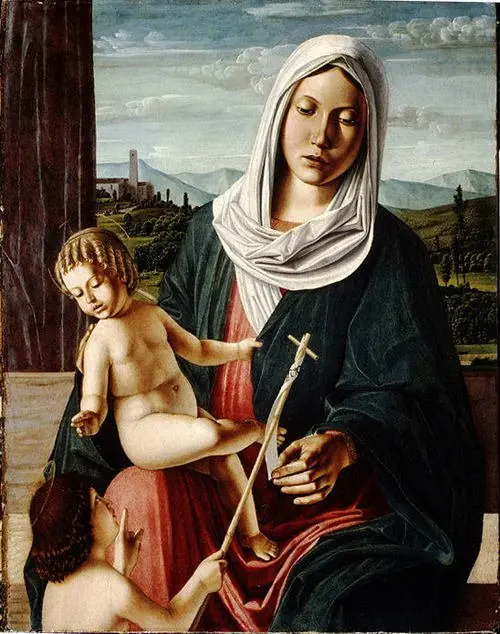 Madonna and Child with the Infant Saint John the Baptist
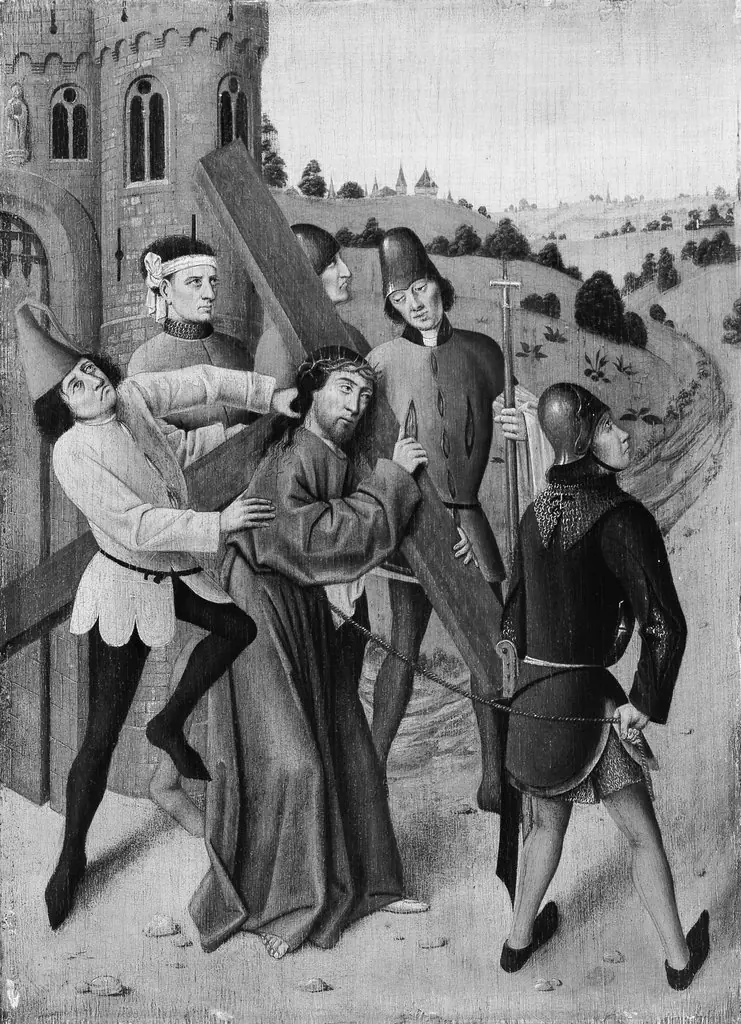 Christ Bearing the Cross
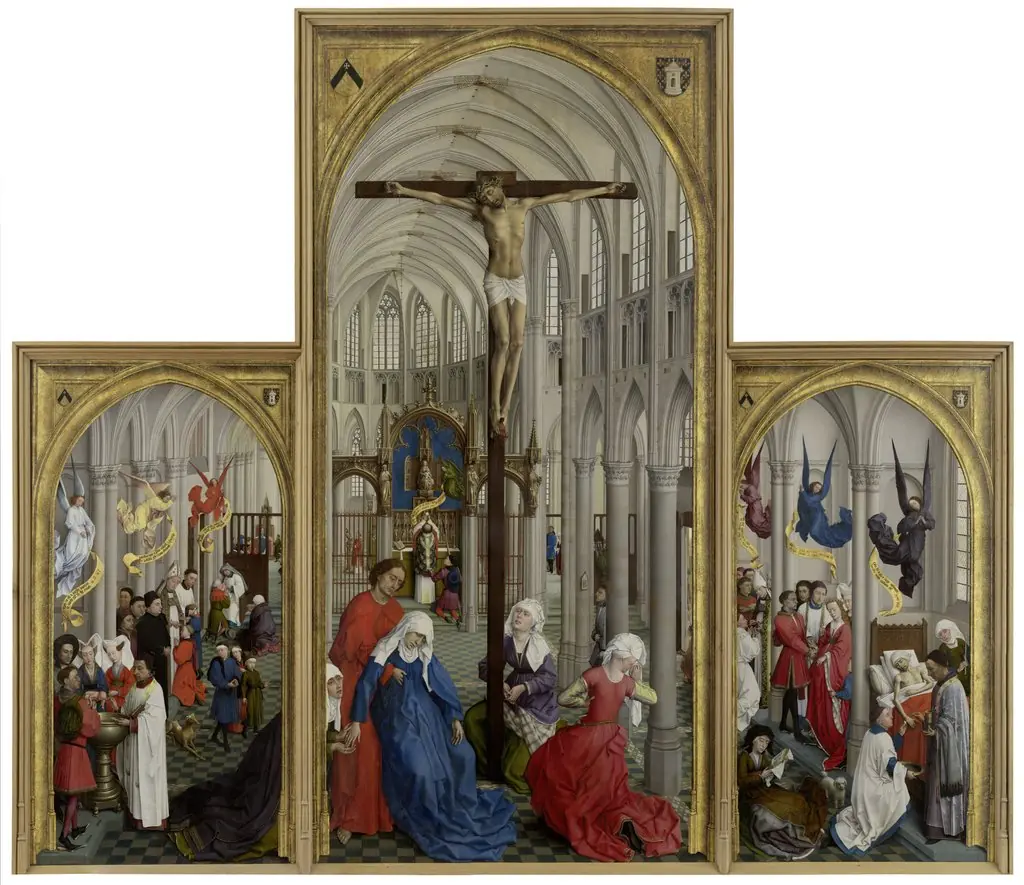 The Seven Sacraments
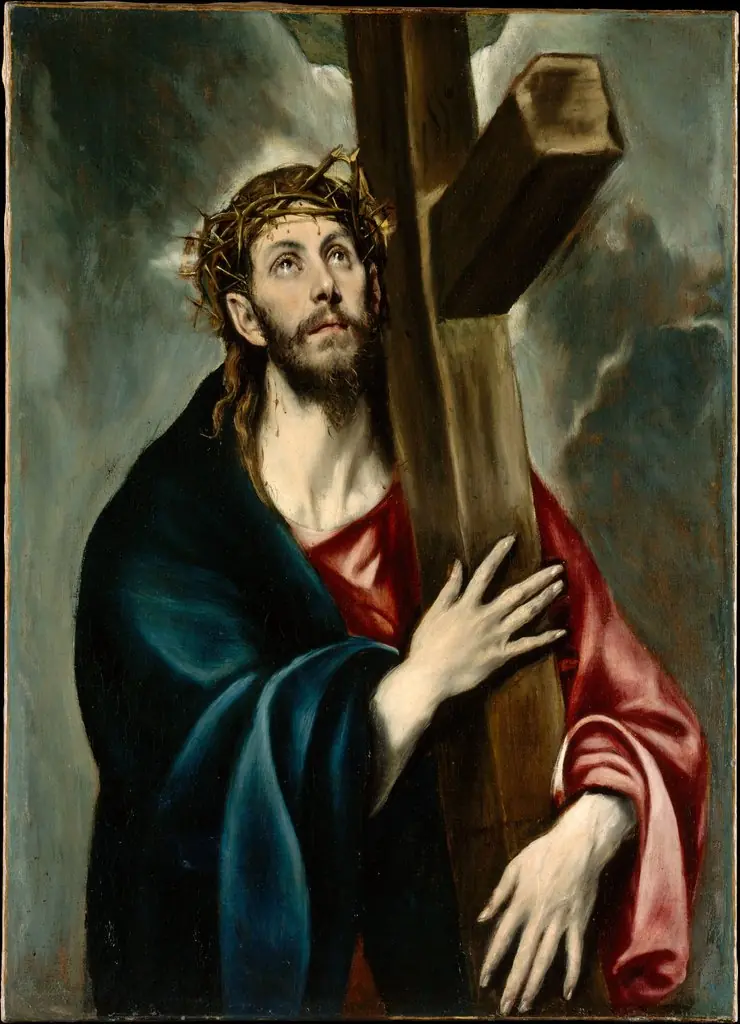 Christ Carrying the Cross
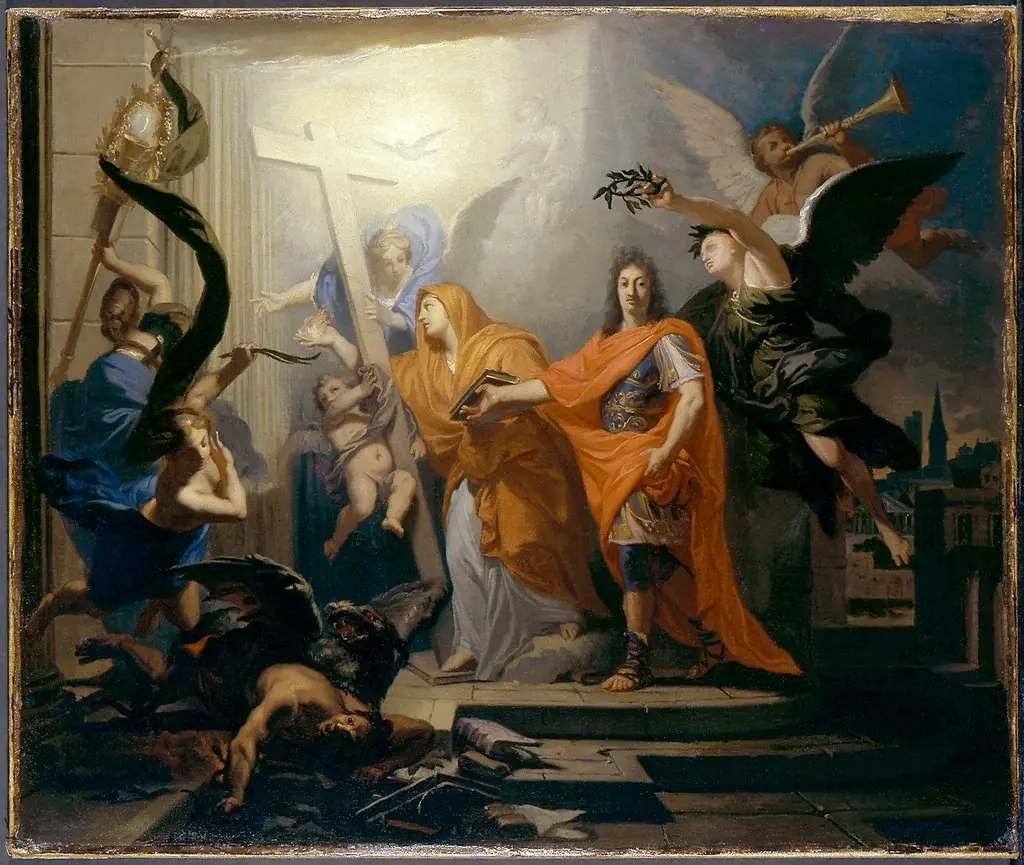 An Allegory, Probably of the Peace of Utrecht of 1713
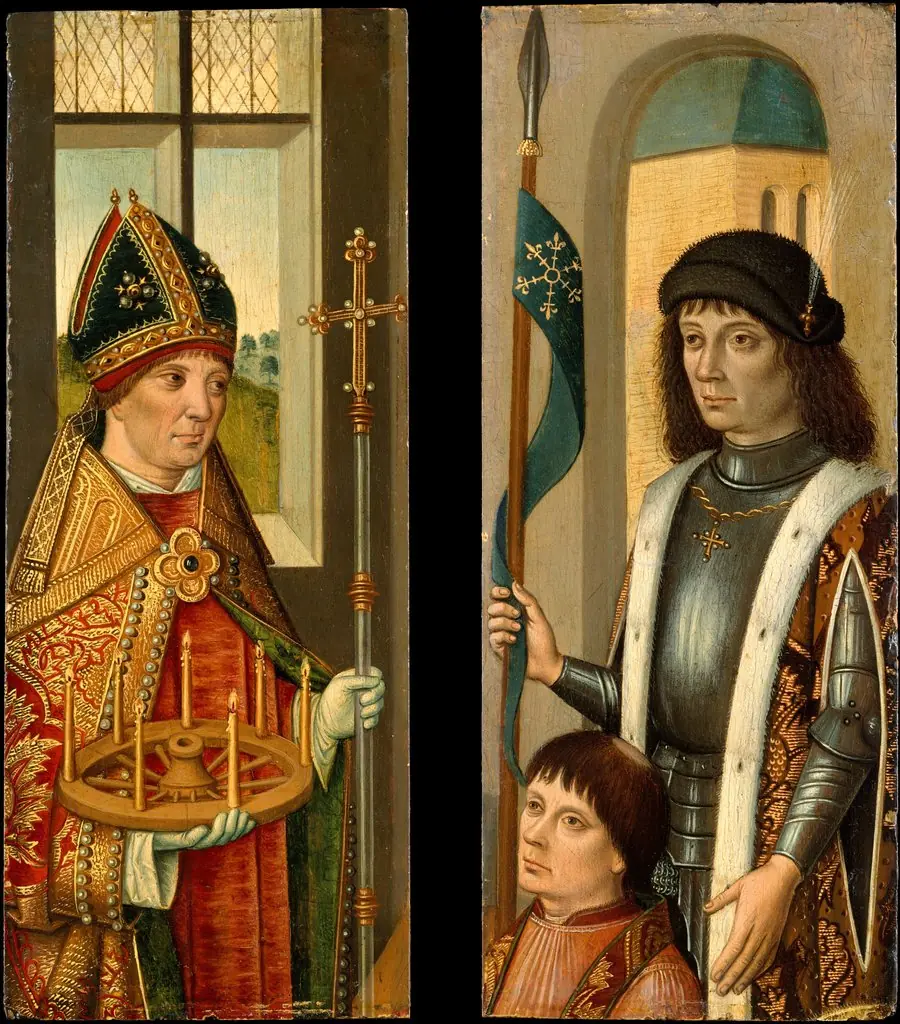 Saint Donatian; Saint Victor Presenting a Donor
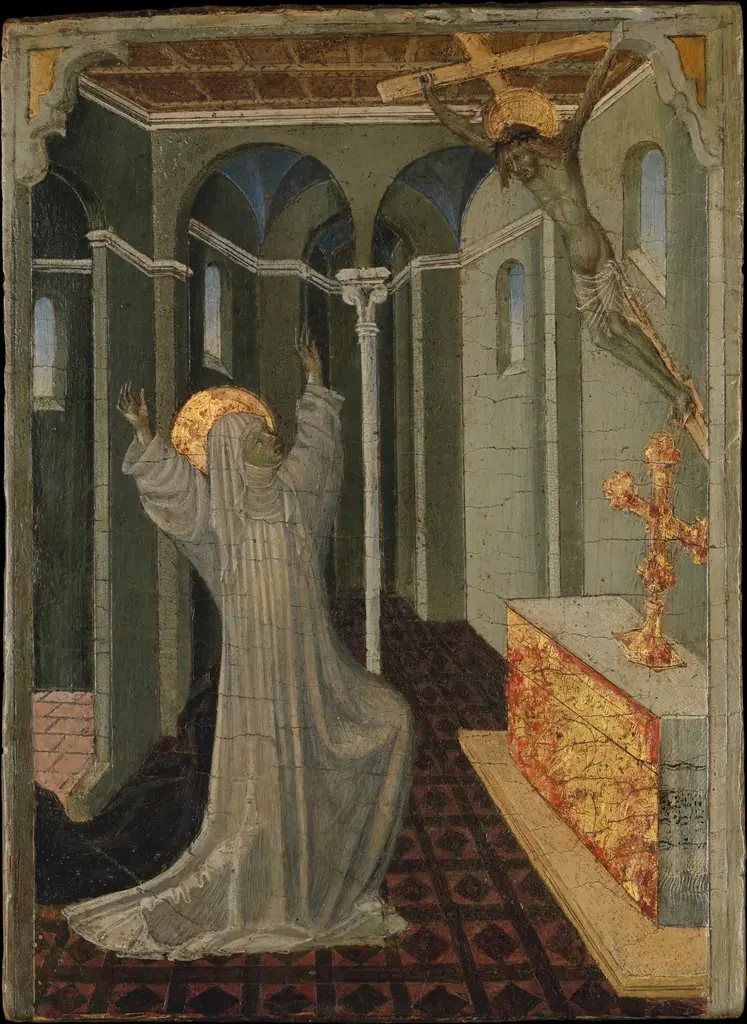 Saint Catherine of Siena Receiving the Stigmata
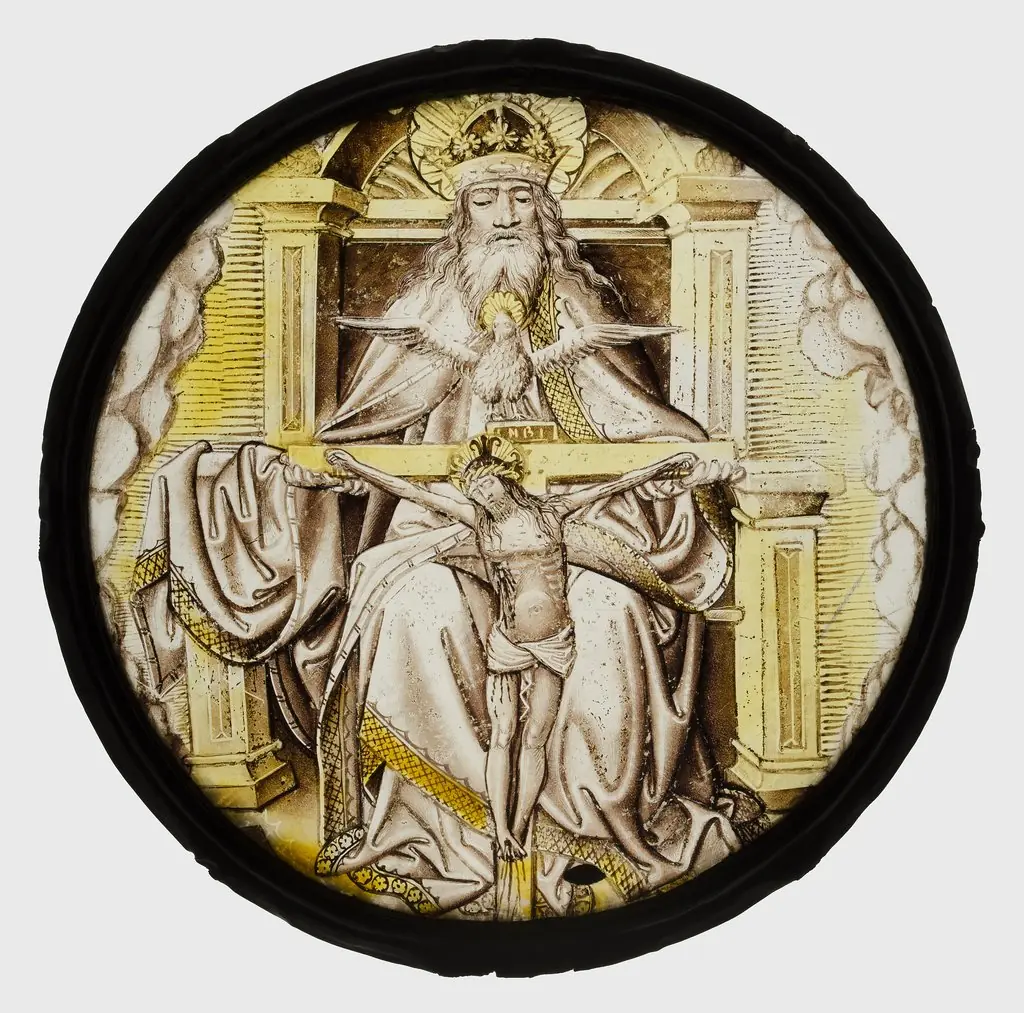 Roundel with the Holy Trinity
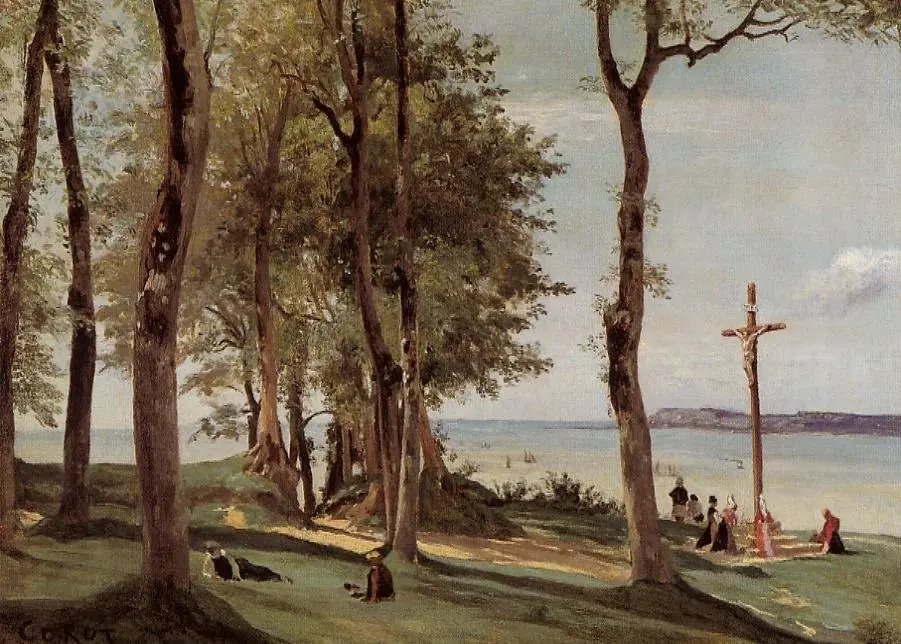 Honfleur: Calvary
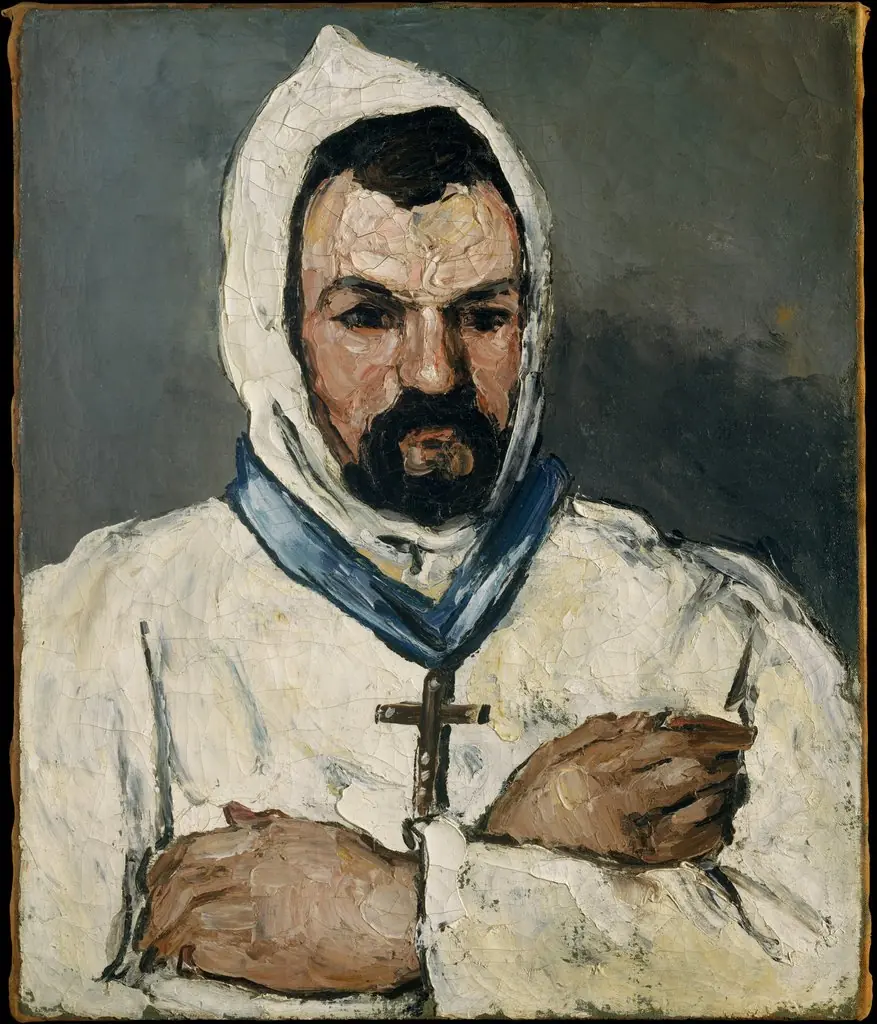 Portrait d'un moine (Monk's Portrait)
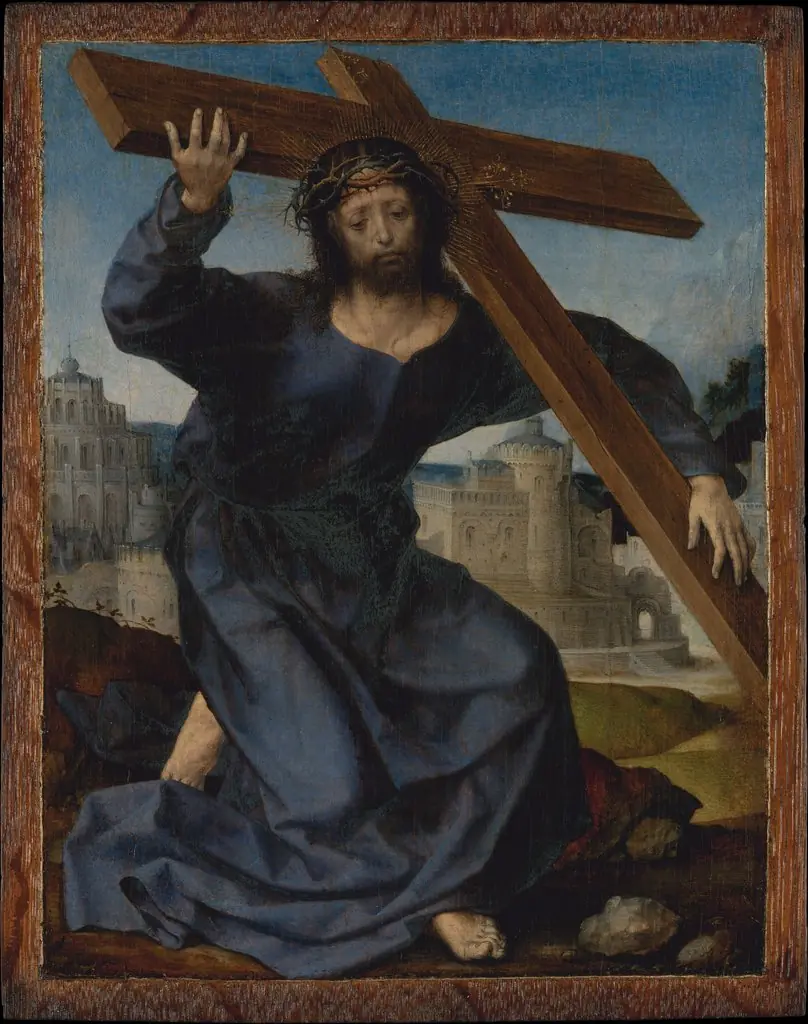 Christ Carrying the Cross
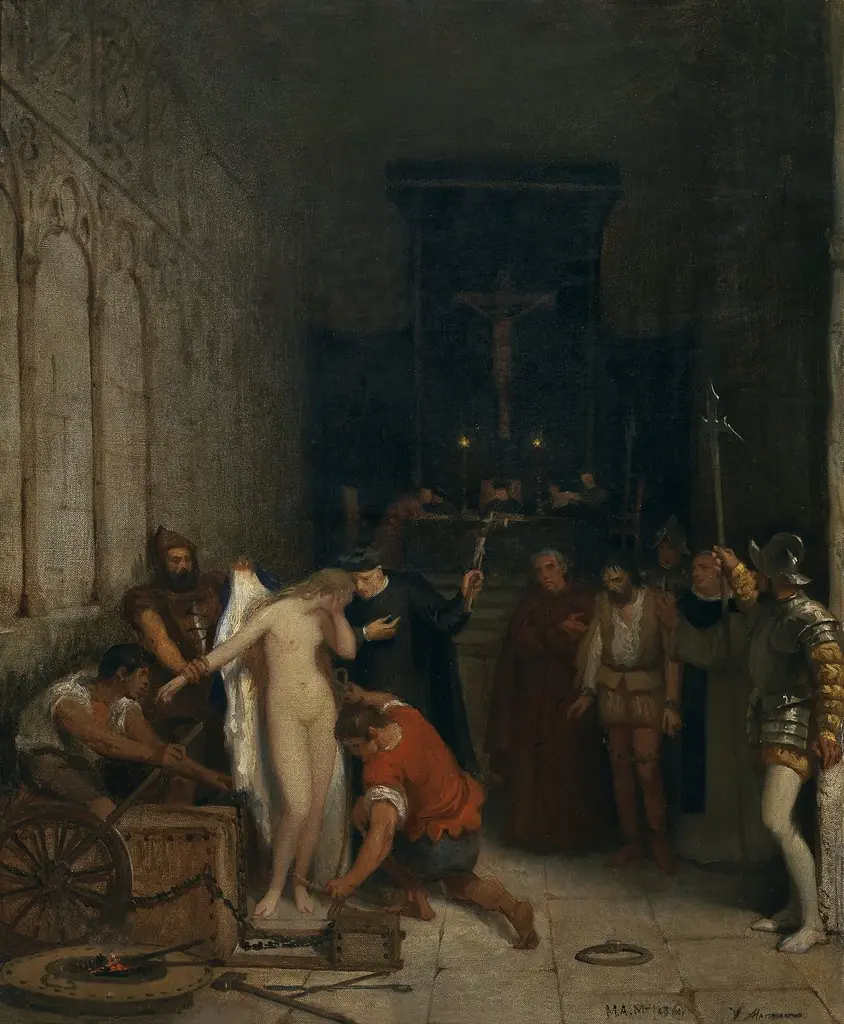 Una escena de la Inquisición
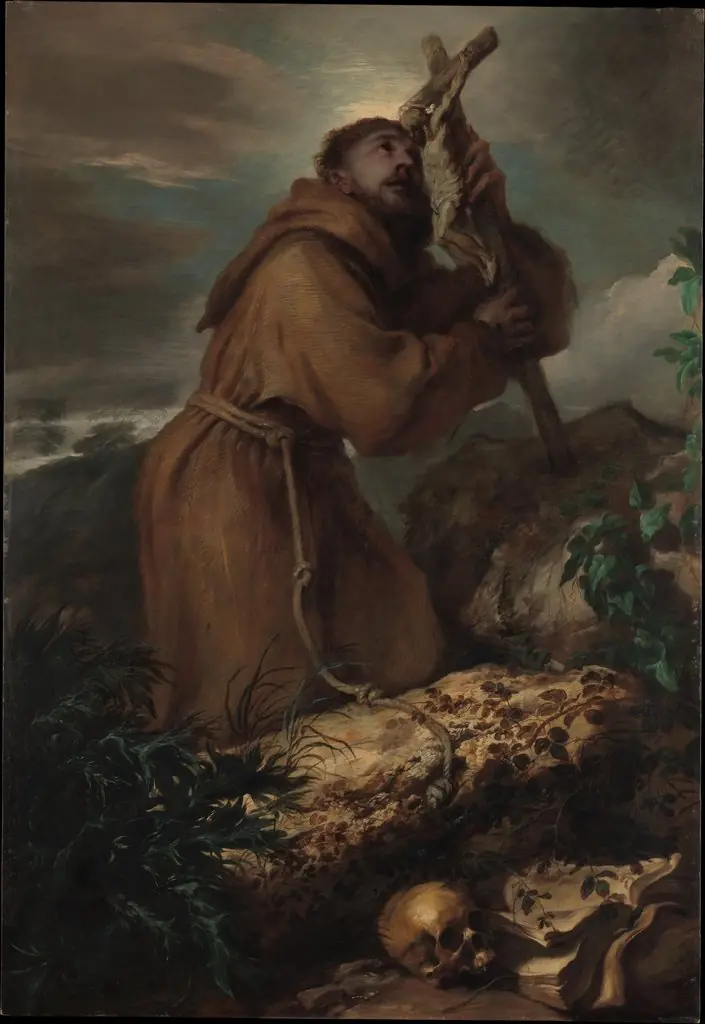 Saint Francis in Ecstasy
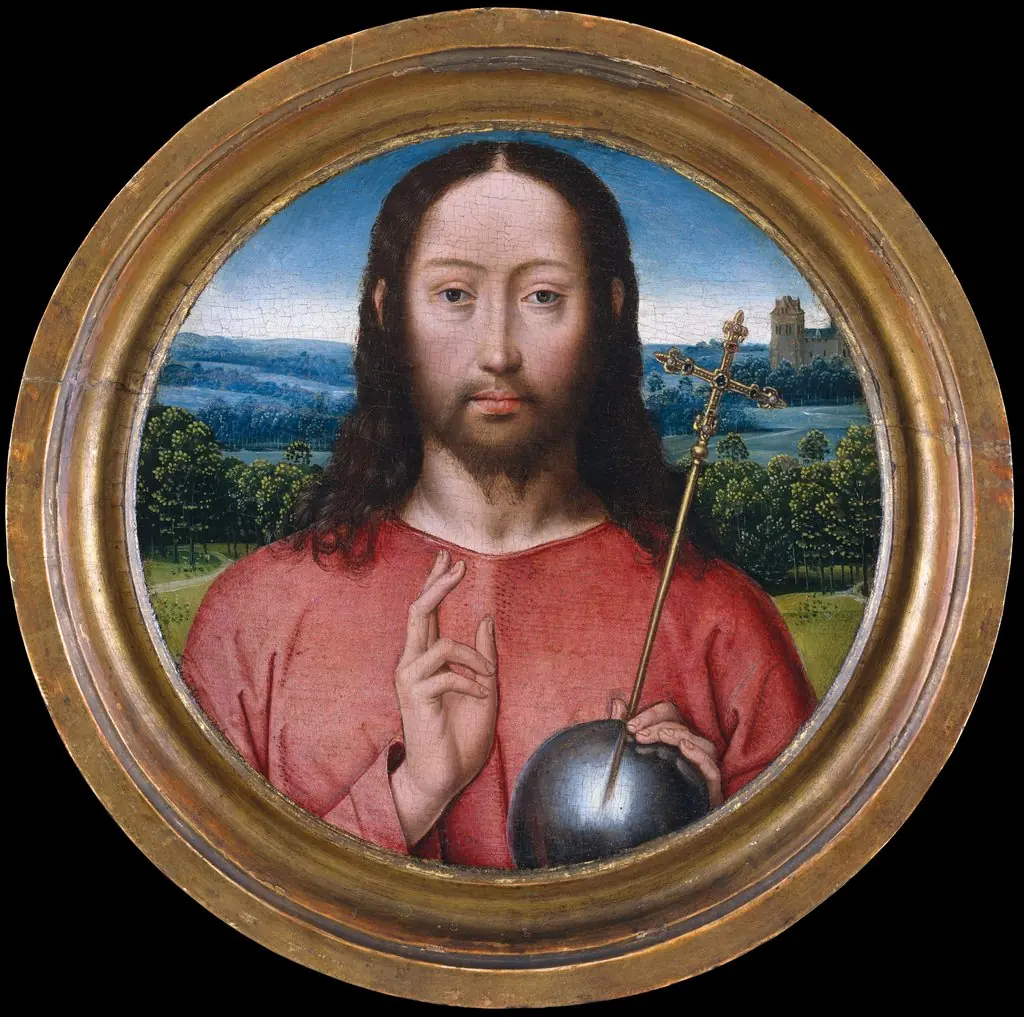 Salvator Mundi
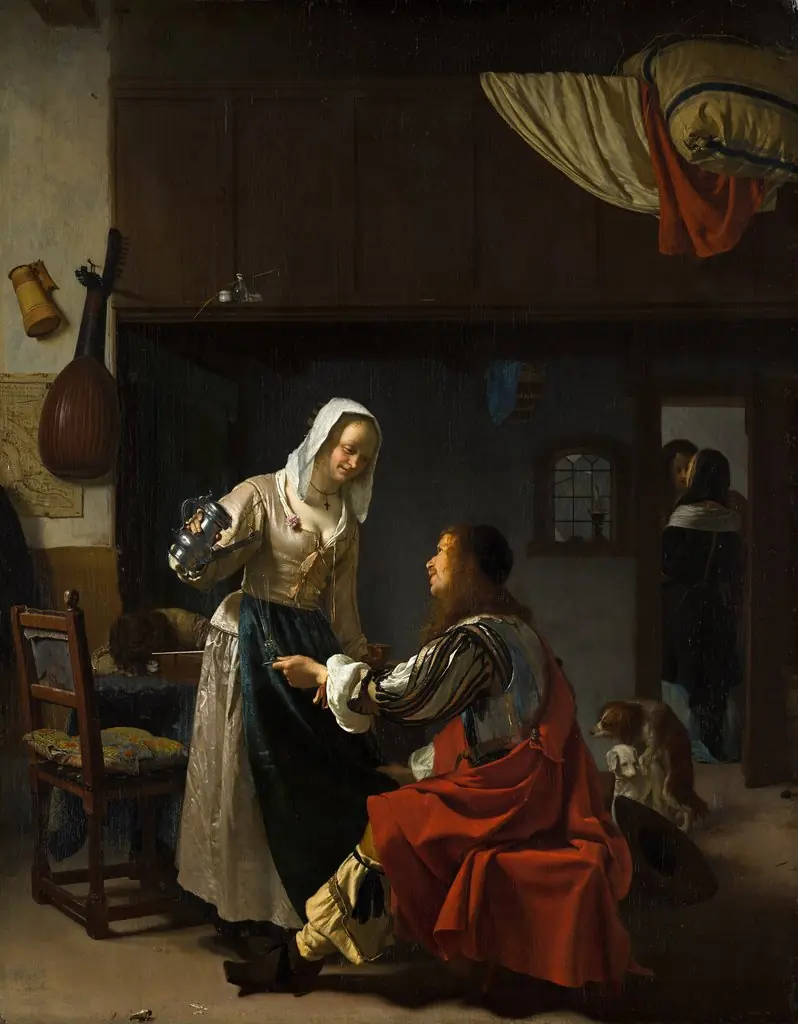 Brothel Scene
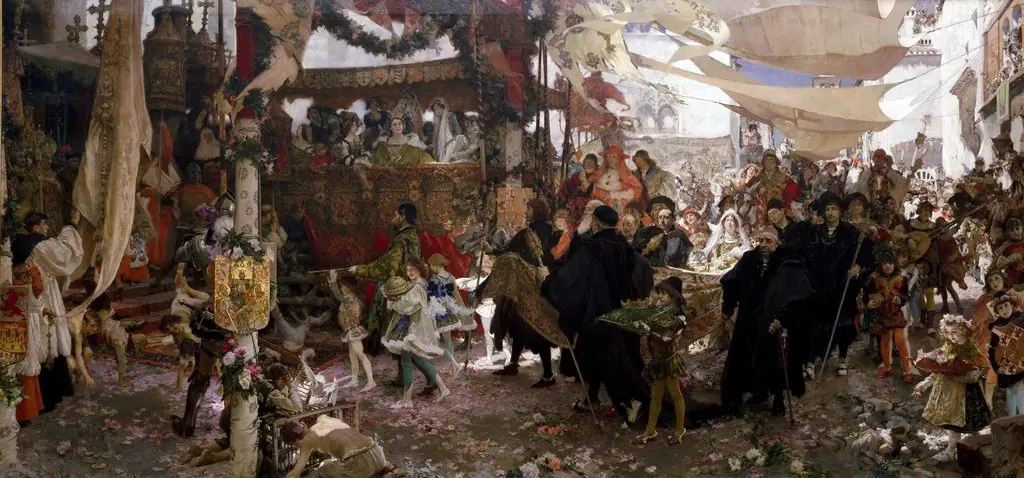 The Baptismal procession of Prince Juan, son of the Catholic Kings, through the streets of Seville
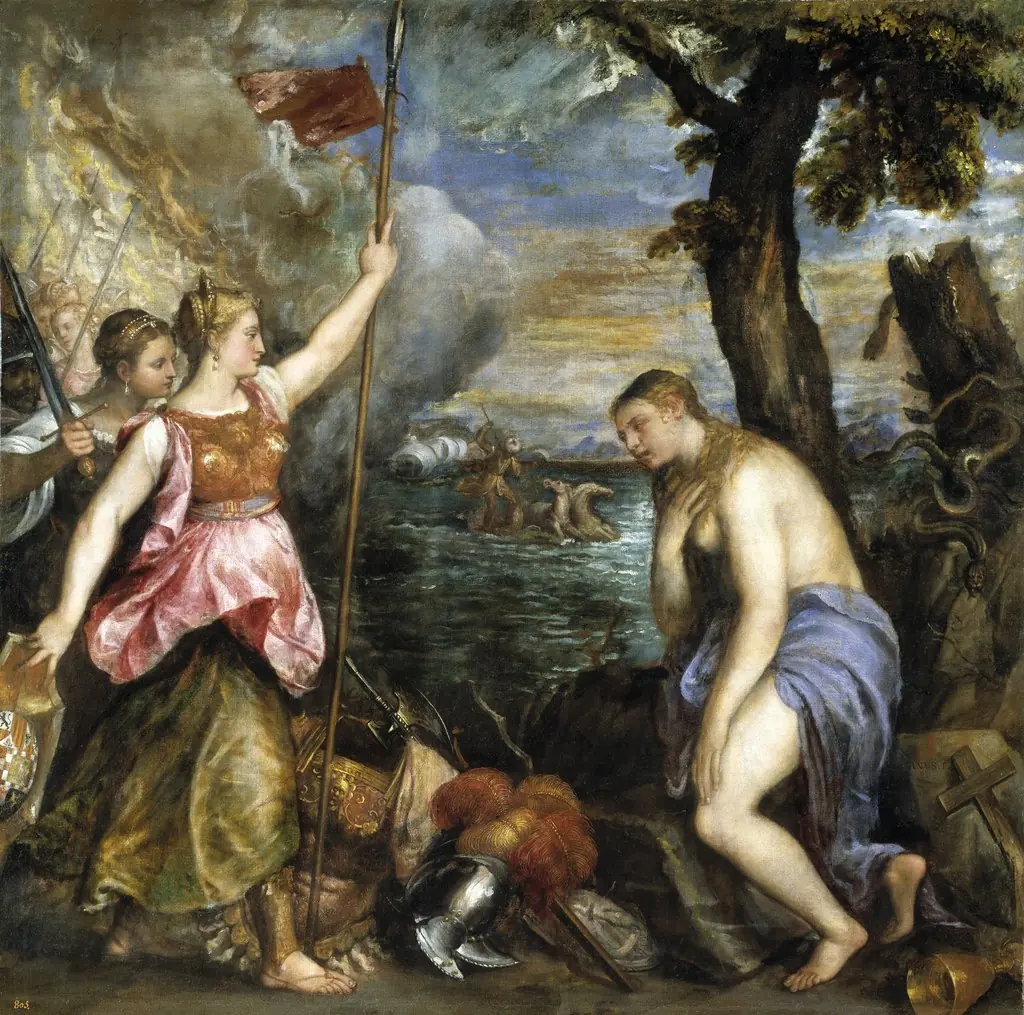 Religion saved by Spain
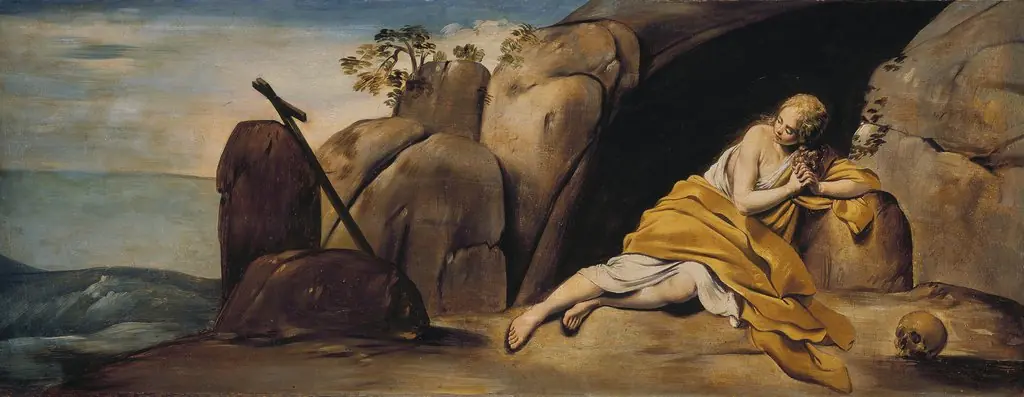 Magdalena penitente en la gruta de Sainte-Baume
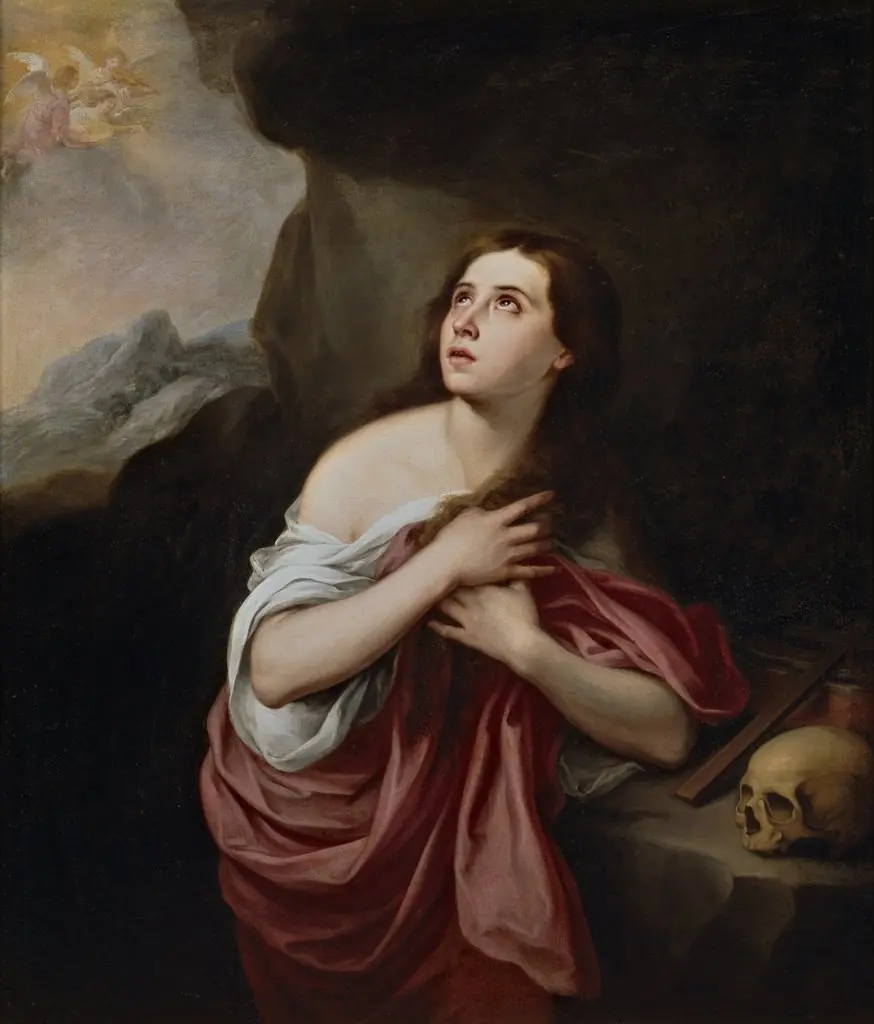 Penitent Magdalen
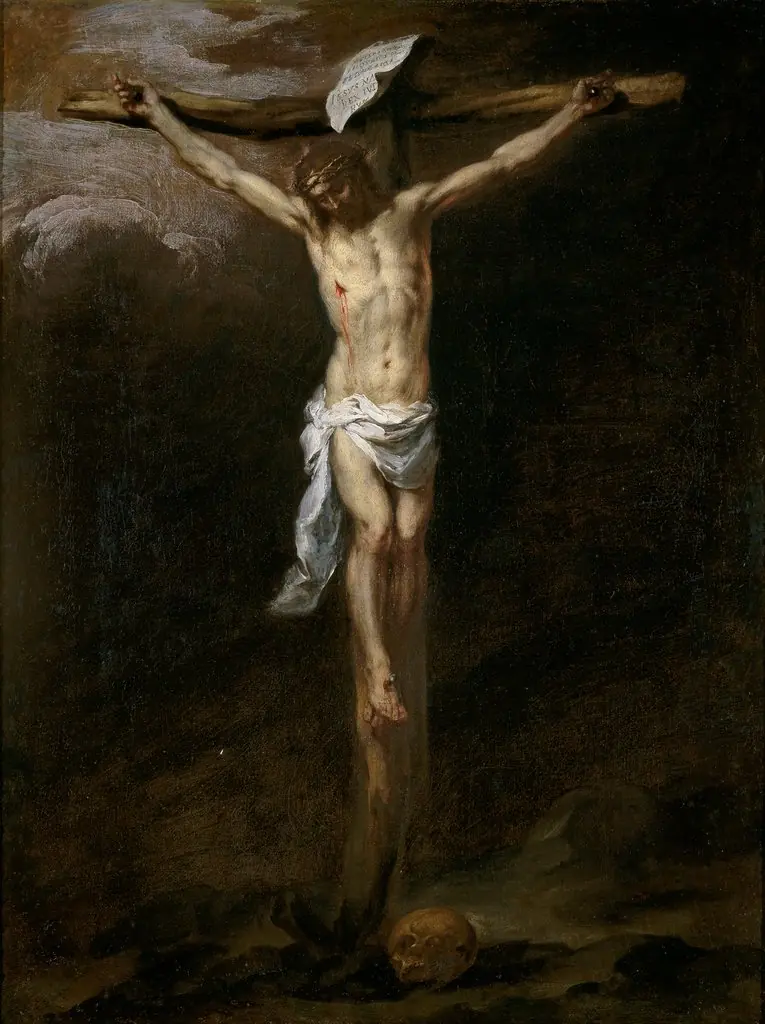 Christ crucified
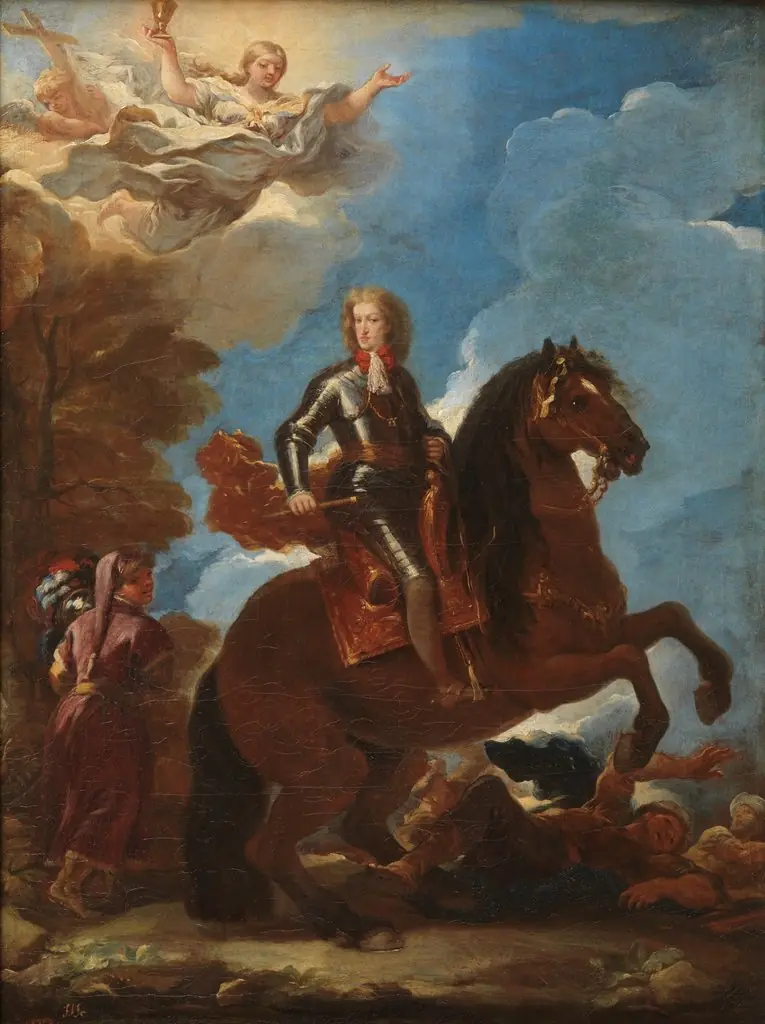 Charles II, King of Spain, on Horseback
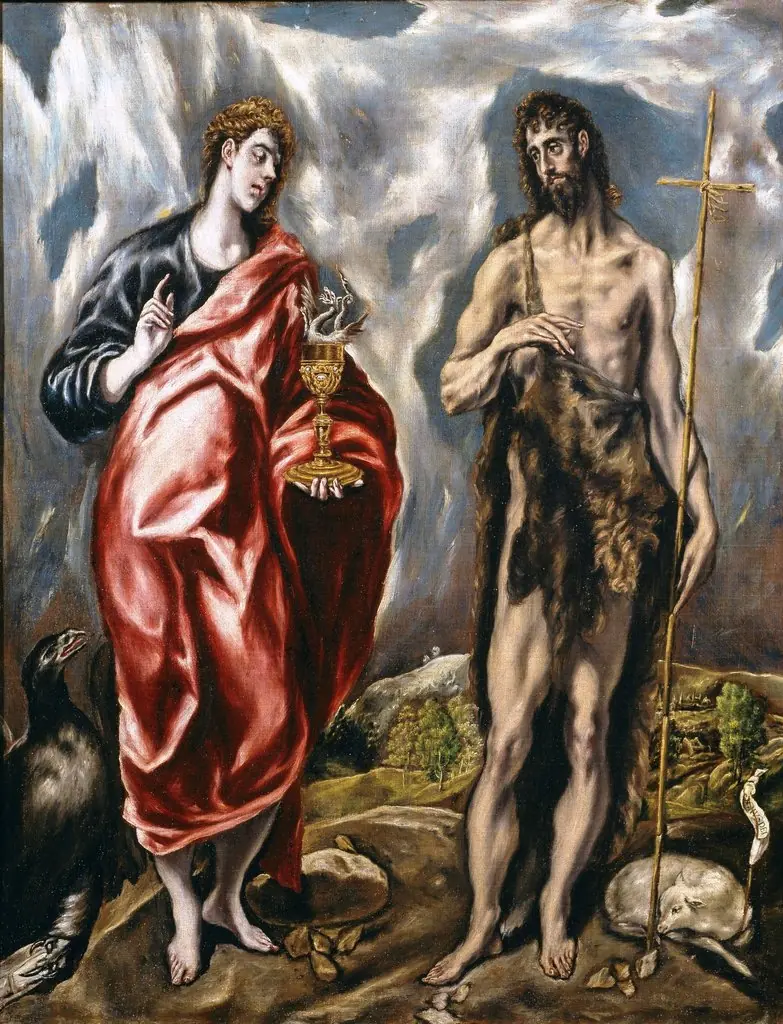 Saint John the Baptist and Saint John the Evangelist
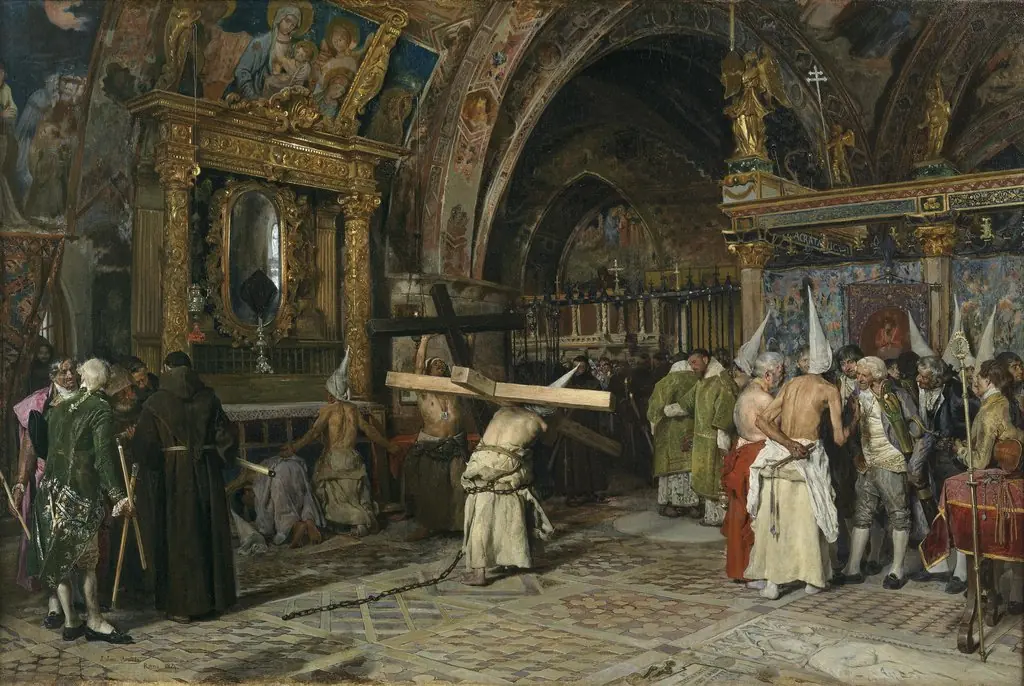 Penitents in the Lower Basilica of Assisi
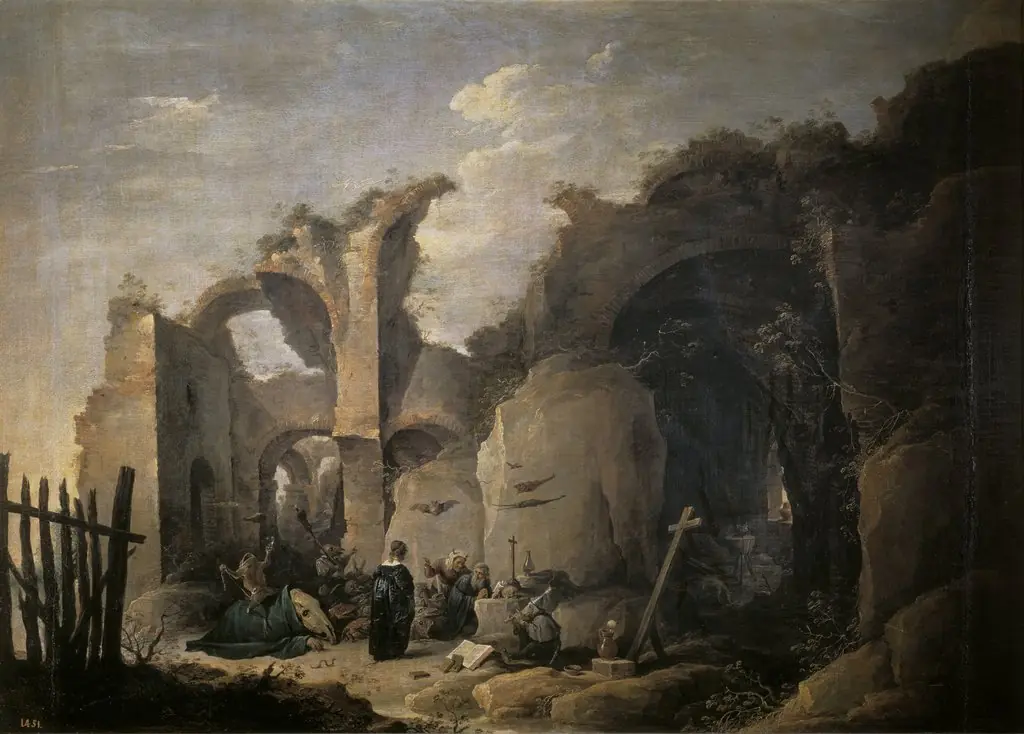 The Temptations of Saint Anthony the Abbot
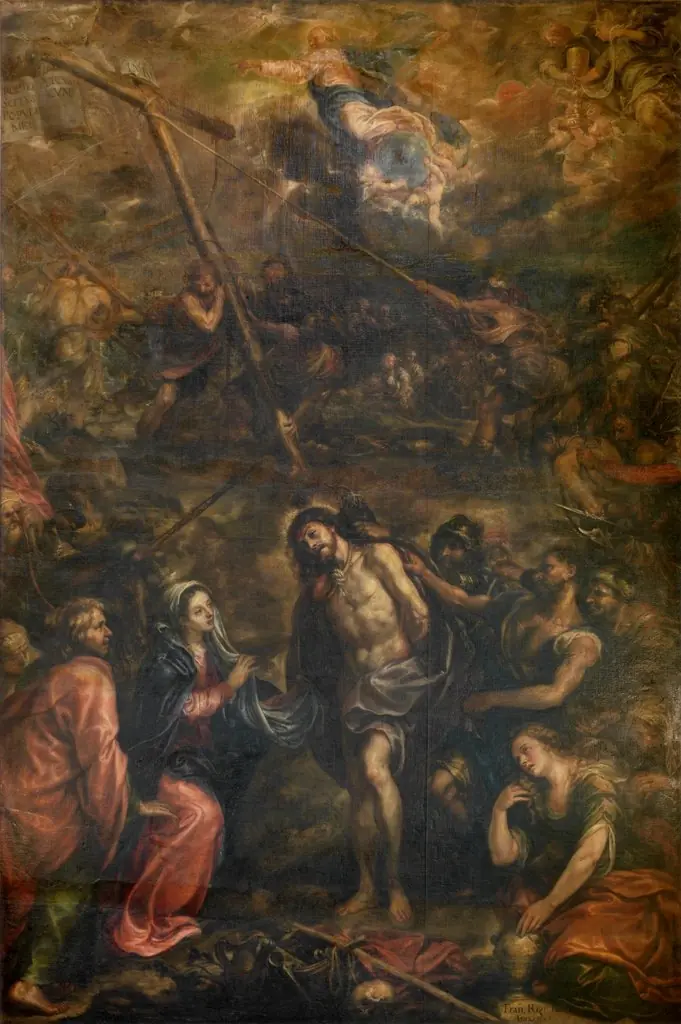 El expolio de Cristo
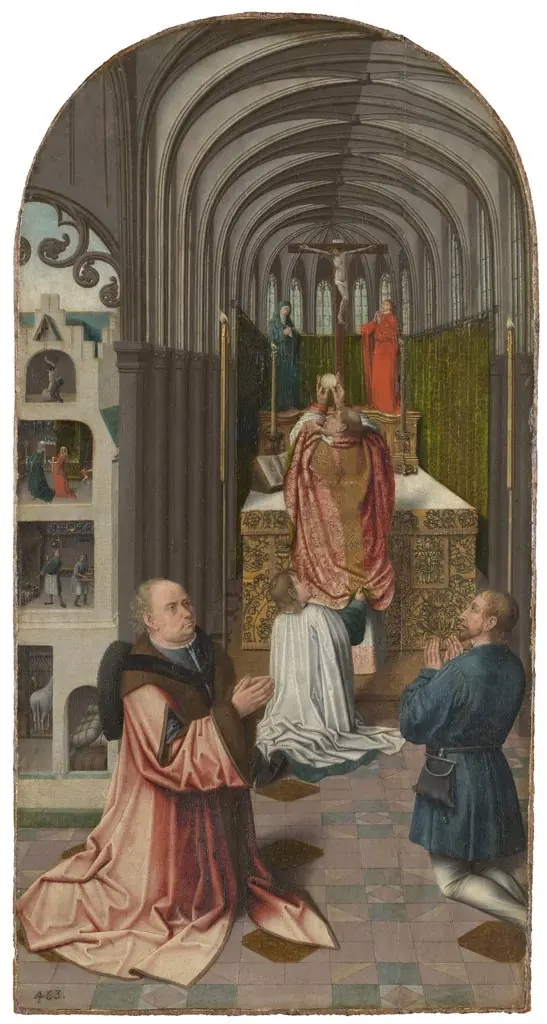 Celebration of a Mass
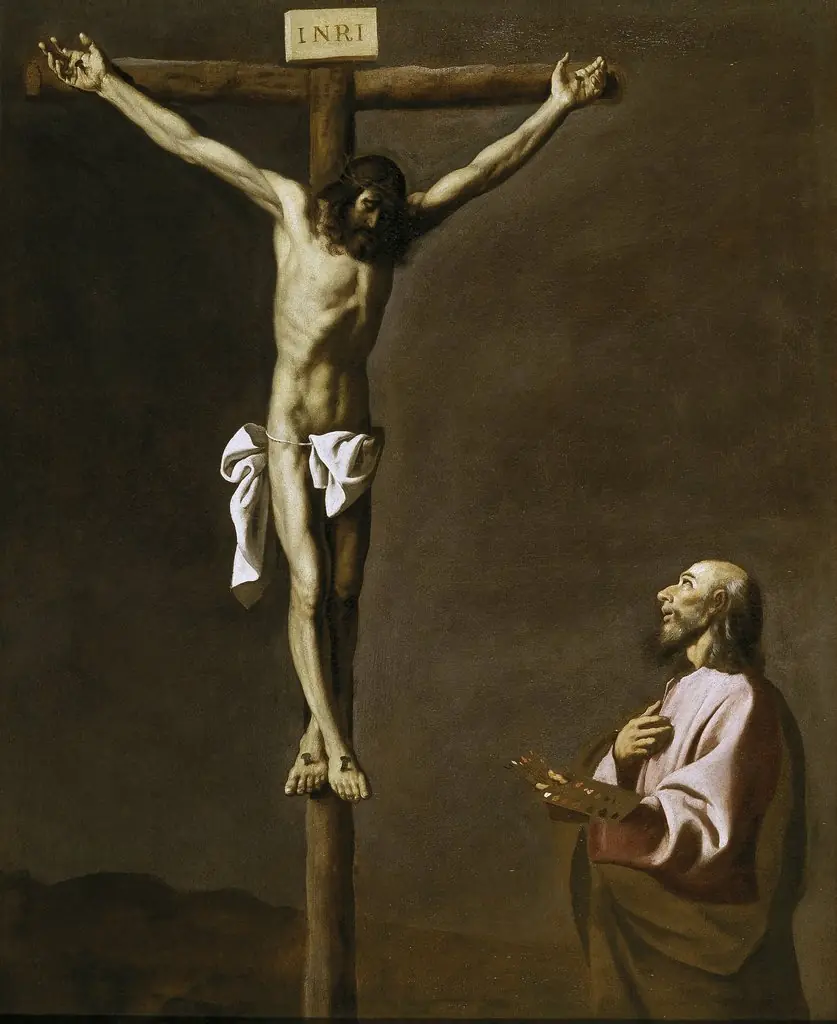 Saint Luke as a painter, before Christ on the Cross
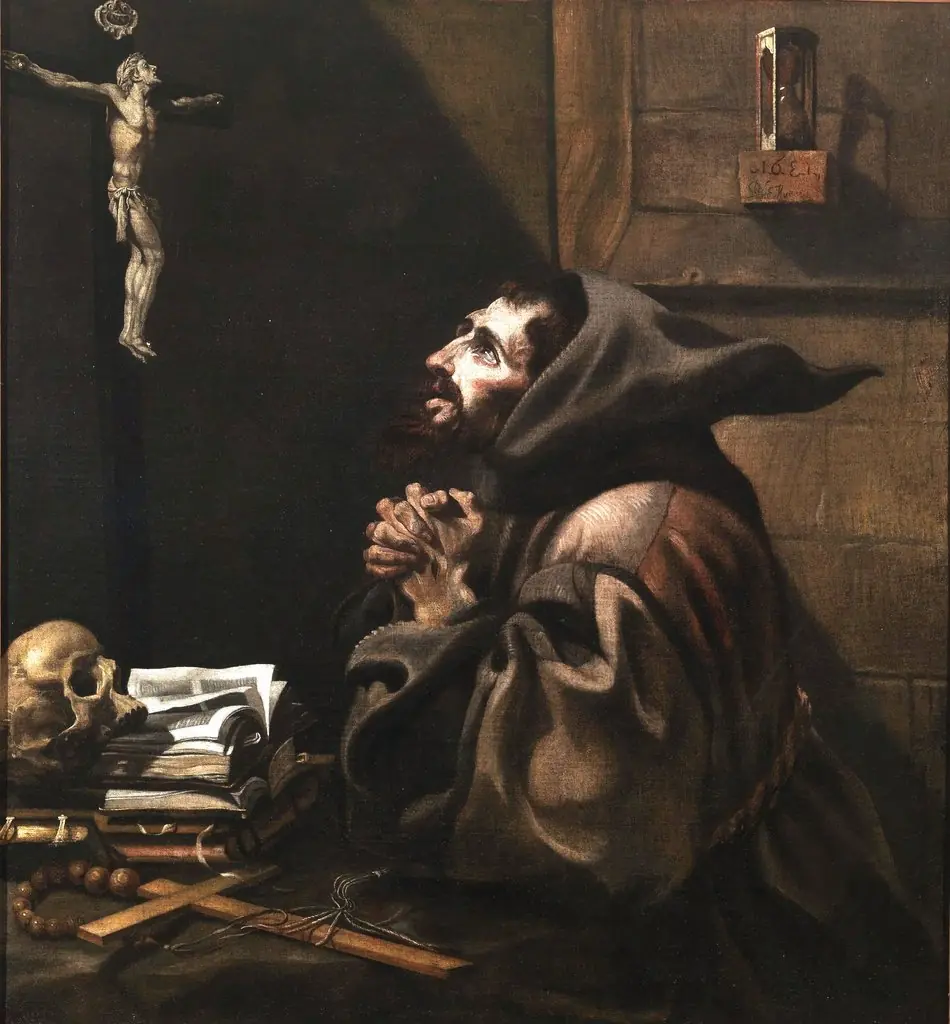 St. Francis in Prayer
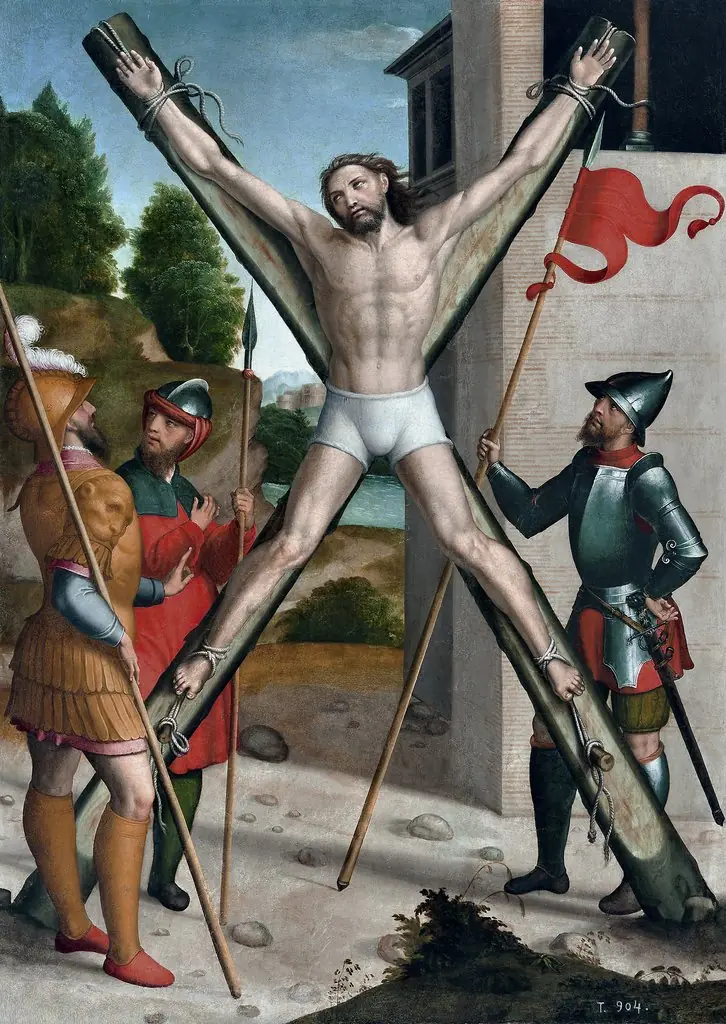 Martirio de San Andrés
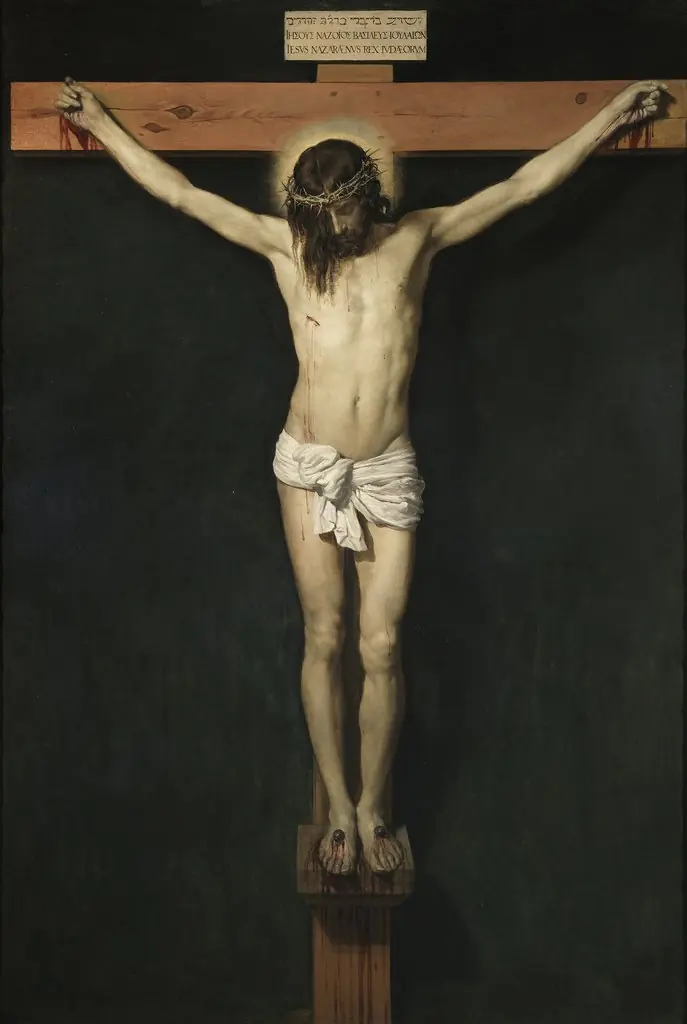 Christ Crucified
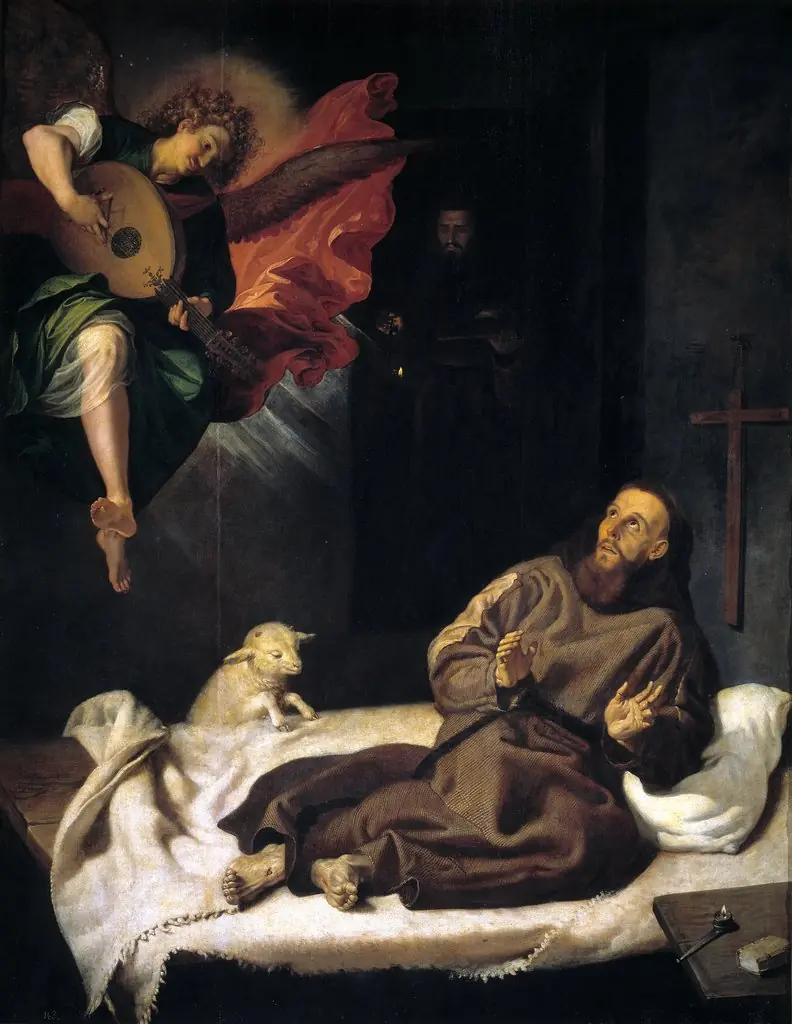 Saint Francis comforted by a Angel
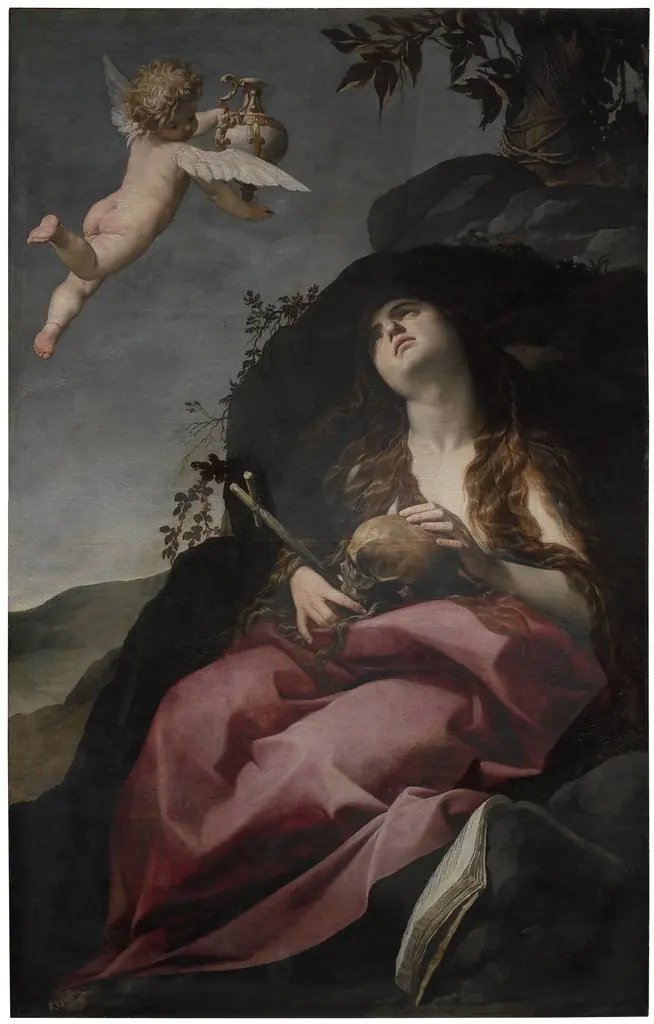 Penitent Magdalene
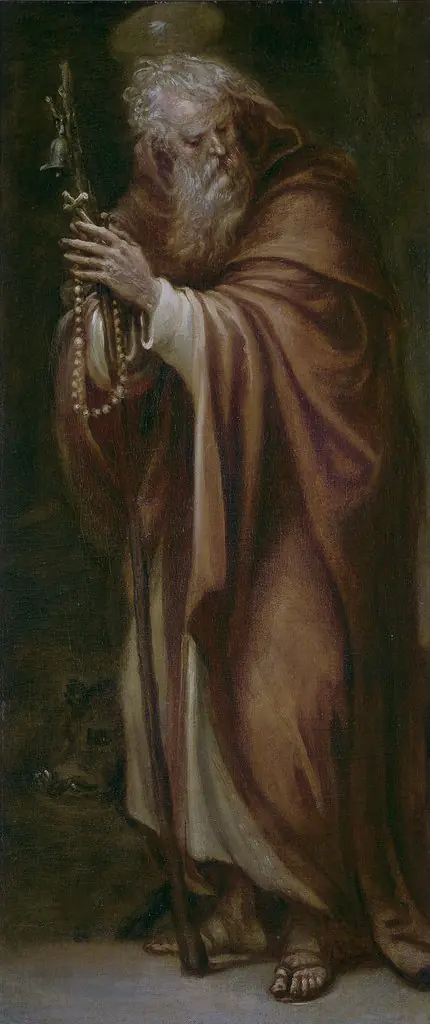 San Antonio Abad
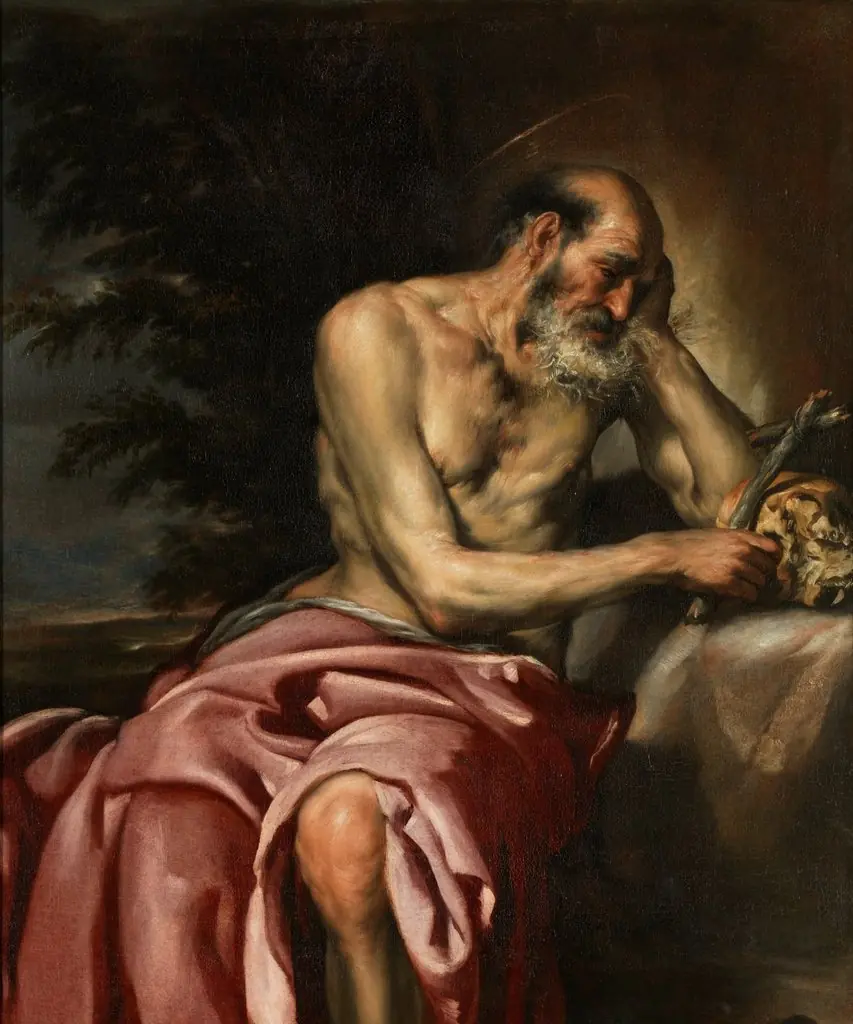 San Jerónimo penitente
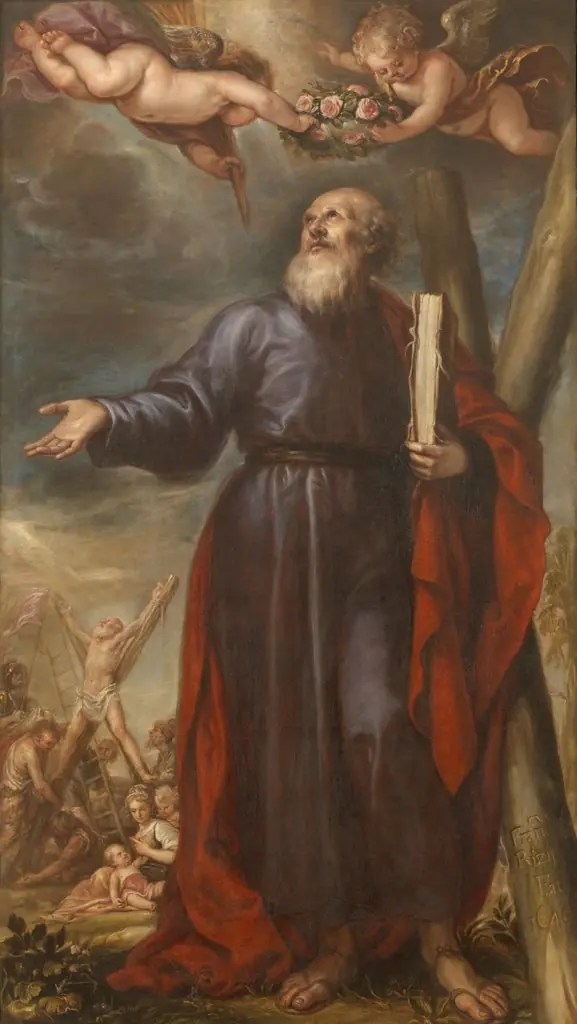 S. Andrew
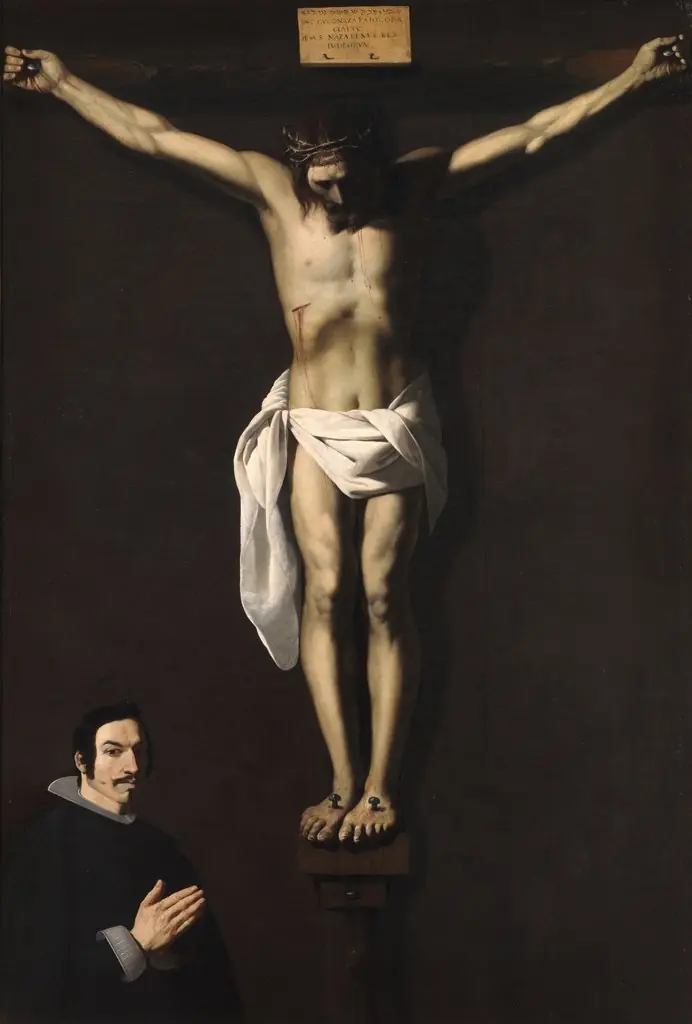 The Crucified Christ with a Donor
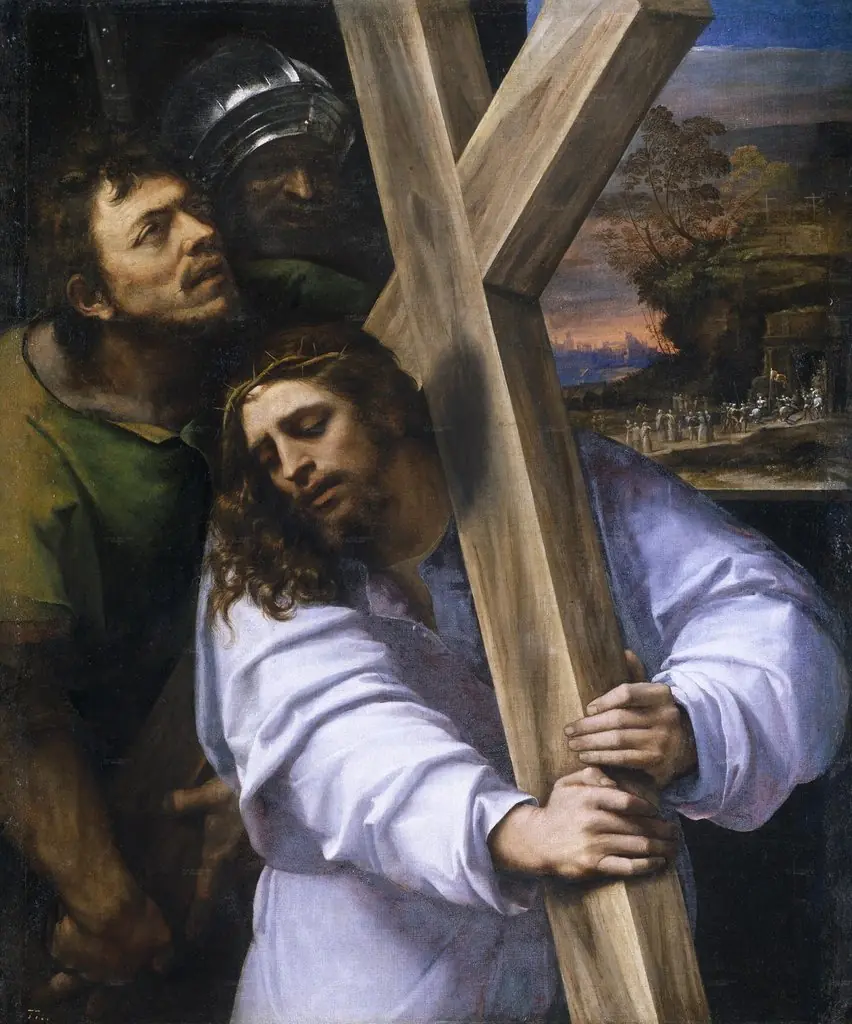 Jesus carrying the Cross
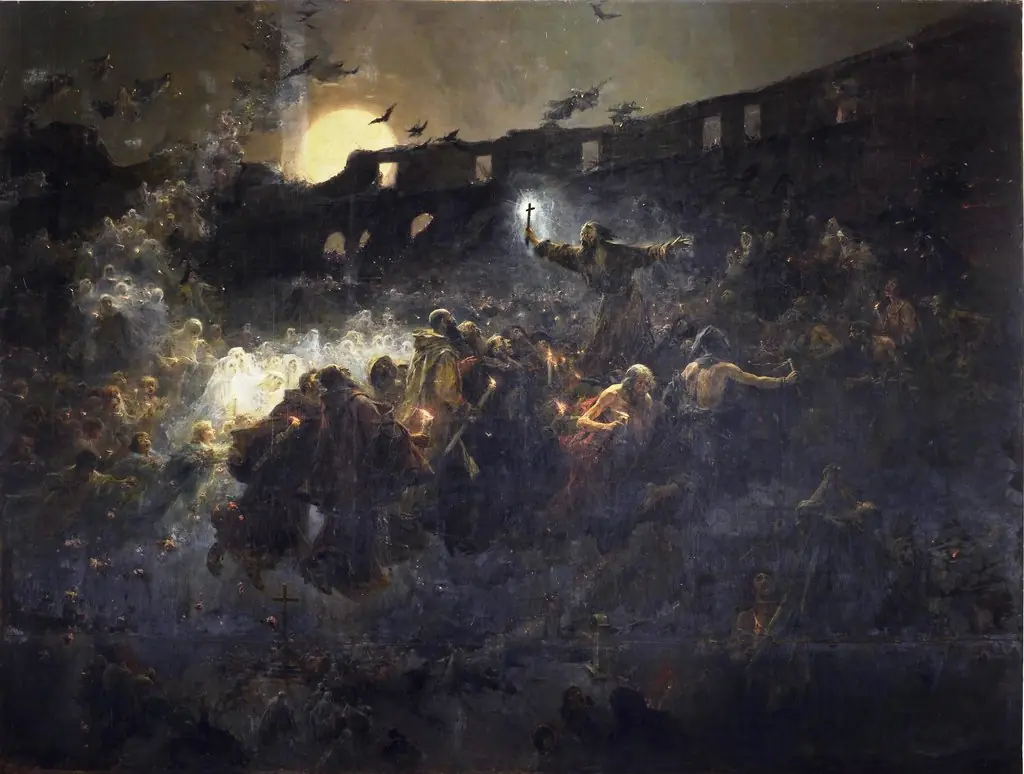 La visione del Colosseo
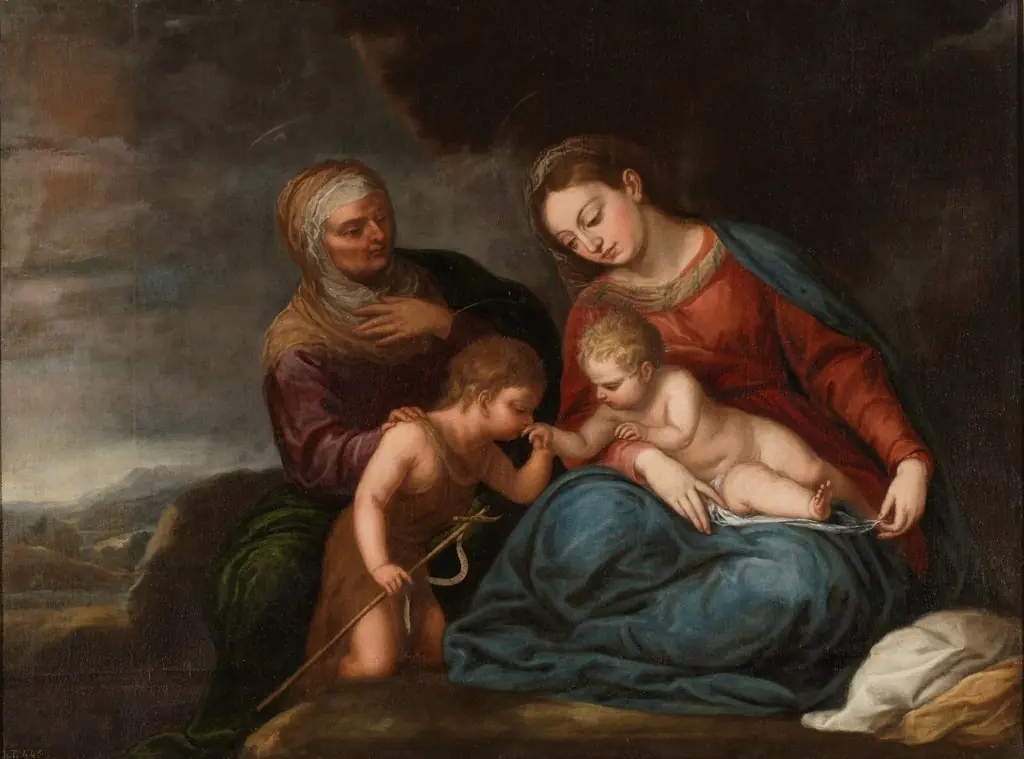 The Virgin and Child with Saints Elizabeth and John
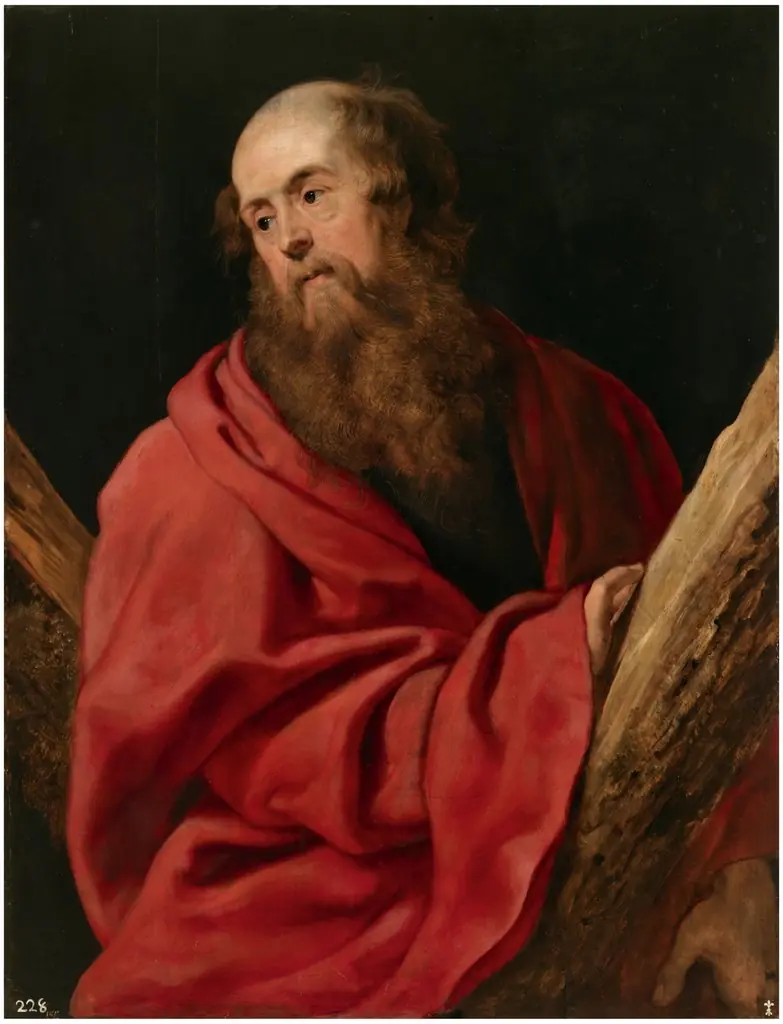 Saint Andrew
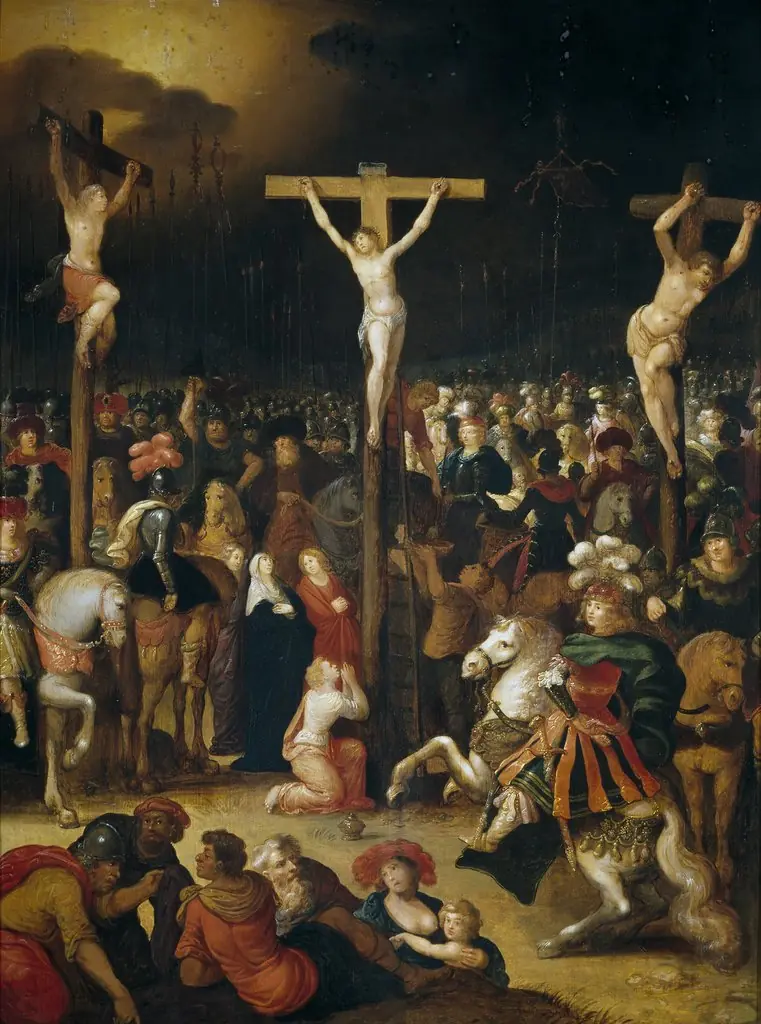 La Crucifixión
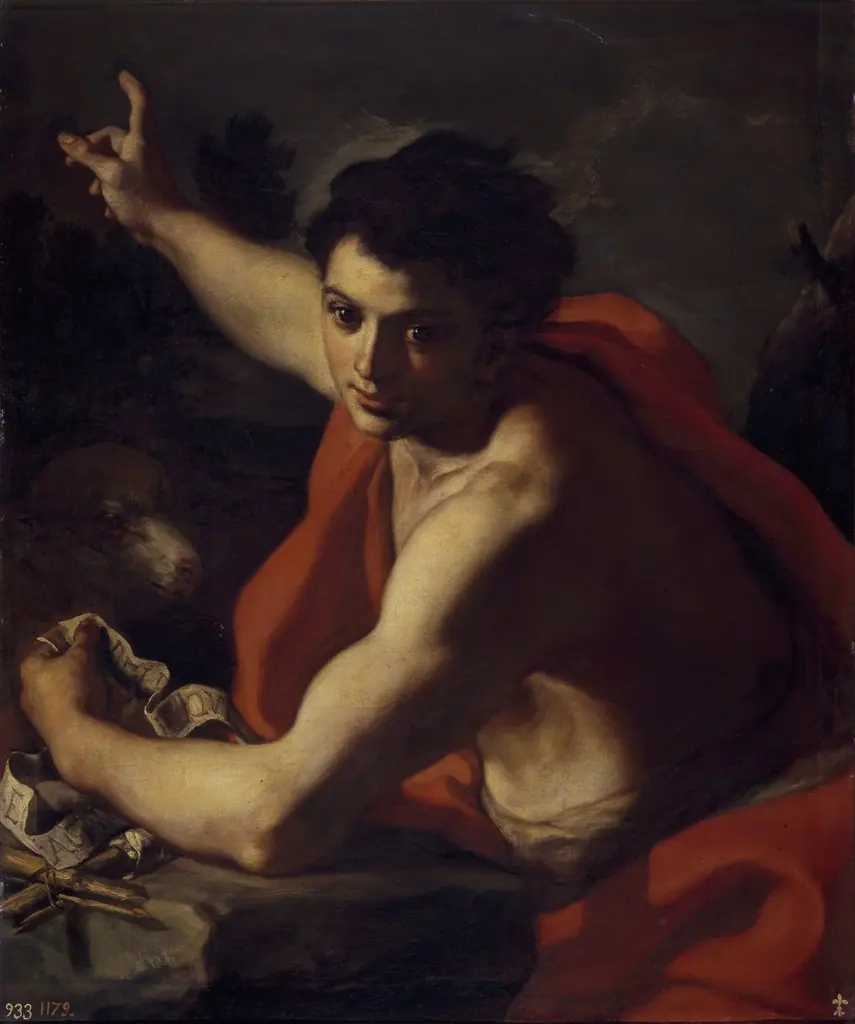 Saint John the Baptist
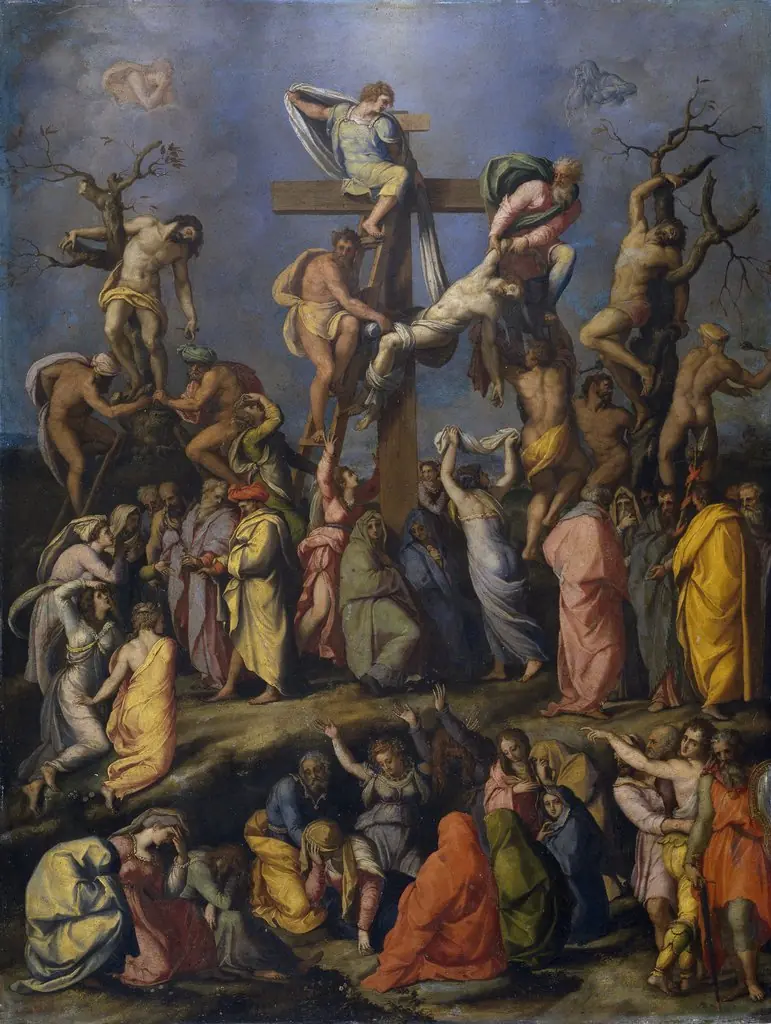 Descent from the Cross
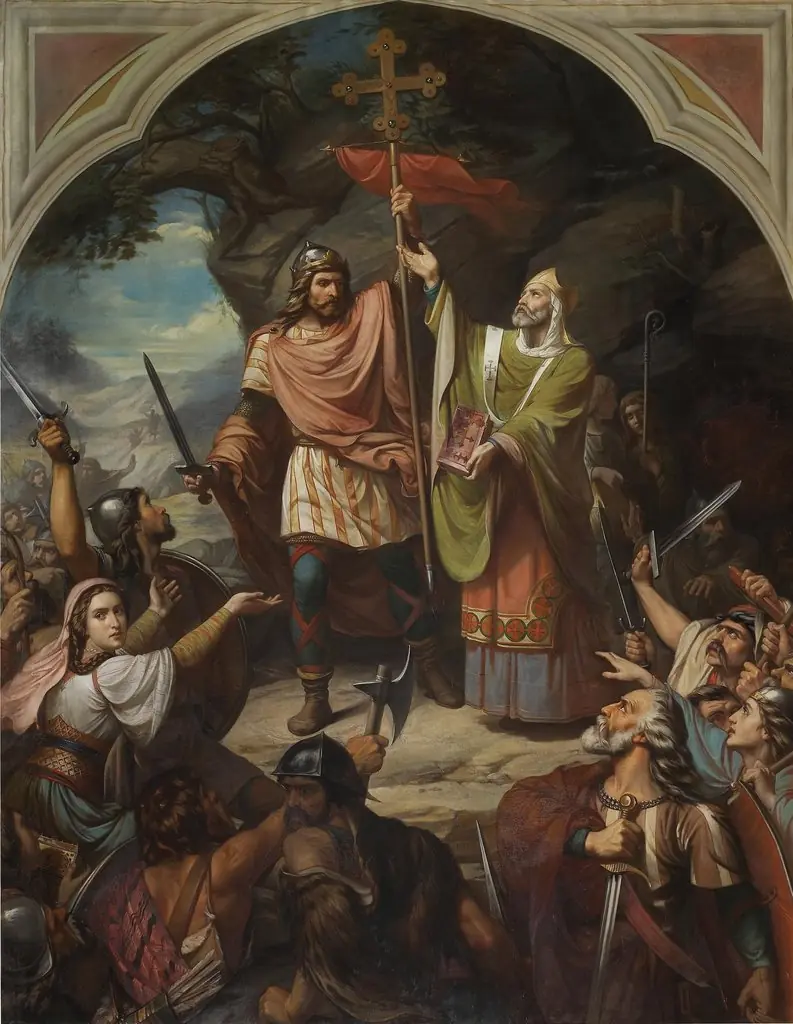 Don Pelayo en Covadonga
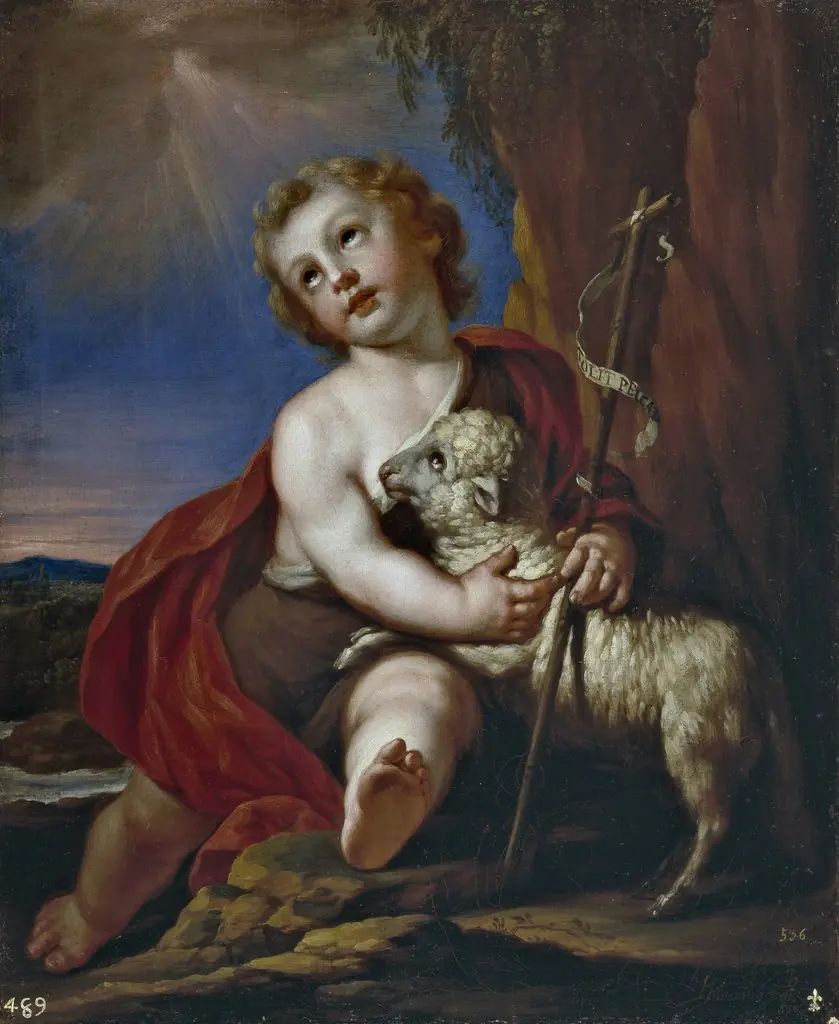 The Infant Saint John the Baptist
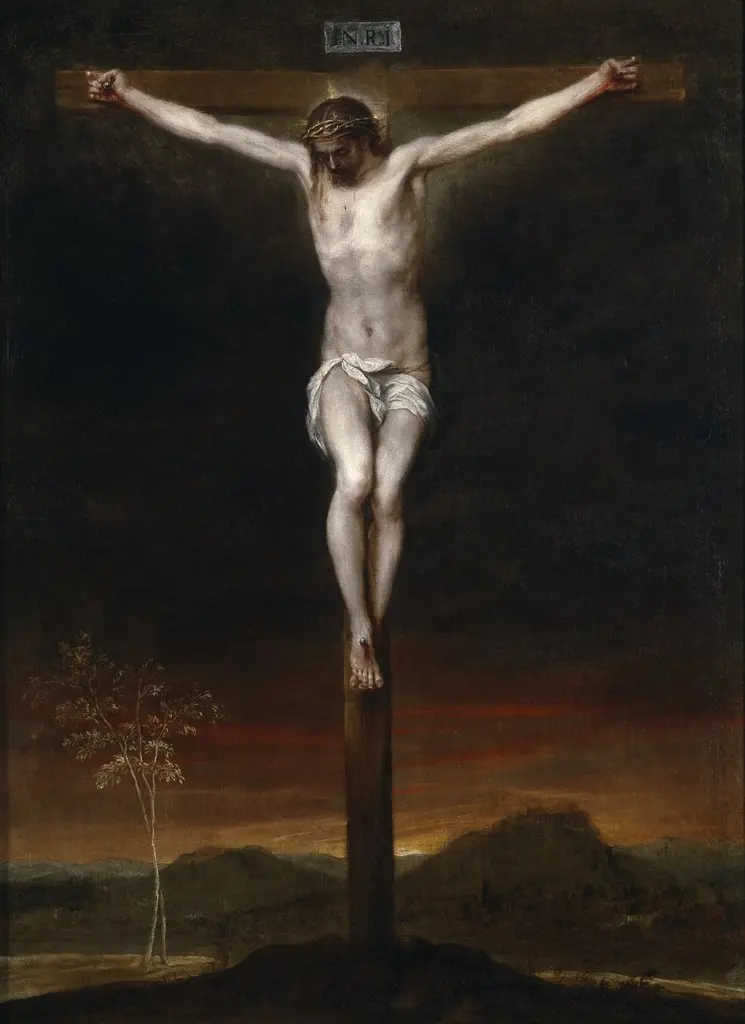 The Crucifixion
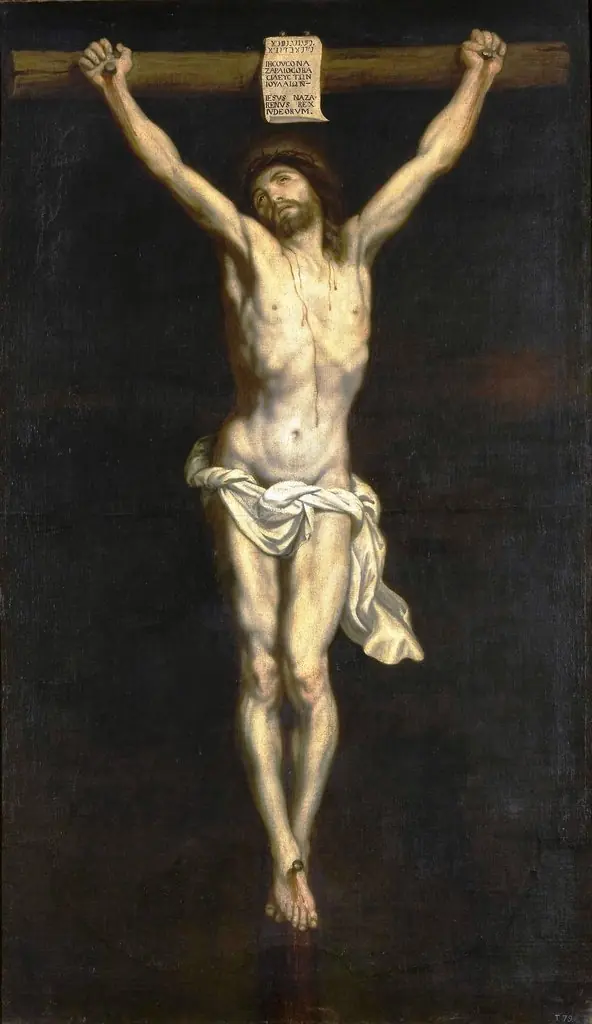 Christ Crucified
 Cristo crucificado
 Christ the Saviour
 The Agony in the Garden
 The Pietà
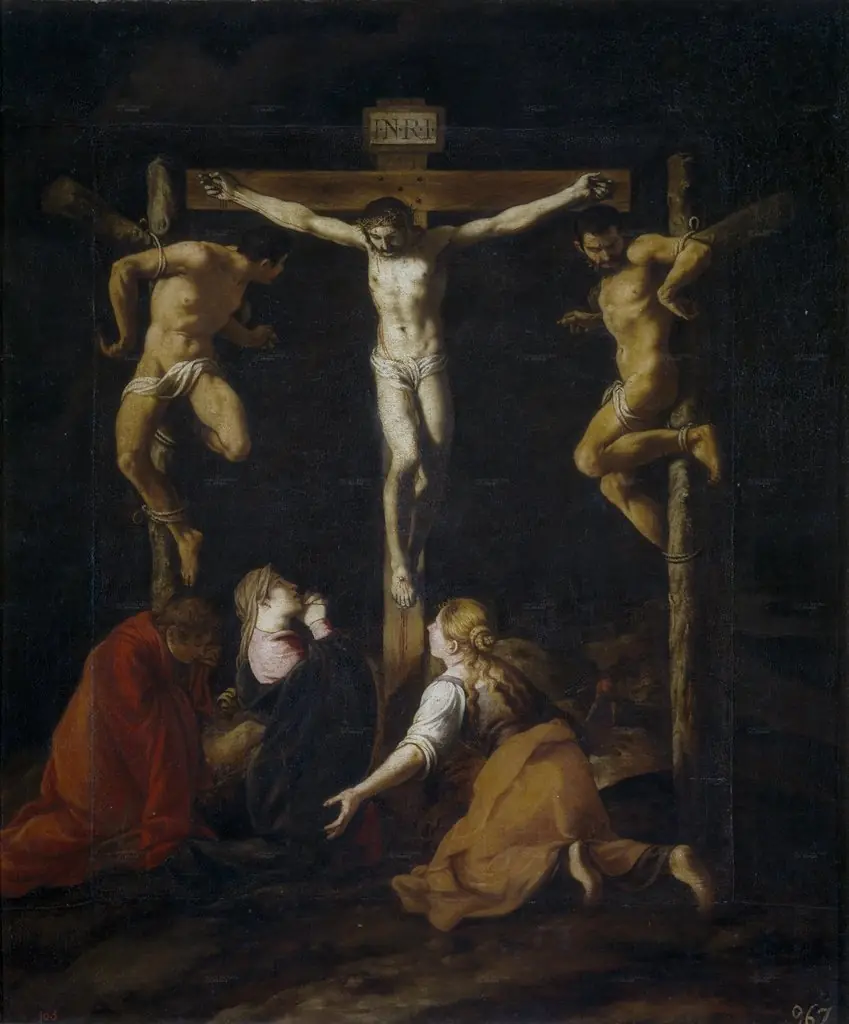 The Crucifixion
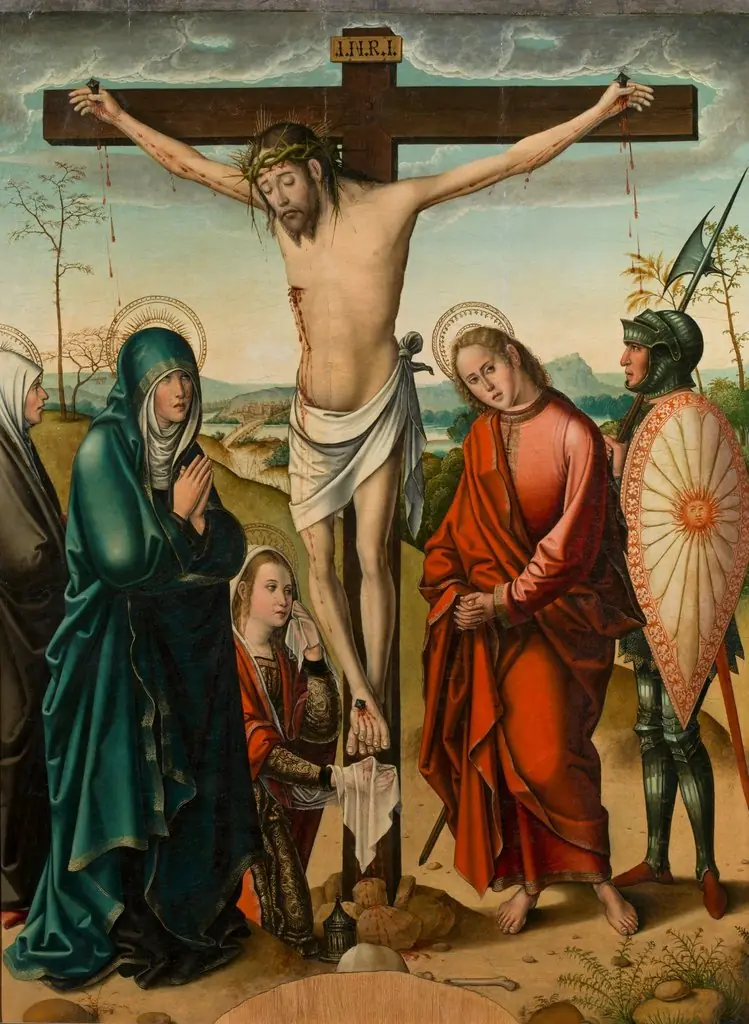 Crucifixión
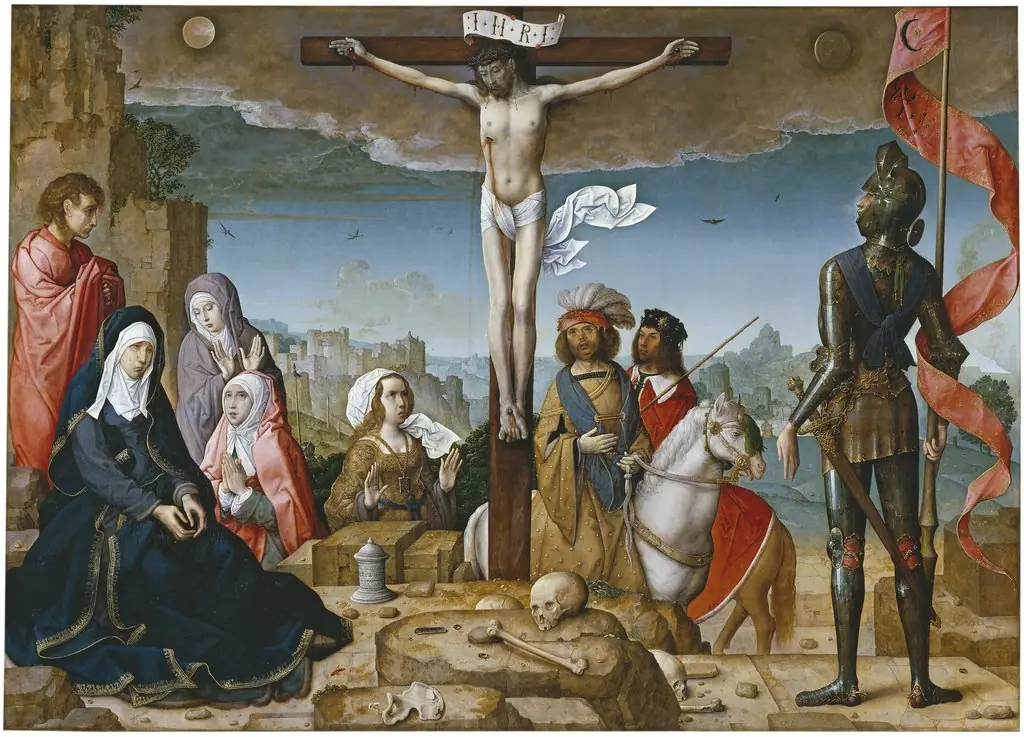 Crucifixion of Christ
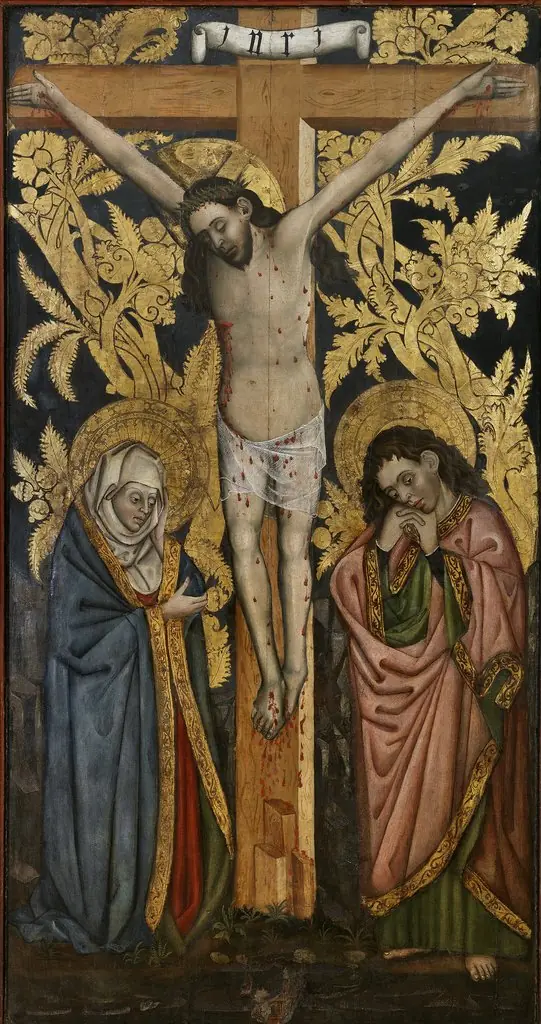 The Crucifixion
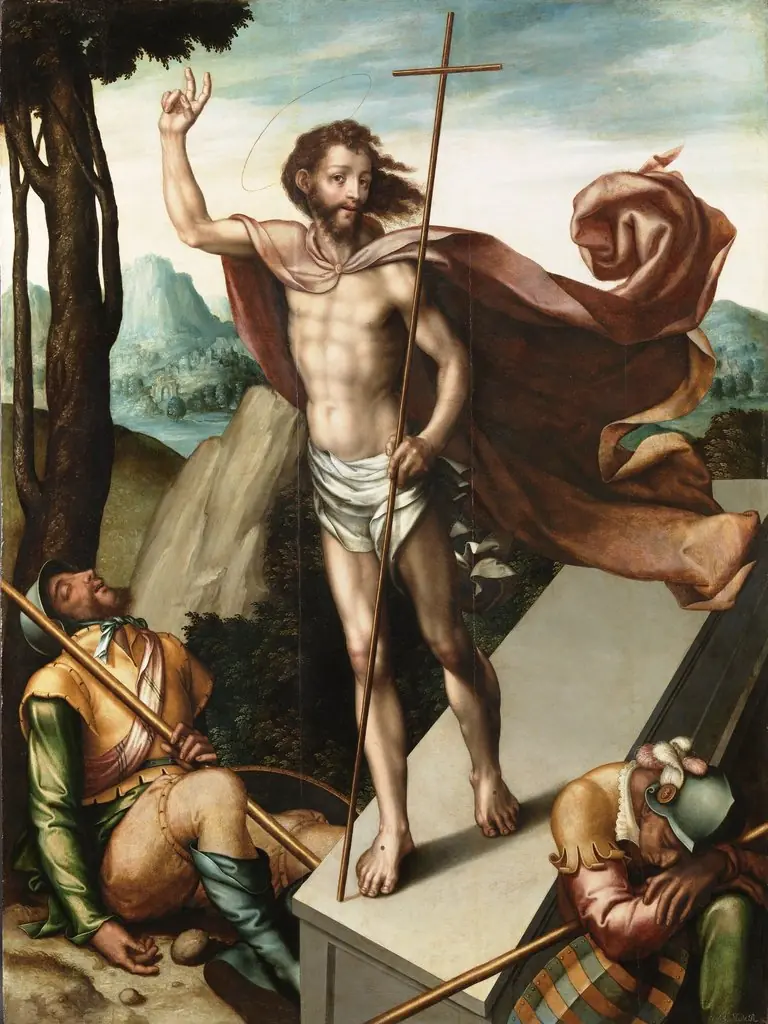 The Resurrection of Christ
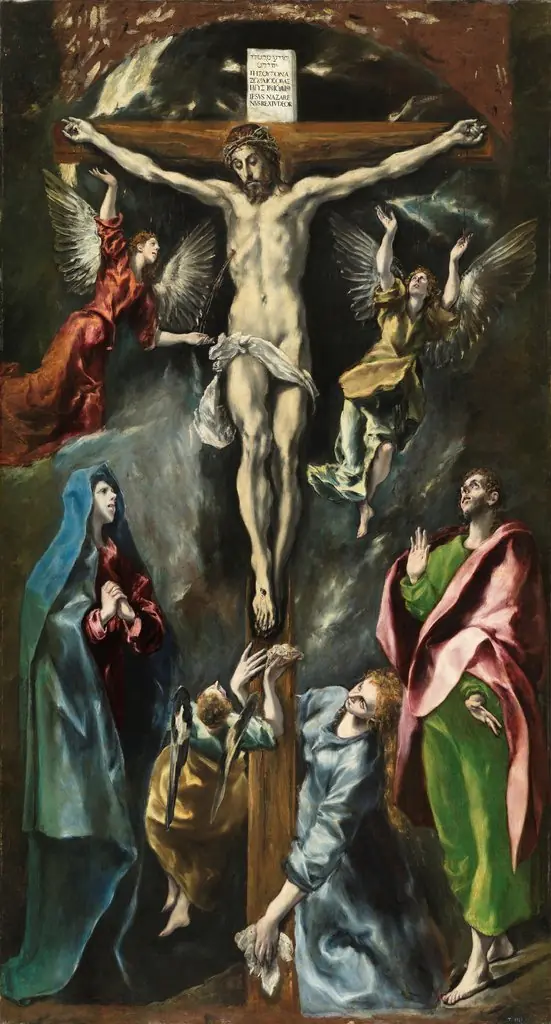 The Crucifixion
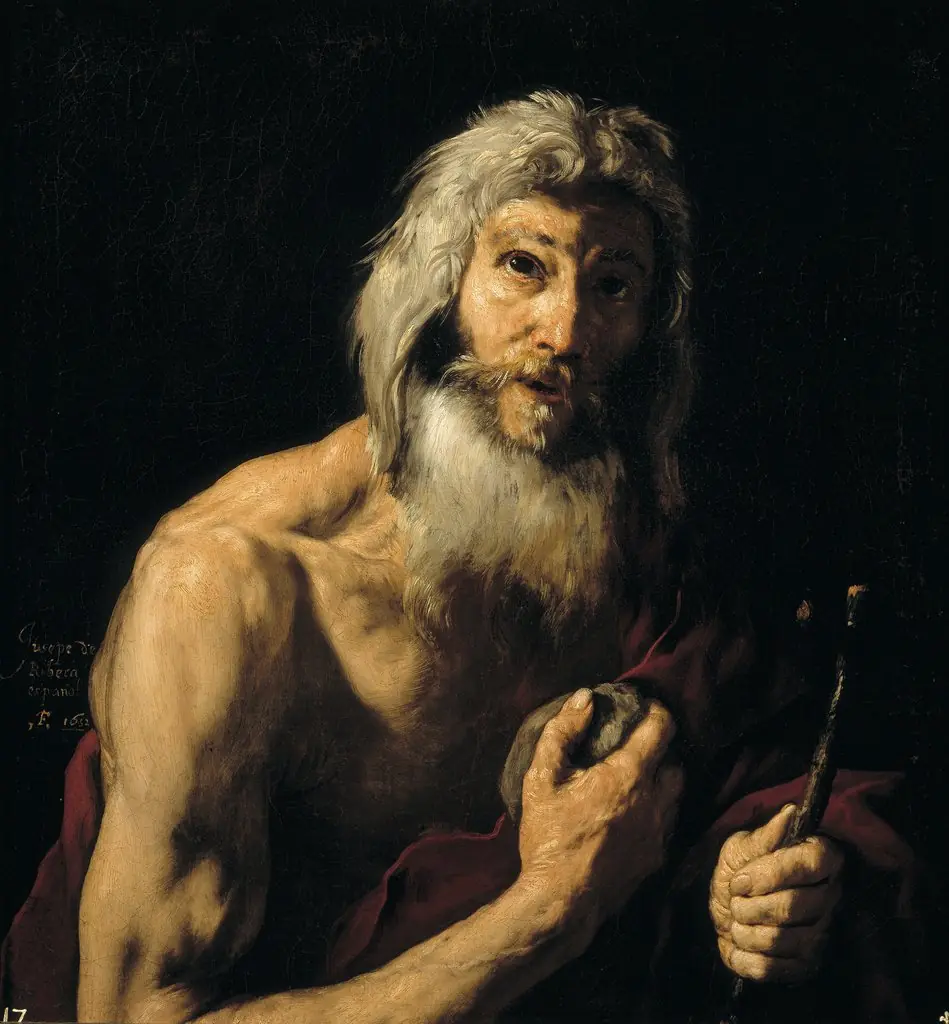 Penitent Saint Jerome
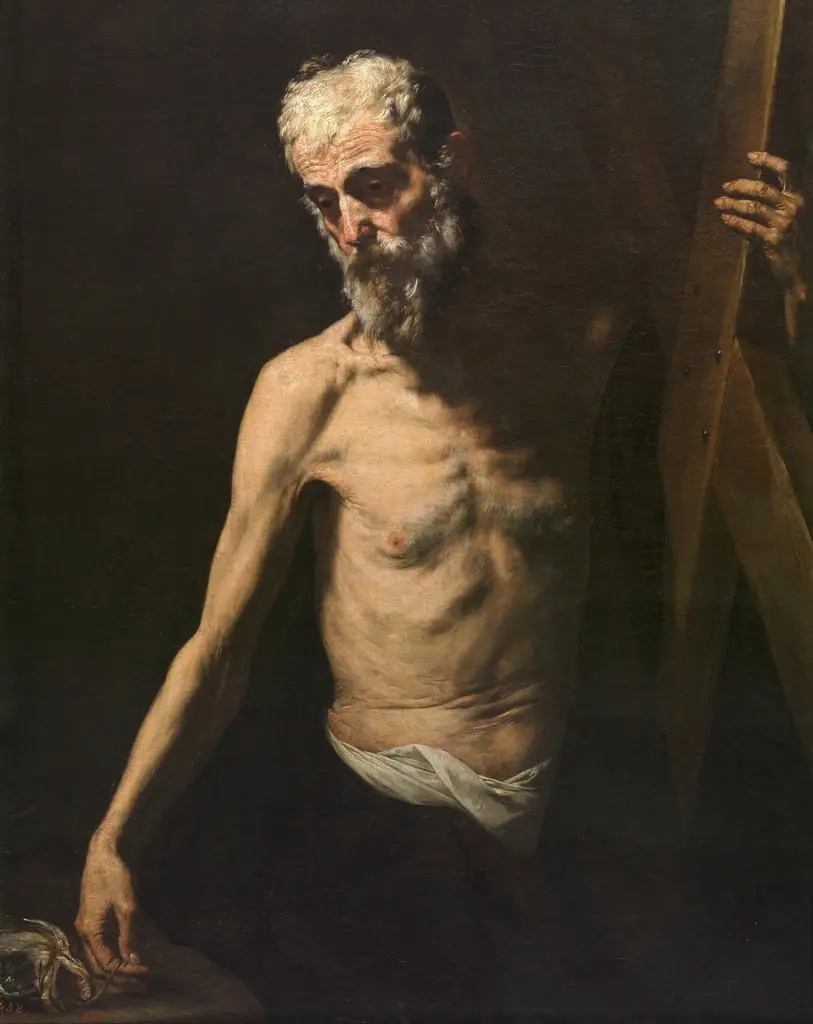 Saint Andrew
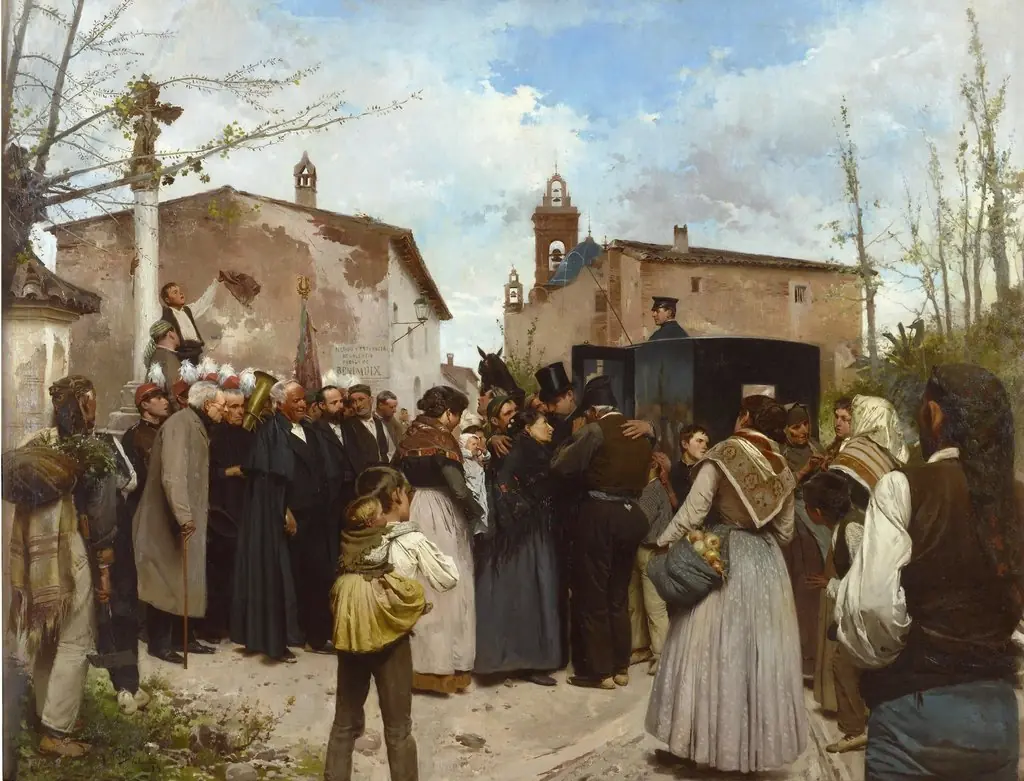 La gloria del pueblo
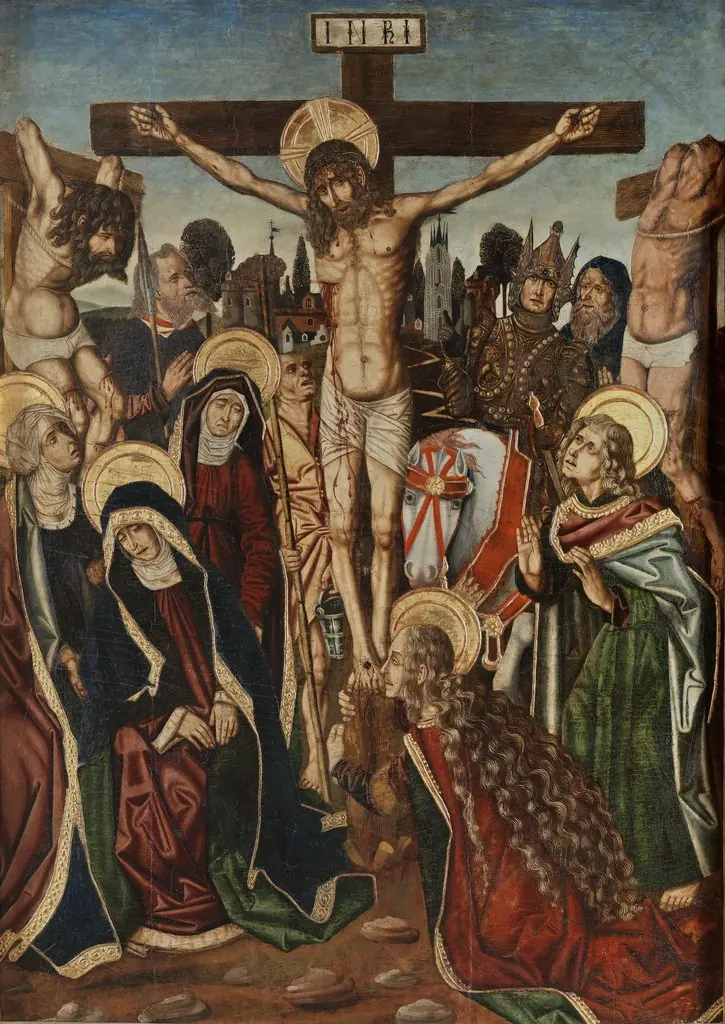 The Crucifixion
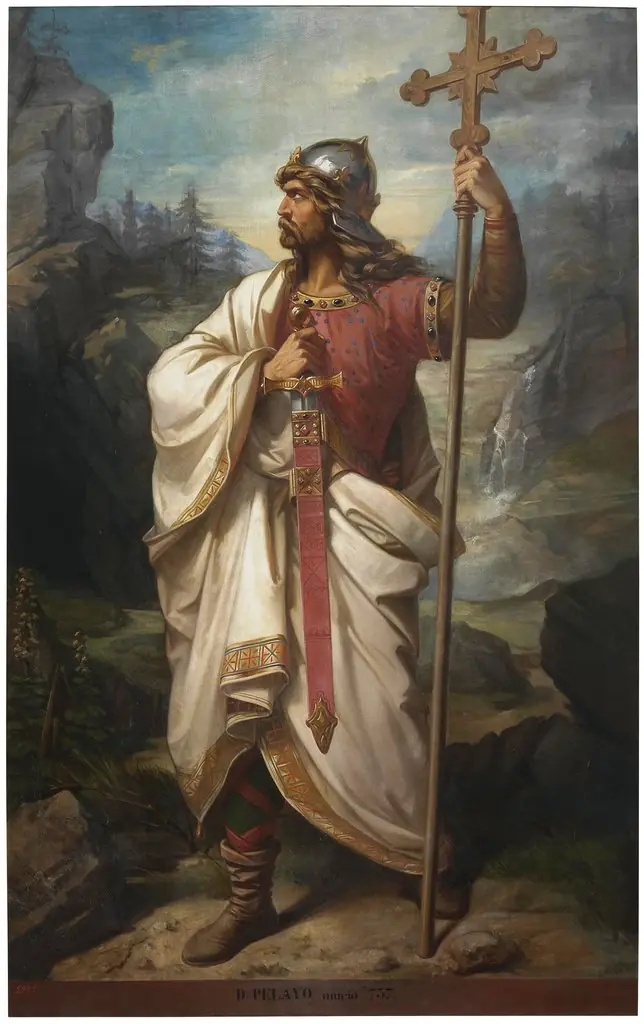 Don Pelayo rey de Asturias
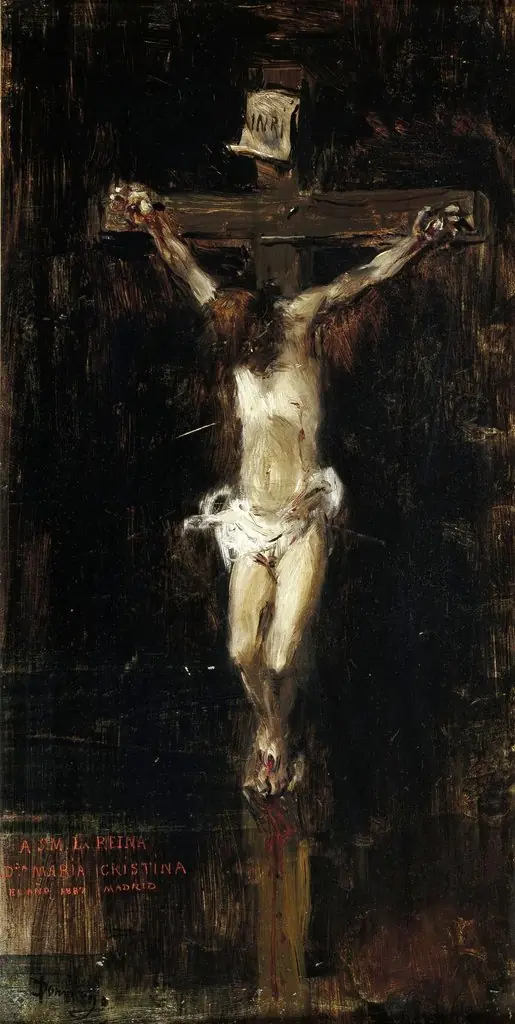 Cristo crucificado
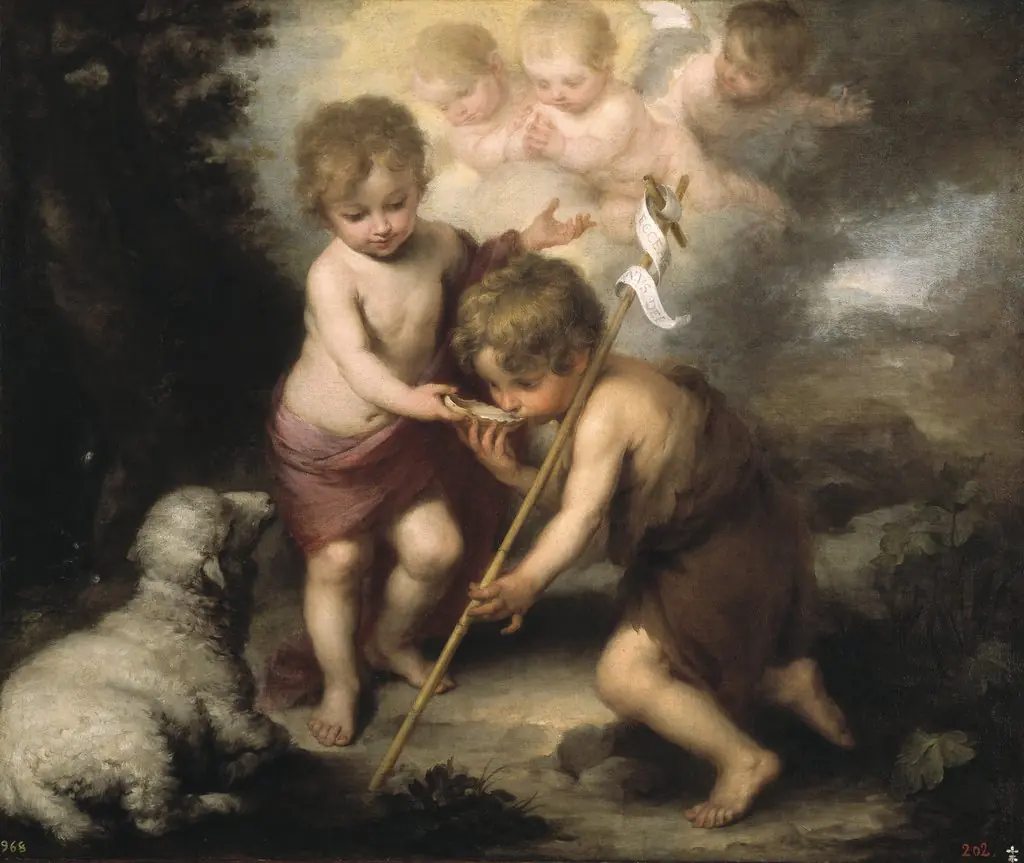 The Holy Children with a Shell
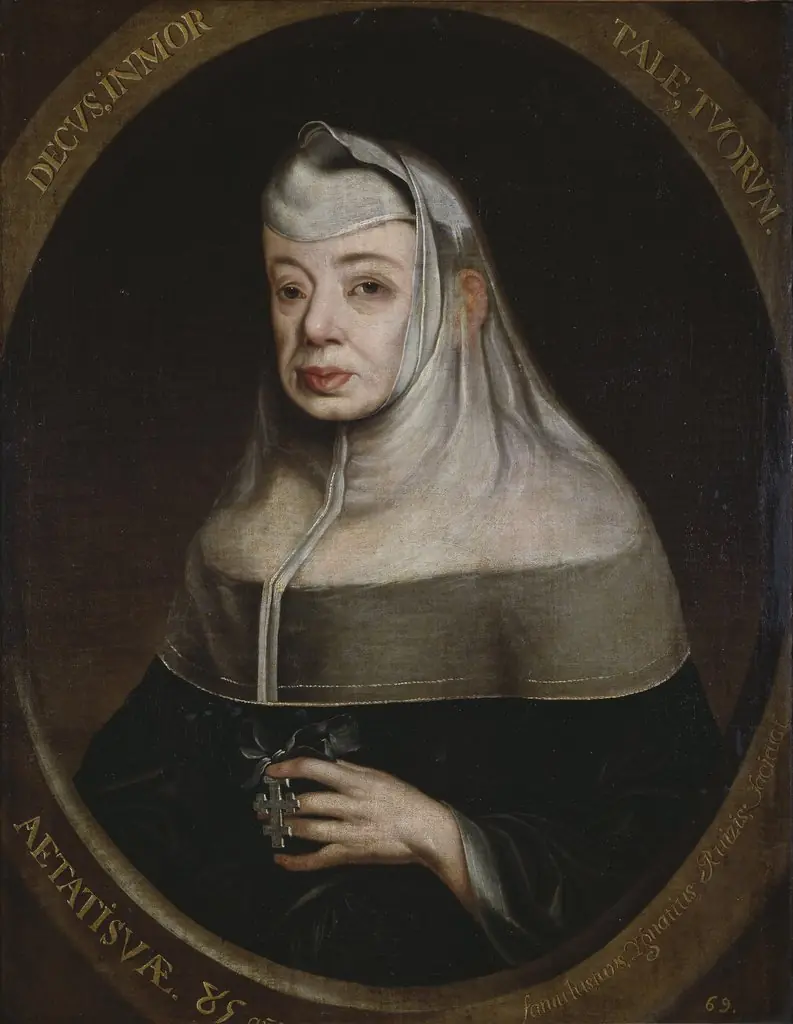 Maria Guadalupe Lancaster duquesa de Aveiro
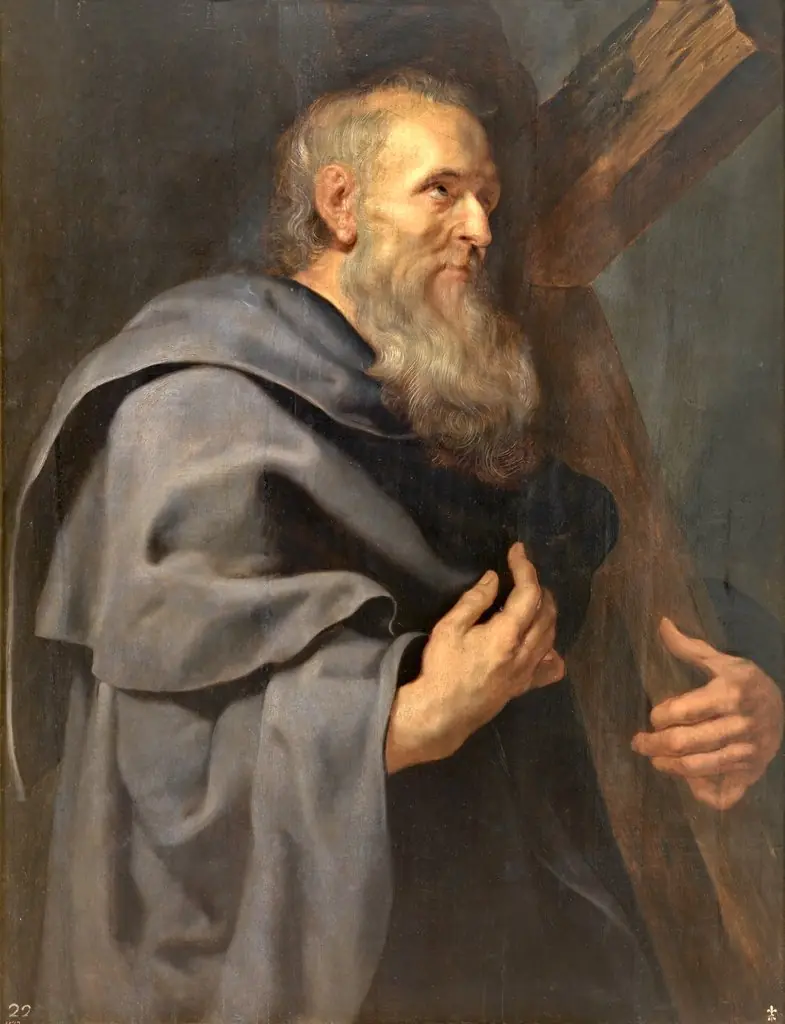 Saint Philip
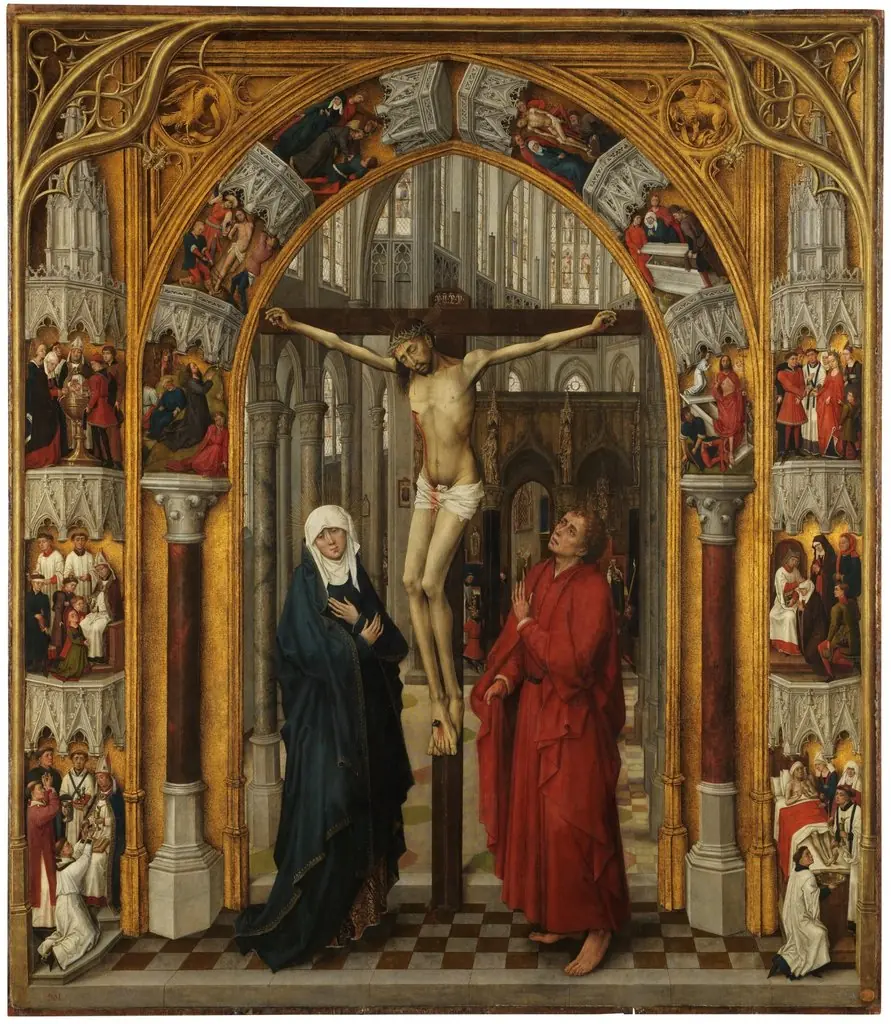 Redemption Triptych: The Crucifixion
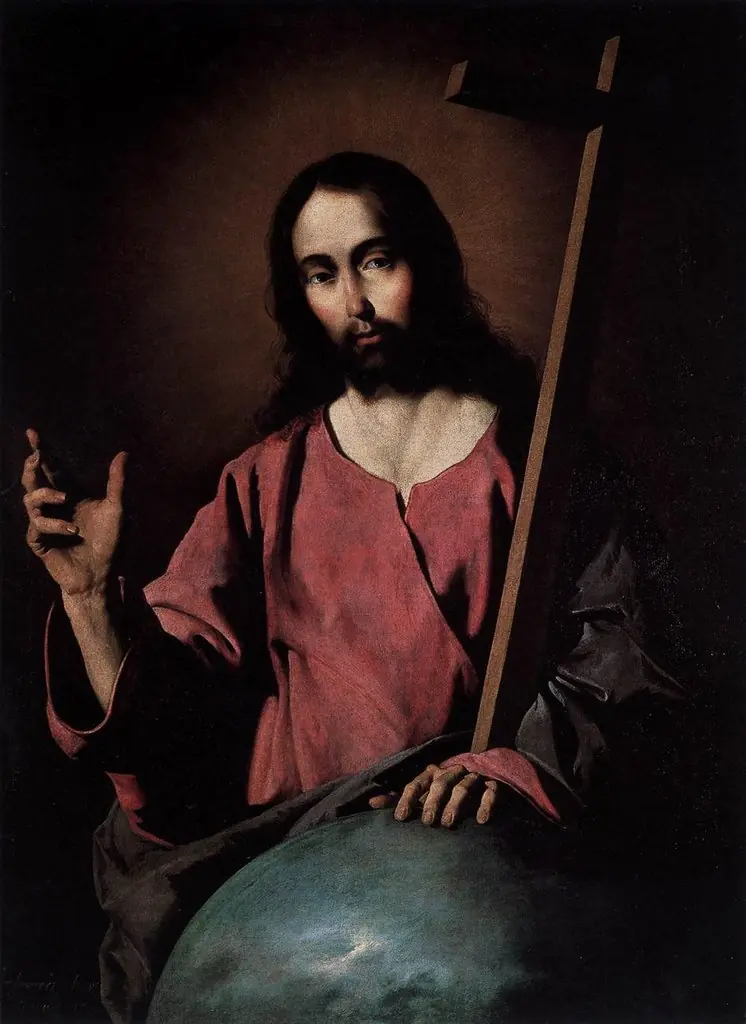 Christ the Saviour blessing
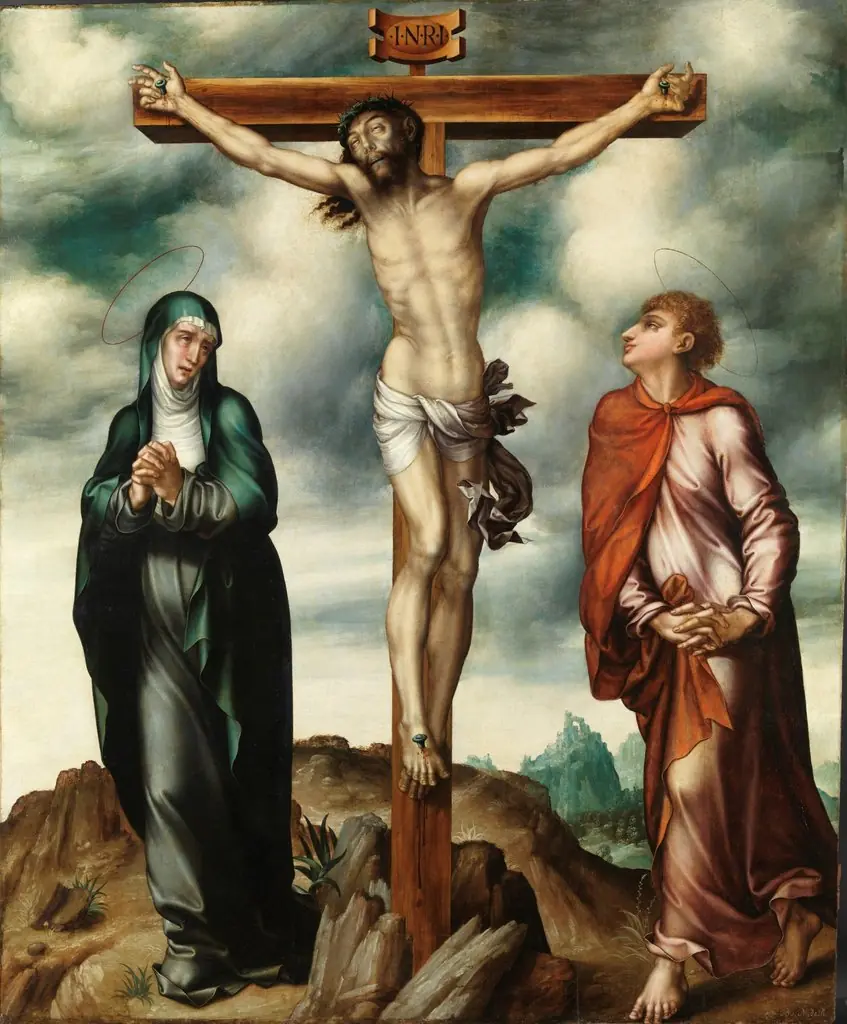 The Crucifixion
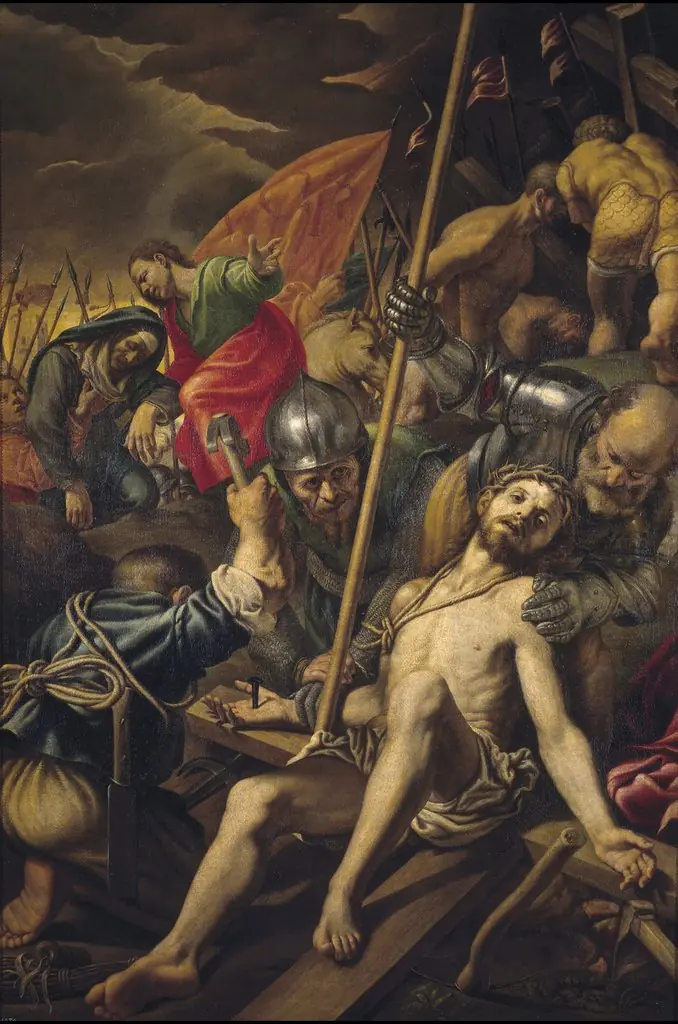 Christ nailed to the Cross
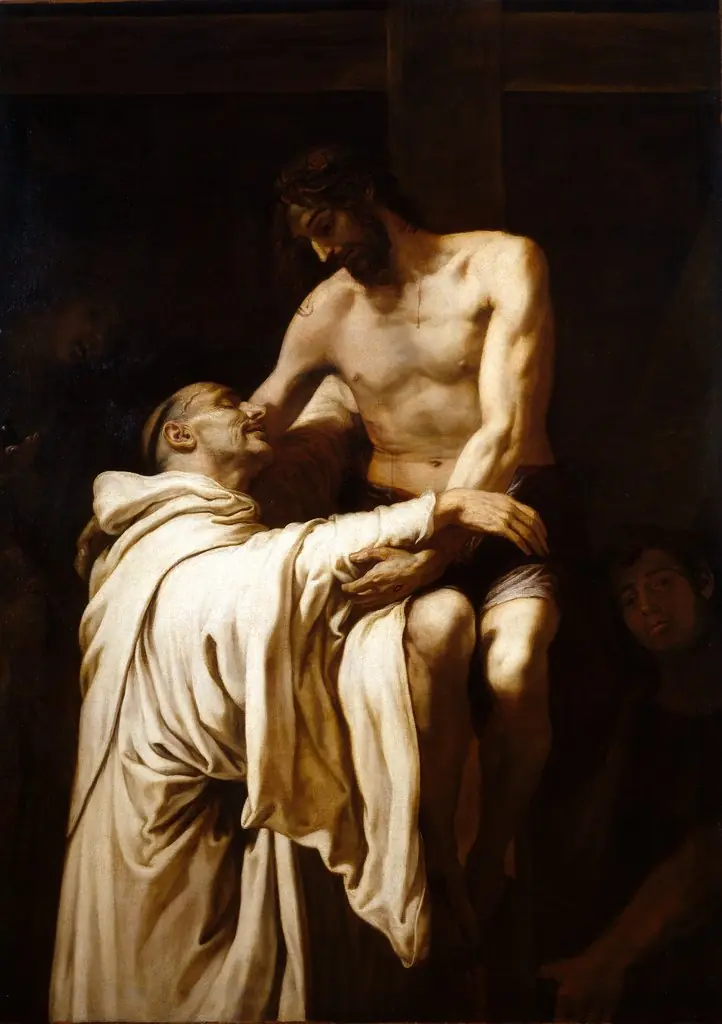 Christ embracing Saint Bernard
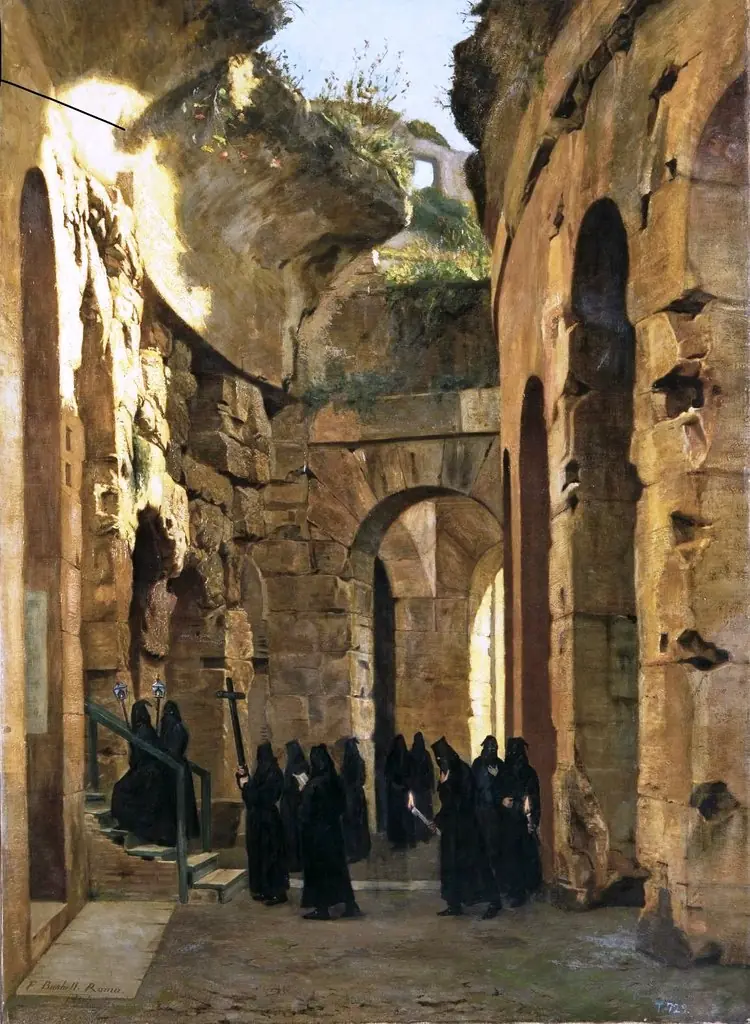 Procesión del Viernes Santo en el Coliseo de Roma
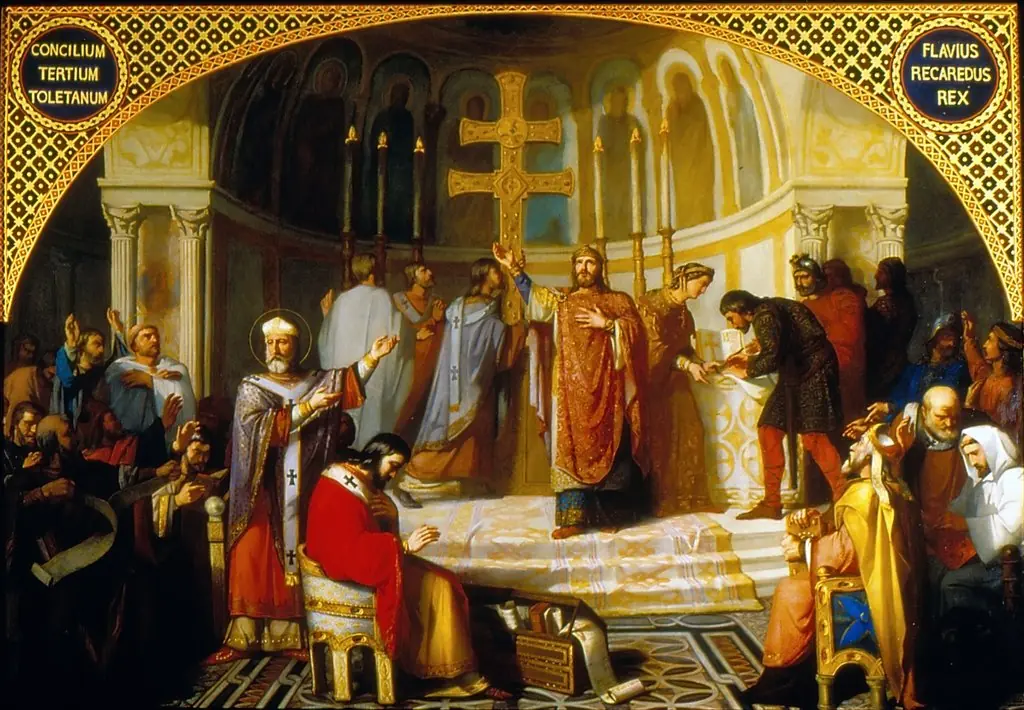 Concilio III de Toledo
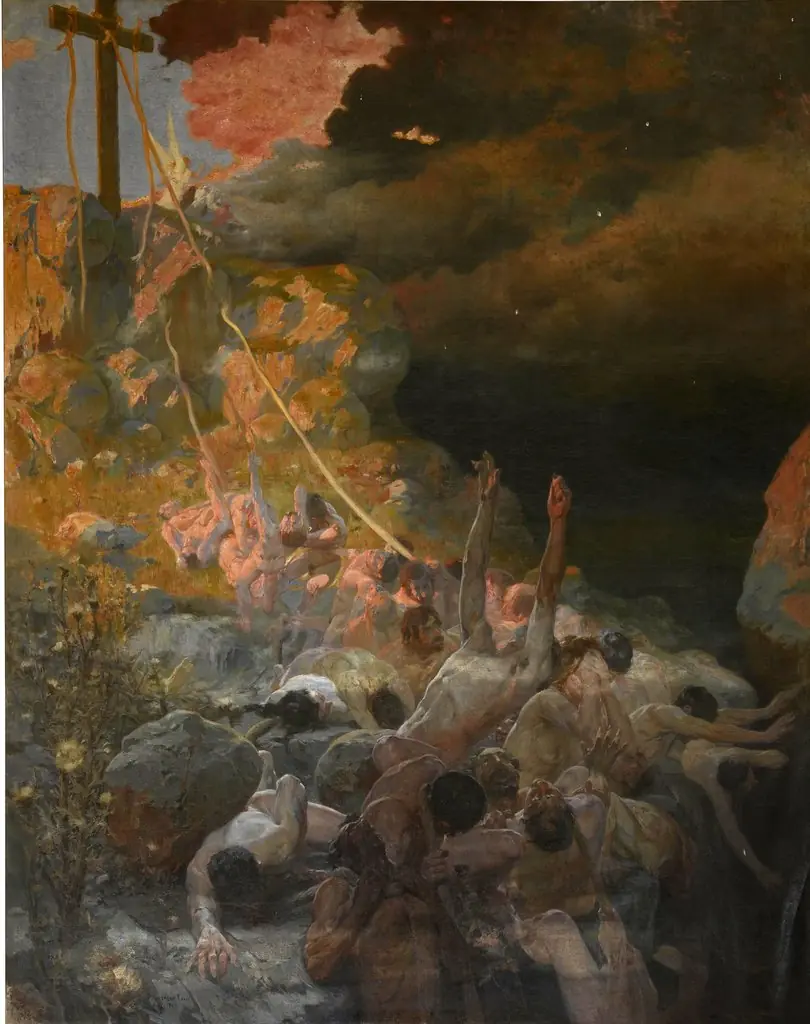 Al abismo
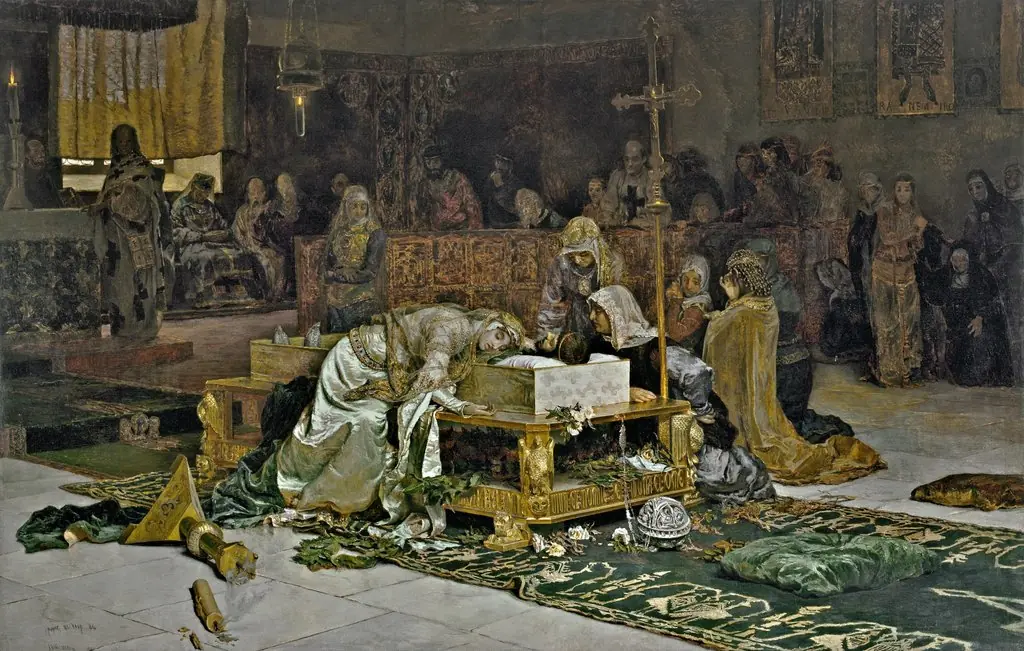 The Lovers of Teruel
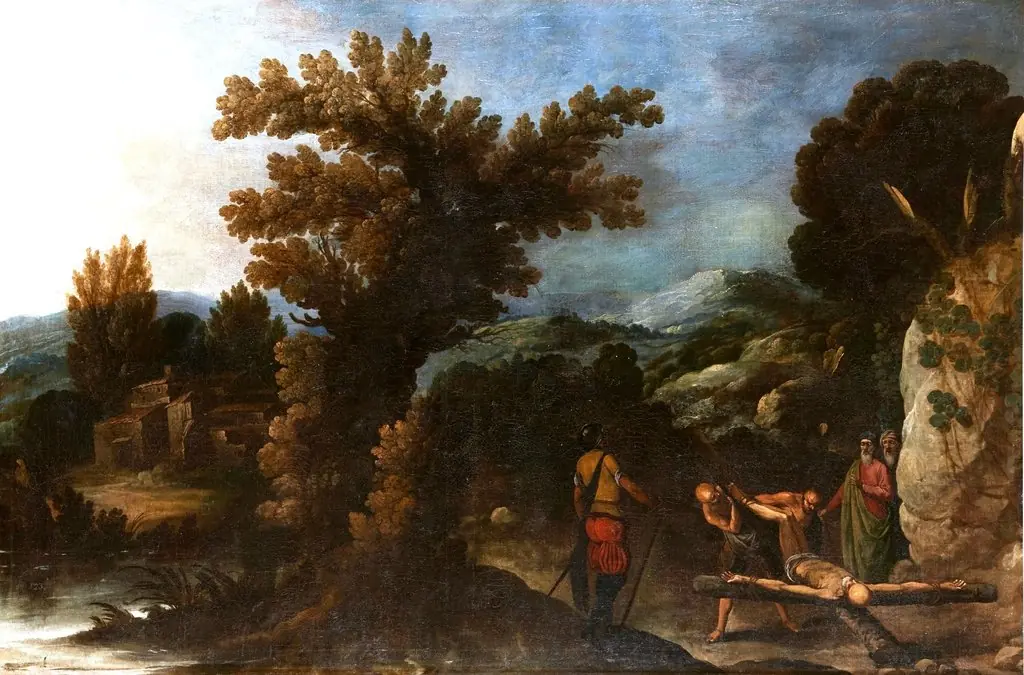 Paisaje con la crucifixión de San Pedro
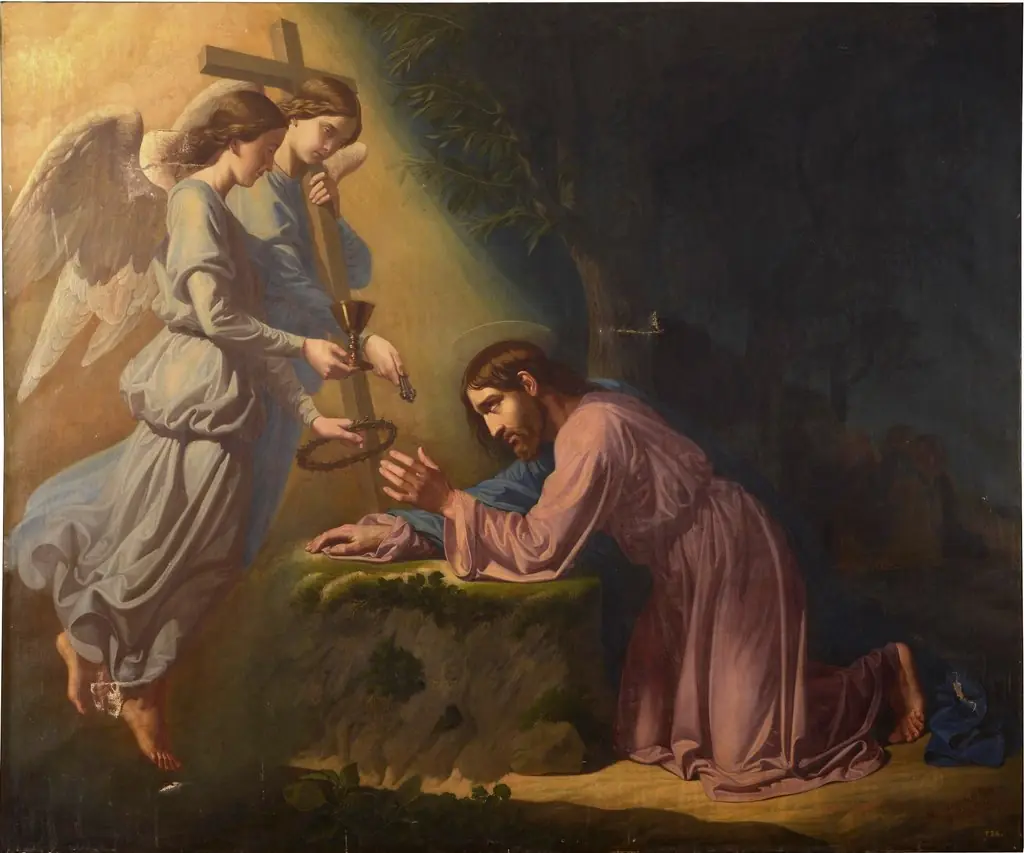 La Oración en el Huerto
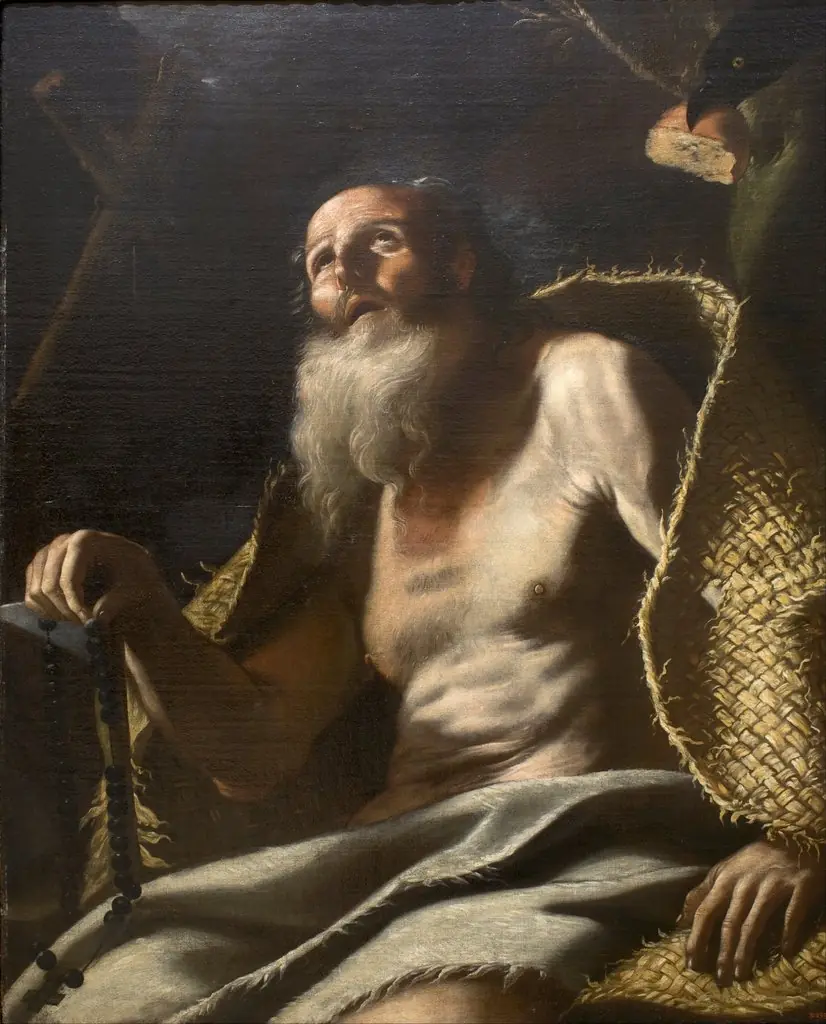 Saint Paul the Hermit
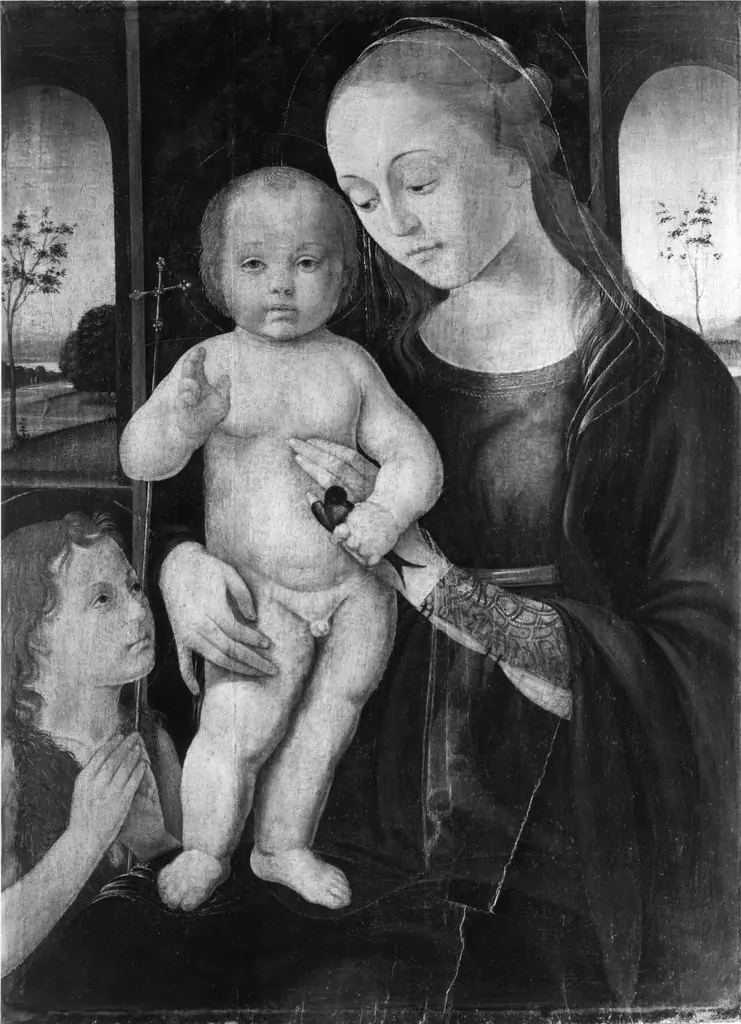 Madonna and Child with the Young St. John the Baptist
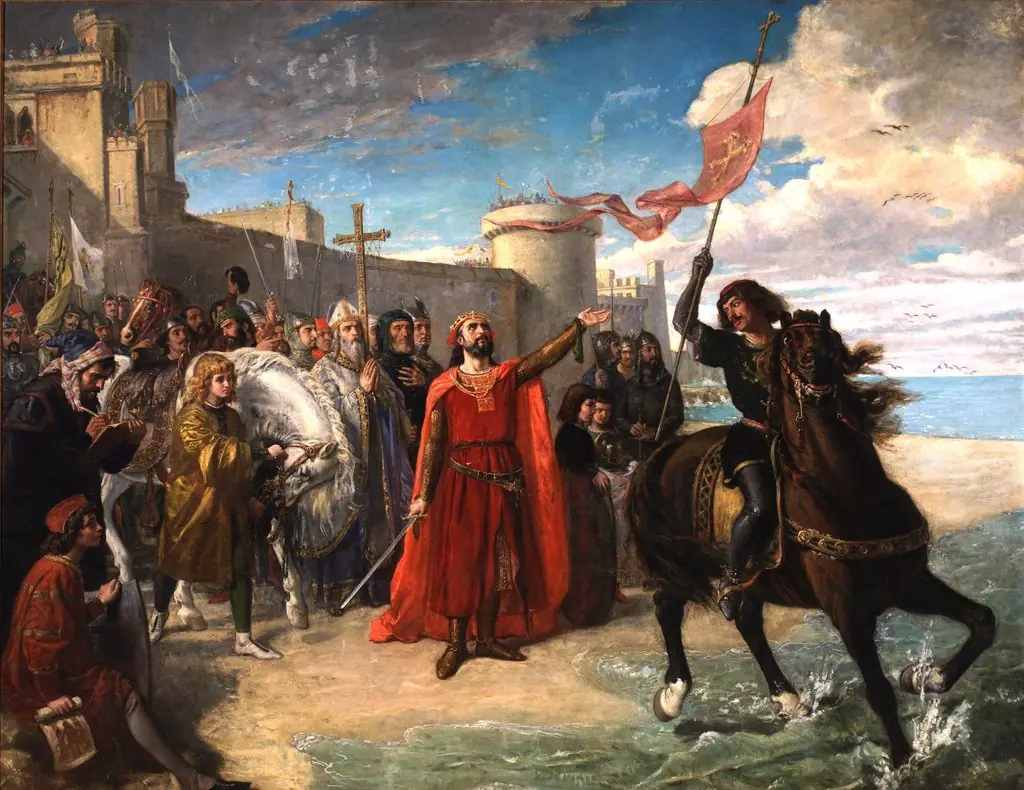 Don Alfonso el Sabio después de haber ganado a los moros la plaza de Cádiz primera plaza marítima que poseyeron los reyes de Castilla tomó posesión del mar para abrir a los cristianos el camino que había de conducirles al África
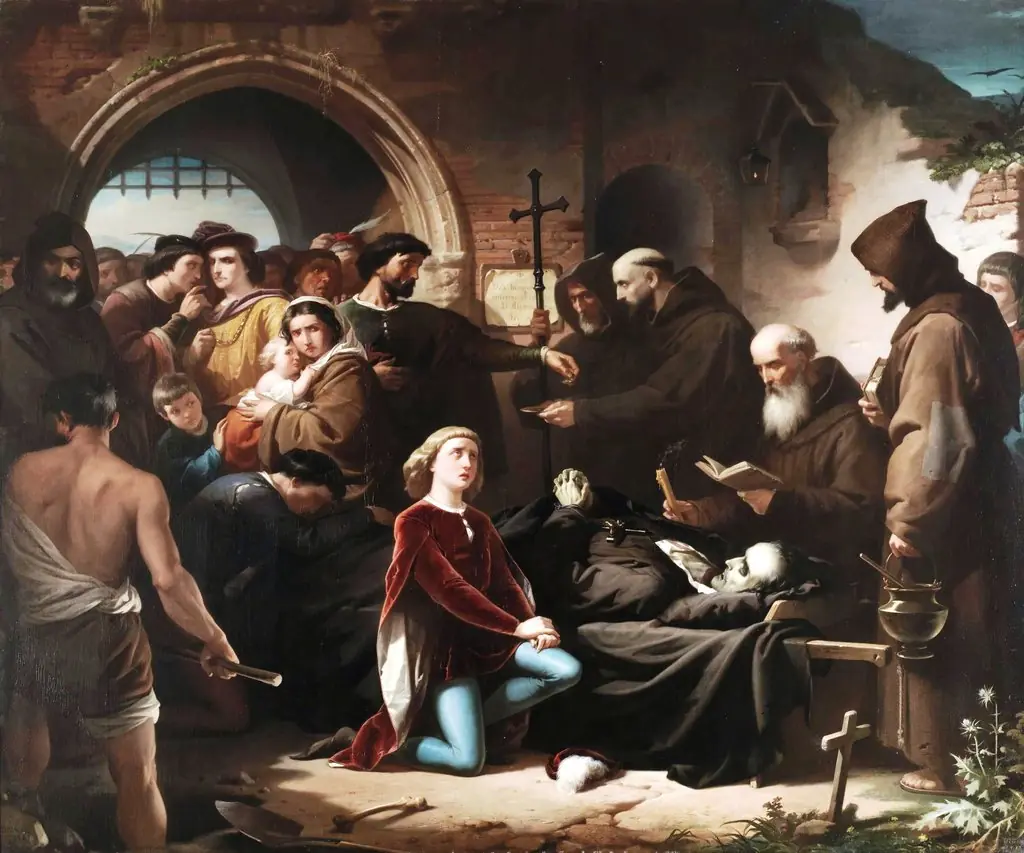 Don Álvaro de Luna condestable y favorito del rey D. Juan II de Castilla decapitado públicamente en la Plaza Mayor de Valladolid el 2 de junio de 1453 es enterrado de limosna en el cementerio de los ajusticiados extramuros de dicha ciudad
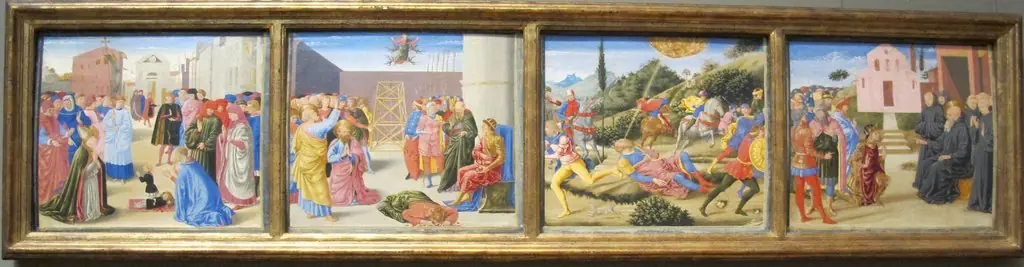 Predella with scenes from the Life of the Saint
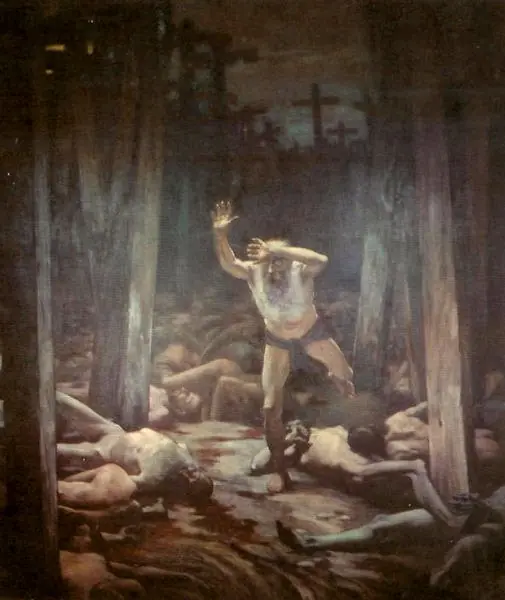 The Wandering Jew
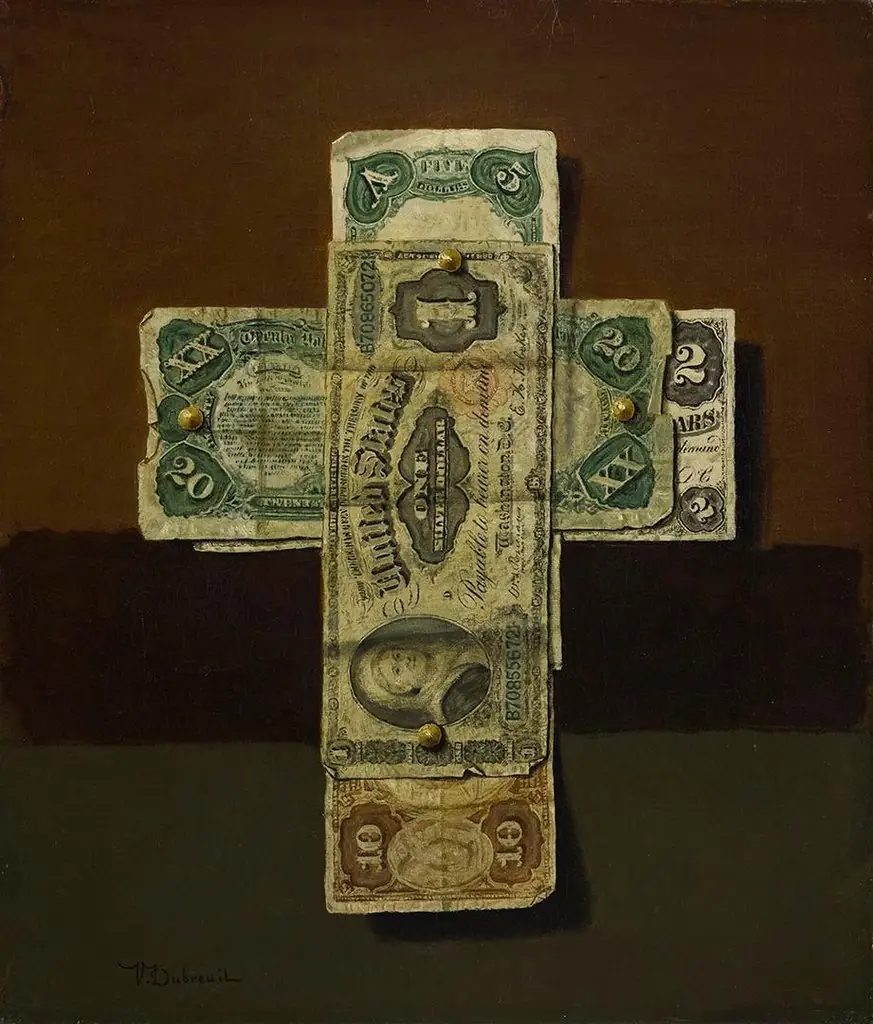 The Cross of Gold
 Monument al eroilor căzuți în Primul Război Mondial și în Al Doilea Război Mondial
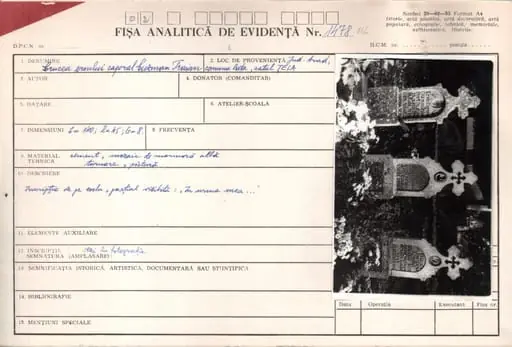 Monument al eroului Cuzman Traian căzut în Al Doilea Război Mondial
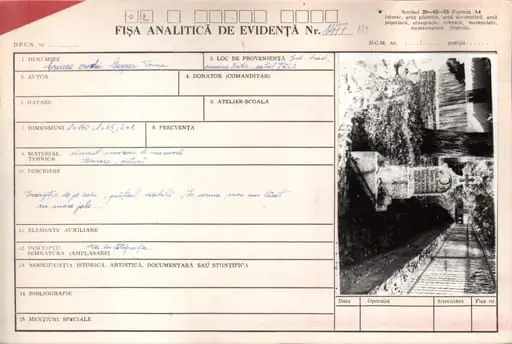 Monument al eroilor căzuți în Al Doilea Război Mondial
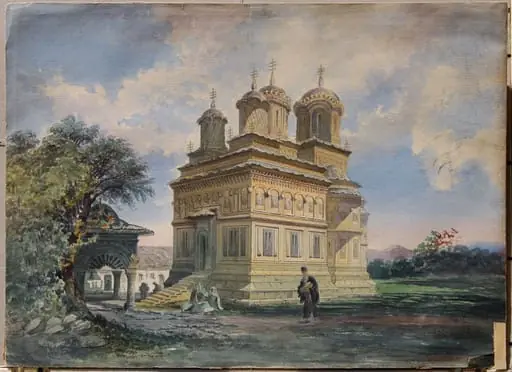 Curtea de Argeș
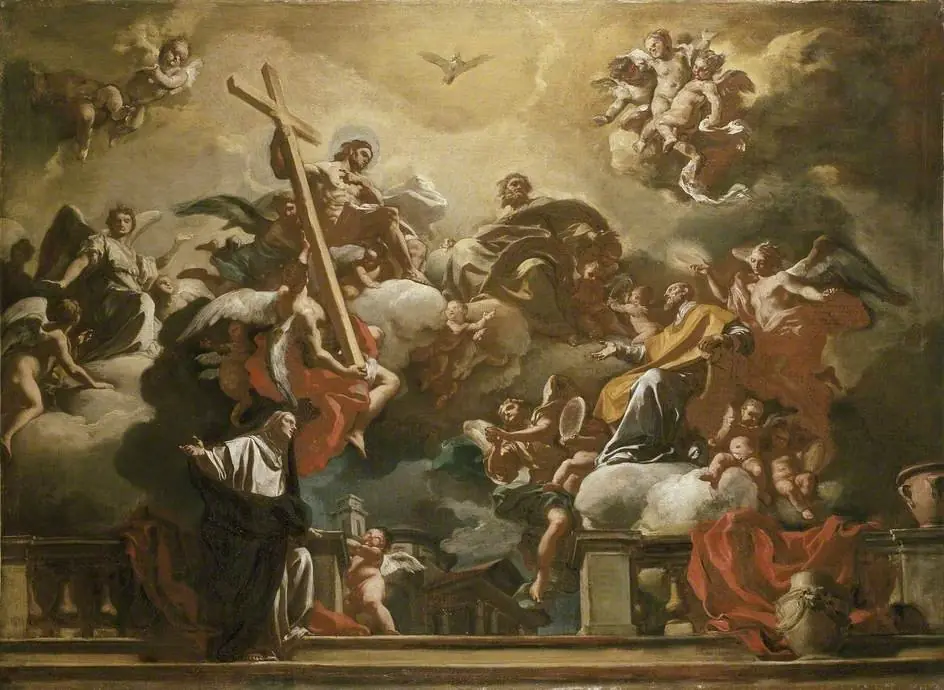 The Holy Trinity with St Philip Neri in Glory
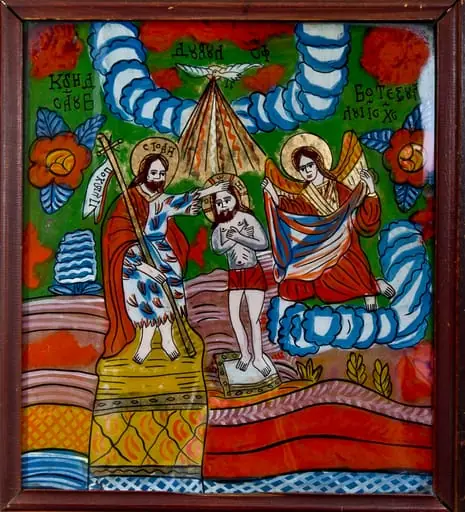 Botezul lui IS HS
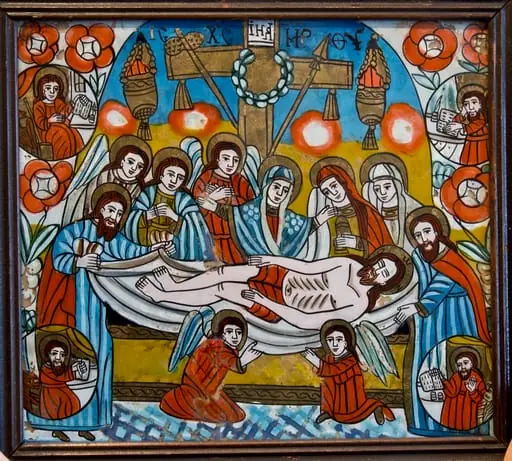 Punerea în mormânt; (Îngroparea lui Iisus, Prohodul)
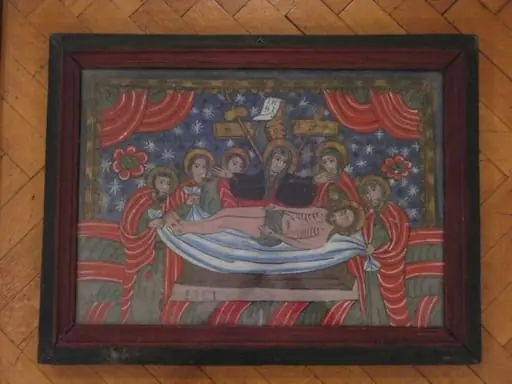 Plângerea lui Iisus Hristos (Prohodul)
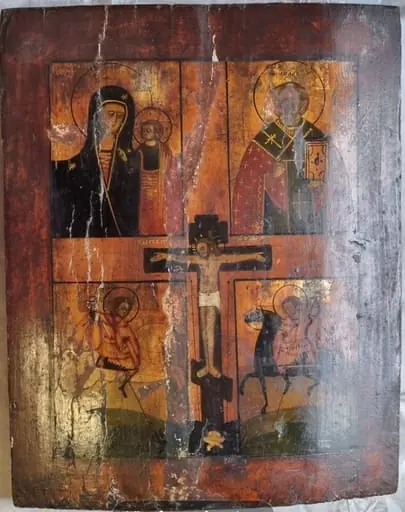 Răstignirea cu patru scene iconografice: 1) Maica Domnului cu Pruncul; 2) Sf. Nicolae; 3) Sf. Gheorghe; 4) Sf. Dumitru
 Icoambla
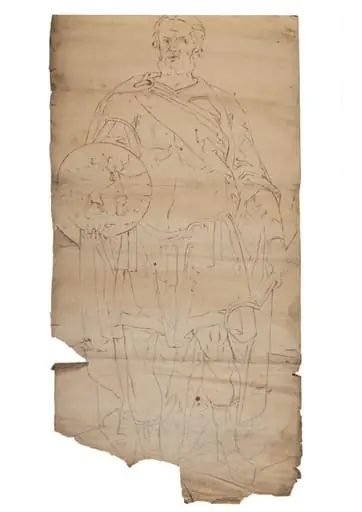 Martirul Eustatiu
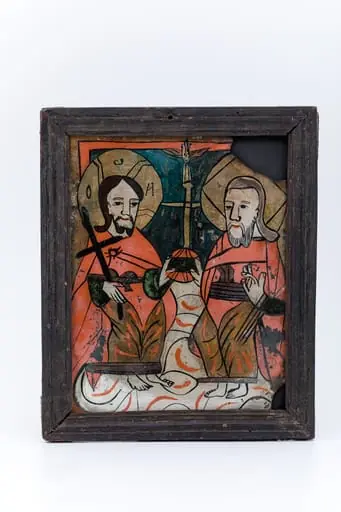 Icoana reprezintă Sfânta Treime. Dumnezeu-Tatăl și Dumnezeu-Fiul susțin împreună globul pământesc cu o cruce mare deasupra, apărând ca un sfânt chivot, ca pe o Biserică țin Pământul. Dumnezeu-Fiul, fiind alături, ține Crucea pe umărul drept. Dumnezeu-Tatăl are aureola în formă de triunghi echilateral, simbolizând Sfânta Treime. Dumnezeu-Tatăl și Dumnezeu-Fiul sunt îmbrăcați în veșminte în combinație de roz-corai, brun-bronziu, negru. Sfântul Duh se pogoară prin deschiderea Cerurilor. Fondul icoanei este cerul albastru ultramarin, cu influențe ușoare de indigo. În registrul inferior sunt nori albi, cu striații corai. Cromatica este armonioasă: roz-corai, albastru ultramarin bleu-marin, alb, gri-antracit, brun-bronziu, kaki, ocru-muștar, alb, negru. Alăturarea cromatică: roz corai, albastru ultramarin și brun-bronziu este excepțională. Inscripția din româno-chirilică se traduce Sfânta Treime. Icoana este din Nordul Transilvaniei, Nicula.
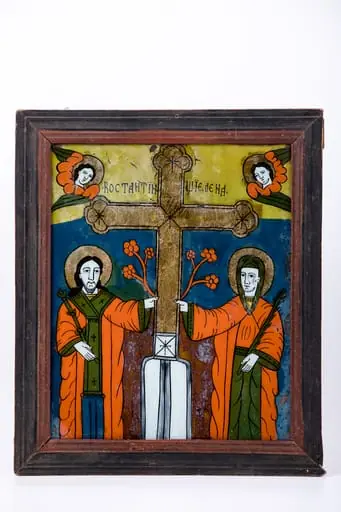 În centrul icoanei este Crucea albă la bază și bronzie în rest, cu capetele brațelor împodobite trilobat, iar în dreapta crucii este Sfântul Împărat Constantin, și în stânga este Împărăteasa Elena, mama sa. În spatele Crucii, sunt flori roșii agățătoare și unduitoare dintr-o grhirlandă de trandafiri. Crucea găsită este susținută cu bucurie de cei doi sfinți. Veșmintele Sfinților Constantin și Elena sunt într-o combinație de roșu vermillon și verde-iarbă de vară. Spațiul albastru-galben de lumină, din fondul icoanei, duce gândul la Crucea de lumină apărută pe cer In hoc signo vinces - prin acest semn vei învinge. Fondul icoanei este cerul albastru cobalt, lumina galbenă și o panglică albă, în josul crucii. În registrul superior, în colțurile stânga-dreapta sunt 2 îngeri serafimi. Cromatica este armonioasă, bogată și senină: roșu vermillon, galben-ocru, albastru cobalt, verde-iarbă de vară nuanță spanac-avocado, alb, negru. Icoana este de Nicula. Inscripția din româno-chirilică se traduce Constantin Elena.
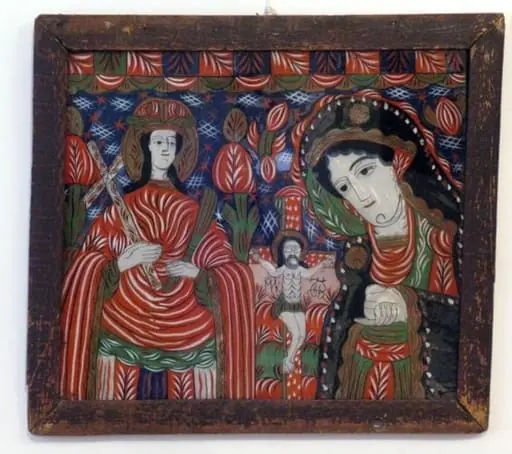 Sfânta Cuvioasă Paraschiva; Maica Domnului îndurerată
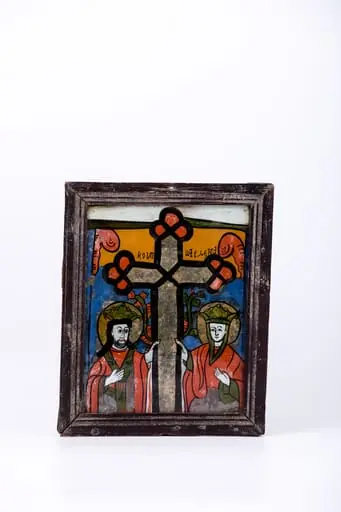 În centrul icoanei este Crucea gri-petrol, cu capetele brațelor împodobite roșu-trilobat, iar în dreapta crucii este Sfântul Împărat Constantin și în stânga este Împărăteasa Elena, mama sa. În spatele Crucii, este un vrej agățător și unduitor dintr-o grhirlandă de trandafiri, cu flori, spini și frunze și spațiul albastru regal unit cu cel galben-chihlimbar creează un izvor tainic de lumină. Crucea găsită este susținută cu bucurie de cei doi sfinți. Veșmintele Sfinților Constantin și Elena sunt într-o combinație de roșu vermillon și verde-iarbă de vară. Spațiul albastru-galben de lumină duce cu gândul la Crucea de lumină apărută pe cer In hoc signo vinces - prin acest semn vei învinge. Fondul icoanei este cerul albastru, lumina galbenă și o panglică alb-ivorie, în laterală superioară. Întreaga compoziție este încadrată armonios de un chenar decorativ geometrizant format din volute roșii. Cromatica este armonioasă, bogată și senină: roșu vermillon, galben-chihlimbar, albastru regal, verde-iarbă de vară, ivoriu, alb, negru. Icoana este de Nicula. Inscripția din româno-chirilică se traduce Constantin Elena.
 Mântuitorul Iisus Hristos, fiind răstignit pe Cruce, are în stânga pe Sfântul Împărat Constantin cel Mare, în locul uceniculuil cel iubit, care a stat lipit de pieptul Învățătorului, la Cina cea de Taină, mai precis, în locul Sfântului Apostol și Evanghelist Ioan Teologul, Evanghelistul Iubirii și în dreapta pe Sfânta Împărăteasă Elena, mama Sfântului Constantin, în locul Maicii Domnului Îndurerate, Jalnică și Plângătoare. Veșmintele Sfinților Împărați sunt sacosuri albastre cobalt și mantii roșii vermillon. Mântuitorul Iisus Hristos Răstignit pe Cruce are o țesătură verde-gri-antracit în jurul mijlocului și a coapselor. Fondul icoanei este cerul albastru bleu-ciel senin și în registrul inferior, în spatele Crucii este un spațiu galben-chihlimbar, prefigurând Lumina Învierii Domnului Iisus Hristos. Întreaga tematică iconografică este încadrată de un chenar decorativ fitomorf, format dintr-o ghirlandă de bujori și trandafiri, 4 ruje. Cromatica este armonioasă: roșu vermillon, albastru ceruleum, cobalt și bleu-ciel, gri antracit, verde forest, galben chihlimbar alb, negru. Inscripția din româno-chirilică se traduce Constantin cu Elena. Icoana este mai rară, datorită abordării tematicii iconografice. Icoana este din Nordul Transilvaniei, Nicula.
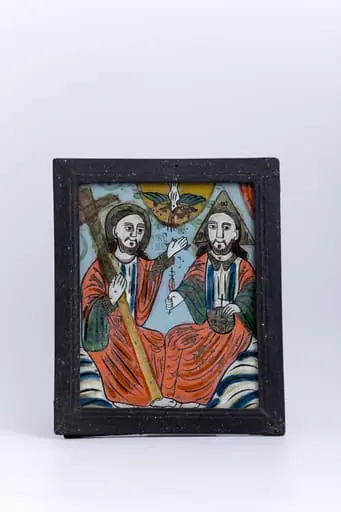 Icoana reprezintă Sfânta Treime. Dumnezeu-Tatăl are globul pământesc albastru pe genunchi și arătă către Fiul Iisus Hristos Binecuvântând lumea. Dumnezeu-Fiul are Crucea galbenă-aurie pe umărul drept și arătă către Dumnezeu-Tatăl. Dumnezeu-Tatăl și Dumnezeu-Fiul sunt înveșmântați în roșu vermillon și verde smarald cu albastru cobalt. Deasupra, în registrul superior este un soare galben, din care pe un mănunchi de raze luminoase, se pogoară Sfântul Duh, sub forma porumbelului alb. Astfel este prezentă întreaga Sfântă Treime. Între Dumnezeu-Tatăl și Fiul este un spațiu luminos de galben. Fondul icoanei este cerul albastru cobalt-regal, înconjurat de lumina galbenă-solară. Cromatica este luminoasă și armonioasă: roșu vermillon, albastru regal și cobalt, galben chihlimbar, verde smarald, gri, alb, negru.Inscripția din româno-chirilică se traduce Treime. Icoana este din Nordul Transilvaniei, Nicula.
 Mântuitorul Iisus Hristos, fiind răstignit pe Cruce, are în stânga în locul ucenicului cel iubit, care a stat lipit de pieptul Învățătorului, la Cina cea de Taină, mai precis, în locul Sfântului Apostol și Evanghelist Ioan Teologul, Evanghelistul Iubirii și în dreapta în locul Maicii Domnului Îndurerate, Jalnice și Plângătoare câte o ramură înaltă de trandafiri, cu boboci și frunze. Mântuitorul Iisus Hristos Răstignit pe Cruce are o țesătură verde în jurul mijlocului și a coapselor. Crucea este brună. Fondul icoanei brun-negru întunecat, iar în spatele Crucii, este un spațiu galben-chihlimbar, prefigurând Lumina Învierii Domnului Iisus Hristos. Întreaga tematică iconografică este încadrată de un chenar decorativ geometrizant, alb-roșu vermillon-acajou. Cromatica este armonioasă: roșu vermillon-acajou, brun-maro, verde brad, galben chihlimbar, bronziu, alb, negru. Inscripția din româno-chirilică se traduce Restignirea Lui IC XC Iisus Hristos. Icoana este din Nordul Transilvaniei, Nicula.
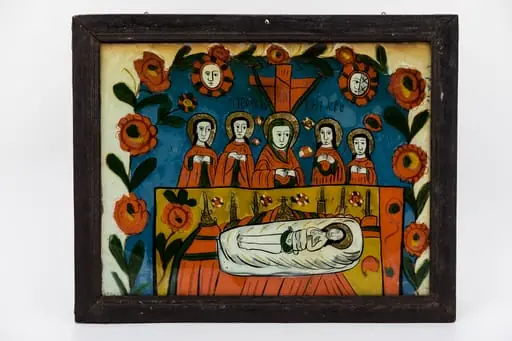 Icoana reprezintă Punerea în mormânt a Mântuitorului Iisus Hristos. Prohodul Domnului. Trupul Mântuitorului Iisus Hristos, fiind coborât de pe cruce, este învelit în țesătura giulgiului alb-gri, cu fire diafane galbene de lumină, amintind de Lumina Învierii. Maica Domnului împreună cu Sfinții Iosif din Arimateea, Nicodim și două femei mironosițe aducătoare de mir țin în brațe trupul Mântuitorului. Compozițional se creează astfel o imagine concentrică de corabie, cu Crucea Răstignirii ca și catarg, corabia prefigurând Biserica. Giulgiul și îmbrățișarea celor apropiați, uniți întru dragoste și suferință, reprezintă axa orizontală perpendiculară pe Cruce. Compoziția este echilibrată, simetrică și circulară. Maica Domnului este îmbrăcată în veșmânt cu maforiom roșu vermillon, cu sacos roșu vermillon și interiorul căptușit cu verde văratic. Fondul icoanei este cerul albastru ceruleum-cobalt, în registrul superior și de mijloc și un spațiu de galben-chihlmbar, în registrul inferior, în jurul mormântului Mântuitorului Iisus Hristos. Întreaga compoziție iconografică este încadrată de un chenar decorativ geometrizant alb, dublat de un chenar fitomorf, format dintr-o ghirlandă de 10-12 ruje roșii vermillon, cu interiorul galben-verde. În ghirlanda de ruje, sunt intercalate cele două elemente astrale martore: Soarele și Luna. Simetric și armonios, sunt 6 sfeșnice cu lumânări arzânde, lângă Trupul Mântuitorului Iisus Hristos, învăluit în giulgiu. Cromatica este armonioasă și luminos-pastelată: roșu vermillon, albastru cobalt, ceruleum, verde văratic-forest, galben chihlimbar, alb și negru. Inscripția din româno-chirilică se traduce Îngroparea Lui IC XC Iisus Hristos. Icoana este din Țara Oltului, Șcheii Brașovului.
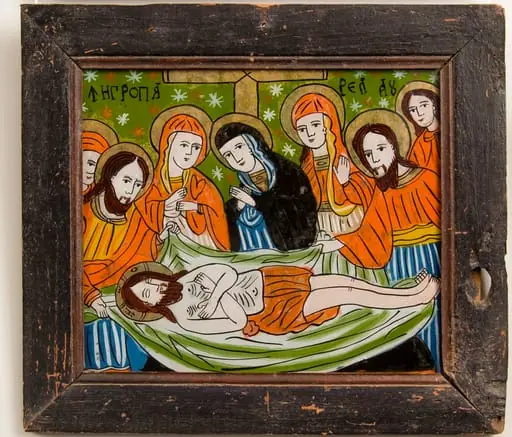 Punerea în mormânt; Îngroparea lui Iisus
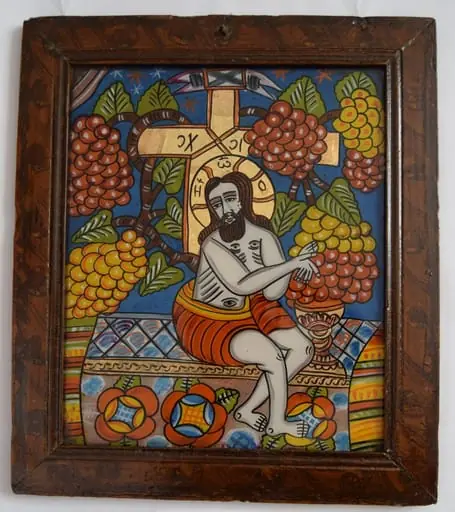 Iisus Hristos Euharistic
 Mântuitorul Iisus Hristos, fiind răstignit pe Cruce, având în dreapta pe Maica Domnului Îndurerată și în stânga pe ucenicul cel iubit Sfântul Apostol și Evanghelist Ioan. Mântuitorul Iisus Hristos Răstignit pe Cruce are o țesătură verde-forest în jurul mijlocului și a coapselor. Crucea este orange. În registrul superior sunt elementele astrale: Soarele și Luna. Fondul icoanei este cerul albastru ultramarin bleumarin întunecat de noapte și tristețe și galben-solar în spatele Crucii, prefigurând Lumina Învierii Domnului Iisus Hristos. Cerul este bogat ornamentat cu elemente astrale - soarele și luna, stilizate floral. În spațiul inferior, este un câmp galben solar de lumină. Cromatica este armonioasă: roșu vermillon, orange, albastru ultramarin bleumarin, gri antracit, galben solar, brun, crem, bej, bronziu, alb, negru. Icoana este din Nordul Transilvaniei, Nicula.
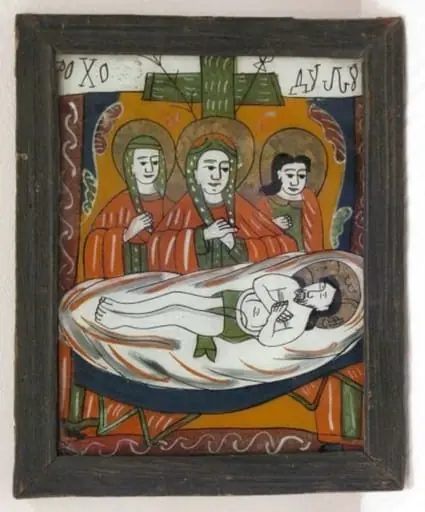 Plângerea lui Iisus
 Icoari.
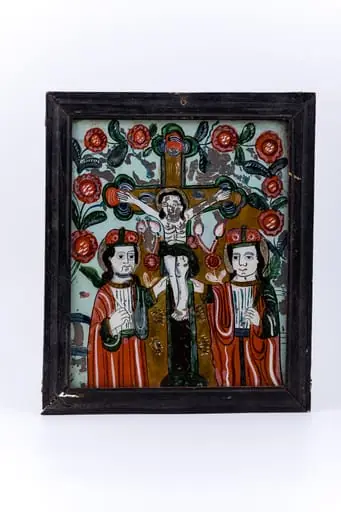 Mântuitorul Iisus Hristos, fiind răstignit pe Cruce, are în dreapta pe Sfântul Împărat Constantin cel Mare, în locul uceniculuil cel iubit, care a stat lipit de pieptul Învățătorului, la Cina cea de Taină, mai precis, în locul Sfântului Apostol și Evanghelist Ioan Teologul, Evanghelistul Iubirii și în stânga pe Sfânta Împărăteasă Elena, mama Sfântului Constantin, în locul Maicii Domnului Îndurerate, Jalnică și Plângătoare. Veșmintele Sfinților Împărați sunt sacosuri albe, cu dungi albastre-verzi și mantii roșii vermillon, cu mânecile largi și verzi. Mântuitorul Iisus Hristos Răstignit pe Cruce are o țesătură verde-forest în jurul mijlocului și a coapselor. Fondul icoanei este cerul albastru bleu-ciel înspre alburiu senin și deschis, în registrul superior și galben-chihlimbar, în spatele Crucii, un spațiu galben-solar, prefigurând Lumina Învierii Domnului Iisus Hristos. Întreaga tematică iconografică este încadrată de un chenar decorativ fitomorf, format dintr-o ghirlandă de bujori și trandafiri, 10 ruje. Cromatica este armonioasă: roșu vermillon, albastru bleu-ciel, albastru cobalt, gri antracit, galben-chihlimbar, verde forest, alb zinc, negru. Icoana este mai rară, datorită abordării tematicii iconografice. Icoana este din Nordul Transilvaniei, Nicula.
 Icoana reprezintă Prohodul Domnului. Punerea în mormânt a Mântitorului Iisus Hristos. Trupul Mântuitorului Iisus Hristos, fiind coborât de pe cruce, este învelit în țesătura giulgiului alb-verde-gri. Maica Domnului împreună cu Sfinții Iosif din Arimateea, Nicodim și două femei mironosițe aducătoare de mir țin în brațe trupul Mântuitorului. Compozițional se creează astfel o imagine concentrică de corabie, cu Crucea Răstignirii ca și catarg, corabia prefigurând Biserica. Giulgiul și îmbrățișarea celor apropiați, uniți întru dragoste și suferință, reprezintă axa orizontală, perpendiculară pe Cruce. Compoziția este echilibrată, simetrică și circulară. Maica Domnului este îmbrăcată în veșmânt roșu vermillon-corai, cu sacos alb-crem, cu dungulițe albastre. Veșmintele Sfinților și Mironosițelor sunt în combinație de roșu vermillon și verde-forest. Mironosițele sunt înveșmântate în galben-chihlimbar - culoarea luminii și a Mirului. Ele sunt vestitoarele Învierii Domnului Iisus Hristos. Fondul icoanei este cerul albastru regal și un spațiu de galben-chihlimbar-verde-maro, în registrul inferior. Întreaga tematică iconografică este încadrată de un chenar decorativ fitomorf, format dintr-o ghirlandă din 2 ruje mari roșii vermillon. Cromatica este armonioasă: roșu vermillon, albastru cobalt, regal, bleu-ciel alburiu, verde văratic-forest, galben chihlimbar, maro, alb și negru. Inscripția din româno-chirilică se traduce Îngroparea. Icoana este din Nordul Transilvaniei, Nicula.
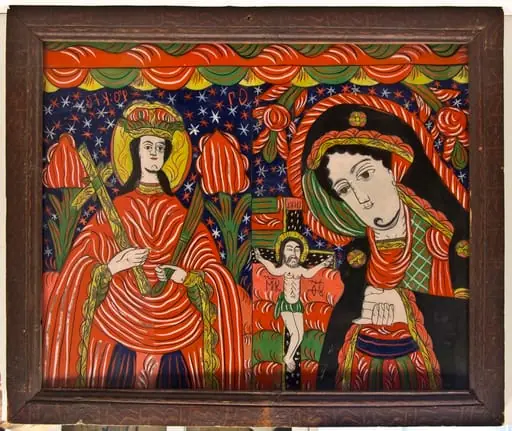 Sf. Parascheva și Maica Domnului îndurerată
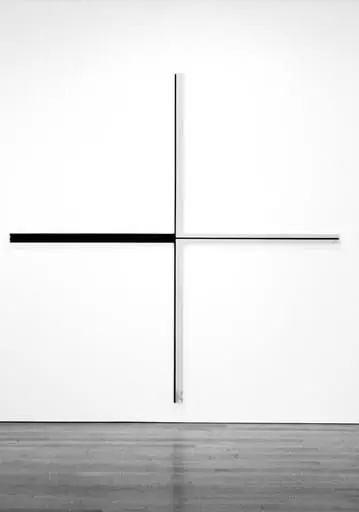 Untitled
 În centrul icoanei este Crucea galbenă, cu terminațiile brațelor trilobate pictate cu roșu-alb-gri, iar în dreapta crucii este Sfântul Împărat Constantin, și în stânga este Împărăteasa Elena, mama sa. În spatele Crucii, este cerul albastru regal, încadrat de o ghirlandă de 4 ruje. Crucea găsită este susținută cu bucurie de cei doi sfinți. Veșmintele Sfinților Constantin și Elena sunt într-o combinație de roșu vermillon, gri antracit. Fondul icoanei este cerul albastru-cobalt, în registrul superior, iar în registrul inferior, este un câmp de galben luminos. În registrul superior, este o boltă-cupolă-arcadă albă luminoasă. Cromatica este armonioasă: roșu vermillon, galben-ocru, albastru regal, gri antracit, alb, negru. Icoana este de Nicula. Inscripția din româno-chirilică se traduce Constantin cu Elena. Postamentul Crucii este realizat printr-un caroiaj alb-negru.
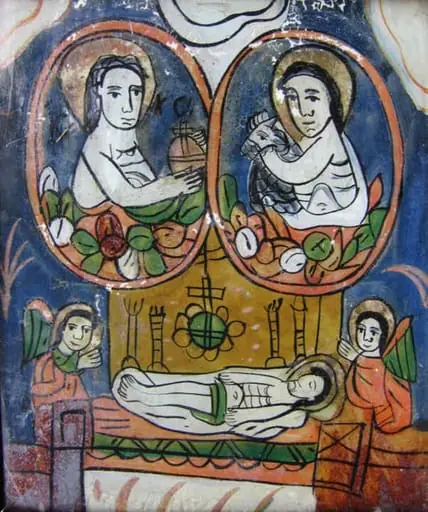 Ioan Botezătorul cu mielul și Iisus; Îngroparea lui Iisus
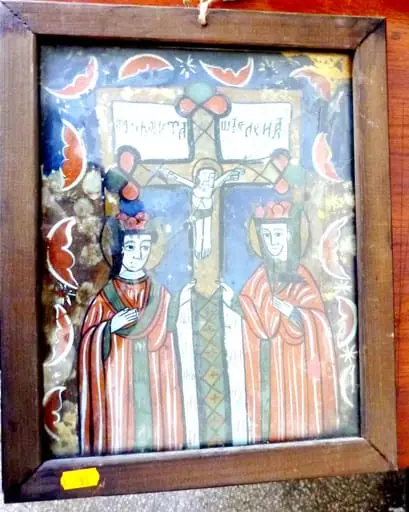
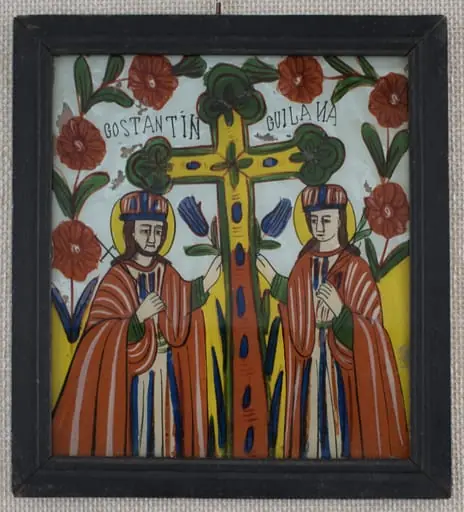 Icoana este pictată pe spatele unei bucăți de sticlă dreptunghiulară, în ax vertical. Compoziția îi reprezintă pe Sfinții Împărați Constantin și Elena, în picioare, din ușor semiprofil, sub brațele crucii pe care o susțin, crucea pe care a fost răstignit Isus, găsită de Împărăteasa Elena la Ierusalim. Amândoi au plete castanii, lăsate pe umeri, coroane sub formpă de tocă, veșminte identice , cămăși pictate policrom (alb, roșu, verde) și mantii roșii cu falduri bogate, trasate cu alb. Sf. Constantin ține în mâna liberă o cruce iar mama sa o ramură verde. Crucea, plasată în centrul compoziției, pictată policrom, are brațele trilobate, corpul decorat cu motive geometrice și sacrale. În partea de jos sunt sugerate frunze, amintind de ipostaza de pom al vieții. Câmp bicolor, jumătatea inferioară - galben intens caracteristic Niculei târzii, partea de sus alb-bleu, două tulpini sinuoase de flori roșii(ruje) care se apropie în partea superioară a crucii.Linie de desen roșie. Rama profilată este vopsită cu negru și încheiată oblic;dosul este din lemn subțire de brad; Culoarea este exfoliată pe unele locuri;
 Trupul Mântuitorului Iisus Hristos, fiind coborât de pe cruce, este învelit în țesătura giulgiului alb. Maica Domnului împreună cu Sfinții Iosif din Arimateea, Nicodim și patru femei mironosițe aducătoare de mir țin în brațe trupul Mântuitorului. Compozițional se creează astfel o imagine concentrică de corabie, cu Crucea Răstignirii ca și catarg, corabia prefigurând Biserica. Giulgiul și îmbrățișarea celor apropiați, uniți întru dragoste și suferință, reprezintă axa orizontală perpendiculară pe Cruce. Icoana este o oglindă a Nașterii Mântuitorului-giulgiul fiind vechea înfășare in scutecele alb al Pruncului Iisus. În registrul inferior sunt doi îngeri îngenucheați, care susțin Trupul Mântuitorului, învelit în giulgiu. Lateral, stâng-dreapta, crucii sunt prezente soarele și luna, elemente astrale. Compoziția este echilibrată, simetrică și circulară. Cromatica, specifică autoarei Ana Deji, din Făgăraș, este alcătuită din roșu, albastru bleumari ceruleum, alb și negru. Stilul iconăriței Ana Deji se remarcă prin fondul icoanei cu un cer albastru cu stele albe și roșii, pensulațiiile albe și încadrarea tematicii narativ-iconografice într-un chenar din volutele unei draperii-drapaje.Trăsăturile personajelor sunt fin desenate, tristețea și durerea dezvăluindu-se. În inscripție se dezvăluie Mormântul Lui ICXC Iisus Hristos.
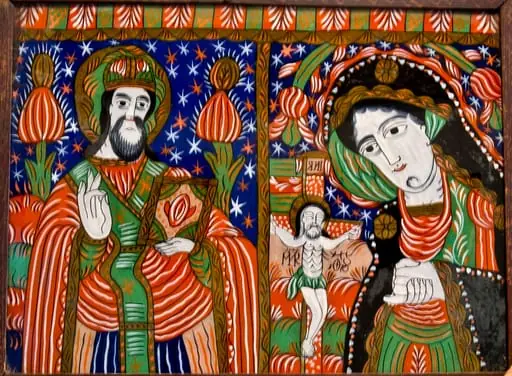 Sf. Nicolae și Maica Domnului îndurerată
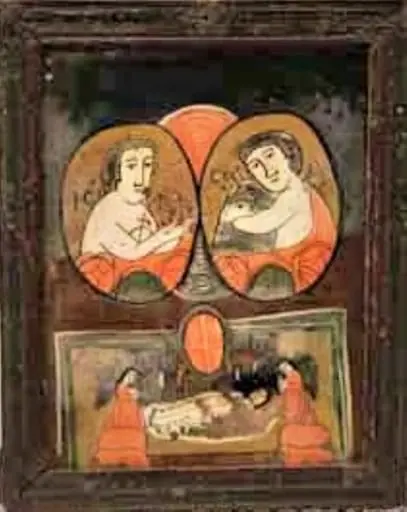 punerea în mormânt și Iisus și Ioan copii
 Tema icoanei face parte din ciclul Pascal și înfățișează Învierea Domnului. În plan central apare reprezentat Iisus Hristos biruitor, deasupra unor nori stilizați, ținând în mâna dreaptă un steag cu cruce, iar cu stânga binecuvintează. În partea stângă a compoziției e pictat un paznic, iar în dreapta apare un înger cu un filacter deschis în mână. Cromatica icoanei se compune din tonuri de roșu vermillon, alb, ocru galben, verde, albastru, negru și gri. Rama icoanei e simplă, băițuită și e formată din îmbinarea a patru baghete de lemn. Sticla este spartă în partea dreaptă.
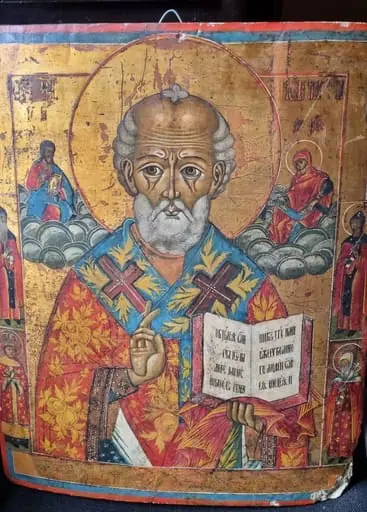 Sfântul Ierarh Nicolae cu Sfinți pe chenar
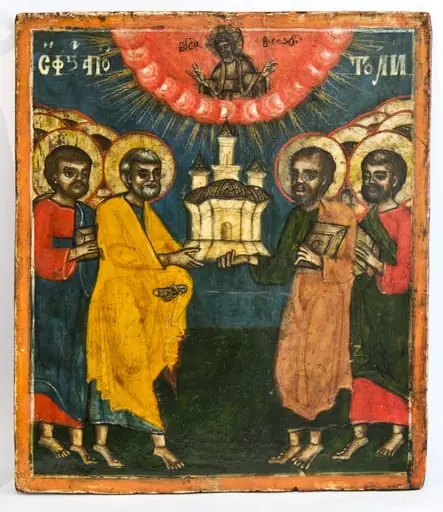 Sf. Petru și Pavel; Duminica Tuturor Sfințilo
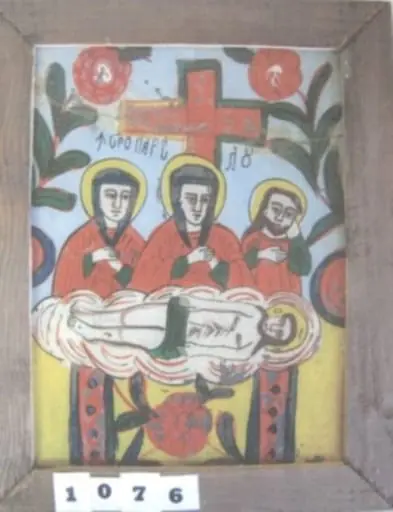 Îngroparea lui Iisus
 Tema icoanei face parte din ciclul Patimilor Mântuitorului și înfățișează scena Răstignirii Domnului. Compoziția este extrem de simplă: Hristos răstignit în mijloc pe cruce, Maica Domnului în dreapta Lui, iar Sfântul Ioan Evanghelistul în stânga. Cromatica se compune din tonuri de roșu vermillon, verde, albastru, ocru galben, negru și gri. Rama icoanei e profilată, băițuită, și e formată din îmbinarea a patru baghete de lemn. Sticla este spartă în mai multe fragmente.
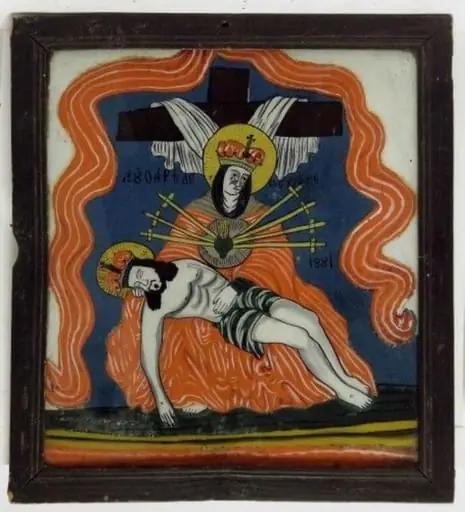 Coborârea de pe cruce
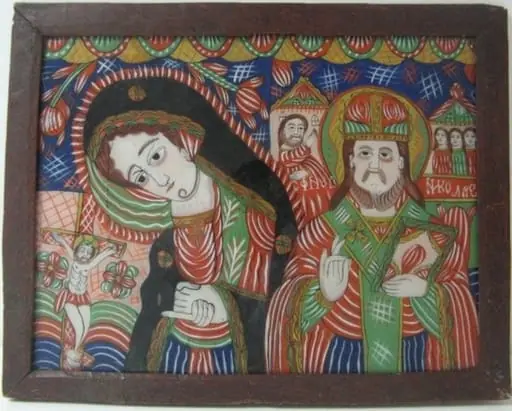 Maica Domnului Îndurerată și Sfântul Nicolae
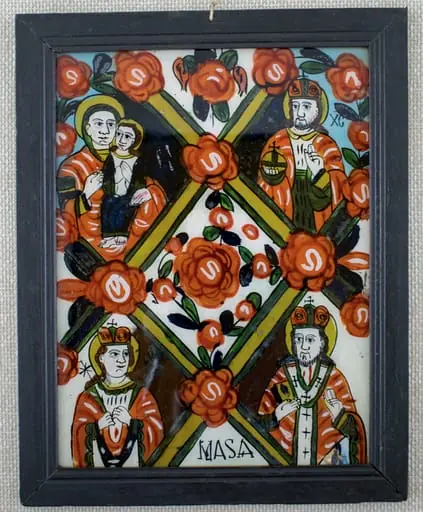 Icoau pe
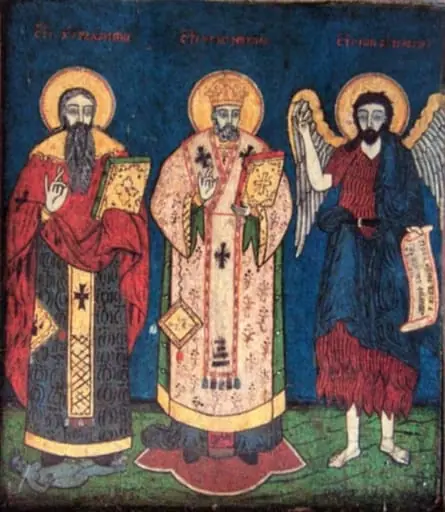 Sfinții Haralambie, Nicolae și Ioan Botezătorul
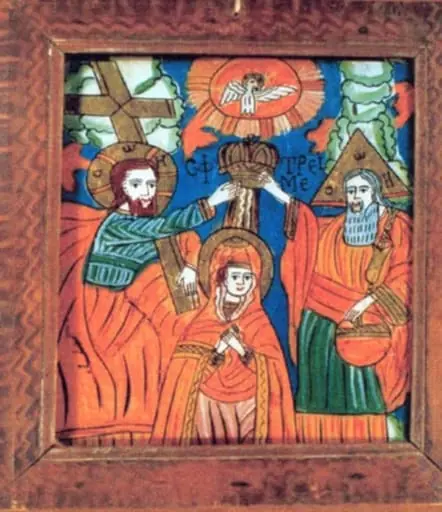 Sfânta Treime; Încoronarea Fecioarei
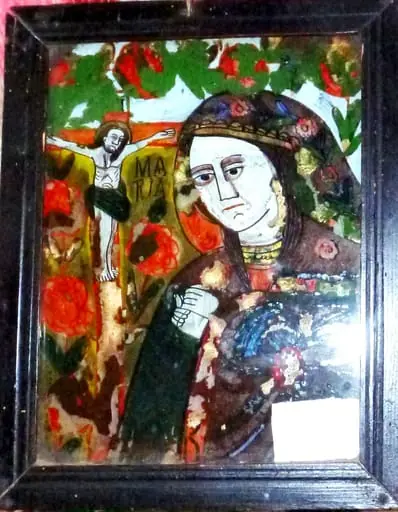 Maica Domnului indurerata
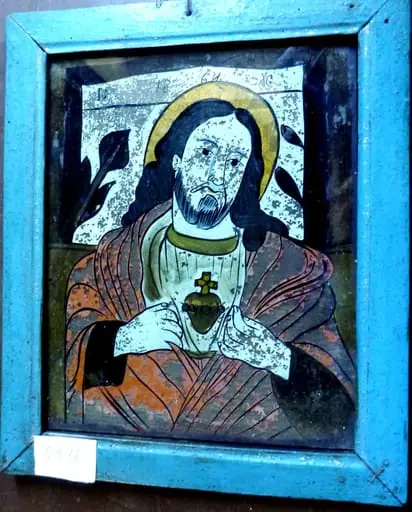 Inima lui Iisus
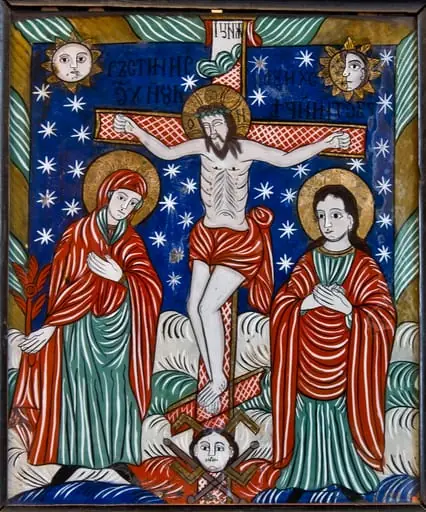 Răstignirea lui Iisus Hristos
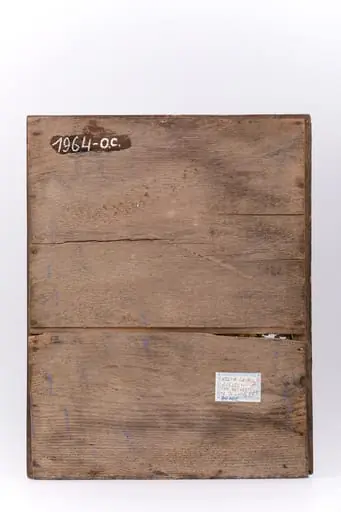 Mântuitorul Iisus Hristos, fiind răstignit pe Cruce, are în stânga și în dreapta pe cei doi tâlhari răstigniți. Mântuitorul Iisus Hristos Răstignit pe Cruce are o țesătură verde-gri-antracit în jurul mijlocului și a coapselor. De asemenea și cei doi tâlhari au astfel mijlocul acoperit. Mântuitorul Iisus Hristos are aureola de lumină. Fondul icoanei este bicrom: cerul albastru bleu-ciel-regal senin, în registrul superior și în registrul inferior, în spatele Crucii este un spațiu galben-chihlimbar, prefigurând Lumina Învierii Domnului Iisus Hristos. Întreaga tematică iconografică este încadrată de un chenar decorativ fitomorf, format dintr-o ghirlandă bogată de bujori și trandafiri, 16 ruje, care împresoară întreaga compoziție. Cele trei cruci sunt roșii-vermillon-cărămizii. Cromatica este armonioasă: roșu vermillon, albastru ceruleum, cobalt și bleu-ciel, gri antracit, verde forest, galben chihlimbar alb, negru. Inscripția din româno-chirilică se traduce INRI Iisus Nazarieneanul Regele iudeilor. Icoana este mai rară, datorită abordării tematicii iconografice. Icoana este din Nordul Transilvaniei, Gherla.
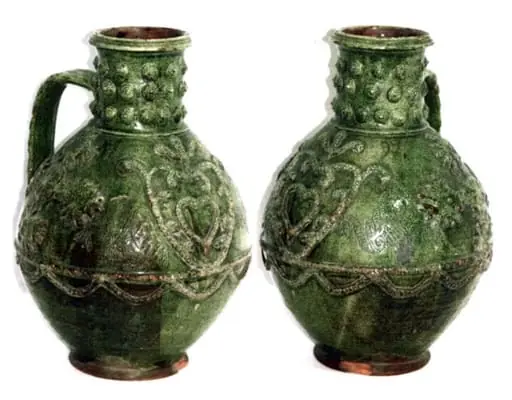 cană de bere
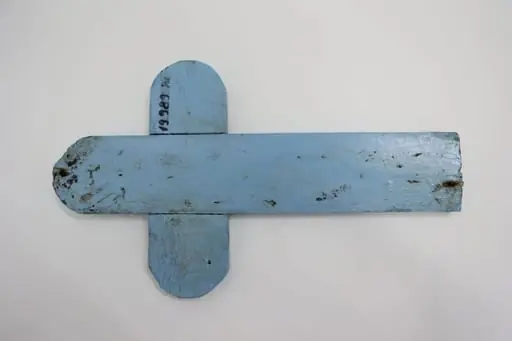 Cruce de jurământ, cu brațele ușor rotunjite, în afară de cel de jos, care este drept. Prezintă două orificii de prindere, sus și jos. În mijlocul crucii se află Iisus Hristos, ținând în mâna stângă Evanghelia și fiind încadrat, la partea superioară, la stânga și la dreapta, de doi îngeri sau sfinți. Sub Iisus se află pictată inscripția, cu caractere negre. Pe lângă inscripția de jos, mai există o mică inscripție, „N.R.”, în partea superioară. Printre îngeri și Iisus se află dispuse 7 linii ondulate, albe, ca niște șerpișori.. Cromatică: fond bleu, roșu, verde, maro, galben.
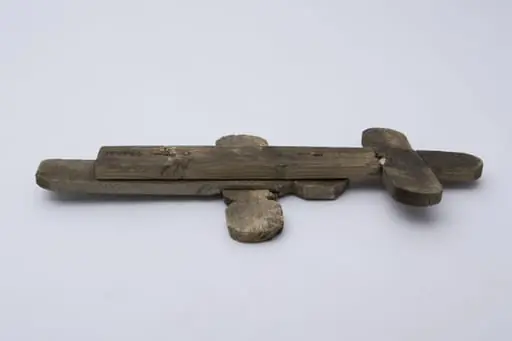 Obiect de cult confecționat din lemn de brad. Compusă din două cruci; o cruce pictată, prinsă printr-un cui metalic, cu o altă cruce nepictată, cu rol de suport. Pe fond verde se intuiește o pictură reprezentându-l pe Iisus răstignit. Text inscripționat în culoare albă. Linii diagonale dublate alcătuind un ”X” sunt trasate cu negru pe cele trei capete superioare ale crucii. Culorile sunt estompate. Capetele brațului scurt și capul brațului lung din partea superioară decupate în formă hexagonală. Cealaltă cruce prezintă extremitățile brațului scurt și extremitatea superioară a brațului lung rotunjite. Ambele cruci sunt formate din câte două bucăți de lemn, una mai lungă și cealaltă mai scurtă așezate perpendicular și asimetric una peste alta. Elementele din lemn îmbinate și prinse în cuie. Cromatică: maro; verde; cărămiziu; alb.
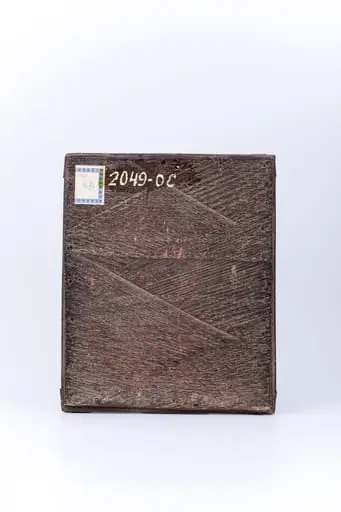 Icoana reprezintă Sfânta Treime. Dumnezeu-Tatăl și Fiul Iisus Hristos susțin globul pământesc dimpreună, Binecuvântând lumea, și având Crucea în spatele Pământului. Dumnezeu-Tatăl și Dumnezeu-Fiul sunt înveșmântați în roșu vermillon și verde-văratic-kaki, cu liniuțe fine albe. Deasupra, în registrul superior, dintr-un mănunchi de raze luminoase, printr-o mandorlă de nouri albi, rotunzi, se pogoară Sfântul Duh, sub forma porumbelului alb. Astfel este prezentă întreaga Sfântă Treime. Între Dumnezeu-Tatăl și Fiul este un spațiu luminos de galben, cu Crucea aurie. Fondul icoanei este cerul albastru ultramarin-indigo înconjurat de lumina galbenă de chihlimbar și lumina albă, ca de zăpadă. Întreaga tematică iconografică este încadrată de un chenar decorativ geometrizant brun-acajou, cu linia albă șerpuită, simbolul infinitului. Inscripția din româno-chirilică se traduce S Treime. Cromatica este luminoasă și armonioasă: roșu vermillon, albastru ultramarin-indigo, galben chihlimbar, verde văratic-kaki, brun, acajou, alb, negru. Icoana este din Nordul Transilvaniei, Nicula.
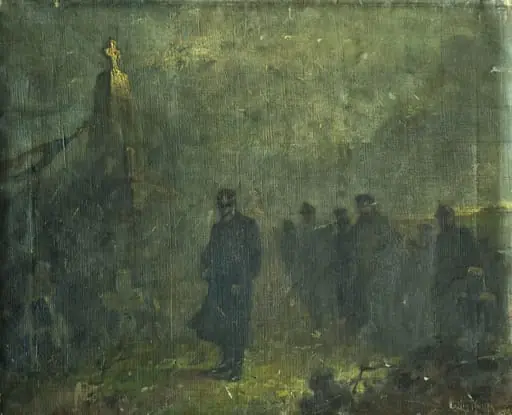 Carol (I) într-un cimitir
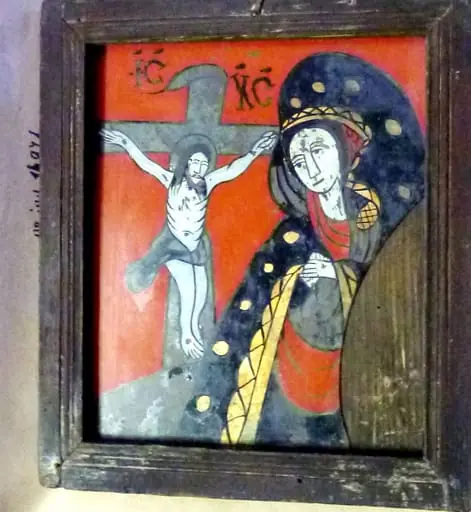 Maica Domnului Indurearata
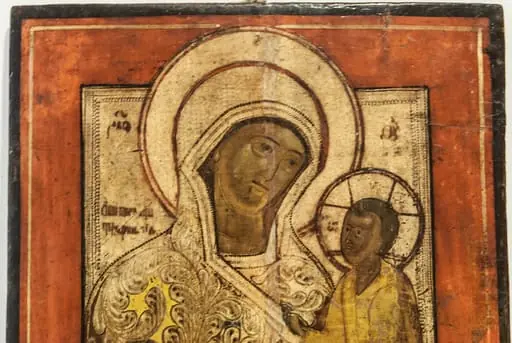 Icoan in
 Maica Indurerata
 Icoa cee
 lada de haine
 Înălțarea Domnului
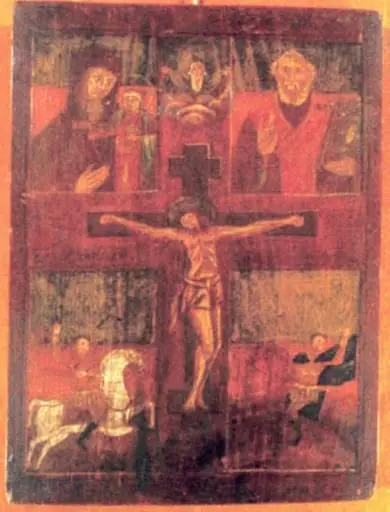 Răstignirea lui Iisus Hristos
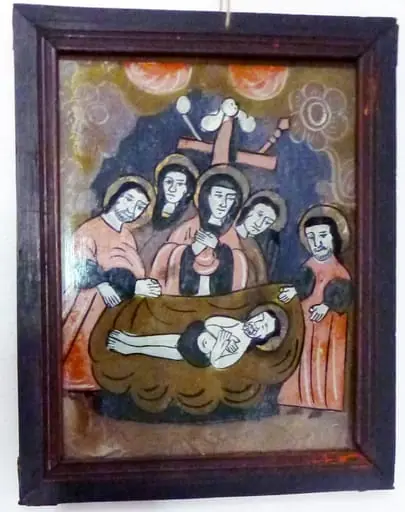 Prohodul Domnului
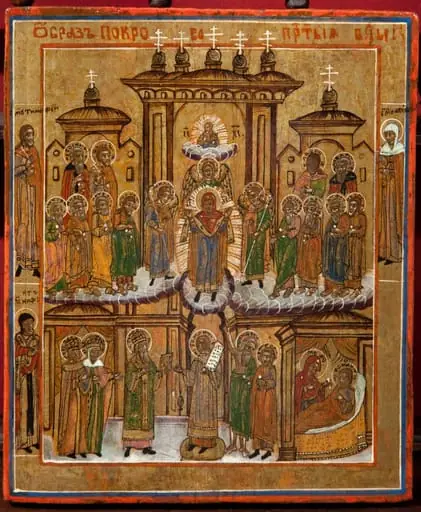 Acoperământul Maicii Domnului; Pocrovul
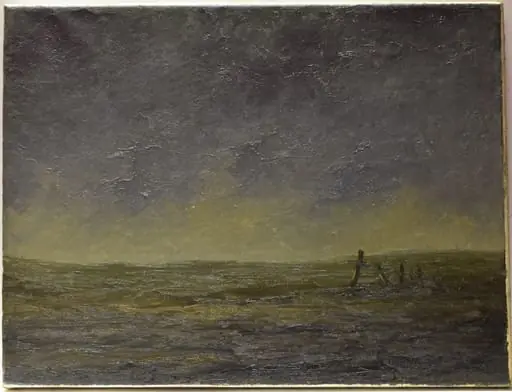 Cruci în amurg
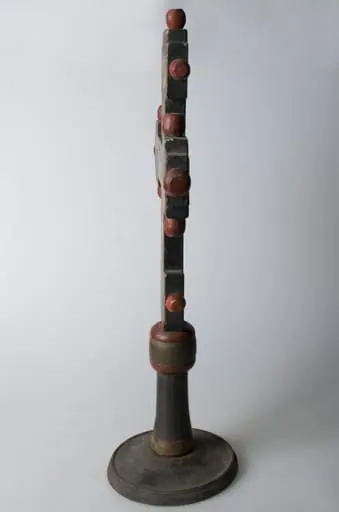 Crucea treflată este realizată din lemn de esență moale cu postament rotund, având câte trei bulbi pe cele trei brațe ale crucii și doi bulbi la bază. Aceasta are două fețe, fiind prelungită cu un mâner. Pe una dintre fețele crucii este pictată scena Botezul Domnului: central este reprezentat Iisus Hristos, iar deasupra un porumbel printre nori reprezentând Duhul Sfânt. În partea stângă este prezent Ioan Botezătorul, iar în dreapta o altă persoană. Pe cealaltă față este ilustrată scena Răstignirea Domnului: în partea centrală este Iisus Hristos, răstignit pe cruce. În partea stângă este pictată Maica Domnului, iar în partea dreaptă este pictat ucenicul iubit, Ioan. În registrul superior sunt reprezentate soarele și luna. Cromatică: alb; roșu; negru; bleumarin.
 Untitled
 Untitled
 Untitled
Frequently asked questions
What is Cross?
Cross is an English topographic surname for someone who lived on a road near a stone cross.
How many Cross works does Artifact World Gallery have?
Artifact World Gallery holds 158 public-domain Cross works, all free to view and download.
Who are the key Cross artists?
Key Cross artists in the collection include Titian, Jean Baptiste Camille Corot and El Greco.
Where can I see Cross works?
Cross works in the collection are held by Museo del Prado, Metropolitan Museum of Art and ASTRA National Museum Complex.