Artwork
Fourteen Auxiliary Saints
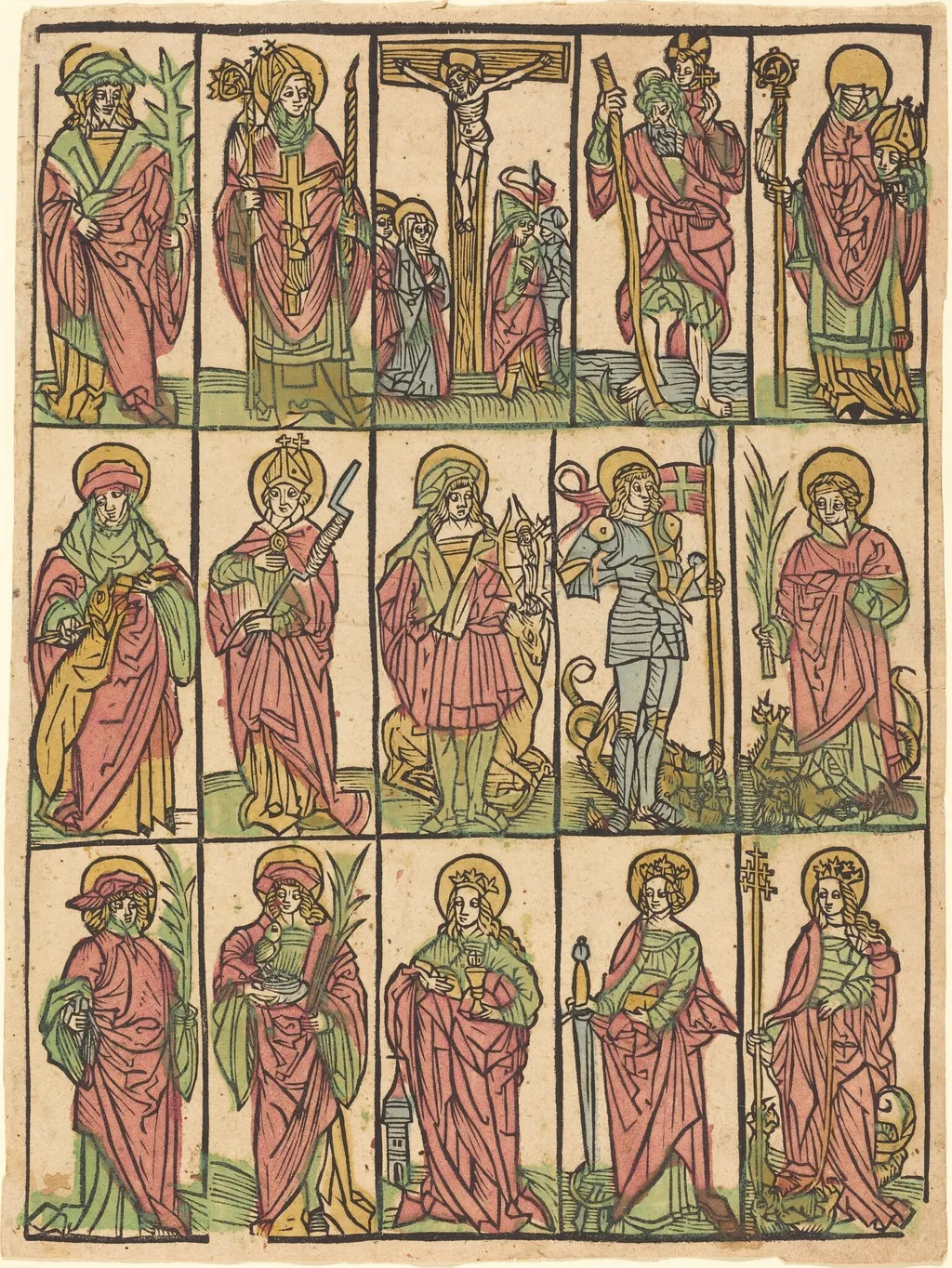
Fourteen Auxiliary Saints is an ink print by the Renaissance artist German 15th Century. It dates from 1500 and is held in the collection of the National Gallery of Art.
About this work
Overview
Fourteen Auxiliary Saints is a woodcut print, hand-colored in a vibrant palette of pink-red, green, blue, and yellow, set against a light beige background. The composition arranges fourteen saints in a structured grid of three rows and five columns.
Subject & Meaning
The print depicts fourteen auxiliary saints, each distinguishable by their attire and attributes such as swords, crosses, and palm leaves. Their varied poses, including standing and kneeling, convey a sense of dynamic devotion.
Technique & Style
Executed as a woodcut with subsequent hand-coloring, the piece blends the precision of printmaking with the expressive touch of manual coloring. The style, while not explicitly dated in the provided facts, is suggested to relate to the Renaissance movement, implying a period of heightened artistic innovation.
Context
The work's context is hinted at through a suggested connection to the Renaissance, a time of religious and artistic fervor in Europe. The use of auxiliary saints aligns with the period's religious practices and devotional art.
Legacy
While specific legacy details are not provided, the piece's recommended comparison to the Renaissance movement implies it may contribute to the broader understanding of religious art and printmaking techniques of its time.
Artist & collection

Artist
This 15th-century German artist carved vivid religious scenes into metal and wood, then hand-painted them in bright, symbolic colors.

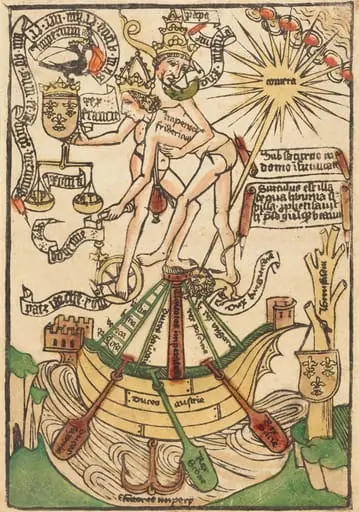 Allegory of the Meeting of Pope Paul II and Emperor Frederick III
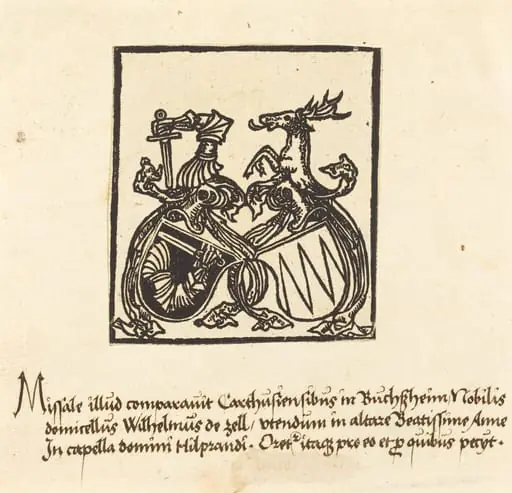 Bookplate of Wilhelm von Zell
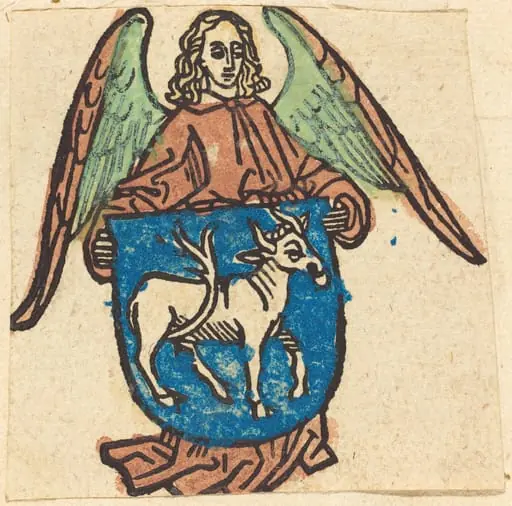 Bookplate of Hilprand Brandenburg of Bibrach
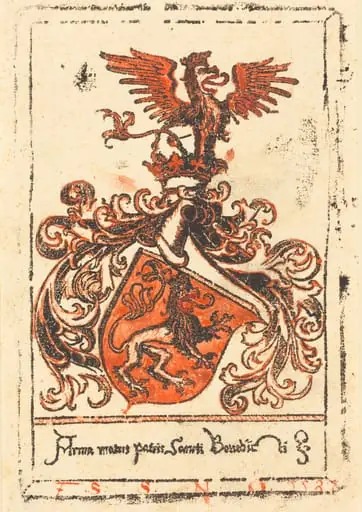 Bookplate of the Abbey of Ottobeuren
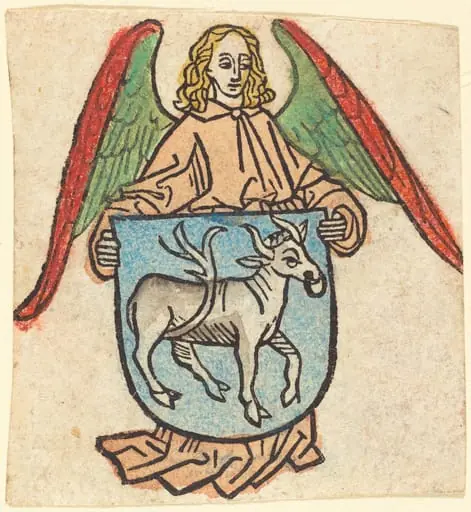 Bookplate of Hilprand Brandenburg of Bibrach
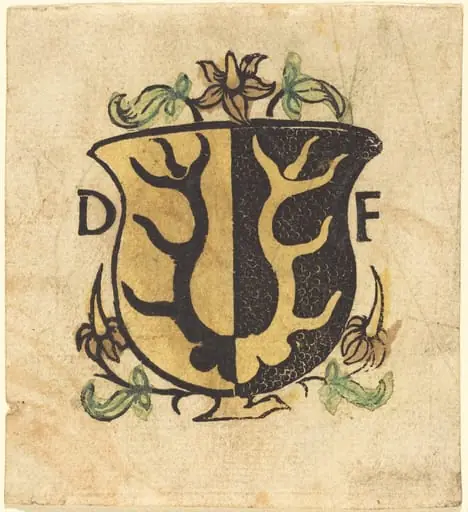 Bookplate of Dominicus Frauenfelder
![Studies for Six Figures (sheet from a model book) [recto], by German 15th Century](https://artifactworldgallery.com/img/german-15th-century--studies-for-six-figures-sheet-from-a-model-book-recto--4837429e0755bc3f-w320.webp) Studies for Six Figures (sheet from a model book) [recto]
Studies for Six Figures (sheet from a model book) [recto]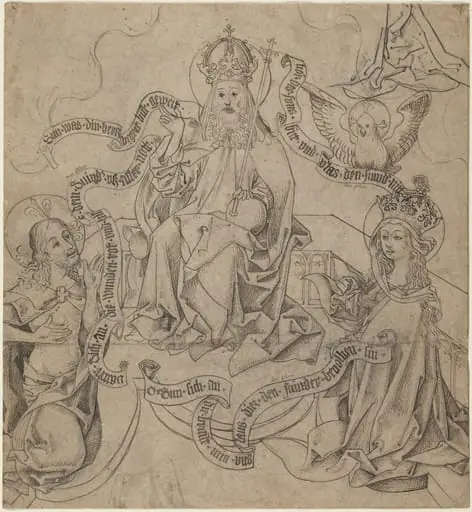 Christ and Mary Interceding with God the Father
![Saint Agnes [verso], by German 15th Century](https://artifactworldgallery.com/img/german-15th-century--saint-agnes-verso--eb41977e5e7551cd-w320.webp)