Artwork
Holy Kinship
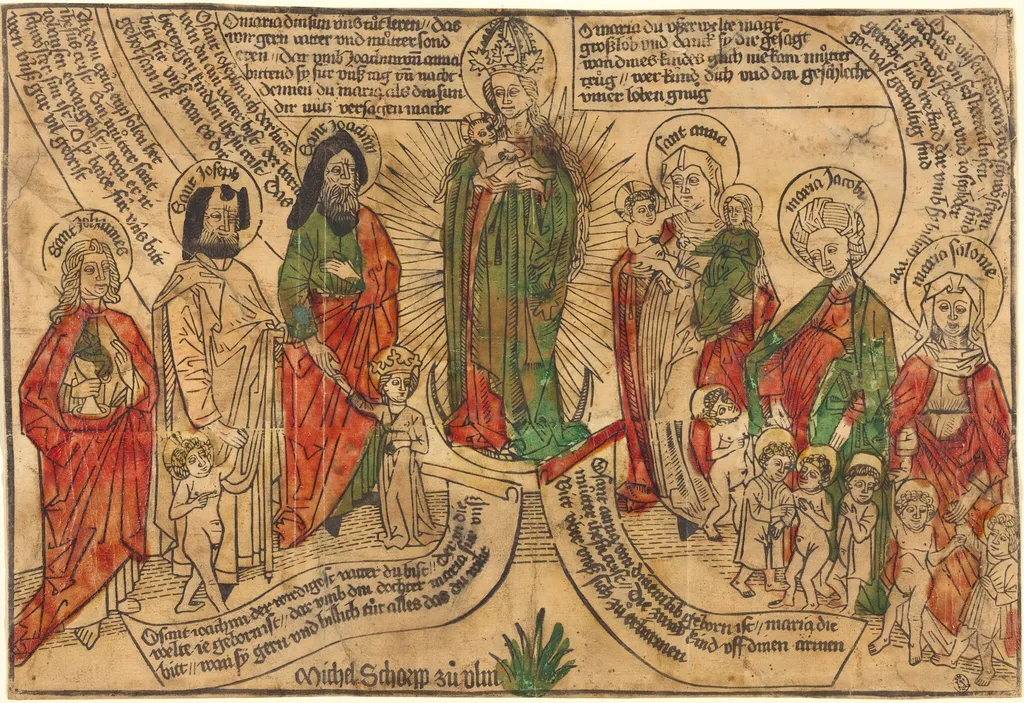
Holy Kinship is an ink print by the Renaissance artist German 15th Century. It dates from 1495 and is held in the collection of the National Gallery of Art.
About this work
Overview
Created in 1495, this hand-colored woodcut depicts the Holy Kinship, a subject popular in late 15th-century German and Low Countries art.
Created in 1495, this hand-colored woodcut depicts the Holy Kinship, a subject popular in late 15th-century German and Low Countries art. The composition presents a crowded assembly of figures standing on steps, illustrating the extended family of Jesus as defined by the medieval tradition of Saint Anne's three marriages. Central to the narrative is the belief that Saint Anne, mother of the Virgin Mary, was grandmother to Jesus and five of the twelve apostles: John the Evangelist, James the Greater, James the Less, Simon, and Jude.
These figures, along with John the Baptist, are portrayed as cousins of Jesus. The work features figures dressed in bright red, green, and gold robes, distinguished by halos, with some holding hands or gesturing toward a central figure seated on a raised platform. The background is filled with blocks of text in medieval script, integrating written doctrine with the visual scene.
This piece reflects the specific theological interests of the period before the Council of Trent, which later diminished the popularity of such familial depictions. The hand-coloring in green, yellow, red lake, and light brown enhances the visual hierarchy and devotional impact of the print.
Subject & Meaning
The image depicts a genealogical tableau of the Holy Family, extending beyond the immediate parents and child to include saints, relatives and angels. Figures are shown holding hands or gesturing toward a central seated figure, suggesting reverence and interconnection within the sacred lineage. The arrangement underscores medieval concepts of spiritual kinship and the intercessory role of saints.
Technique & Style
Executed as a woodcut, the design was carved into a block of wood, inked, and pressed onto paper. After printing, the sheet was hand‑coloured with pigments such as green, yellow, red lake and light brown, a common practice to enhance visual impact. The flat, bold colour fields and lack of modelling reflect the graphic conventions of late medieval printmaking.
Context
Woodcut prints like Holy Kinship circulated widely in the pre‑photographic era, serving as affordable devotional images for private and communal use. The inclusion of textual elements in a medieval script indicates a didactic purpose, linking visual narrative with written instruction. Such prints contributed to the spread of religious iconography across Europe during the late Middle Ages.
Artist & collection

Artist
This 15th-century German artist carved vivid religious scenes into metal and wood, then hand-painted them in bright, symbolic colors.

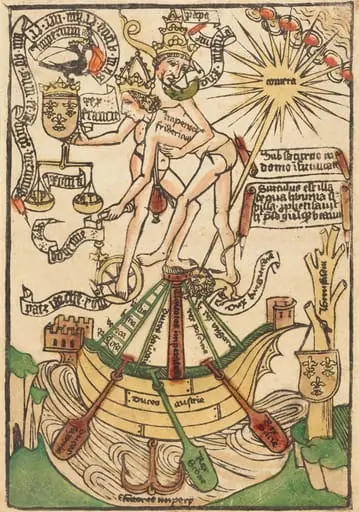 Allegory of the Meeting of Pope Paul II and Emperor Frederick III
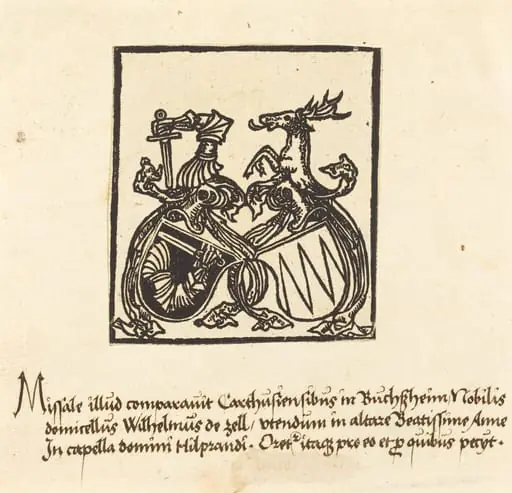 Bookplate of Wilhelm von Zell
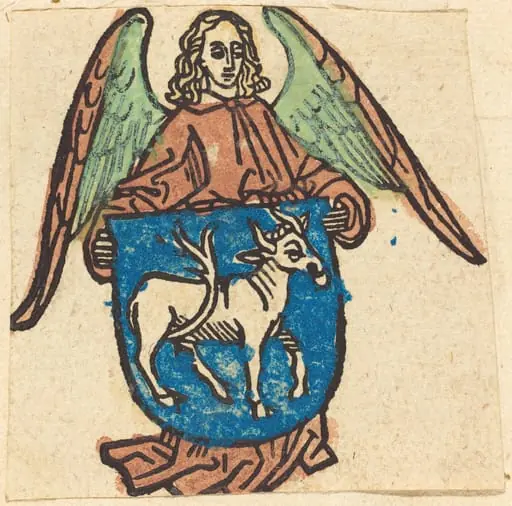 Bookplate of Hilprand Brandenburg of Bibrach
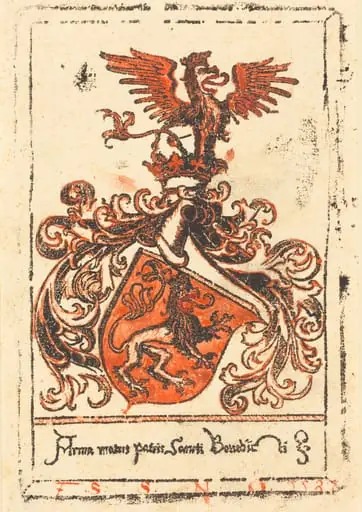 Bookplate of the Abbey of Ottobeuren
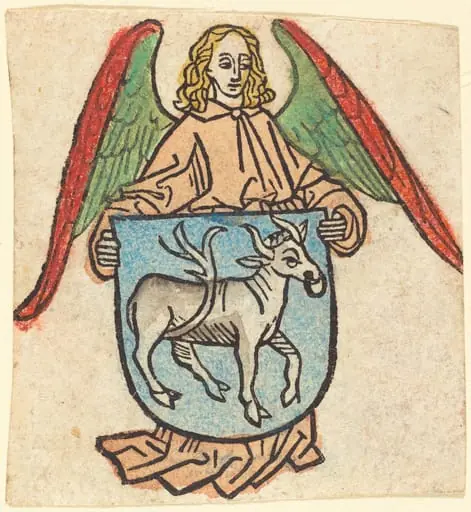 Bookplate of Hilprand Brandenburg of Bibrach
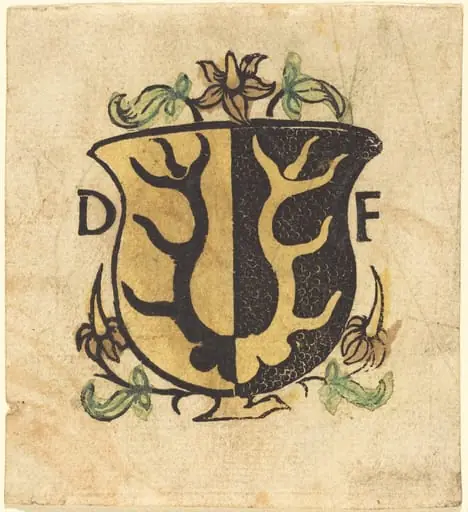 Bookplate of Dominicus Frauenfelder
![Studies for Six Figures (sheet from a model book) [recto], by German 15th Century](https://artifactworldgallery.com/img/german-15th-century--studies-for-six-figures-sheet-from-a-model-book-recto--4837429e0755bc3f-w320.webp) Studies for Six Figures (sheet from a model book) [recto]
Studies for Six Figures (sheet from a model book) [recto]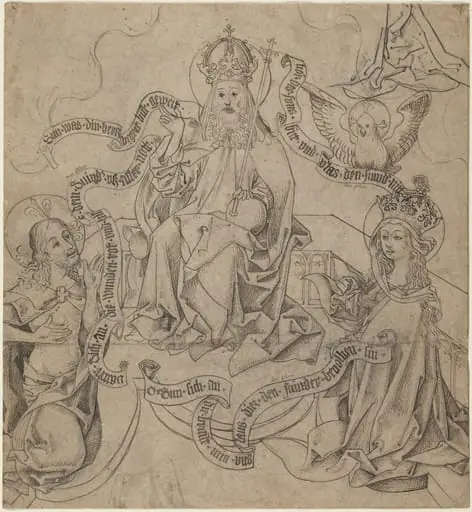 Christ and Mary Interceding with God the Father
- Madonna with the Rosary
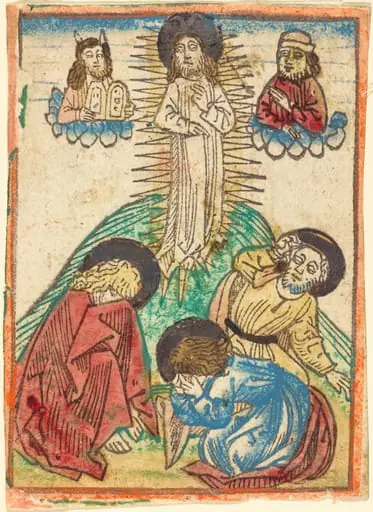 The Transfiguration
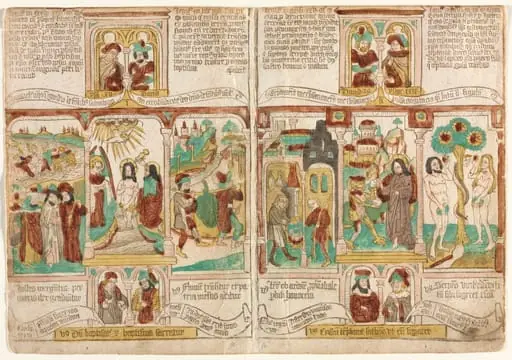 The Bible of the Poor (Biblia Pauperum),
Pharaoh's Army Drowned in the Red Sea; Baptism of Christ; and Moses' Spies Returning with Grapes from Canaan
Esau Selling Jacob his Birthright; Temptation of Christ; and Temptation of Adam and Eve
The Bible of the Poor (Biblia Pauperum),
Pharaoh's Army Drowned in the Red Sea; Baptism of Christ; and Moses' Spies Returning with Grapes from Canaan
Esau Selling Jacob his Birthright; Temptation of Christ; and Temptation of Adam and Eve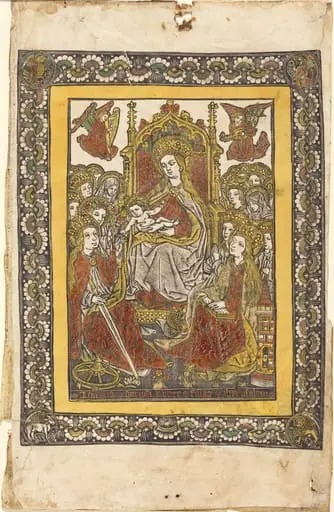 The Madonna Enthroned with Eighteen Holy Women
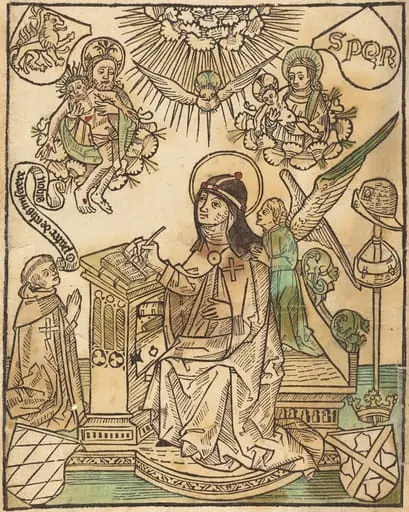 Saint Bridget
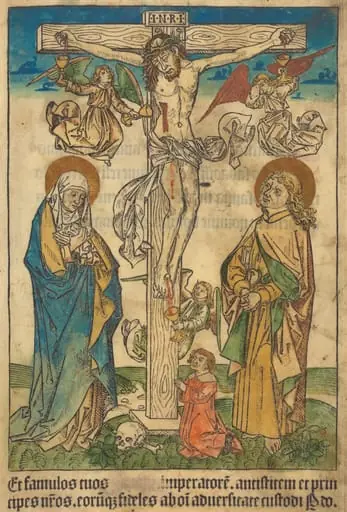 Christ on the Cross with Angels
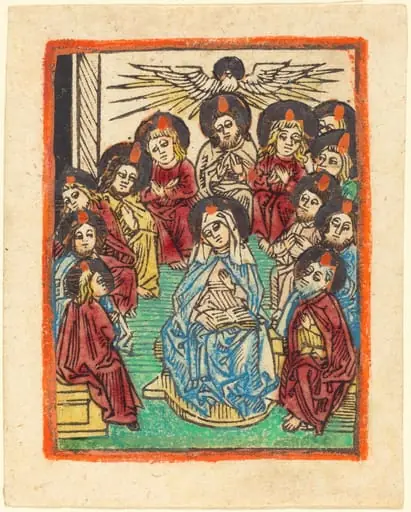 The Descent of the Holy Ghost
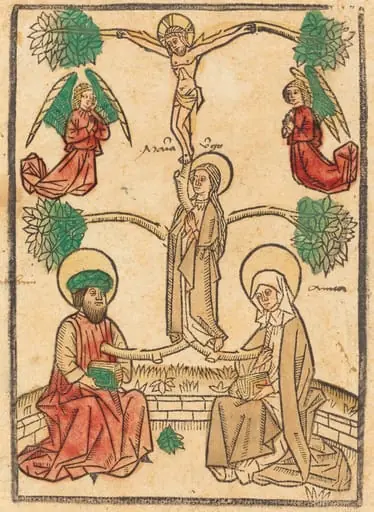 Genealogical Tree of Christ
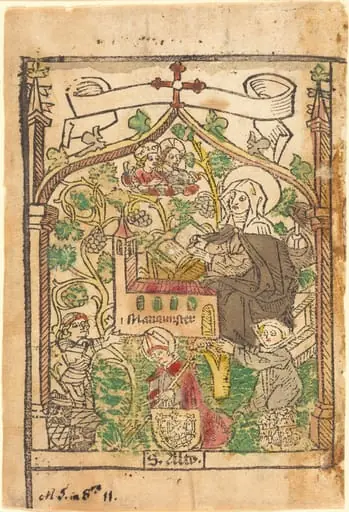 Saint Alto, Saint Bridget and the Founders of the Mariamunster
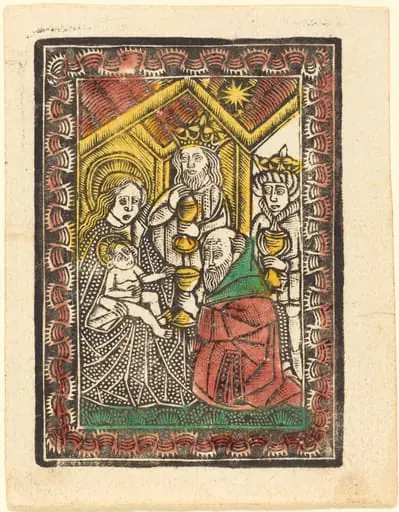 The Adoration of the Magi
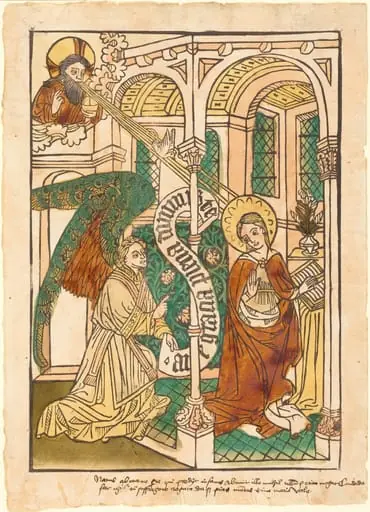 The Annunciation
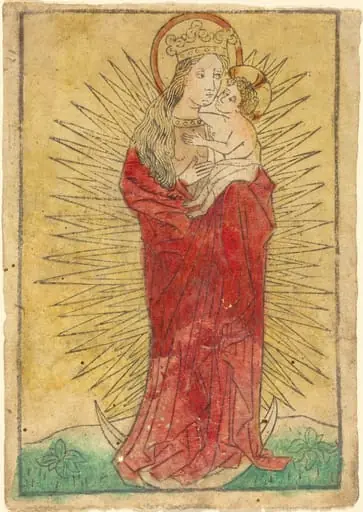 Madonna and Child in a Glory Standing on a Crescent Moon