Artwork
Madonna with the Rosary
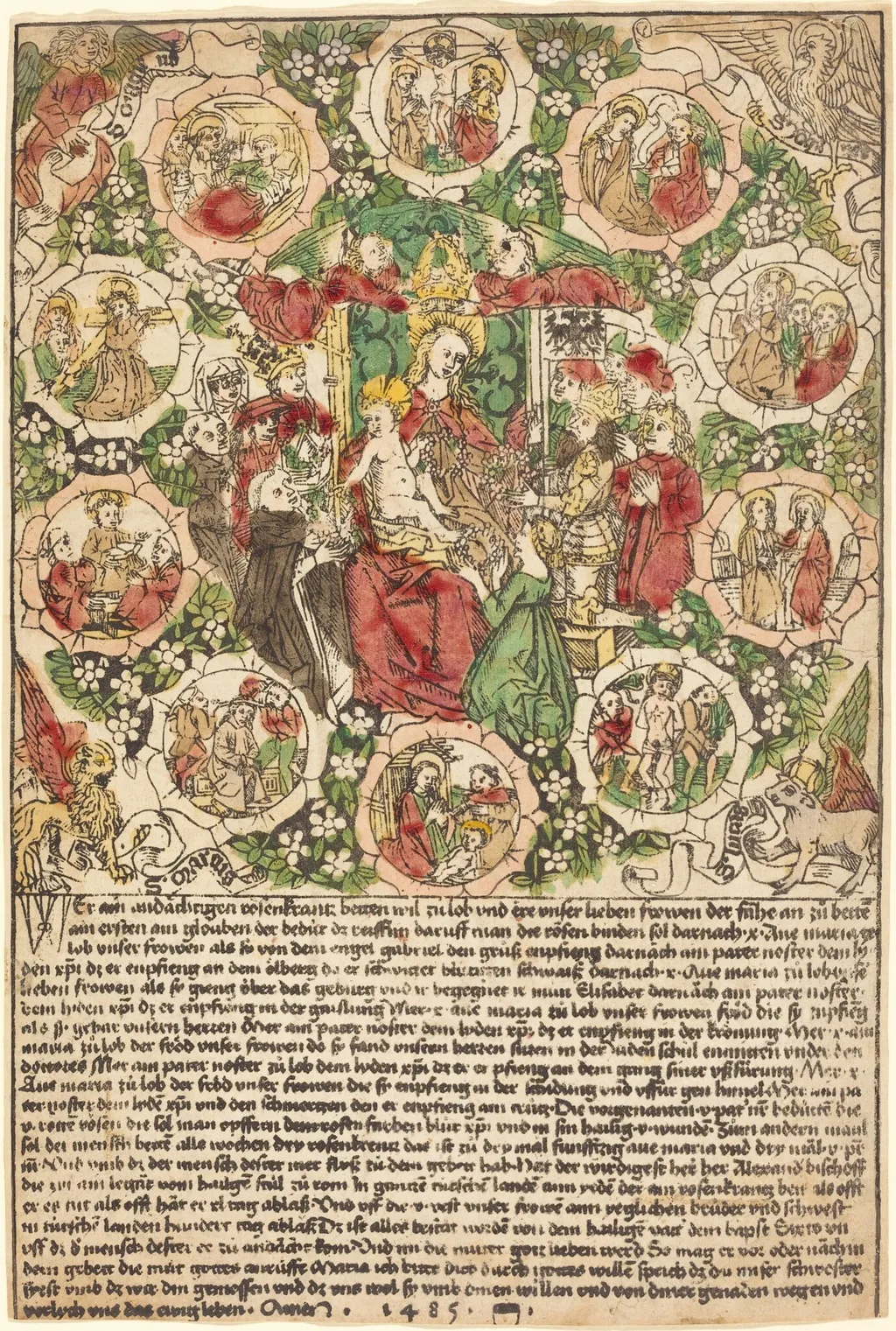
Madonna with the Rosary is an ink print by the Renaissance artist German 15th Century. It dates from 1485 and is held in the collection of the National Gallery of Art.
- Inscription
- Inscribed:in block, on banderole at upper left: S Matheus; in block, on banderole at upper right: S. Joha[nnes]; in block, on banderole at lower right: S Lucas; in block, on banderole at lower left: S. Marcus; in block, below image: Wer ain andächtigen rosenkrantz betten wil zu lob vnd ere vnser lieben frowen der fahe an zu betten am ersten ain glouben der bedüt dz reifflin daruff man die rösen binden sol darnach .x. Aue maria ze löb vnser frowen als sy von dem engel gabriel den gruß enpfieng darnach ain pater noster dem lyden xpi dz er enpfieng an dem ölberg do er schwiczet flutigen schwaiß darnach .x. Aue maria zu lobe der [5] lieben frowen als sy gieng vber das geburg vnd ir begegnet ir mim Elisabeth darnach ain pater noster dem lyden xpi dz er enpfieng in der gaislung Mer .x. aue maria zu lob vnser frowen frod die sy enpfieng als sy gebar vnsern herren Mer ain pater noster dem lyden xpi dz er enpfieng in der krönung Mer .x. aue maria zu lob der frod vnser frowen do zy fand vnsern herren siczen in der Juden schul enmitten vnder den doctores Mer ain pater noster zu lob dem lyden xpi d er enpfieng an dem gang siner vßfuerung Mer .x. [10] Aue maria zu lob der frod vnser frowen die sy enpfieng an der schidung vffur gen himel Mer ain pater noster dem lyden xpi vnd den schmerczen den er enpfieng am cruecz. Die vorgenanten .v. pater noster bedütten die .v. rotten rosen die soll man opffern dem rosen farben blut xpi vnd in sin hailig .v. wunden. Zum andern maul sol der mensch betten alle funffczig aue maria vnd dry mäl .v. pater noster Vnd vmb dz der mensch dester mer flyß zu dem gebett hab. Hat der wirdigest herr her Alexander bischoff [15] die zit ain legät vom hailgen stul zu rom Jn ganczen tueschen landen aim yeden der ain rosenkrancz bett als offt er es tut als offt hät er xl tag ablaß. Vnd vff die .v. vest vnser frowen aim yeglichen bruder vnd schwest[er] in tutschen landen hundert tag ablaß Dz ist alles bestät worden von dem hailigen vatter bapst Sixto vn vff dz der mendsch dester ee zu andacht kom. Vnd im die muter gotz lieben werd so mag er vor oder nach in dem gebett die mut[er] gottes anruffen 'Maria ich bitte dich durch gottes willen sprich dz du unser schwester [20] syest vmb dz wir din geniessen vnd dz vns wol sy vmb dinen willen vnd von diner genaden wegen vnd verlych vns das ewig leben. Amen. 1485.
About this work
Overview
Created in 1485, this German woodcut depicts the Madonna of the Rosary, a devotional image characteristic of late 15th-century Northern European printmaking.
Created in 1485, this German woodcut depicts the Madonna of the Rosary, a devotional image characteristic of late 15th-century Northern European printmaking. The composition centers on the Virgin Mary in a red robe holding the Christ Child, with a strand of rosary beads prominently displayed. The work is distinguished by its intricate border design, which integrates numerous small circular medallions containing scenes from the life of Christ and the Virgin, alongside figures of saints and donors engaged in prayer or reading.
These vignettes are interwoven with stylized vines and floral motifs that fill the surrounding space. The print is hand-colored using red lake, green, brown, yellow, tan, gray, rose, and black pigments, applied to the woodcut lines to enhance the narrative details and visual hierarchy. This technique reflects the period's practice of adding color to mass-produced religious images to increase their devotional impact and aesthetic appeal.
As a product of the German school during the transition from the late Gothic to the early Renaissance, the work exemplifies the era's focus on detailed iconography and the proliferation of rosary devotion in the decades preceding the Reformation.
Subject & Meaning
At the core of the image, the mother and child are depicted in red garments, emphasizing their central devotional role. The surrounding vignettes show figures engaged in prayer, reading, and other pious activities, linked together by intertwining vines and floral motifs, suggesting a contemplative network of faith.
Technique & Style
The work was created by carving the design into a wood block, a process that yields crisp, linear outlines. After printing, the image was hand‑colored with pigments, resulting in flat yet vivid areas of color that may appear slightly uneven where the artist applied the hues.
History & Provenance
The print is known as a woodcut, a medium popular for reproducing religious subjects in the early modern period. Specific details about its date of production, original publisher, or subsequent ownership are not provided in the source material.
Context
Woodcut prints such as this one were often used for devotional purposes, allowing broader distribution of religious imagery. The inclusion of a rosary and multiple prayerful figures aligns with Counter‑Reformation emphasis on personal piety and the promotion of Marian devotion.
Artist & collection

Artist
This 15th-century German artist carved vivid religious scenes into metal and wood, then hand-painted them in bright, symbolic colors.

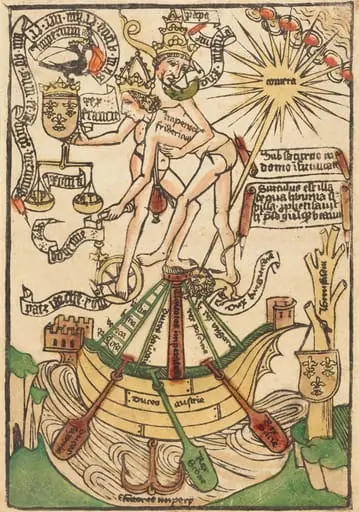 Allegory of the Meeting of Pope Paul II and Emperor Frederick III
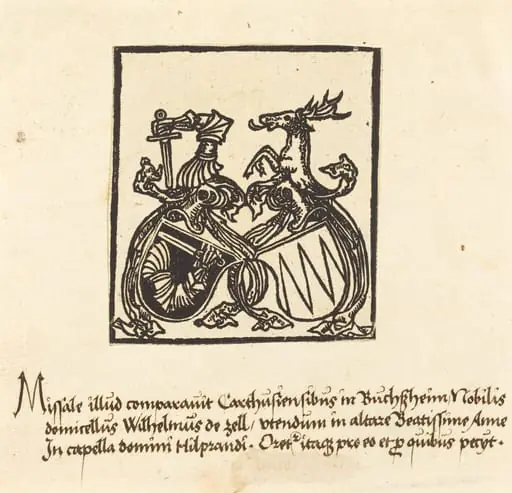 Bookplate of Wilhelm von Zell
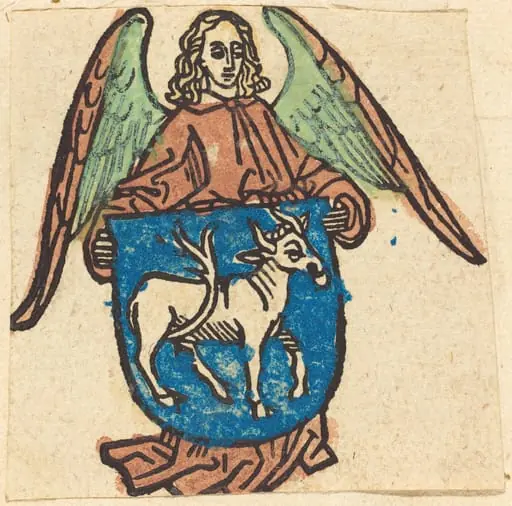 Bookplate of Hilprand Brandenburg of Bibrach
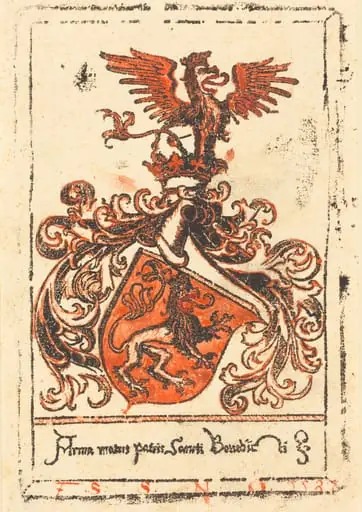 Bookplate of the Abbey of Ottobeuren
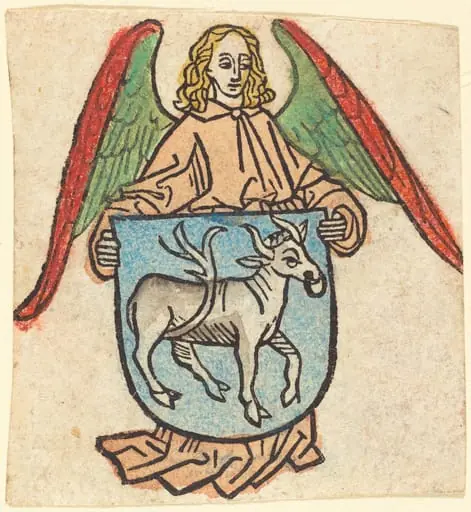 Bookplate of Hilprand Brandenburg of Bibrach
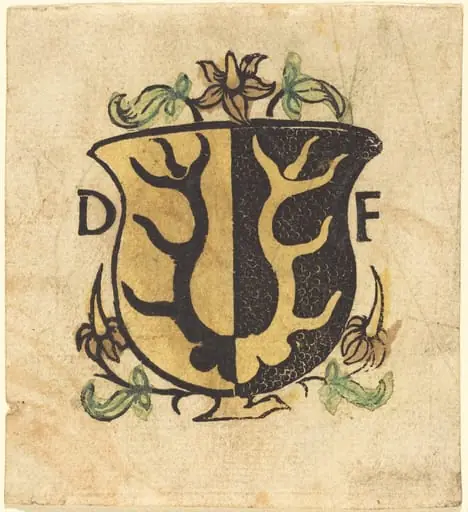 Bookplate of Dominicus Frauenfelder
![Studies for Six Figures (sheet from a model book) [recto], by German 15th Century](https://artifactworldgallery.com/img/german-15th-century--studies-for-six-figures-sheet-from-a-model-book-recto--4837429e0755bc3f-w320.webp) Studies for Six Figures (sheet from a model book) [recto]
Studies for Six Figures (sheet from a model book) [recto]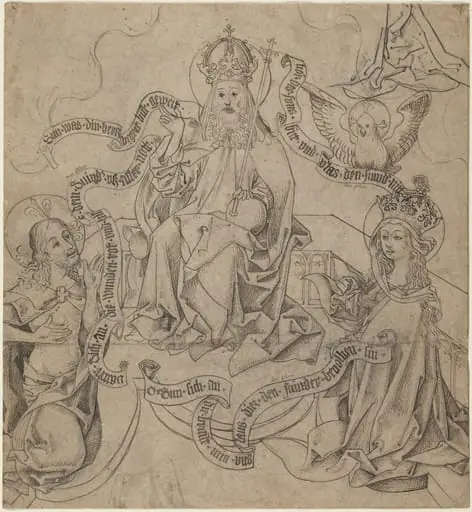 Christ and Mary Interceding with God the Father
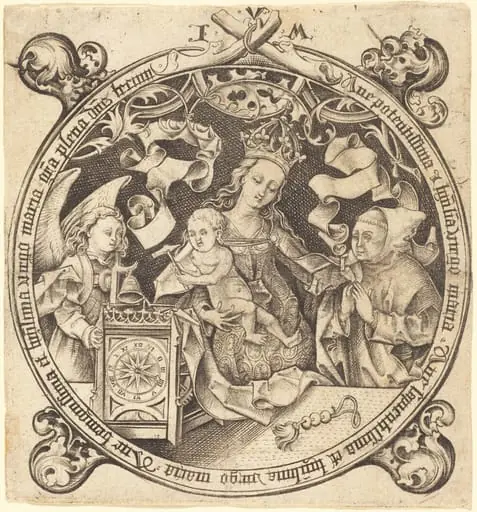 The Madonna with the Clock
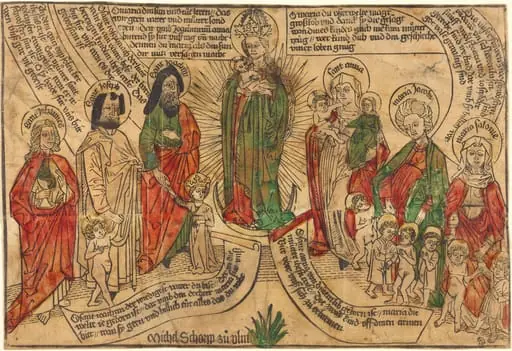 Holy Kinship
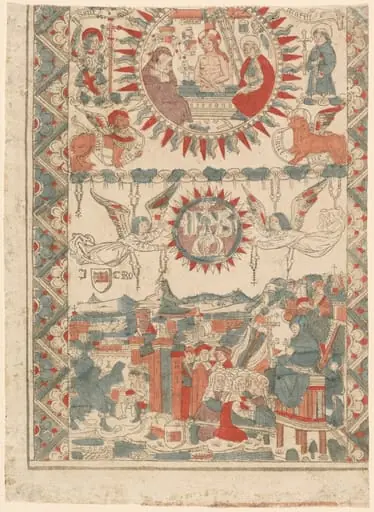 Saint Bonaventure Arriving and Preaching in Lyon
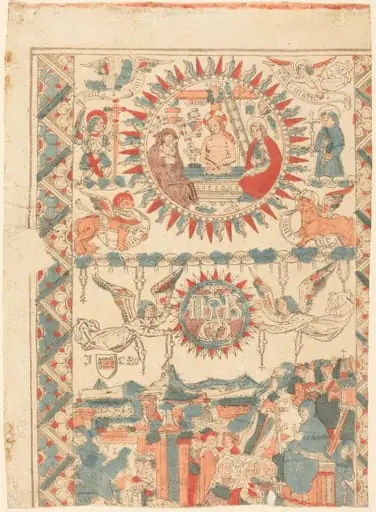 Saint Bonaventure Arriving and Preaching in Lyon
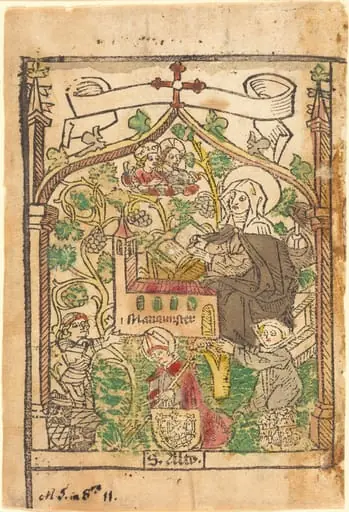 Saint Alto, Saint Bridget and the Founders of the Mariamunster
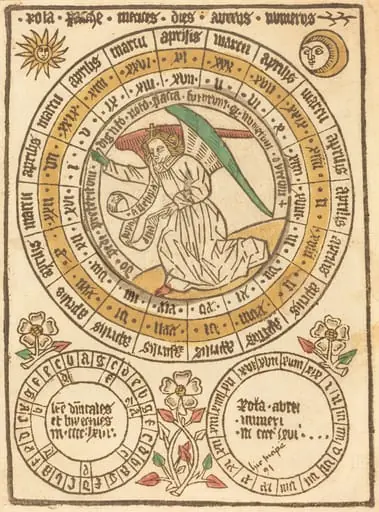 An Easter Calendar Beginning with the Year 1466
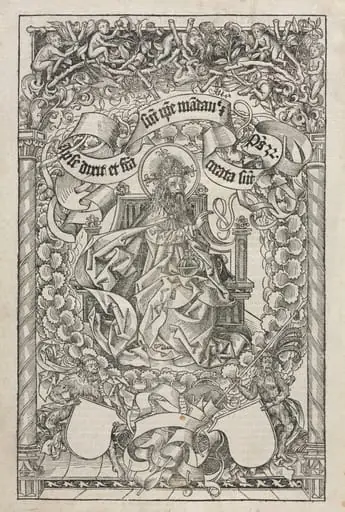 The Emblem
 Apocalypse: The Adoration of the Lamb—The Hymn of the Chosen