Artwork
Saint John the Baptist and Saint Christopher
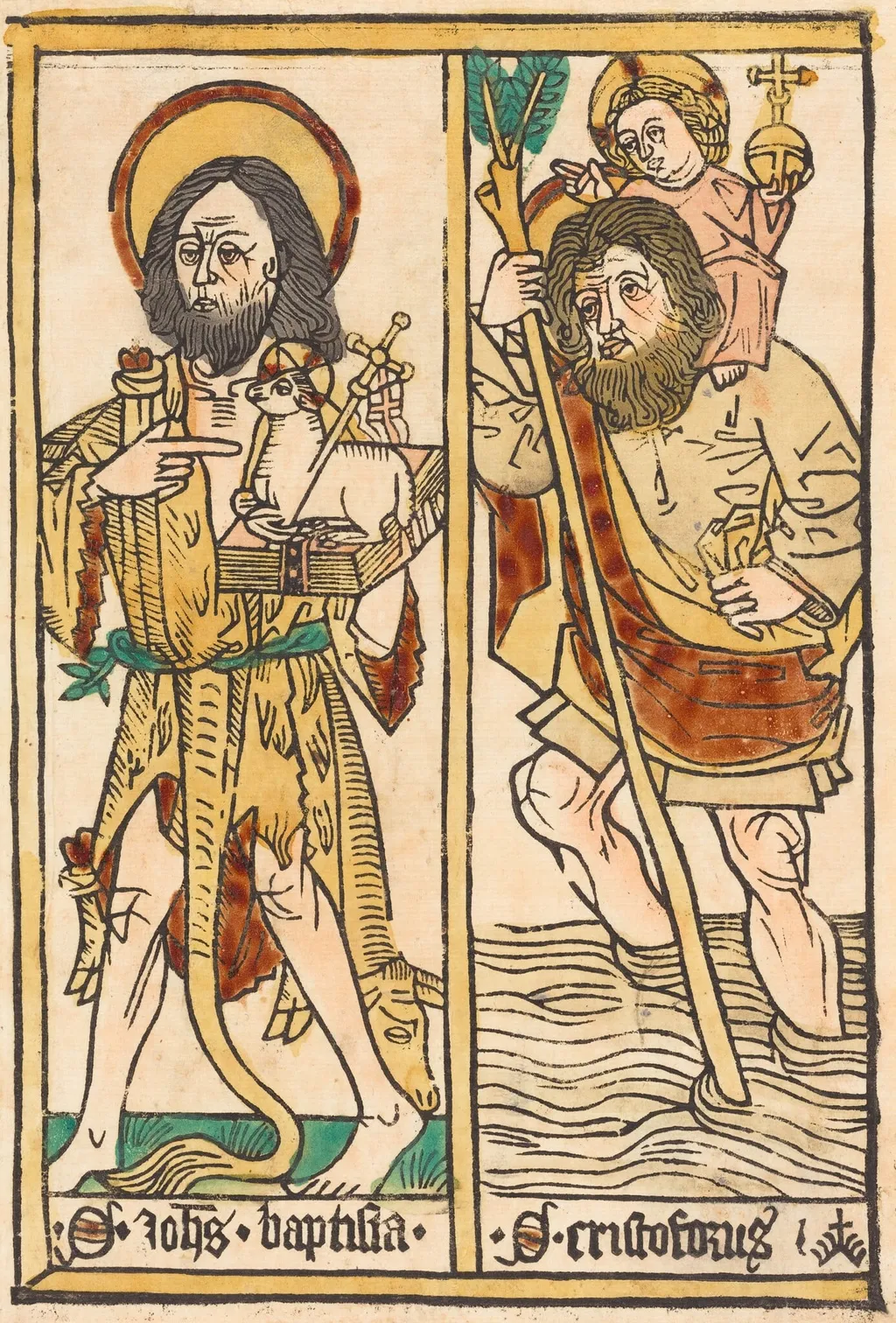
Saint John the Baptist and Saint Christopher is an ink print by the Renaissance artist German 15th Century. It dates from 1475 and is held in the collection of the National Gallery of Art.
About this work
Overview
Such devotional prints were produced in Germany during the mid-to-late 1400s to make religious imagery accessible to a broader audience beyond the clergy.
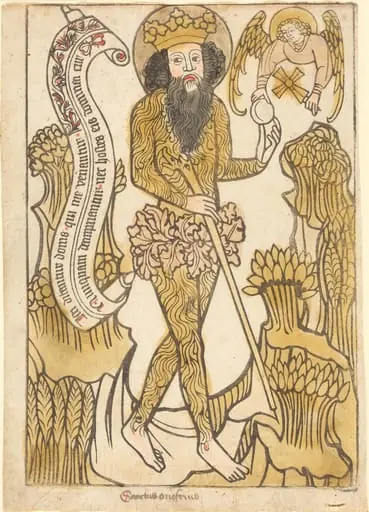
Created around 1475 by an anonymous German artist active in the late 15th century, this hand-colored woodcut depicts Saint John the Baptist and Saint Christopher standing side by side in a devotional format. The composition places the Baptist on the left, holding his characteristic reed cross, while Saint Christopher stands on the right, bearing the Christ Child upon his shoulder. Executed on paper, the work utilizes a woodblock for the linear definition of the figures and drapery.
Before the ink fully dried, an artist applied vibrant pigments by hand, including red lake, yellow, green, pink, gray, brown, and tan. This specific coloring technique highlights the saints' forms and adds visual warmth to the monochrome print. Gray shading is employed to model the figures, creating a sense of volume and depth against the flat background.
Such devotional prints were produced in Germany during the mid-to-late 1400s to make religious imagery accessible to a broader audience beyond the clergy. The pairing of these two saints was common in late medieval piety, combining the precursor to Christ's ministry with the protector of travelers. The work exemplifies the transitional phase in German printmaking where hand-coloring was used to elevate the aesthetic appeal of mass-produced woodcuts.
Subject & Meaning
The work juxtaposes John the Baptist, the forerunner of Christ, with Christopher, the patron saint of travelers. By placing the cross‑holding prophet beside the giant carrier of the infant Jesus, the print underscores themes of pilgrimage, protection, and the transmission of divine authority from the Old to the New Testament.
Technique & Style
Executed as a woodcut, the image was printed in black ink before the artist applied washes of red lake, yellow, green, pink, gray, brown and tan. The bright pigments highlight the saints’ garments and flesh, while subtle gray shading creates a sense of volume. The hand‑coloring adds a vivid, almost painterly quality to the otherwise graphic medium.
History & Provenance
The print is part of a series of colored woodcuts that circulated in early modern Europe, where such works were used for private devotion and illustration. A comparable example is held by the National Gallery of Art in Washington, indicating the piece’s inclusion in major public collections and its relevance to the study of printed religious art.
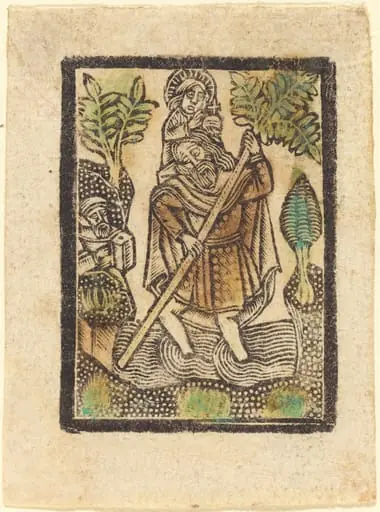
Artist & collection

Artist
This 15th-century German artist carved vivid religious scenes into metal and wood, then hand-painted them in bright, symbolic colors.

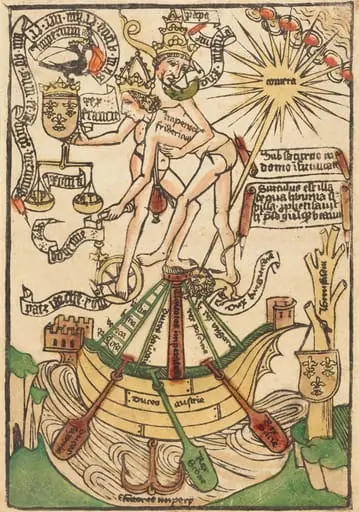 Allegory of the Meeting of Pope Paul II and Emperor Frederick III
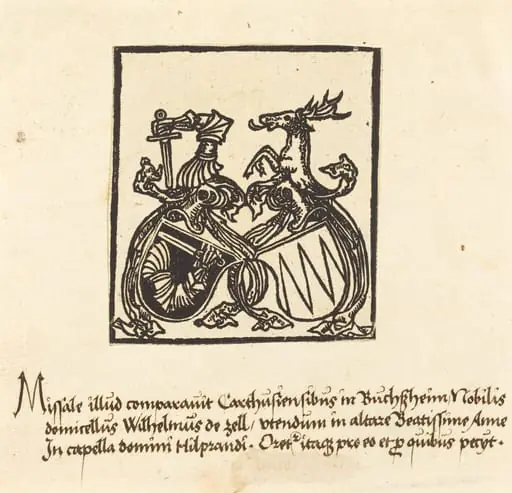 Bookplate of Wilhelm von Zell
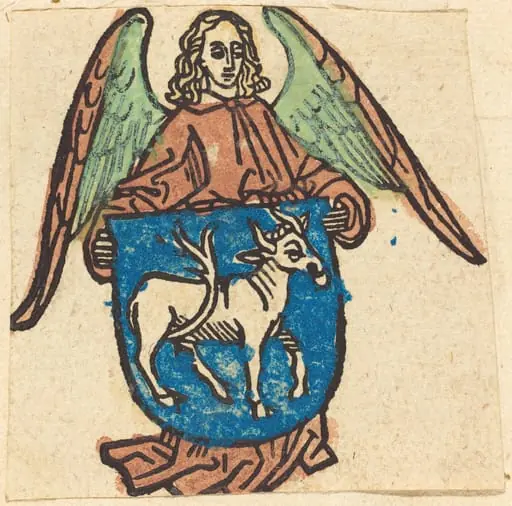 Bookplate of Hilprand Brandenburg of Bibrach
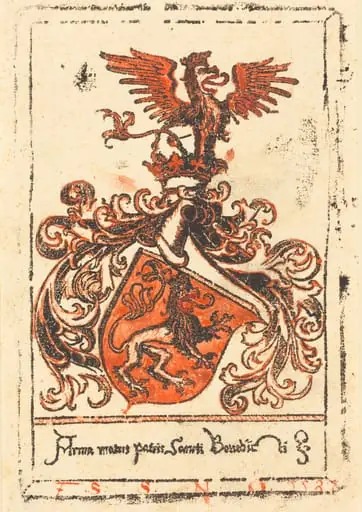 Bookplate of the Abbey of Ottobeuren
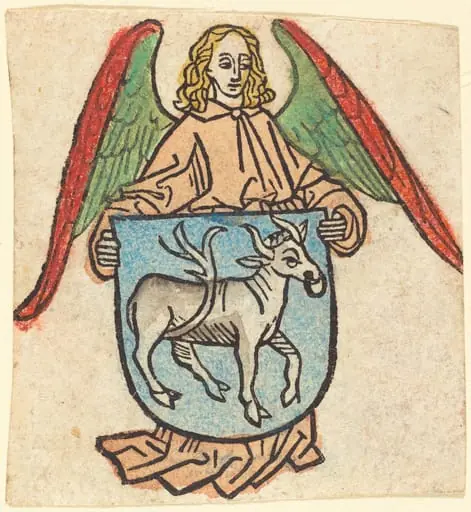 Bookplate of Hilprand Brandenburg of Bibrach
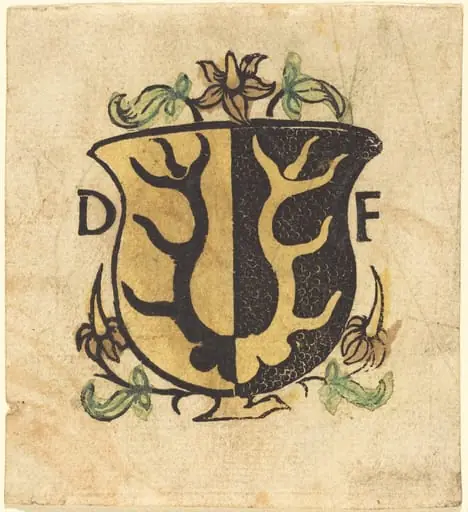 Bookplate of Dominicus Frauenfelder
![Studies for Six Figures (sheet from a model book) [recto], by German 15th Century](https://artifactworldgallery.com/img/german-15th-century--studies-for-six-figures-sheet-from-a-model-book-recto--4837429e0755bc3f-w320.webp) Studies for Six Figures (sheet from a model book) [recto]
Studies for Six Figures (sheet from a model book) [recto]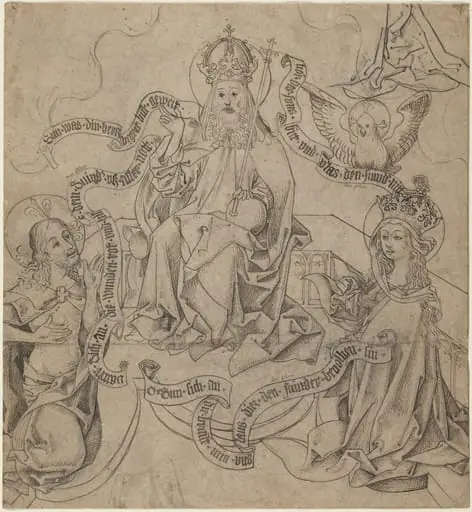 Christ and Mary Interceding with God the Father