Artwork
The Measure of the Side Wound and the Body of Christ
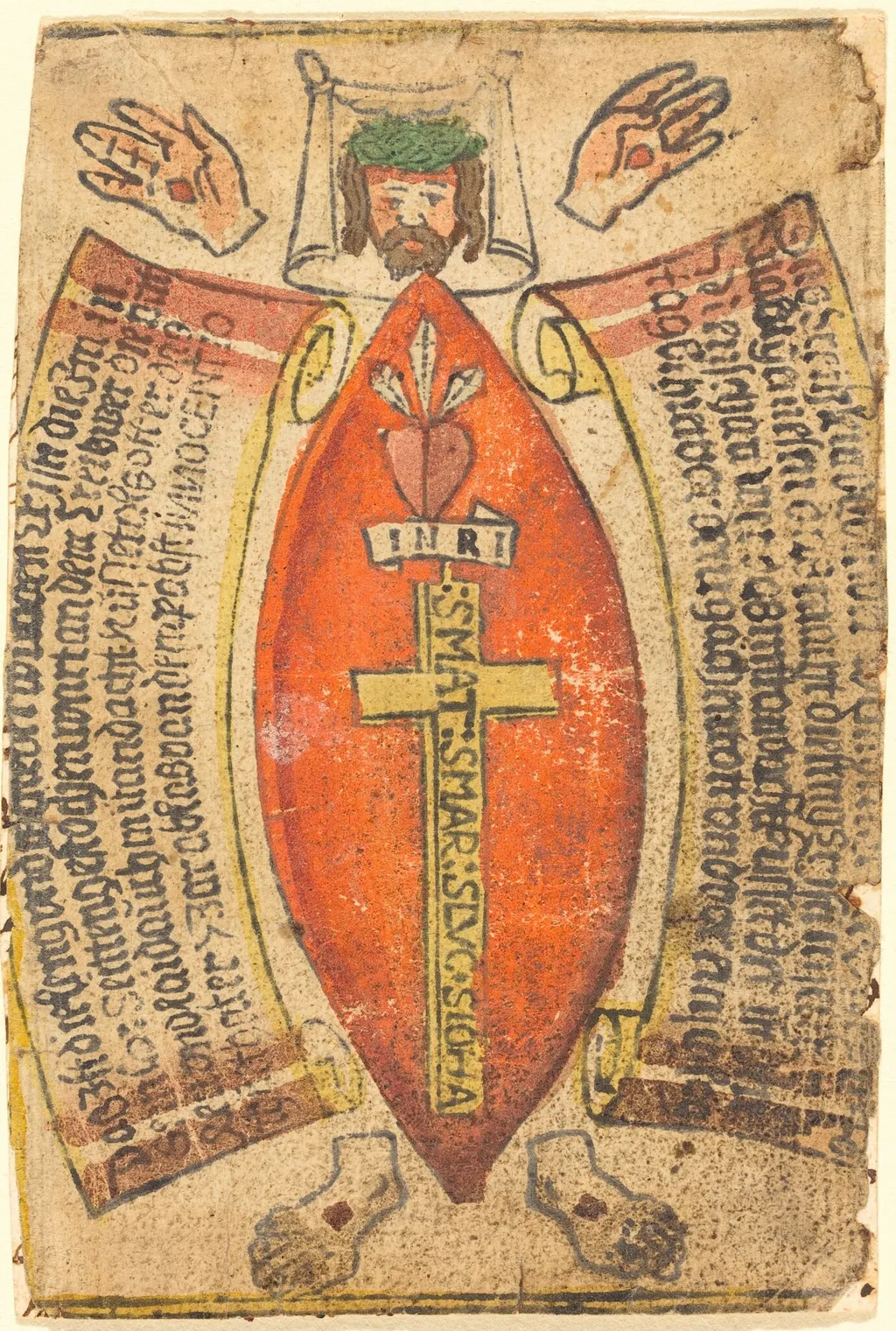
The Measure of the Side Wound and the Body of Christ is an ink print by the Renaissance artist German 15th Century. It dates from 1488 and is held in the collection of the Rosenwald Collection. This woodcut, hand-colored with vermilion, green, and yellow, depicts a symbolic representation of Christ’s side wound measured by a scale.
- Inscription
- Inscribed:on left banderole, in block: Das ist die leng vnd weite der wŭnden Cristi die Im in / sein h. Seitten gestochen wart an dem Creitz wer die mit / reŭ vnd laid aŭch mit andacht kŭsset als oft er das / thŭet hat er 7 jar ablas von dem pabst INNOCENTIO (This is the length and width of Christ's wound which was pierced in his side on the Cross. Whoever kisses this wound with remorse and sorrow, also with devotion, will have as often as he does this, seven years indulgence from Pope Innocent); on right banderole, in block: Das Creitzlein das in der wŭnden Cristi stet zu 40 / maln gemesen das macht die leng Christi in seiner / Menschait wer das mit andacht kŭsset der ist den / tag behiet vor dem gächen tott vnd vor ein schlag (This little cross standing n Christ's wound measured 40 times makes the length of Christ in his humanity. Whoever kisses it with devotion shall be protected from sudden death or misfortune. [translations from Parshall, Peter, and Rainer Schoch. _Origins of European Printmaking: Fifteenth-Century Woodcuts and Their Public._ Washington, DC: National Gallery of Art, 2005, p. 259.]; verso, at upper left, in graphite by a later hand: 7.; at upper right, in graphite by a later hand: 763; at bottom center, in graphite by a later hand: 15G276
- Markings
- Marked:verso, stamped in black ink: Lessing Julius Rosenwald (Lugt 1760c); stamped in black ink: National Gallery of Art, Rosenwald Collection: Lugt 1932d)
About this work
Overview
This woodcut, hand-colored with vermilion, green, and yellow, depicts a symbolic representation of Christ’s side wound measured by a scale.
This woodcut, hand-colored with vermilion, green, and yellow, depicts a symbolic representation of Christ’s side wound measured by a scale. The image is printed on paper and mounted over a manuscript on the reverse. The composition centers on a red oval containing a golden cross inscribed with Latin text and the letters 'INRI,' surrounded by figures and ornamental background patterns typical of late medieval printmaking.
Subject & Meaning
The scene illustrates the measurement of Christ’s side wound, a devotional motif tied to medieval piety and the physical reality of the Passion. A bearded figure in a green hat, possibly a monk or angel, holds a balance, suggesting a solemn weighing of suffering or divine justice. The Latin inscription and cross evoke theological themes of sacrifice, while the scale implies a cosmic reckoning tied to redemption.
Technique & Style
Executed as a hand-colored woodcut, the image reflects 15th-century Northern European print practices. The artist carved lines into a wooden block, inked it, and pressed it onto paper, then applied pigments by hand, vermilion for blood, green for foliage or garment, yellow for halos or light. The background’s faded patterns suggest reused or recycled paper, common in devotional prints of the period.
History & Provenance
The work likely originated in a religious workshop in the German-speaking regions during the late 1400s, where woodcuts were mass-produced for private devotion. Its mounting over a manuscript indicates reuse of materials, typical in monastic or lay settings. No definitive provenance is recorded, but similar prints circulated among pilgrims and clergy as aids for meditation on Christ’s wounds.
Context
In the late Middle Ages, visualizations of Christ’s wounds became central to personal piety, especially following the influence of mystics like Bridget of Sweden. Devotional prints like this one allowed individuals to engage physically with sacred imagery, reinforcing the belief that Christ’s suffering could be quantified and contemplated. The scale reflects a broader cultural fascination with measuring divine grace and human sin.
Legacy
This print exemplifies the transition from manuscript illumination to printed devotional imagery, democratizing access to sacred symbols. While not widely known today, such works influenced later Reformation-era religious graphics and preserved medieval iconographic traditions. Its survival, often bound into prayer books or tucked into personal relics, speaks to its quiet but enduring role in everyday faith.
Artist & collection

Artist
This 15th-century German artist carved vivid religious scenes into metal and wood, then hand-painted them in bright, symbolic colors.
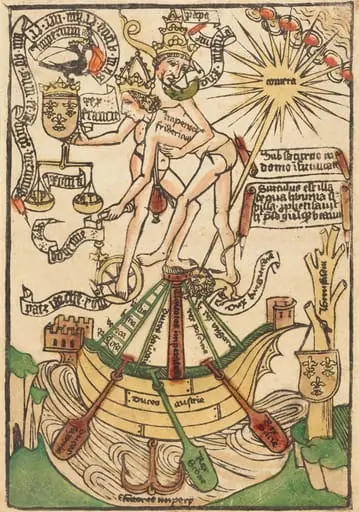 Allegory of the Meeting of Pope Paul II and Emperor Frederick III
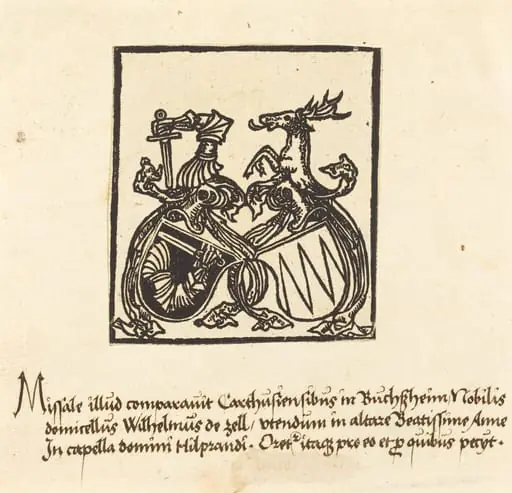 Bookplate of Wilhelm von Zell
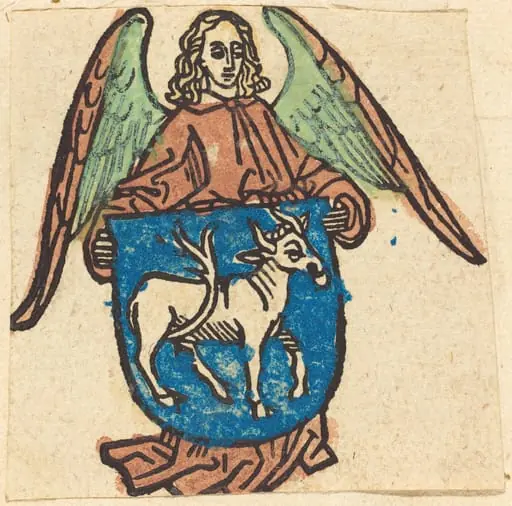 Bookplate of Hilprand Brandenburg of Bibrach
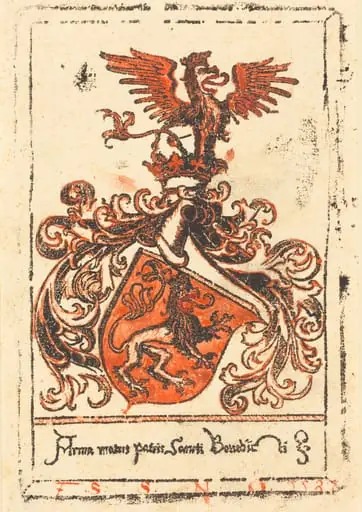 Bookplate of the Abbey of Ottobeuren
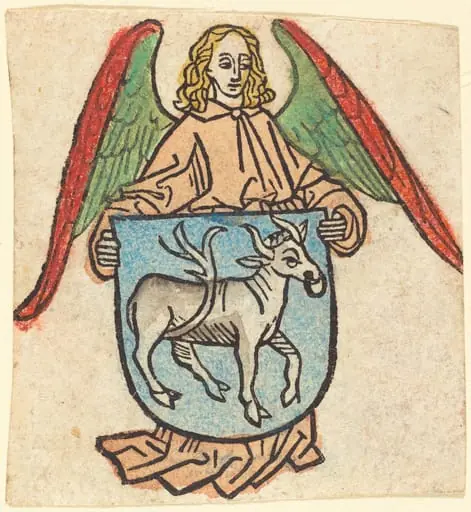 Bookplate of Hilprand Brandenburg of Bibrach
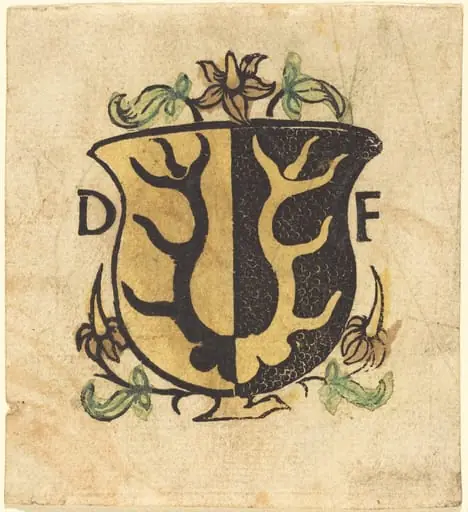 Bookplate of Dominicus Frauenfelder
![Studies for Six Figures (sheet from a model book) [recto], by German 15th Century](https://artifactworldgallery.com/img/german-15th-century--studies-for-six-figures-sheet-from-a-model-book-recto--4837429e0755bc3f-w320.webp) Studies for Six Figures (sheet from a model book) [recto]
Studies for Six Figures (sheet from a model book) [recto]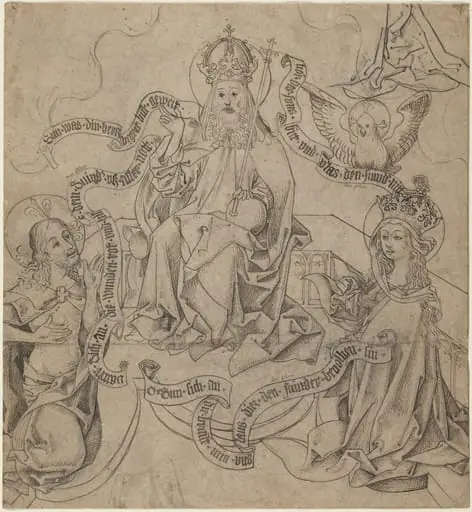 Christ and Mary Interceding with God the Father
- The Sacred Monogram
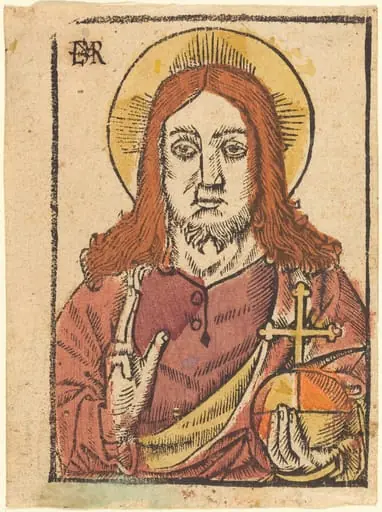 Salvator Mundi
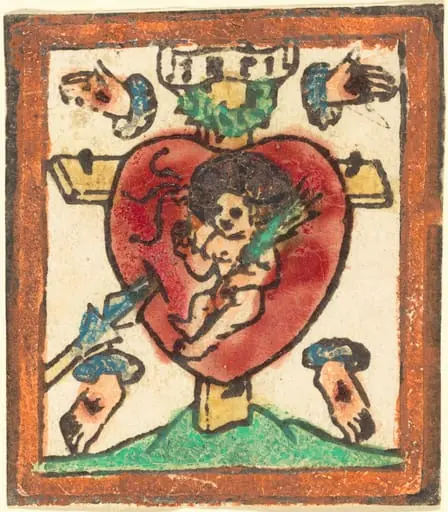 Christ Child in the Sacred Heart
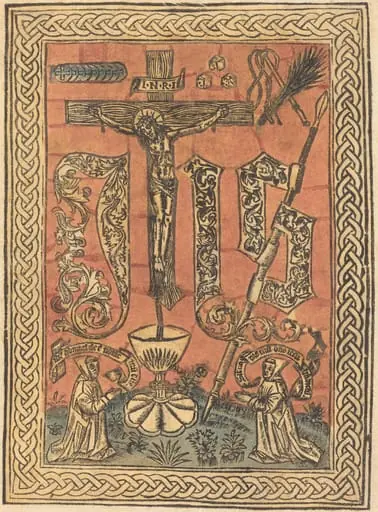
![The Sacred Monograph with the Crucifixion and Passion Symbols [recto], by German 15th Century](https://artifactworldgallery.com/img/german-15th-century--the-sacred-monograph-with-the-crucifixion-and-passion-symbol--0037ce706250b56f-w320.webp) The Sacred Monograph with the Crucifixion and Passion Symbols [recto]
The Sacred Monograph with the Crucifixion and Passion Symbols [recto]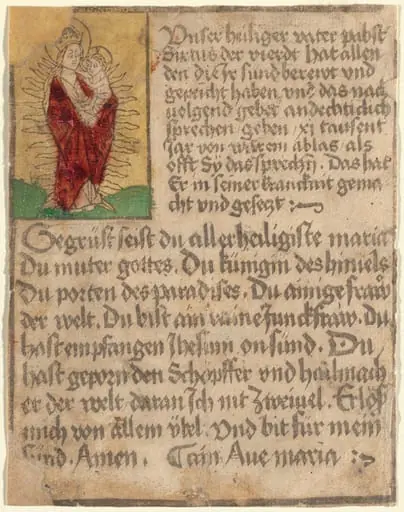 Madonna and Child in a Glory with an Indulgence and a Prayer
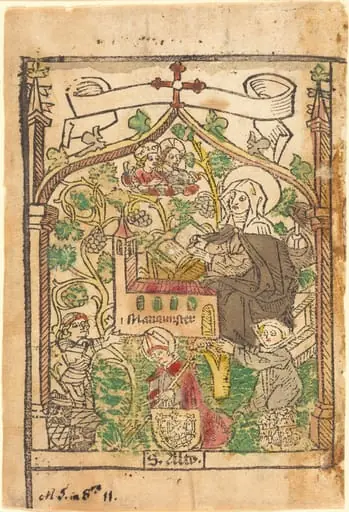 Saint Alto, Saint Bridget and the Founders of the Mariamunster
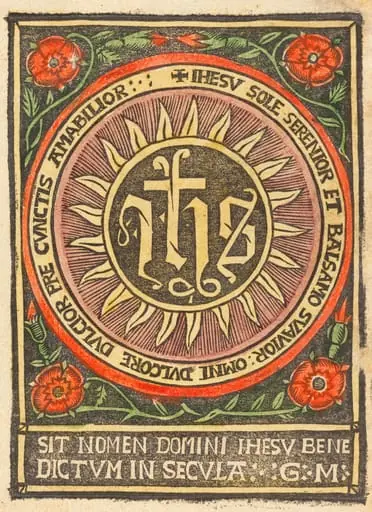 Monogram JHS in a Flaming Circle
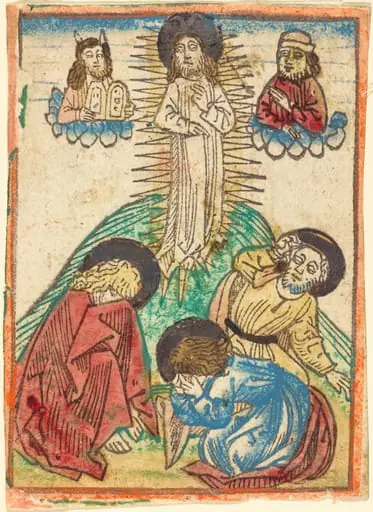 The Transfiguration
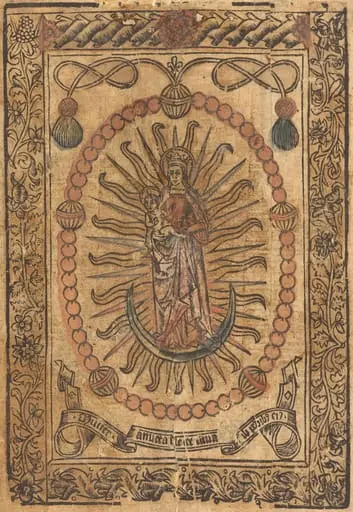 The Madonna and Child in a Rosary
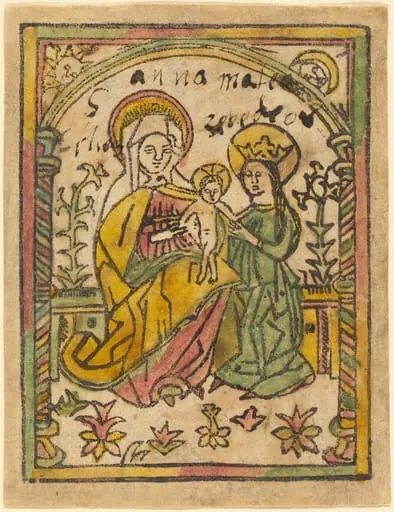 Saint Anne with the Madonna and Child
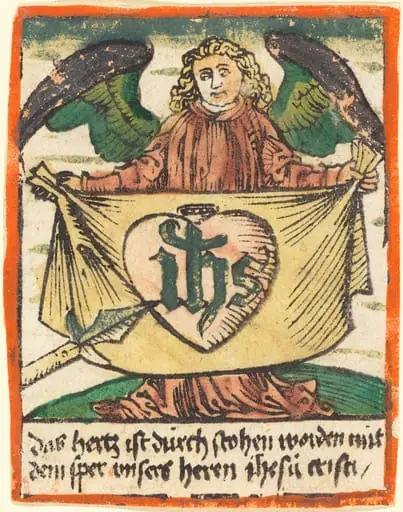 Sacred Monogram in a Sacred Heart on a Cloth Held by an Angel
 Christ Carrying the Cross