Artwork
Karttikeya
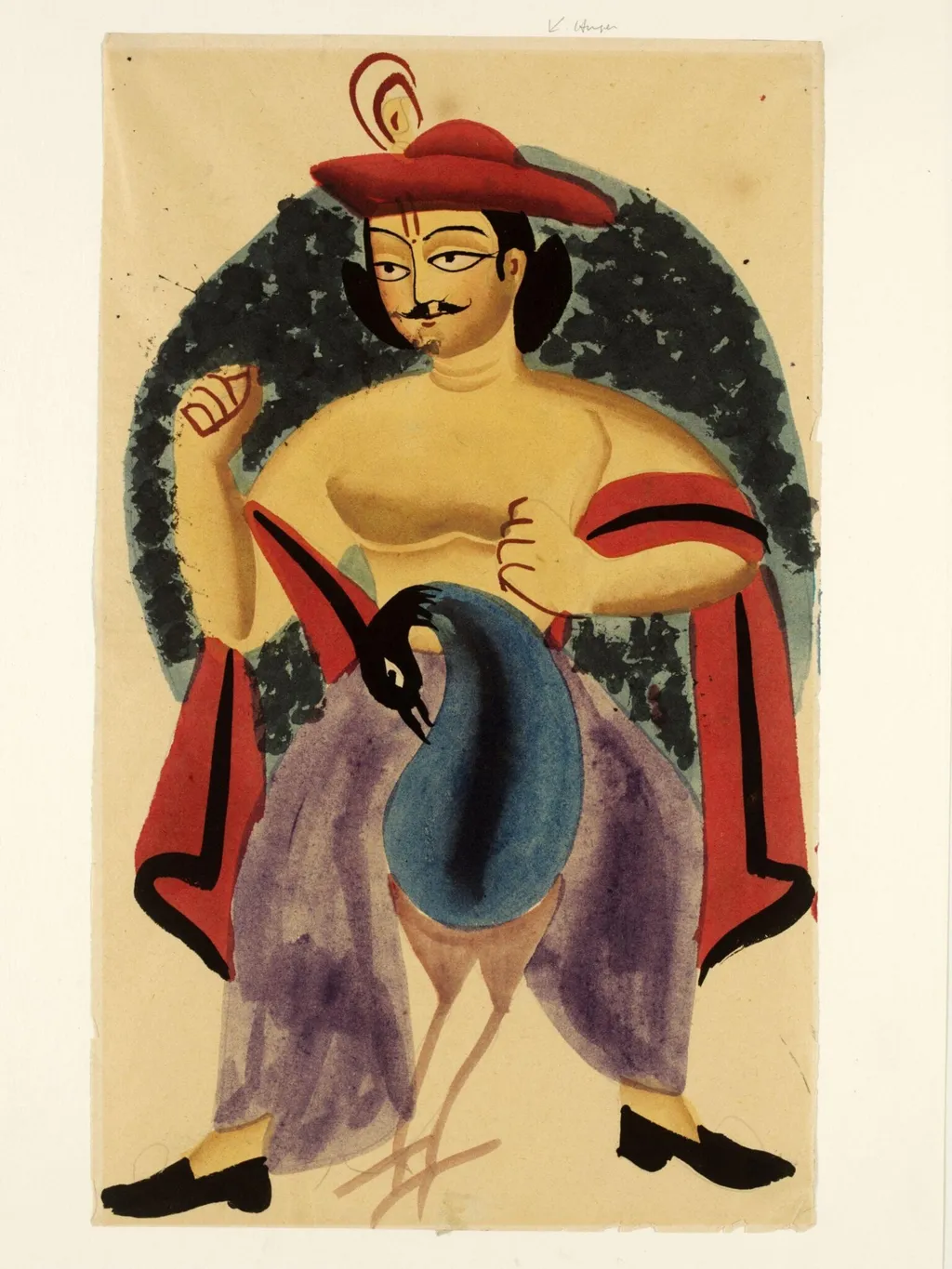
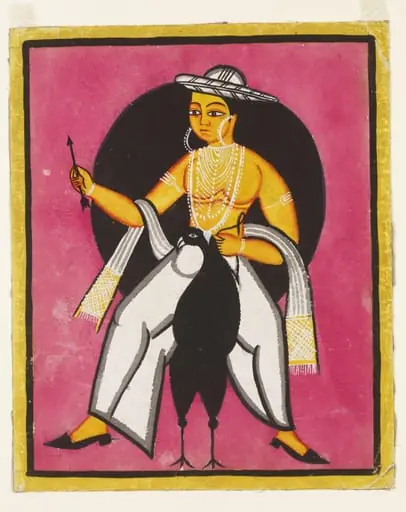
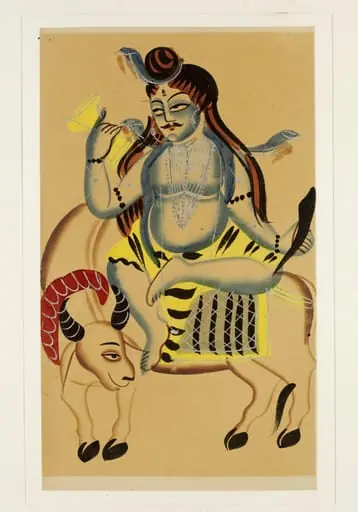
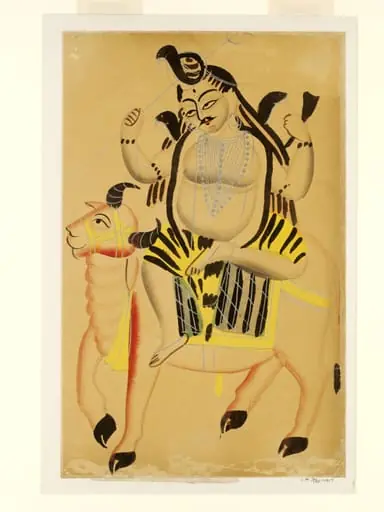
Karttikeya is a paint painting by the Post-Impressionist artist Kali Charan Ghosh. It dates from 1900 and is held in the collection of the Victoria and Albert Museum.
About this work
Overview
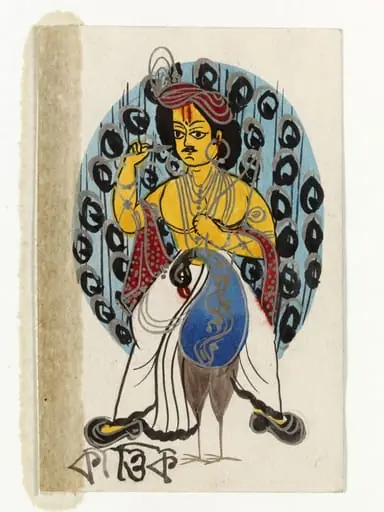
Kali Charan Ghosh’s watercolour from 1900 portrays the Hindu war deity Karttikeya astride a peacock. Executed on paper, the image combines vivid pigments with a dark backdrop, highlighting the god’s blue complexion, four arms, and a luminous gold halo.
Subject & Meaning
Karttikeya, son of Shiva and Parvati, is shown in his traditional martial role, riding the peacock that often serves as his mount. The composition emphasizes his divine authority through the halo and the dynamic posture of both rider and bird.
Technique & Style
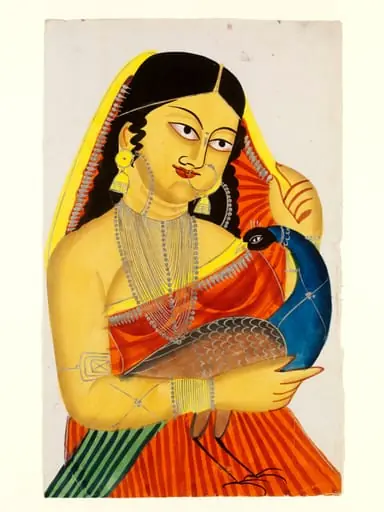
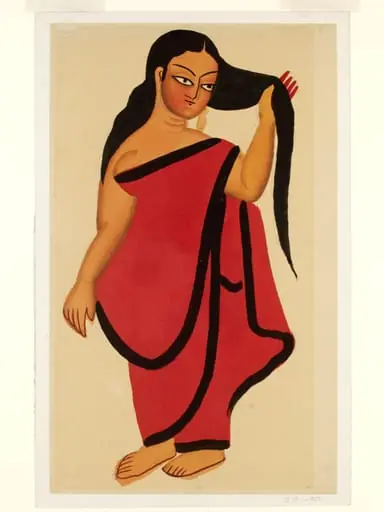
The work belongs to the Kalighat school, a 19th‑century Calcutta tradition noted for brisk brushwork, simplified outlines and bright colour palettes. Ghosh builds depth by applying thin, layered washes, giving the skin and feathers a soft, glowing quality, while the halo appears metallic from a pressed‑in gold pigment.
History & Provenance
The painting entered the museum’s collection in 1932, purchased at the Kalighat market directly from the artist’s family. Its provenance traces back to the bustling commercial hub where many rural‑origin painters sold works depicting local mythologies and contemporary colonial themes.
Context
Kalighat paintings emerged as a response to the cultural flux of colonial Calcutta, merging folk iconography with urban sensibilities. Ghosh’s depiction of Karttikeya reflects the genre’s focus on popular deities, serving both devotional and decorative purposes for a broad audience.
Own this work as a print
Artist & collection
Artist
Kali Charan Ghosh painted figures and scenes around the turn of the 20th century in India.