Artwork
Midas, Transmuting All into Paper
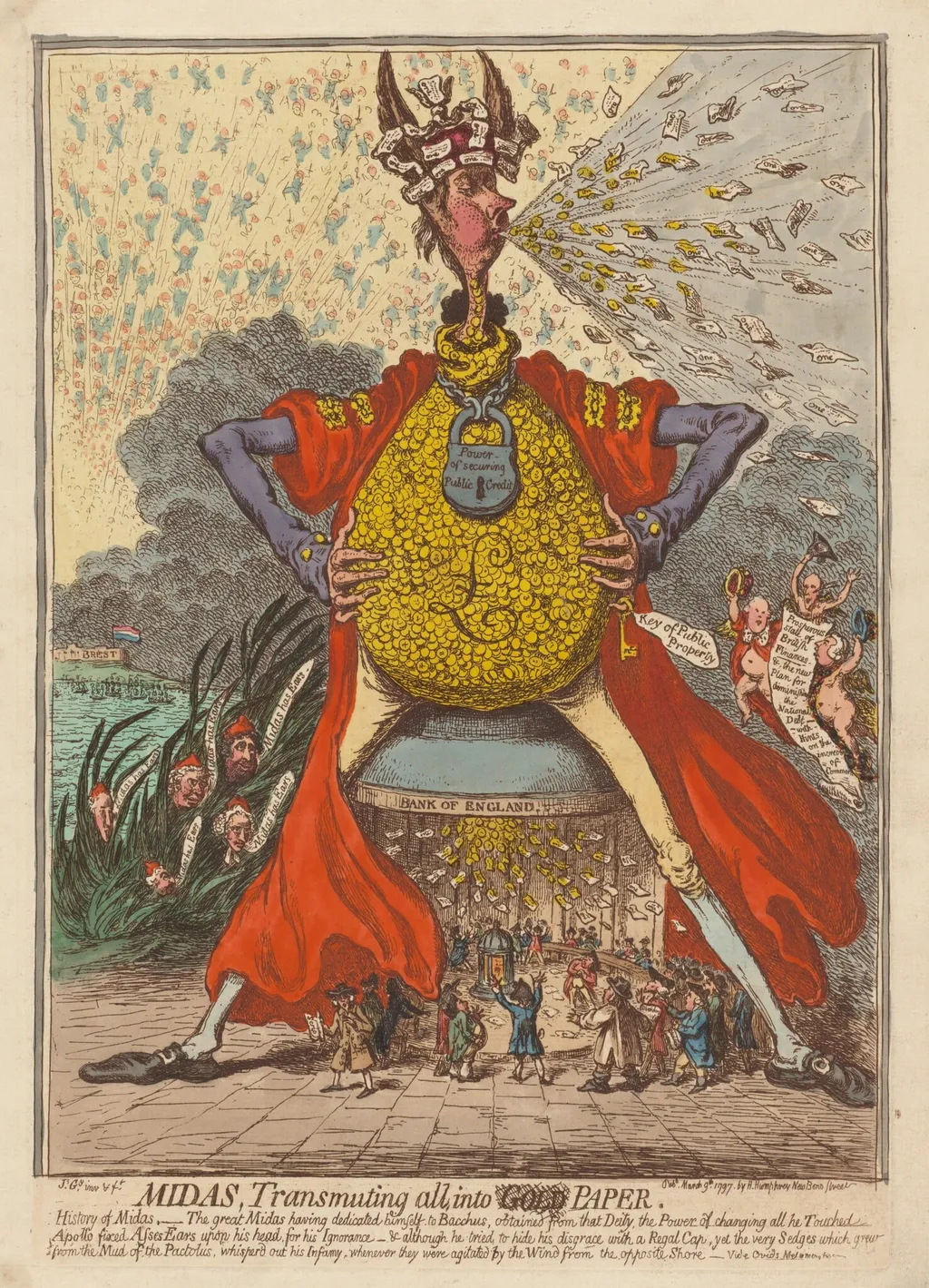
Midas, Transmuting All into Paper is a watercolor print by the Romanticist artist James Gillray. It dates from 1797 and is held in the collection of the National Gallery of Art.
- Inscription
- Inscribed:lower left in plate: Js. Gy. inv & ft.; lower right in plate: Pub. March 9th 1797 by H. Humphrey New Bond Street; lower center in plate: MIDAS, Transmuting all into GOLD [crossed out] PAPER. / History of Midas, ____ The great Midas having dedicated himself to Bacchus, obtained from that Deity, the power of changing all he Touched / Apollo fixed Asses Ears upon his head, for his Ignorance___ & although he tried to hide his disgrace with a Regal Cap, yet the very Sedges which grew / from the Mud of the Pactolus, whispered out his Infamy, whenever they were agitated by the Wind from the opposite Shore___ Vide Ovids Metamorpho... in image: Power / of securing / Public Credit; Key of Public / Property; Prosperous / State of Britain... ; by later hand, lower right verso in graphite: Kiuress House / 1 11 3 WSMM
About this work
Overview
James Gillray’s 1797 print Midas, Transmuting All into Paper satirizes contemporary monetary policy. The composition centers on a regal figure in a red cloak, clutching a golden orb, set before a façade labeled “Bank of England.” A throng of distressed onlookers clutch papers and coins, conveying panic and confusion.
Subject & Meaning
The crowned man represents King Midas, here transformed into a commentator on the era’s paper‑currency crisis. By turning everything he touches into paper, Gillray mocks the proliferation of banknotes and the resulting economic instability, suggesting that the monarch’s touch spreads financial chaos among the populace.
Technique & Style
Gillray employed a fine etching line on laid paper, later enhanced with hand‑applied watercolor. The bold reds and golds highlight the central figure, while the crowded foreground is rendered in finer, more subdued tones, creating a dramatic contrast that emphasizes the satirical narrative.
History & Provenance
Issued in 1797, the print circulated widely in pamphlets and broadsheets, reaching a broad audience across Britain. Gillray’s reputation as the pre‑eminent political caricaturist of his day ensured the work’s rapid dissemination, influencing public opinion on the Bank of England’s policies during the period.
Own this work as a print
Artist & collection
Artist
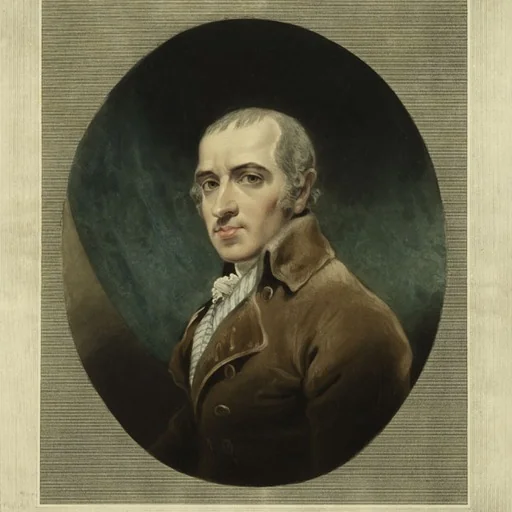
James Gillray (13 August 1756 – 1 June 1815) was an English caricaturist and printmaker famous for his etched political and social satires, mainly published between 1792 and 1810.

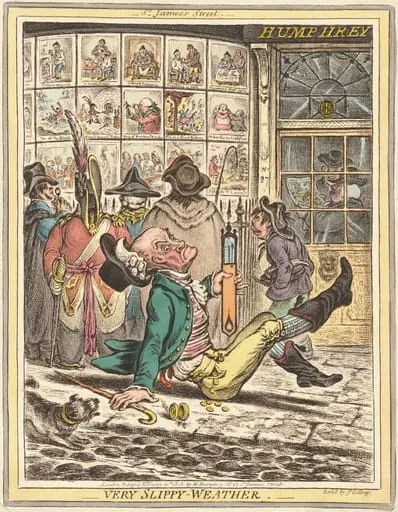
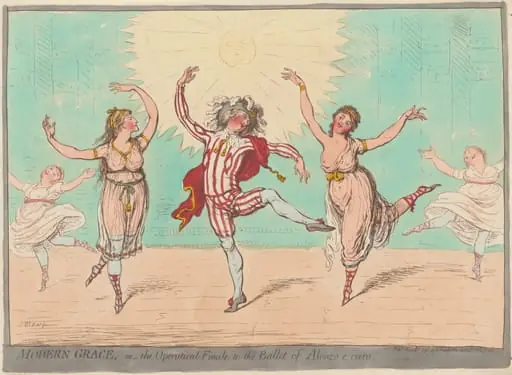
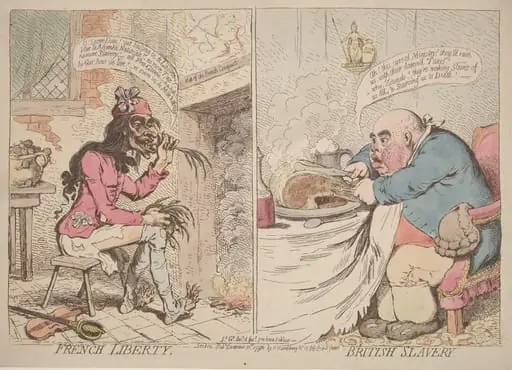
- H Beard Print Collection
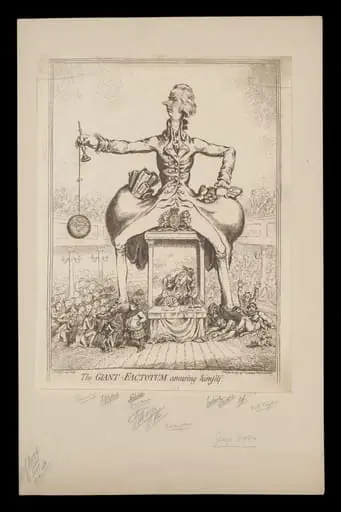 H Beard Print Collection
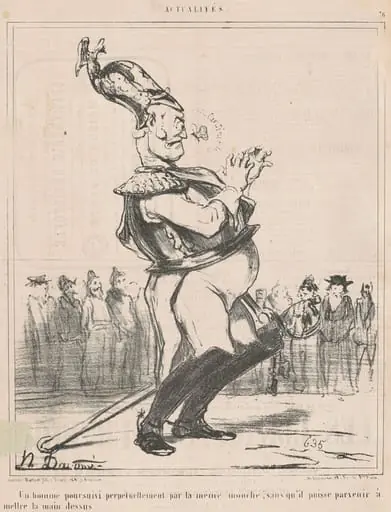 Un homme poursuivi ...
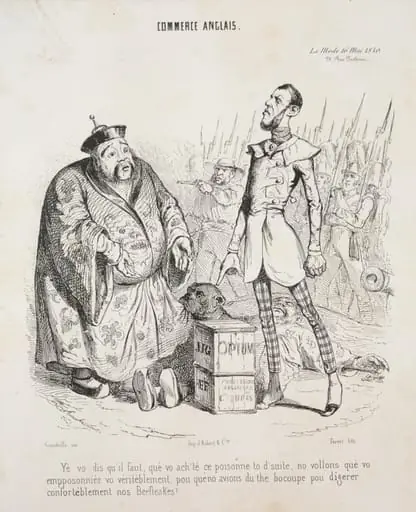 Commerce anglais. Yé vo dis qu'il faut, que vo ach'te ce poisonne to d'suite, no vollons que vo empposonniez vo véritéblement, pou que'no avions du thé bocoupe pou digerer conforteblément nos Beefteakes!
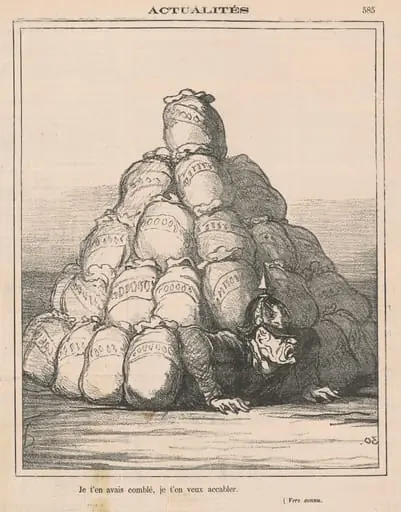 Je t'en avais comblé ...
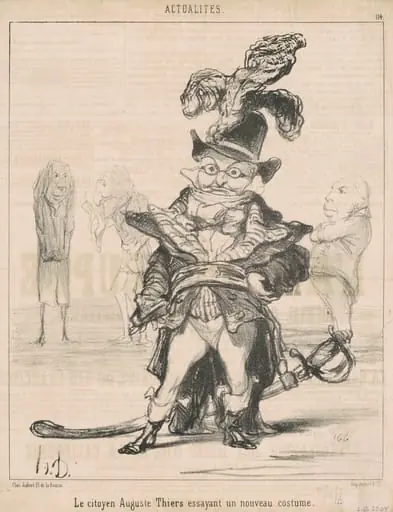 Le Citoyen ... Thiers essayant un nouveau costume
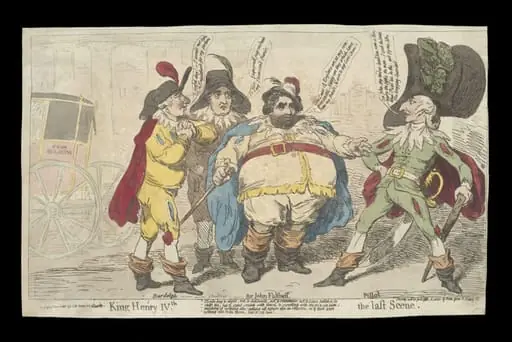 H Beard Print Collection
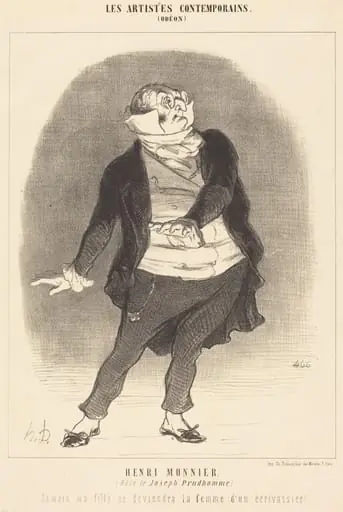 Henri Monnier (Rôle de Joseph Prudhomme)
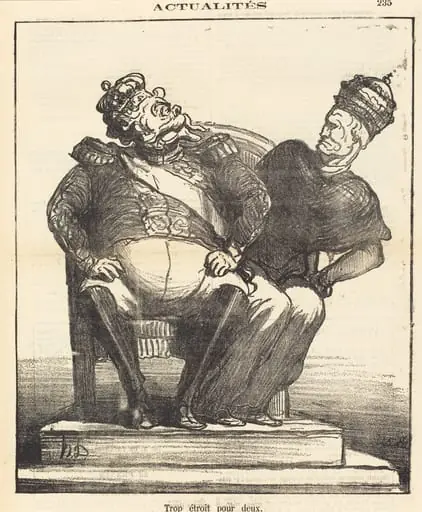 Trop étroit pour deux
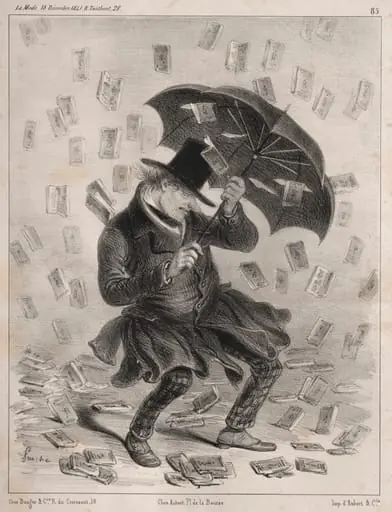 Actualités: Comment! on ne fera pas des processions pour faire changer ce temps là?.....
 H Beard Print Collection