Artwork
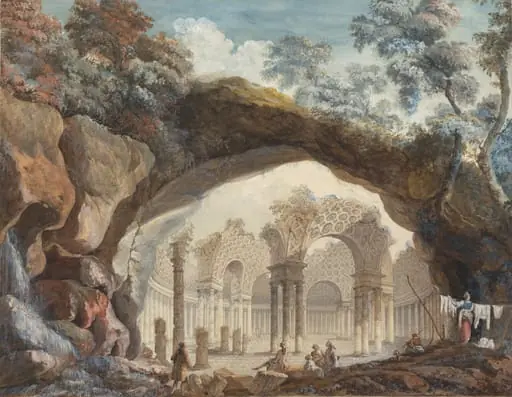
A View of the Ruins of the Baths of Caracalla
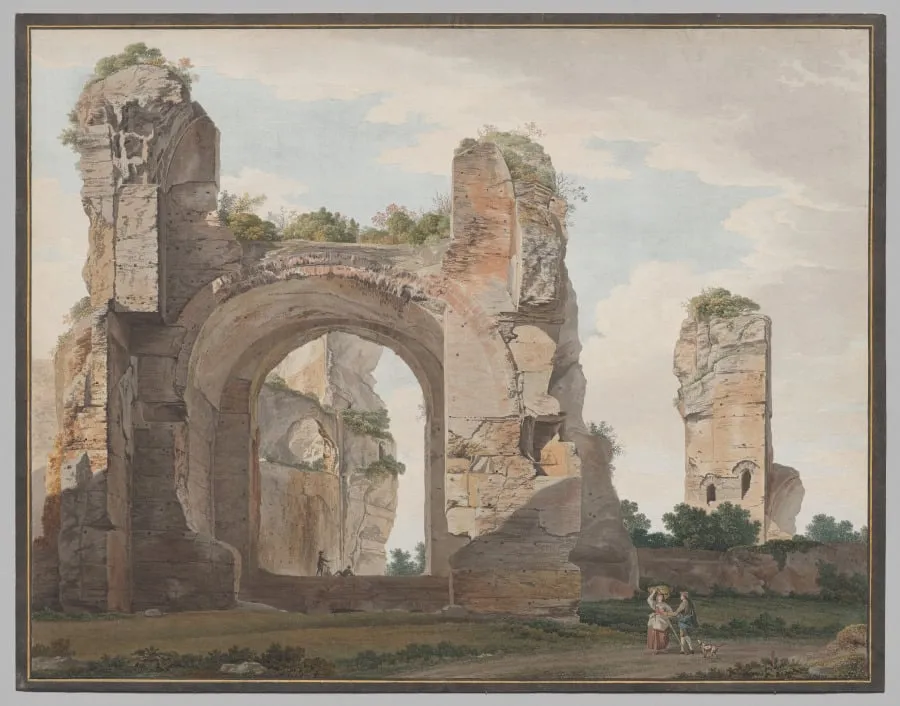
A View of the Ruins of the Baths of Caracalla is a drawing by the Romanticist artist Giovanni Battista Lusieri. It dates from 1780 and is held in the collection of the Cleveland Museum of Art.
- Accession no.
- 2022.93
- Credit line
- Severance and Greta Millikin Purchase Fund
About this work
Overview
Executed in the late afternoon, the work emphasizes the interplay of light and shadow across weathered brick and stone.
This drawing by Giovanni Battista Lusieri captures the ruins of the Baths of Caracalla in Rome, rendered with precise observation and a focus on atmospheric conditions. Executed in the late afternoon, the work emphasizes the interplay of light and shadow across weathered brick and stone. Its scale and detail suggest it was intended as a personal keepsake for a British patron, reflecting the Grand Tour tradition of collecting authentic records of antiquity.
Subject & Meaning
The scene presents the baths not as a grand monument, but as a quiet, inhabited ruin. Figures, small and scattered, anchor the viewer’s sense of scale against the towering fragments of architecture. By choosing an interior vantage point, Lusieri avoids the typical panoramic view, instead inviting contemplation of decay and time’s quiet erosion of imperial grandeur.
Technique & Style
Lusieri employed fine, controlled strokes to replicate the texture of aged brick and the subtle gradations of late-day sunlight. His attention to the quality of light, warm, directional, and softening as it falls across surfaces, demonstrates a methodical study of natural conditions. The rendering avoids idealization, favoring a near-topographical accuracy that anticipates later documentary practices in architectural drawing.
History & Provenance
Created during Lusieri’s time in Italy, likely in the 1780s, the drawing was commissioned by an English nobleman engaged in the Grand Tour. Such works served as tangible mementos of cultural encounters abroad. Its survival in private collections attests to its value as both artistic record and personal relic, bridging the classical past and the Enlightenment-era fascination with antiquity.
Context
In the late 18th century, Roman ruins were studied not only as relics but as sources of formal and aesthetic inspiration. Lusieri’s approach diverged from theatrical reconstructions, instead favoring empirical observation. His work aligned with emerging scholarly interests in archaeology and topography, contributing to a more nuanced understanding of ancient architecture beyond romanticized depictions.
Legacy
Lusieri’s method influenced later artists and topographers who sought to document ruins with fidelity rather than embellishment. His focus on transient light and unidealized form prefigured 19th-century realist tendencies in architectural drawing. While not widely known today, his work remains a quiet benchmark in the transition from picturesque convention to observational precision.
Artist & collection
Artist
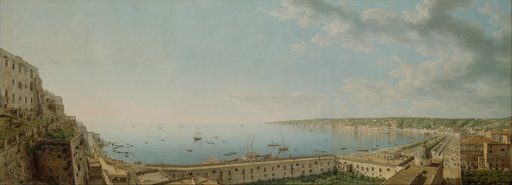
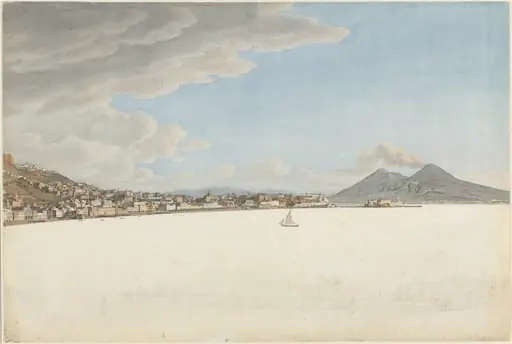
Giovanni Battista Lusieri (1755–1821) was an Italian landscape painter from Naples.

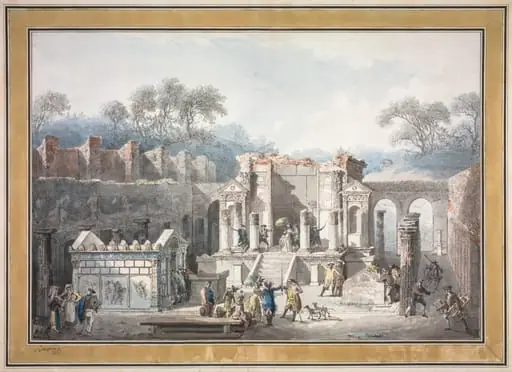 The Temple of Isis at Pompeii
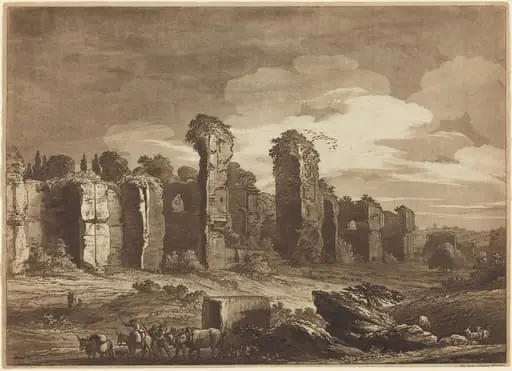 View of the Remains of Caracalla's Baths, Taken from the Jesuits Gardens at Rome
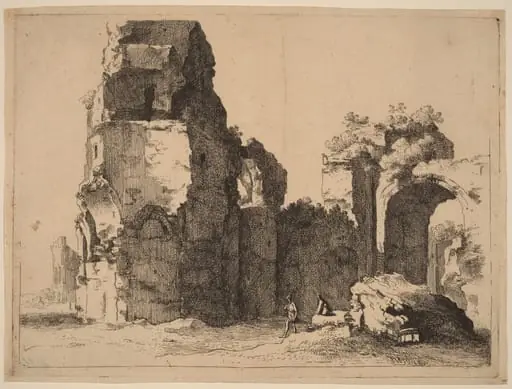 Ruins
Ruins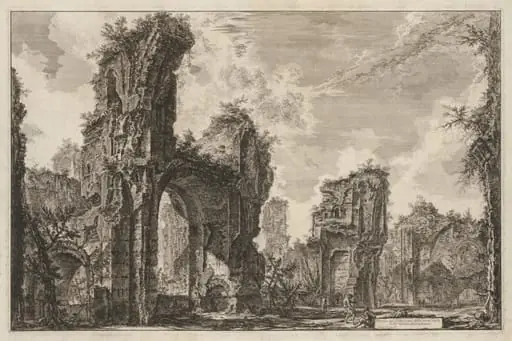 Views of Rome: Rovine del Sisto o sia della gran sala delle Terme Antoniniane
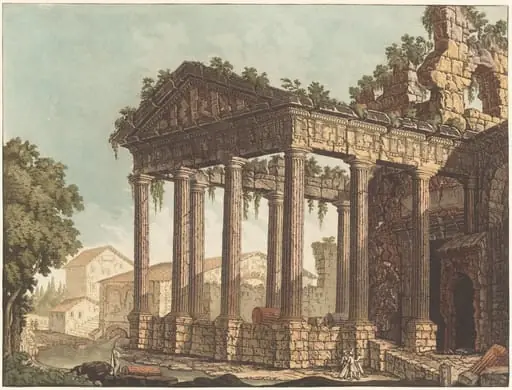 The Temple of Hercules at Cori
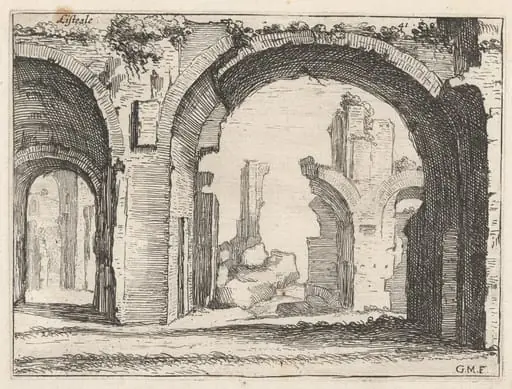 Antonine Baths, or Baths of Caracalla
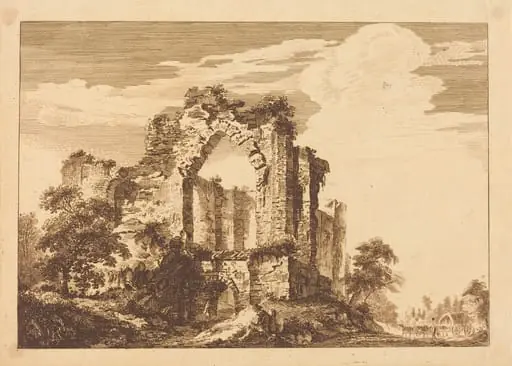 Ruins with a Seated Man, and a Covered Wagon in the Distance
 Architectural Fantasy: Ruins of a Circular Temple Seen through a Natural Arch