Artwork
Archer with Turbaned Headdress
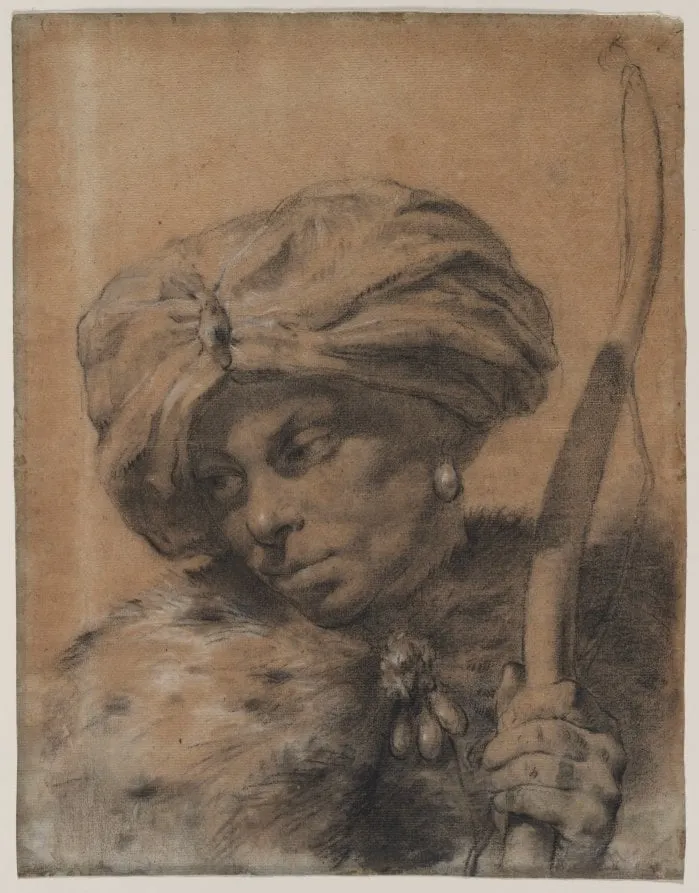
Archer with Turbaned Headdress is a drawing by the Baroque artist Giovanni Battista Piazzetta. It dates from 1740 and is held in the collection of the Cleveland Museum of Art.
- Accession no.
- 1931.60
- Credit line
- Margaret Huntington Smith McCarthy Fund
About this work
Overview
The subject is captured in the act of drawing a bow, though the arrow remains unaimed, suggesting a moment of poised readiness rather than active combat.
Giovanni Battista Piazzetta's 'Archer with Turbaned Headdress,' executed in 1740, depicts a male figure in a half-length format, characterized by a white turban and a dark coat. The subject is captured in the act of drawing a bow, though the arrow remains unaimed, suggesting a moment of poised readiness rather than active combat. The composition relies heavily on the artist's signature use of chiaroscuro, a technique inherited from the Venetian Baroque tradition.
Strong contrasts of light and shadow model the figure's face and hands, isolating them against a dark, indistinct background. This dramatic lighting, often described as 'candlelight' effects, creates a sense of intimacy and psychological depth. Painted during the height of Piazzetta's career in Venice, the work exemplifies his mature style, which moved away from the lighter Rococo tendencies of his contemporaries toward a more somber, sculptural approach.
The painting reflects the artist's interest in genre subjects and his ability to infuse everyday or exoticized figures with a monumental presence through the manipulation of light. It stands as a representative example of mid-18th-century Venetian painting, bridging the gap between the dramatic intensity of the earlier Baroque and the emerging sensibilities of the Enlightenment era.
Subject & Meaning
The composition shows a man wearing a white turban and a dark coat, drawing an arrow that is not aimed at any visible target. The turban hints at a traveler or merchant, while the archer’s poised stance suggests preparation rather than action, inviting viewers to contemplate a pause before an unseen event.
Technique & Style
Piazzetta employs chiaroscuro, the dramatic contrast of light and dark, to model the figure’s features and emphasize the texture of the turban and coat. The half‑lit face and the reflective quality of the Venetian light give the drawing a three‑dimensional presence, a hallmark of the artist’s approach to rendering atmospheric depth.
History & Provenance
Created in the early 1740s, the drawing entered the Cleveland Museum of Art’s holdings through acquisition in the 20th century. Its provenance traces back to Venice, where Piazzetta worked, and it has remained a representative example of his draftsmanship, illustrating his interest in everyday subjects rendered with theatrical lighting.
Artist & collection
Artist
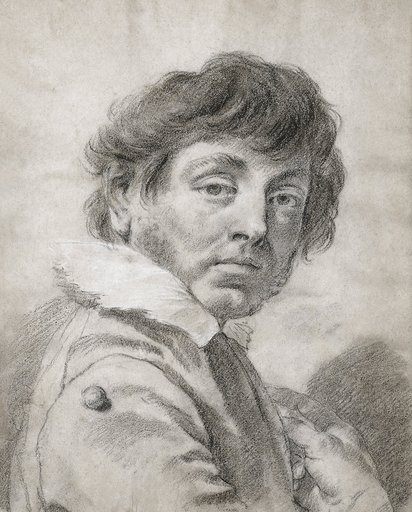
Giovanni Battista Piazzetta was an Italian Rococo painter of religious subjects and genre scenes.

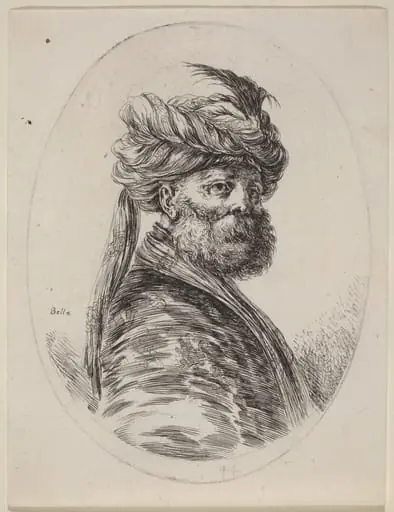 Bearded Moor in a Feathered Turban with a Veil, Turned to the Right
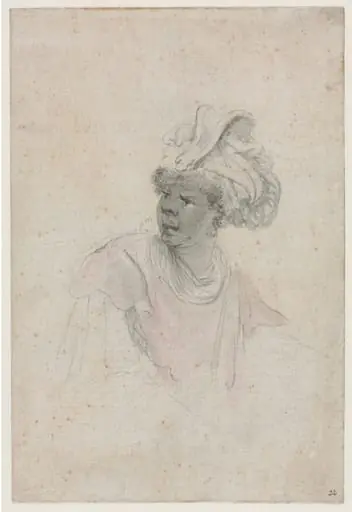 Study of a Moor, Facing to the Left
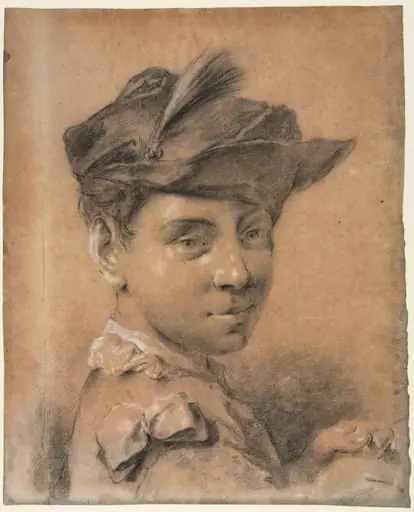 Head of a Young Man Wearing a Hat
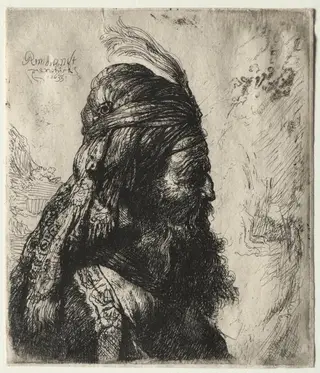 The Third Oriental Head
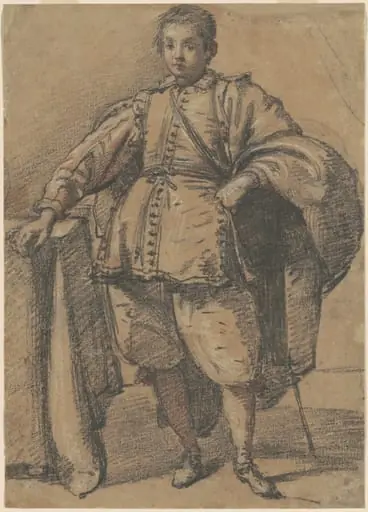 Portrait of a Young Nobleman
 Standing Man Wearing a Cloak and Hat
 Man with a Fur Cap
 study of a head
 A Standing Saint Holding a Book and a Palm Frond