Artwork
Χωρίς τίτλο
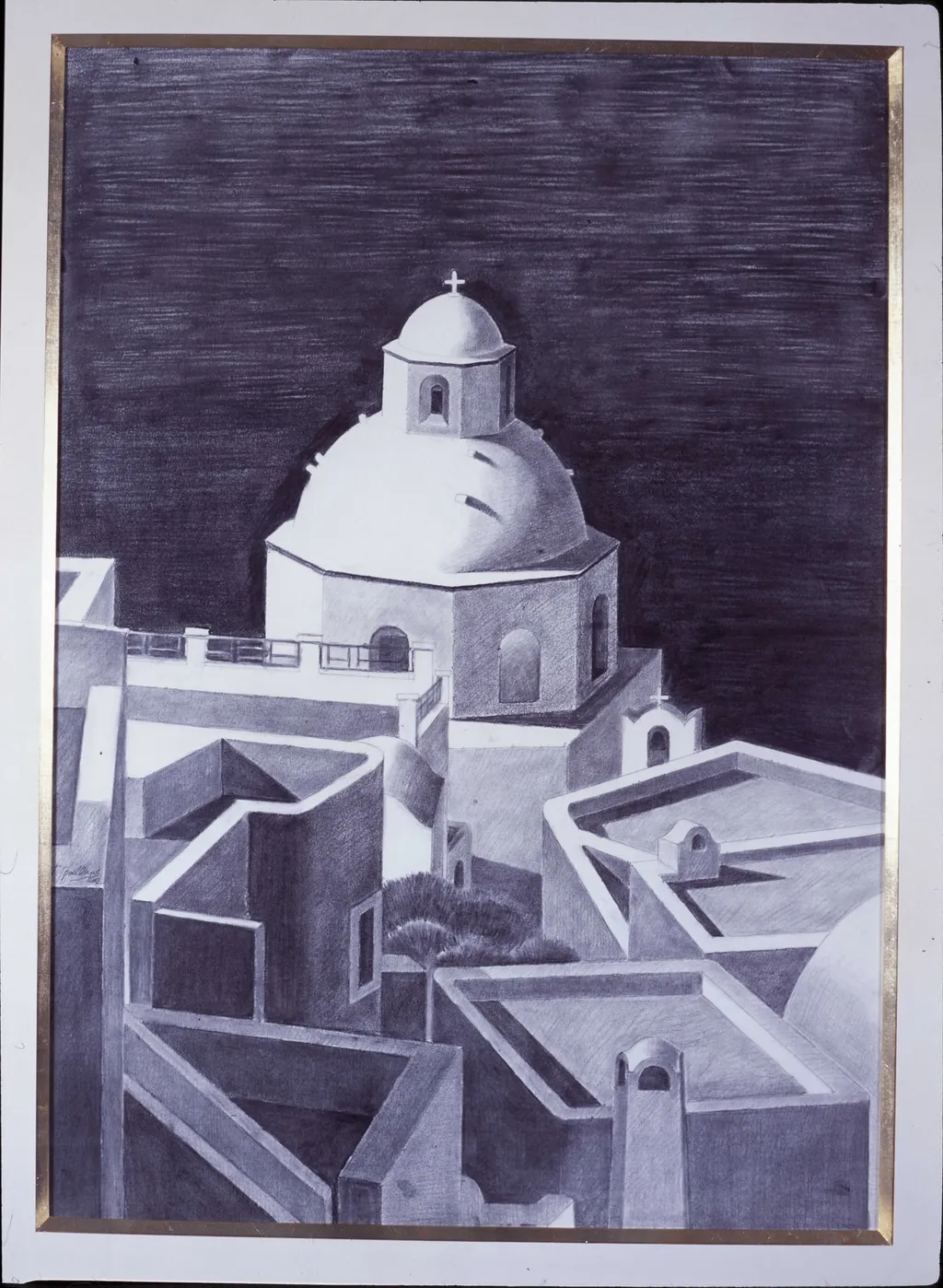
Χωρίς τίτλο is a print by Panayiotis Gravalos. It dates from 1983 and is held in the collection of the Metropolitan Organisation of Museums of Visual Arts of Thessaloniki – MOMus.
About this work
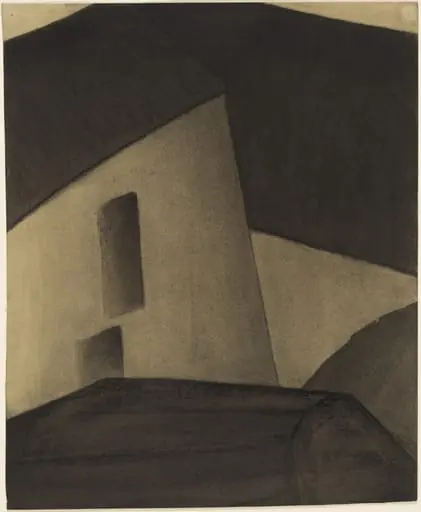
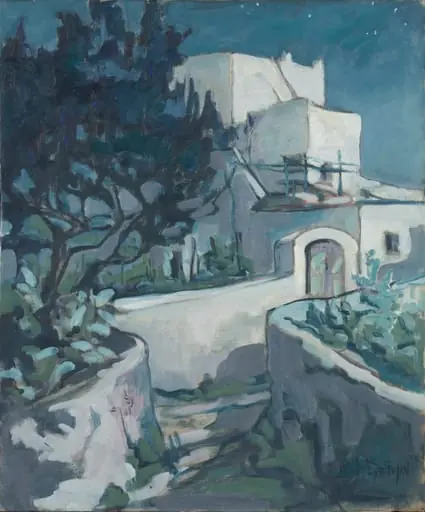
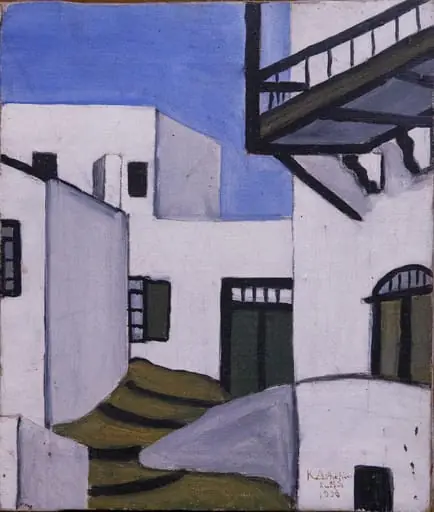
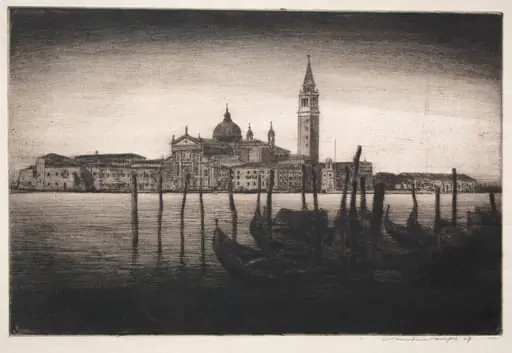
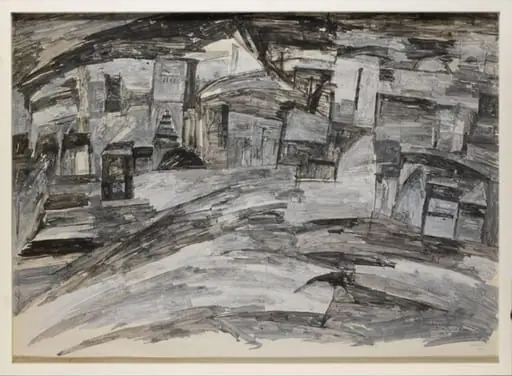
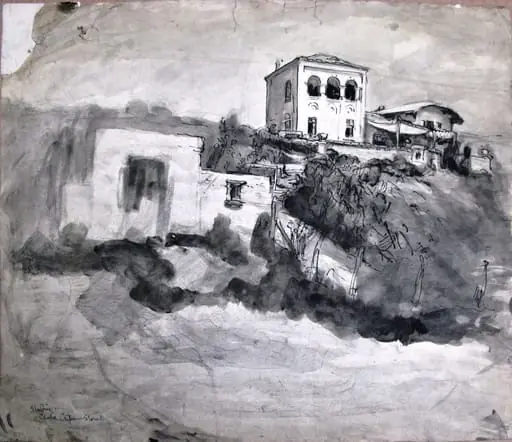
This print shows a Greek island scene in bold black and white. The white buildings stand out against dark shadows. The contrast makes the landscape feel bright and sharp.
Gravalos used clean lines and sharp shapes to build the scene. The strong black-and-white contrast feels almost photographic. It’s small but full of energy.
Look up Gravalos, Panayiotis (1933-2014) to see more of his work.
Overview
Despite its small scale, the composition conveys a sense of spatial clarity and rhythmic structure, characteristic of Gravalos’s approach to printmaking.
Panayiotis Gravalos created this untitled engraving as a minimalist representation of a Greek island landscape. Executed in stark black and white, the work relies on precise line work and high-contrast tonal relationships to define form and depth. Despite its small scale, the composition conveys a sense of spatial clarity and rhythmic structure, characteristic of Gravalos’s approach to printmaking.
Subject & Meaning
The scene depicts a cluster of whitewashed structures nestled into a rocky island terrain, suggesting a quiet coastal settlement. Absent of human figures or narrative detail, the focus lies in the architectural geometry and the interplay of light and shadow. The image evokes a sense of stillness and permanence, reflecting the enduring relationship between built environment and natural topography in the Aegean.
Technique & Style
Gravalos employed engraving techniques to achieve sharp, clean lines and precise tonal contrasts. By reserving areas of the plate for white space and incising deep blacks, he created a graphic rhythm that mimics the intensity of sunlight on stone. The absence of grayscale tones heightens the abstraction, emphasizing form over realism and aligning the work with modernist print traditions.
History & Provenance
Created during Gravalos’s active period in the mid-to-late 20th century, this piece belongs to a body of work produced after his studies in Athens and exposure to European modernism. While specific provenance details are not widely documented, the engraving reflects his consistent engagement with Greek landscapes through print, a medium he favored for its clarity and reproducibility.
Context
Gravalos’s work emerged in postwar Greece, a time when artists sought to redefine national identity through simplified visual language. His engravings, including this one, responded to both local architectural traditions and international trends in abstraction. The reduction of form to essential lines and contrasts aligned with broader movements in graphic art across Europe during the 1950s–70s.
Legacy
Gravalos’s engravings remain referenced in studies of modern Greek printmaking for their formal discipline and cultural resonance. Though not widely exhibited internationally, his work influenced a generation of Greek artists who turned to print as a means of exploring place and memory. This untitled piece exemplifies his enduring contribution to the medium’s development in Greece.
Artist & collection
Museum
Metropolitan Organisation of Museums of Visual Arts of Thessaloniki – MOMus
Continue through works from the same source collection.