Artwork
Village Street
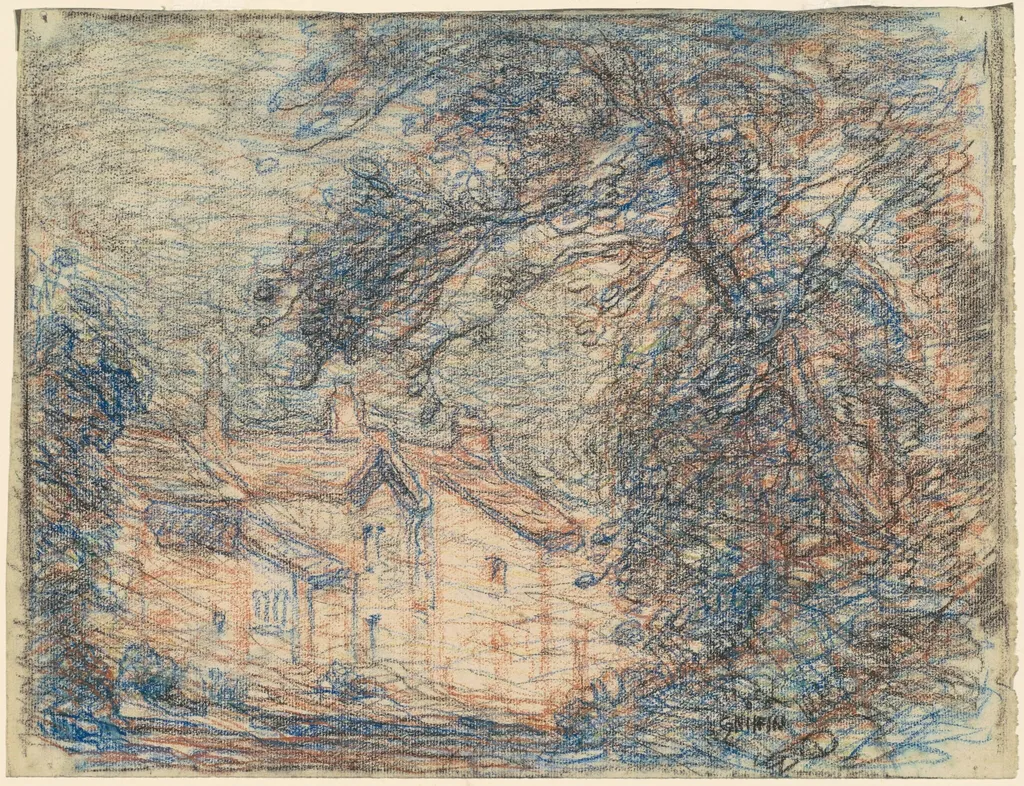
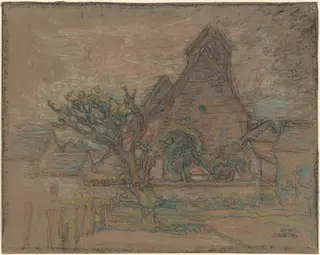
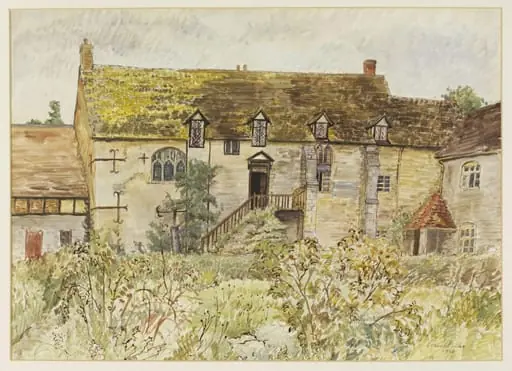
Village Street is a pastel drawing by Walter Griffin. It dates from 1922 and is held in the collection of the National Gallery of Art.
- Inscription
- Inscribed:lower right in black pastel: GRIFFIN
About this work
Overview
Walter Griffin’s 1922 work titled Village Street is a pastel drawing executed on laid paper. The composition captures a densely populated urban thoroughfare, rendered with a multitude of intersecting lines and forms that suggest the bustle of everyday life. The overall impression is one of movement and crowding, conveyed through a loosely applied, sketch‑like approach.
Subject & Meaning
The scene depicts a street lined with buildings, trees and indistinct figures, all merged into a collective visual mass. By allowing individual elements to blend, Griffin emphasizes the communal atmosphere of a village’s central artery, inviting viewers to sense the rhythm of daily activity rather than focus on specific details.
Technique & Style
Griffin employed soft pastel sticks on laid paper, a medium that yields velvety, easily blended hues. The palette is dominated by muted blues, browns and light grays, applied in quick, overlapping strokes that create a hazy, almost impressionistic surface. The handling favors spontaneity, giving the work the appearance of a rapid, exploratory sketch rather than a finished, polished drawing.
Context
Created in the early 1920s, Village Street reflects a period when artists increasingly explored pastel for its immediacy and tonal richness. Griffin’s choice of a modest, everyday subject aligns with contemporary interests in portraying ordinary environments, while his loose execution mirrors broader modernist tendencies toward abstraction of form and atmosphere.
Own this work as a print
Artist & collection

- Two Figures on a Country Road
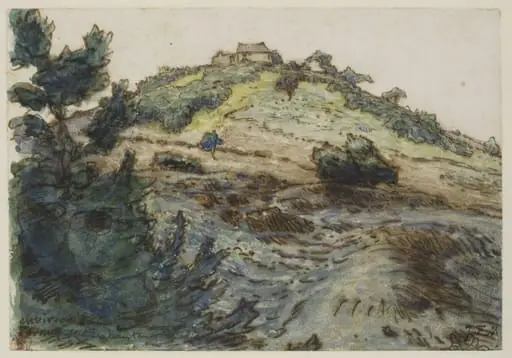 The farm on the hill
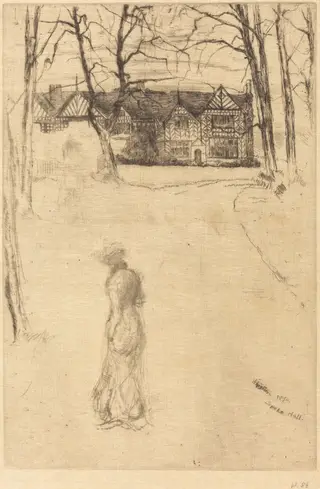 Speke Hall, No.1
![Figures on the Anthoniesdijk Entering Houtewael [verso], by Rembrandt van Rijn](https://artifactworldgallery.com/img/rembrandt-van-rijn--figures-on-the-anthoniesdijk-entering-houtewael-verso--34adc78d6ee3c51d-w320.webp) Figures on the Anthoniesdijk Entering Houtewael [verso]
Figures on the Anthoniesdijk Entering Houtewael [verso]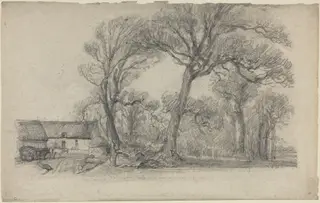 Landscape with Trees, Cottage, and Farm Wagon
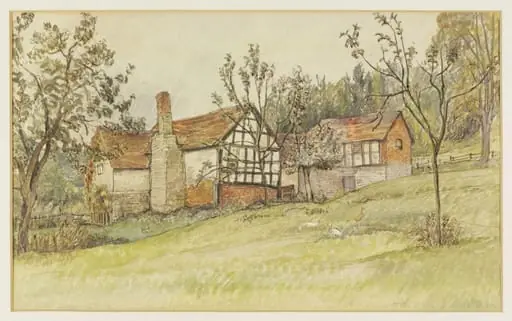 Oldfield Farm, between Leinthall Earls and Richard's Castle
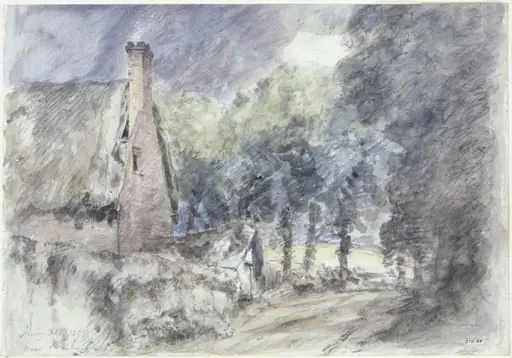 A cottage and Trees near Salisbury
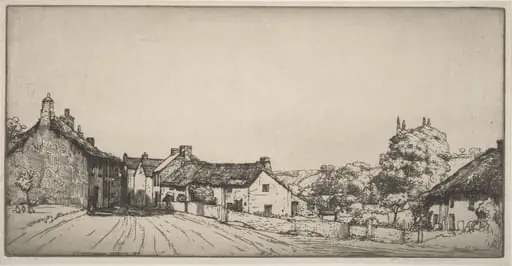 A Devonshire Village
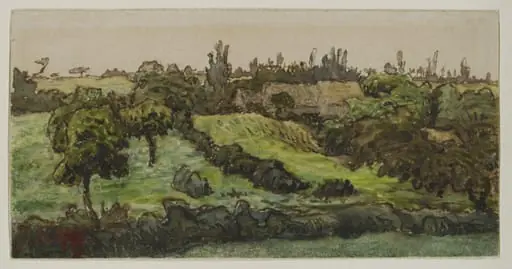 Landscape with farm buildings
 Grange Farm, The Abbot's House, Wigmore Abbey remains