Artwork
Germany's Famous Authors
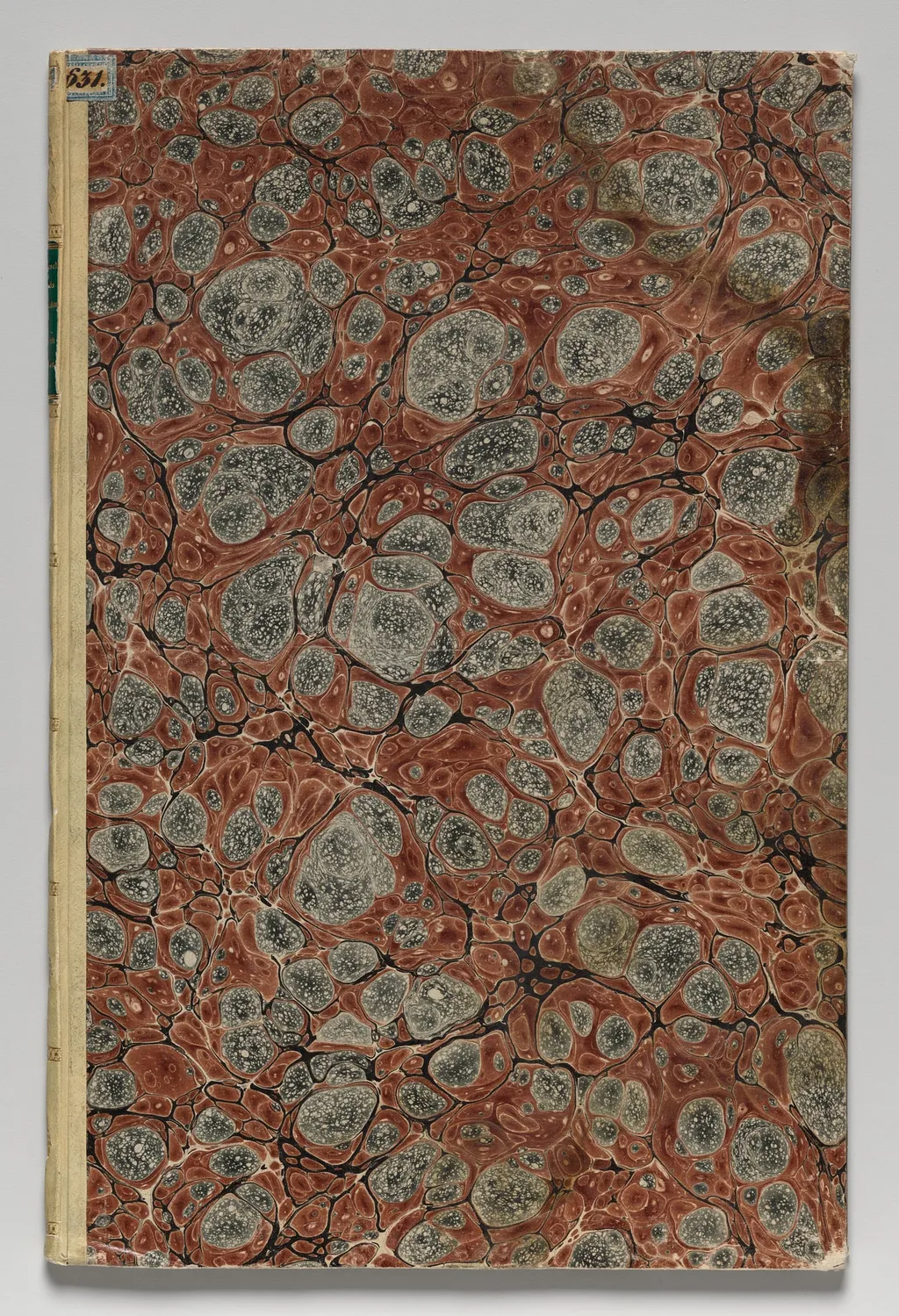
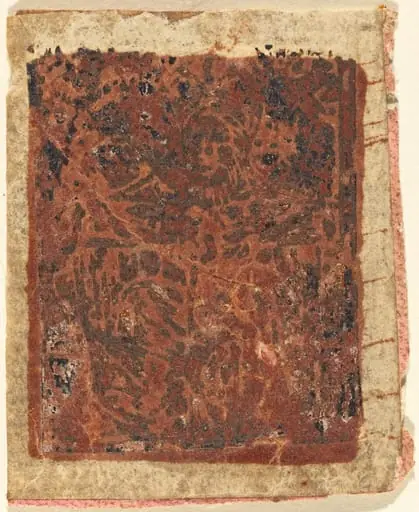
Germany's Famous Authors is a print by the Romanticist artist Gustav Karl Friedrich Lüderitz. It dates from 1824 and is held in the collection of the Cleveland Museum of Art.
- Accession no.
- 1940.1139
- Credit line
- Mr. and Mrs. Lewis B. Williams Collection
About this work
Overview
Though titled Germany's Famous Authors, the work presents no names or portraits, instead offering an abstract composition of swirling reds, browns, and blacks.
Created in 1824 by Gustav Karl Friedrich Lüderitz, this print features a marbled paper design without any textual content. Though titled Germany's Famous Authors, the work presents no names or portraits, instead offering an abstract composition of swirling reds, browns, and blacks. The pattern mimics the appearance of ink suspended and dried in water, suggesting a decorative technique common in bookbinding. It resides in The Cleveland Museum of Art as an example of 19th-century paper ornamentation.
Subject & Meaning
The title references Germany’s literary figures, yet the image contains no direct representation of authors or their works. This absence may reflect a symbolic gesture, invoking intellectual legacy through material beauty rather than literal portraiture. The marbled surface could allude to the complexity and fluidity of literary thought, or serve as a decorative frame meant to elevate the physical object over its content.
Technique & Style
The work employs a marbling technique, likely achieved by floating pigments on a viscous liquid surface before transferring them to paper. The result is an organic, non-repeating pattern with layered tones and irregular edges, evoking natural forms like drifting smoke or submerged foliage. The手法 suggests handcraft rather than mechanical reproduction, aligning with pre-industrial book arts traditions of the early 1800s.
History & Provenance
Lüderitz produced this piece during a period when marbled papers were widely used in German bookbinding to adorn covers and endpapers. While the specific provenance before its acquisition by The Cleveland Museum of Art is undocumented, such papers were often created for commercial or private publishing houses. Its survival as a standalone print indicates it may have been preserved as a sample or artistic study.
Context
In early 19th-century Germany, marbled paper was both a practical and aesthetic element in publishing. Its use coincided with Romanticism’s emphasis on nature, individuality, and the handmade. Though the image lacks figuration, its organic forms resonate with Romantic sensibilities, contrasting with the rigid typography of the era and offering a tactile counterpart to literary ideals.
Legacy
This work exemplifies a once-common craft now largely obsolete due to industrial printing. As a rare surviving example of decorative paper art from the period, it preserves a tactile dimension of literary culture that modern editions have lost. It invites reflection on how material form once shaped the experience of reading and the reverence for books as objects.
Own this work as a print
Artist & collection
Artist
Gustav Karl Friedrich Lüderitz
Gustav Karl Friedrich Lüderitz (1803–1884) was a German artist.

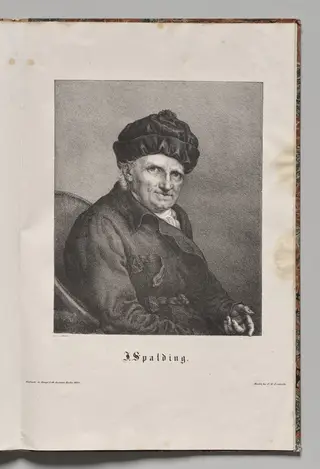 Germany's Famous Authors: Portrait of Johann Joachim Spalding
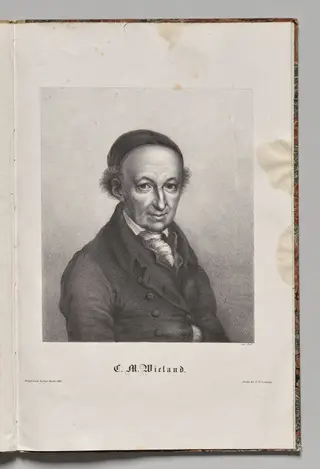 Germany's Famous Authors: Portrait of Christopher Martin Wieland
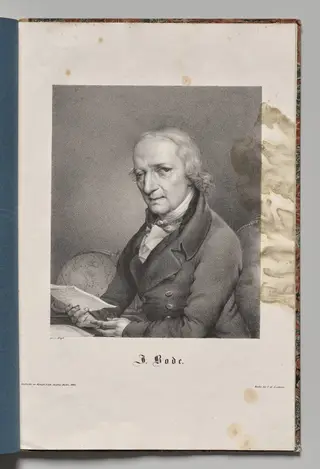 Germany's Famous Authors: Portrait of Johann Elert Bode
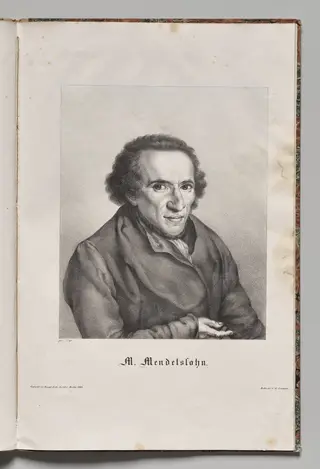 Germany's Famous Authors: Portrait of Moses Mendelssohn
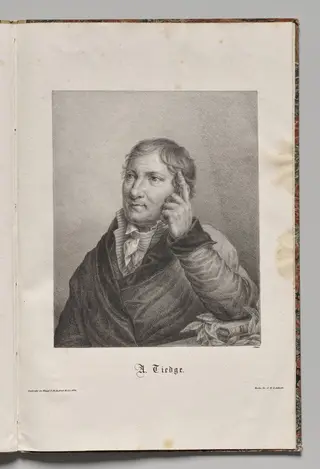 Germany's Famous Authors: Portrait of Chrisoph August Tiedge
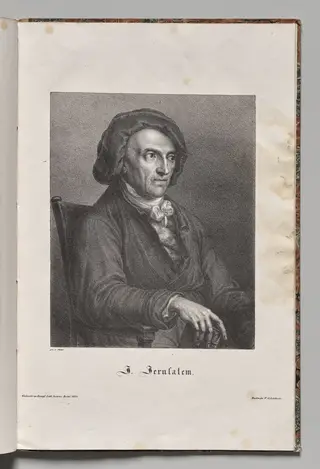 Germany's Famous Authors: Portrait of Johann Friedrich Wilhelm Jerusalem
- Mascarade à la Grecque
 Landscapes
 Landscapes
 The Apocalypse (bound volume)
 Page from Tales of a Parrot (Tuti-nama): blank page
 Geamie
 Maica Domnului, Sfântul Nicolae, Sfântul Gheorghe, Sfântul Mihail
 Printer's Device for the Plantin Press
 Trinity
 Icoai"(a
 Madonna and Child
 Page from Tales of a Parrot (Tuti-nama): blank page