Artwork
Germany's Famous Authors: Portrait of Christopher Martin Wieland
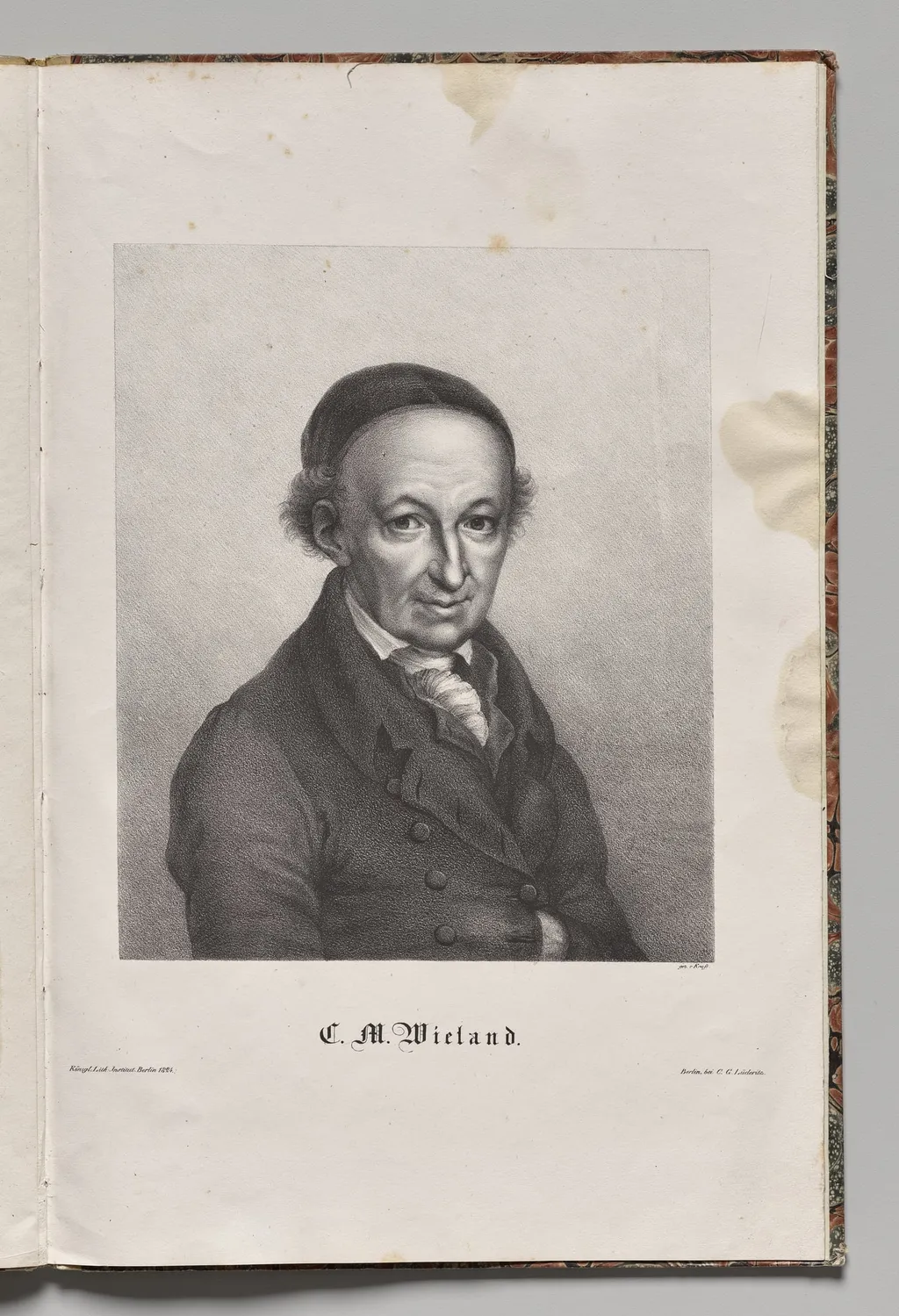
Germany's Famous Authors: Portrait of Christopher Martin Wieland is a print by the Romanticist artist Gustav Karl Friedrich Lüderitz. It dates from 1824 and is held in the collection of the Cleveland Museum of Art.
- Accession no.
- 1940.1139.f
- Credit line
- Mr. and Mrs. Lewis B. Williams Collection
About this work
Overview
The image is printed on aged paper with a soft, faded tone, suggesting it was meant for reproduction rather than as a unique artwork.
This black-and-white print, made in 1824 by Gustav Karl Friedrich Lüderitz, depicts the German writer Christopher Martin Wieland. Produced as part of a series on notable German literary figures, it was likely intended for wide distribution. The image is printed on aged paper with a soft, faded tone, suggesting it was meant for reproduction rather than as a unique artwork. Its modest framing and restrained composition reflect the period’s preference for dignified, unadorned portraiture.
Subject & Meaning
Christopher Martin Wieland, a leading figure in German literature during the late 18th and early 19th centuries, is portrayed with quiet solemnity. His formal attire, dark coat, high collar, and white cravat, signals his status as an intellectual and man of letters. The hands resting calmly in his lap convey composure, aligning with contemporary ideals of rational self-possession.
The inclusion of his name beneath the image reinforces the print’s purpose: to identify and honor a significant cultural contributor.
Technique & Style
Lüderitz employed a linear, engraved technique typical of 19th-century reproductive prints. The image relies on fine lines and tonal gradations to define form, avoiding dramatic contrasts. The texture of the paper and the slight fading suggest the print was made from a worn plate or printed in limited, low-contrast editions.
The composition is centered and frontal, with minimal background detail, focusing attention entirely on the subject’s face and posture.
History & Provenance
Created in 1824, the print was likely produced as part of a broader project documenting Germany’s literary heritage. It entered the collection of The Cleveland Museum of Art at an unknown date, though its condition and style are consistent with prints distributed in the decades following Wieland’s death in 1813. Its survival in institutional care reflects its role as a historical document rather than a sought-after artistic object.
Context
Wieland was a central voice in German Enlightenment and early Romantic circles, known for his novels and translations of Shakespeare. This portrait emerged during a period when Germany was consolidating its cultural identity through printed collections of notable figures. Such images served educational and patriotic aims, circulating among middle-class households and libraries to reinforce national literary pride.
Legacy
Though not widely recognized today as a work of fine art, the portrait remains a tangible link to Wieland’s enduring influence on German letters. It exemplifies how 19th-century print culture preserved the likenesses of intellectuals for public memory. Its presence in a major museum underscores its value as a historical artifact, offering insight into how literary figures were visually commemorated in their time.
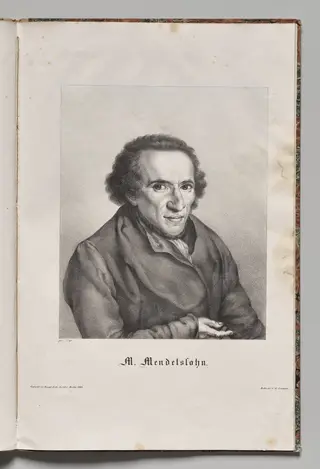
Own this work as a print
Artist & collection
Artist
Gustav Karl Friedrich Lüderitz
Gustav Karl Friedrich Lüderitz (1803–1884) was a German artist.

 Germany's Famous Authors
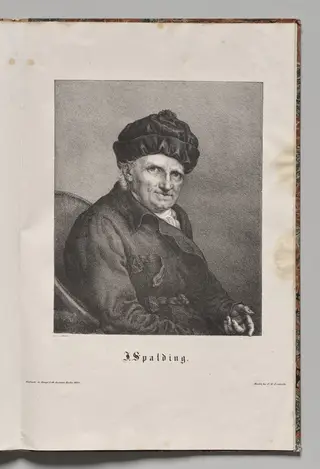 Germany's Famous Authors: Portrait of Johann Joachim Spalding
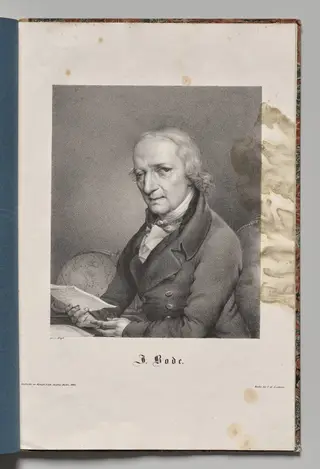 Germany's Famous Authors: Portrait of Johann Elert Bode
- Germany's Famous Authors: Portrait of Moses Mendelssohn
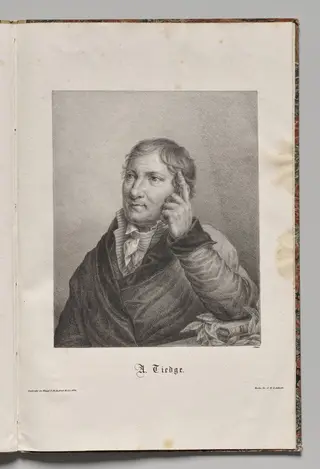 Germany's Famous Authors: Portrait of Chrisoph August Tiedge
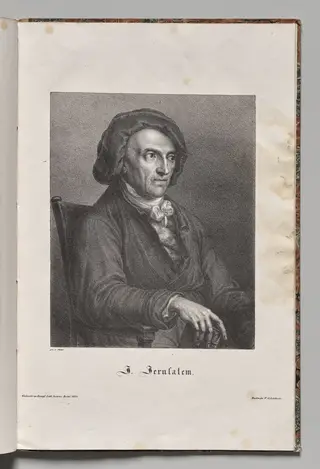 Germany's Famous Authors: Portrait of Johann Friedrich Wilhelm Jerusalem