Artwork
The Kedawong Sugar Mill near Pasuruan on Jawa
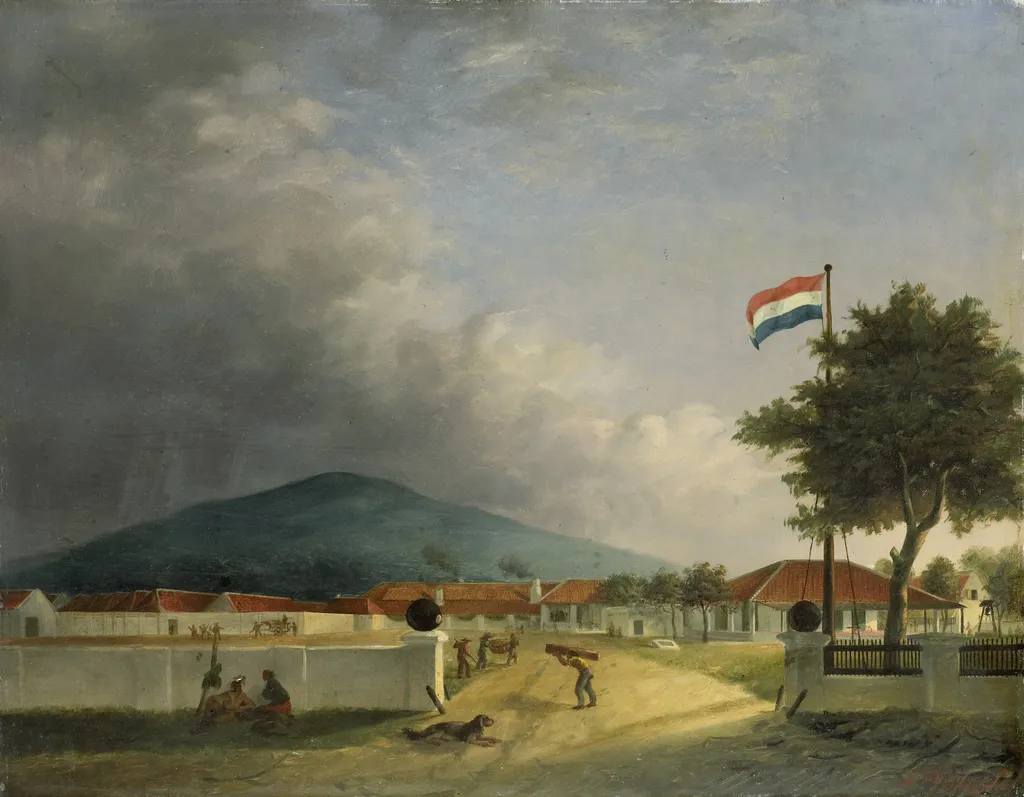
The Kedawong Sugar Mill near Pasuruan on Jawa is an oil painting by the Orientalist artist H.Th. Hesselaar. It dates from 1849 and is held in the collection of the Rijksmuseum. H.
About this work
Subject & Meaning
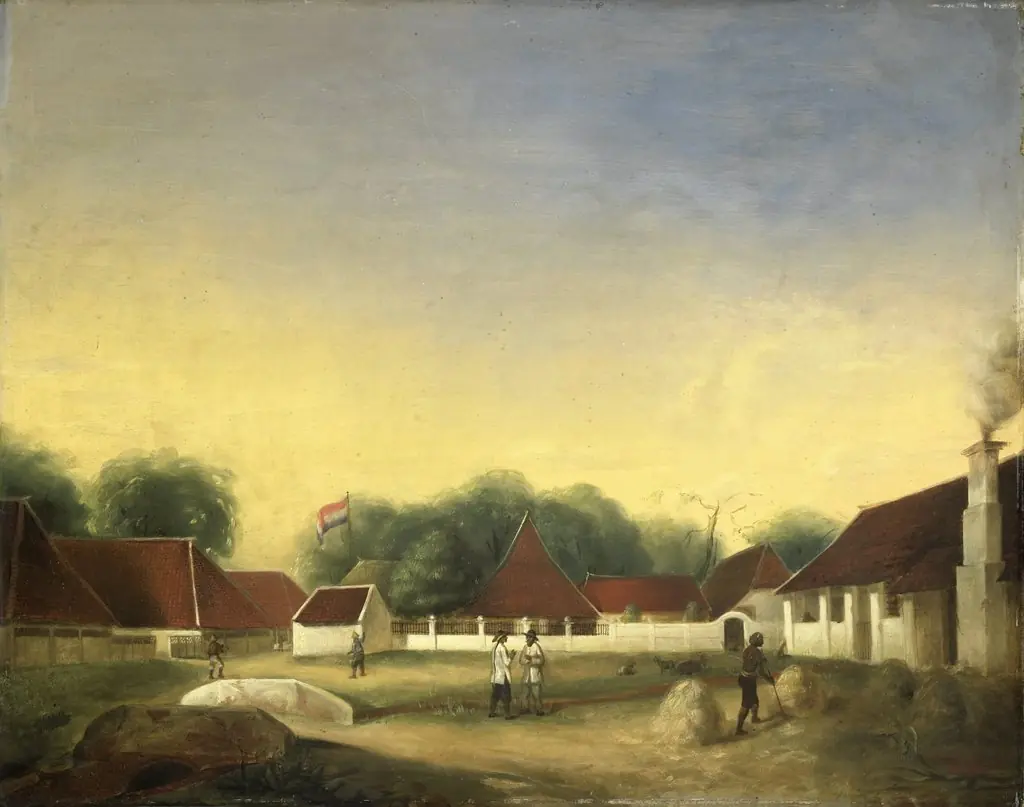
The painting shows a sugar mill complex set against a landscape that includes a house, a tree and a mountain, all rendered in oil on panel. The mill itself symbolizes the colonial economic infrastructure that shaped Java's agricultural economy in the mid-nineteenth century.
Technique & Style
As a mid-19th-century panel painting, it utilizes traditional oil mediums to render the architectural and natural elements of the scene.
Created in 1849 by H.Th. Hesselaar, this work is an oil painting executed on a wooden panel. The composition depicts a landscape featuring a house, trees, and a mountain, representing the sugar mill near Pasuruan on Java.
The piece measures 43 cm in height and 54 cm in width. As a mid-19th-century panel painting, it utilizes traditional oil mediums to render the architectural and natural elements of the scene.
History & Provenance
H.Th. Hesselaar created the oil painting The Kedawong Sugar Mill near Pasuruan on Jawa in 1849. The work was executed on a panel support measuring 43 cm in height and 54 cm in width.
It depicts a landscape featuring a house, trees, and a mountain. The painting is held in the collection of the Rijksmuseum.
Overview
H.Th. Hesselaar’s oil on canvas, dated 1849, portrays the Kedawong sugar mill situated near Pasuruan on the island of Java. The composition centers on a courtyard surrounded by white structures with red tiled roofs, a modest mountain in the distance, and a cloudy sky overhead.
A red‑and‑white flag flutters from a pole, while a dog and laborers moving bundles add a sense of everyday activity.
Context
The Kedawong mill was part of a network of sugar production facilities that underpinned the economic foundation of the Dutch East Indies. By the late 1840s, sugar had become a major export commodity, and artworks like Hesselaar’s offered metropolitan audiences a glimpse of the distant plantations that supported the empire’s trade.
Own this work as a print
Artist & collection