Artwork
Solomon's Temple, Buxton
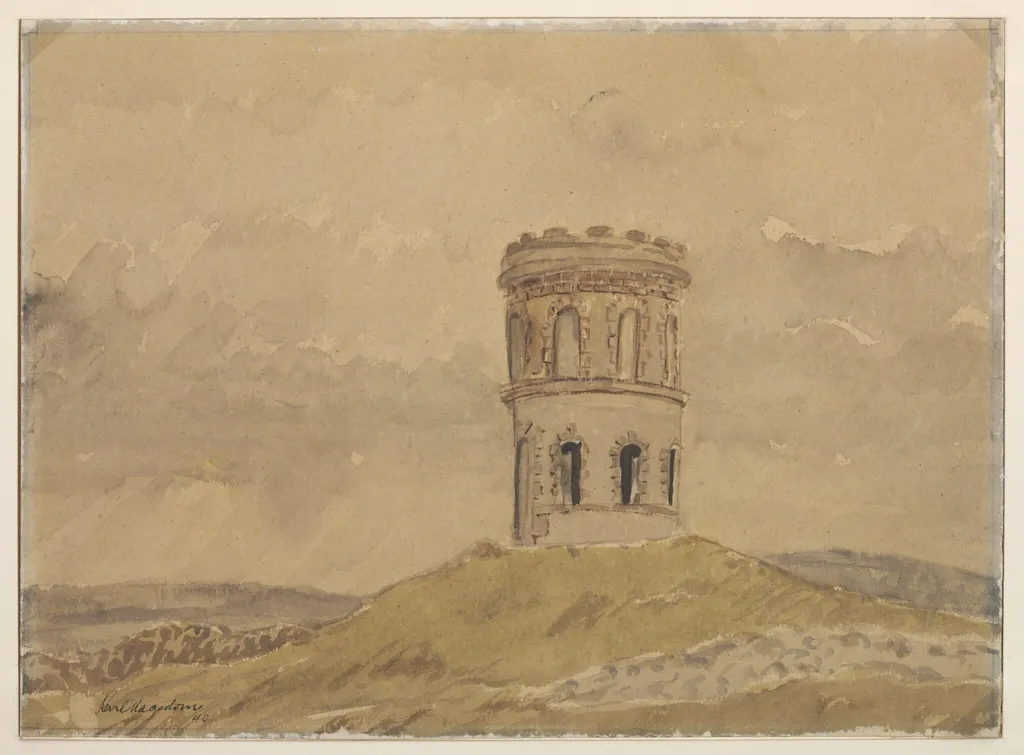
Solomon's Temple, Buxton is a watercolor work on paper by Hagedorn. It dates from 1940 and is held in the collection of the Victoria and Albert Museum.
About this work
Overview
In 1940, artist Hagedorn rendered a watercolour of Solomon’s Temple, a Victorian-era tower perched on a ridge near Buxton. The composition centers the cylindrical structure against a muted, cloud‑filled sky, using a palette of soft, blended hues that convey both the stone’s texture and the atmospheric light.
Subject & Meaning
The painting records a local landmark that had become emblematic of rural England’s built heritage. By isolating the tower on its hilltop, Hagedorn emphasizes its solitary presence within the landscape, inviting contemplation of the relationship between historic architecture and the surrounding countryside.
Technique & Style
Executed in a topographical manner, the work employs delicate watercolor washes to model form and surface. Layered pigments suggest the roughness of stone walls, while finer strokes delineate the round windows and doorway, achieving a balance between precise detail and atmospheric softness.
History & Provenance
Created under the Recording Britain programme, the piece was part of a wartime effort funded by the Pilgrim Trust and overseen by Sir Kenneth Clark. The initiative commissioned artists to document sites deemed at risk from wartime damage or modern development, providing both a cultural archive and financial support for creators.
Context
The painting reflects broader concerns of the early 1940s about the loss of traditional English scenery. Alongside works by contemporaries such as John Piper and Rowland Hilder, Hagedorn’s watercolour contributes to a visual record of a Britain perceived to be disappearing amid conflict and change.
Artist & collection
Artist
Karl Hagedorn (11 September 1889 – 1969), who signed himself Hagedorn, was a painter and illustrator. He was born in Berlin in 1889 but settled in Manchester, England, in 1905.

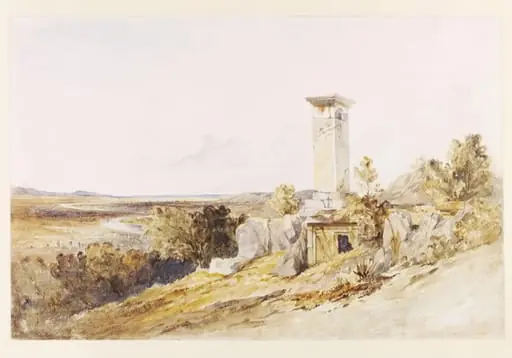 Xanthus
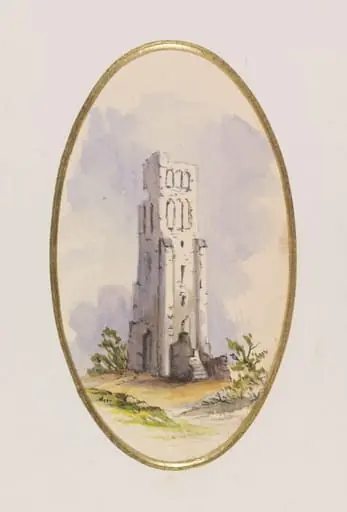 Ruin near Arimathea
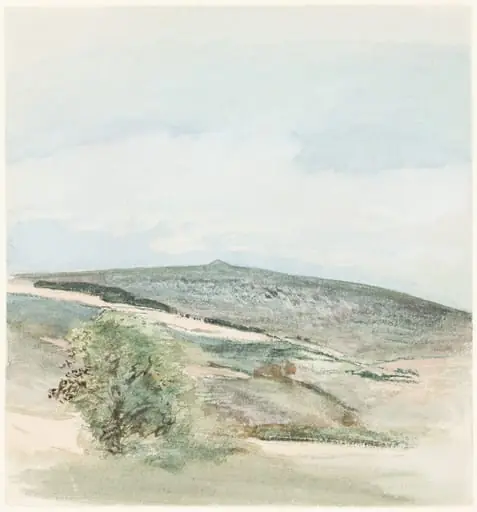 A Heath in Sussex
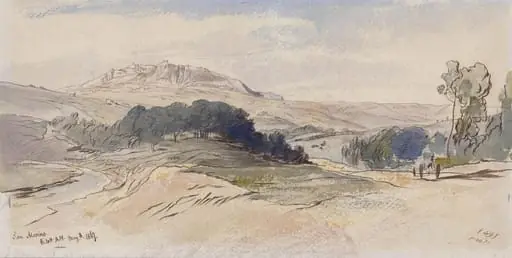 San Marino 6.40 AM. May 8. 1867
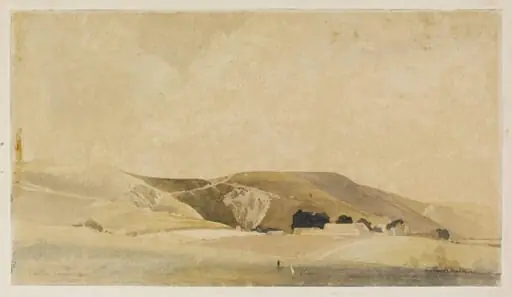
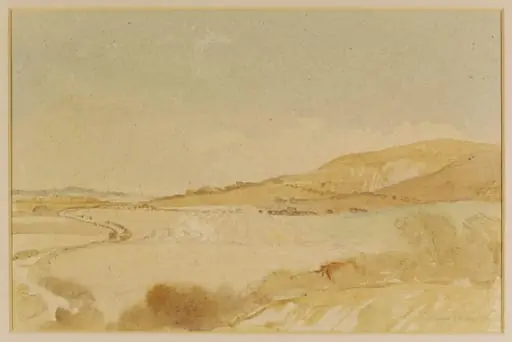 The Southdown, Underhill Road; Clayton to Westmeston
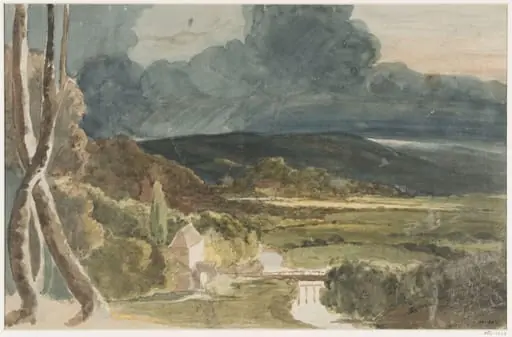 Landscape with river and mountains
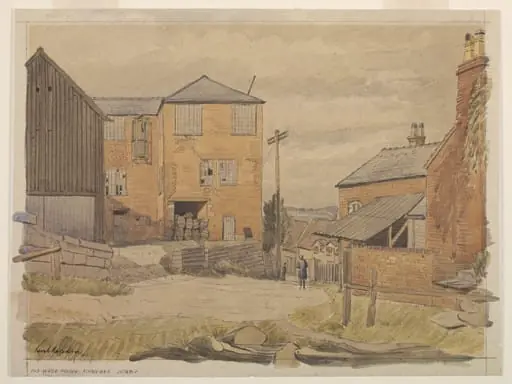
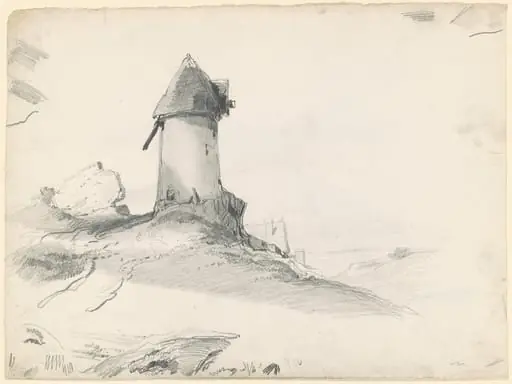 Landscape with Mill
![Deserted Tin-Mine, Cornwall. [ 1938 ], by Hardie](https://artifactworldgallery.com/img/hardie--deserted-tin-mine-cornwall-1938--abfeba7bb57d1e54-w320.webp) Deserted Tin-Mine, Cornwall. [ 1938 ]
Deserted Tin-Mine, Cornwall. [ 1938 ]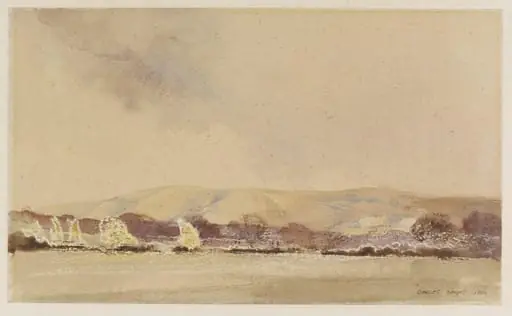 Fields and Woods South of Ditchling
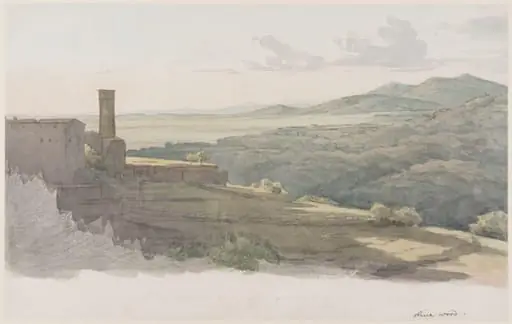 Villa of Maecenas at Tivoli
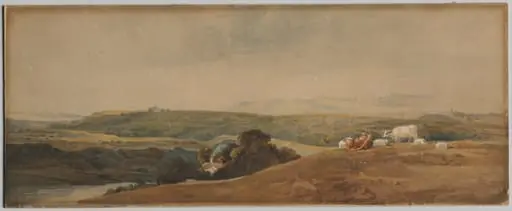 Mountains and Cattle
- The Southdown, Underhill Road: Porching Farm from Fulking