Artwork
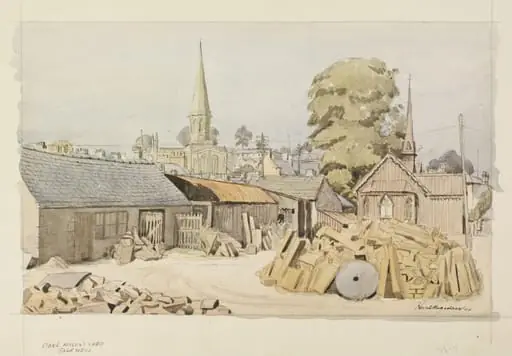
Old Warehouse, Ashbourne
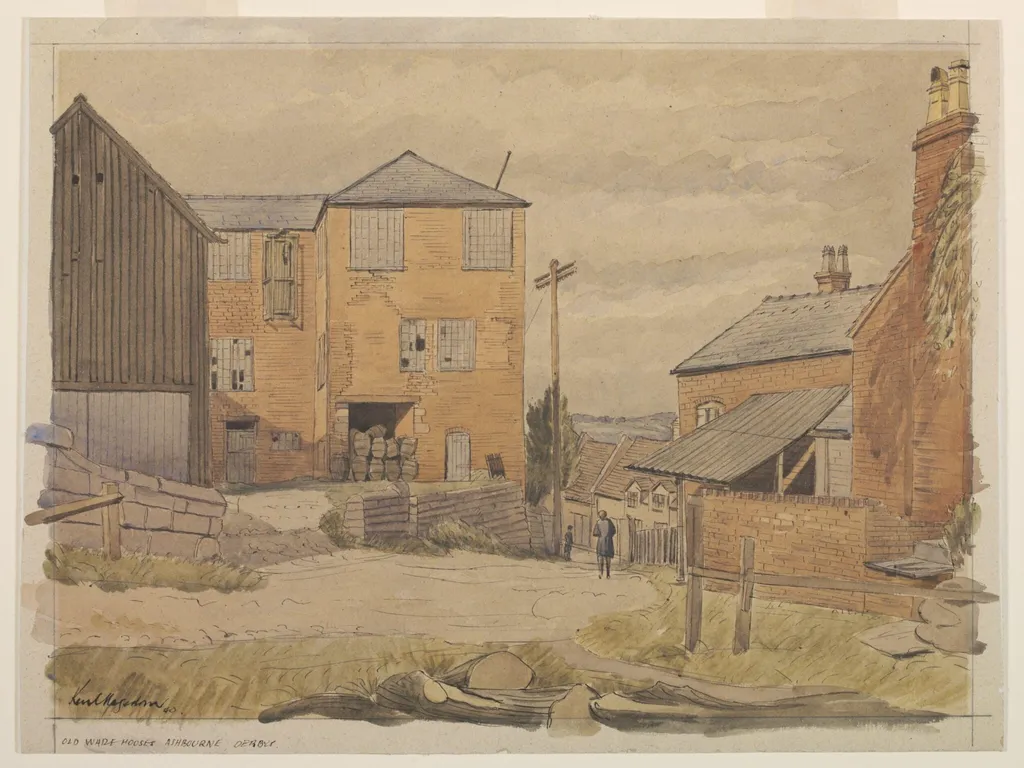
Old Warehouse, Ashbourne is a watercolor work on paper by the Regionalist artist Hagedorn. It dates from 1940 and is held in the collection of the Victoria and Albert Museum.
About this work
Overview
The work belongs to a broader collection of topographical watercolours made between 1940 and 1943, now held by the Victoria and Albert Museum.
Created in 1940, Old Warehouse, Ashbourne is a watercolour by artist Hagedorn, produced as part of the Recording Britain project. This initiative, led by Sir Kenneth Clark, commissioned artists to capture vernacular architecture and rural scenes deemed vulnerable to wartime destruction or urban change. The work belongs to a broader collection of topographical watercolours made between 1940 and 1943, now held by the Victoria and Albert Museum.
Subject & Meaning
The painting depicts a modest brick warehouse alongside a cluster of nearby dwellings in Ashbourne, with figures standing near the building’s large entrance. Its focus on utilitarian structures reflects the Recording Britain project’s aim to preserve visual records of everyday places before they vanished. The inclusion of people suggests quiet daily life, reinforcing the cultural value of ordinary, unremarkable spaces during a time of national uncertainty.
Technique & Style
Hagedorn employed watercolour with a restrained, muted palette of earthy browns, soft greys, and pale ochres. The washes create a hazy, atmospheric effect, with the overcast sky subtly unifying the composition. Brushwork is deliberate but unobtrusive, emphasizing form and texture over detail. The technique aligns with the project’s preference for quiet, observational realism rather than dramatic expression.
History & Provenance
The painting was completed in 1940 and entered the Recording Britain archive, a state-supported effort to document threatened landscapes. It remained in the collection of the Victoria and Albert Museum, which acquired the full corpus of works produced under the project. The piece carries Hagedorn’s signature and date, confirming its origin within the initiative’s strict documentation standards.
Context
During the early years of the Second World War, Britain faced widespread destruction and rapid modernization. The Recording Britain project emerged as a cultural preservation effort, responding to fears that historic buildings and local character would be lost. Artists like Hagedorn were sent to towns and villages to record scenes that embodied regional identity, often focusing on structures overlooked by mainstream art.
Legacy
Old Warehouse, Ashbourne endures as part of a significant archive of British topographical art from the war era. It contributes to ongoing scholarly interest in how art served as a form of cultural memory during crisis. The work remains accessible in the V&A’s collection, offering insight into the quiet resilience of everyday architecture and the role of art in documenting social change.
Artist & collection
Artist
Karl Hagedorn (11 September 1889 – 1969), who signed himself Hagedorn, was a painter and illustrator. He was born in Berlin in 1889 but settled in Manchester, England, in 1905.

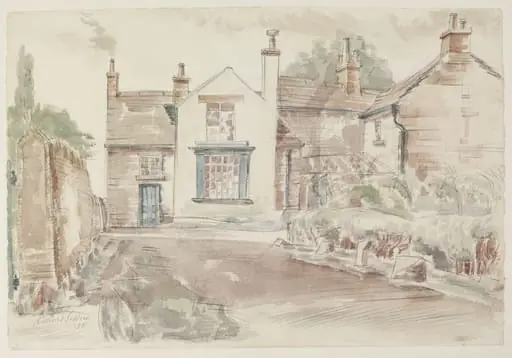 Cottages at Norton, No.1
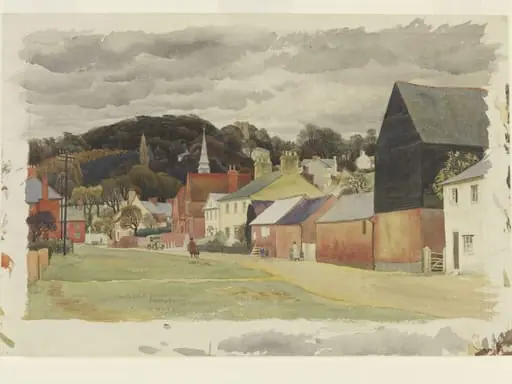 Bow Brickhill, Bletchley, Buckinghamshire
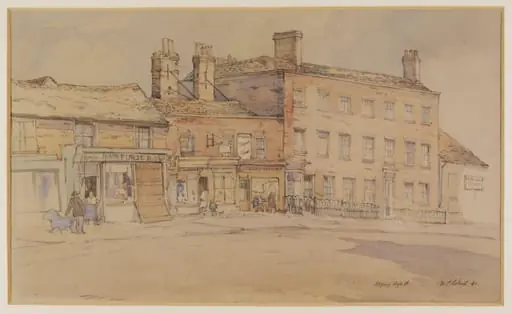 Epping High Street
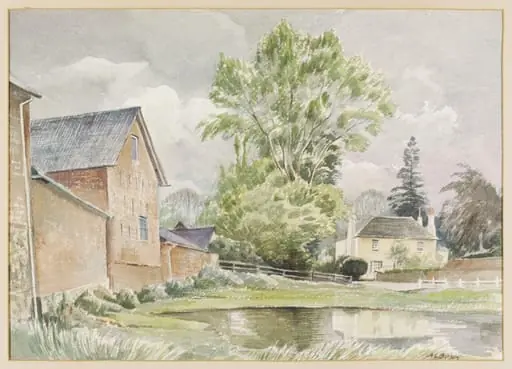 Bentworth, Near Alton
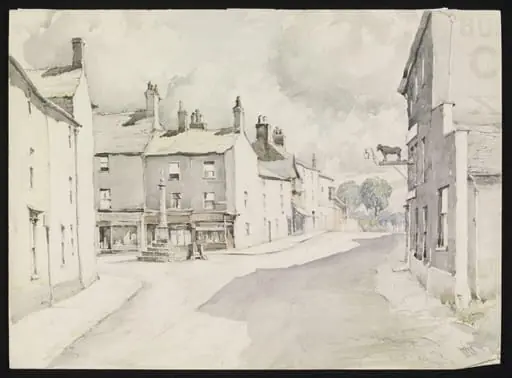 Market Place, Poulton-le-fylde, near Blackpool
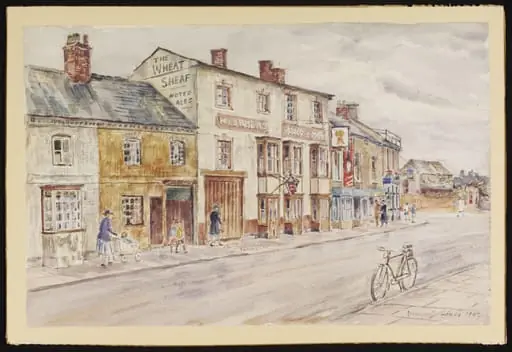 The Wheatsheaf Inn and Cottages, Newport Road, Swindon
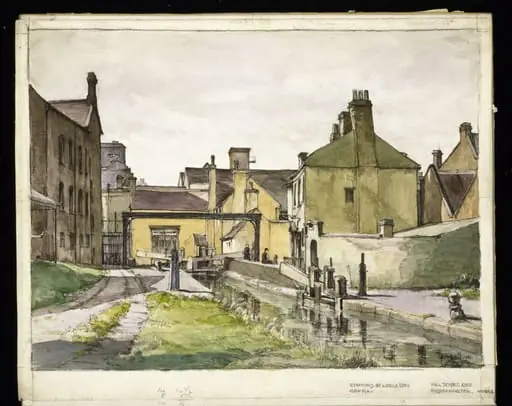 Mill Street Lock, Kidderminster
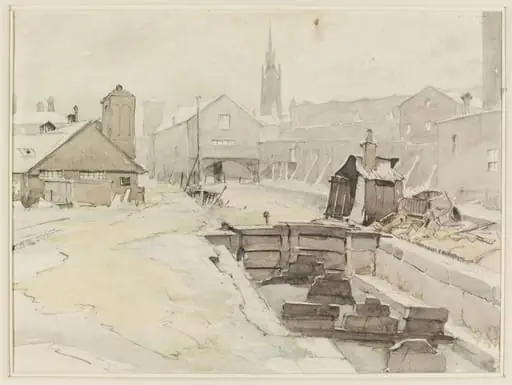 Manchester Ship Canal, Quay Street, Manchester
 Crag Farm near Sudbourne
 The Old Prison, Northleach
- Ashbourne