Artwork
En jysk bonde læser i Bibelen
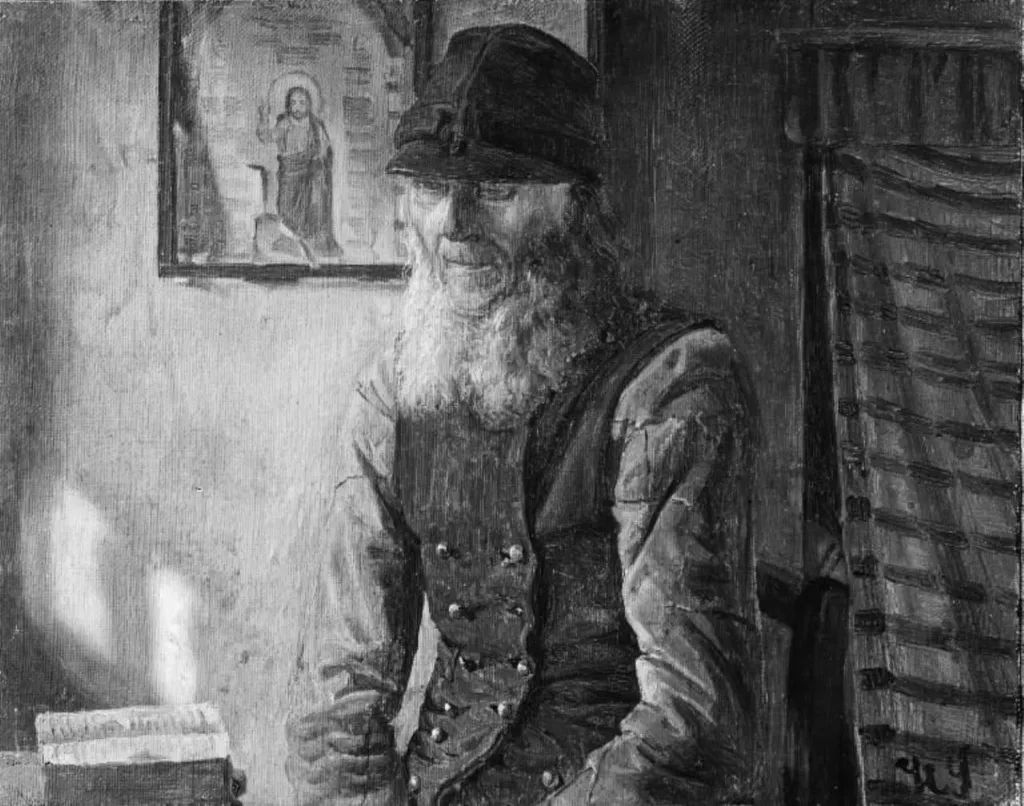
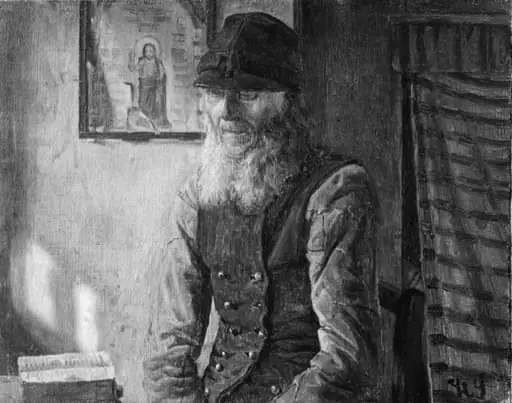
En jysk bonde læser i Bibelen is an oil painting by the Realist artist Hans Smidth. It dates from 1870 and is held in the collection of the Statens Museum for Kunst.
About this work
Overview
En jysk bonde læser i Bibelen (A Jutland Farmer Reading the Bible) is an oil painting on canvas created by the Danish artist Hans Ludvig Smidth in 1870.
En jysk bonde læser i Bibelen (A Jutland Farmer Reading the Bible) is an oil painting on canvas created by the Danish artist Hans Ludvig Smidth in 1870. Measuring 230 by 290 centimetres, the work is held in the collection of the Statens Museum for Kunst (National Gallery of Denmark) in Copenhagen. It stands as a significant early example of Smidth's sustained engagement with the rural life and inhabitants of Jutland, the peninsula that constitutes mainland Denmark, establishing themes that would occupy him throughout his long career. The painting exemplifies his focus on local figures and country life at a formative moment, before his style developed the finer tonal qualities that would later earn him wider recognition.
Subject & Meaning
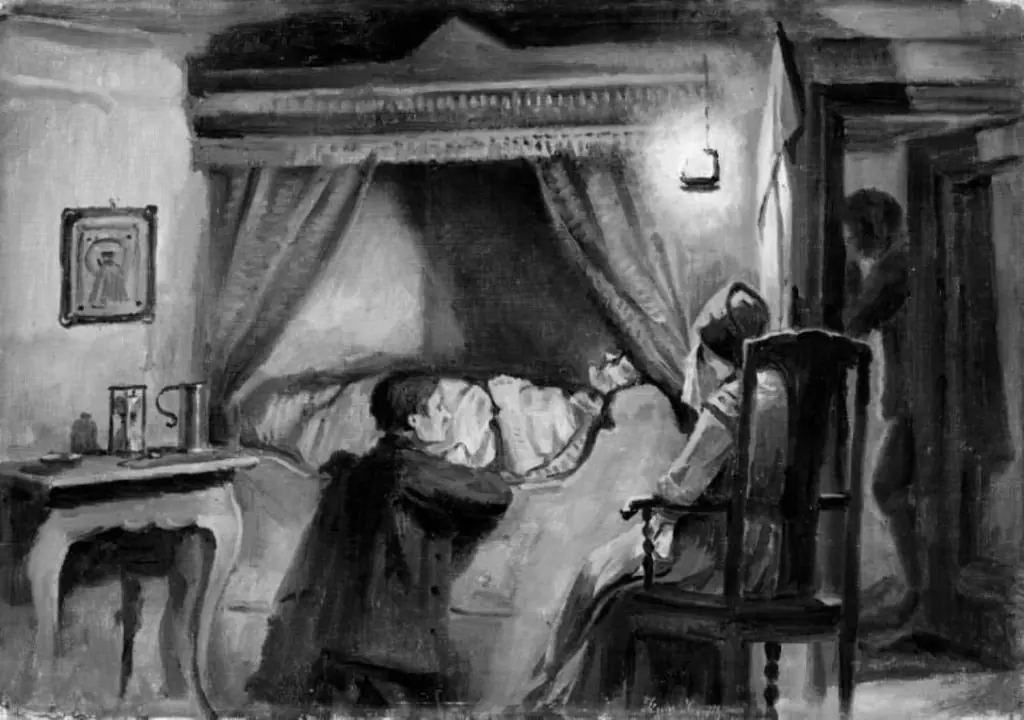
The painting depicts a bearded farmer seated in a dim interior, absorbed in reading an open Bible resting in his lap. He faces slightly left, his hands upon the book, wearing a dark cap, a sleeveless buttoned vest over a light-toned long-sleeved shirt, and trousers. To his left, a candle burns brightly on a small stand, casting strong upward light that illuminates his face and hands while leaving deep shadows around him. Behind him on the wall hangs a framed image of a standing robed figure with a halo, one hand raised, a devotional picture that reinforces the religious atmosphere of the scene. To the right, a heavy wooden door with visible horizontal planks and metal studs stands partially open, suggesting the humble, enclosed world of the rural dwelling. The iconography centres on quiet piety and literacy among the peasantry, presenting the Jutland farmer not as a rustic type but as an individual engaged in solitary spiritual contemplation. The candle as the sole light source carries traditional associations of divine illumination and the passage of time devoted to sacred reading.
Technique & Style
Executed in oil on canvas, the painting employs a limited palette dominated by blacks, whites, and grays, whether through monochrome restraint or the effect of reproduction. The brushwork is visible and somewhat loose, with textured strokes articulating the clothing and background surfaces. Shadows are deep and pronounced, particularly around the door and behind the figure, creating strong chiaroscuro effects against the bright candle flame and the illuminated face and hands. The composition is intimate and frontal, with the seated figure occupying most of the frame, drawing the viewer into the private space of devotion. A signature with the initials "H J" appears in the lower right corner. At this stage in Smidth's career, his handling already shows attention to form and detail, though contemporary observers noted that his colour could be rather dry, a quality that would moderate as his style matured. The dramatic lighting and sober tonality suggest affinities with earlier Danish interior traditions while focusing on contemporary rural subject matter.
History & Provenance
The painting is dated to 1870, a year that falls within a significant period of Smidth's early development. Having entered the Danish Academy in 1861 under Niels Simonsen, he left in 1866 due to financial difficulties and subsequently painted scenes of Limfjord and the Jutland moors. In 1870-71, he undertook further study under Vilhelm Kyhn, suggesting that this canvas may reflect the influence of that brief period of renewed training. The work entered the collection of the Statens Museum for Kunst, where it remains today. It is one of 34 paintings by Smidth in that museum's holdings, according to the documented inventory of his works there. The painting's acquisition history and specific exhibition record prior to its current placement are not detailed in the available sources.
Context
Hans Smidth (1839-1917) occupies an ambiguous position in Danish art history, often described as a solitary figure who went his own way. He worked during an era of considerable change, when the echoes of National Romanticism persisted even as modern modes of expression emerged. Unlike the Skagen Painters, who formed a cohesive colony with shared aesthetic aims, or artists who pursued historical and mythological subjects, Smidth devoted himself to direct observation of the Jutland countryside and its people. His paintings, as later critics noted, show the same respect for the land as the peasants themselves possessed. The lack of dated works has complicated scholarly assessment of his development, contributing to his reputation as chronologically homeless and difficult to place within established stylistic categories. Johannes E. Hohlenberg's assessment of his art as "a peculiar blend of the old-fashioned and the modern, of tradition and personality" captures the critical challenge his oeuvre presents. Early recognition came slowly; though he exhibited at Charlottenborg from 1867 onward, full acceptance eluded him until 1900, when a Danish Art Society exhibition of 300 works saw 290 sold. He received the Neuhausen Prize in 1877 and the Eckersberg Medal in 1906.
Legacy
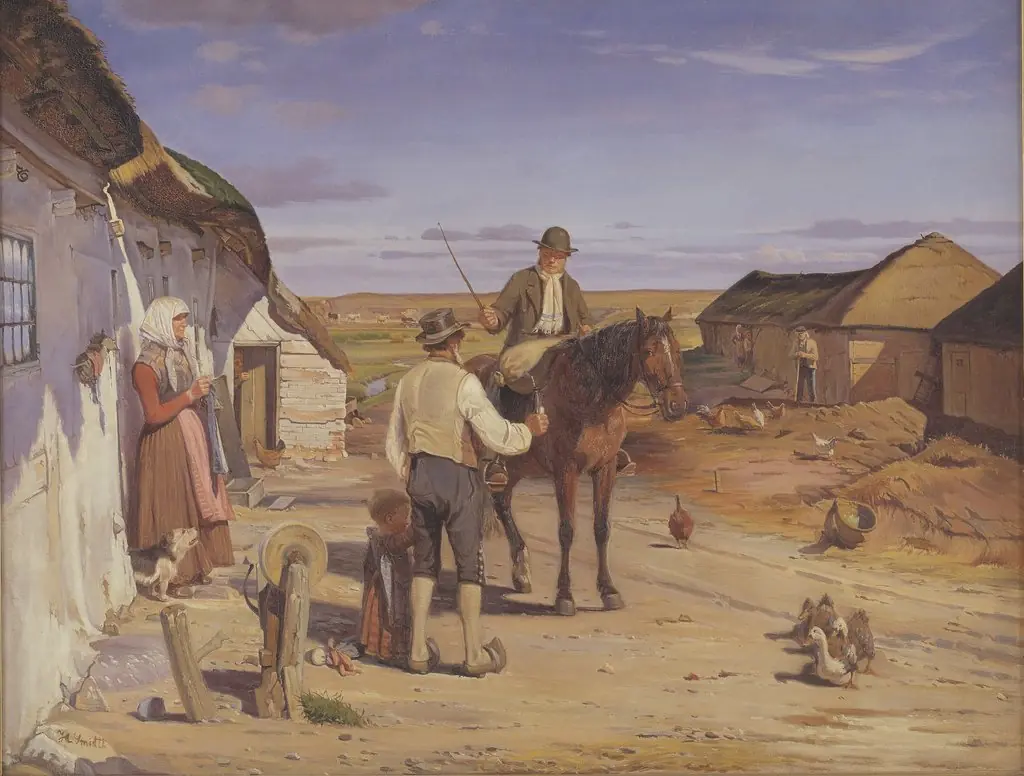
En jysk bonde læser i Bibelen endures as a foundational statement of Smidth's lifelong project: the unidealised recording of Jutland rural life. While his later works, such as the Neuhausen Prize-winning En fremmed spørger om Vej i Bondegaarden paa Heden (1877), would achieve greater technical refinement and tonal subtlety, this 1870 canvas establishes the thematic parameters of his art. The painting's afterlife is linked to Smidth's gradual posthumous rehabilitation from marginalised "loner" to recognised chronicler of Danish regional identity. The scarcity of scholarly attention to Smidth until relatively recently, with key publications by Jørgen Sthyr (1933) and Hans Edvard Nørregård-Nielsen (1989), meant that works like this Bible-reading farmer long awaited sustained critical analysis. Its residence in the Statens Museum for Kunst ensures its accessibility as a touchstone for understanding both Smidth's own trajectory and the broader currents of Danish genre painting in the later nineteenth century, particularly the alternatives to the Skagen colony's aesthetic and the persistence of intimate, observational rural subjects.
Own this work as a print
Artist & collection
Artist
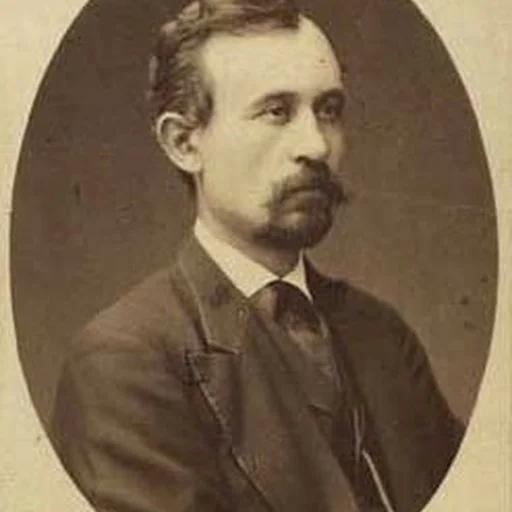
Hans Ludvig Smidth (2 October 1839, Nakskov – 5 May 1917, Frederiksberg) was a Danish painter. He is remembered above all for his paintings of Jutland and its local inhabitants.