Artwork
Mountain Landscape, Stream and Waterfall
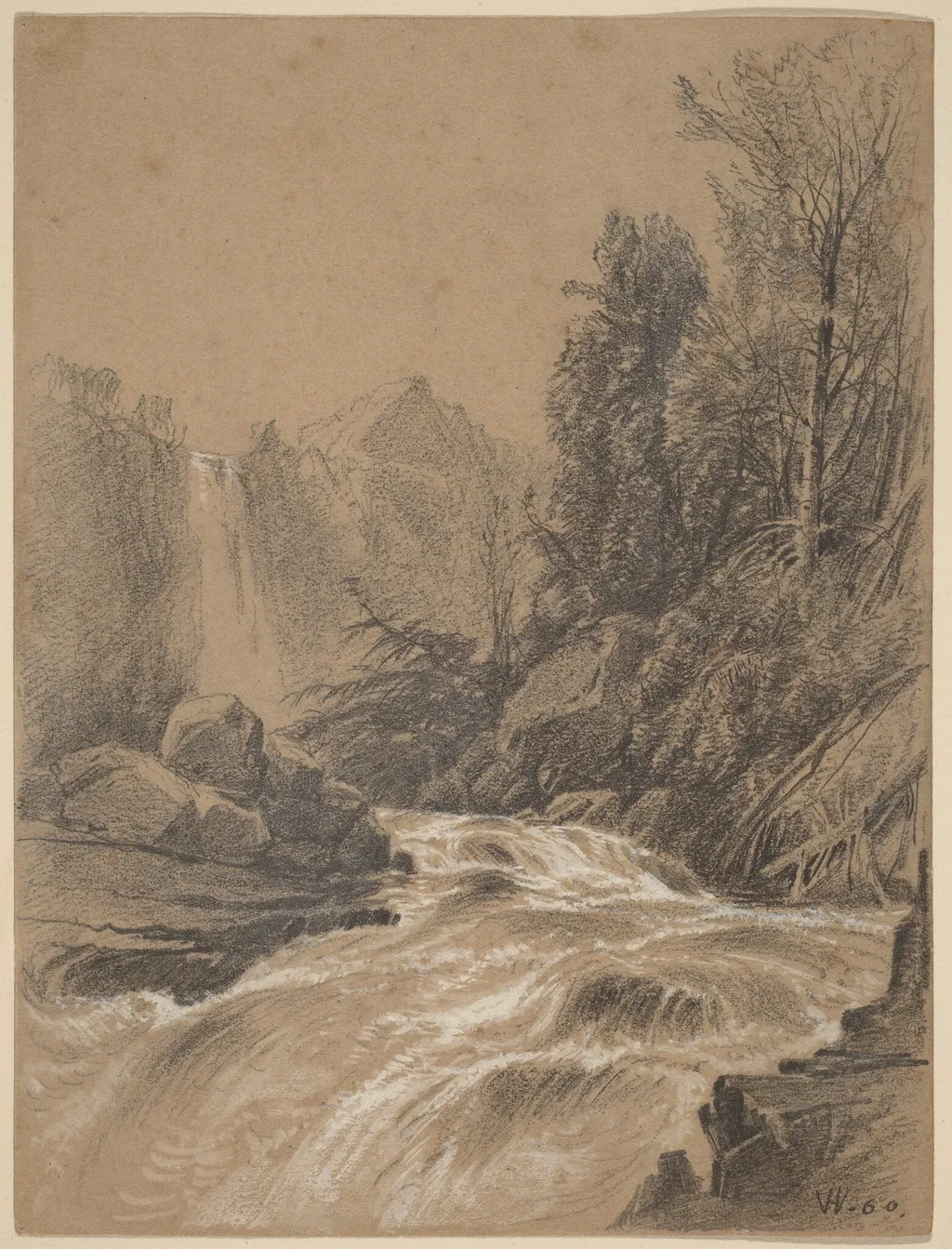
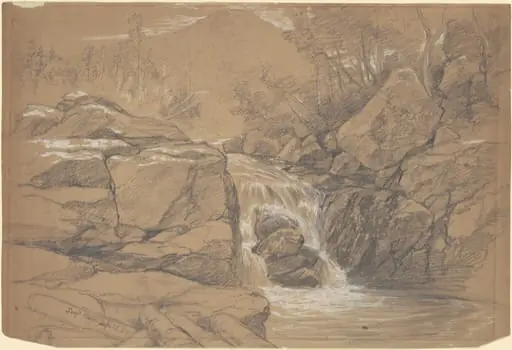
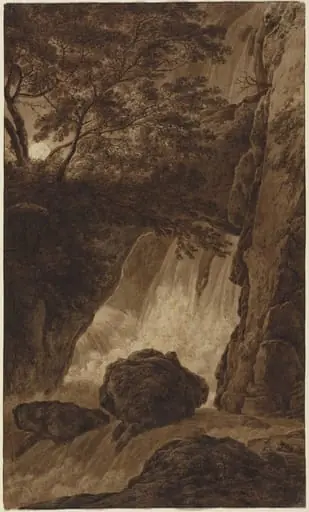
Mountain Landscape, Stream and Waterfall is a graphite drawing by the Impressionist artist William Hart. It dates from 1860 and is held in the collection of the National Gallery of Art.
- Inscription
- Inscribed:lower right in graphite: WH (in monogram).60.; lower right verso in graphite in later hand:B30755
About this work
Overview
William Hart’s 1860 drawing titled Mountain Landscape, Stream and Waterfall presents a mountainous scene where a stream descends into a cascade. Executed on brown paper, the work combines graphite drawing with applied white pigment, creating a contrast that emphasizes the falling water against the darker ground.
Subject & Meaning
The composition centers on a natural landscape, featuring rugged peaks, a winding stream, and a waterfall that draws the viewer’s eye downward. The juxtaposition of light and shadow suggests a tranquil yet dynamic environment, inviting contemplation of the interplay between rock, water, and atmosphere.
Technique & Style
Hart employed graphite for the underlying sketch and applied white gouache, or a similar opaque white medium, over the brown paper. The white pigment highlights the waterfall, allowing it to emerge from the darker background and imparting a sense of depth and luminosity within the limited palette.
History & Provenance
Created in 1860, the drawing reflects Hart’s practice during the mid‑nineteenth century, a period when artists often explored landscape subjects through drawing and watercolor techniques. Details of its ownership history are not recorded in the available sources.
Own this work as a print
Artist & collection

Artist
William Hart (March 31, 1823 – June 17, 1894), was a Scottish-born American landscape and cattle painter, and Hudson River School artist.

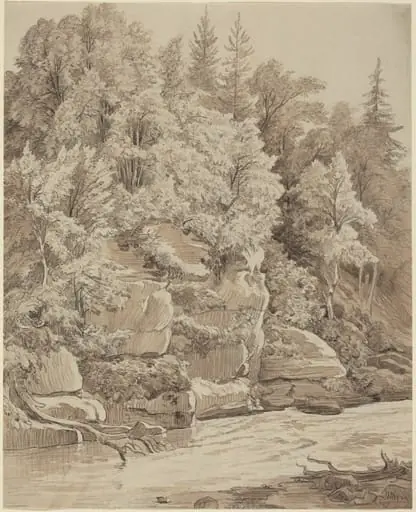
- Wooded Cliffs along a Stream
 Swiftwater
 River Landscape with a Waterfall (recto)
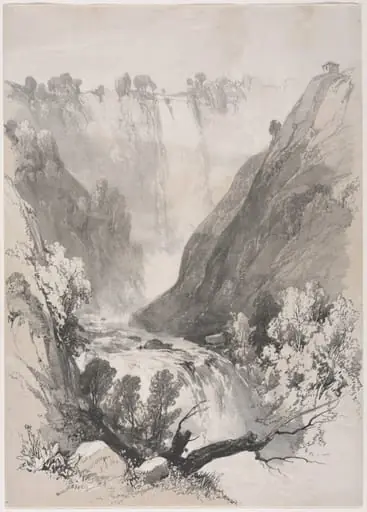 Sketches at Home and Abroad: Falls of Terni
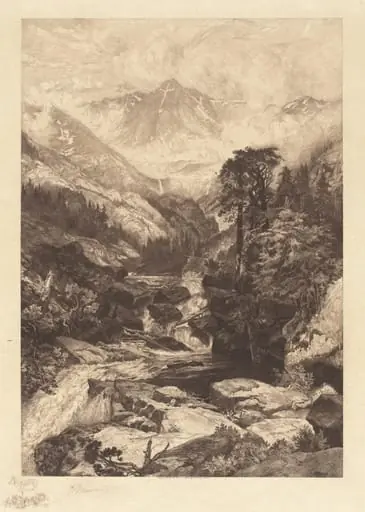 Mountain of the Holy Cross, Colorado
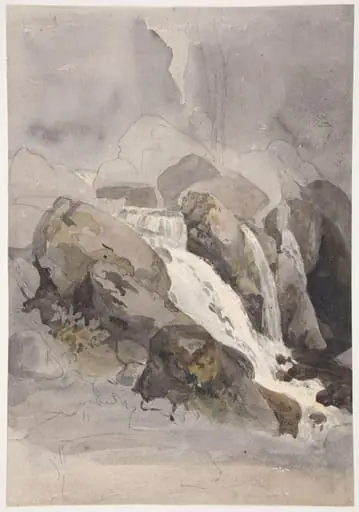 Waterfall in Borrowdale, Cumberland, 1805.
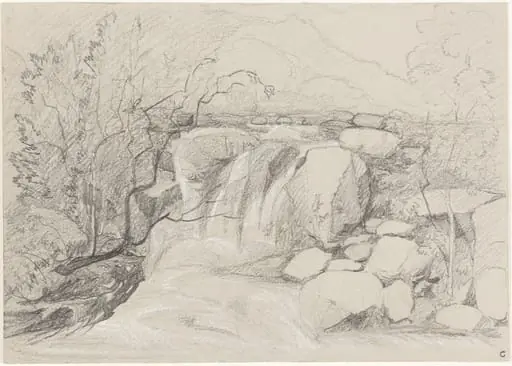 Waterfall with Rocks
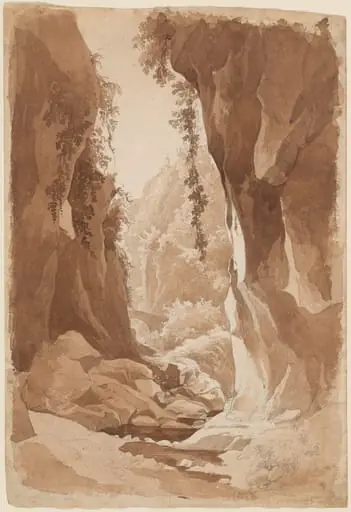 Cliffs Overhanging a River Gorge near Sorrento (recto)
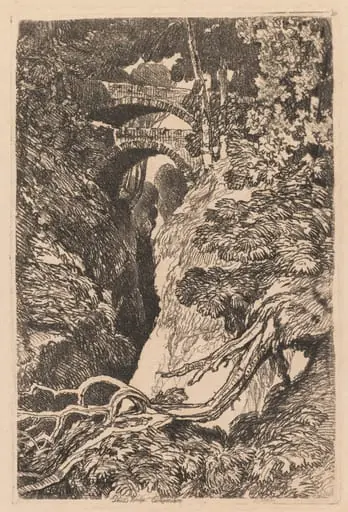 Devil's Bridge, Cardiganshire
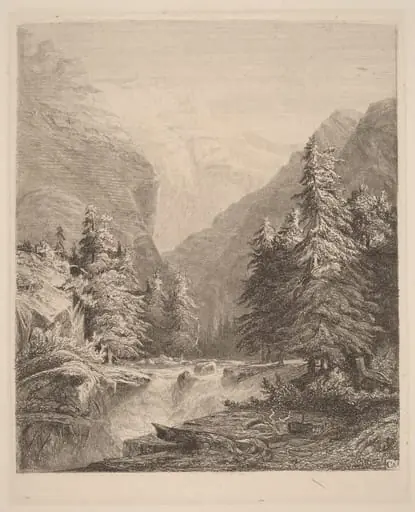 Mountain Waterfall
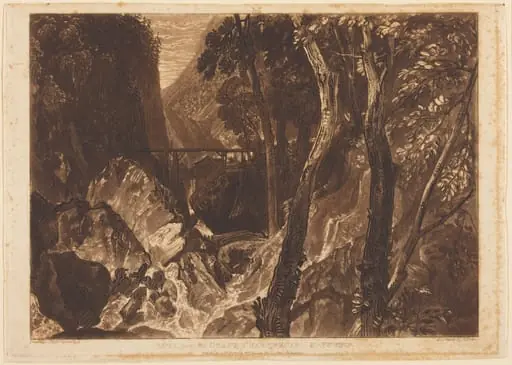 Mill near the Grand Chartreuse
 A Waterfall by Moonlight