Artwork
Eight Nude Children at a Well
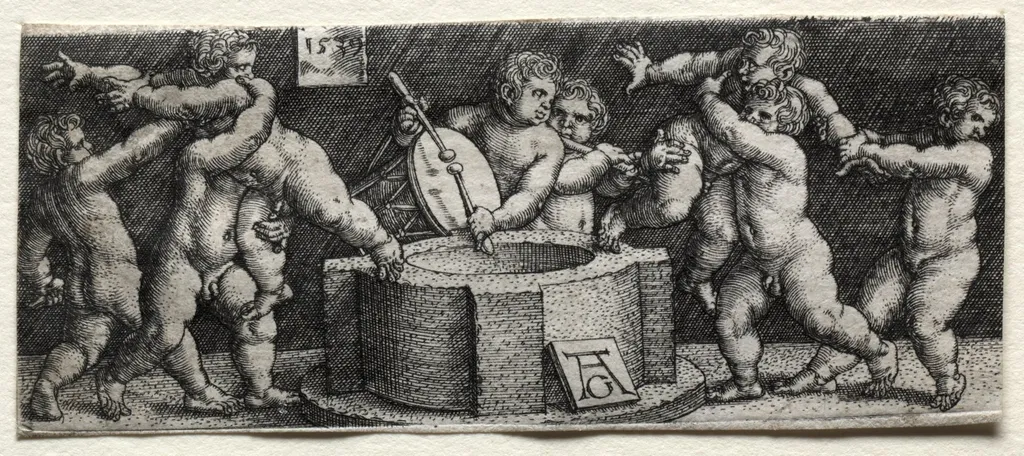
Eight Nude Children at a Well is a print by the Renaissance artist Heinrich Aldegrever. It dates from 1539 and is held in the collection of the Cleveland Museum of Art.
- Accession no.
- 1922.126
- Credit line
- Gift of The Print Club of Cleveland
About this work
Overview
This work exemplifies Aldegrever's skill as a printmaker and his engagement with the Mannerist style, characterized by elongated forms and complex poses.
Heinrich Aldegrever's 1539 engraving, Eight Nude Children at a Well, depicts a dynamic group of eight nude youths gathered around a stone well. The composition is dense and energetic, with figures climbing the structure, holding a bucket, and playing a drum, creating a sense of chaotic movement. Aldegrever renders the children with anatomically precise, muscular bodies that retain the proportions of youth, reflecting the Northern Renaissance interest in human form and classical ideals.
The artist employs fine hatching and cross-hatching to model the figures, creating strong contrasts that make them emerge vividly from the background. This work exemplifies Aldegrever's skill as a printmaker and his engagement with the Mannerist style, characterized by elongated forms and complex poses. Created during a period when the artist was producing numerous small-scale prints, the piece demonstrates his ability to combine mythological or allegorical themes with intricate detail.
The engraving stands as a significant example of German Renaissance printmaking, showcasing the artist's mastery of line and his contribution to the dissemination of humanist imagery in 16th-century Europe.
Subject & Meaning
The work depicts a carefree scene of childhood activity, emphasizing the physicality and movement of the youths. By portraying the children in the nude, Aldegrever highlights the natural human form and the innocence of play, while the well serves as a focal point that unites the figures in a shared space.
Technique & Style
Aldegrever employs strong contrasts of light and dark, using chiaroscuro to give the figures a three‑dimensional presence against a deep background. The careful shading outlines muscular yet youthful bodies, and the crisp lines convey a sense of immediacy, suggesting the figures are captured in the midst of motion.
History & Provenance
Created in the early sixteenth century, the print is part of Aldegrever’s broader output of religious and secular woodcuts. It entered the collection of the Cleveland Museum of Art, where it remains on view, representing an example of Northern Renaissance printmaking and the artist’s interest in genre scenes.
Artist & collection
Artist
Heinrich Aldegrever or Aldegraf (1502–1555, 1558 or 1561) was a German painter and engraver. He was one of the "Little Masters", the group of German artists making small old master prints in the generation after Albrecht Dürer.

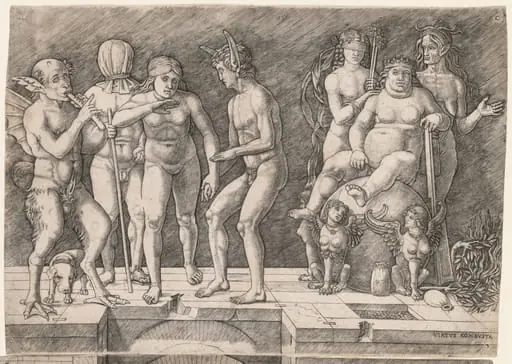 Allegory of the Fall of Ignorant Humanity: Virtus Combusta
 Hannibal Fighting Scipio
 Virgil hanging in a Basket
 Battle of Naked Men
 Ornament Design with a Mask, A Couple of Tritons, and Two Children Below
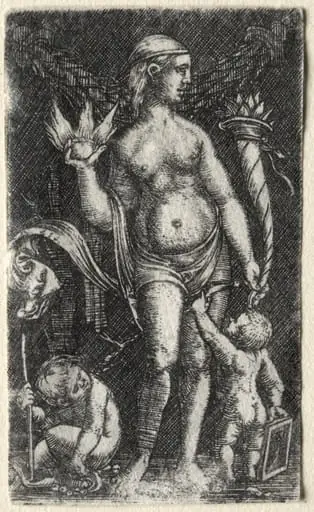 Venus between two cupids
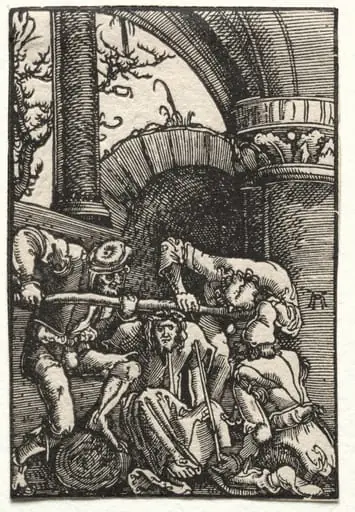 The Fall and Redemption of Man: Christ Crowned with Thorns
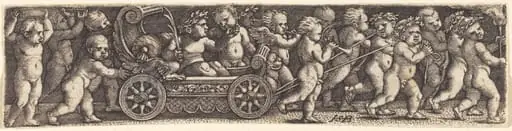 Triumphal Procession of Putti
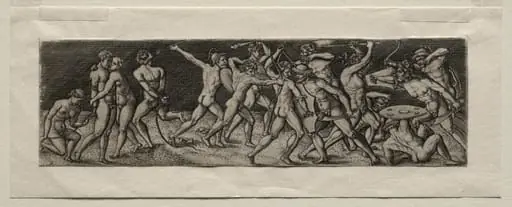 Fight between Eleven Warriors
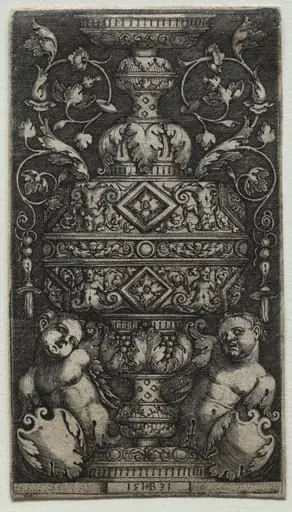 Vase Orné d'Enfans
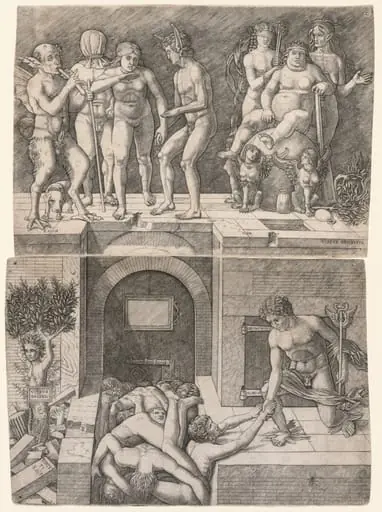 Allegory of the Fall of Ignorant Humanity
- Fifteen Nude Children Dancing