Artwork
Morning Mists
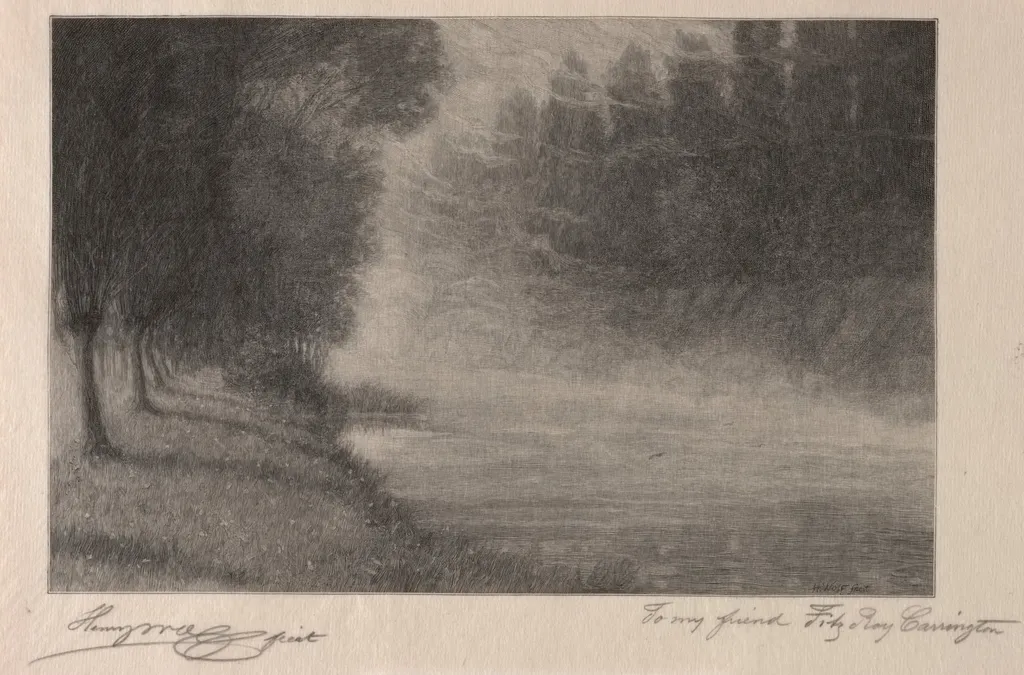
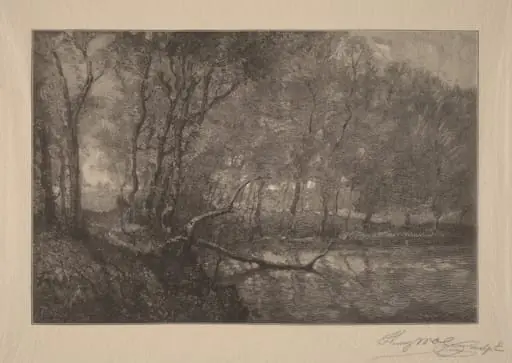
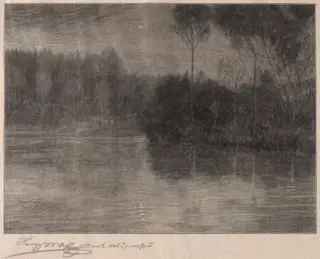
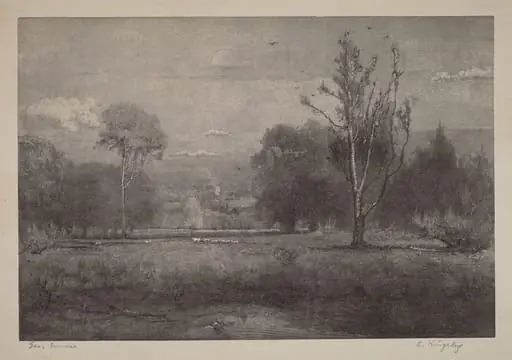
Morning Mists is a print by Henry Wolf. It dates from 1894 and is held in the collection of the Cleveland Museum of Art.
- Accession no.
- 1924.997
- Credit line
- Dudley P. Allen Fund
About this work
If you're interested in learning more about the artist's work, you might want to explore more paintings by Henry Wolf (American, 1852–1916).
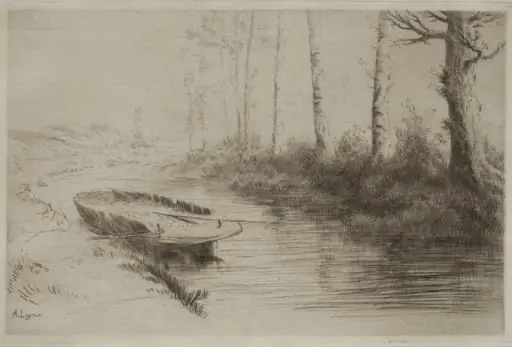
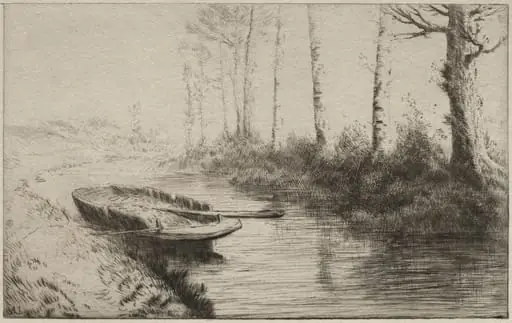
This painting, titled Morning Mists, features a serene landscape with a prominent tree on the left side. The tree's branches stretch upwards, and its trunk is visible in the foreground. The background is filled with misty fog, which gradually fades into the distance. The overall atmosphere is peaceful and calming.
The artist's use of color and light creates a sense of depth and dimensionality in the painting. The misty fog adds a sense of mystery and intrigue, drawing the viewer's eye into the distance.
If you're interested in learning more about the artist's work, you might want to explore more paintings by Henry Wolf (American, 1852–1916).
Overview
Henry Wolf, born in France and active in New York after 1871, produced Morning Mists circa 1894 as a wood engraving. Though trained in Europe, his career unfolded in the American printmaking scene, where he translated paintings by prominent artists into detailed engravings. This work is held in the collection of the Cleveland Museum of Art, reflecting his role in disseminating visual culture through reproductive prints.
Subject & Meaning
The scene depicts a quiet woodland at dawn, centered on a tall, gnarled tree whose trunk rises prominently in the foreground. Its branches reach upward through a veil of mist that softens the distant landscape. The composition evokes stillness and introspection, with no human presence or narrative action, instead, the atmosphere itself becomes the subject, suggesting transience and the quiet passage of time.
Technique & Style
Wolf employed wood engraving, a precise relief technique involving incised lines on hard wood blocks, to render subtle tonal gradations. The mist is suggested through delicate, irregular lines and areas of negative space, while the tree’s texture is built with fine, controlled strokes. The effect is one of atmospheric depth, achieved not through color but through the modulation of ink density and line weight, characteristic of late 19th-century reproductive printmaking.
History & Provenance
Created around 1894, Morning Mists was likely made as part of Wolf’s broader practice of engraving after contemporary paintings, though the original painting it may have reproduced remains unidentified. The work entered the Cleveland Museum of Art’s collection through documented acquisition, preserving its place within the history of American print culture and the transmission of visual ideas across media.
Context
In the 1890s, wood engraving was still widely used for illustrated publications, even as photography began to supplant it. Wolf’s work reflects a transitional moment: artists and publishers relied on skilled engravers to translate paintings into reproducible forms for journals and portfolios. His focus on landscapes and atmospheric effects aligned with broader aesthetic interests in naturalism and mood, common in both American and European art circles at the time.
Legacy
Though Henry Wolf is not widely remembered today, his engravings contributed to the visual literacy of the period by making high-quality reproductions of contemporary art accessible to a broader public. Morning Mists exemplifies the quiet craftsmanship of reproductive printmaking, preserving the aesthetic sensibilities of its era without overt personal expression, yet maintaining technical integrity and emotional resonance.
Own this work as a print
Artist & collection

Artist
Henry Wolf (1852–1916) was a French-born wood engraver who lived and worked in the United States during his most influential work period and until his death.