Artwork
The Red Lion, Fernhurst Green
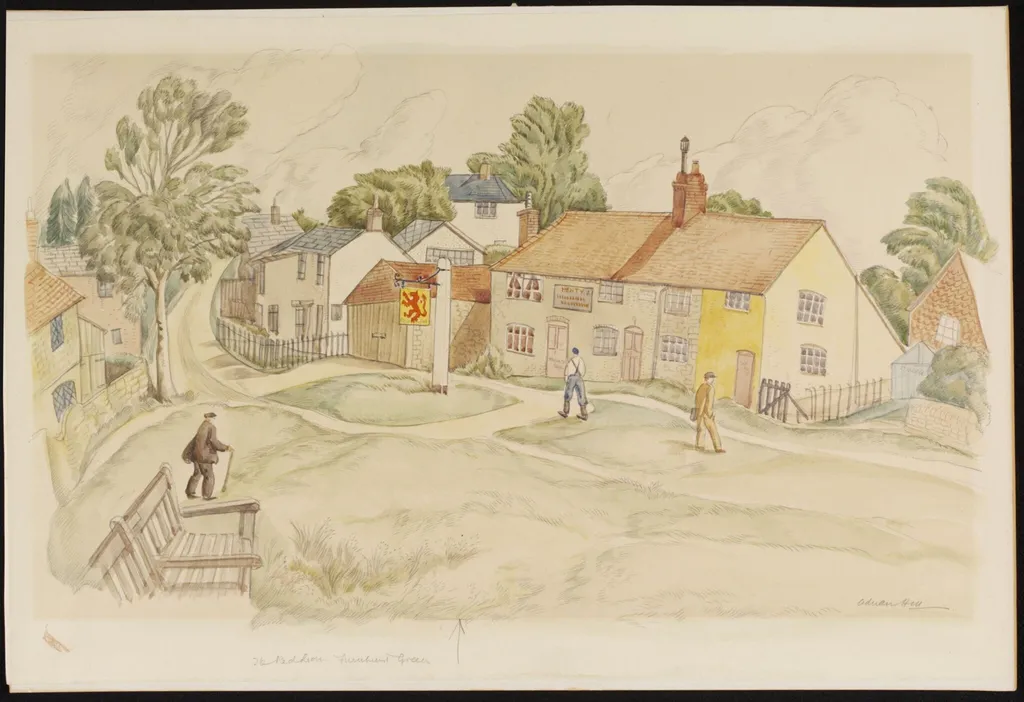
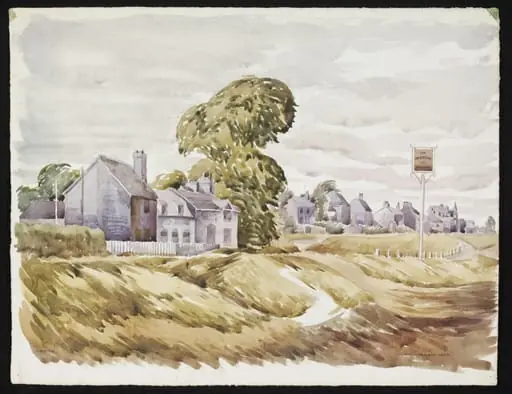
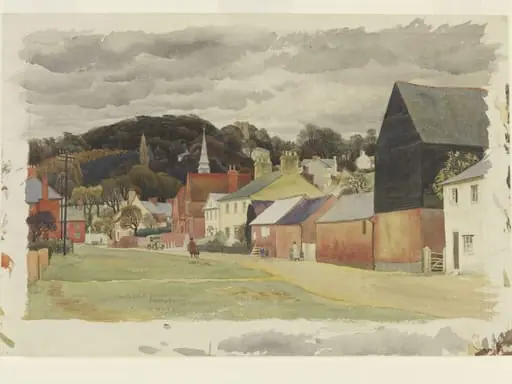
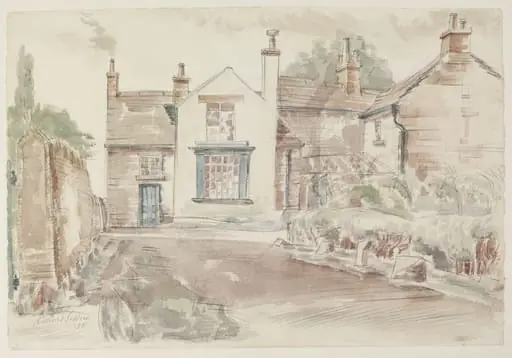
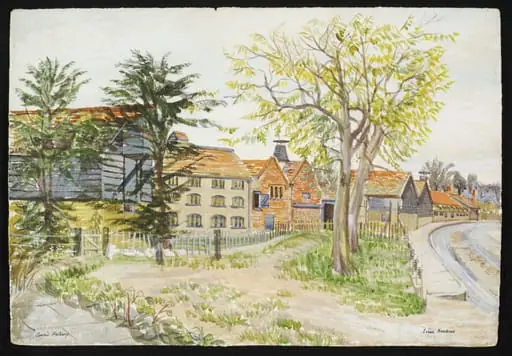
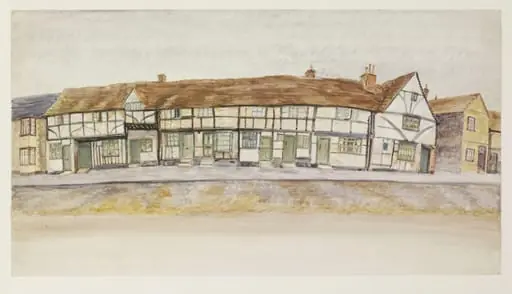
The Red Lion, Fernhurst Green is a watercolor work on paper by Hill. It dates from 1940 and is held in the collection of the Victoria and Albert Museum.
About this work
Overview
Created in 1940, this watercolour by John Hill captures The Red Lion pub on Fernhurst Green as part of the Recording Britain project.
Created in 1940, this watercolour by John Hill captures The Red Lion pub on Fernhurst Green as part of the Recording Britain project. Funded by the Pilgrim Trust and overseen by Sir Kenneth Clark, the initiative enlisted artists to document rural and vernacular architecture amid wartime threats. The work belongs to a collection of over 1,500 pieces intended to preserve visual traces of places deemed vulnerable to destruction or transformation during the conflict.
Subject & Meaning
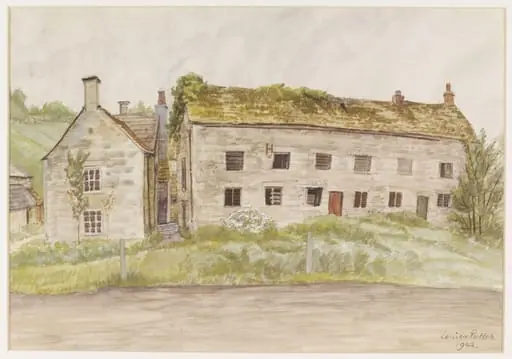
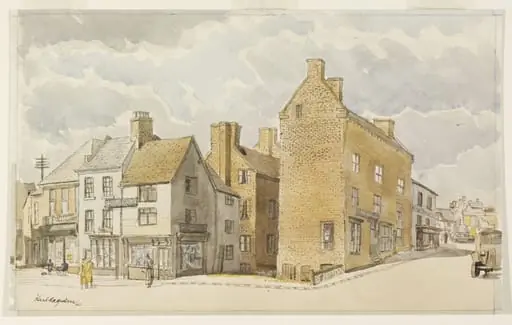
The scene centers on a modest village pub, a symbol of local continuity in a time of upheaval. Three figures, two walking, one resting, suggest quiet daily life. The flag above the entrance and the simple brick structures reinforce a sense of place rooted in tradition.
The composition avoids drama, instead emphasizing stillness and familiarity, reflecting the project’s aim to honor ordinary landscapes at risk of being lost.
Technique & Style
Hill employed loose, fluid watercolour washes to convey a sense of calm and impermanence. Soft, muted tones and minimal detail in the foliage and architecture avoid embellishment, aligning with the project’s documentary ethos. The brushwork is restrained yet expressive, capturing light and texture without precision, reinforcing the scene’s unassuming, everyday character.
History & Provenance
The painting was produced during the Recording Britain project, which ran from 1940 to 1942. It entered the Victoria and Albert Museum’s collection alongside other works from the initiative, preserved as part of a national effort to safeguard visual heritage. The piece remains in the museum’s holdings, accessible as a record of wartime cultural preservation.
Context
Amid fears of aerial bombardment and rapid modernization, the Recording Britain project sought to archive rural and historic sites before they vanished. Artists like Hill were sent across the country to record buildings, streetscapes, and landmarks with little fanfare. Their work was not intended as propaganda but as a quiet archive, testimony to a Britain perceived as fragile and worth remembering.
Legacy
The Recording Britain collection endures as a significant resource for understanding mid-20th-century British life and wartime cultural policy. Hill’s watercolour, like others in the series, offers a restrained yet poignant glimpse into a vanishing rural world. It continues to inform historical and artistic studies, valued for its honesty and unembellished observation.
Artist & collection

Artist
A hill is a landform that extends above the surrounding terrain. It often has a distinct summit, and is usually applied to peaks which are above elevation compared to the relative landmass, though not as prominent as…