Artwork
Surrender of Mantua, February 2, 1797
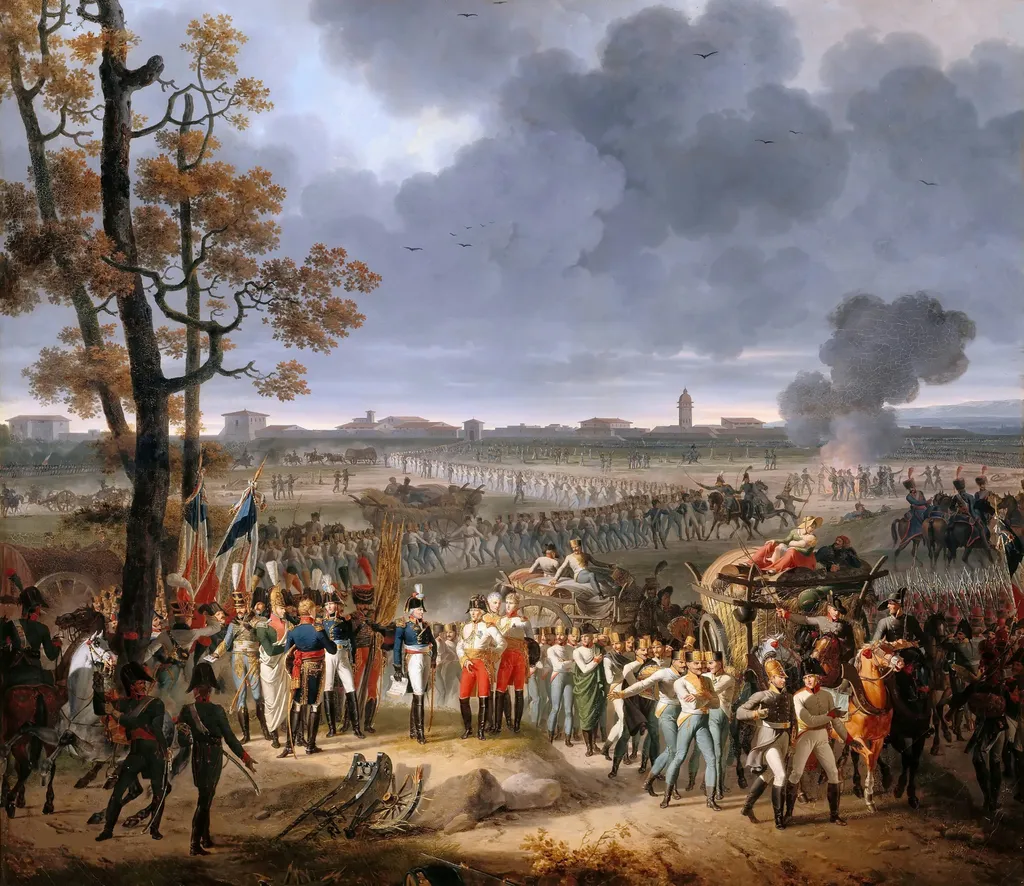
Surrender of Mantua, February 2, 1797 is an oil painting by Hippolyte Lecomte. It dates from 1850 and is held in the collection of the Palace of Versailles.
About this work
Overview
Surrender of Mantua, February 2, 1797 is a history painting by the French artist Hippolyte Lecomte, completed in 1850.
Surrender of Mantua, February 2, 1797 is a history painting by the French artist Hippolyte Lecomte, completed in 1850. Executed in oil on canvas, the work measures 161 by 257 centimeters and is held in the collection of the Museum of the History of France at the Palace of Versailles, where it is inventoried as MV 1490. The painting belongs to the tradition of large-scale military history painting that flourished in France during the first half of the nineteenth century, commemorating a pivotal moment from the French Revolutionary Wars. Its subject, the capitulation of the Austrian garrison at Mantua, marked a decisive turning point in Napoleon Bonaparte's first Italian campaign and has secured the work's place as a significant document of both artistic and historical memory.
Subject & Meaning
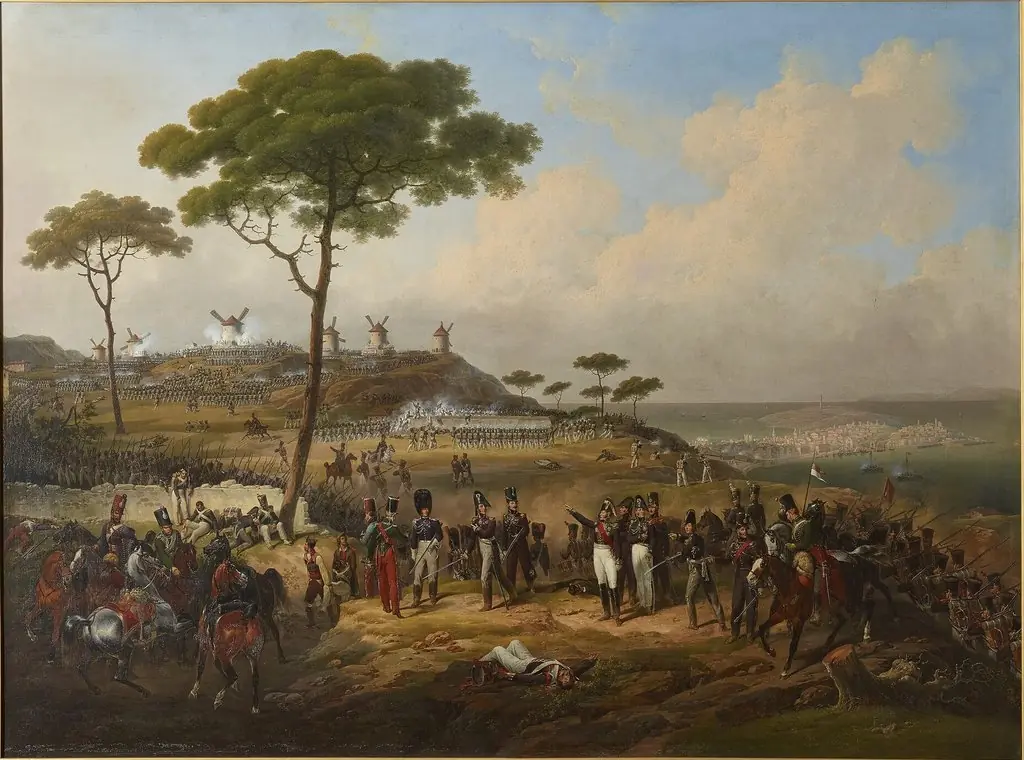
The painting depicts the formal surrender of General Dagobert Sigmund von Würmser to General Jean-Mathieu-Philibert Sérurier on February 2, 1797, following the prolonged siege of the fortress city of Mantua during the French Revolutionary Wars. The composition centers on the confrontation between two groups of officers in elaborate uniforms, with Würmser and his Austrian staff in white coats with red breeches facing Sérurier and his French officers in blue coats with gold trim. The iconography emphasizes the hierarchical structure of military ceremony: flags and standards tilt at various angles, signaling the disorder of defeat and the formalities of capitulation. To the right, soldiers in light blue uniforms with tall caps escort or restrain prisoners, while women and wounded figures recline on a cart, introducing notes of human suffering into the official narrative. The walled city of Mantua with its prominent tower anchors the middle ground, with dense ranks of soldiers in white and blue uniforms stretching toward its walls. A massive plume of dark smoke rising on the right partially obscures the sky, suggesting recent bombardment or the burning of materiel. Fallen weapons and a broken wheel in the sandy foreground serve as traditional vanitas elements, reminders of the cost of war, while birds in the upper sky may allude to the hope of peace. The turbulent sky with heavy gray clouds breaking to reveal pale light creates a dramatic atmosphere that elevates the historical moment toward the sublime.
Technique & Style
Lecomte executed the work in oil on canvas, employing a smooth, highly finished technique characteristic of academic history painting in mid-nineteenth-century France. The surface shows fine craquelure throughout, consistent with its age and the aging properties of oil paint on canvas. The handling is precise and detailed, with careful attention to the rendering of faces, fabrics, and distant architecture. The composition is organized as a vast horizontal panorama, a format well suited to the depiction of large-scale military events and the deployment of numerous figures across a broad plain. The artist uses a relatively low horizon line to accommodate the dense accumulation of figures in the foreground and middle ground, while the turbulent sky occupies significant pictorial space, contributing to the dramatic tone. Color is deployed with historical specificity in the uniforms, with the blue of the French and the white of the Austrians providing clear visual differentiation. The autumn-colored leaves of the large trees in the left foreground introduce naturalistic detail and a temporal specificity that grounds the event in its winter setting. The finish is polished and enamel-like, in keeping with the standards of the Salon and the expectations for history painting during this period.
History & Provenance
Hippolyte Lecomte was born in Puiseaux in 1781 and died in Paris in 1857, placing the creation of this work in the mature phase of his career. The painting was exhibited at the Salon, with one source indicating its presence at the Salon of 1812, though this appears inconsistent with the established date of 1850; the 1850 date is confirmed by multiple authoritative sources and should be taken as correct. The work entered the French national collections and bears multiple inventory numbers reflecting its history: MV 1490, INV 5776, and MR 1954. It is currently located at the Museum of the History of France, housed within the Palace of Versailles, an institution dedicated to the preservation and display of works related to French national history. The accession history through these various inventory numbers suggests a complex path of institutional transfer typical of works absorbed into state collections during the nineteenth century. Photographic documentation of the work has been carried out by Arnaudet for the Réunion des musées nationaux, with images subject to authorization for use.
Context
Hippolyte Lecomte operated within the academic system of nineteenth-century France, producing history paintings that served the ideological needs of the state during a period of intense political fluctuation between Empire, Restoration, and the July Monarchy. The choice to depict an event from the French Revolutionary Wars in 1850 places the work within a broader pattern of Napoleonic revival that characterized much of French art and culture during the Second Republic and subsequent Second Empire. The siege of Mantua itself had been depicted by earlier artists, most notably in the Napoleonic era, and Lecomte's treatment represents a later, more academically polished reconsideration of this foundational moment in the Napoleonic myth. The work's place in Lecomte's oeuvre remains understudied, as he is not among the most extensively documented painters of his generation, but its preservation in the national collections at Versailles indicates its recognized significance. The painting participates in the tradition of official military art that stretched from the commissions of the Napoleonic era through the vast programs of the Second Empire, serving both commemorative and didactic functions. Critical reception of the work in its own time is not extensively recorded in the available sources, though its Salon exhibition would have placed it before a broad public and critical audience conversant with the conventions of history painting.
Legacy
The Surrender of Mantua, February 2, 1797 remains in the public domain and has been disseminated through digital reproductions, including high-resolution images available through Wikimedia Commons. The work continues to serve as a visual document for understanding both the historical event it depicts and the conventions of mid-nineteenth-century French history painting. Its presence in the collections at Versailles ensures its accessibility to researchers and the public, while its inclusion in national databases such as Joconde facilitates scholarly reference. The painting's afterlife has been primarily institutional rather than critical; it has not generated the sustained art-historical attention accorded to comparable works by more prominent artists of the period, but it retains value as a representative example of the genre and of Lecomte's practice. The subject of Mantua's surrender continues to resonate in historical memory as a turning point in the Italian campaign, and Lecomte's visualization contributes to the enduring pictorial tradition of Napoleonic military history. The work's current digital presence, including metadata and high-resolution photographic reproduction, reflects the ongoing processes of museum documentation and open access that characterize twenty-first-century heritage practice.
Own this work as a print
Artist & collection
Artist
Hippolyte Lecomte (French pronunciation:; 28 December 1781, Puiseaux – 25 July 1857, Paris) was a French painter best known for large scale historical paintings and ballet designs.

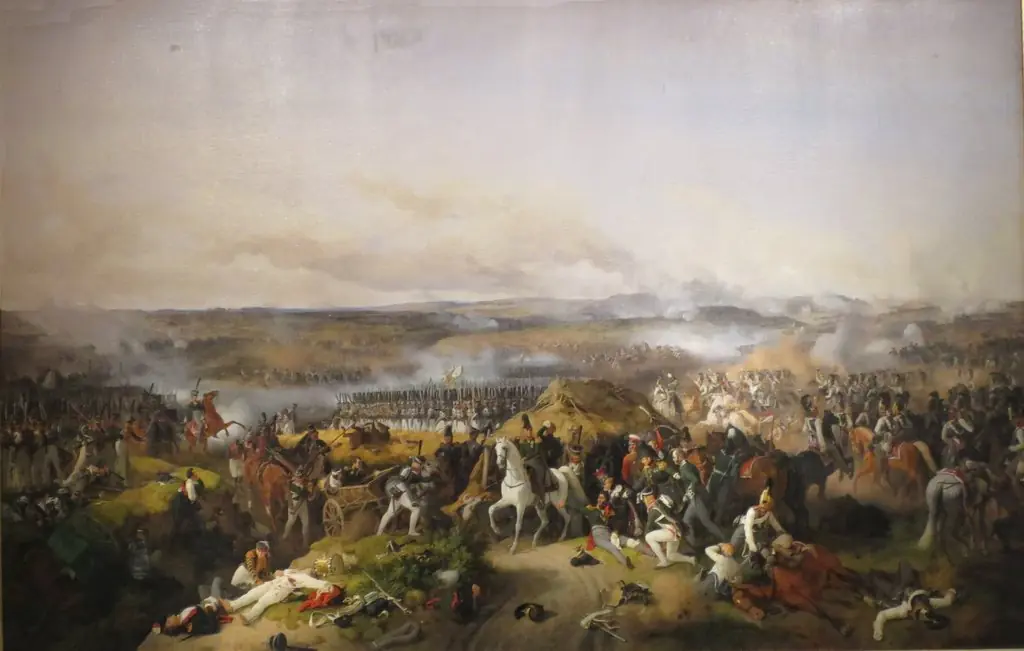 Battle of Borodino on 26 August (7 September) 1812
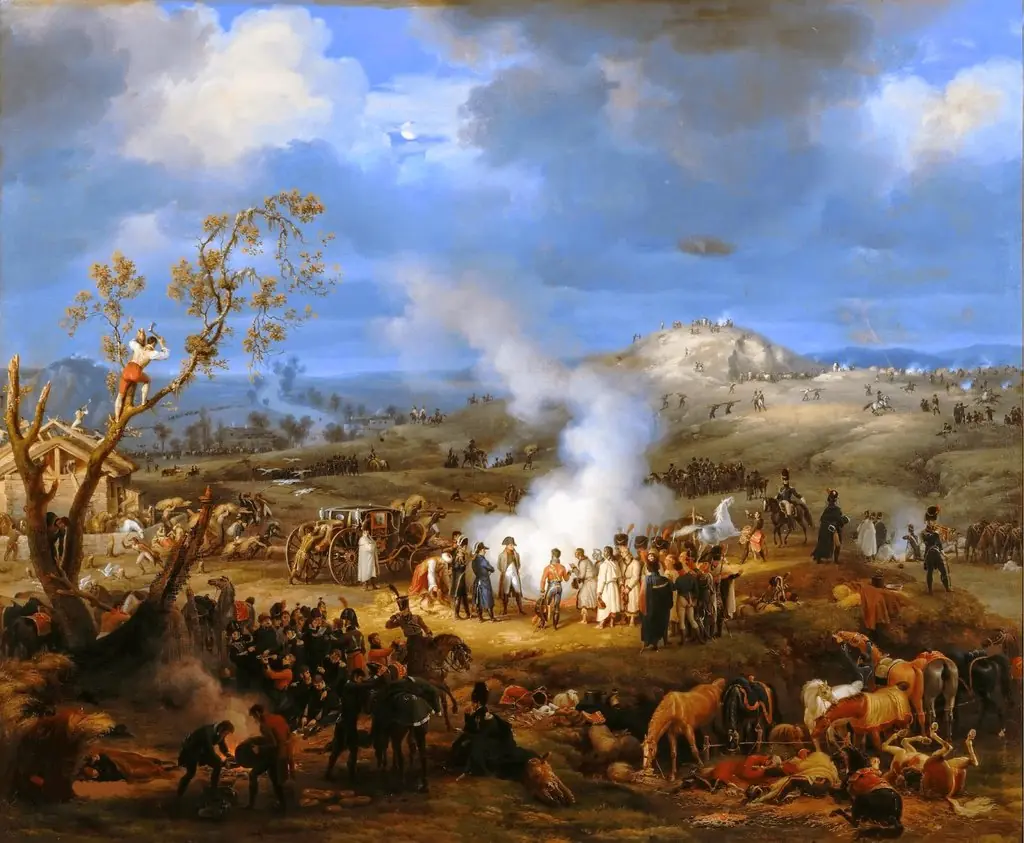 Bivouac on the Eve of the Battle of Austerlitz
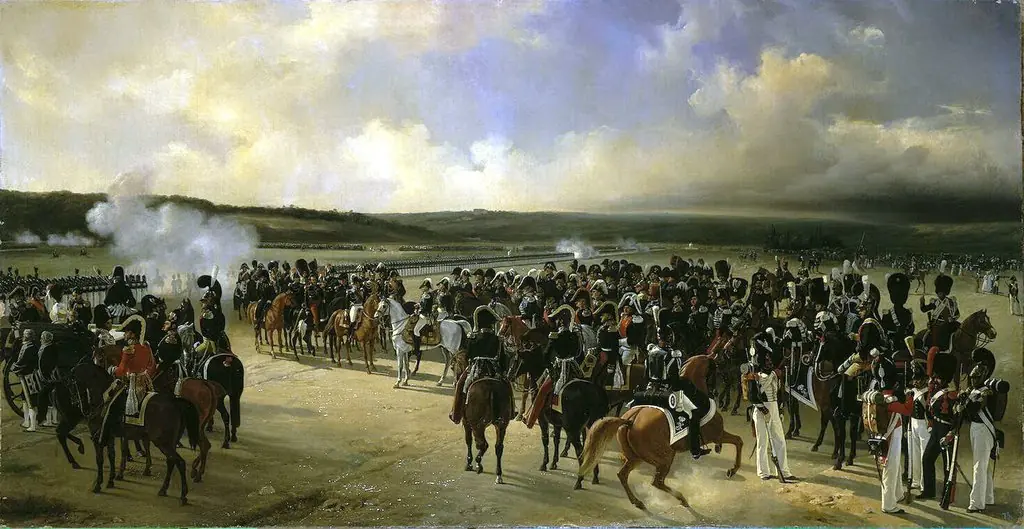 Review of the French Guards in the Presence of Charles X
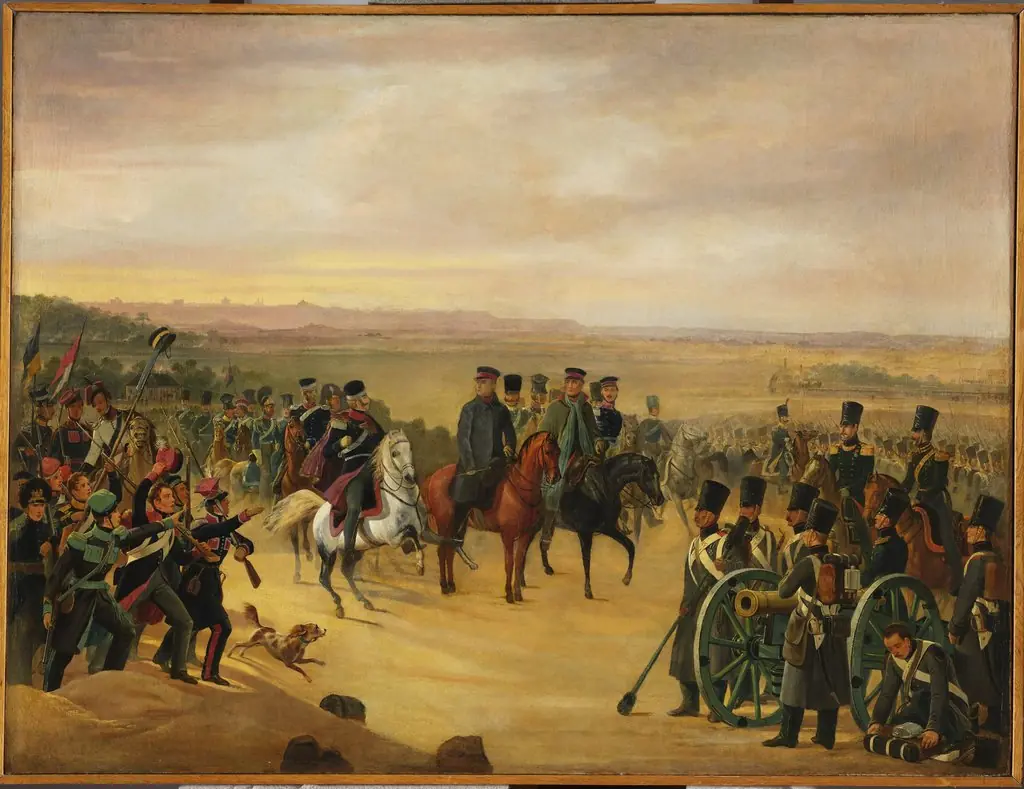 General Józef Chłopicki and Skrzynecki among soldiers
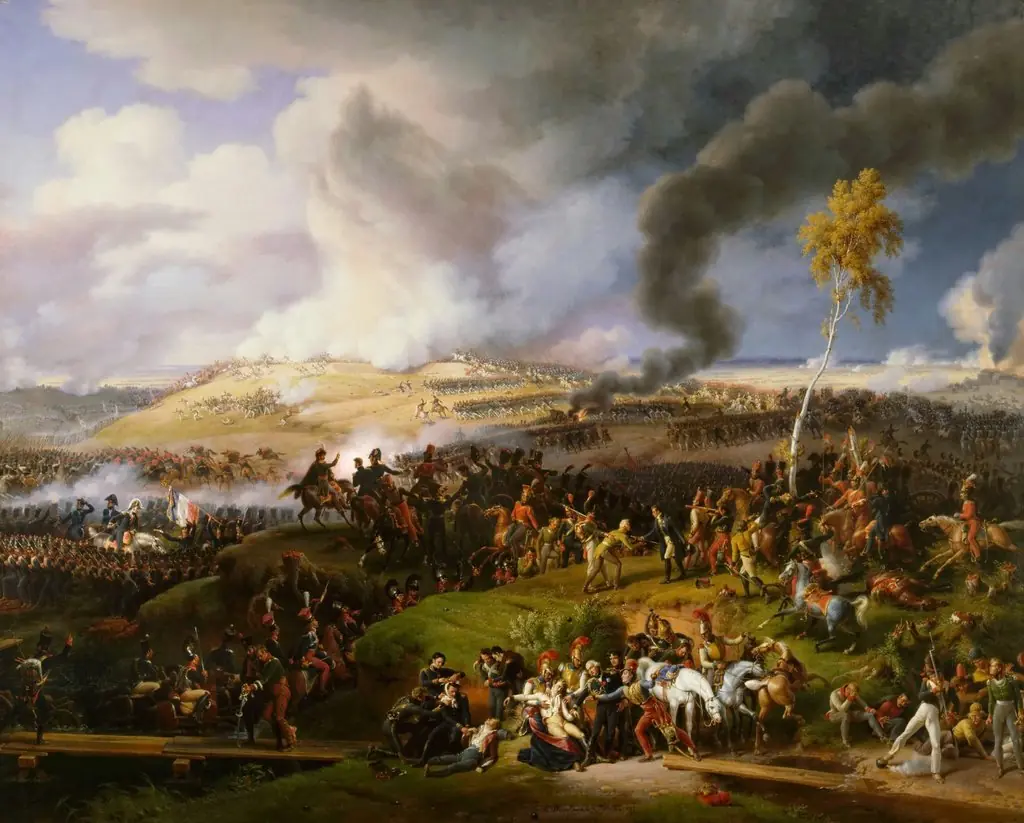 Battle of Moscow, 7th September 1812
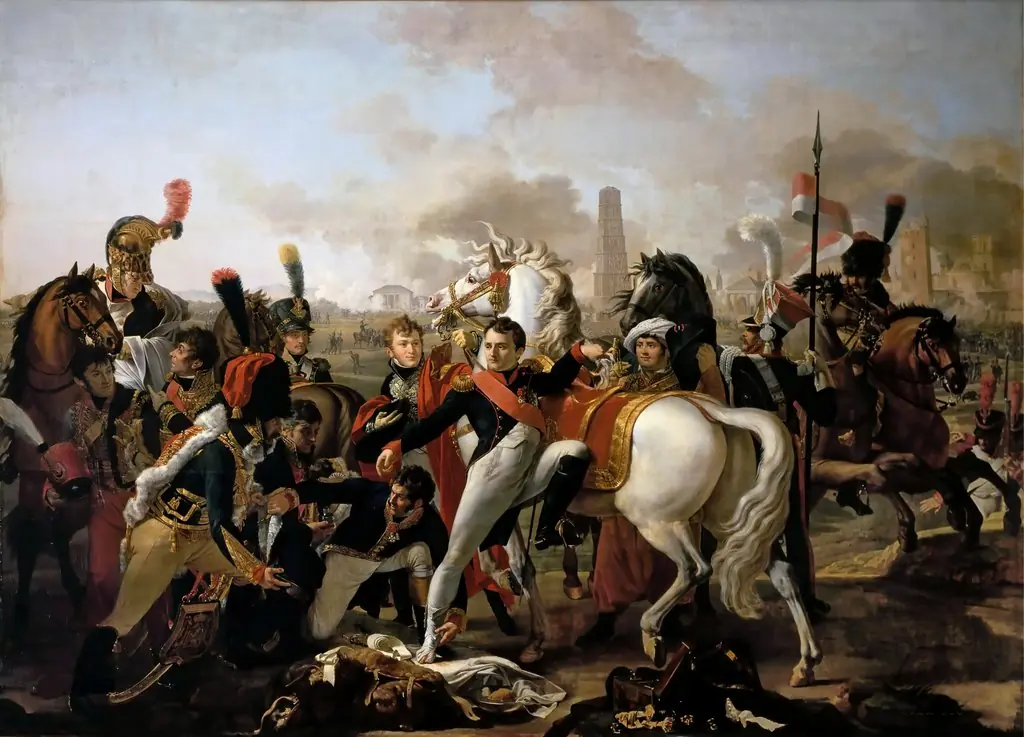 Napoleon dismounting with an injured foot at Regensburg, aided by the Surgeon, Yvan, April 23, 1809
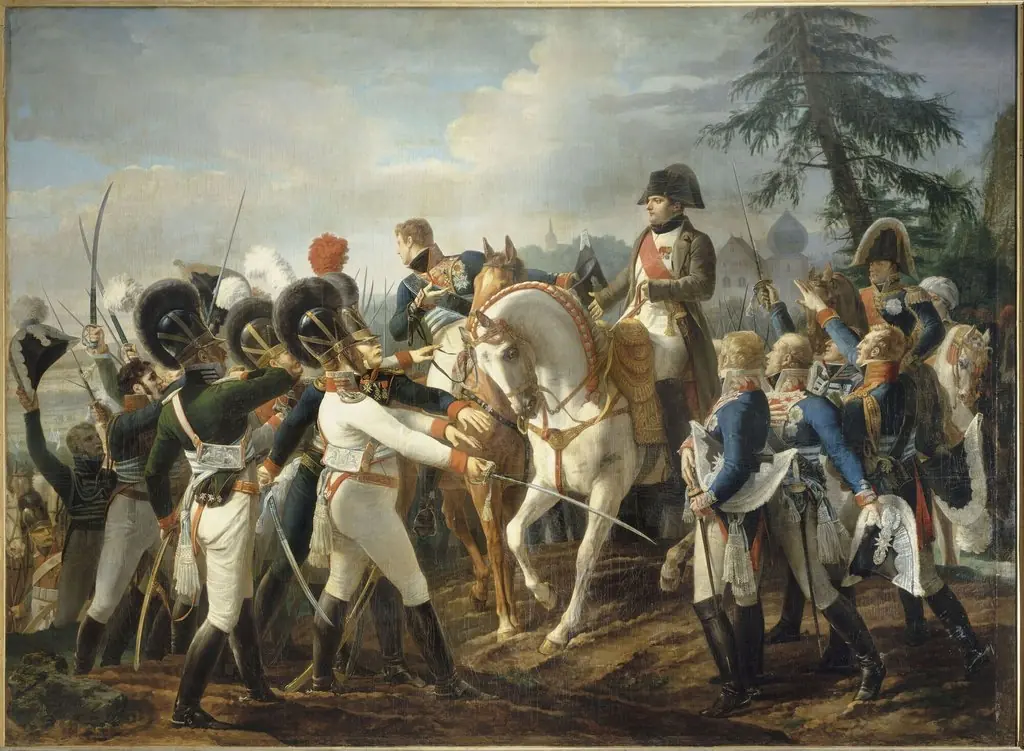 Napoléon harangue les troupes bavaroises et wurtembourgeoises à Abensberg, 20 avril 1809
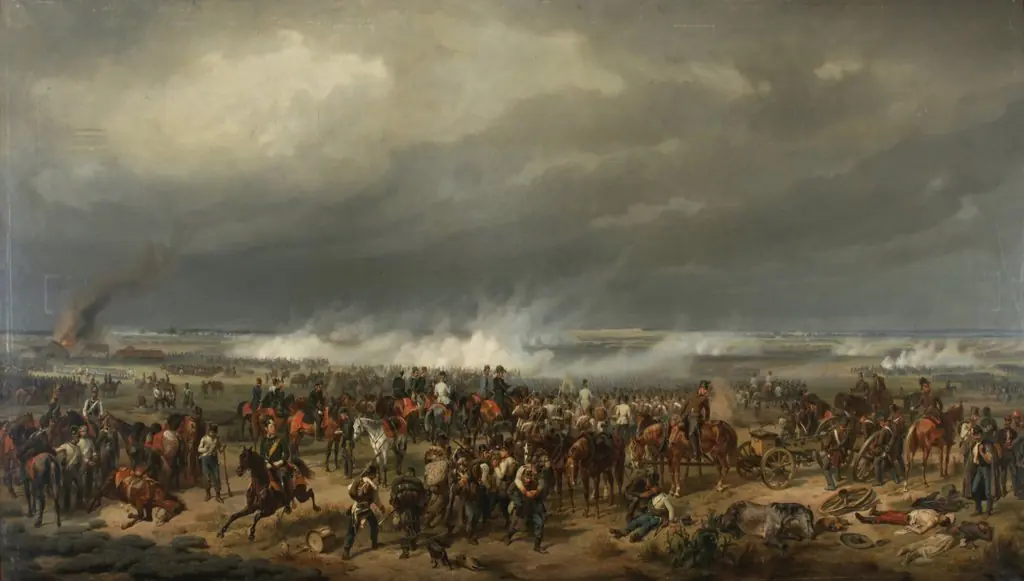 Die Schlacht bei Komorn
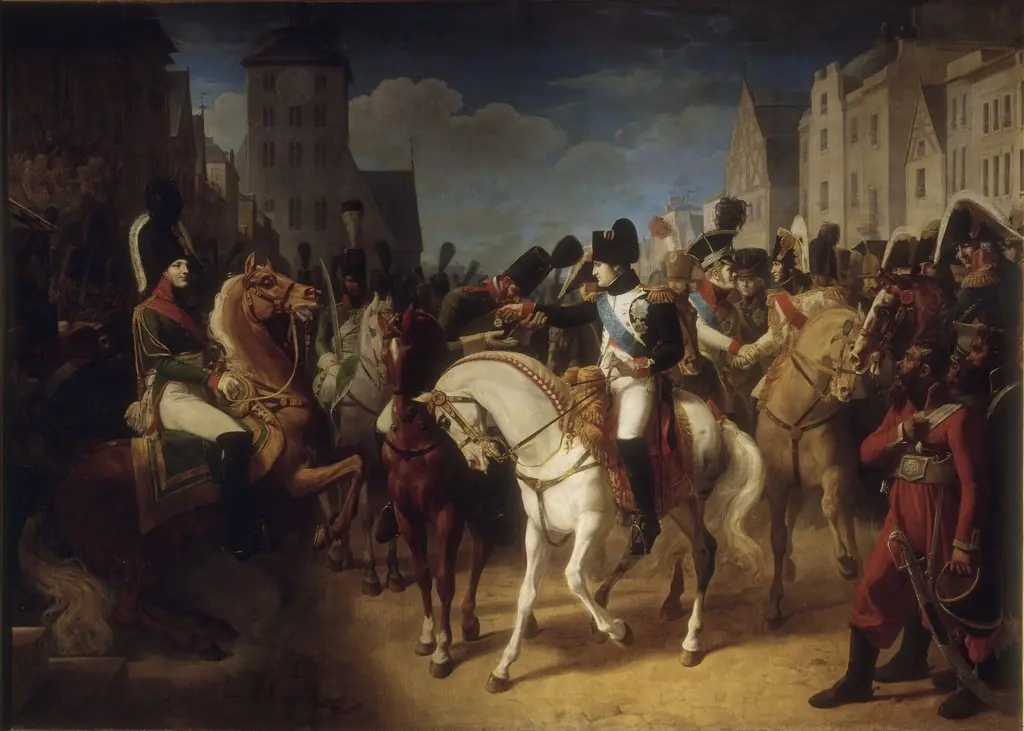 Napoleon I decorated a soldier of the Russian army in Tilsitt with the cross of the Legion of Honor
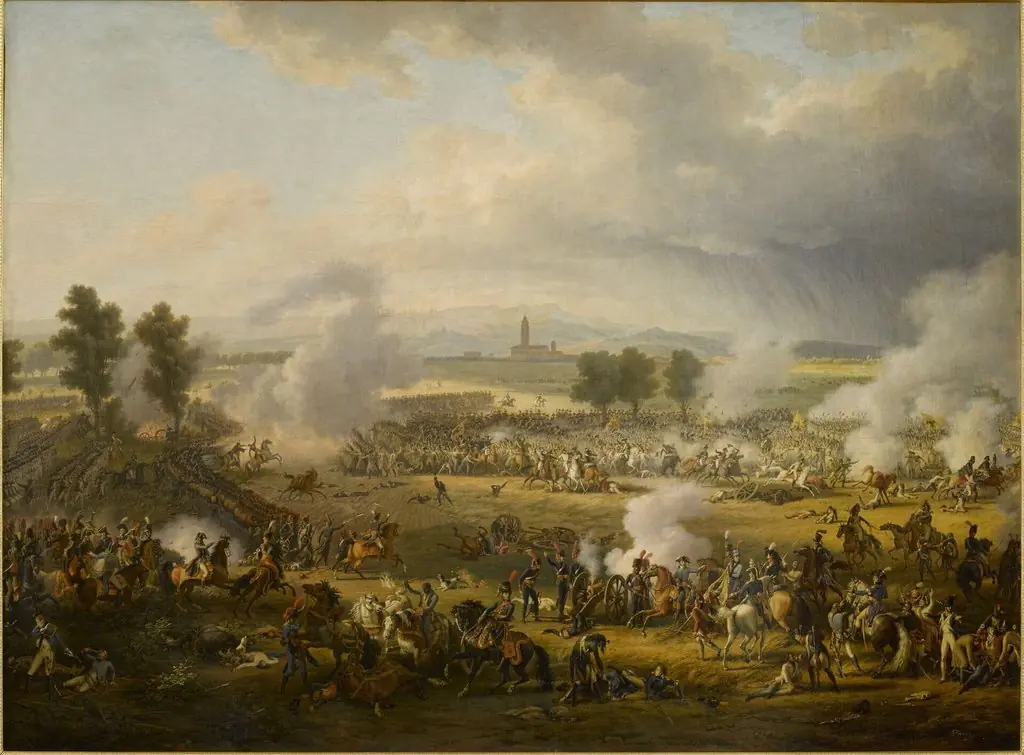 The Battle of Marengo