Artwork
Village Fair at Hoboken
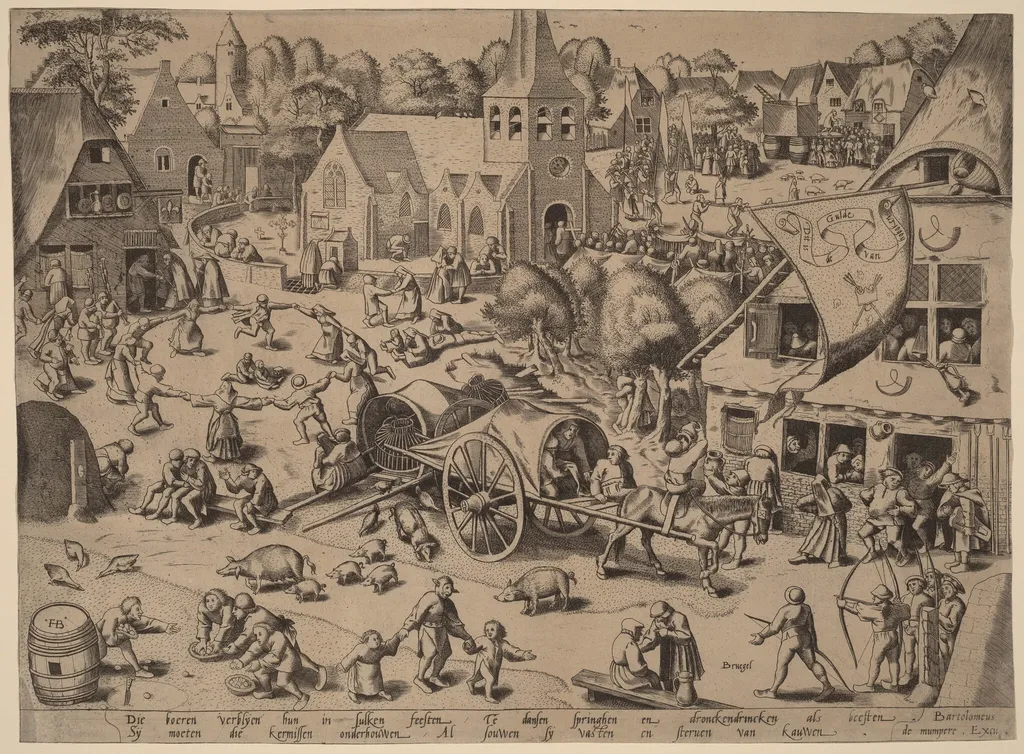
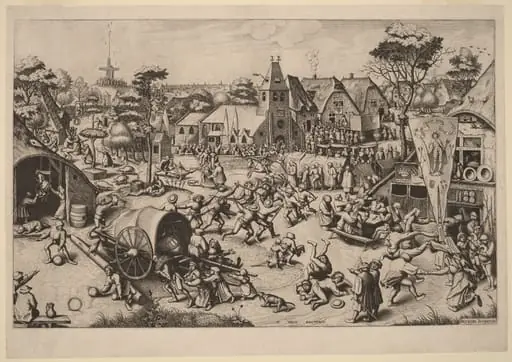
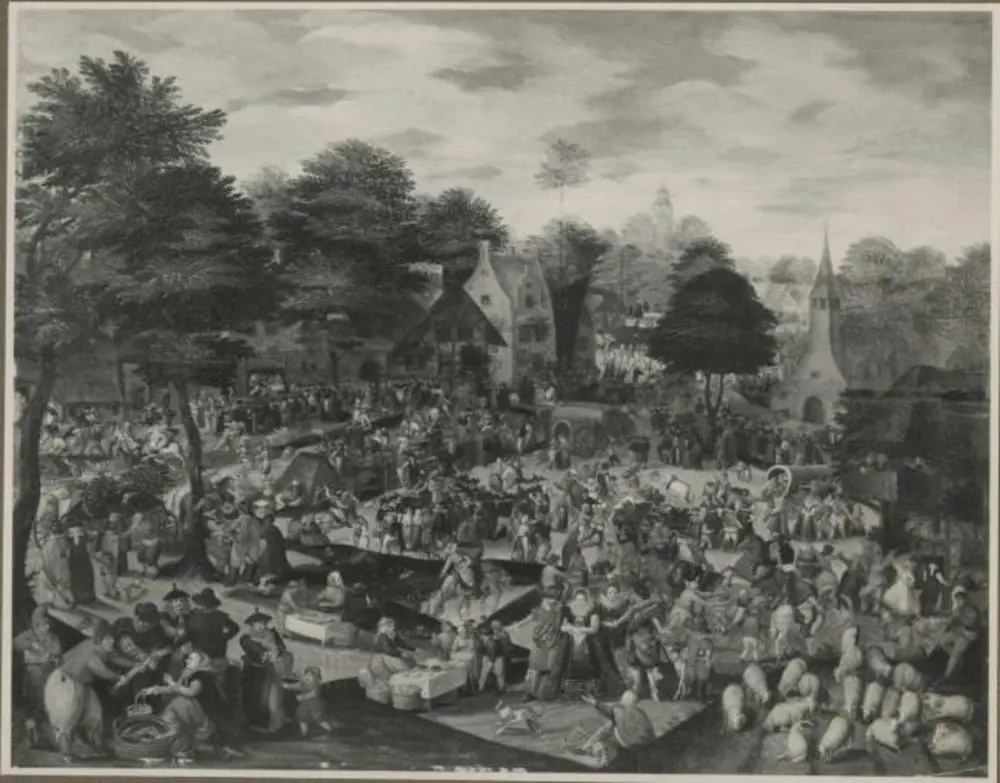
Village Fair at Hoboken is an ink print by the Renaissance artist Frans Hogenberg. It dates from 1559 and is held in the collection of the National Gallery of Art.
- Inscription
- Inscribed:lower left, on barrel, in plate: FHB [artist's monogram]; lower right, in image, in plate: Bruegel; upper right, on banner, in plate: Dit is de Gulde van hoboken (This is the Guild of hoboken); in lower margin, in plate: Die boeren verblyen hun in sulken feesten Te dansen springhen en dronckendrincken als beesten. / Sye moeten die kermissen onderhouwen Al souwen sy vasten en steruen van kauwen. (The peasants rejoice at such festivals in dancing, jumping, and drinking themselves drunk as beasts. / They must observe church festivals even if they fast and die of cold.) / Bartolomeus de mumpere. Excu. [translation from Nadine Orenstein, ed., Pieter Bruegel the Elder: Drawings and Prints. Exhibition catalogue. New York: Metropolitan Museum of Art, 2001, p. 198.]
About this work
Overview
Village Fair at Hoboken is an engraving created by Frans Hogenberg around 1559. It is a print that showcases a lively village scene.
Subject & Meaning
The engraving depicts a chaotic village fair with numerous figures engaged in various activities such as dancing, fighting, and drinking. A central wagon is surrounded by a crowd, while animals roam freely and thatched-roof houses line the background. A lone barrel labeled 'F.B.' is situated in the corner, its significance unclear.
Technique & Style
Hogenberg employed fine lines to achieve depth and texture in the engraving, creating a sense of three-dimensionality. The level of detail suggests a high level of skill in the engraving technique, which involved carving designs onto a metal plate to produce printed images.
Own this work as a print
Artist & collection