Subject
Food
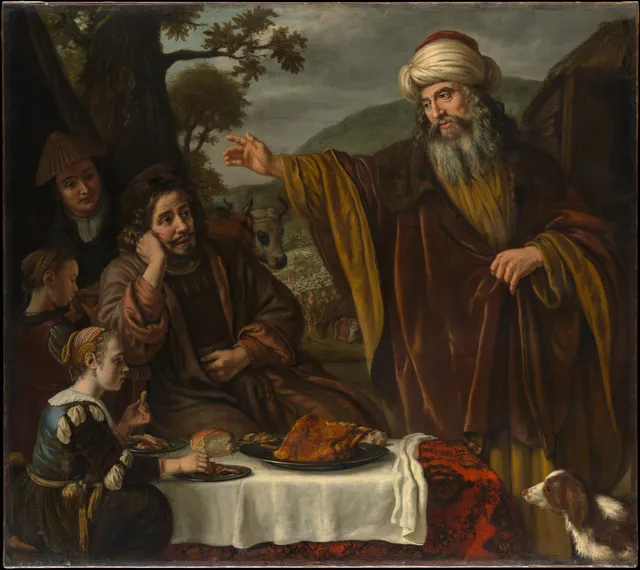
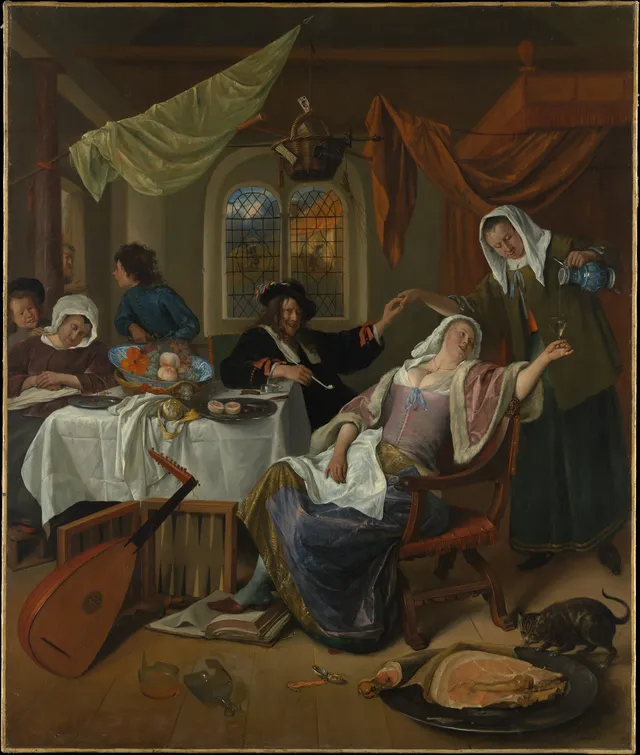
Food is a subject in art. The gallery holds 161 works in this subject in art, including works by William Sidney Mount, Lilly Martin Spencer and Pieter Claesz.
Food is any substance consumed by an organism for nutritional support. Food usually consists of plant, animal, or fungal origin and contains essential nutrients such as carbohydrates, fats, proteins, vitamins, or minerals.
Key artists
Artist
Overview
Food, defined as any substance consumed by an organism for nutritional support, has served as a persistent and versatile subject in visual art across millennia. In the collection under discussion, food appears in 172 works, ranging from ancient Egyptian tomb paintings to Dutch Golden Age genre scenes and modern still lifes. Artists have turned to food not merely as a record of what people ate, but as a vehicle for exploring mortality, social hierarchy, religious doctrine, and sensory pleasure. The motif recurs because it is fundamental to human existence, visually rich, and culturally coded, allowing artists to communicate complex ideas through the universal language of sustenance.
Iconography & meaning
The iconography of food in art carries layered meanings that shift with context and period. In religious painting, food often signals sacramental or narrative significance, as in depictions of the Last Supper or the miraculous multiplication of loaves. In secular contexts, food can denote abundance or its opposite, want and hunger. The vanitas tradition employs perishable foodstuffs, meat, and overturned vessels as memento mori, reminders of death and the transience of earthly pleasures. Conversely, lavish banquet scenes project status, power, and social identity through the display of rare and costly ingredients. In still life painting, the careful arrangement of fruit, bread, and game invites contemplation of texture, color, and the passage of time. Artists have also used food to mark cultural and national identity, with specific dishes and dining customs serving as shorthand for regional belonging. The symbolic range extends from the sacred to the profane, from celebration to critique, making food one of the most flexible and resonant motifs in the visual arts.
Across movements & periods
The treatment of food in art has evolved significantly across movements and cultures, though the sources provide limited detail on this trajectory. What can be established is that ancient Egyptian artists, as in the Tomb of Rekhmire, depicted food preparation as part of funerary ritual, embedding sustenance in beliefs about the afterlife. The medieval and Renaissance periods saw food integrated into religious narrative and symbolic still life, with the latter achieving independent status in the sixteenth and seventeenth centuries, particularly in the Netherlands. The Dutch Golden Age marked a high point for food-related genre painting and still life, with artists specializing in kitchen scenes, market views, and banquet pieces that combined virtuoso technique with moral or economic commentary. The nineteenth century brought new approaches, with Vincent van Gogh's The Potato Eaters (1885) using a humble meal to convey social realism and empathy with peasant life. In the twentieth century, Pop Art transformed food into a vehicle for critiquing consumer culture, most famously in Andy Warhol's Campbell's Soup Cans (1962). Contemporary practice has expanded to include food as actual sculptural medium and installation material, as in Lucy Sparrow's felt delicatessen or Emeka Ogboh's honey brown ale developed as an artwork contemplating immigration and globalization.
Notable depictions
Several canonical works of food art are documented in the sources, though not all belong to the collection under discussion. Pieter Bruegel the Elder's The Peasant Wedding (1567) presents a raucous village celebration centered on abundant food, with bread, meat, and drink symbolizing communal prosperity. Giuseppe Arcimboldo's Vertumnus (c. 1591) assembles fruits, vegetables, and flowers into a portrait of Holy Roman Emperor Rudolf II, fusing natural bounty with political allegory. Antoine Vollon's Mound of Butter captures nineteenth-century fascination with food realism through its luscious rendering of a simple dairy product. Vincent van Gogh's The Potato Eaters (1885) and Still Life with Apples demonstrate the artist's range in treating food as social document and formal study respectively. Paul Cézanne's Apples and Oranges (1898-1899) exemplifies post-Impressionist still life through its dynamic brushwork and structural color. Wayne Thiebaud's Bakery Case (1996) and Andy Warhol's Campbell's Soup Cans (1962) represent American Pop Art's engagement with commercial food imagery. Francis Bacon's Figure with Meat (1954) uses visceral flesh to evoke mortality and unease, while Edward Hopper's Nighthawks captures urban isolation through a late-night diner scene. Julie Bozzi's American Food, a sculptural installation of miniature handmade food products in an oak cabinet, offers contemporary commentary on consumerism and abundance.
Legacy
The legacy of food as an artistic subject extends into contemporary museum practice, scholarship, and popular culture. Dedicated institutions now foreground food's cultural and historical dimensions, including the Food Museum in the United Kingdom, with over 40,000 items spanning wartime recipe cards to Victorian steam engines, and the Smithsonian's permanent food history exhibition, which uses Julia Child's kitchen to explore post-World War II American food transformation. The Museum of Food and Drink in New York and the Disgusting Food Museum in Malmo, Sweden, represent the range from celebratory to critical approaches. Specialized museums such as the Frietmuseum in Bruges focus on single food items as lenses for regional identity. Contemporary exhibitions continue to treat food as a central concern, with shows like Feast and Fast: The Art of Food in Europe, 1500-1800 at the Fitzwilliam Museum demonstrating sustained scholarly and public interest. The Faena Festival's The Last Supper at Art Basel Miami Beach and Lucy Sparrow's felt food installations indicate that food remains a vital medium for addressing spirituality, globalization, consumerism, and community in contemporary art practice.
Works
 The Harvesters
 Abraham's Parting from the Family of Lot
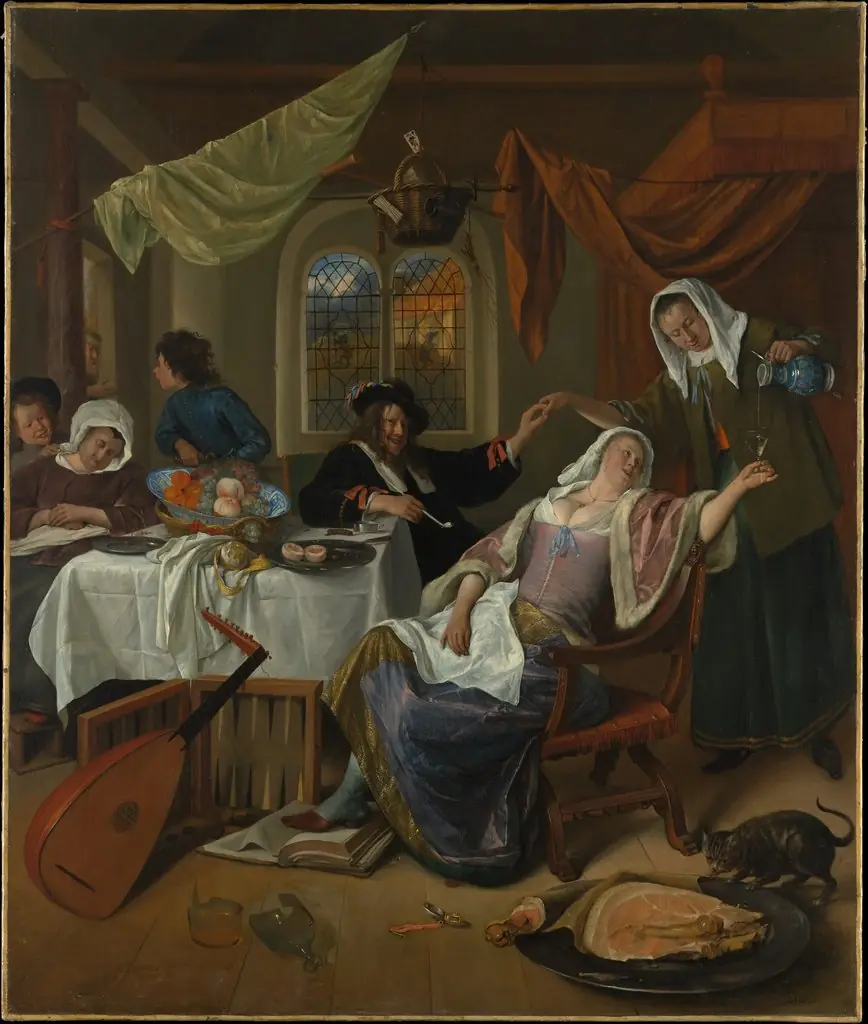 The Dissolute Household
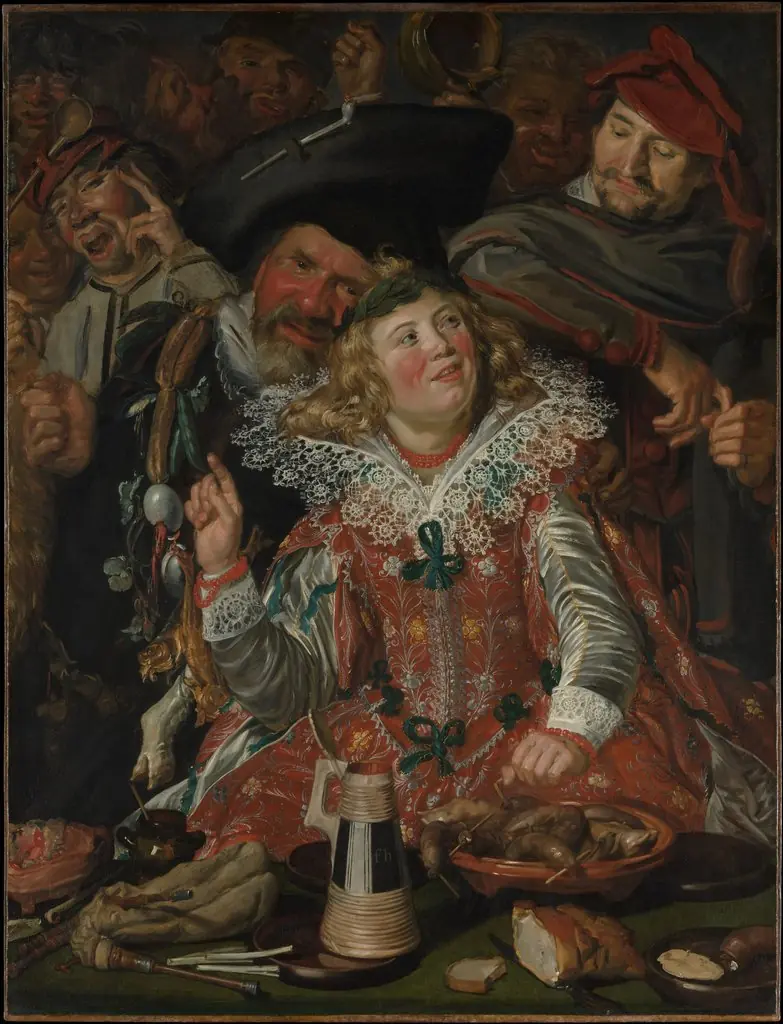 Merrymakers at Shrovetide
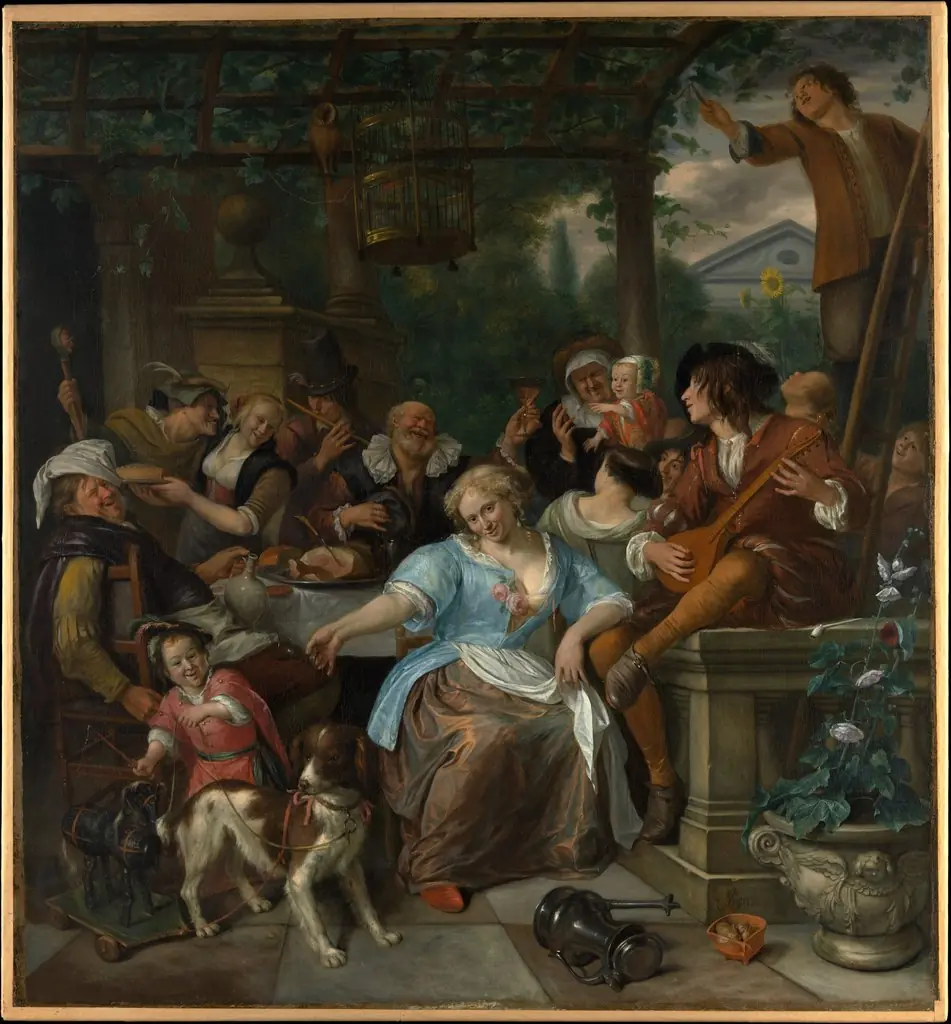 Merry Company on a Terrace
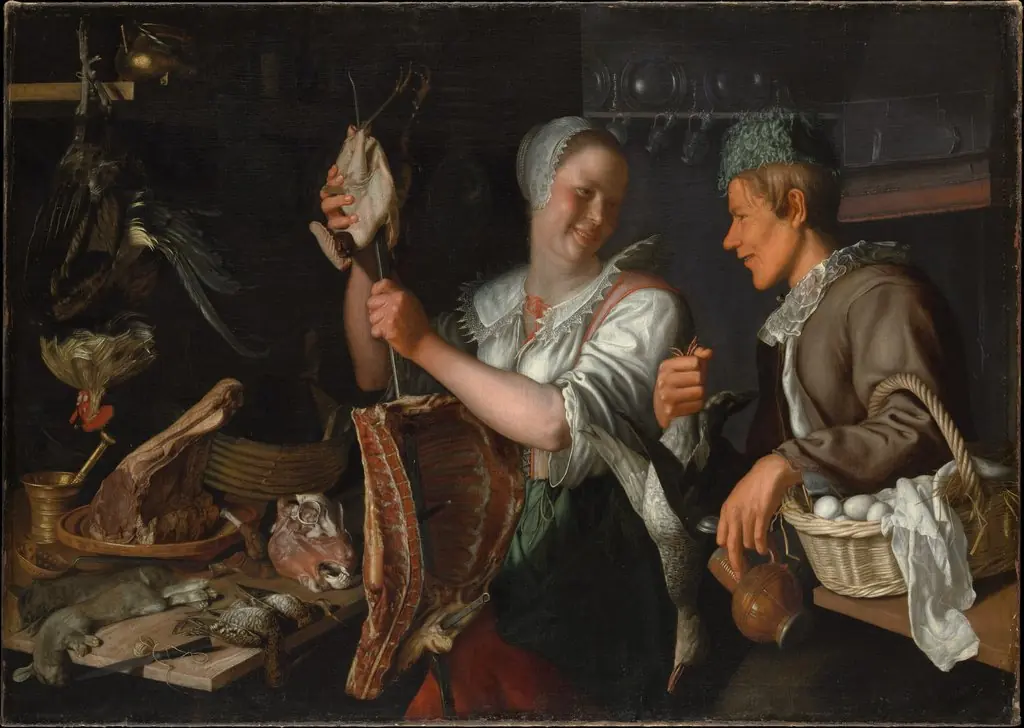 Kitchen Scene
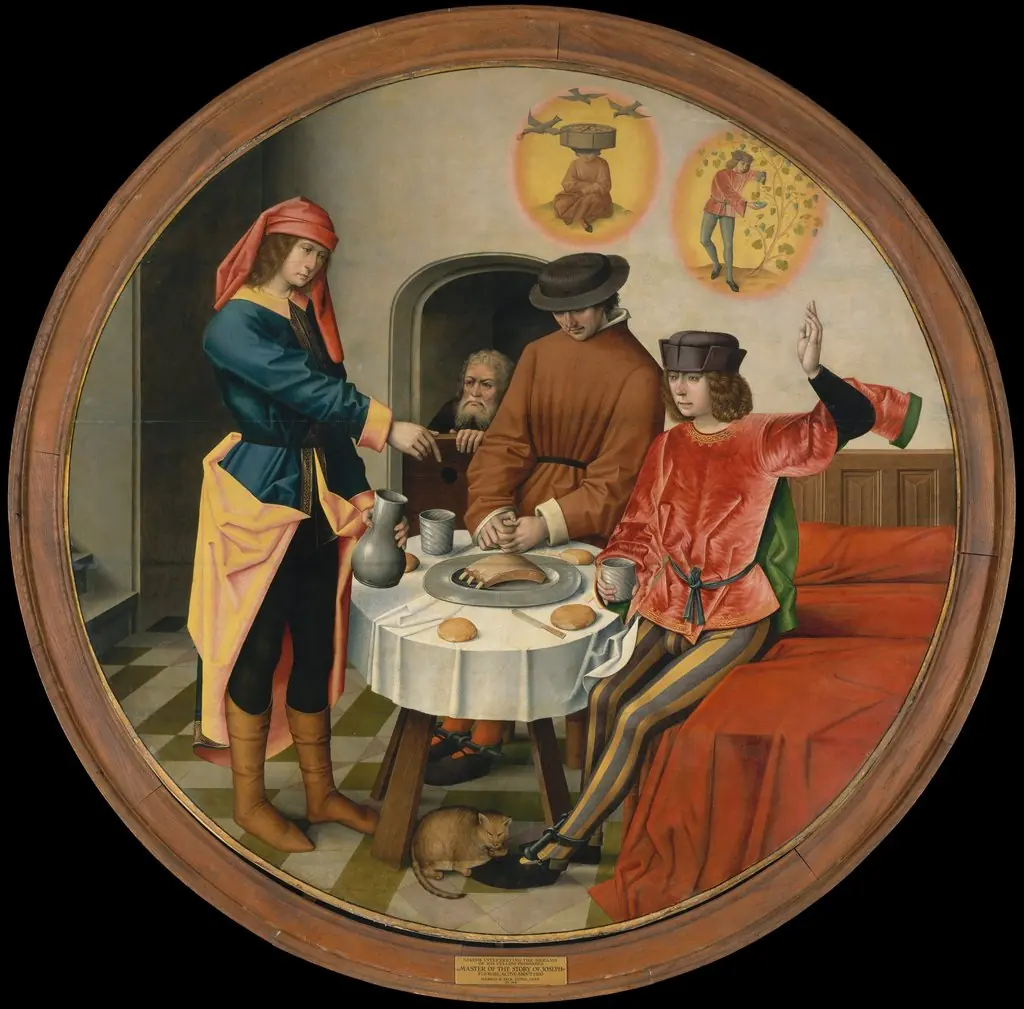 Joseph Interpreting the Dreams of His Fellow Prisoners
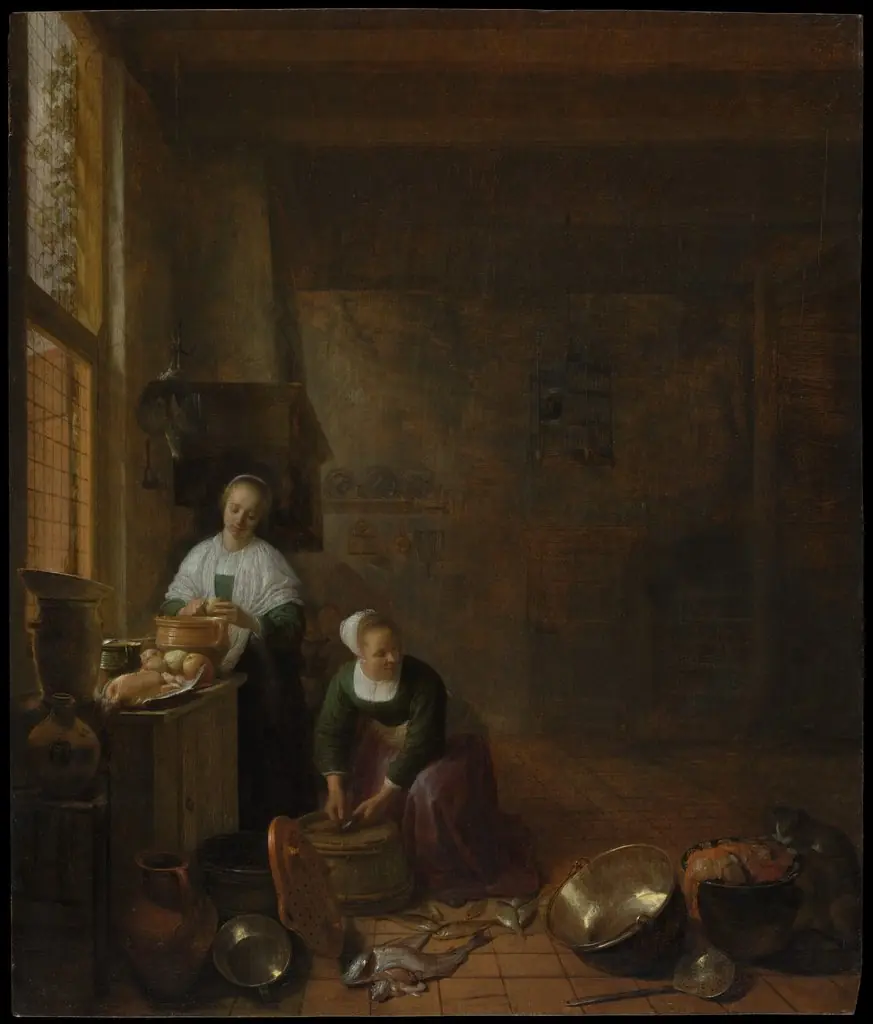 A Kitchen
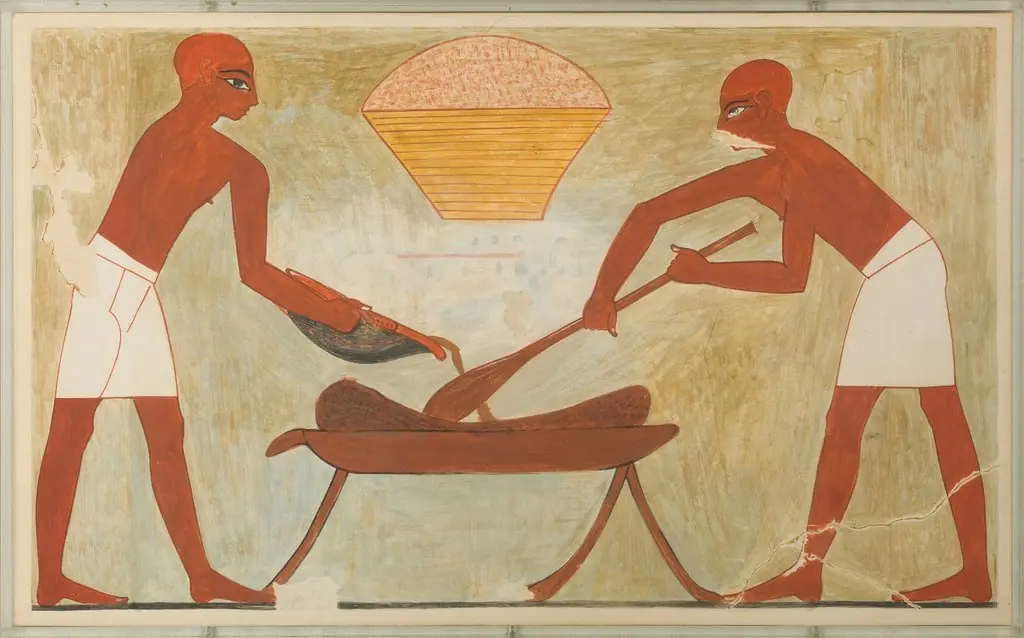 Preparing Dough, Tomb of Rekhmire
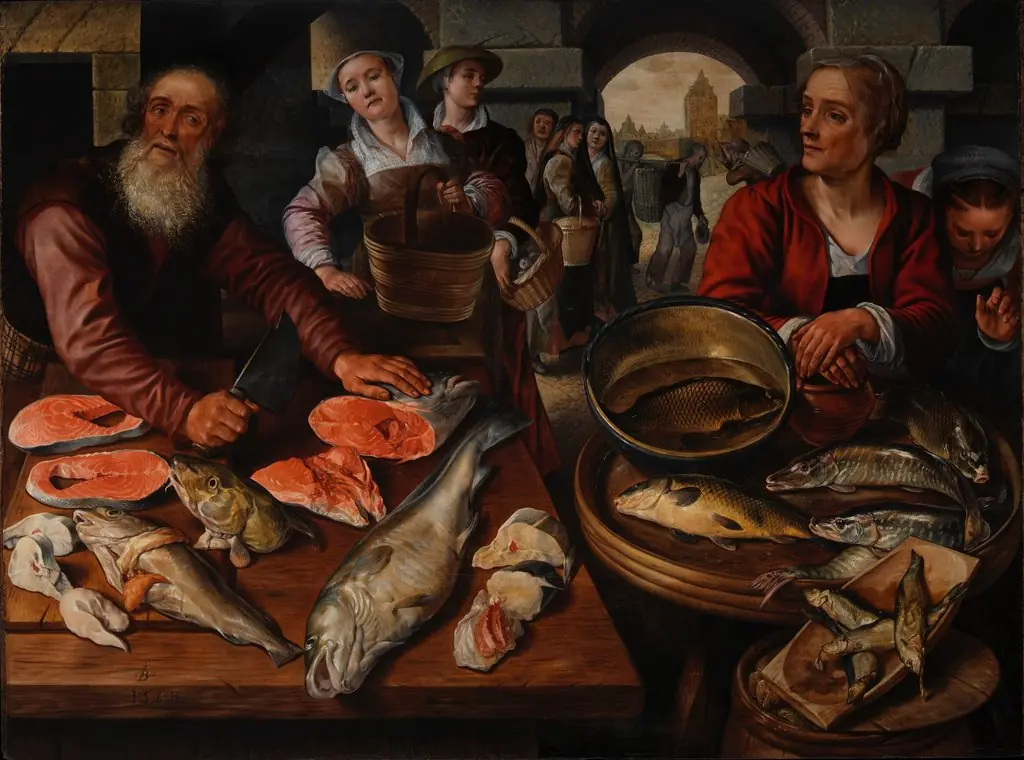 Fish Market
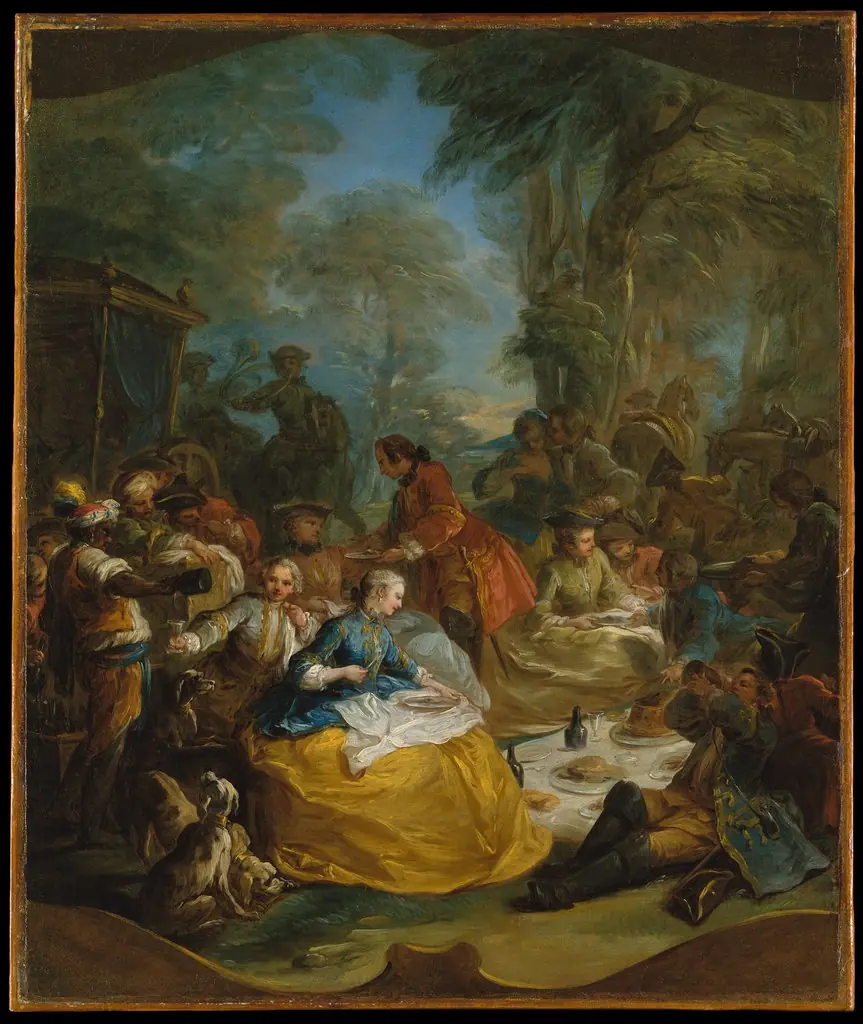 The Hunt Breakfast
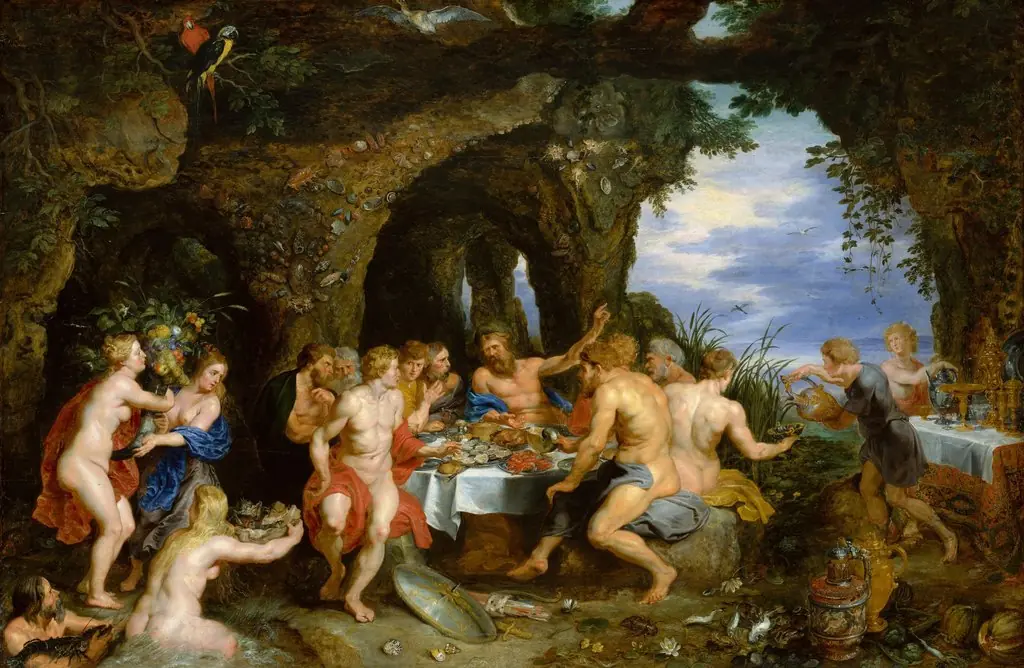 The Feast of Acheloüs
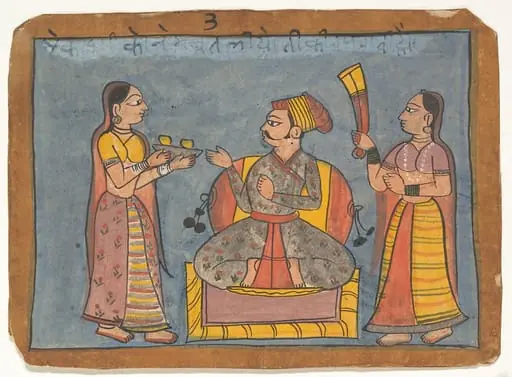 Untitled
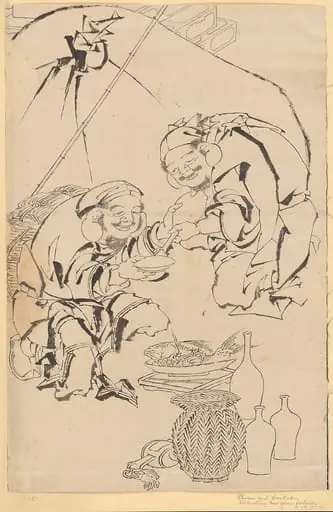 Untitled
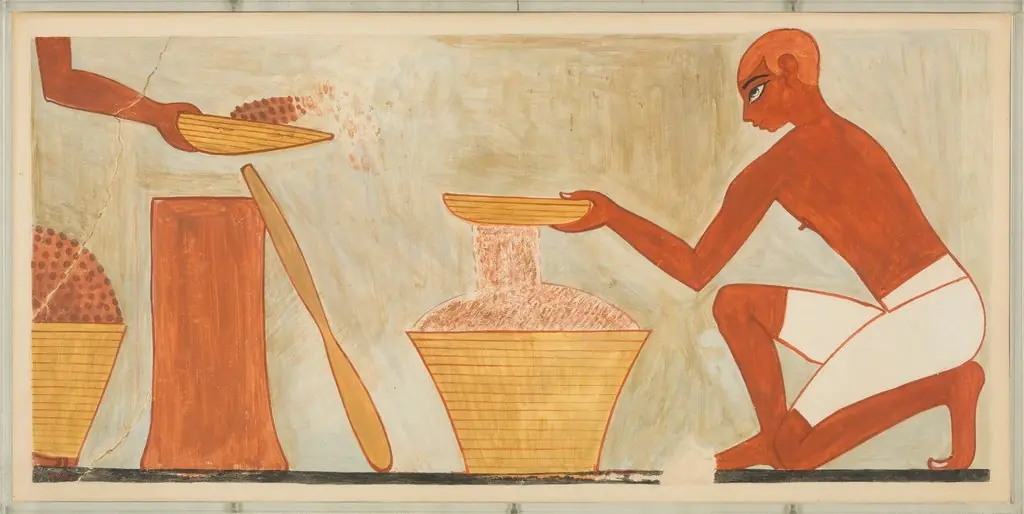 Sifting Meal, Tomb of Rekhmire
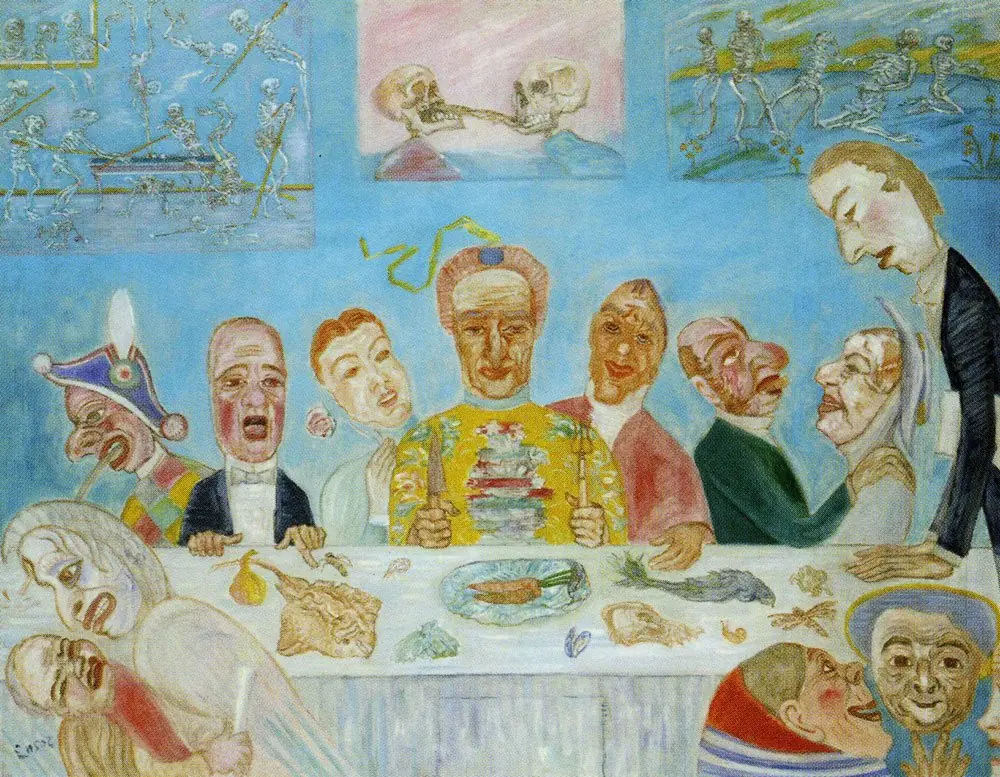 Comical Repast (Banquet of the Starved)
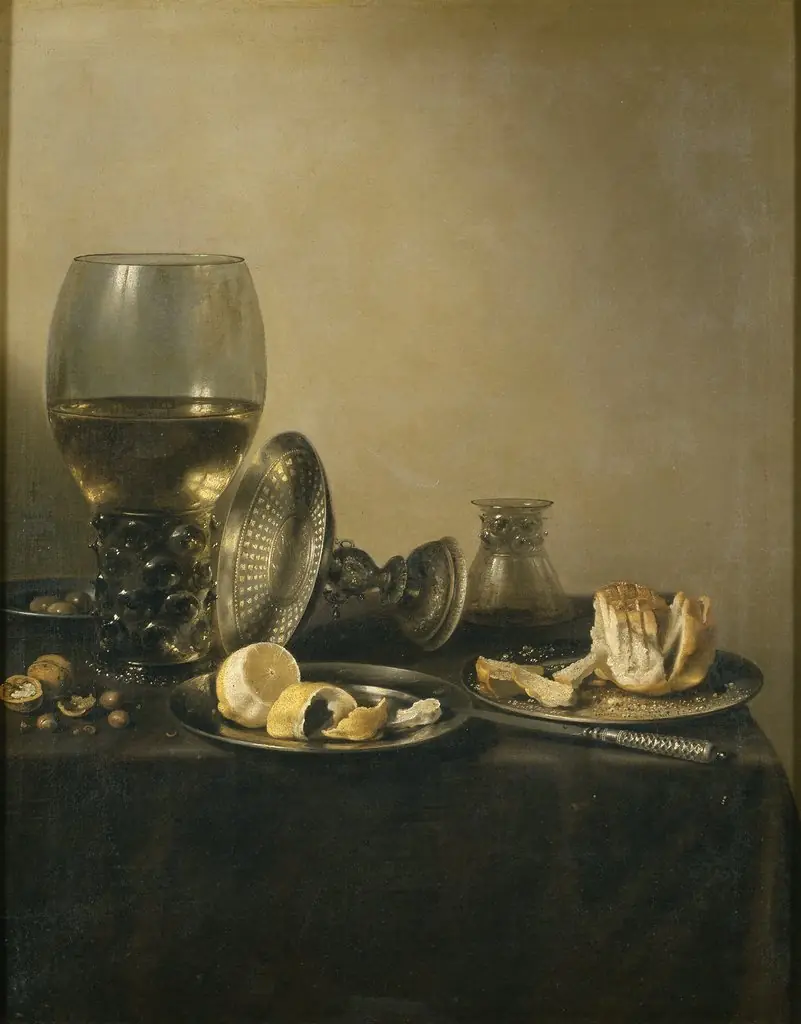 Still Life
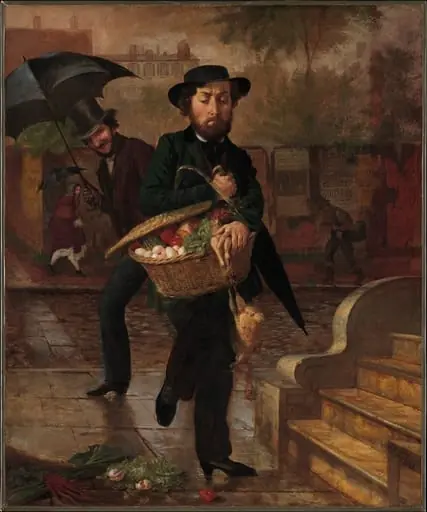 Young Husband: First Marketing
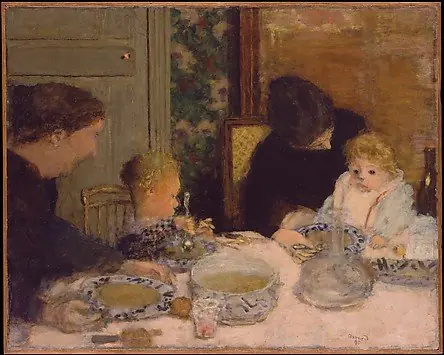 The Children's Meal
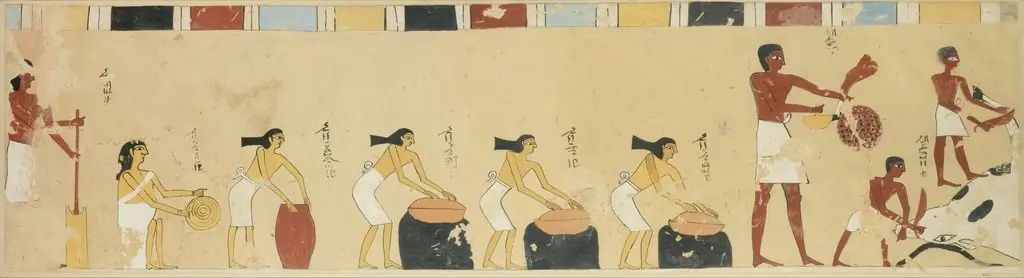 Women Preparing Food, Tomb of Djari
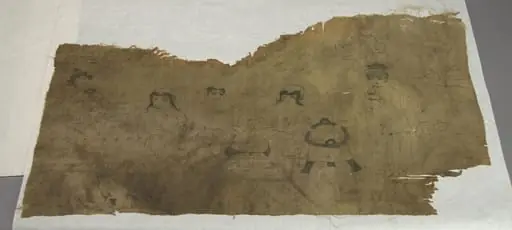 遼 宴飲圖(殘片)|Banquet Scene
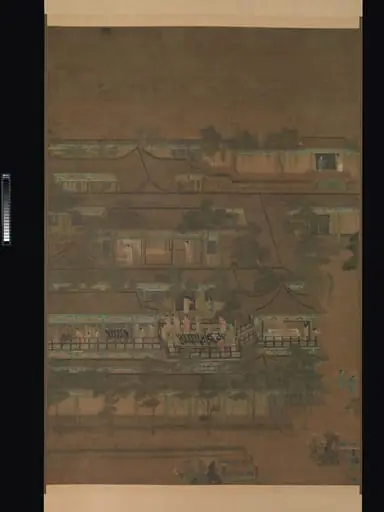 五代/北宋 佚名 乞巧圖 軸|Palace banquet
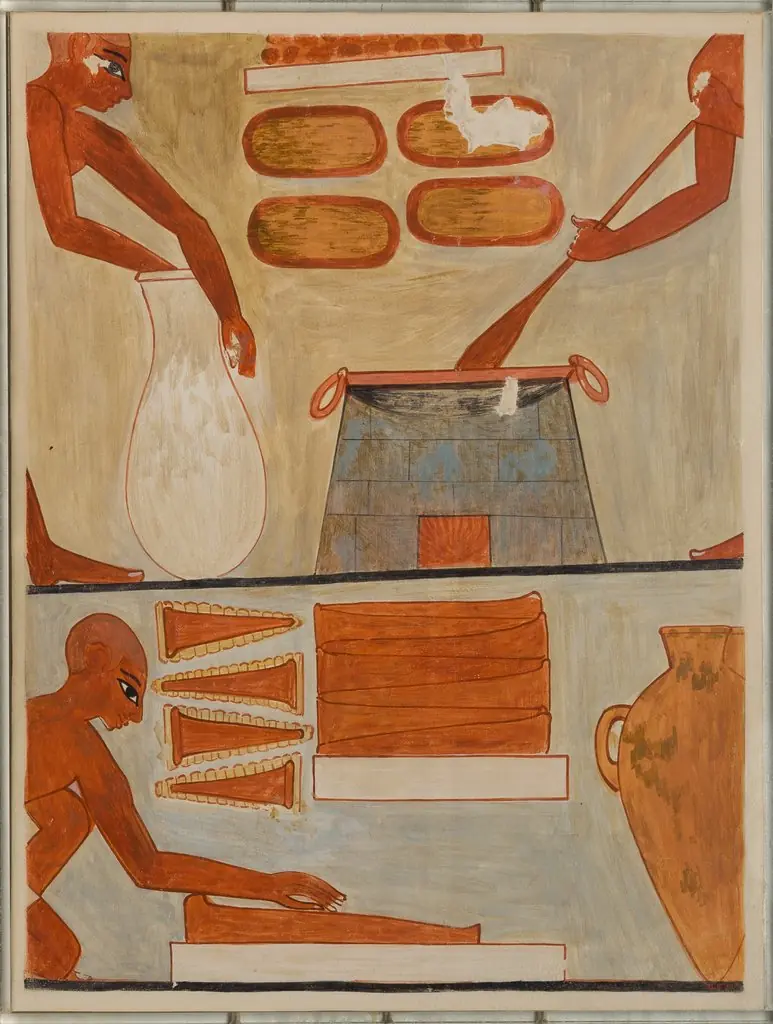 Preparing and Cooking Cakes, Tomb of Rekhmire
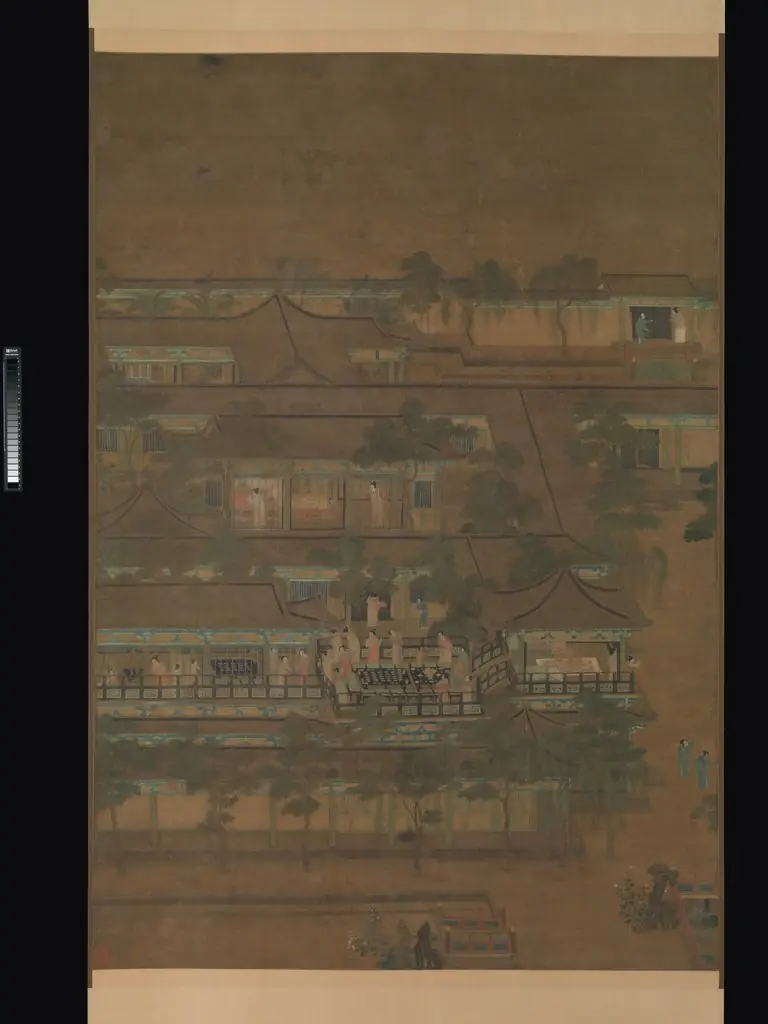 Palace banquet
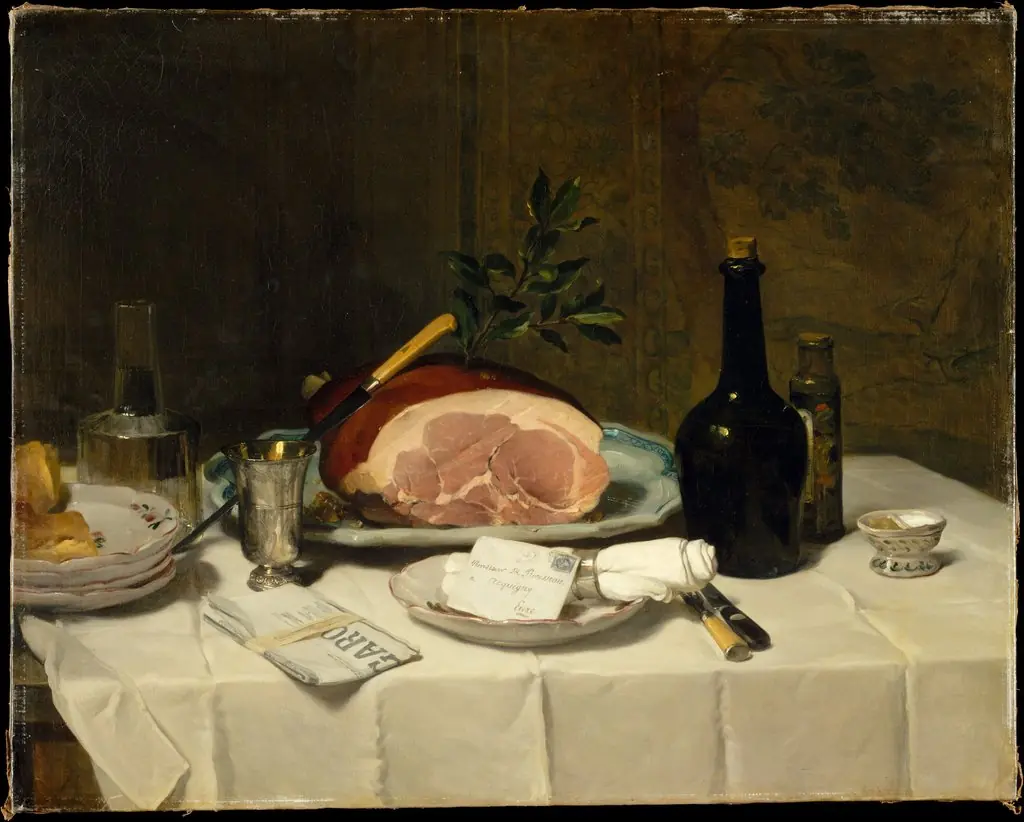 Still Life with Ham
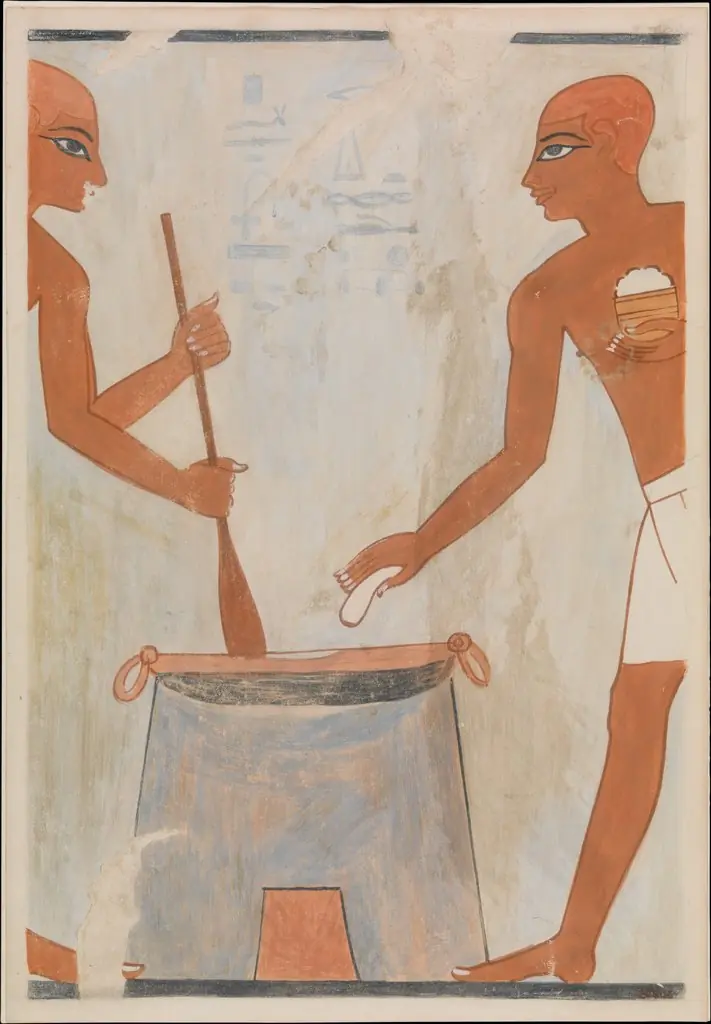 Cooking Cakes with Fat, Tomb of Rekhmire
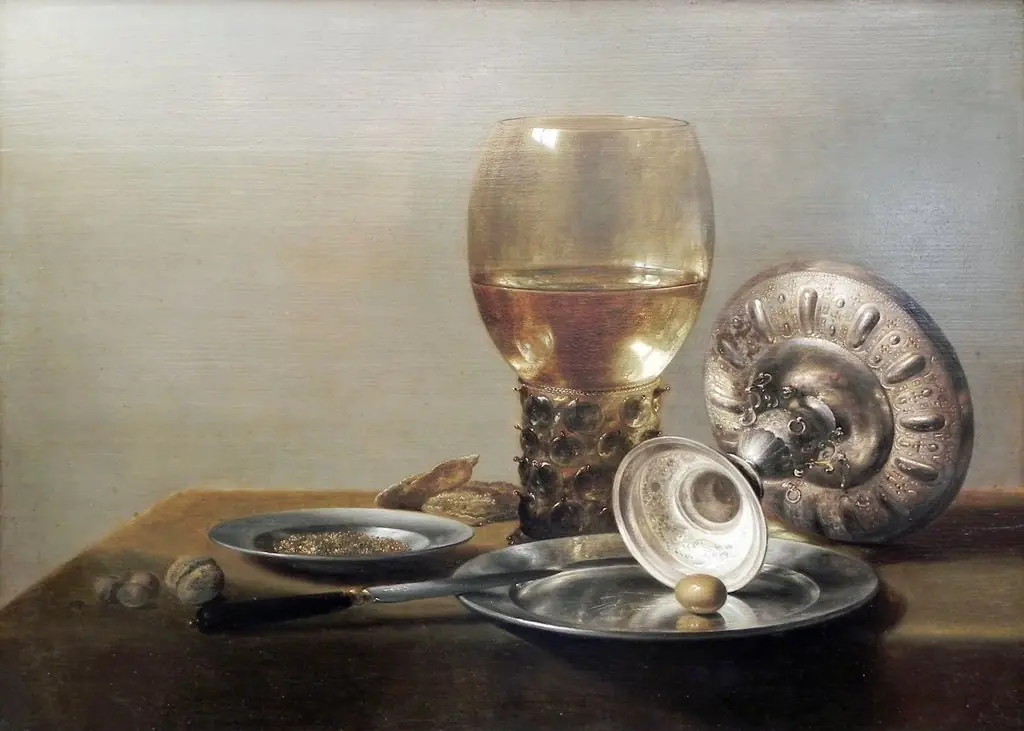 Still-life with Wine Glass and Silver Bowl
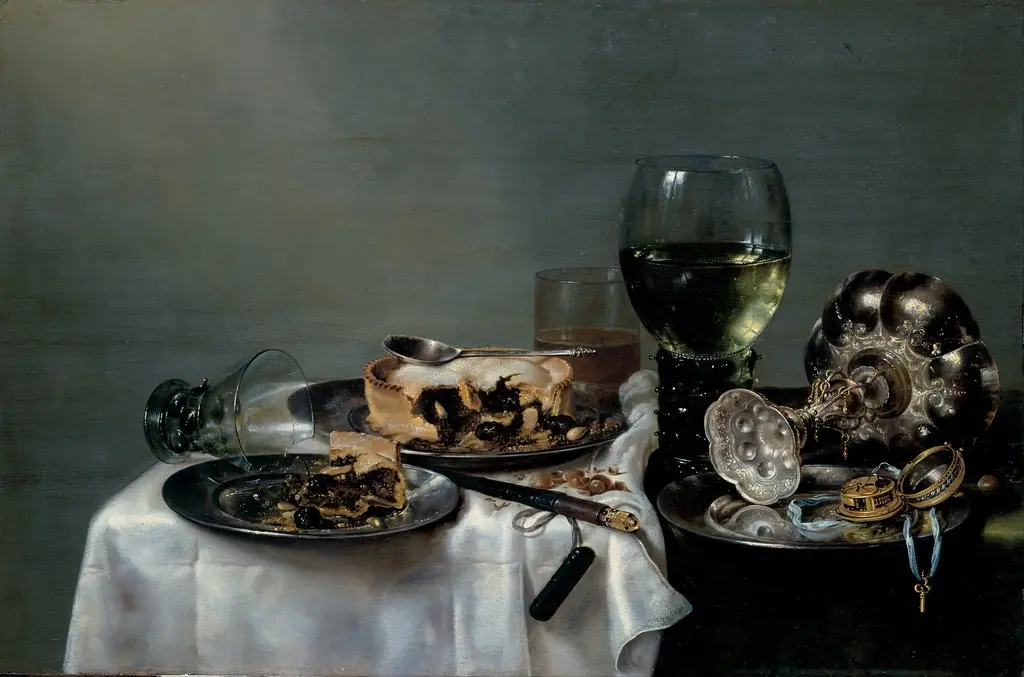 Breakfast Table with Blackberry Pie
 Still Life with Sweets and Pottery
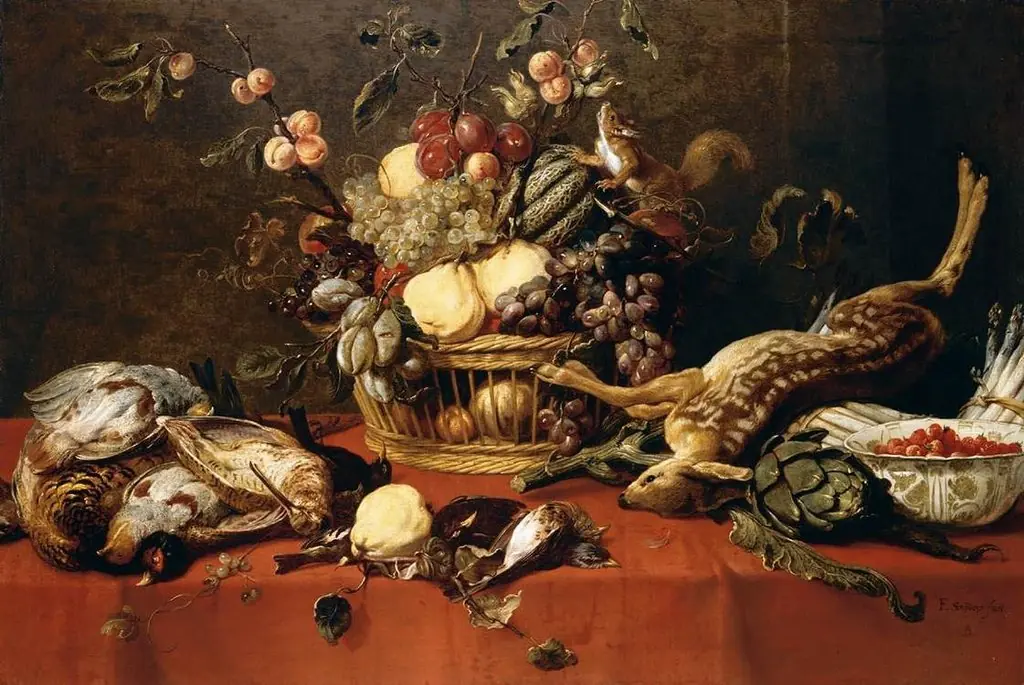 Still life of fruit in a basket together with game, a bowl of fraises-de-bois, artichokes, asparagus and a squirrel upon a table draped with a red cloth
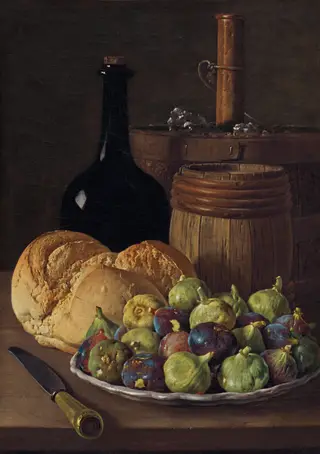 Still Life with Figs and Bread
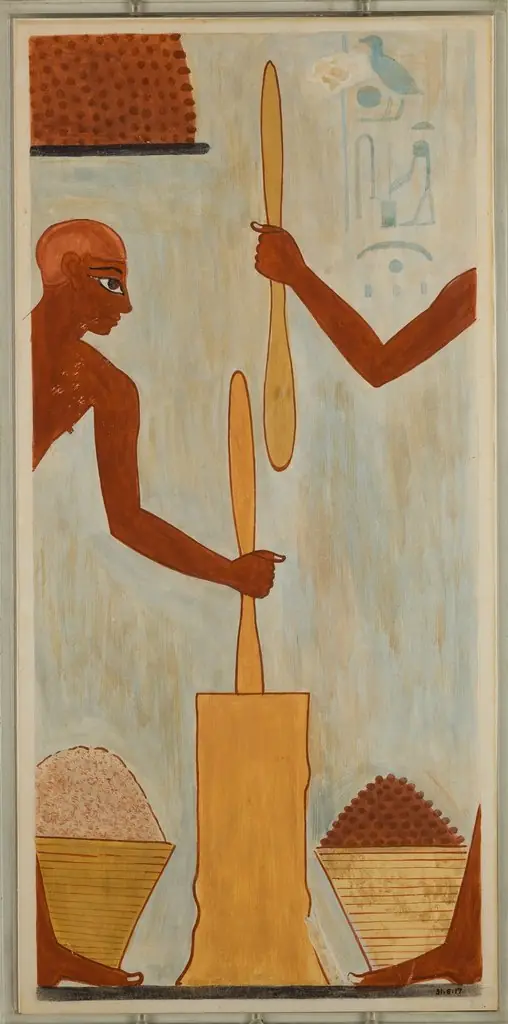 Pounding Meal, Tomb of Rekhmire
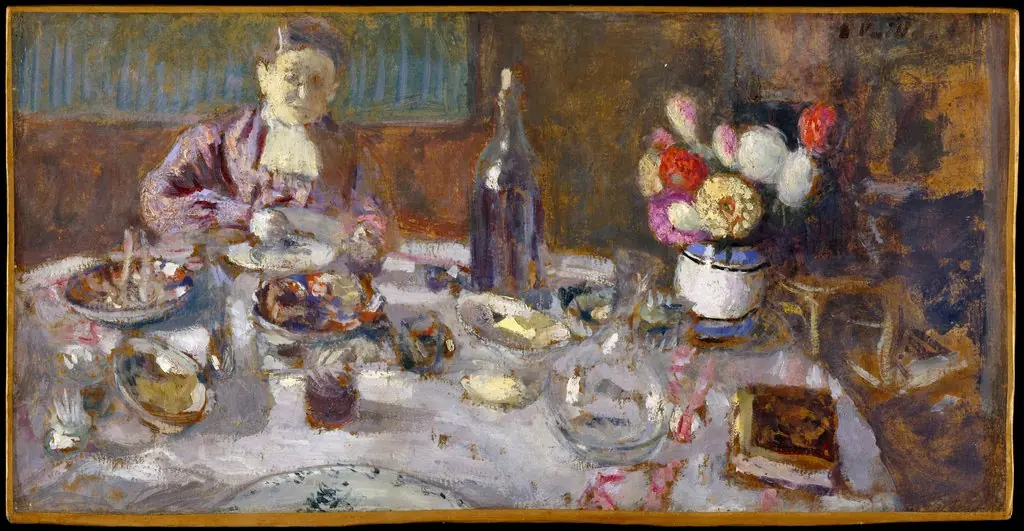 Luncheon
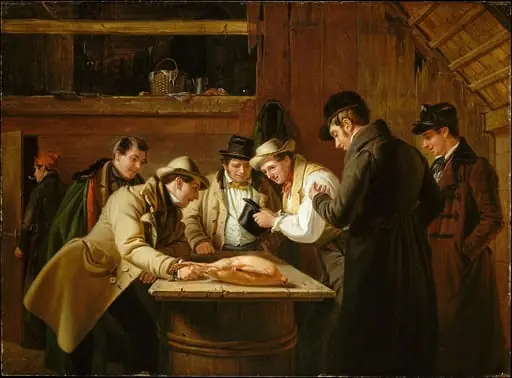 The Raffle (Raffling for the Goose)
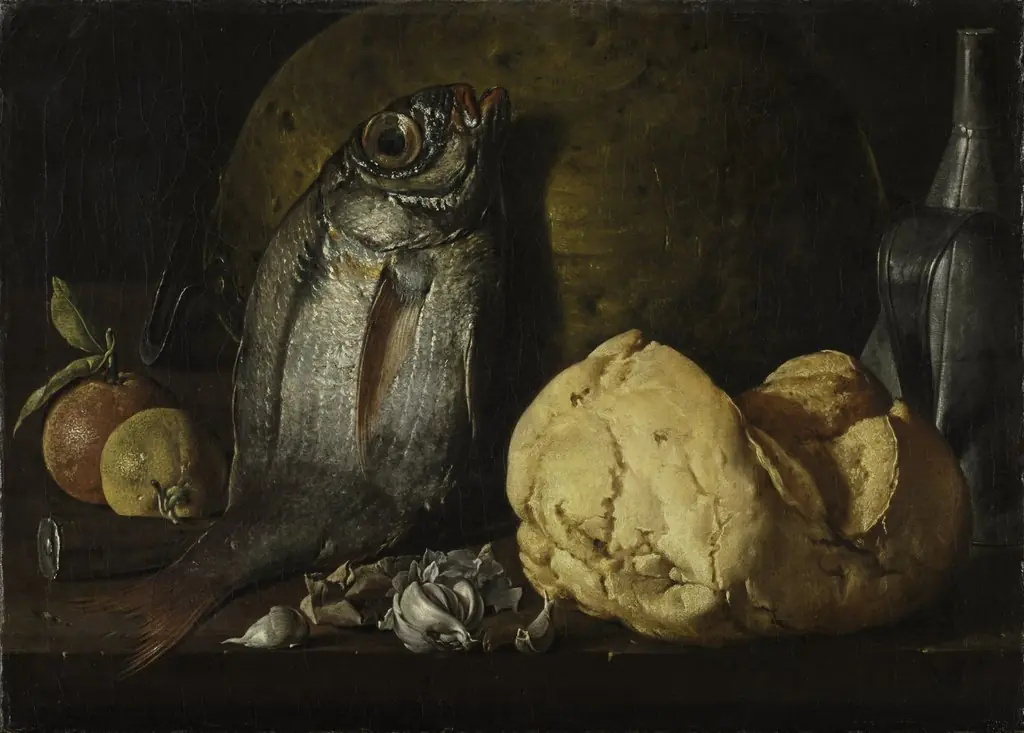 Still Life with Fish, Bread, and Kettle
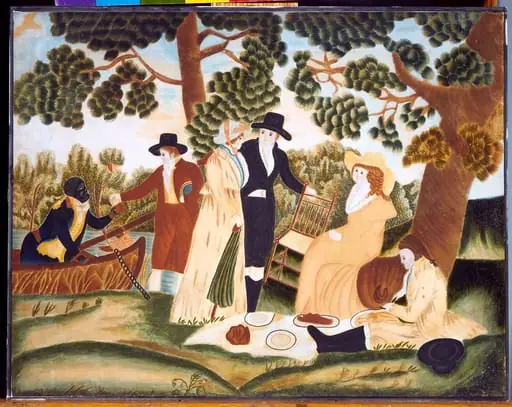 The Picnic
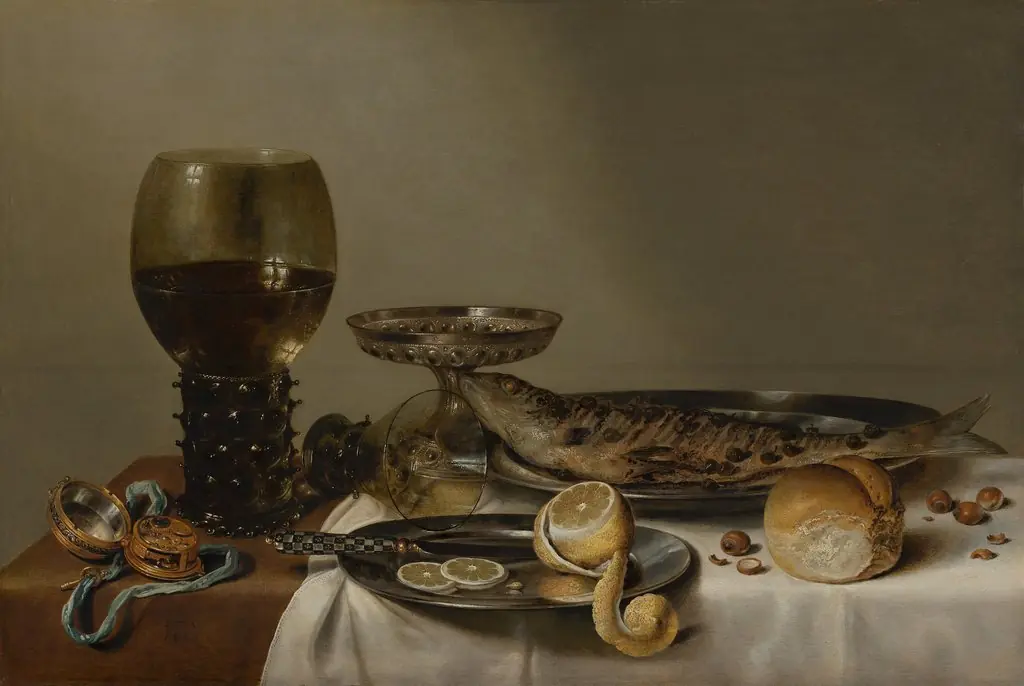 Still Life with a Roemer and a Watch
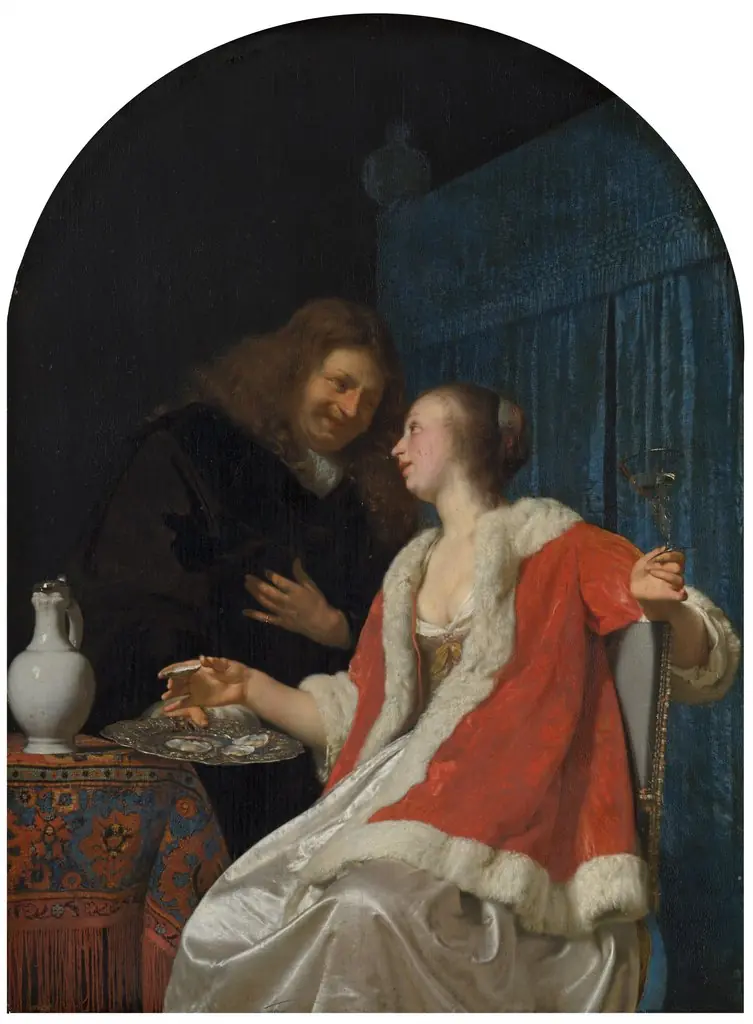 A Meal of Oysters
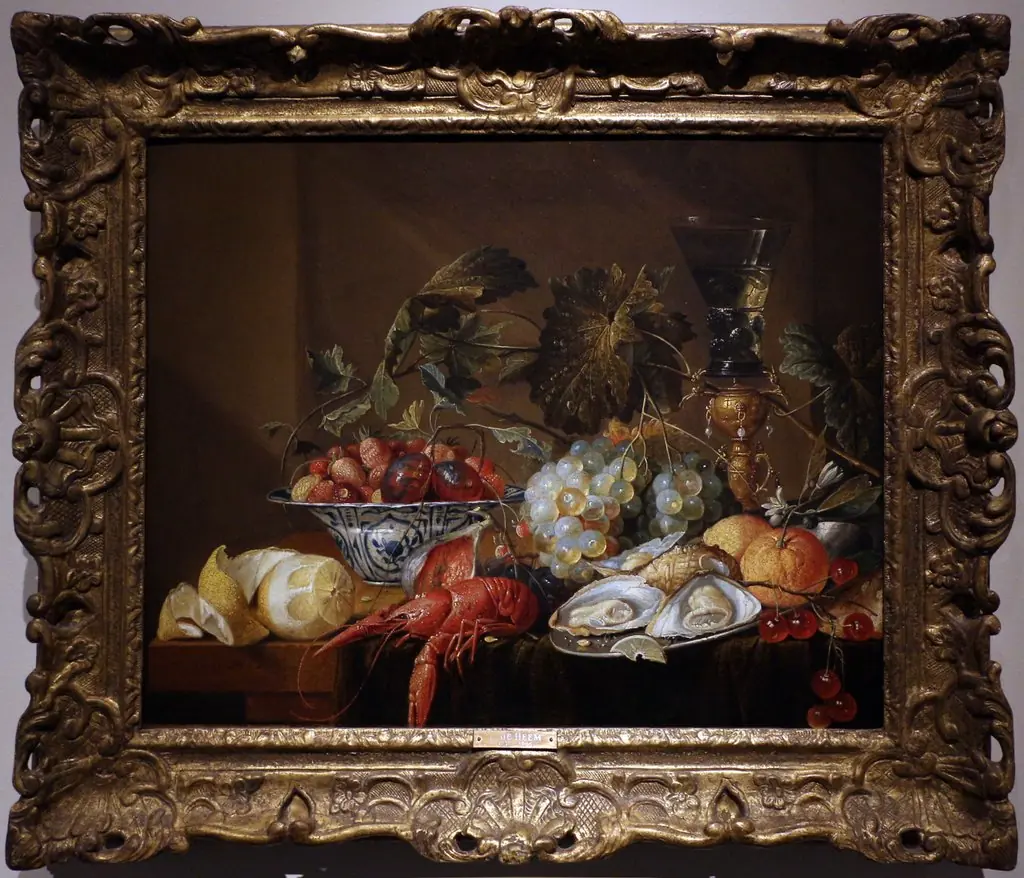 natura morta con gamberone, ostriche e frutta
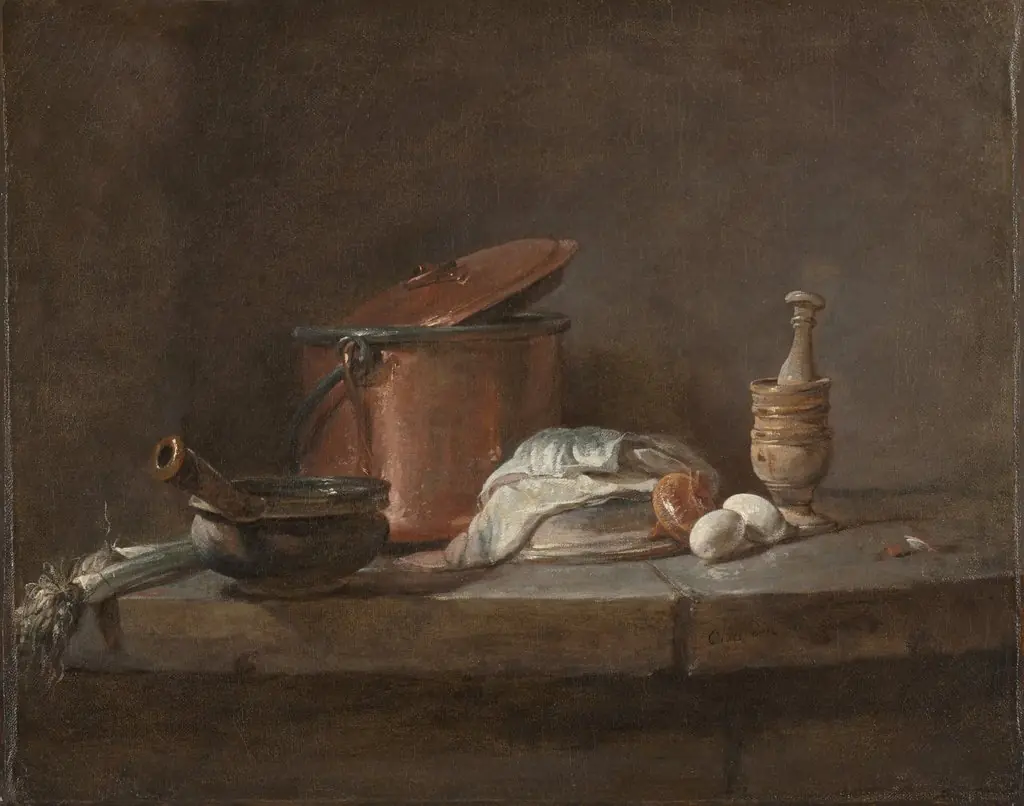 Kitchen Utensils with Leeks, Fish, and Eggs
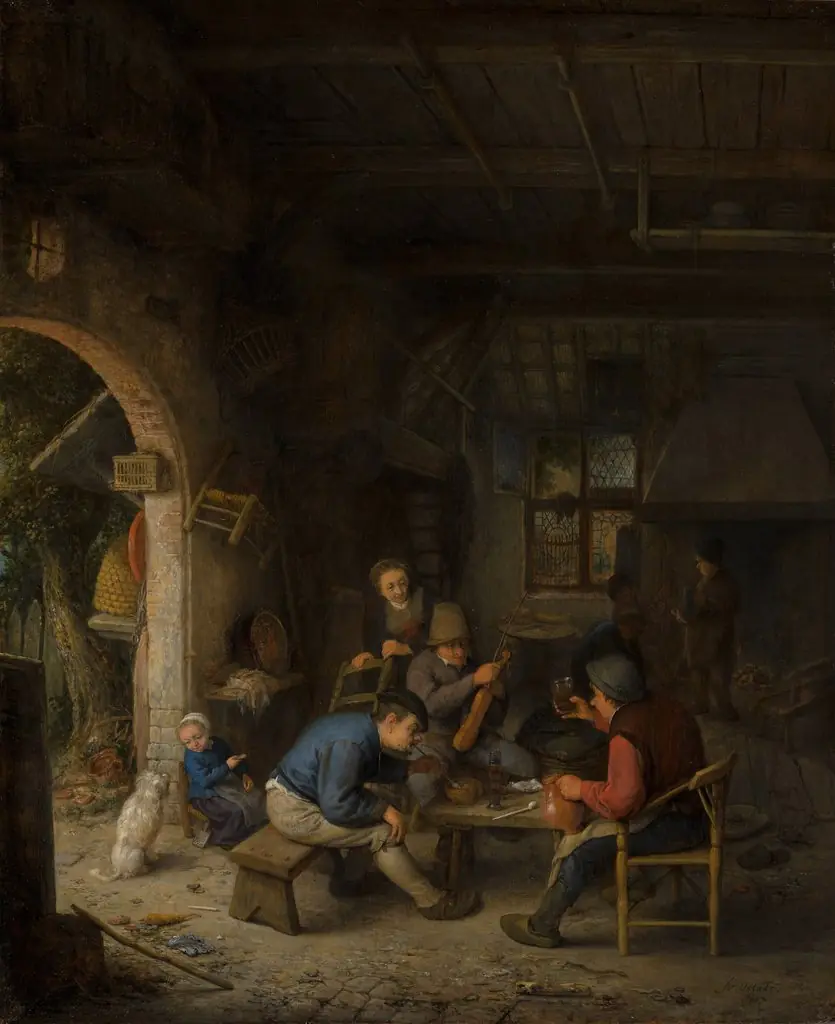 Peasants in an inn
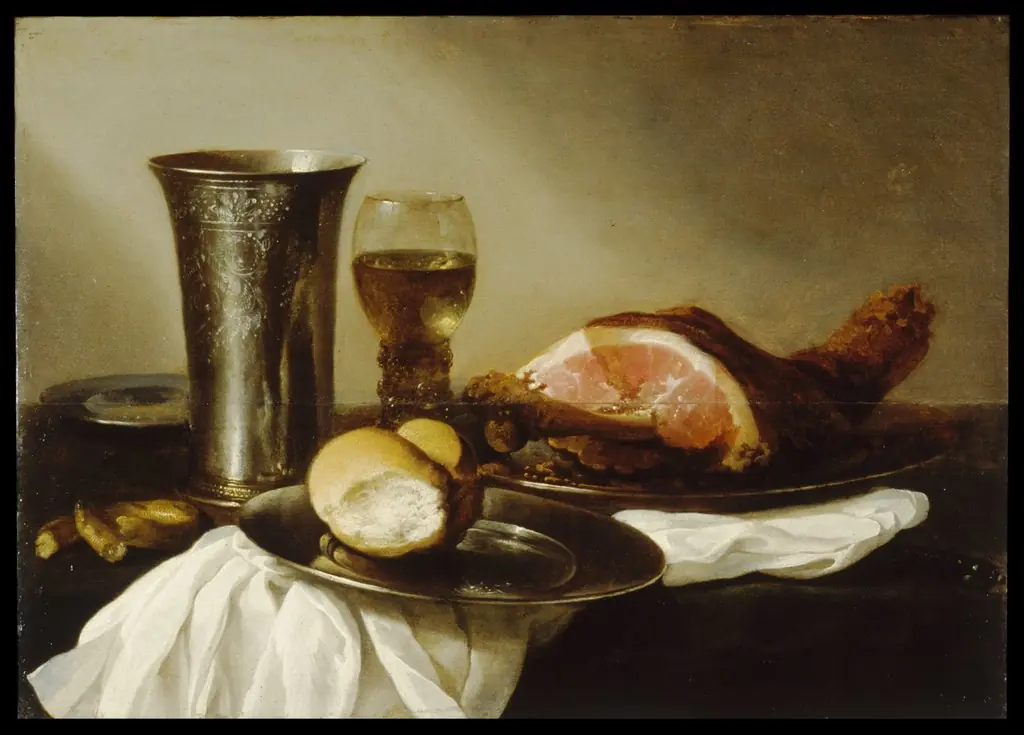 Breakfast Piece
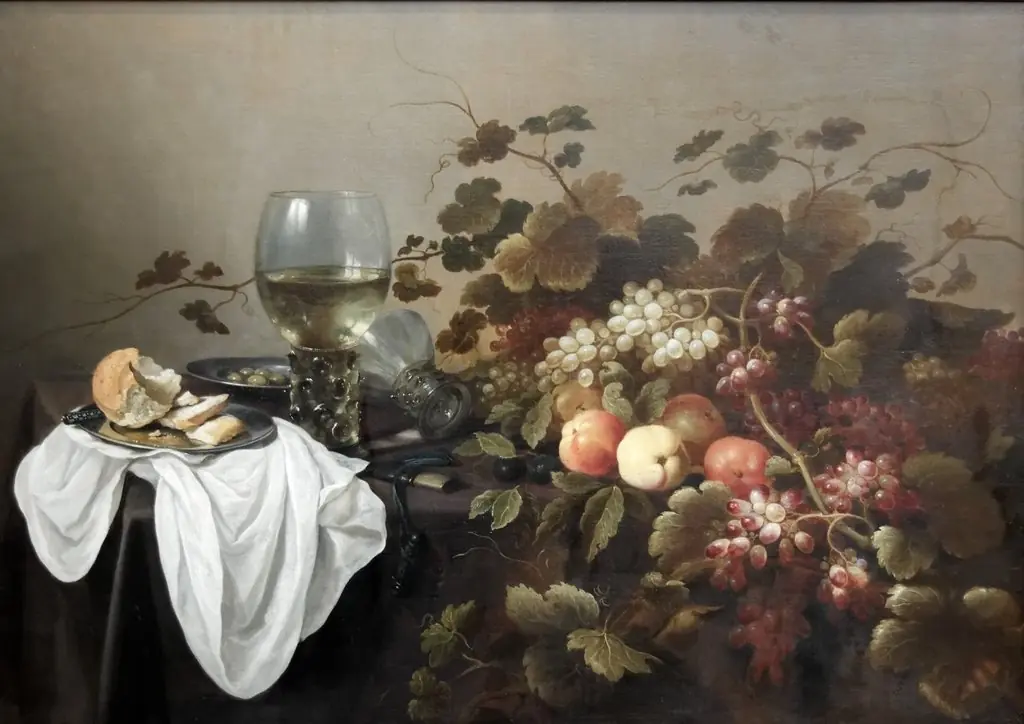 Still life with fruits and Roemer
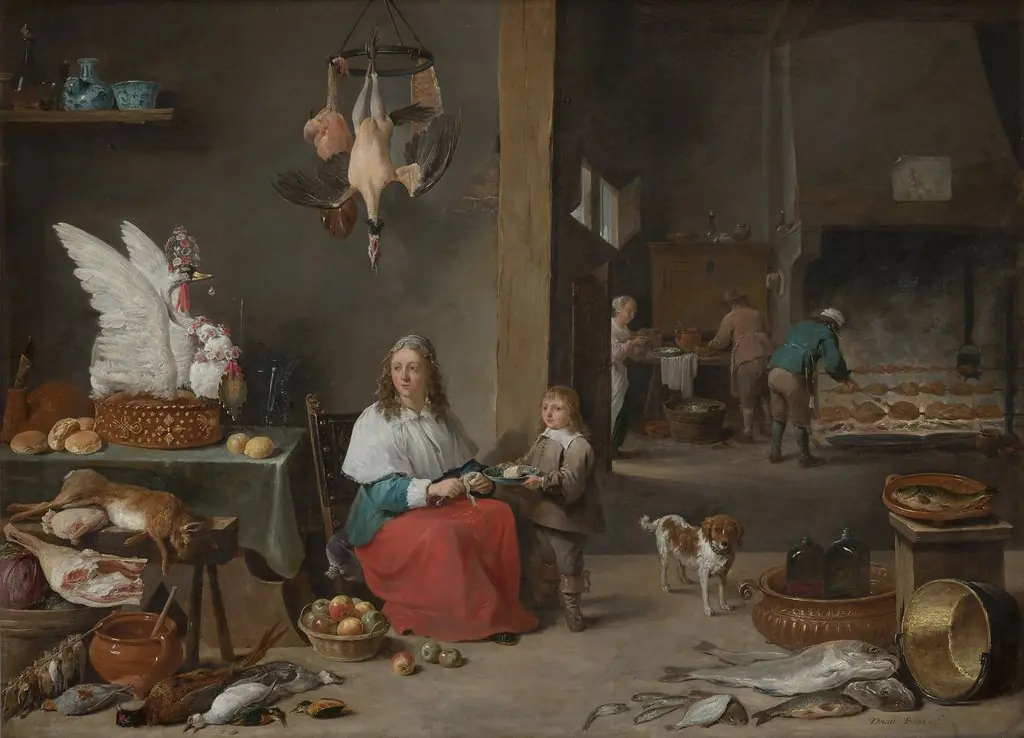 The Fat Kitchen
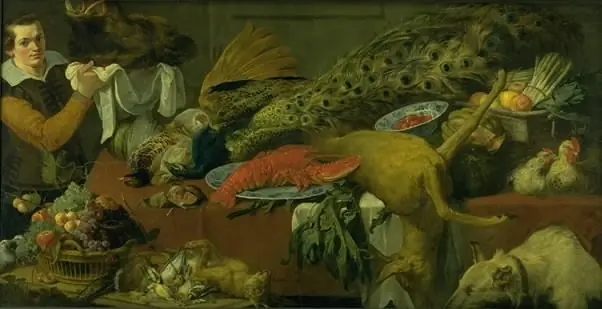 Køkkenstykke med en køkkenkarl
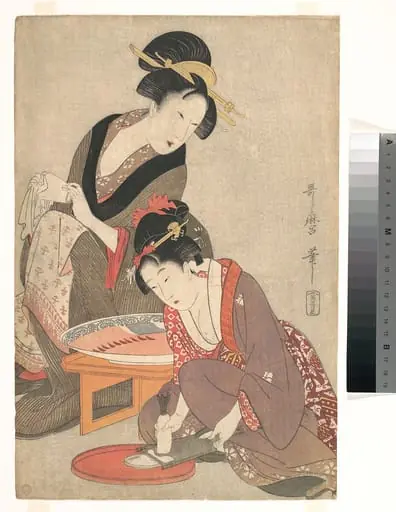 Untitled
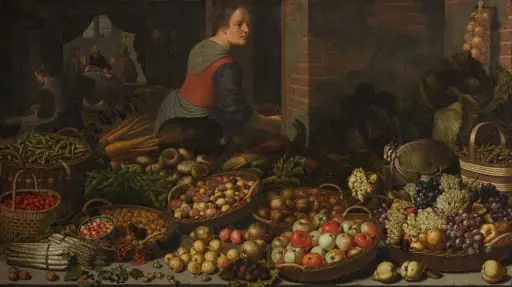 Still Life with Fruit and Vegetables, with Christ at Emmaus in the background
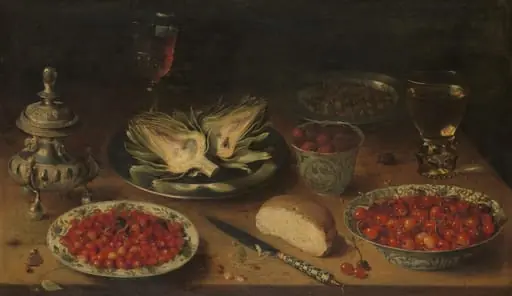 Still Life with Artichoke, Fruit in Kraak Porcelain Ware, a Salt Cellar/Pepper Castor
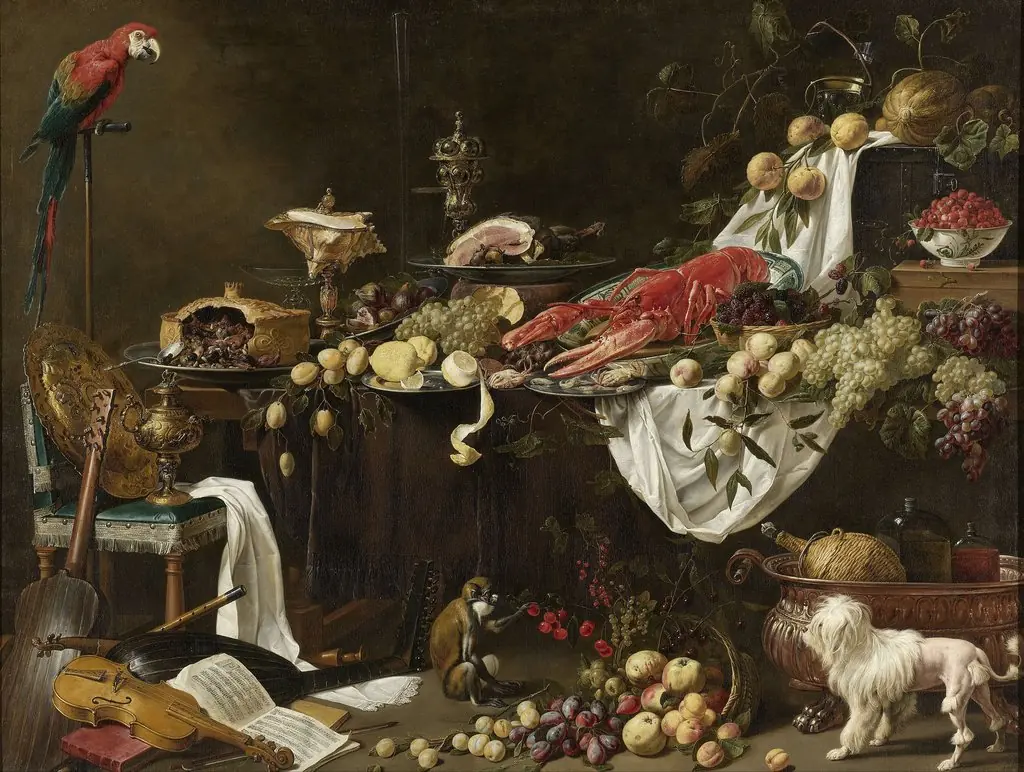 Banquet Still Life
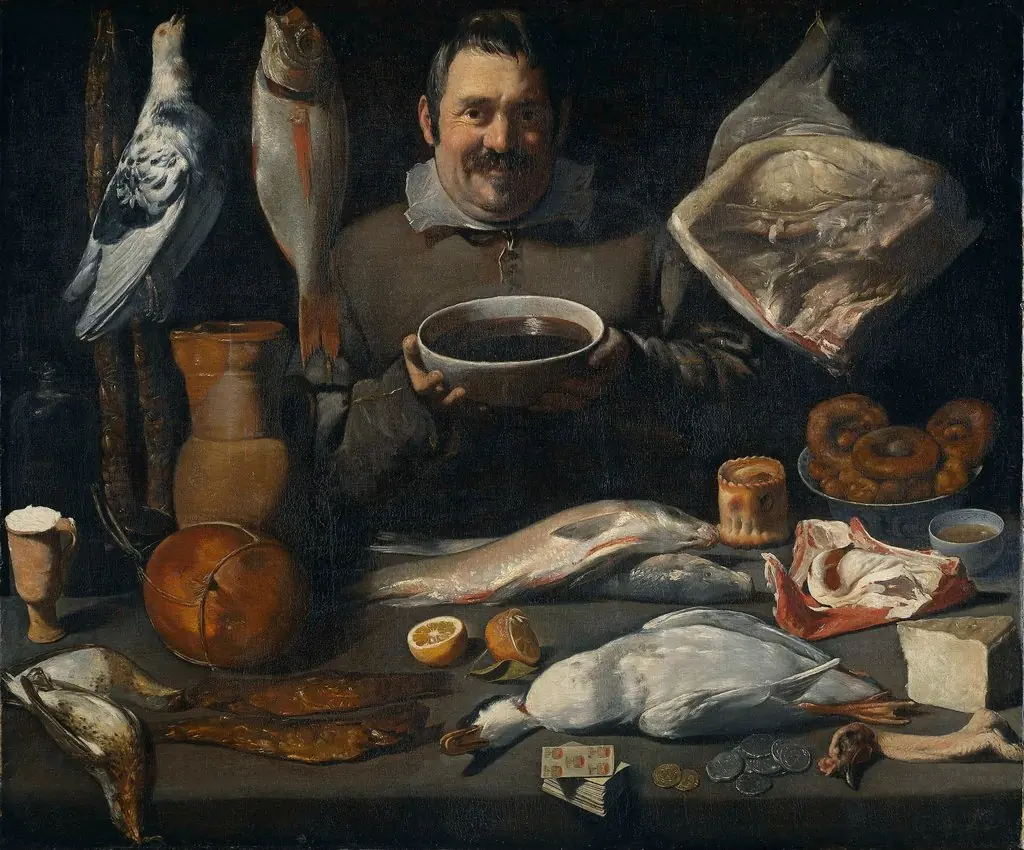 Kitchen Scene
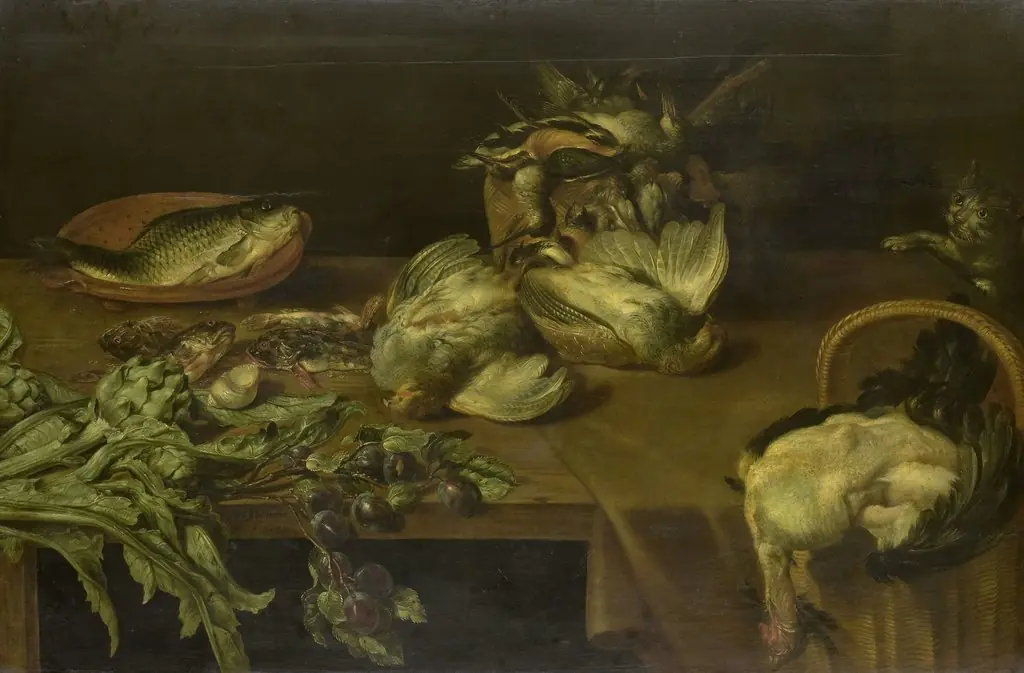 Still life with wild fowl
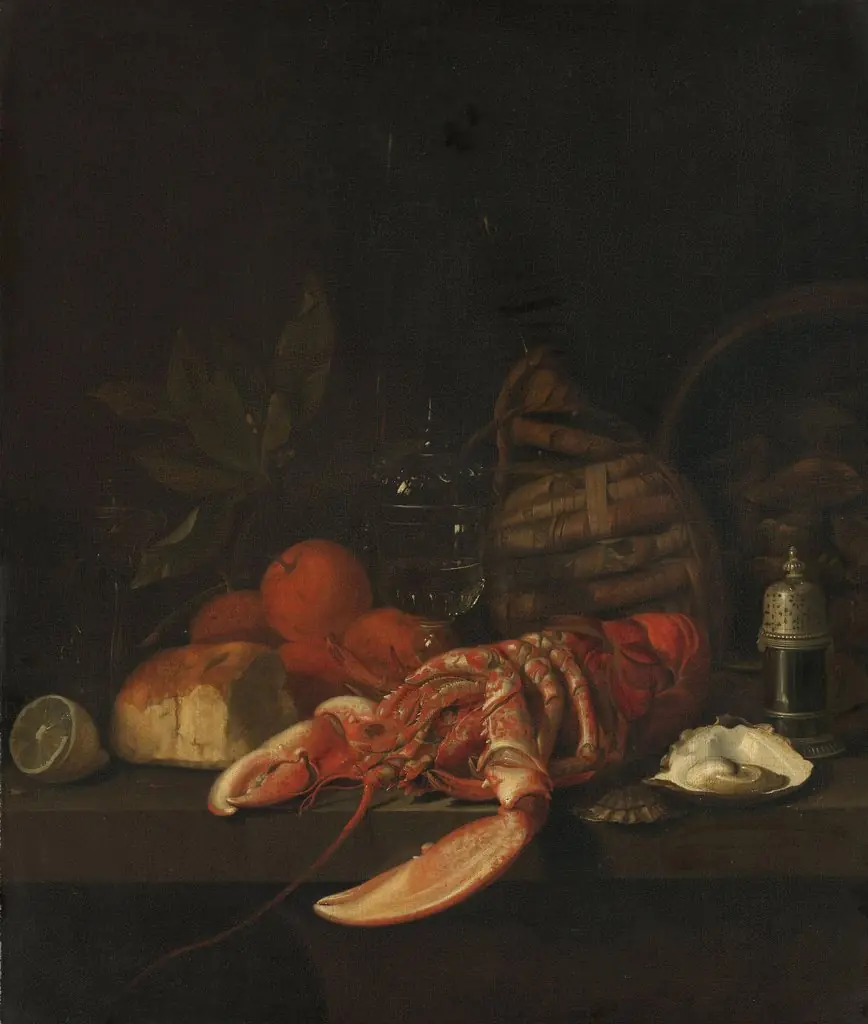 Still life with a lobster. oysters, bread, oranges, a lemon, a glass, a pepper shaker and a wine casket
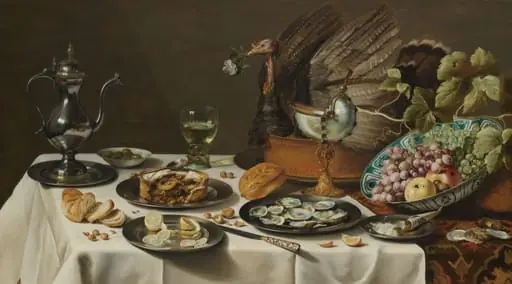 Still Life with a Turkey Pie
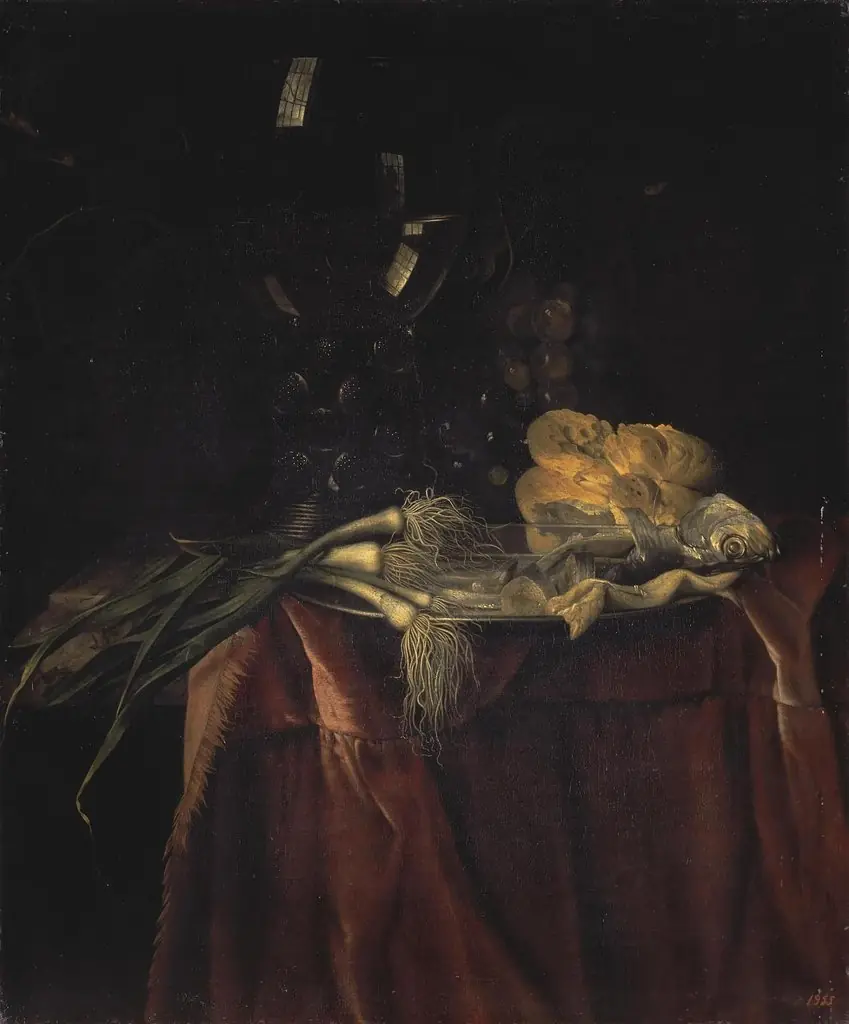 Snack
Snack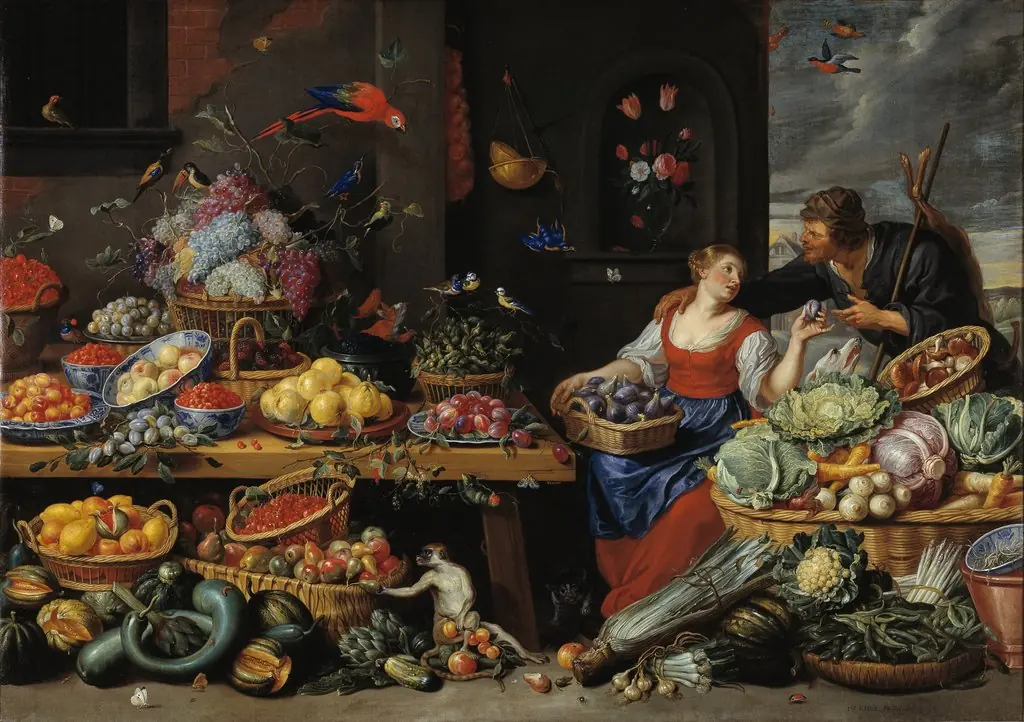 Fruit and Vegetable Market with a Young Fruit Seller
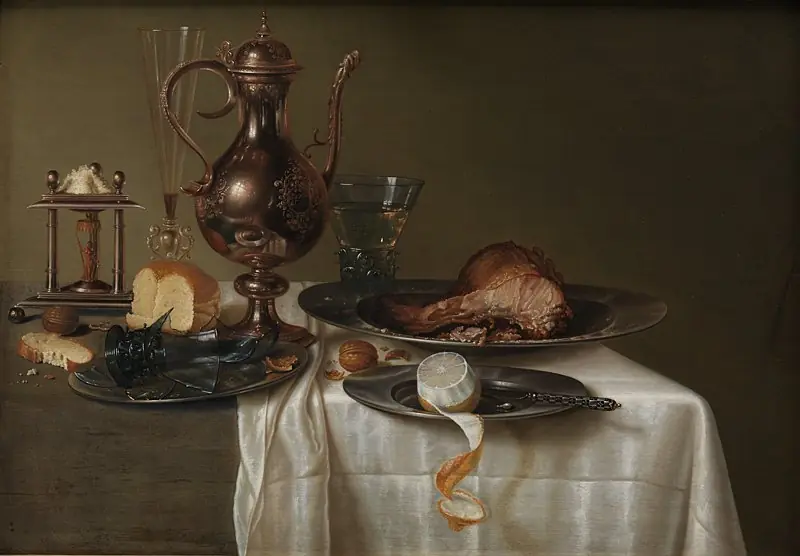 Still Life. Breakfast Piece
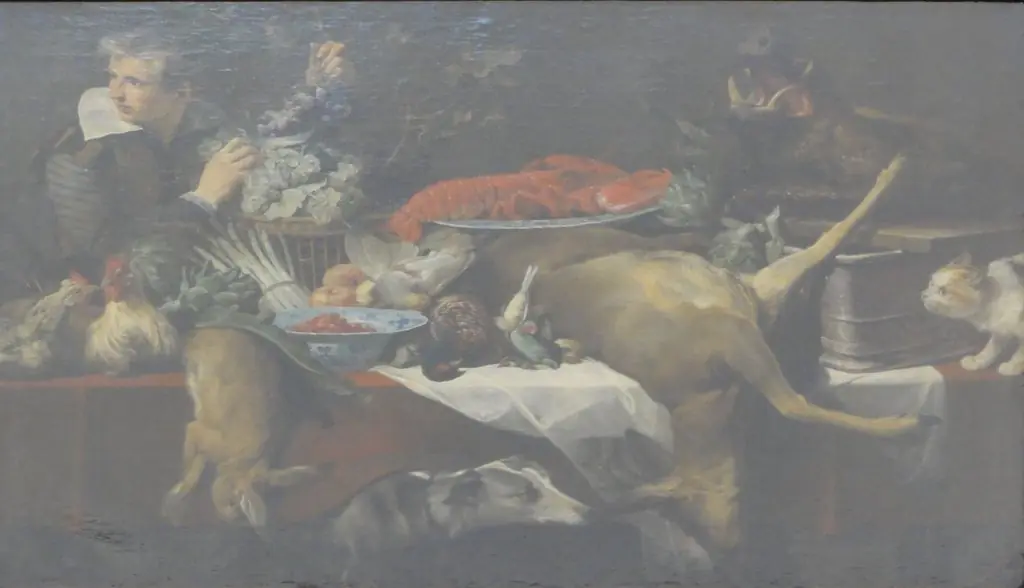 Kitchen scene with game and vegetables, with a serving boy holding a bunch of grapes
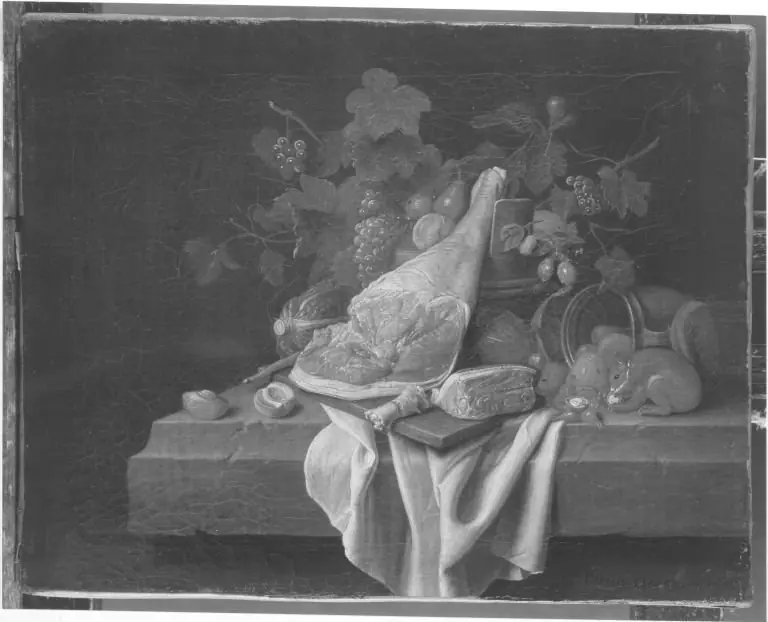 Stillleben mit Schweinskeule und Eichhörnchen
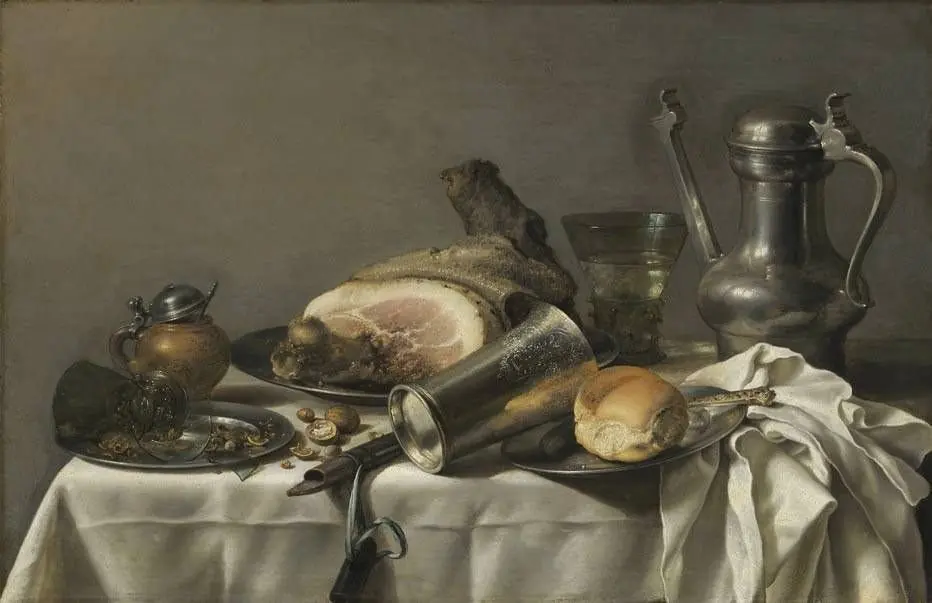 Laid table with Jan Steen pitcher and ham
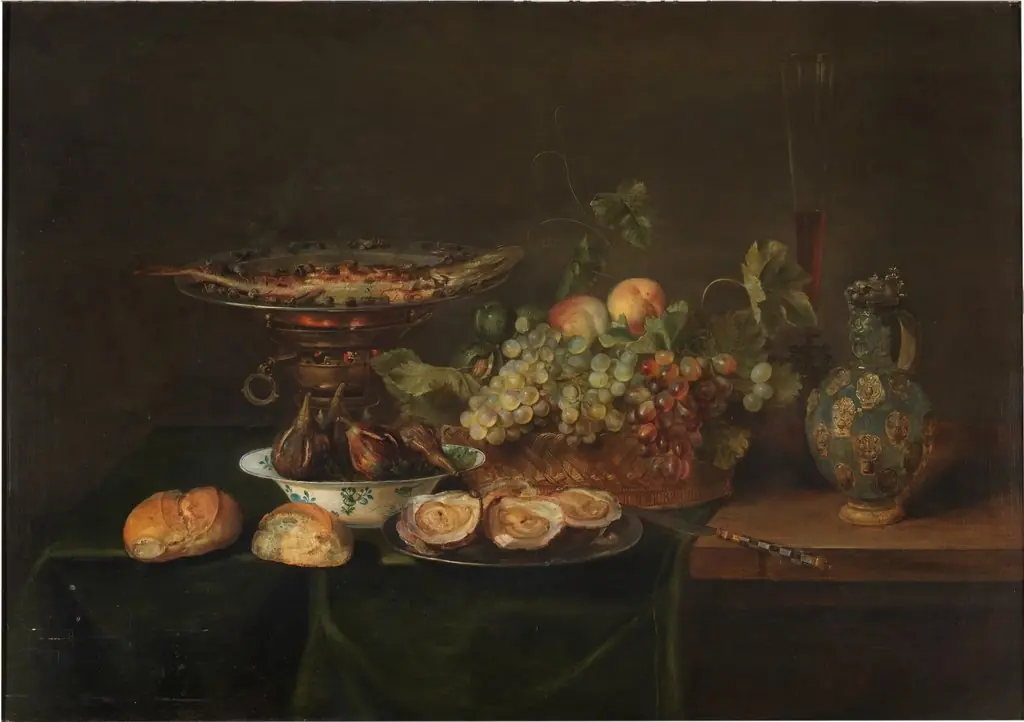 PBanquet still life
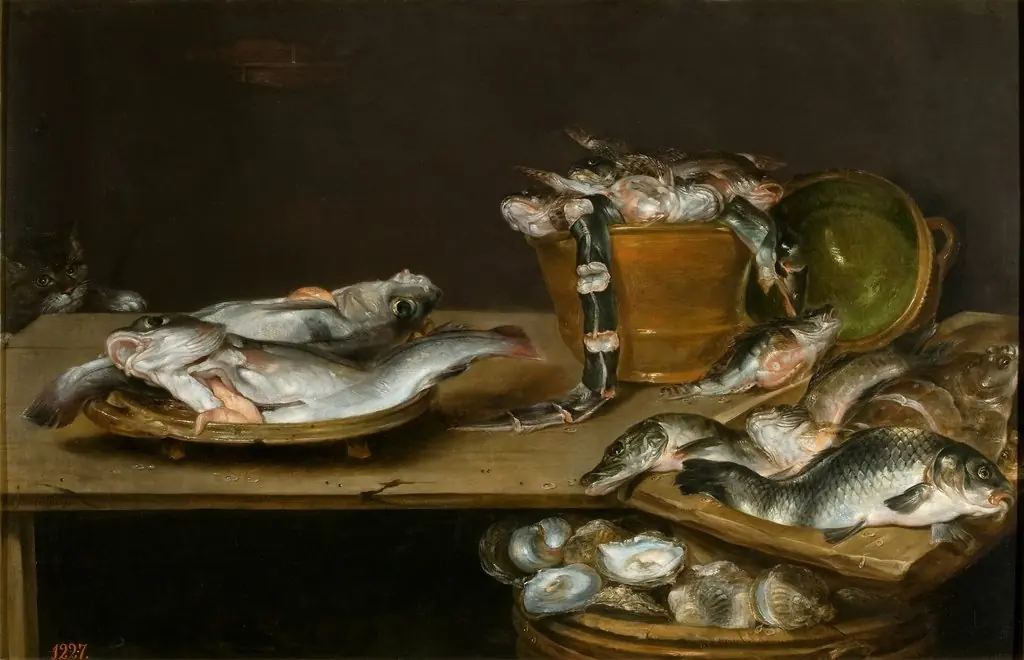 Still Life of Fish and Oysters with a Cat
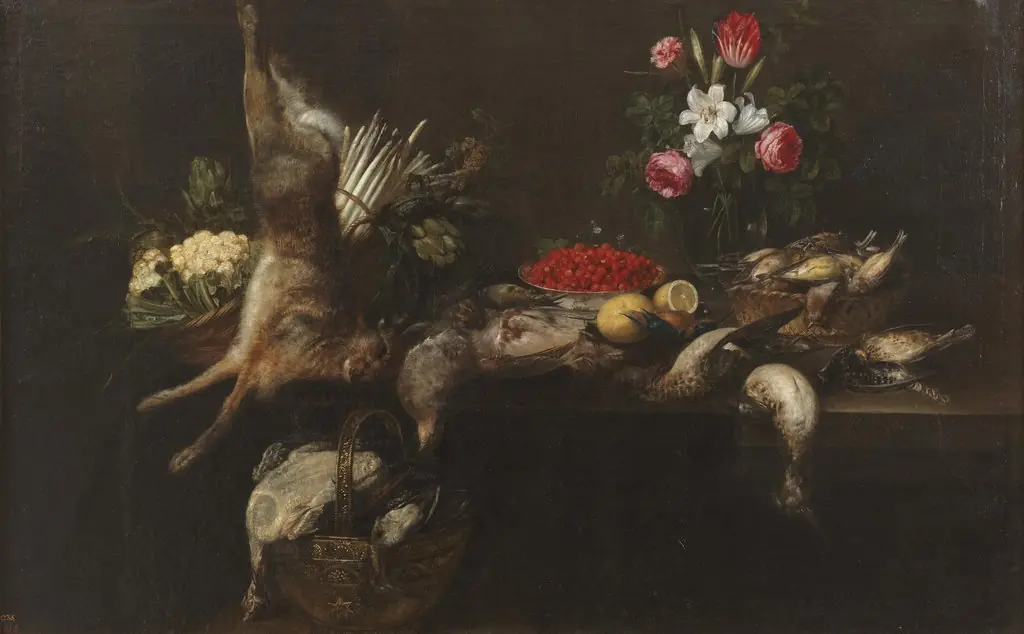 Pantry
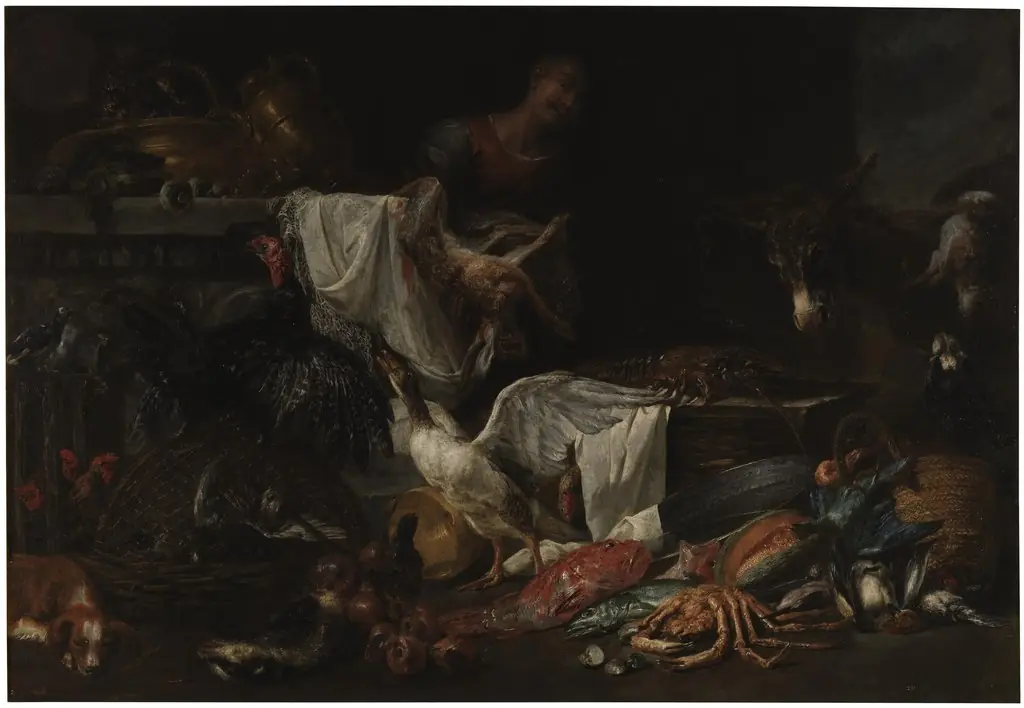 A Larder
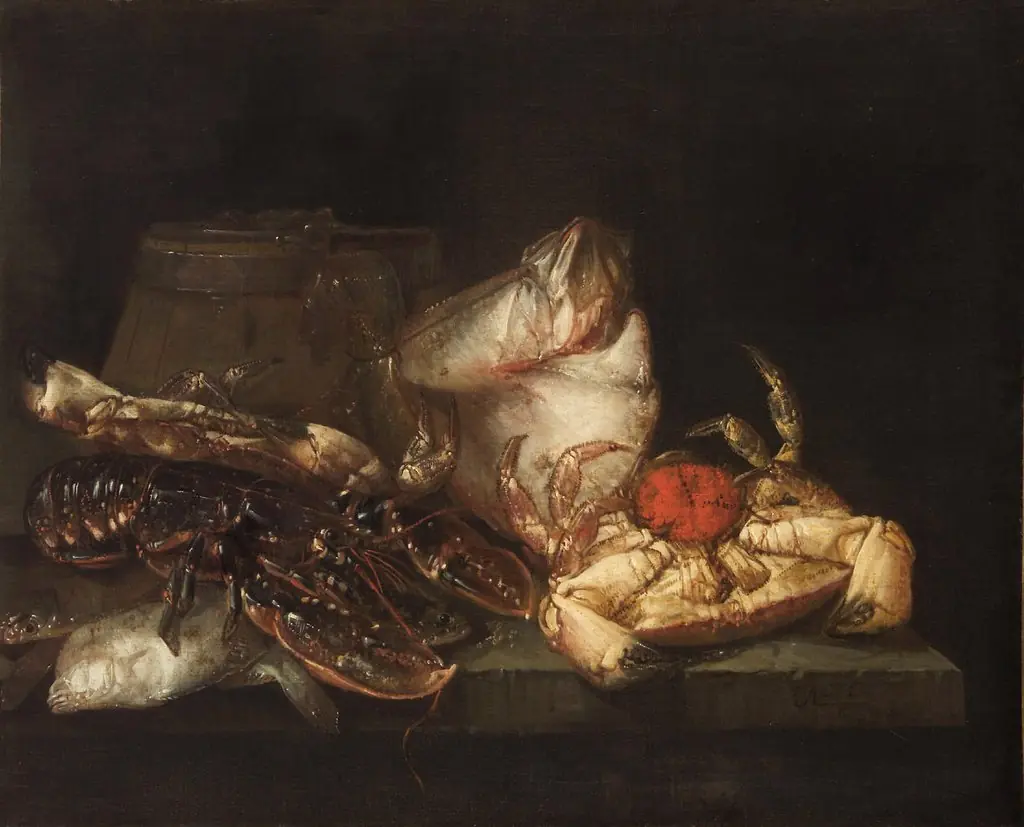 Stilleben mit Fischen und Krebsen
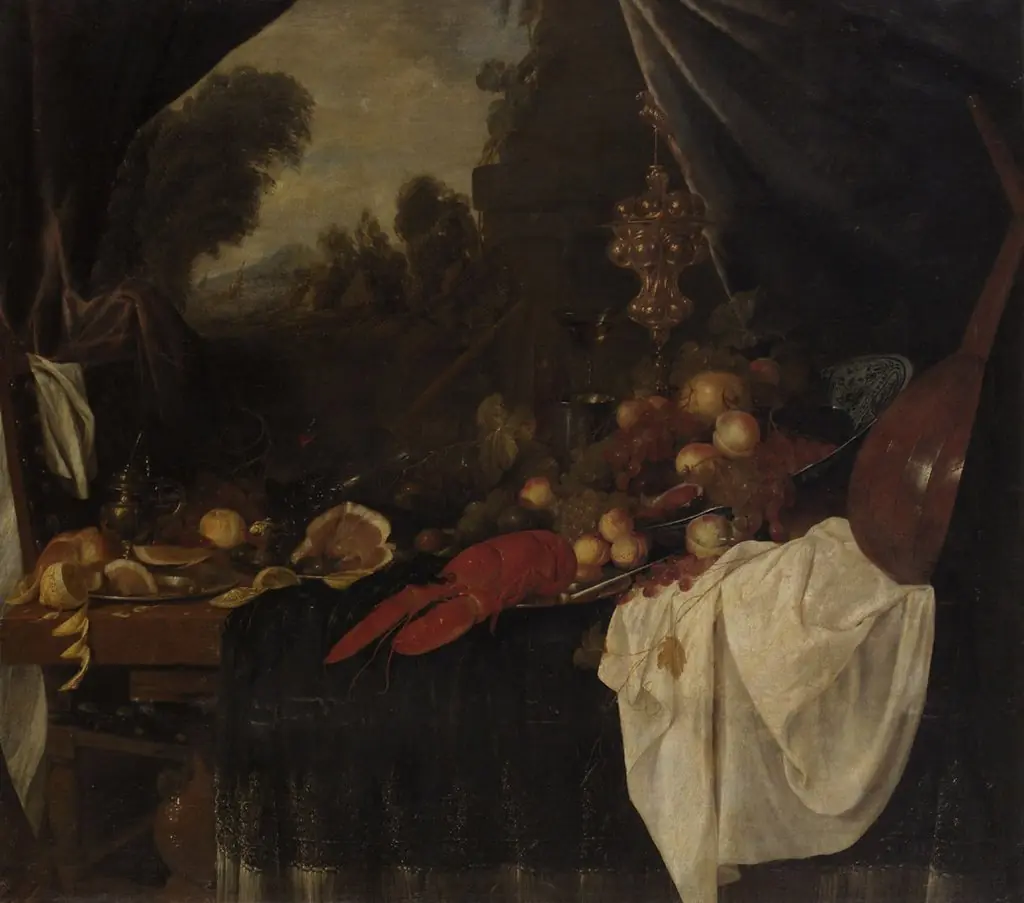 A still life with a view of a river landscape
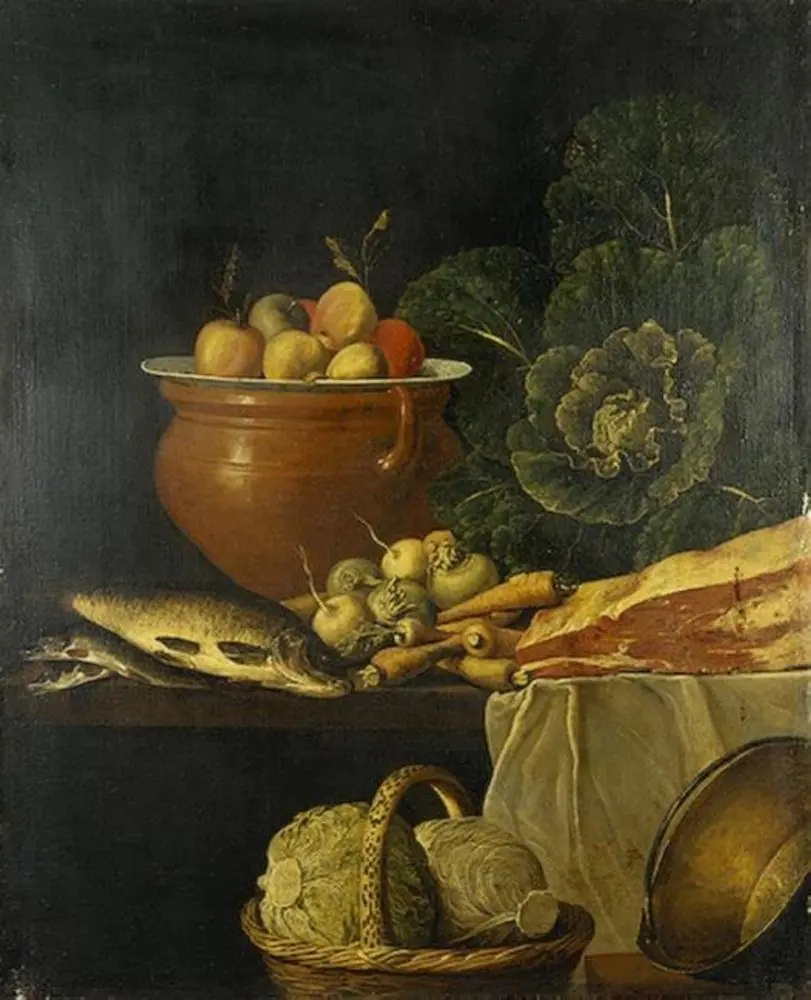 Still Life
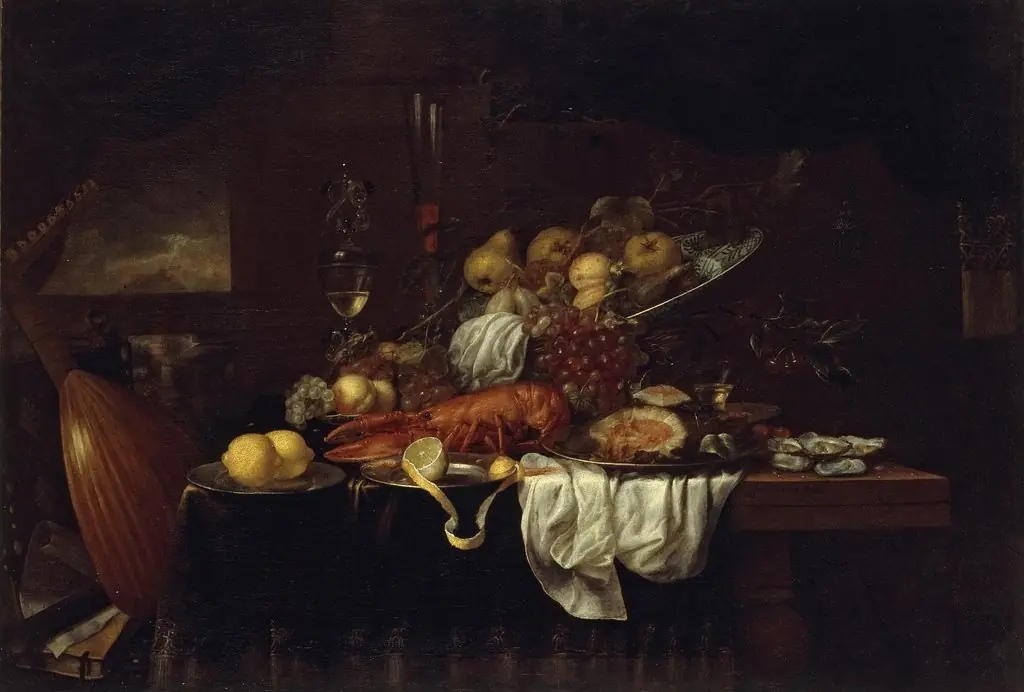 Lobster, Oysters and Fruits on the Table
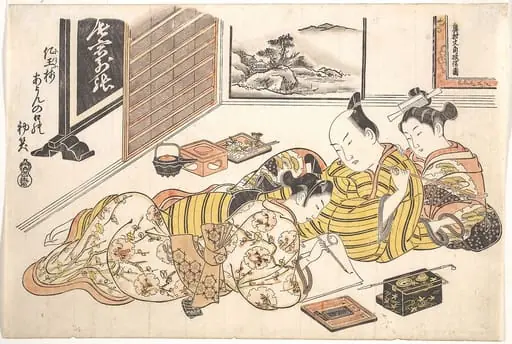 『閨の雛形』 正月|Plate from the Erotic Book Mounds of Dyed Colors: A Pattern Book for the Boudoir (Someiro no yama neya no hinagata), First Month
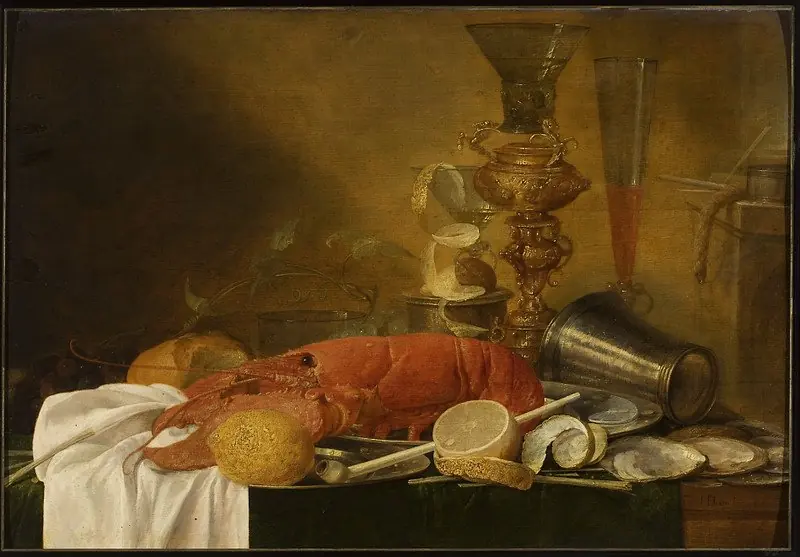 Still life with a lobster
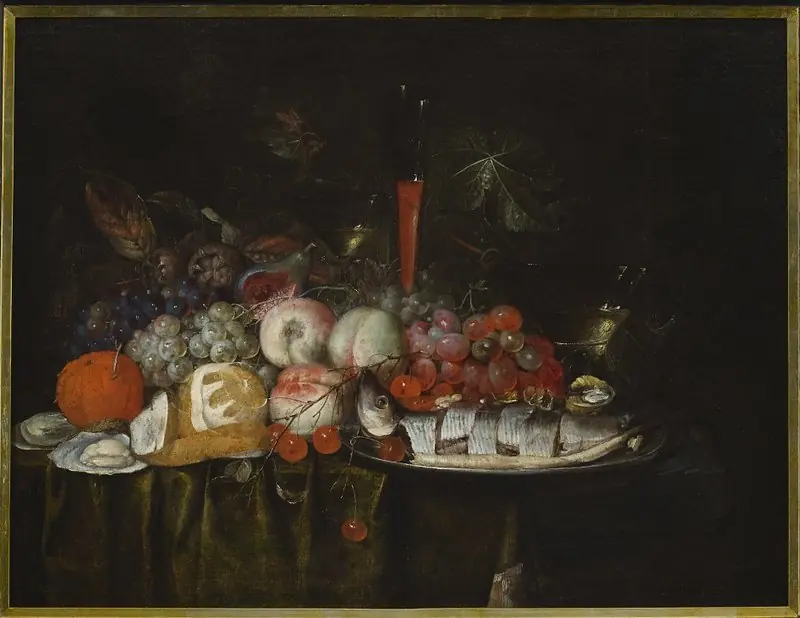 Still Life with Fruit and a Herring
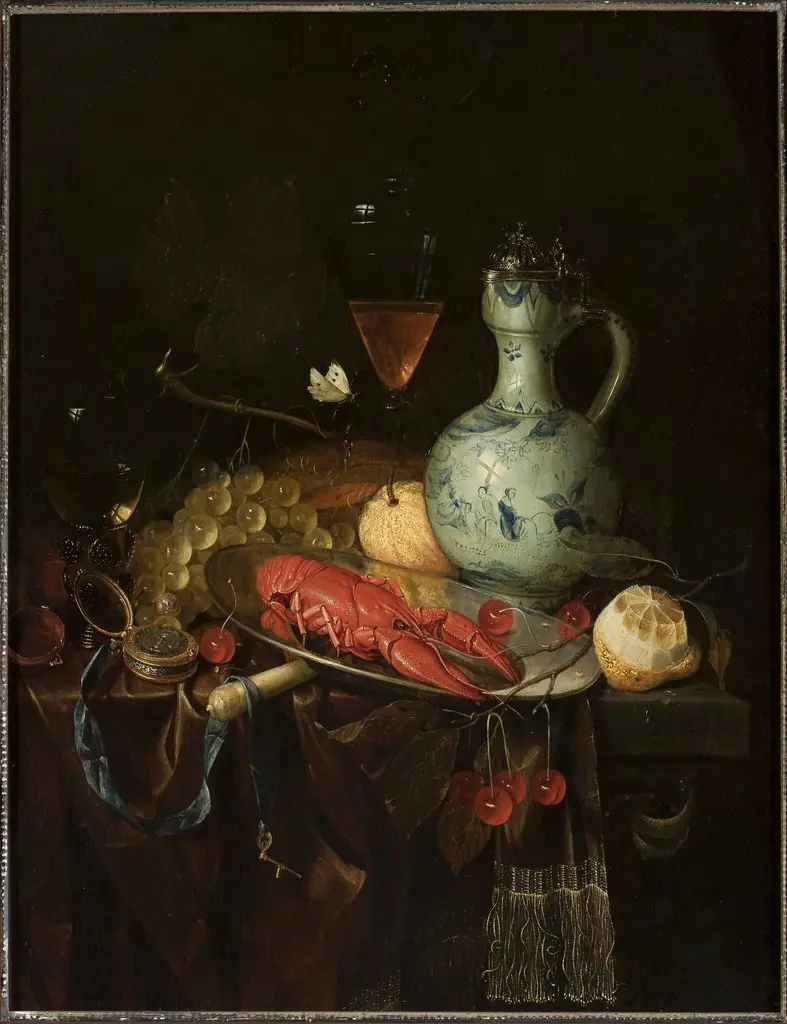 Still life with a watch
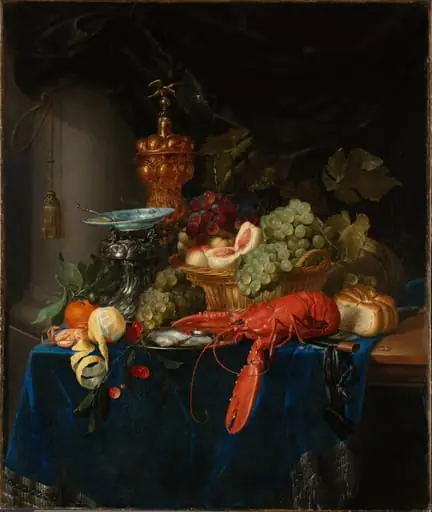 Untitled
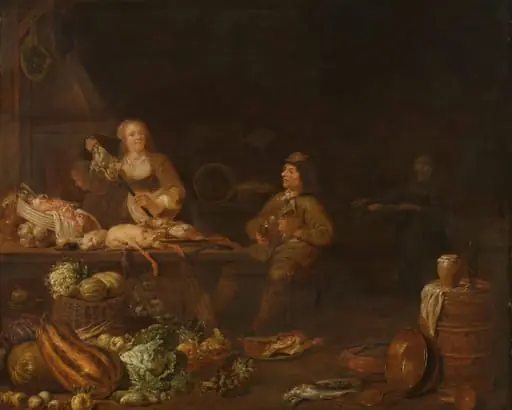 Kitchen Interior
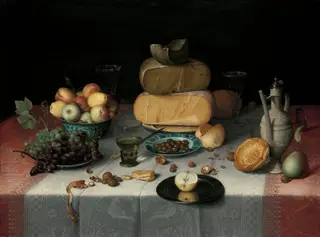 Still Life with Cheese
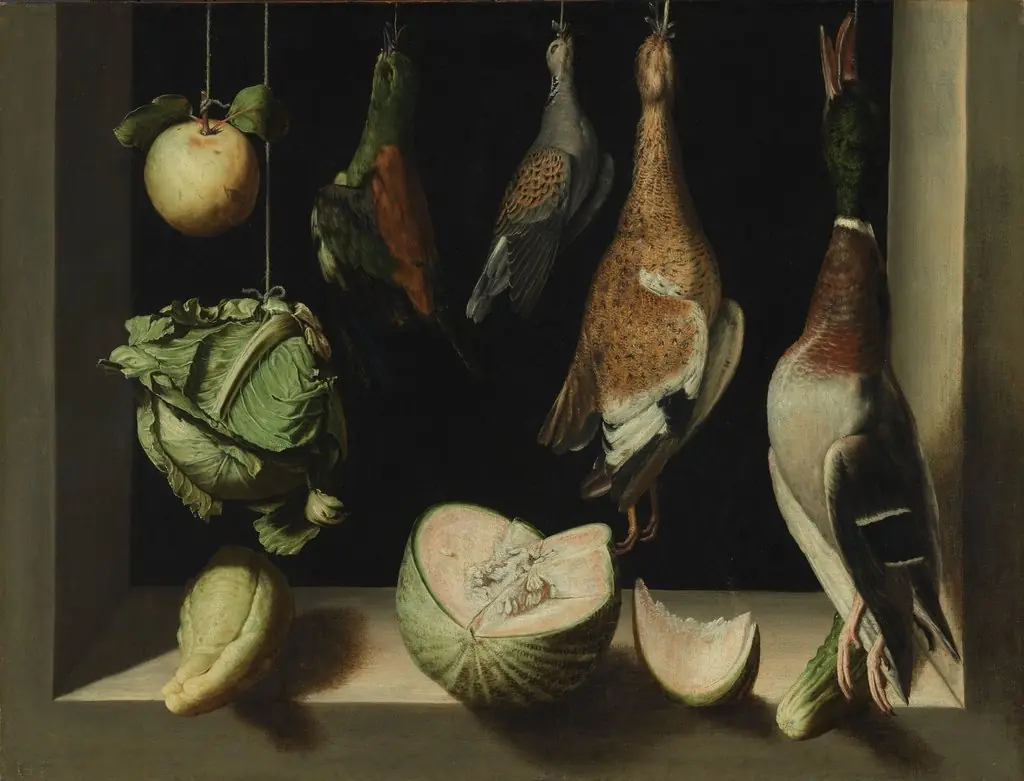 Still Life with Game Fowl
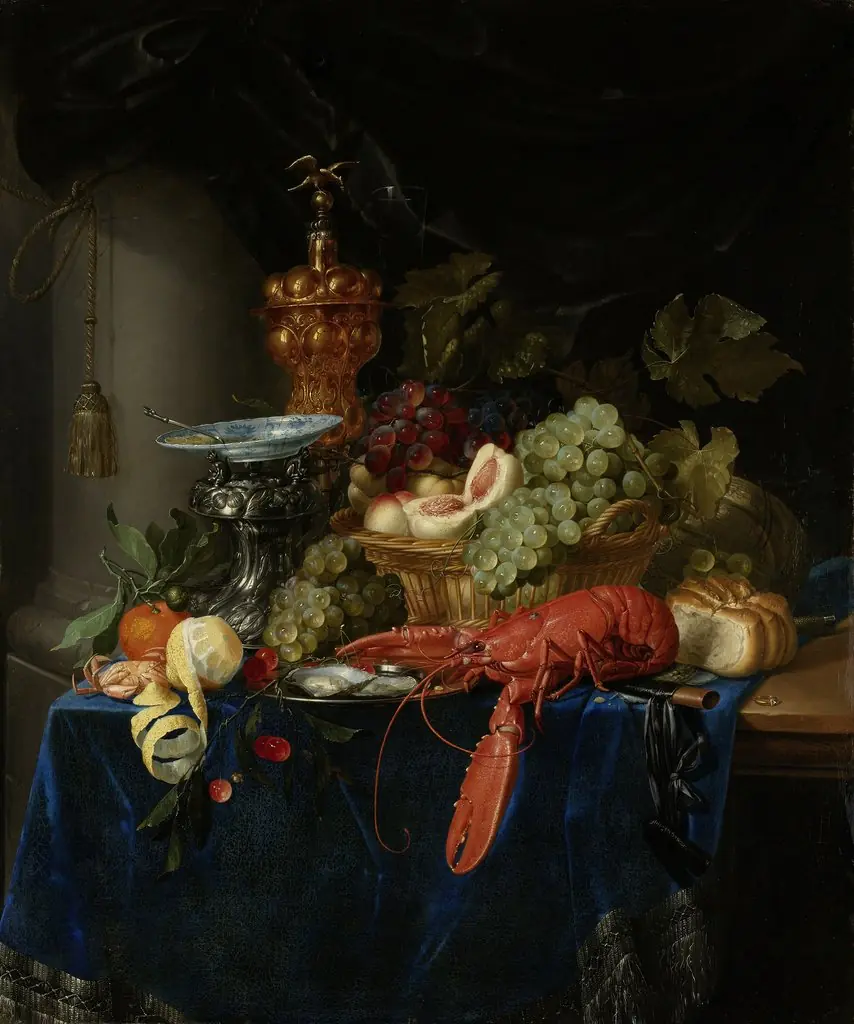 Still life with a golden goblet
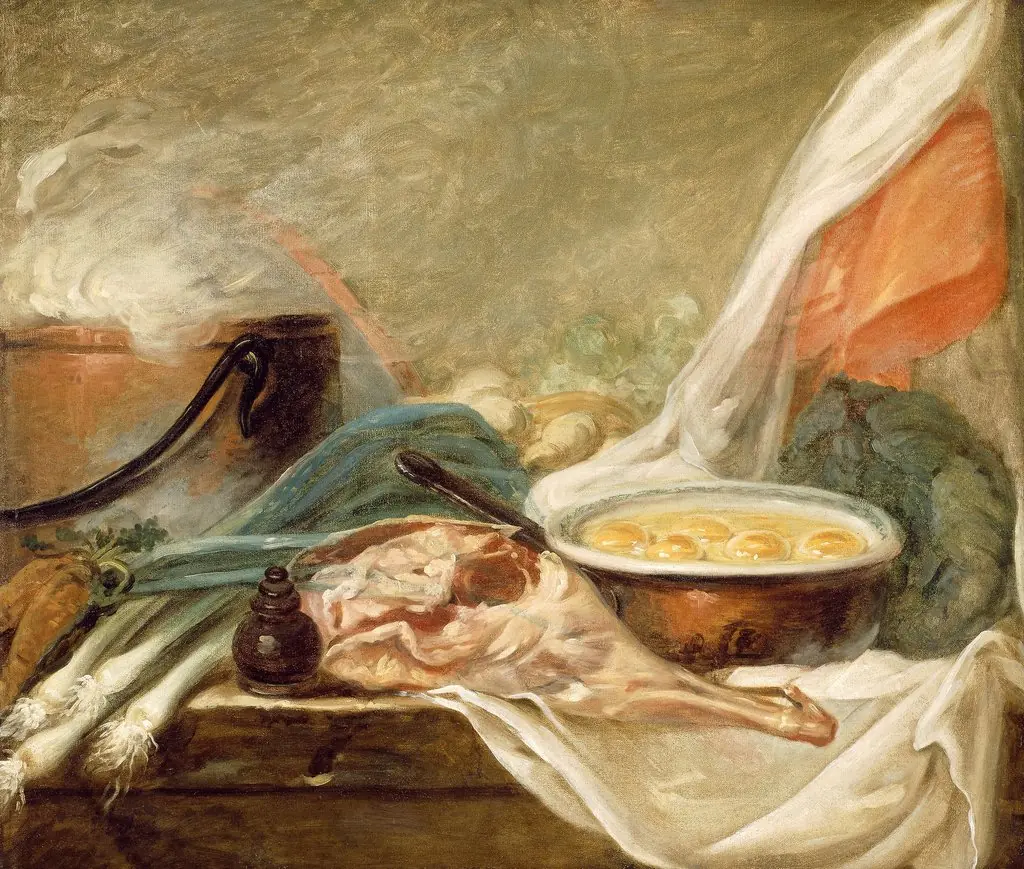 Still Life with Eggs and a Leg of Mutton
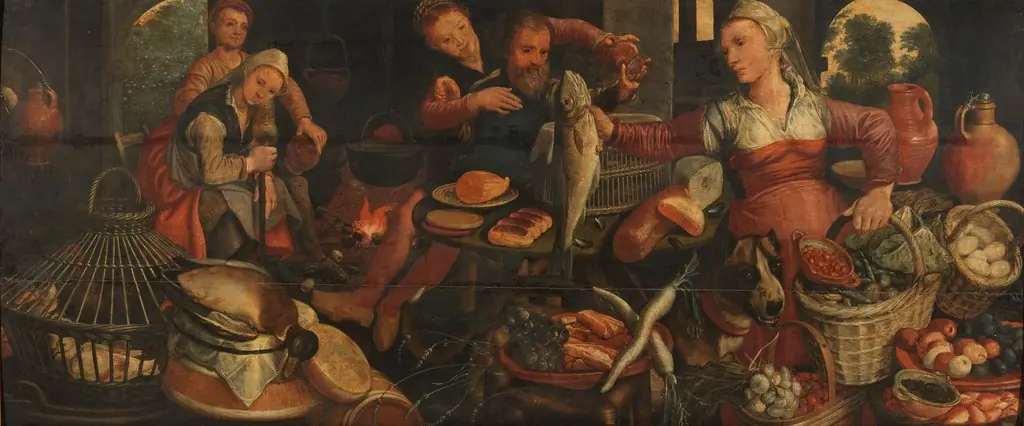 Kitchen scene
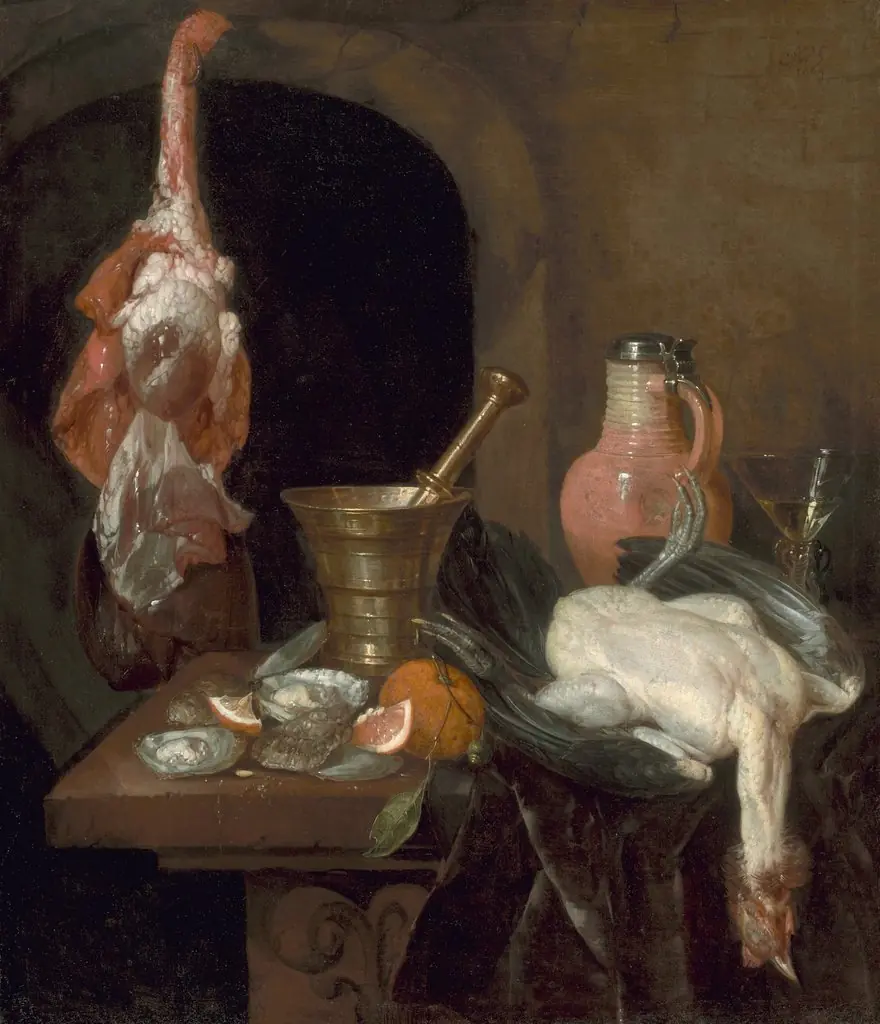 Preparations for a Meal
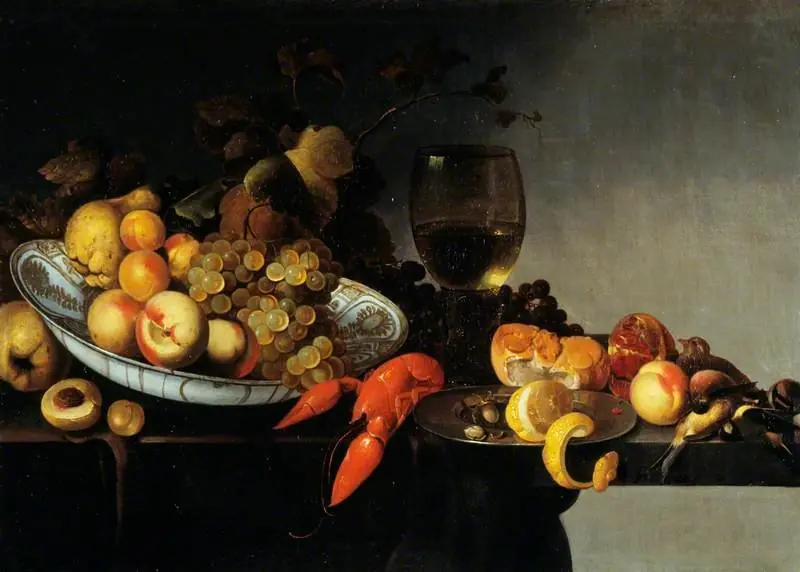 Still Life with Fruit, a Lobster and Dead Game
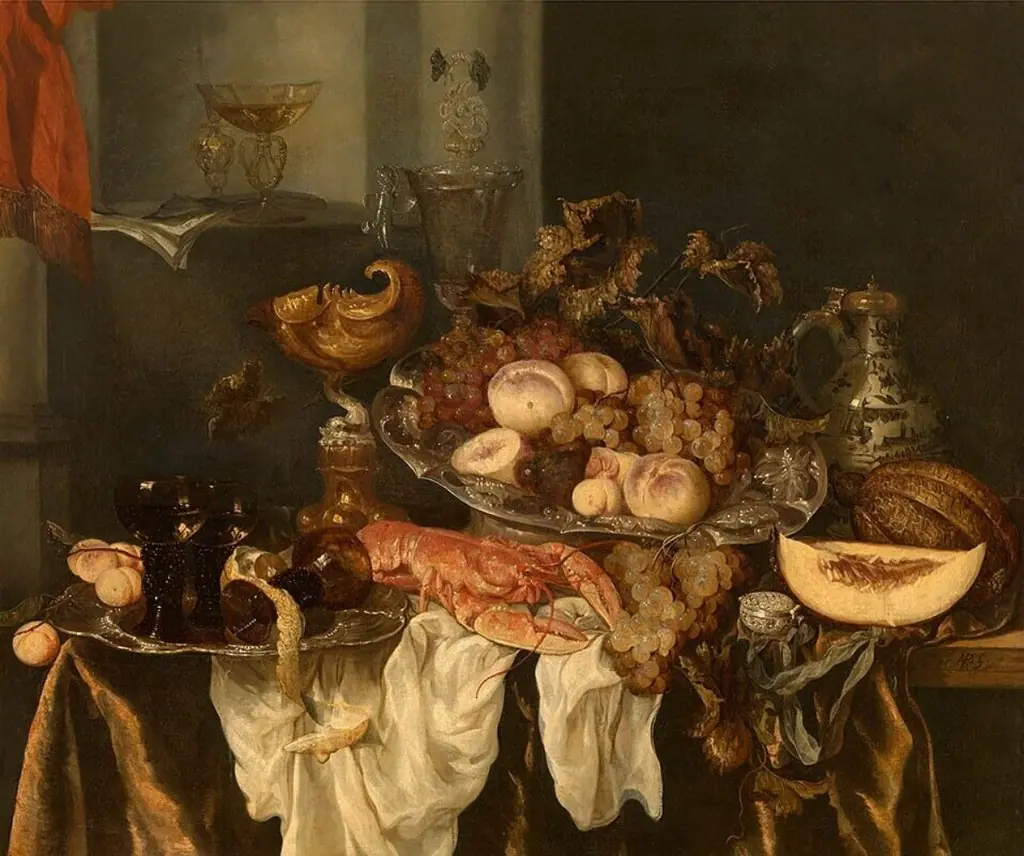 Still Life.
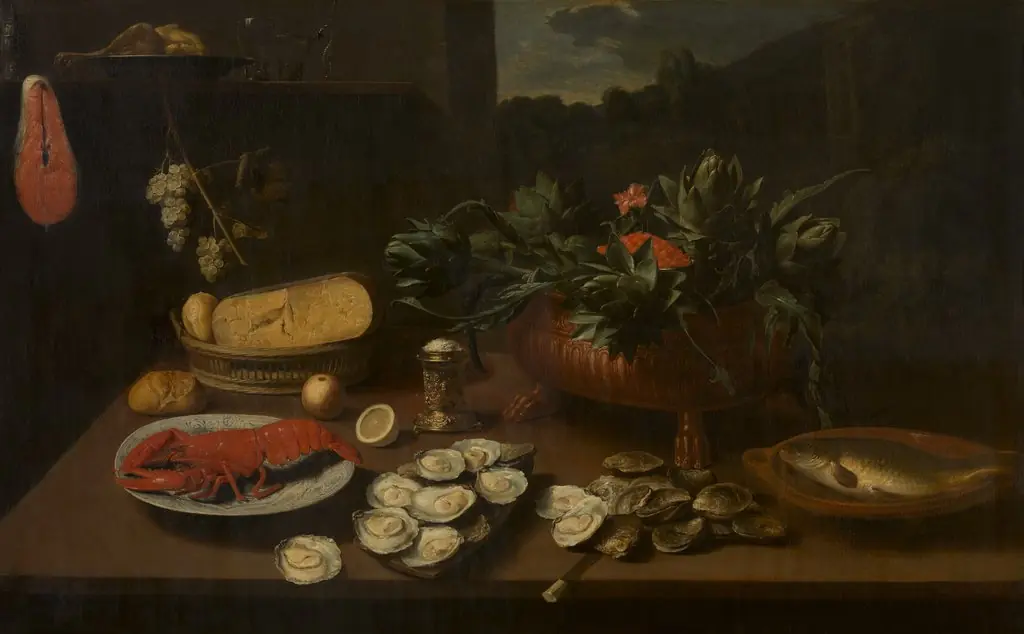 Still Life
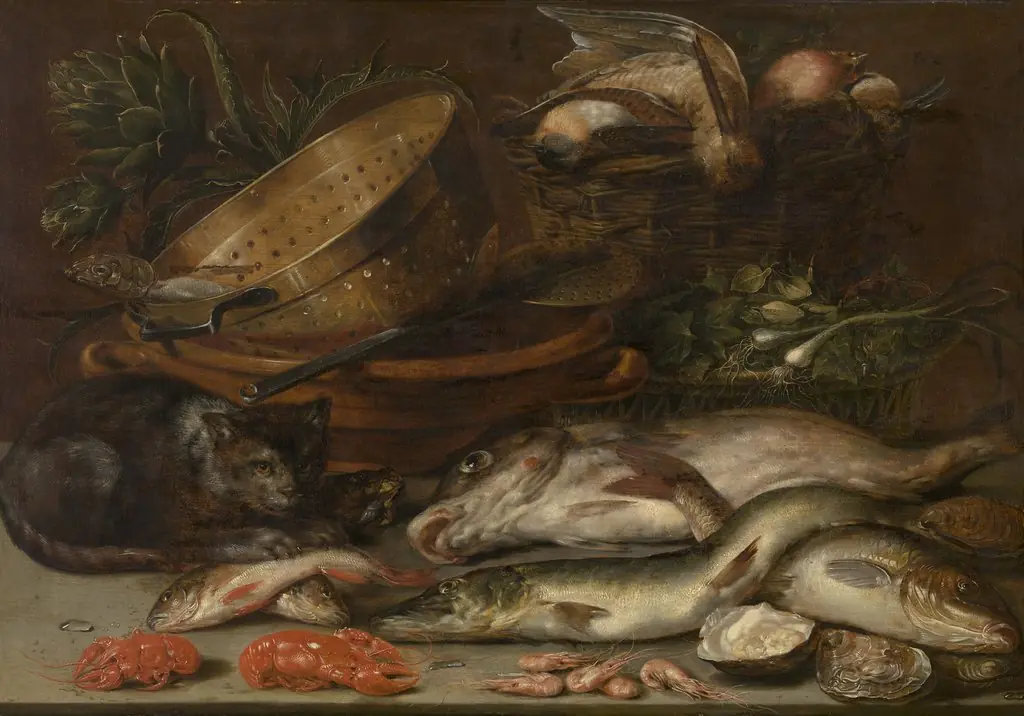 Still life of fish, dead birds, vegetables, kitchenware and a cat
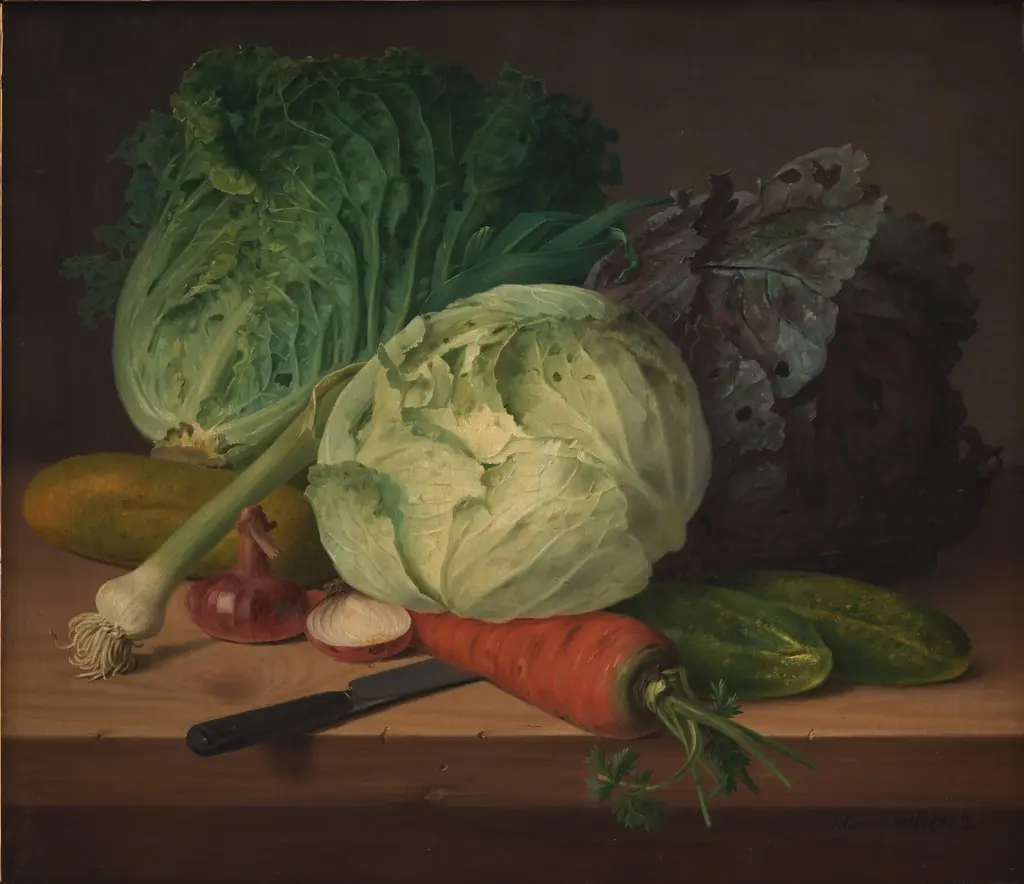 Køkkenurter
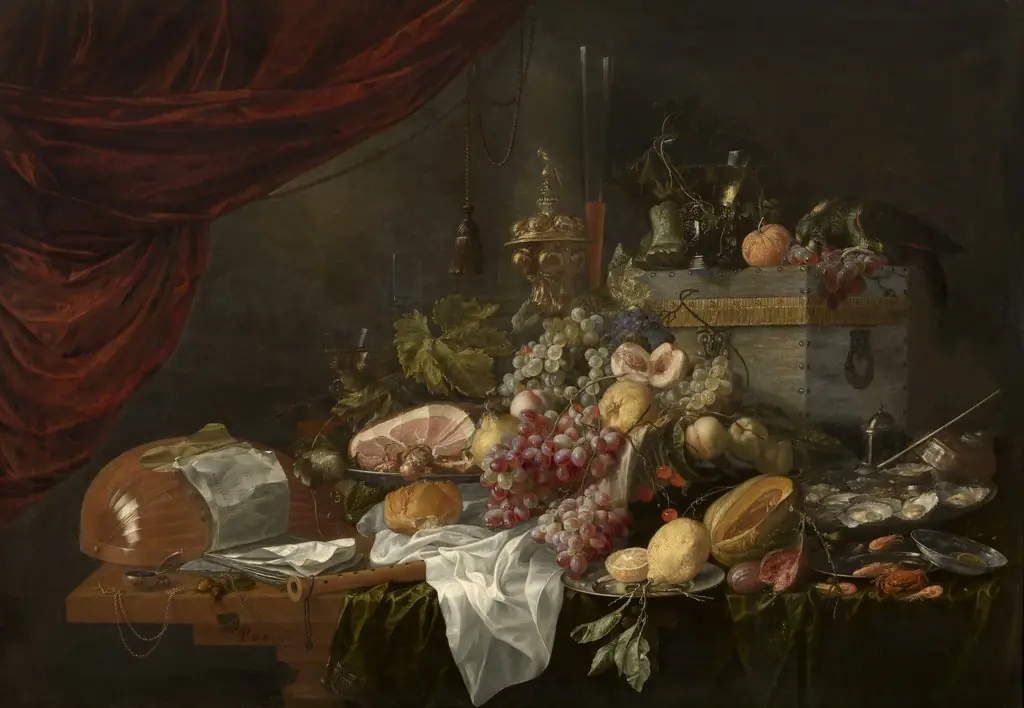 Still Life
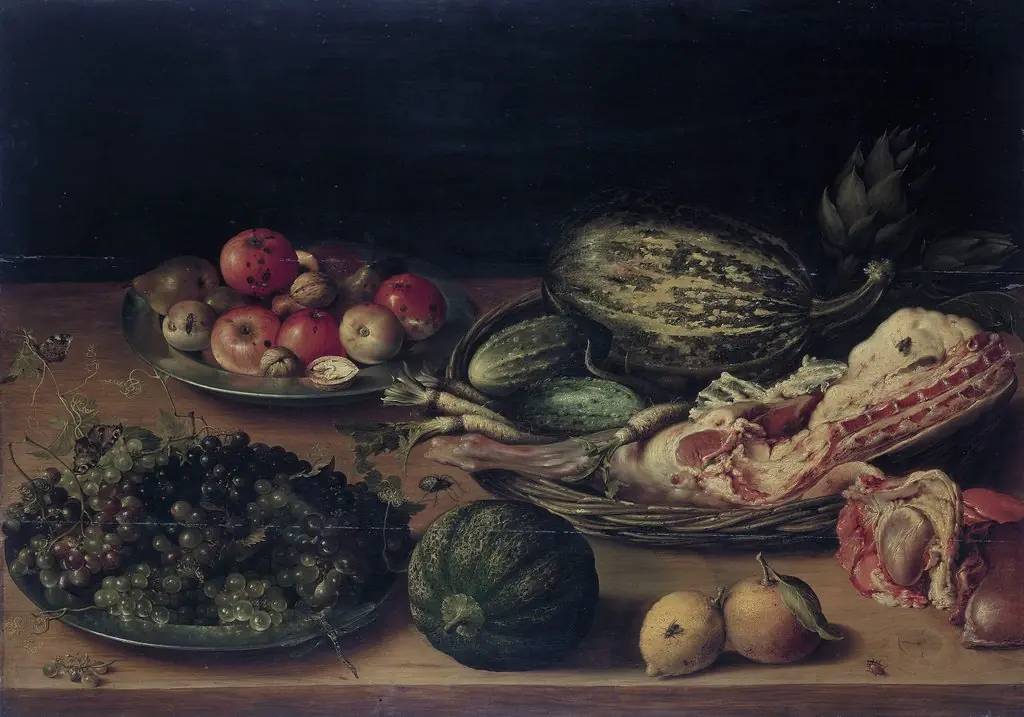 Still life with fruit, vegetables and joint of veal
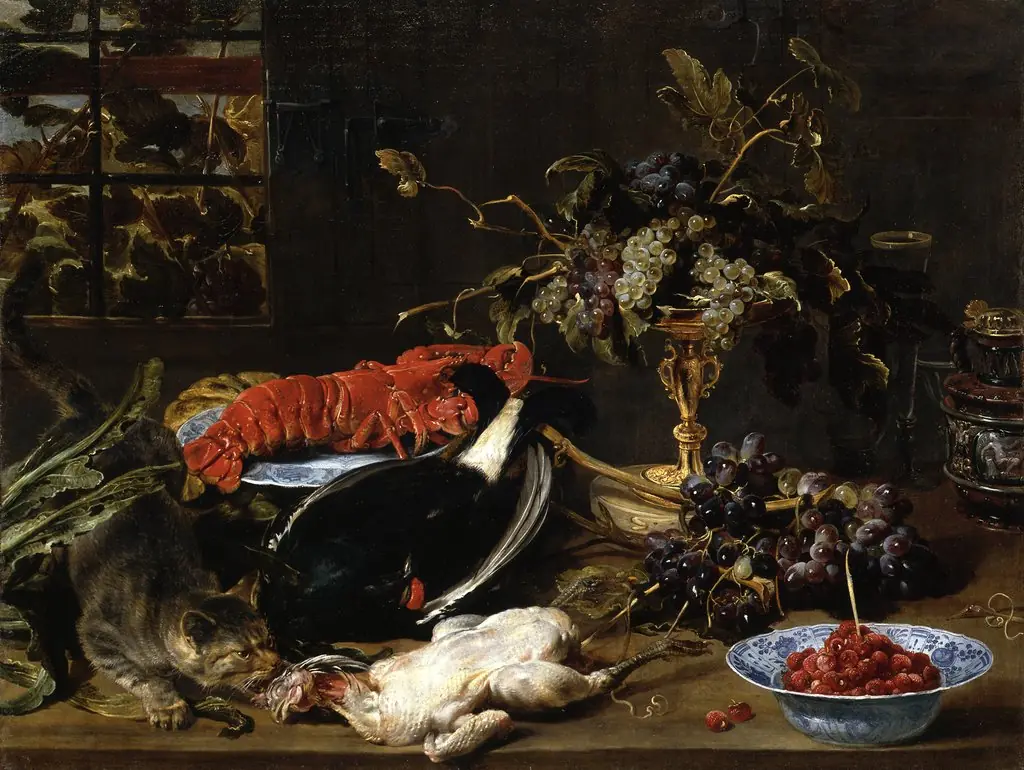 Still Life with Lobster and Fruits
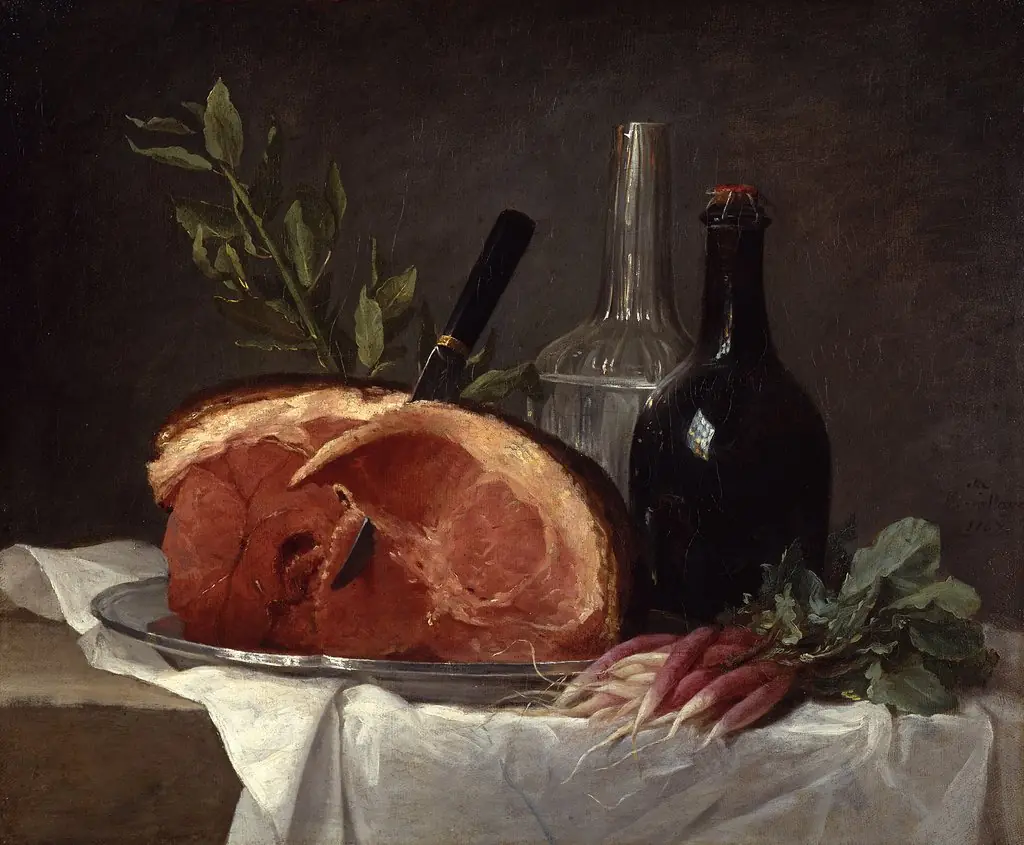 Still Life with a Ham
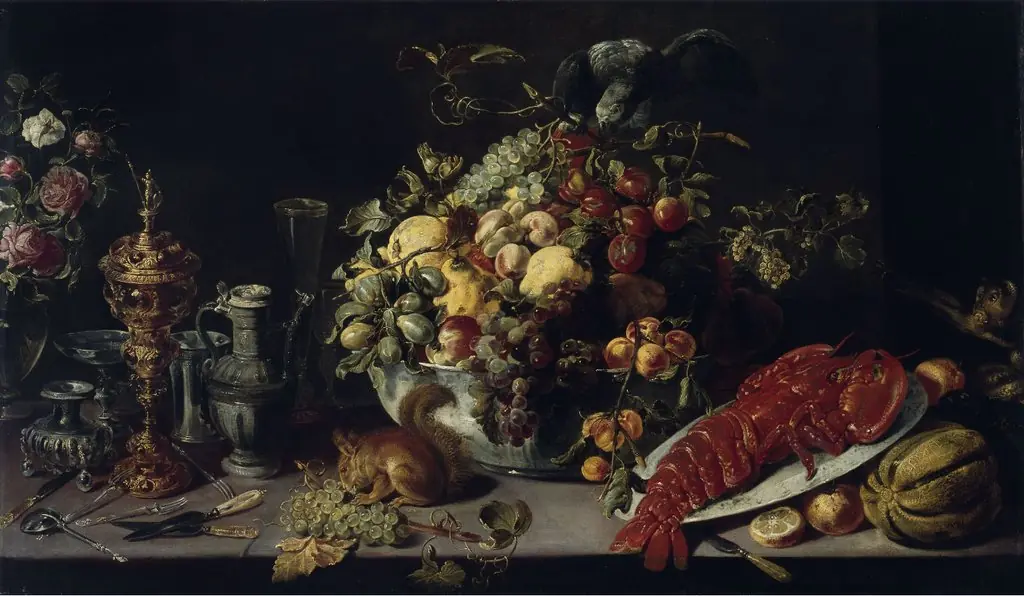 A Banquet Piece
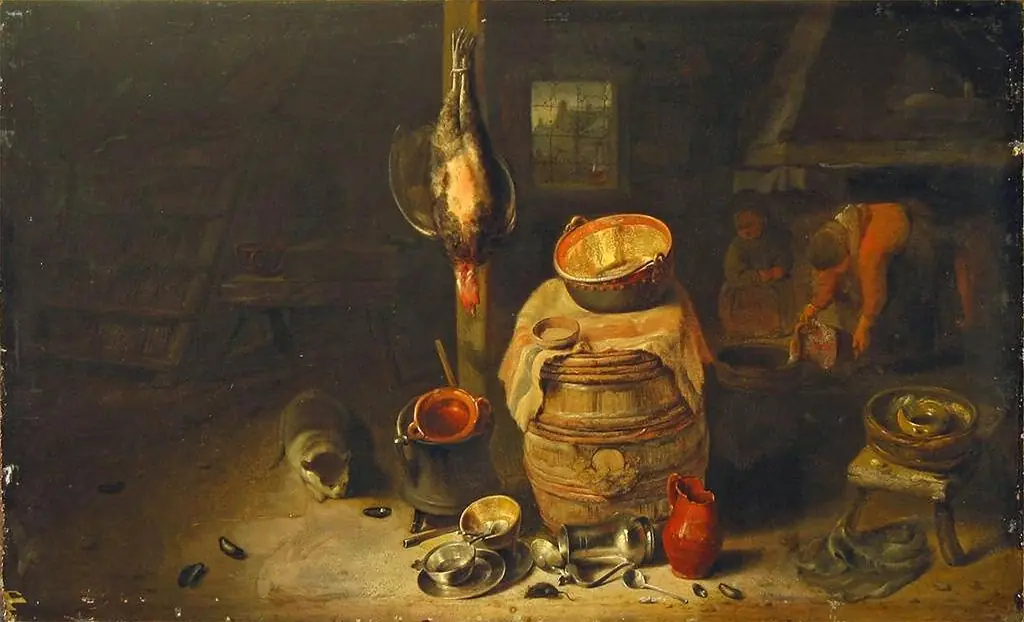 Kitchen
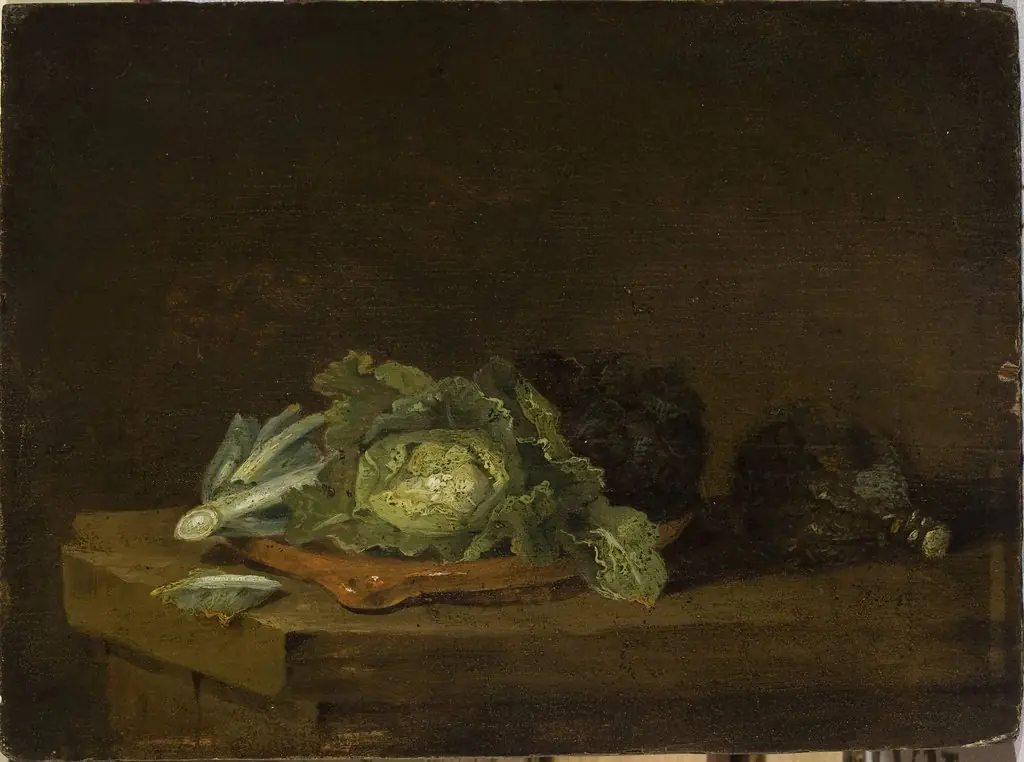 Cabbages on a Table Top
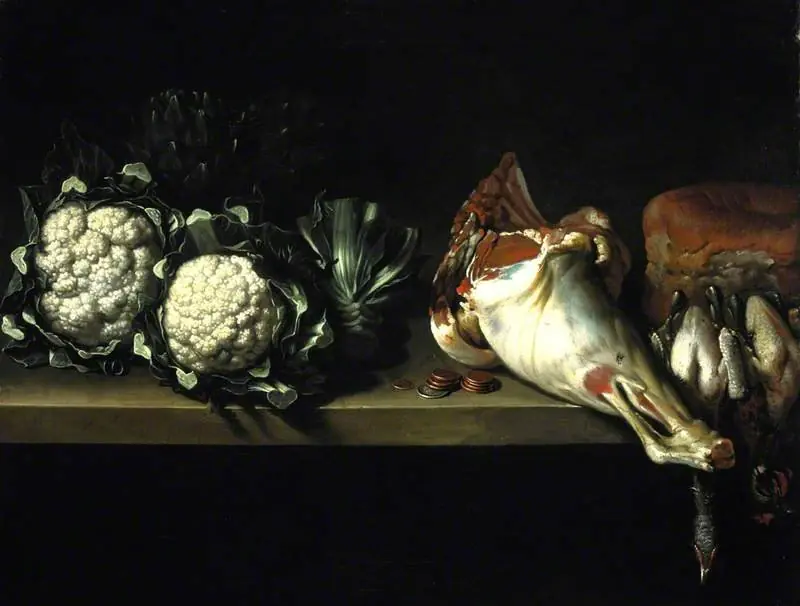 Still-Life
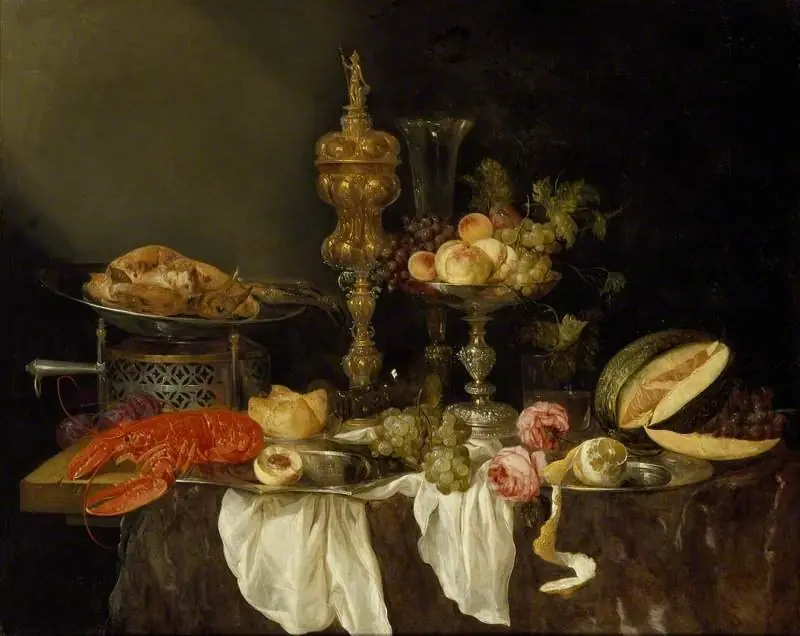 Still Life with a Lobster and Turkey
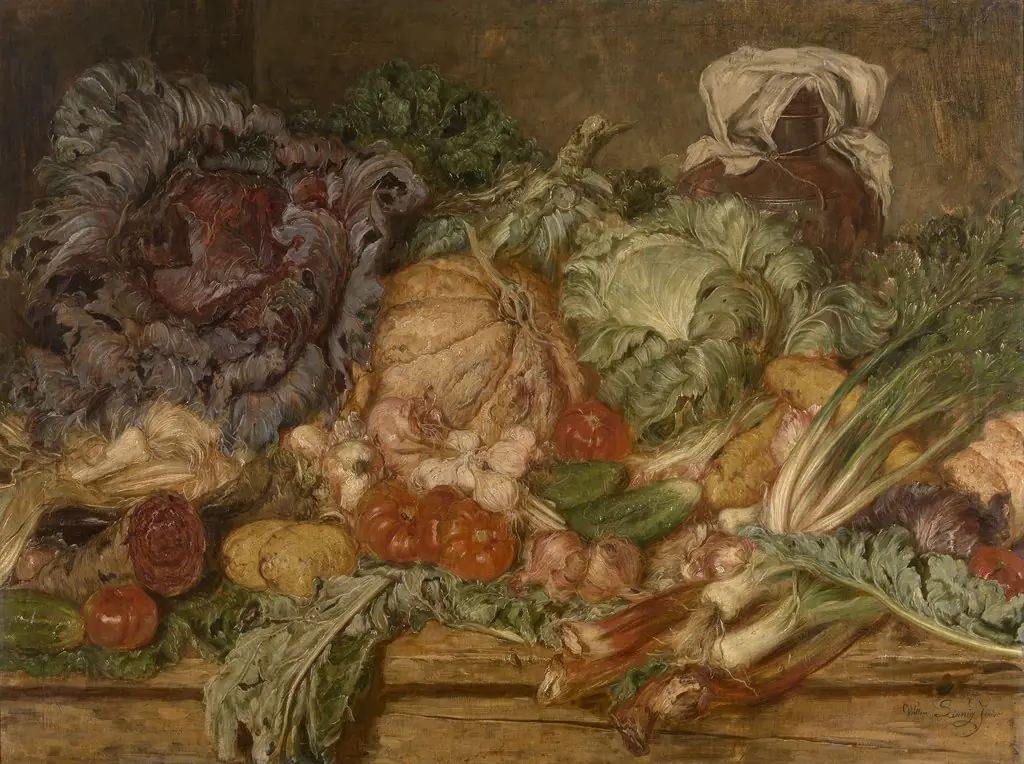 Vegetables
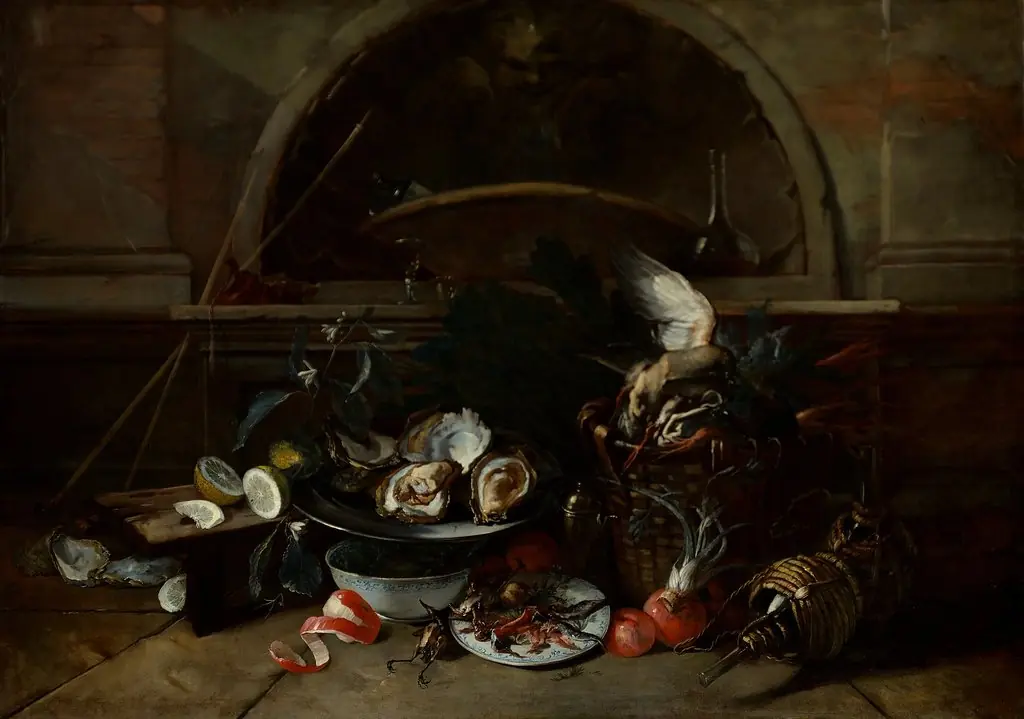 Still Life with Bottles and Oysters
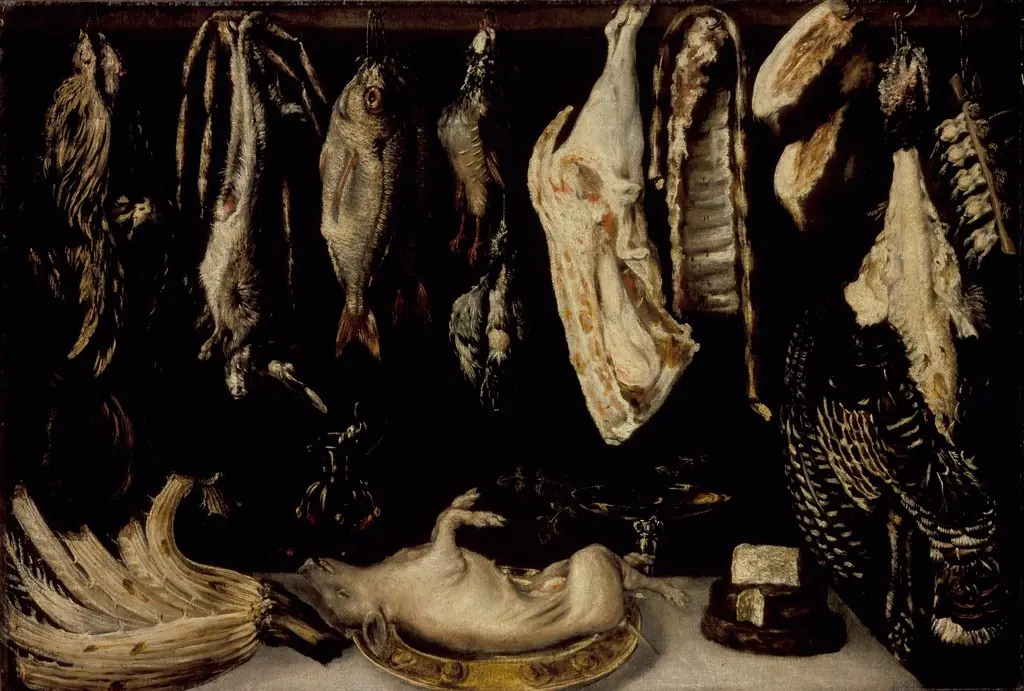 Still Life
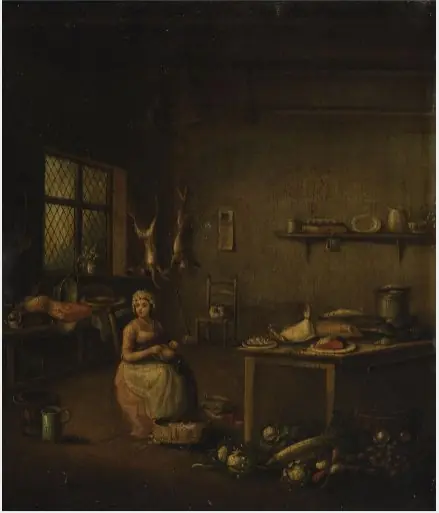 An Interior with Woman and Still Life
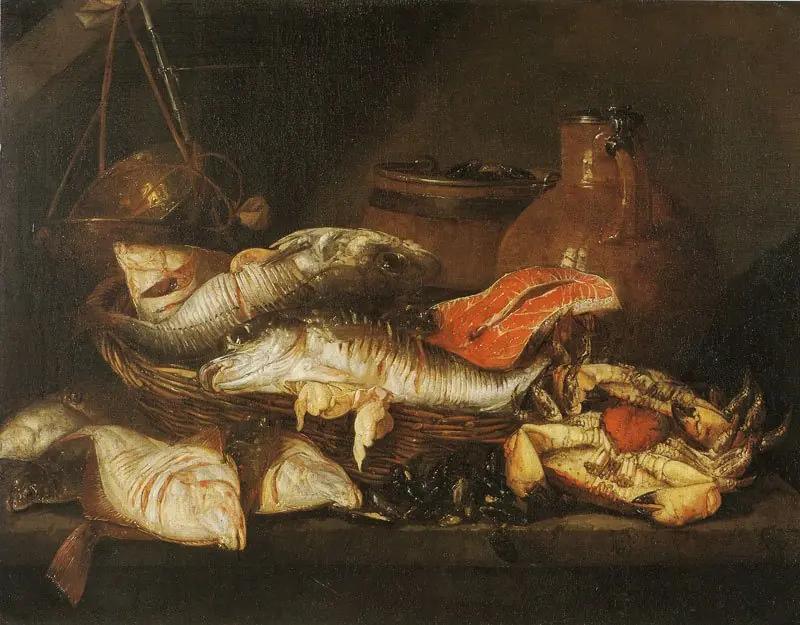 Fish in a Basket near a Scale
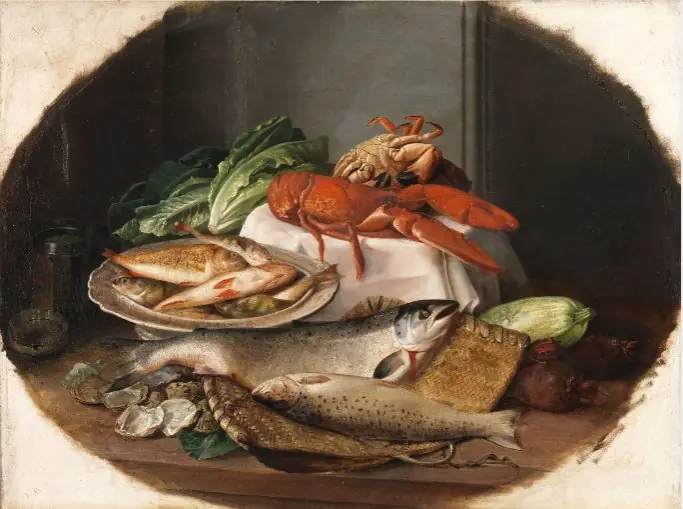 A Still Life with Fish
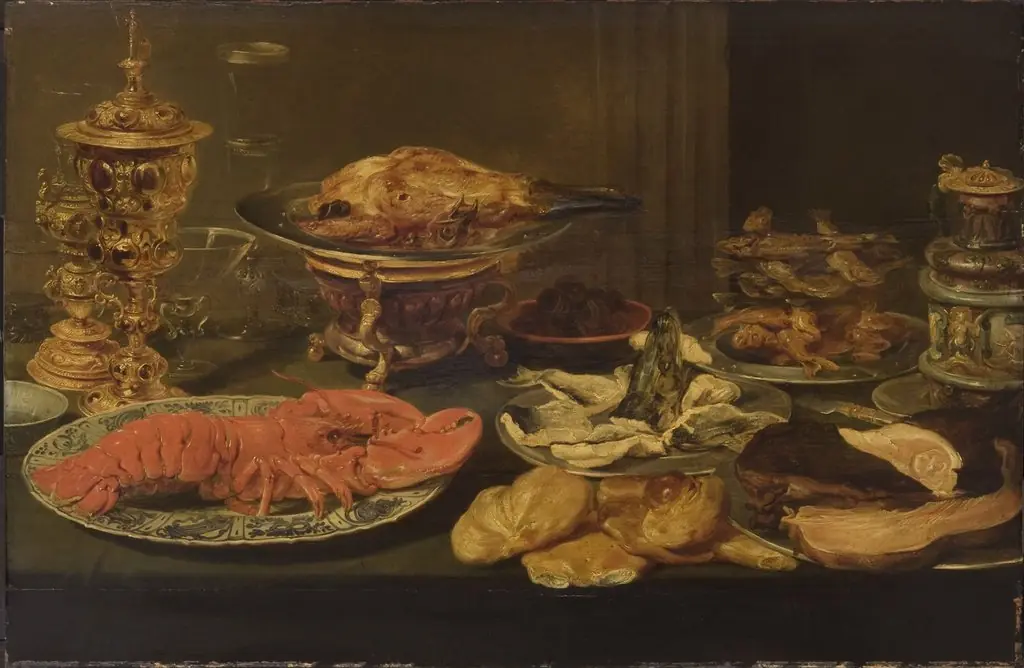 Still Life with a Lobster
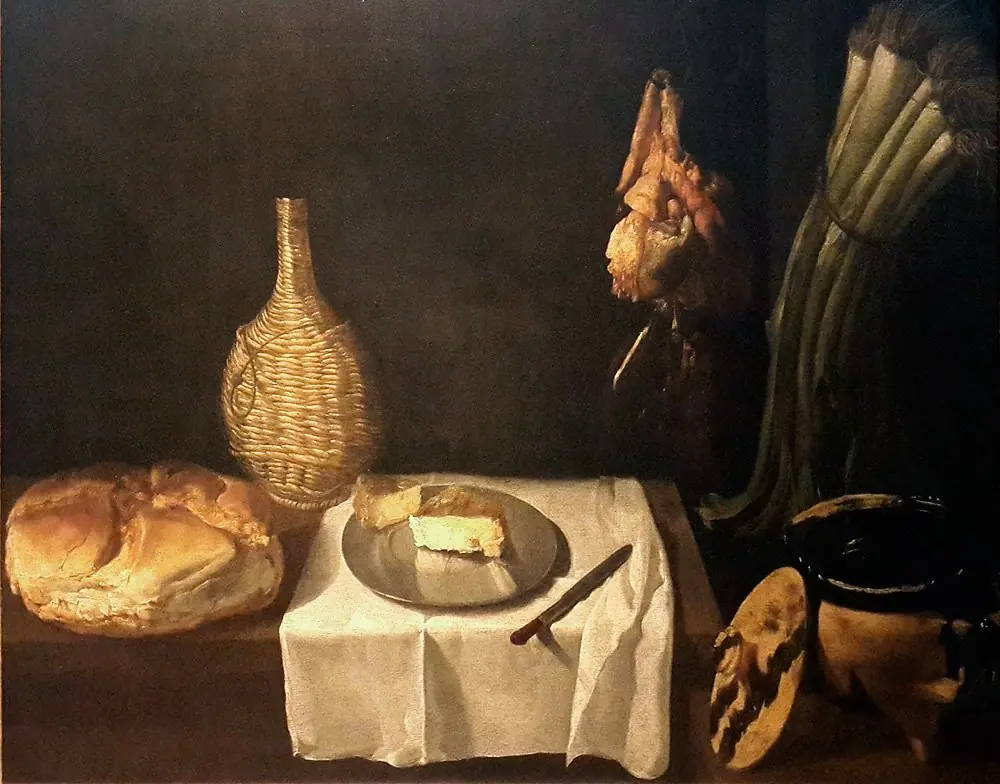 still-life
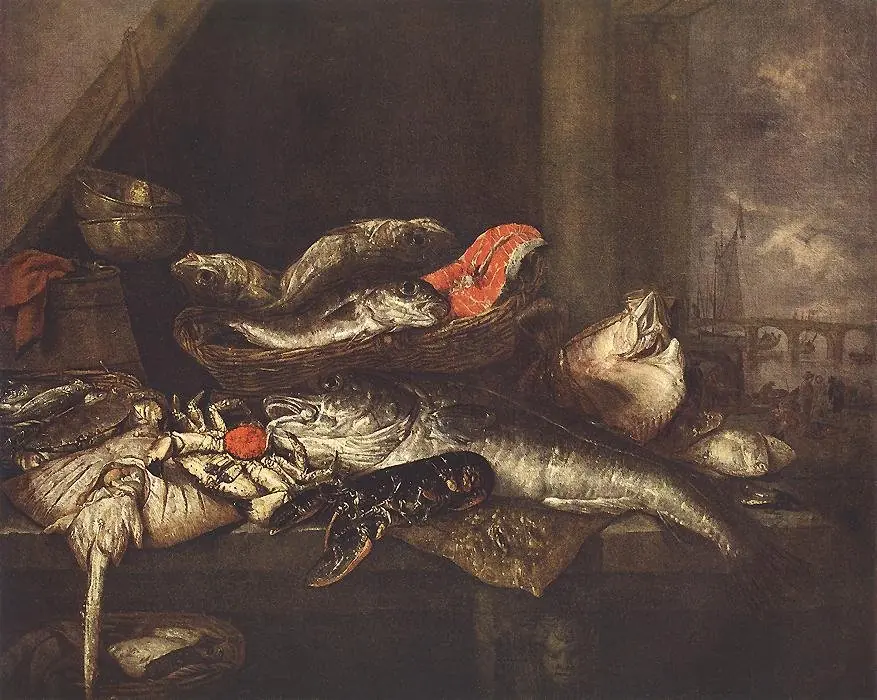 Still-life with Fishes
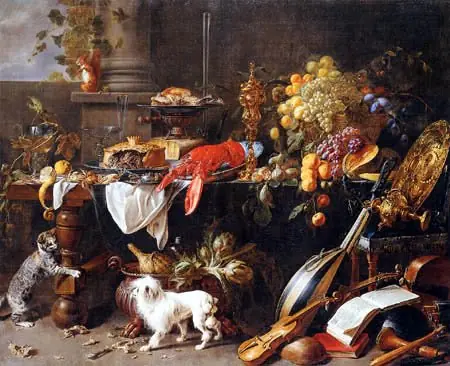 Large Still-life with Dog and Cat
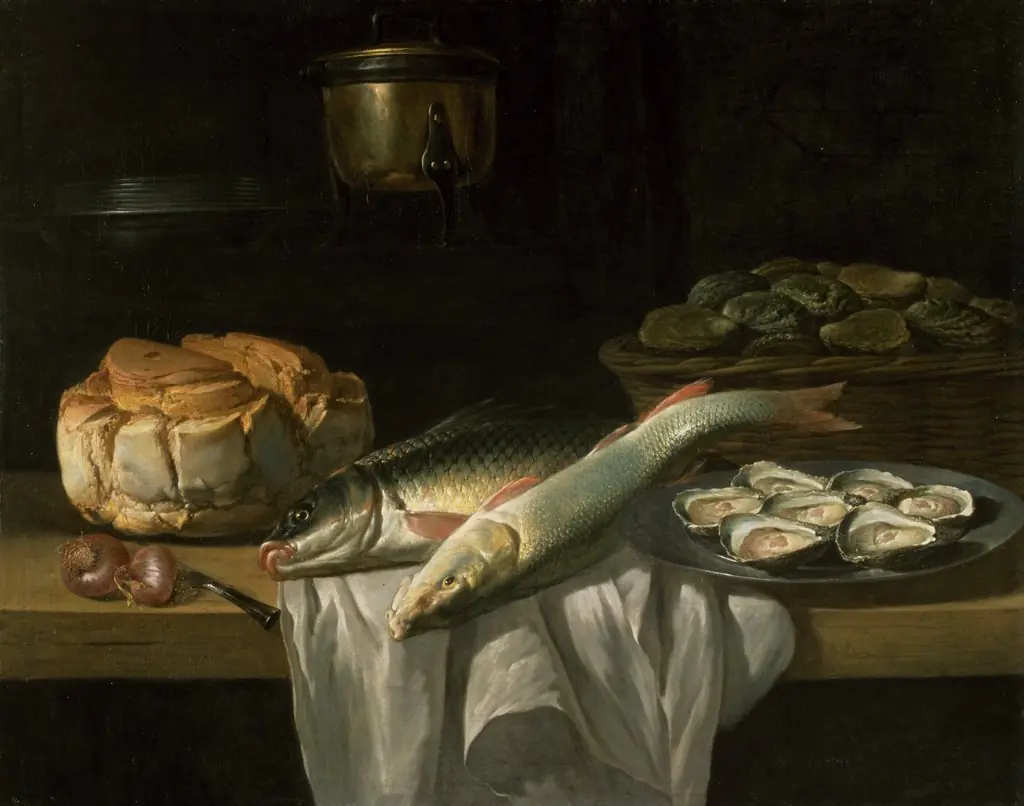 Still Life with Carp and Pike
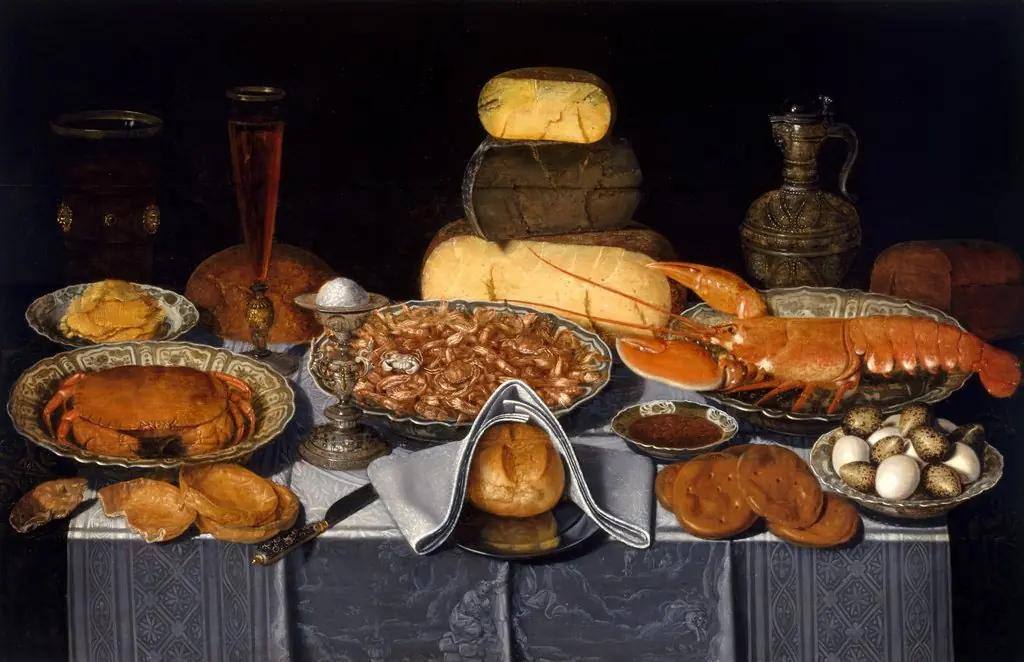 Breakfast still life
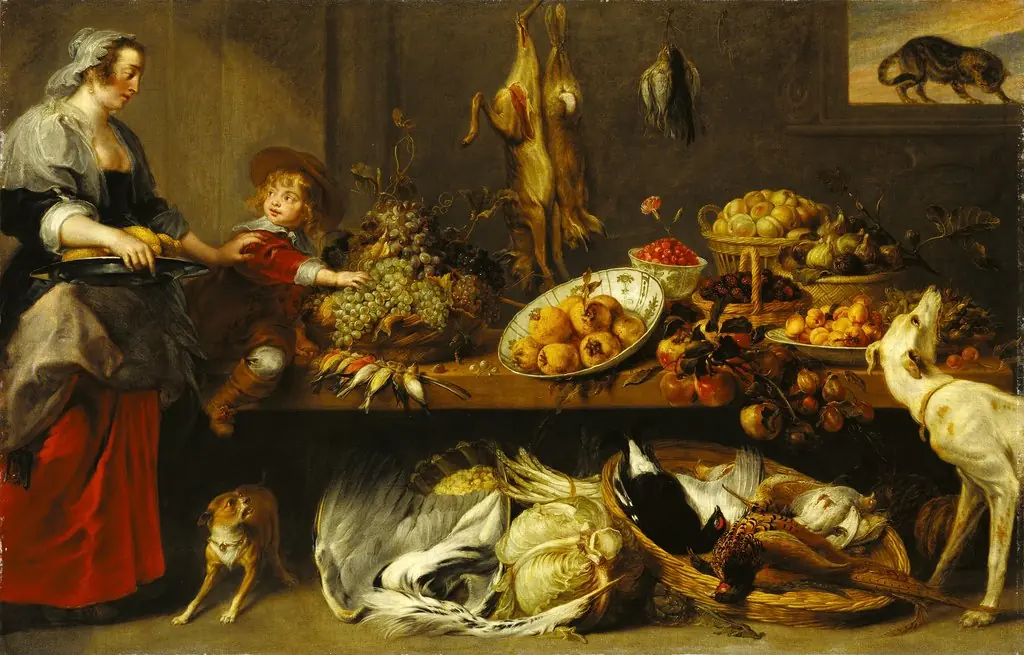 Kitchen Still Life with a Maid and Young Boy
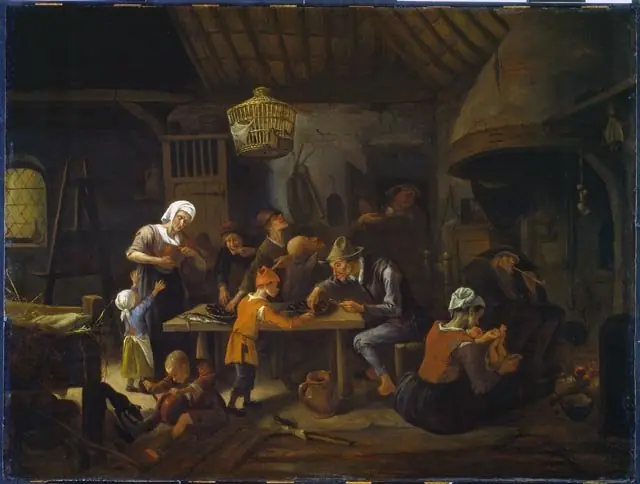 The Lean Kitchen
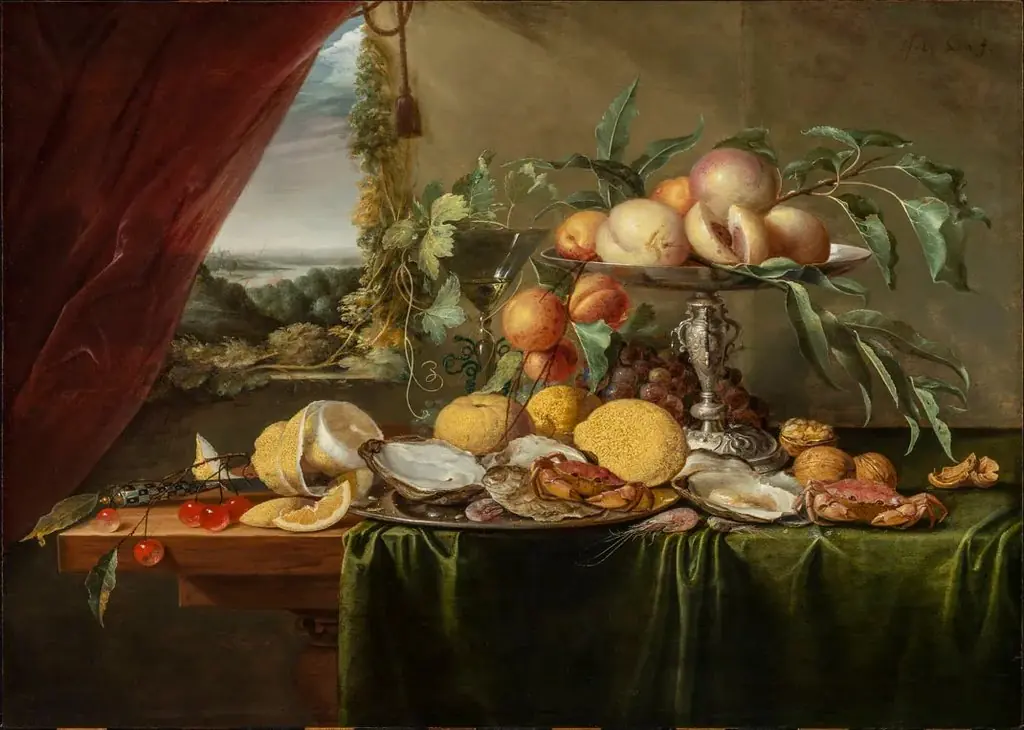 Still Life on a Wooden Table
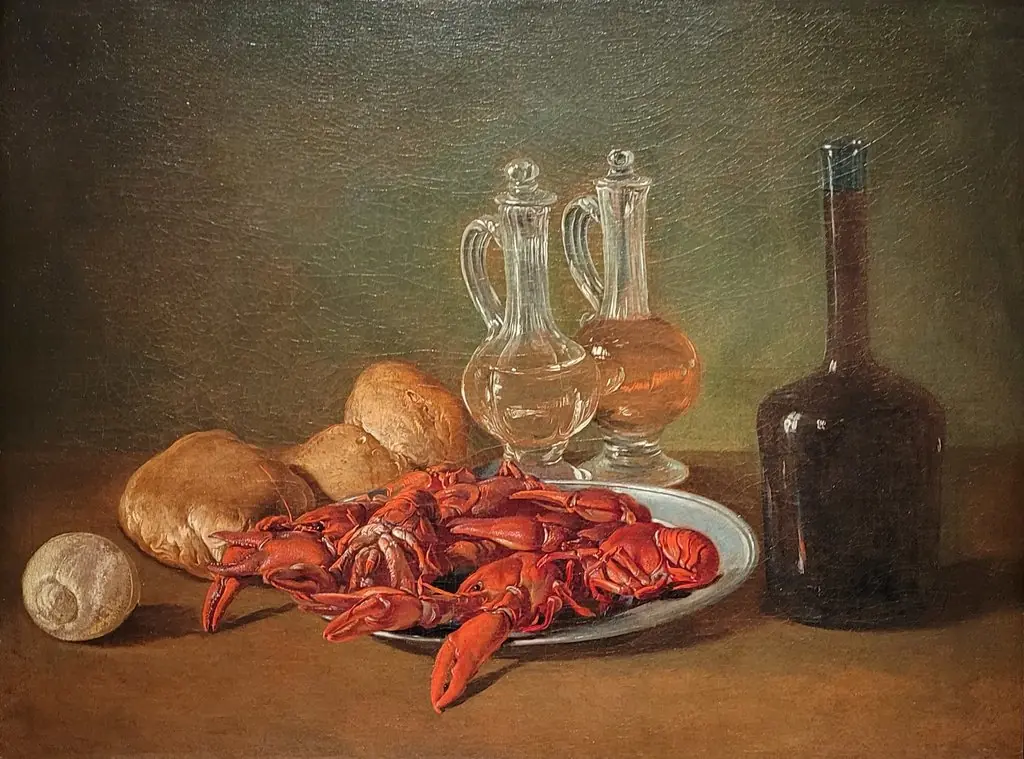 Still Life with Pewter Plate, Shrimps, a Lemon, Glass Cruets, Bread and a Bottle of Wine
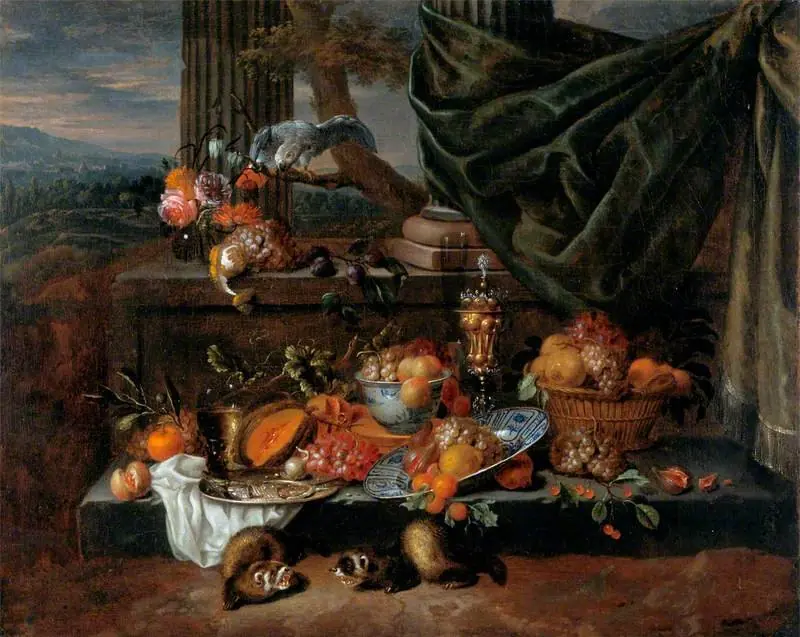 Still Life with Fruit, a Parrot and Polecat Ferrets
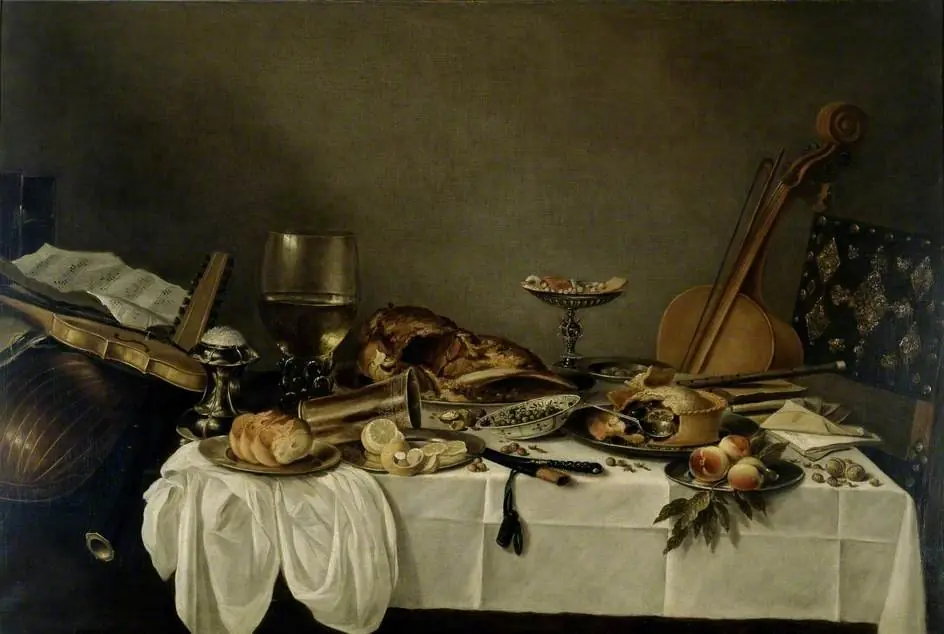 Still Life on a Table with Musical Instruments
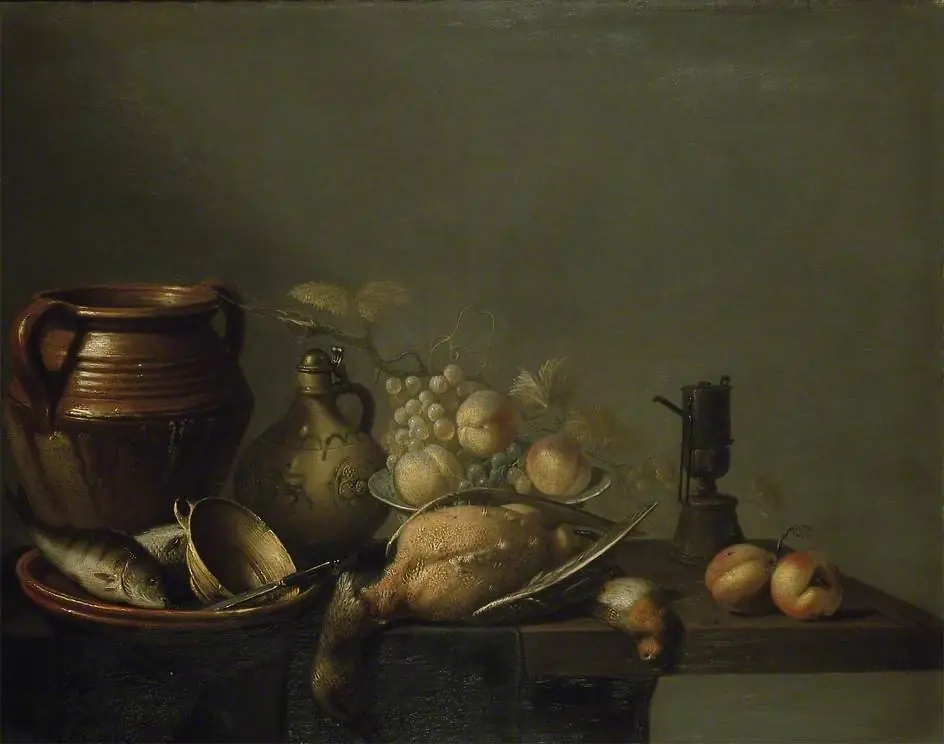 Still Life of Kitchen Utensils with Fruit and Game
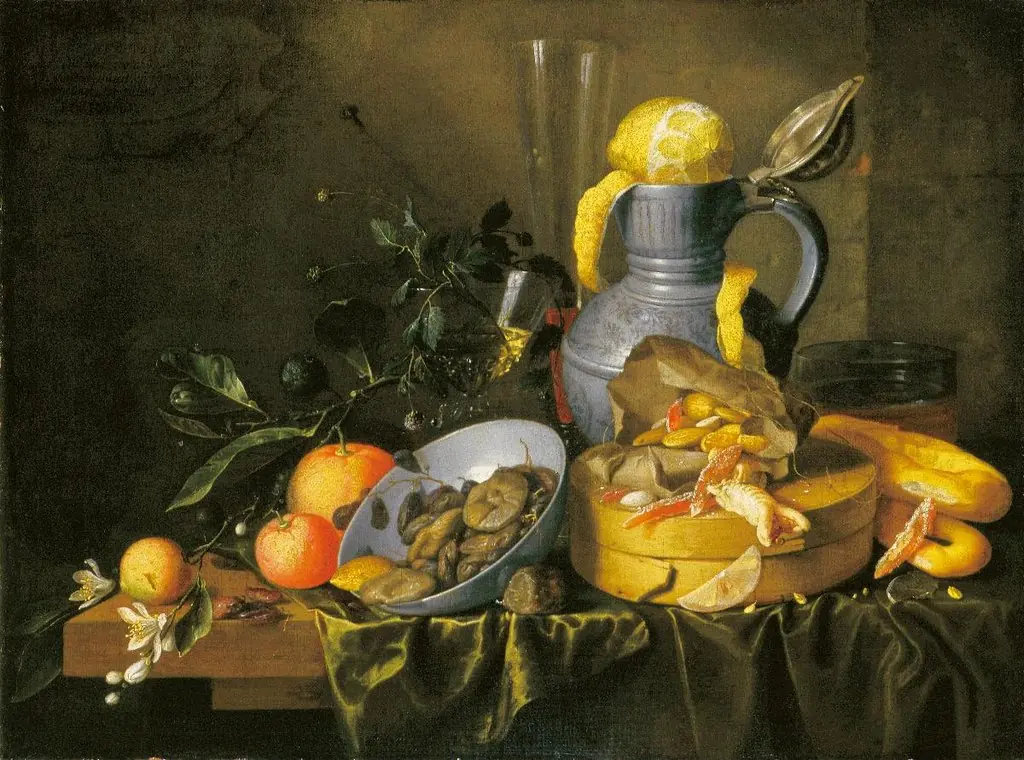 Stillleben mit Sinnspruch und Fastenspeisen
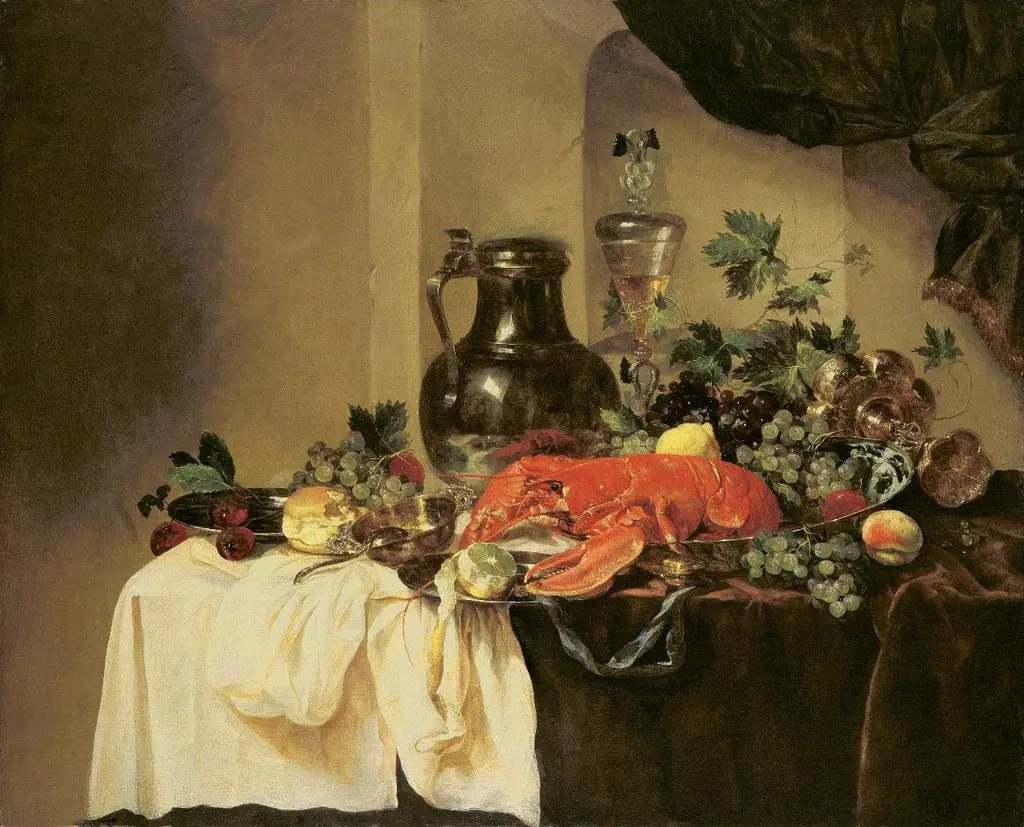 Stillleben mit Hummer und grosser Zinnkanne
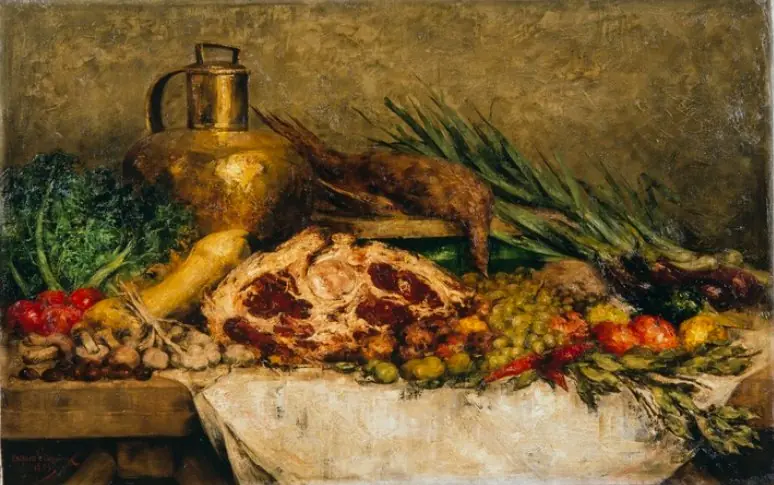 Still life
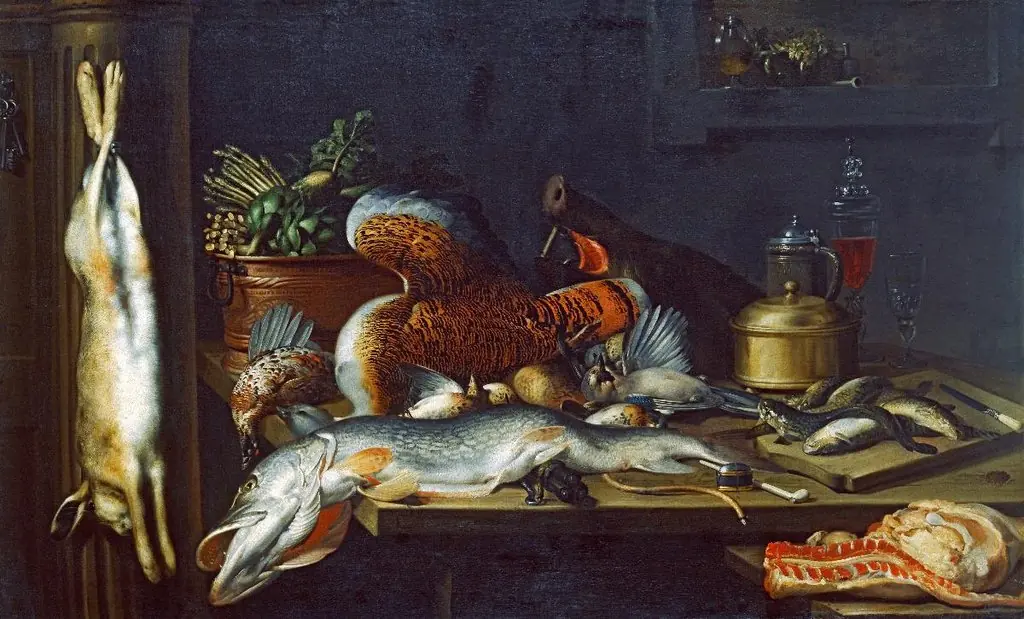 Grosses Küchenstück
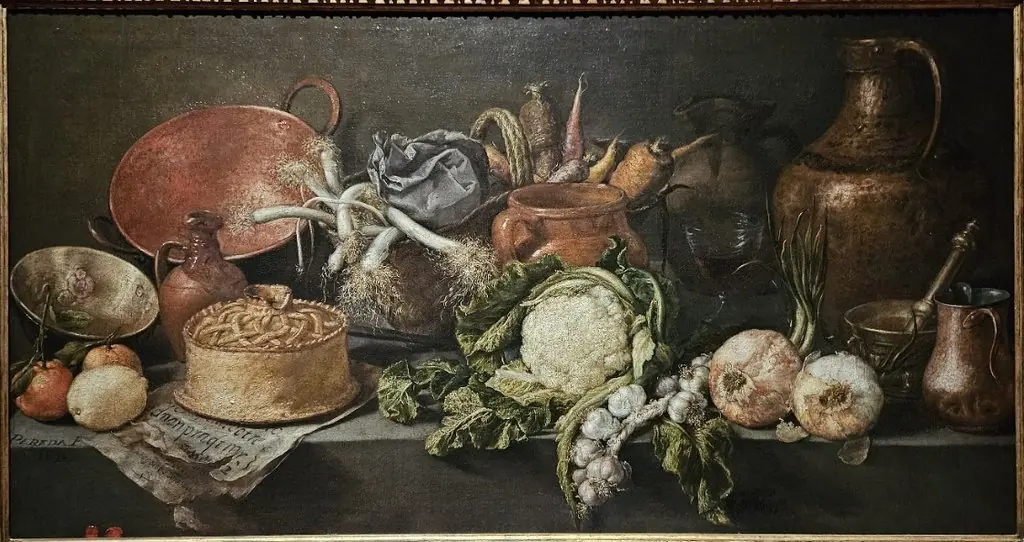 Natureza-morta com Aprestos de Cozinha
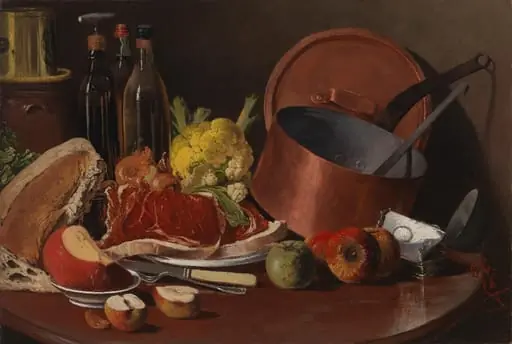 Asetelma
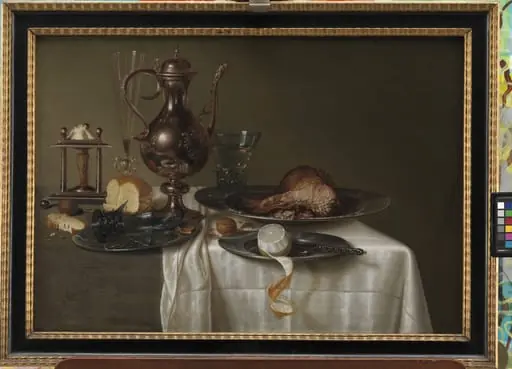 Still Life. Breakfast Piece
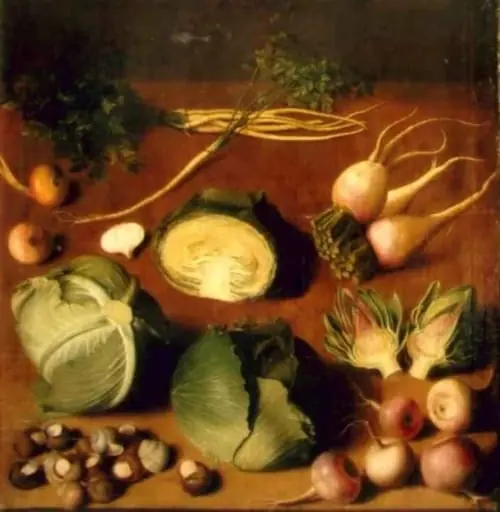 Natură moartă cu varză; pandant: Natură statică cu ciuperci
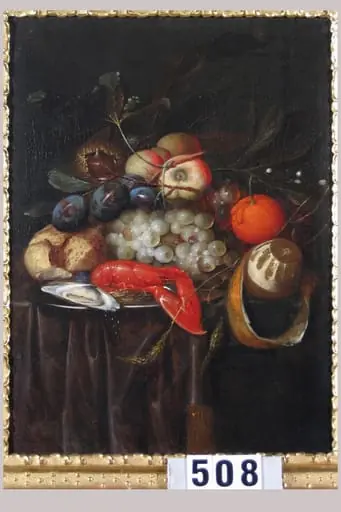 Fructe cu raci și stridii
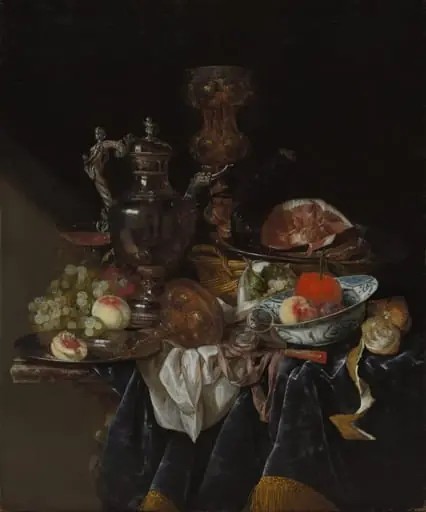 Silver Wine Jug, Ham, and Fruit
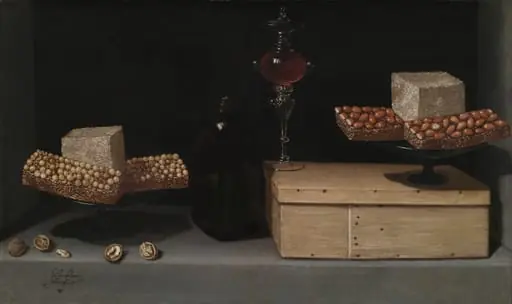 Still Life with Sweets
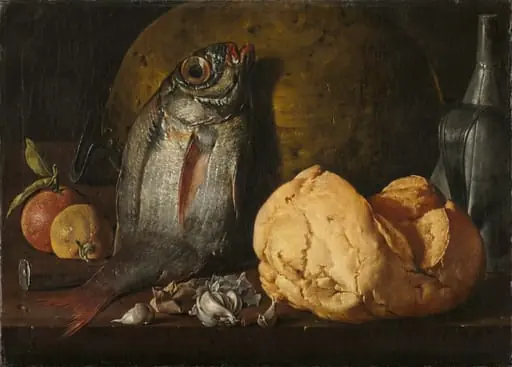 Still Life with Fish, Bread, and Kettle
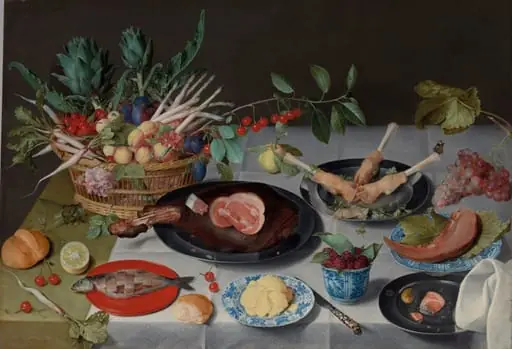 Still Life with Meat, Fish, Vegetables, and Fruit
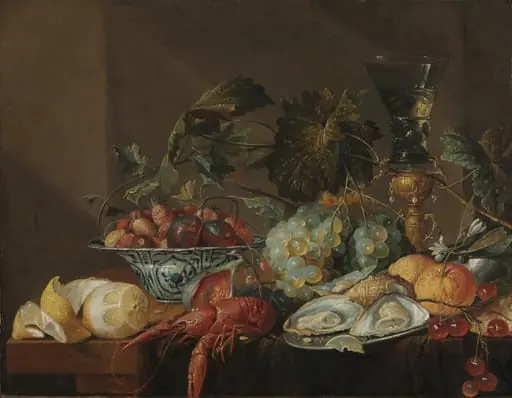 Still-Life with Crayfish, Oysters, and Fruit
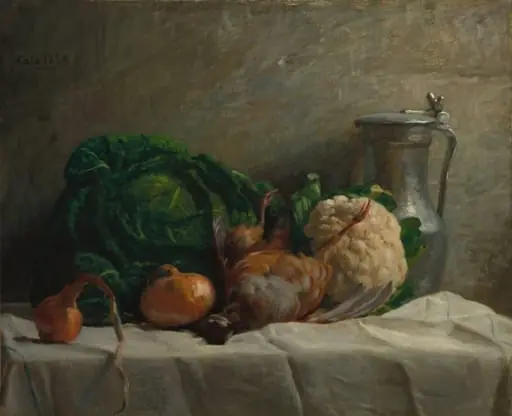 Still Life with Vegetables, Partridge, and a Jug
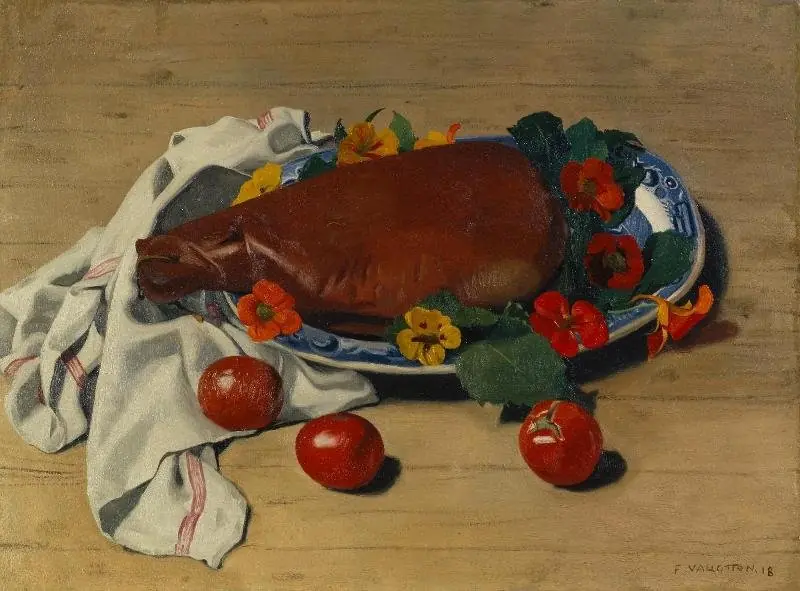 Jambon et tomates
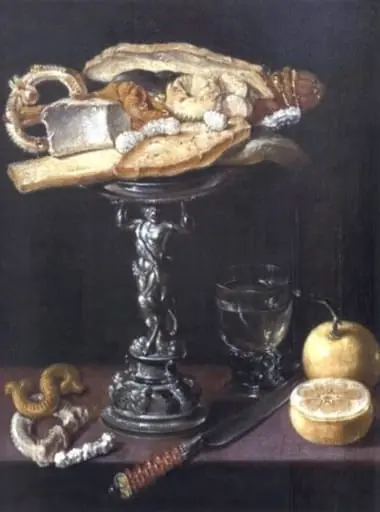 Natură moartă
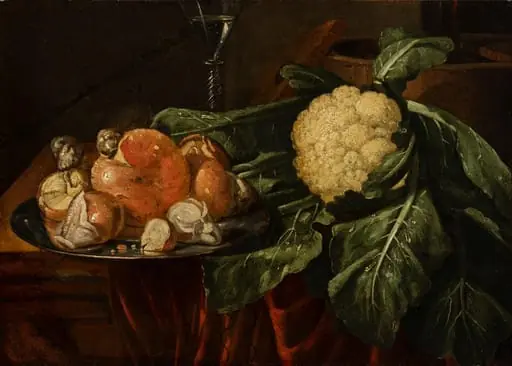 Asetelma
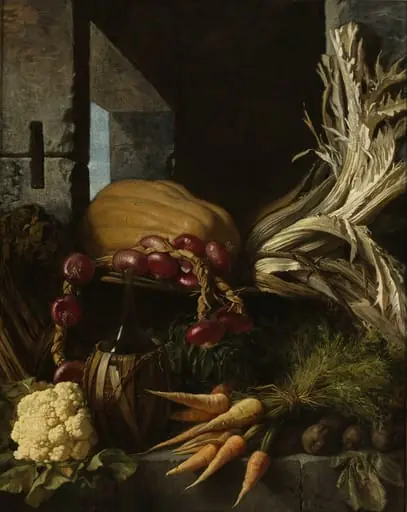 Juureksia ja vihanneksia kellarissa
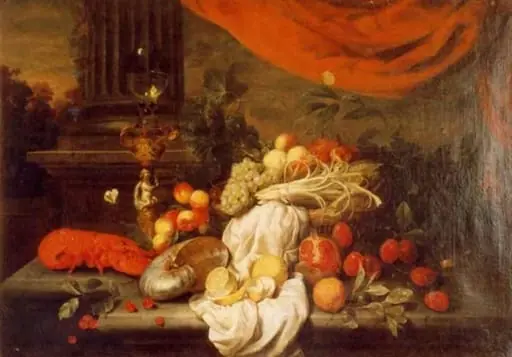 Natură moartă cu coloană
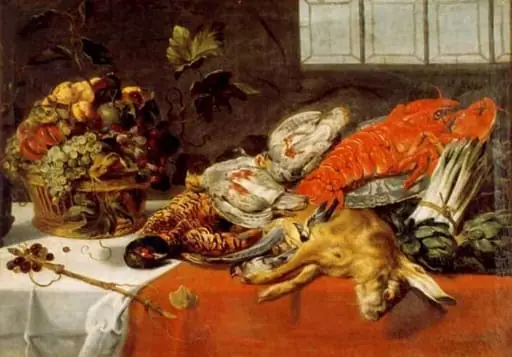 Natură moartă cu homar
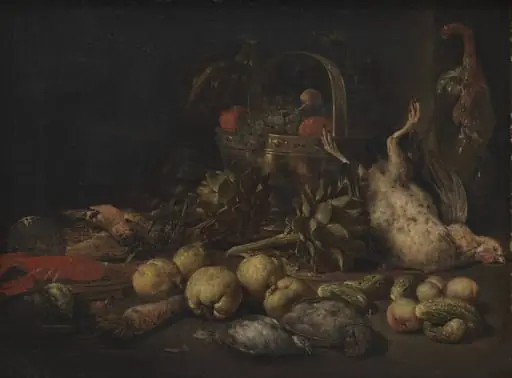 Still Life with Fruit and Birds
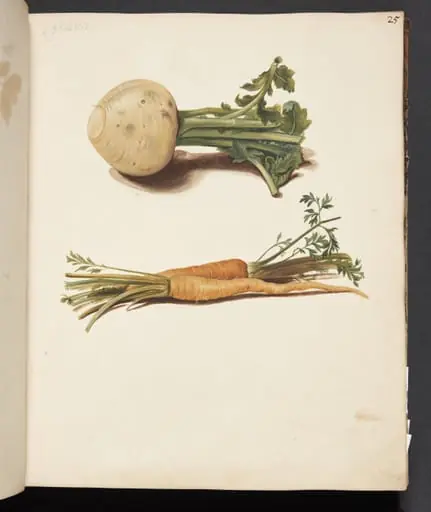 Studie af majroe og gulerødder
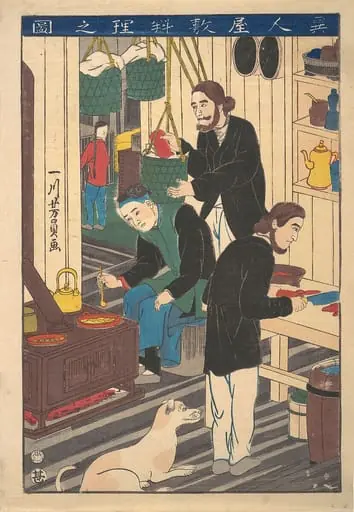 Ijiin Yashiki ryōri no zu|Inside a Foreign Restaurant
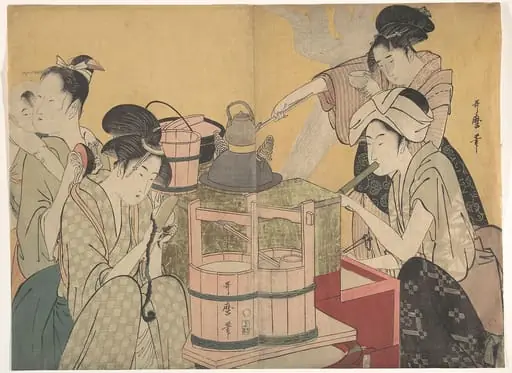 Untitled
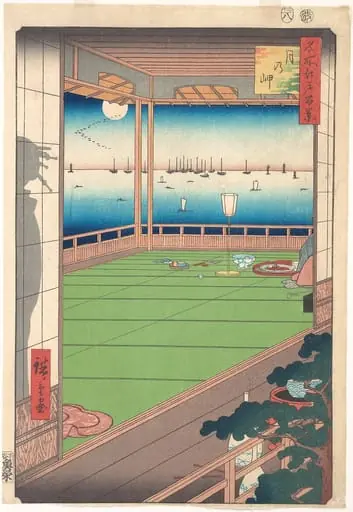 名所江戸百景 月の岬|Moon Viewing Point
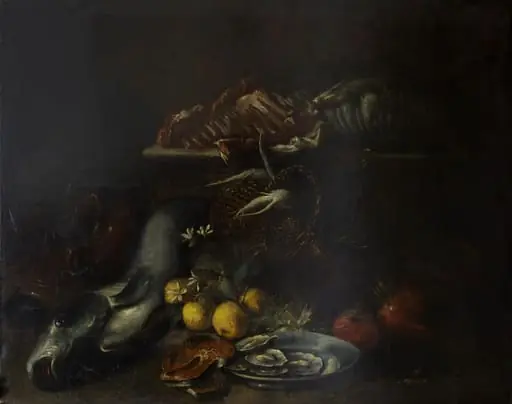 Natură statică
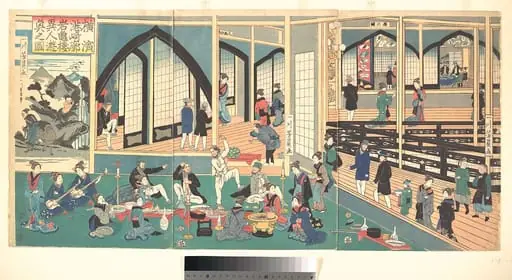 Untitled
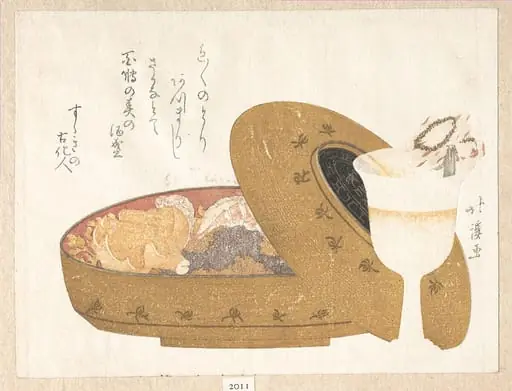 Untitled
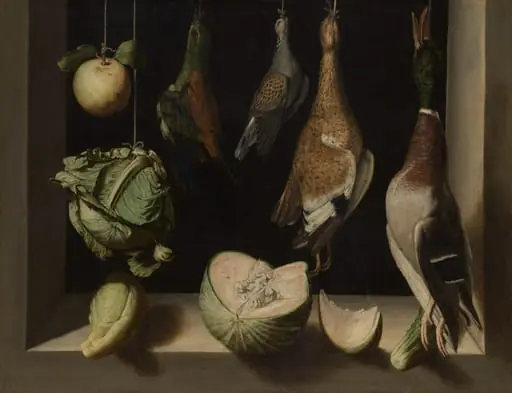 Still Life with Game Fowl
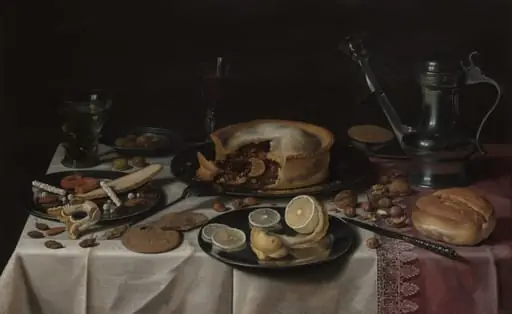 Still Life
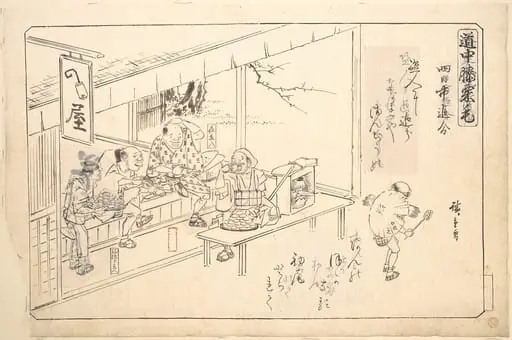 道中膝栗毛 四日市追分|The Branch Road at Yokkaichi
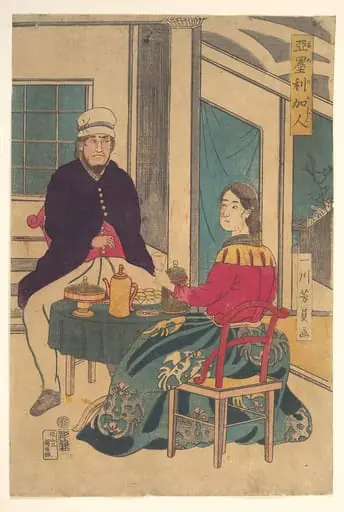 亜墨利加人|Amerikajin
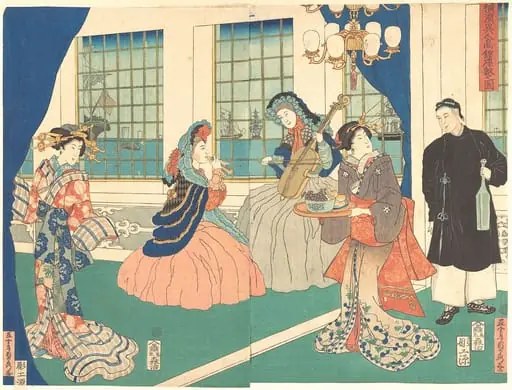 『横浜異 人商館座敷之図』|Drawing Room of a Foreign Business Establishment in Yokohama
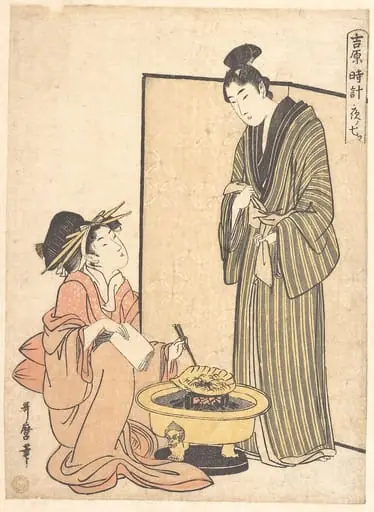 吉原時計 夜の七つ|The Seventh Hour of the Night
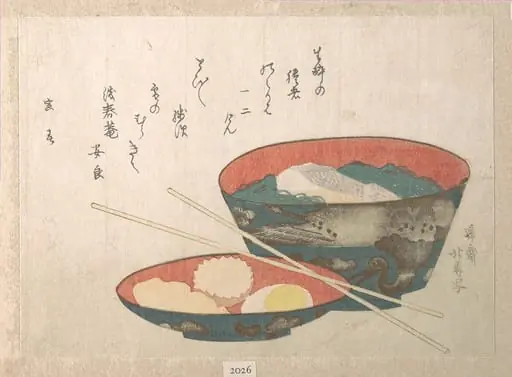 Untitled
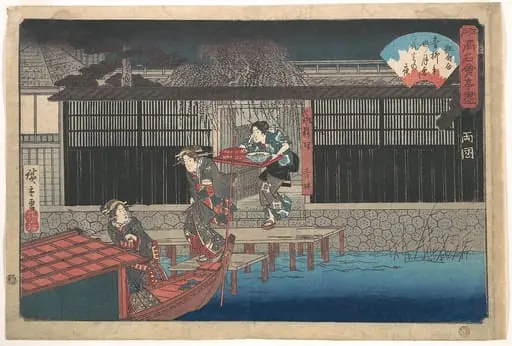 江戸高名会亭尽 両国|The Aoyagi in Ryogoku
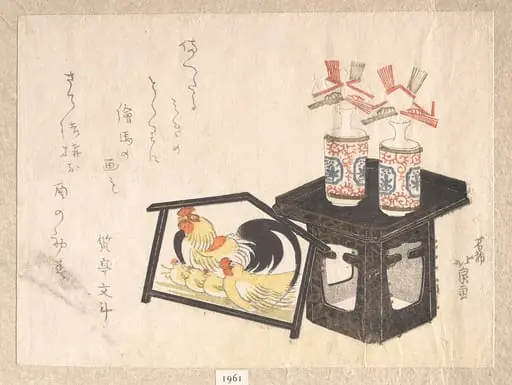 Untitled
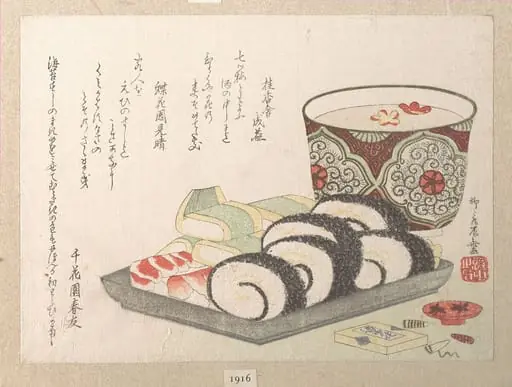 寿司と酒|Sushi and New Year’s Sake
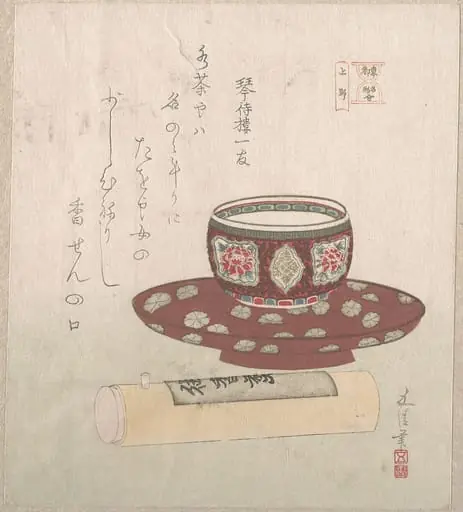 Untitled
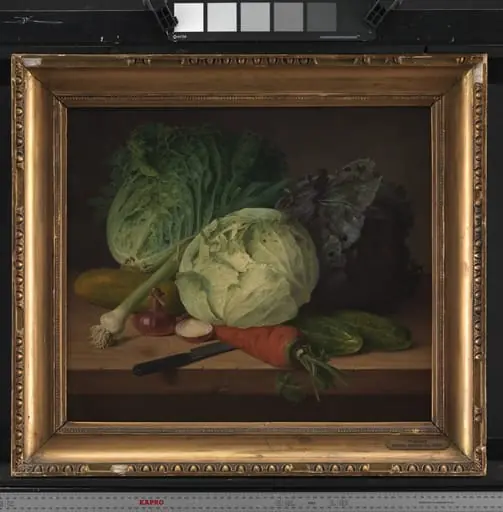 Køkkenurter
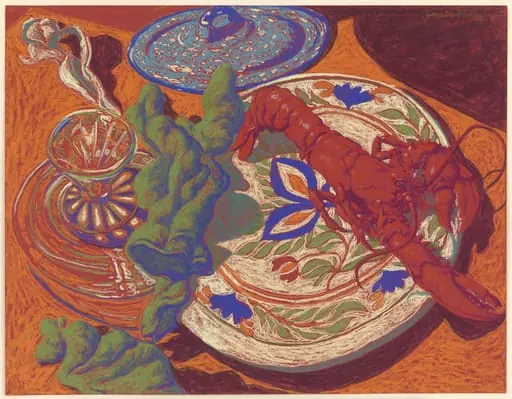 Untitled
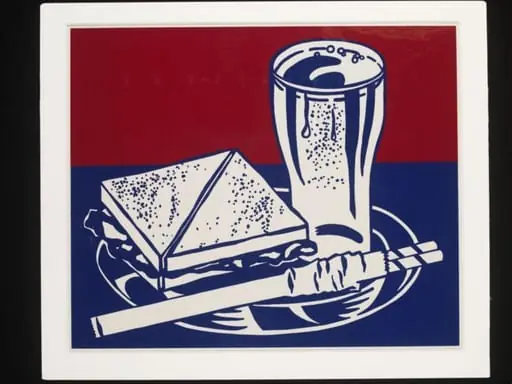 Untitled (image of sandwich and soda). Print from the suite 'Ten Works by Ten Painters.'
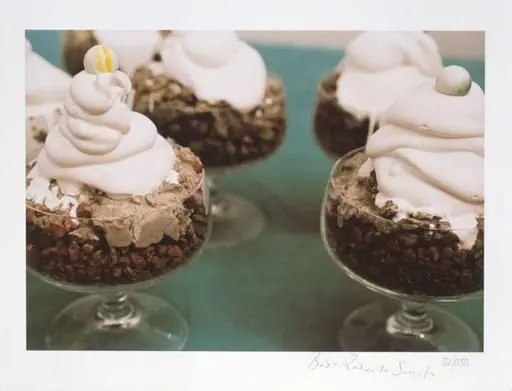 Grit Surprise Topped with Plaster of Paris
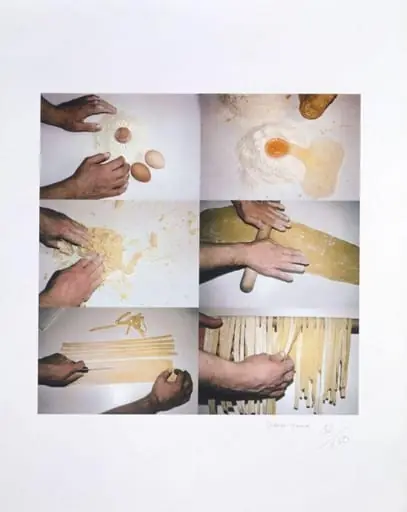 Il Meglio del Meglio all 'Infinito
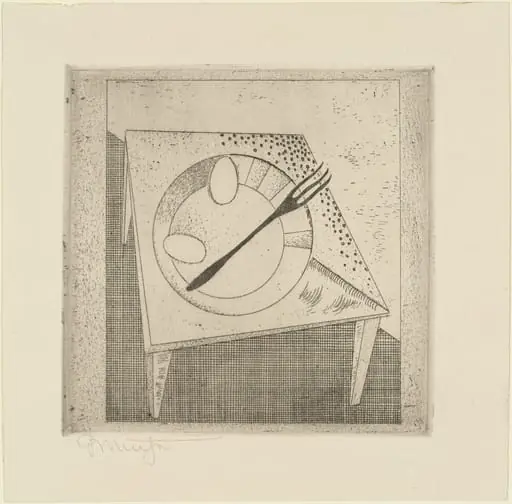 Untitled
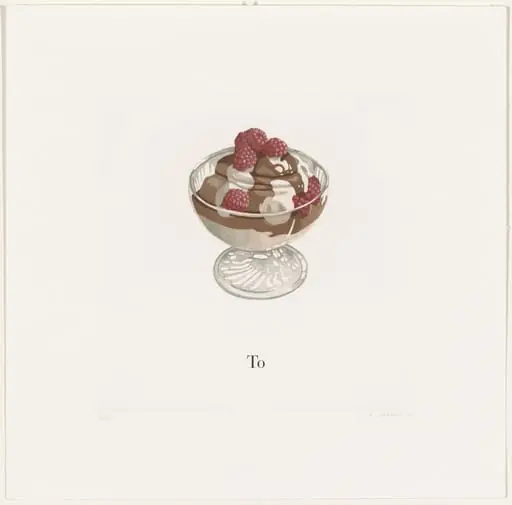 Untitled
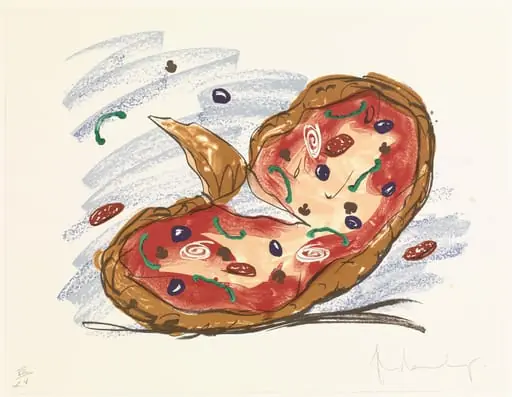 Untitled
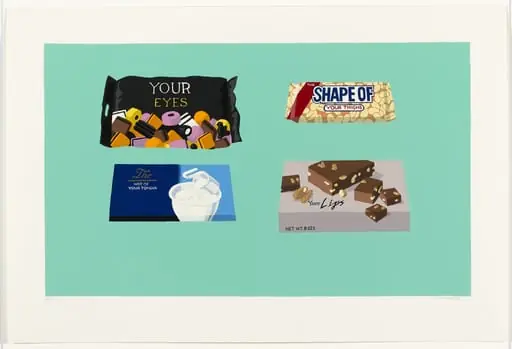 Untitled
Frequently asked questions
What is Food?
Food is any substance consumed by an organism for nutritional support.
How many Food works does Artifact World Gallery have?
Artifact World Gallery holds 161 public-domain Food works, all free to view and download.
Who are the key Food artists?
Key Food artists in the collection include William Sidney Mount, Lilly Martin Spencer and Pieter Claesz.
Where can I see Food works?
Food works in the collection are held by Metropolitan Museum of Art, Rijksmuseum and Cleveland Museum of Art.