Artwork
Cârciumă
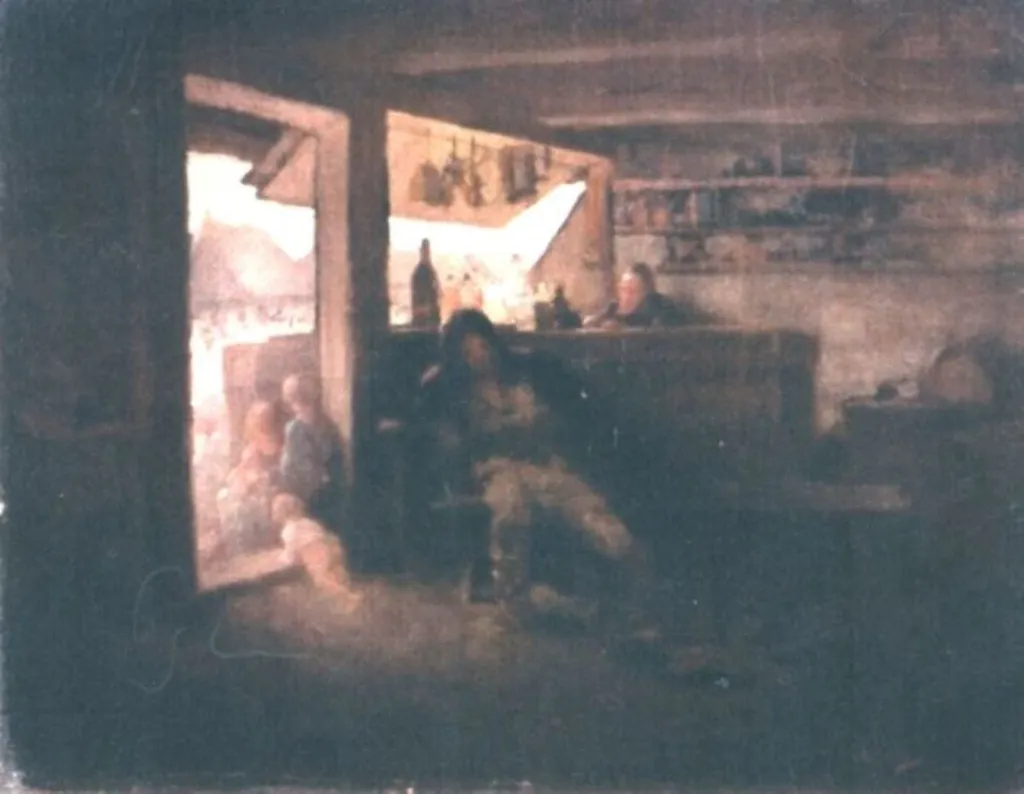
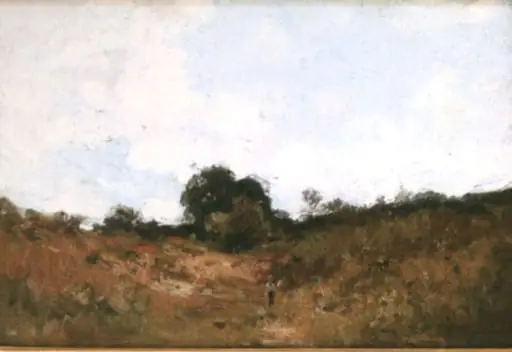
Cârciumă is an unspecified painting by the Impressionist artist Nicolae Grigorescu. It dates from 1880 and is held in the collection of the National Museum of Art of Romania.
About this work
Overview
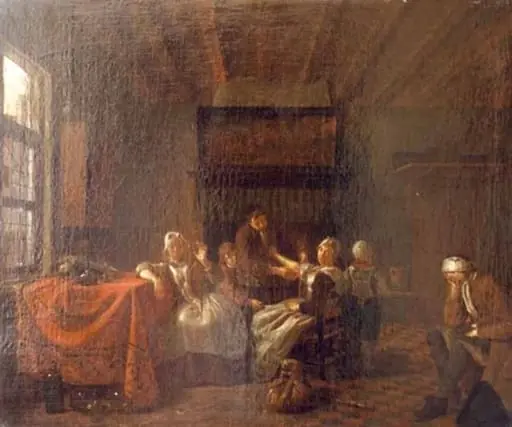
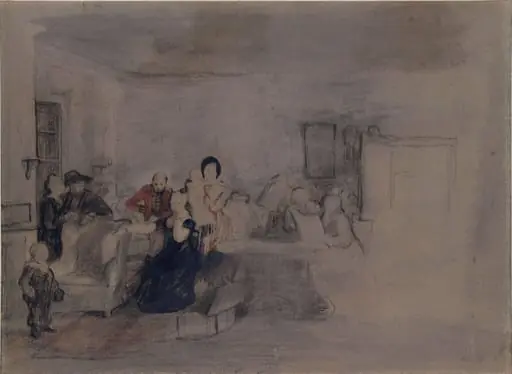
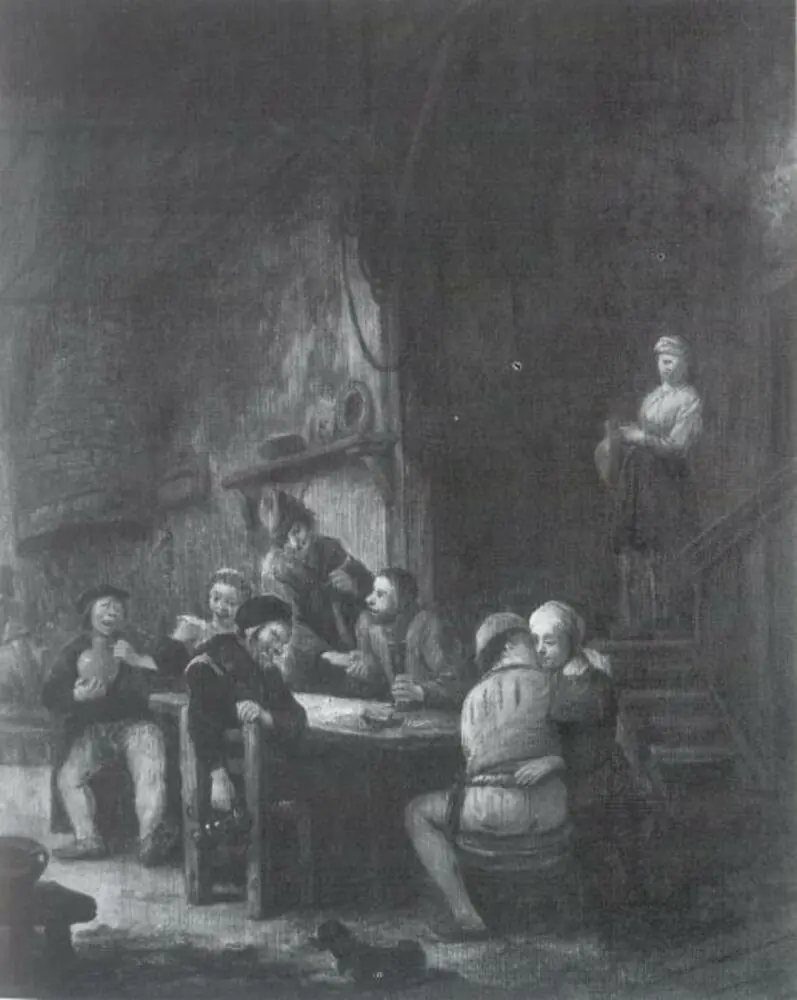
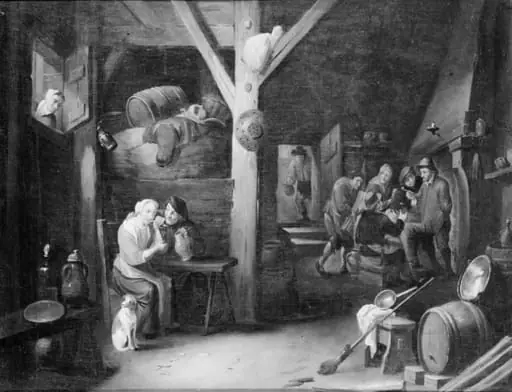
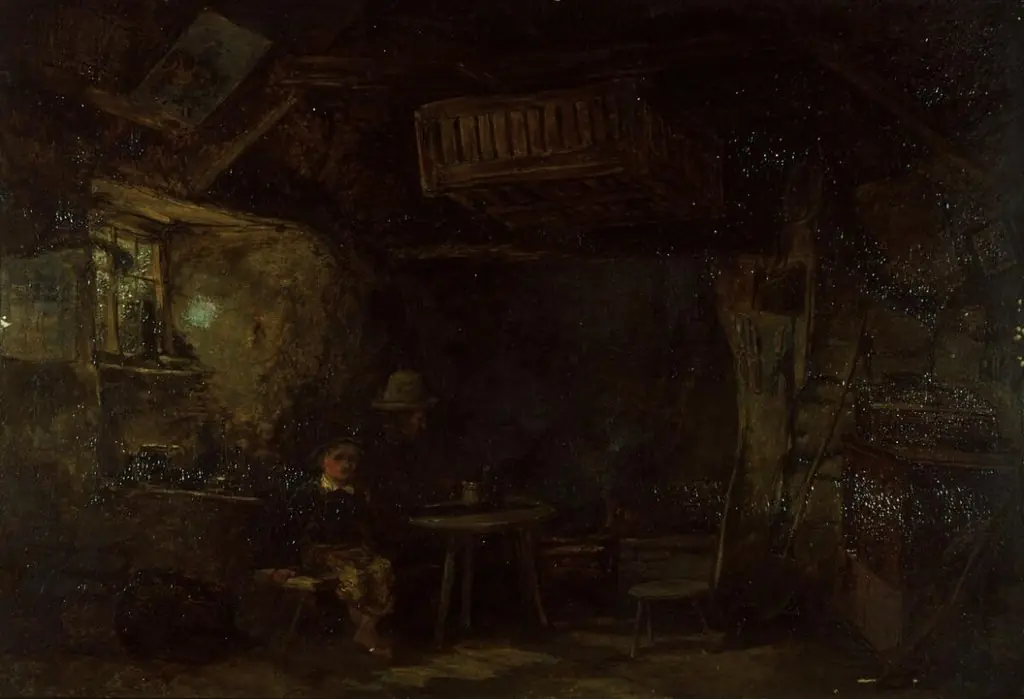
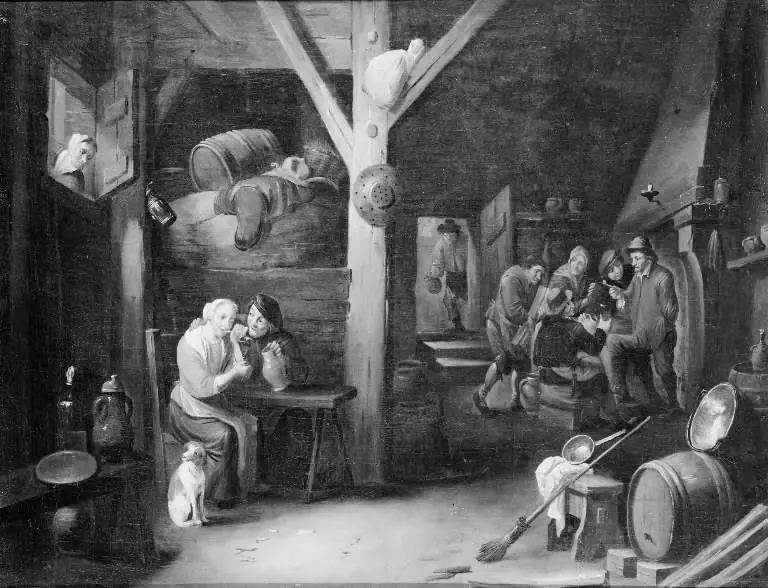
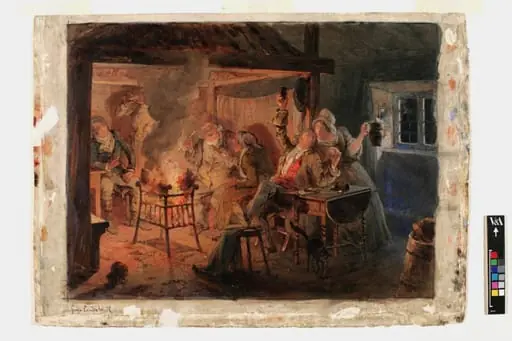
Cârciumă, painted by Nicolae Grigorescu in 1880, depicts an interior scene of a rural Romanian inn. The composition centers on a group of figures gathered around a wooden table, their forms softened by low, directional light. The atmosphere is quiet and introspective, with no clear narrative action, inviting contemplation rather than storytelling.
Subject & Meaning
The painting captures a moment of stillness among ordinary people—likely laborers or travelers—sharing an unspoken moment in a modest drinking establishment. The presence of a dog at their feet and shelves lined with bottles suggest a place of routine, not celebration. The scene reflects everyday life in 19th-century rural Romania, emphasizing dignity in the mundane.
Technique & Style
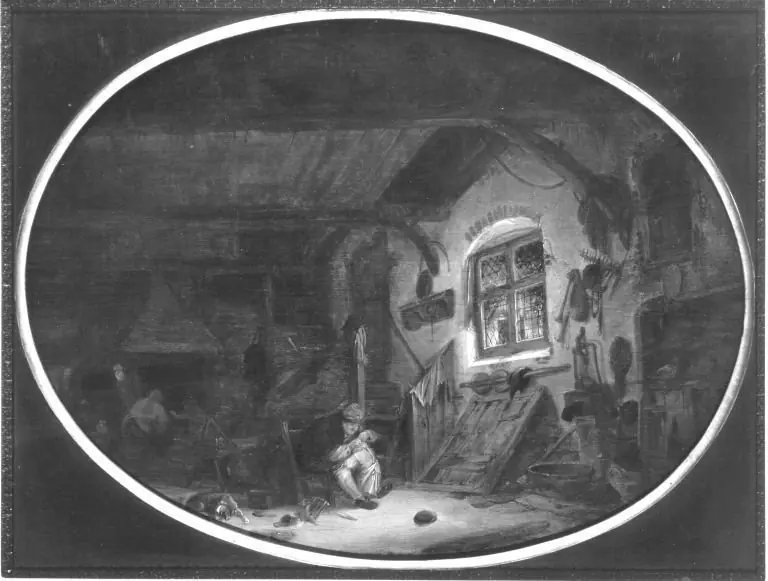
Grigorescu employed chiaroscuro to model forms through subtle gradations of light and shadow. The window on the left casts a narrow beam that illuminates faces and surfaces while leaving corners in deep tone. Brushwork is restrained, avoiding detail in favor of atmospheric effect. The palette is dominated by earthy browns and muted ochres, reinforcing the room’s intimacy and somber mood.
History & Provenance
Created during Grigorescu’s mature period, Cârciumă emerged from his commitment to depicting Romanian peasant life with authenticity. The work was likely painted in the countryside, where he spent extended periods observing local customs. It entered public collections in Romania shortly after its completion and has remained within national institutions since.
Context
In the late 19th century, Romanian artists sought to define a national visual identity distinct from Western European traditions. Grigorescu’s focus on rural interiors aligned with this movement, rejecting idealized history painting in favor of quiet, unadorned scenes. Cârciumă reflects a broader cultural turn toward realism and ethnographic observation.
Legacy
Cârciumă stands as a quiet example of Romanian Realism, influencing later generations who valued emotional restraint over dramatic expression. Its emphasis on light, texture, and ordinary life helped establish a visual language for depicting national identity without sentimentality. The work remains a reference point in discussions of 19th-century Eastern European painting.
Artist & collection
Artist
Romanian painter Nicolae Grigorescu made quiet, honest scenes of everyday life and country roads around 1900.