Artwork
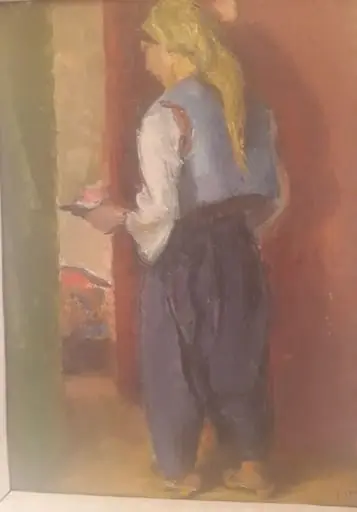
Două tătăroaice
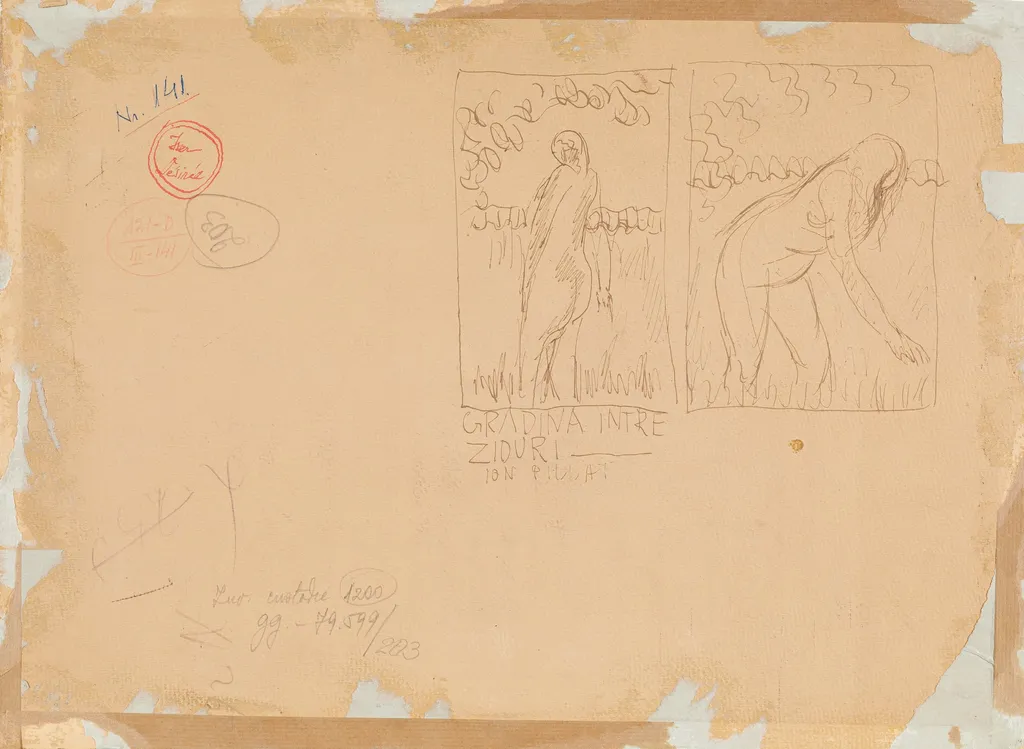
Două tătăroaice is an unspecified painting by Iosif Iser. It dates from 1916 and is held in the collection of the National Museum of Art of Romania.
About this work
Overview
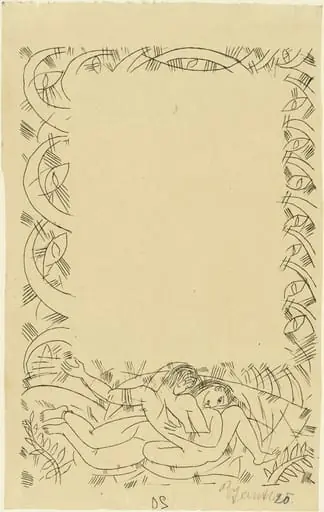
The composition presents two female figures enclosed within a delineated frame, rendered in a direct, unembellished manner.
Executed in 1916, *Două tătăroaice* is a drawing by Romanian artist Iosif Iser. The composition presents two female figures enclosed within a delineated frame, rendered in a direct, unembellished manner. The medium appears to be charcoal or pencil on textured paper, emphasizing immediacy over refinement. The artist’s signature and the title, inscribed below the image, anchor the work within its period and cultural setting.
Subject & Meaning
The drawing depicts two women, identified by the title as Tatar figures, a reference to the Turkic ethnic group historically present in parts of Eastern Europe. Their postures—one static with outstretched arms, the other reclined with limbs raised—suggest a contrast between stillness and movement. The sparse background, consisting of schematic lines, may evoke natural elements, though the focus remains on the figures’ expressive gestures.
Technique & Style
Iser’s approach in *Două tătăroaice* is characterized by loose, economical lines that convey form without detail. The rough paper texture interacts with the medium, lending the work a tactile quality. The figures’ simplified anatomy and the absence of shading reflect an interest in immediacy, aligning with early 20th-century trends that prioritized gesture and spontaneity over academic finish.
History & Provenance
Created during a period of social and artistic upheaval, the drawing emerged amid Iser’s broader engagement with folk themes and modernist experimentation. Little is documented about its early ownership, though its survival as a standalone work suggests it was preserved either as a preparatory study or an independent piece. The artist’s inscription indicates it was intended for identification, though its exact circulation remains unclear.
Context
The work reflects Iser’s fascination with rural and ethnic subjects, a recurring motif in his oeuvre. Produced during World War I, it may also register the broader cultural preoccupation with identity and tradition in Romania. The choice of Tatar women as subjects points to an interest in marginalized or regional narratives, though the drawing’s intent—whether ethnographic, expressive, or formal—remains open to interpretation.
Artist & collection
Artist
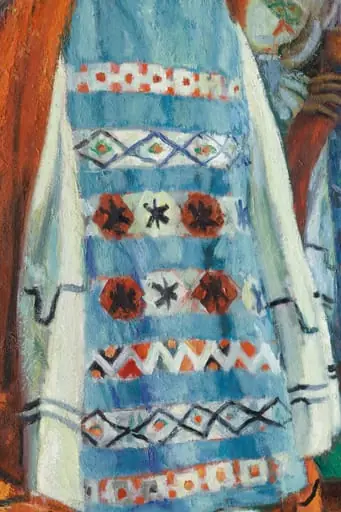
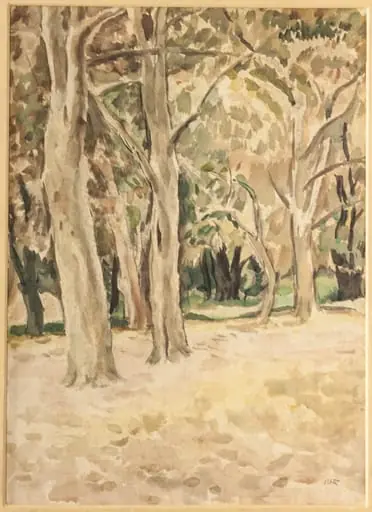
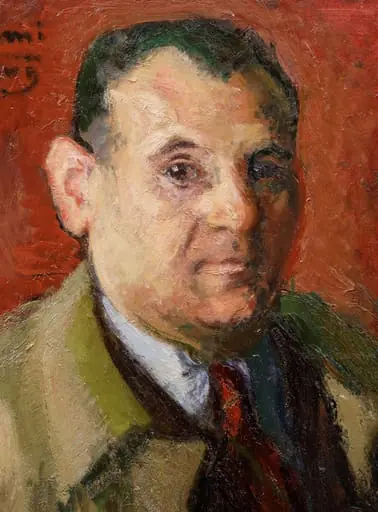
Iosif Iser painted everyday life with a focus on people and places. His 1933 work *Paris. Strada Mouffetard* shows a lively street scene in Paris, while *Nud pe fotoliu* depicts a seated nude figure. His brushwork…

![Crouching Monkey and Man's Head; Bones and Muscles [verso], by Paul Gauguin](https://artifactworldgallery.com/img/paul-gauguin--crouching-monkey-and-man-s-head-bones-and-muscles-verso--6ce66c8fb6bba7c2-w320.webp) Crouching Monkey and Man's Head; Bones and Muscles [verso]
Crouching Monkey and Man's Head; Bones and Muscles [verso]![Head of a Man with a Study of His Back; Various Sketches with a Peasant Woman and a Goose [recto], by Paul Gauguin](https://artifactworldgallery.com/img/paul-gauguin--head-of-a-man-with-a-study-of-his-back-various-sketches-with--2fa4d0cd45c52509-w320.webp) Head of a Man with a Study of His Back; Various Sketches with a Peasant Woman and a Goose [recto]
Head of a Man with a Study of His Back; Various Sketches with a Peasant Woman and a Goose [recto]![Thanksgiving in Camp [verso], by Winslow Homer](https://artifactworldgallery.com/img/winslow-homer--thanksgiving-in-camp-verso--8a306a872aff9e0b-w320.webp) Thanksgiving in Camp [verso]
Thanksgiving in Camp [verso] Kvinde i landskab
![Study for "Shoeing Calvary Horses at the Front" [verso], by John Singer Sargent](https://artifactworldgallery.com/img/john-singer-sargent--study-for-shoeing-calvary-horses-at-the-front-verso--6f6d1a163e84e9ab-w320.webp) Study for "Shoeing Calvary Horses at the Front" [verso]
Study for "Shoeing Calvary Horses at the Front" [verso] Soldier in a Trench (recto) Reclining Woman (verso)
 Natură moartă cu fructe
 A Nude and Foliage
![Group of Human Forms; A Man Seated [recto], by Paul Gauguin](https://artifactworldgallery.com/img/paul-gauguin--group-of-human-forms-a-man-seated-recto--4584f2f2117fc923-w320.webp) Group of Human Forms; A Man Seated [recto]
Group of Human Forms; A Man Seated [recto] Untitled
 Montarea tronsonului de cale ferată
 Untitled