Artwork
Crouching Monkey and Man's Head; Bones and Muscles [verso]
![Crouching Monkey and Man's Head; Bones and Muscles [verso], by Paul Gauguin, graphite, 1886](https://artifactworldgallery.com/img/paul-gauguin--crouching-monkey-and-man-s-head-bones-and-muscles-verso--6ce66c8fb6bba7c2-w1024.webp)
Crouching Monkey and Man's Head; Bones and Muscles [verso] is a graphite drawing by the Impressionist artist Paul Gauguin. It dates from 1886 and is held in the collection of the National Gallery of Art.
- Inscription
- Inscribed:center left in graphite: c'est un cul de julie
About this work
Overview
In 1886 Paul Gauguin produced a graphite drawing on wove paper that combines two distinct studies on a single sheet. One side presents a crouching monkey beside a man's head, while the reverse contains a skeletal and muscular diagram rendered in light, gestural lines. The work reflects Gauguin’s interest in rapid observation and experimental handling of form.
Subject & Meaning
The front image juxtaposes an animal figure with a human portrait, suggesting a playful comparison of anatomy and character. A French caption, “c’est un cul de julot,” adds a humorous tone, literally referring to a small monkey’s rear. The back side serves as a straightforward anatomical study, exposing the underlying structure of the body beneath the skin.
Technique & Style
Executed entirely in graphite, the drawing employs loose, sketchy strokes that convey immediacy. On the front, the lines are slightly more defined to capture the monkey’s posture and the man's facial features, whereas the reverse uses thin, schematic lines to map bones and muscles. The use of wove paper provides a smooth surface that accentuates the subtle tonal variations of the pencil.
History & Provenance
Created during Gauguin’s early Parisian period, the piece predates his later voyages to Tahiti and reflects his engagement with academic drawing practices. The work has remained within private collections before entering a museum holding of 19th‑century drawings, where it is catalogued as a study rather than a finished composition.
Context
The drawing aligns with the broader 19th‑century interest in anatomical research and the Symbolist fascination with the animal as a metaphor for human traits. Gauguin’s simultaneous exploration of realistic observation and symbolic meaning places the work at the intersection of academic study and emerging modernist tendencies.
![Landscape and Head of Man; Head of Monkey Inside a Square [recto]](https://artifactworldgallery.com/img/paul-gauguin--landscape-and-head-of-man-head-of-monkey-inside-a-square-rec--9db8c3f222a674c1-w320.webp)
Own this work as a print
Artist & collection
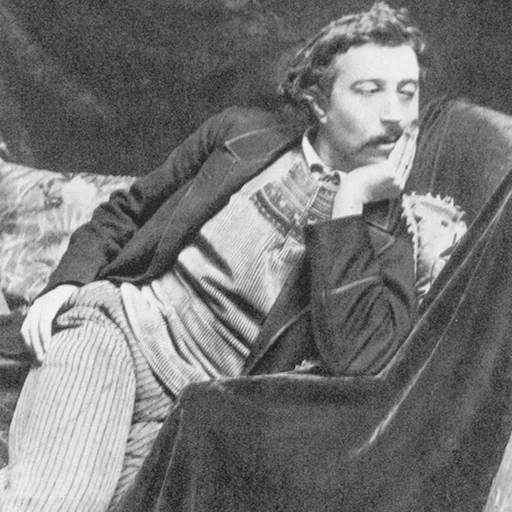
Artist
Eugène Henri Paul Gauguin (; French:; 7 June 1848 – 8 May 1903) was a French painter, sculptor, printmaker, ceramist, and writer, whose work has been primarily associated with the Post-Impressionist and Symbolist movements.

![A Pig; Breton Peasant Kneeling [verso], by Paul Gauguin](https://artifactworldgallery.com/img/paul-gauguin--a-pig-breton-peasant-kneeling-verso--7b9f71fc8b8672db-w320.webp) A Pig; Breton Peasant Kneeling [verso]
A Pig; Breton Peasant Kneeling [verso] Soldier in a Trench (recto) Reclining Woman (verso)
![Eye and Part of Face; A Breton Woman and Two Men [recto], by Paul Gauguin](https://artifactworldgallery.com/img/paul-gauguin--eye-and-part-of-face-a-breton-woman-and-two-men-recto--81c9125f35b9b9e6-w320.webp) Eye and Part of Face; A Breton Woman and Two Men [recto]
Eye and Part of Face; A Breton Woman and Two Men [recto]![Head of a Man with a Study of His Back; Various Sketches with a Peasant Woman and a Goose [recto], by Paul Gauguin](https://artifactworldgallery.com/img/paul-gauguin--head-of-a-man-with-a-study-of-his-back-various-sketches-with--2fa4d0cd45c52509-w320.webp) Head of a Man with a Study of His Back; Various Sketches with a Peasant Woman and a Goose [recto]
Head of a Man with a Study of His Back; Various Sketches with a Peasant Woman and a Goose [recto]![Five Sheep; Four Head Studies [verso], by Paul Gauguin](https://artifactworldgallery.com/img/paul-gauguin--five-sheep-four-head-studies-verso--c7b13148bfdbb0ae-w320.webp) Five Sheep; Four Head Studies [verso]
Five Sheep; Four Head Studies [verso]![Four Fantastic Forms [recto], by Paul Gauguin](https://artifactworldgallery.com/img/paul-gauguin--four-fantastic-forms-recto--183786bd7a3d5b0d-w320.webp) Four Fantastic Forms [recto]
Four Fantastic Forms [recto]![Group of Human Forms; A Man Seated [recto], by Paul Gauguin](https://artifactworldgallery.com/img/paul-gauguin--group-of-human-forms-a-man-seated-recto--4584f2f2117fc923-w320.webp) Group of Human Forms; A Man Seated [recto]
Group of Human Forms; A Man Seated [recto]![Four Studies of Breton Women; Shapes and Vases [verso], by Paul Gauguin](https://artifactworldgallery.com/img/paul-gauguin--four-studies-of-breton-women-shapes-and-vases-verso--9d4d602e9c3e8bff-w320.webp) Four Studies of Breton Women; Shapes and Vases [verso]
Four Studies of Breton Women; Shapes and Vases [verso]