Artwork
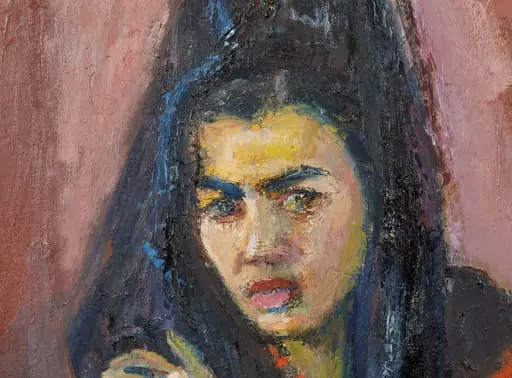
Portret de femeie cu lorgnion
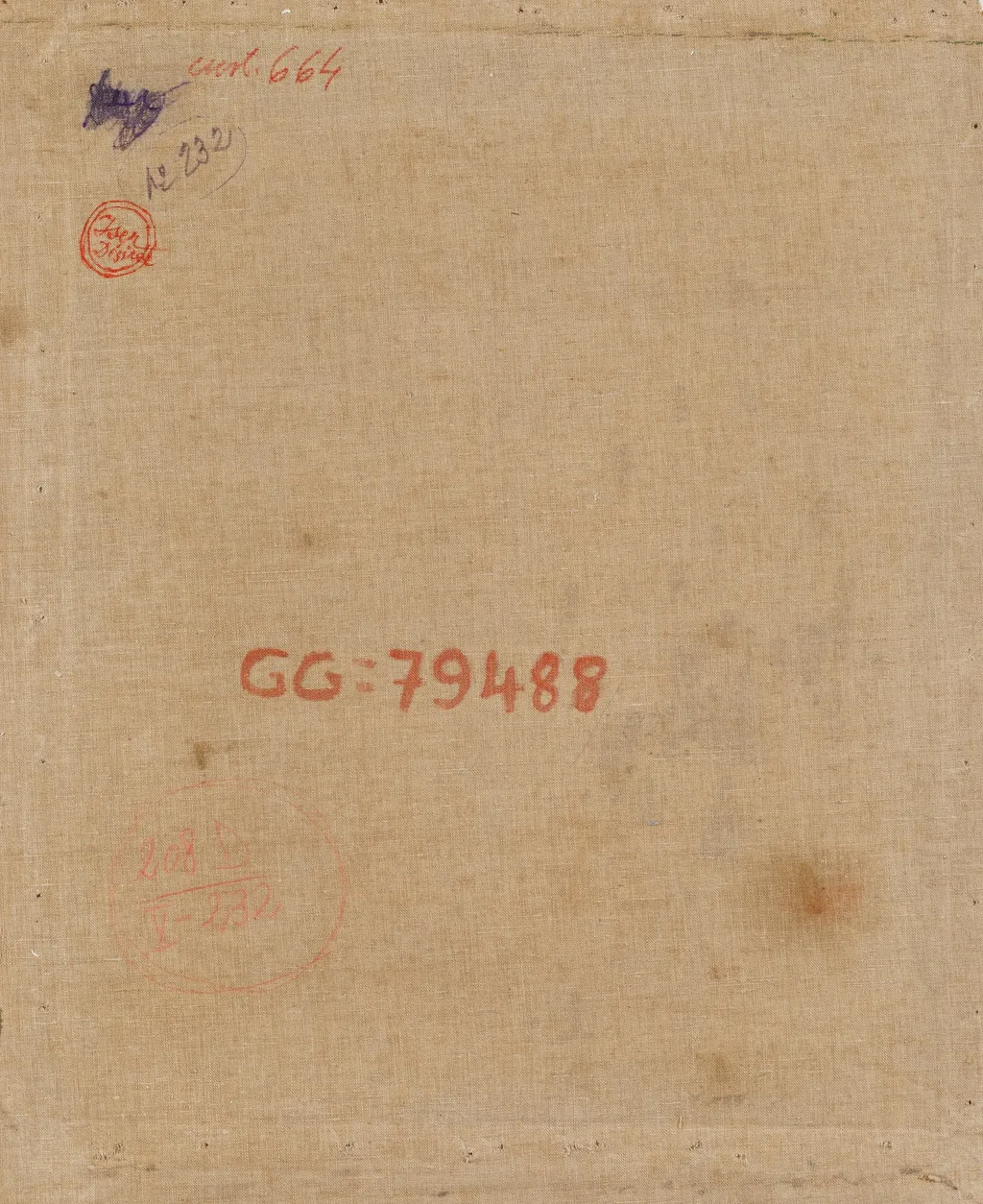
Portret de femeie cu lorgnion is an unspecified painting by Iosif Iser. It dates from 1850 and is held in the collection of the National Museum of Art of Romania.
About this work
Overview
Portret de femeie cu lorgnion, attributed to Iosif Iser and dated to around 1850, consists of a light‑toned canvas that appears almost devoid of imagery. The work is presented as a portrait despite the minimal visual content, inviting viewers to consider the notion of representation itself.
Subject & Meaning
Although titled as a portrait of a woman with a lorgnette, the canvas offers no discernible figure. The suggestion of a sitter is conveyed solely through the title, prompting reflection on absence, identity, and the conventions of portraiture.
Technique & Style
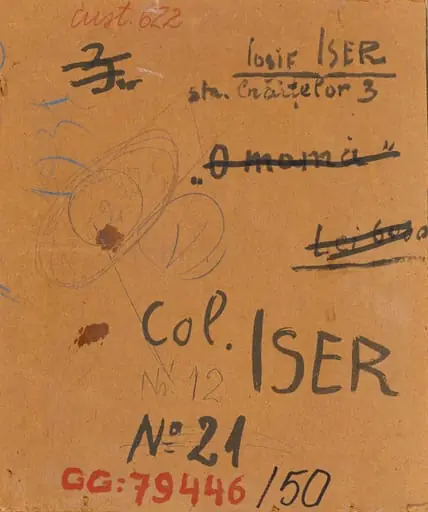
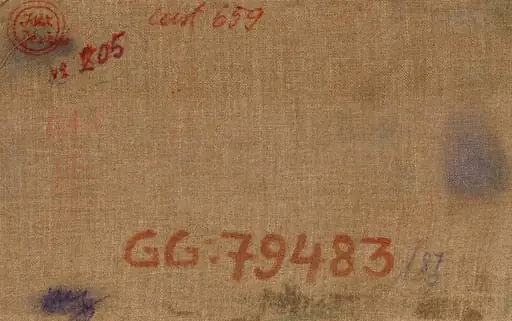
The surface bears faint, pencil‑like strokes in red and blue near the upper left and a darker smudge centrally, hinting at gestural experimentation. A small red stamp with alphanumeric characters in the lower right marks the work, underscoring its status as a study or archival piece rather than a finished painting.
History & Provenance
Created circa 1850, the piece aligns with a period in Iser’s career when he explored the limits of representation. Its current location and ownership are not documented in the provided information, and the red stamp may indicate a cataloguing or institutional accession number.
Context
Iser’s oeuvre includes investigations of space and form, often employing sparse compositions to challenge traditional narrative content. This work exemplifies that approach, using the void as a compositional element and questioning the expectations of portraiture in the mid‑nineteenth century.
Artist & collection
Artist
Iosif Iser painted everyday life with a focus on people and places. His 1933 work *Paris. Strada Mouffetard* shows a lively street scene in Paris, while *Nud pe fotoliu* depicts a seated nude figure. His brushwork…

 Țărănci pe câmp
 Odaliscă cu văl pe braț
 Prince with Attendants and Horse in Foreground
 Portret de turc
 Blocuri noi în Constanța
 Două nuduri în interior
 Page from Tales of a Parrot (Tuti-nama): blank page
 Nud la malul mării
 Geamie
 Prince in Pavilion; Princess with Attendants in Court
 Prince and Attendants in Palace Scene
 Court Scene with Various Princes and a Lady