Artwork
Țărănci pe câmp

Țărănci pe câmp is an unspecified painting by Iosif Iser. It dates from 1937 and is held in the collection of the National Museum of Art of Romania.
About this work
Overview
Iser’s focus on ordinary figures reflects a broader interest in the dignity of manual labor during interwar Romania.
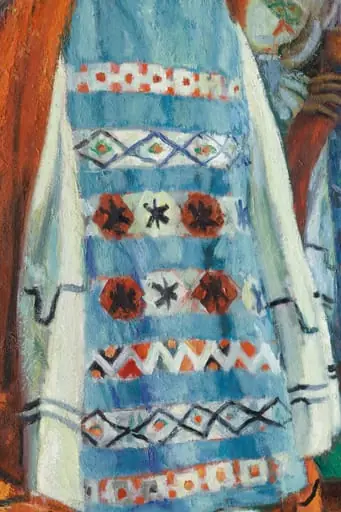
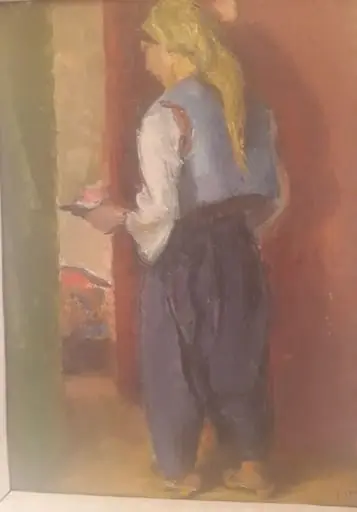
Created around 1937 by Romanian artist Iosif Iser, Țărănci pe câmp is a quiet depiction of rural labor. The painting captures a group of peasant women engaged in fieldwork, their movements rendered with subtle realism. The composition avoids dramatic tension, instead emphasizing the rhythm of daily toil against a muted landscape. Iser’s focus on ordinary figures reflects a broader interest in the dignity of manual labor during interwar Romania.
Subject & Meaning
The figures in the painting are shown in varied postures—bending, standing, gazing—suggesting both physical exertion and moments of pause. Their anonymity reinforces a collective experience rather than individual identity. The absence of tools or clear crops shifts attention to the act of labor itself, framing it as an enduring, almost ritualistic part of rural life. The stillness in their gazes hints at resignation or contemplation, not despair.
Technique & Style
Iser employs a restrained palette of earthy greens and browns, with soft transitions between tones to suggest atmospheric depth. Brushwork is deliberate but unobtrusive, avoiding sharp outlines in favor of blended forms that merge figures with the land. The background fades into a hazy horizon, enhancing the sense of quiet isolation. The style leans toward tonal realism, prioritizing mood over detail.
History & Provenance
The painting emerged during a period when Romanian artists increasingly turned to indigenous themes amid national cultural revival efforts. While specific ownership history is not widely documented, Țărănci pe câmp aligns with Iser’s broader body of work from the 1930s, which often centered on peasant life. It likely circulated within Romanian artistic circles before entering public collections.
Context
In interwar Romania, rural communities constituted the majority of the population, and artists like Iser sought to represent their lives with authenticity rather than idealization. This work responds to a broader movement in Eastern European art that rejected urban modernism in favor of regional identity. The painting’s quiet tone contrasts with more overtly political or romanticized depictions of peasantry common elsewhere.
Legacy
Though not widely exhibited internationally, Țărănci pe câmp remains a representative example of Iser’s commitment to understated realism. It contributes to a Romanian artistic tradition that values quiet observation over spectacle. Scholars cite it as evidence of how local artists navigated modernity without abandoning the cultural textures of rural life.
Artist & collection
Artist
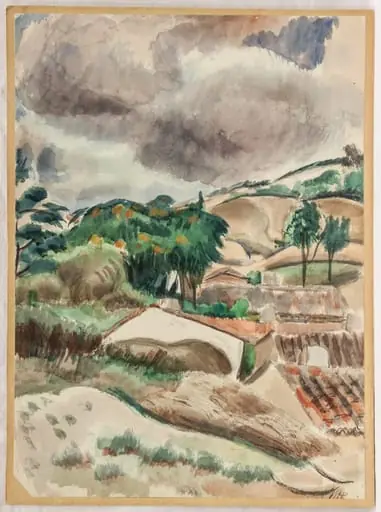
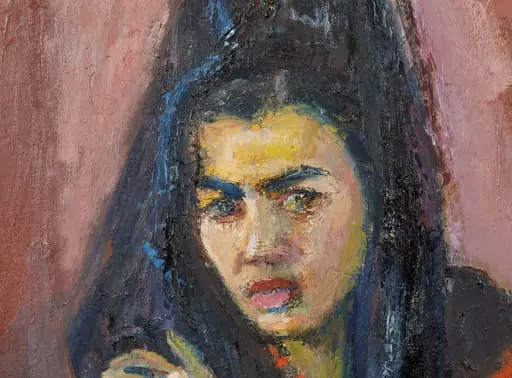
Iosif Iser painted everyday life with a focus on people and places. His 1933 work *Paris. Strada Mouffetard* shows a lively street scene in Paris, while *Nud pe fotoliu* depicts a seated nude figure. His brushwork…