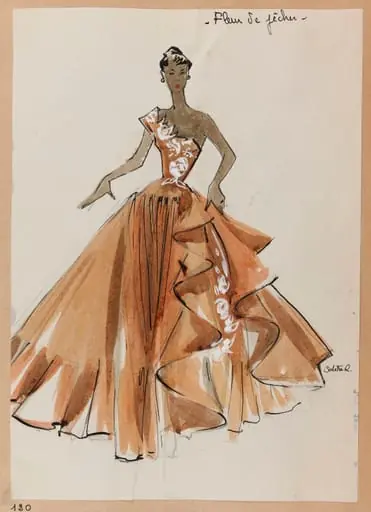
Artwork
Volubilis
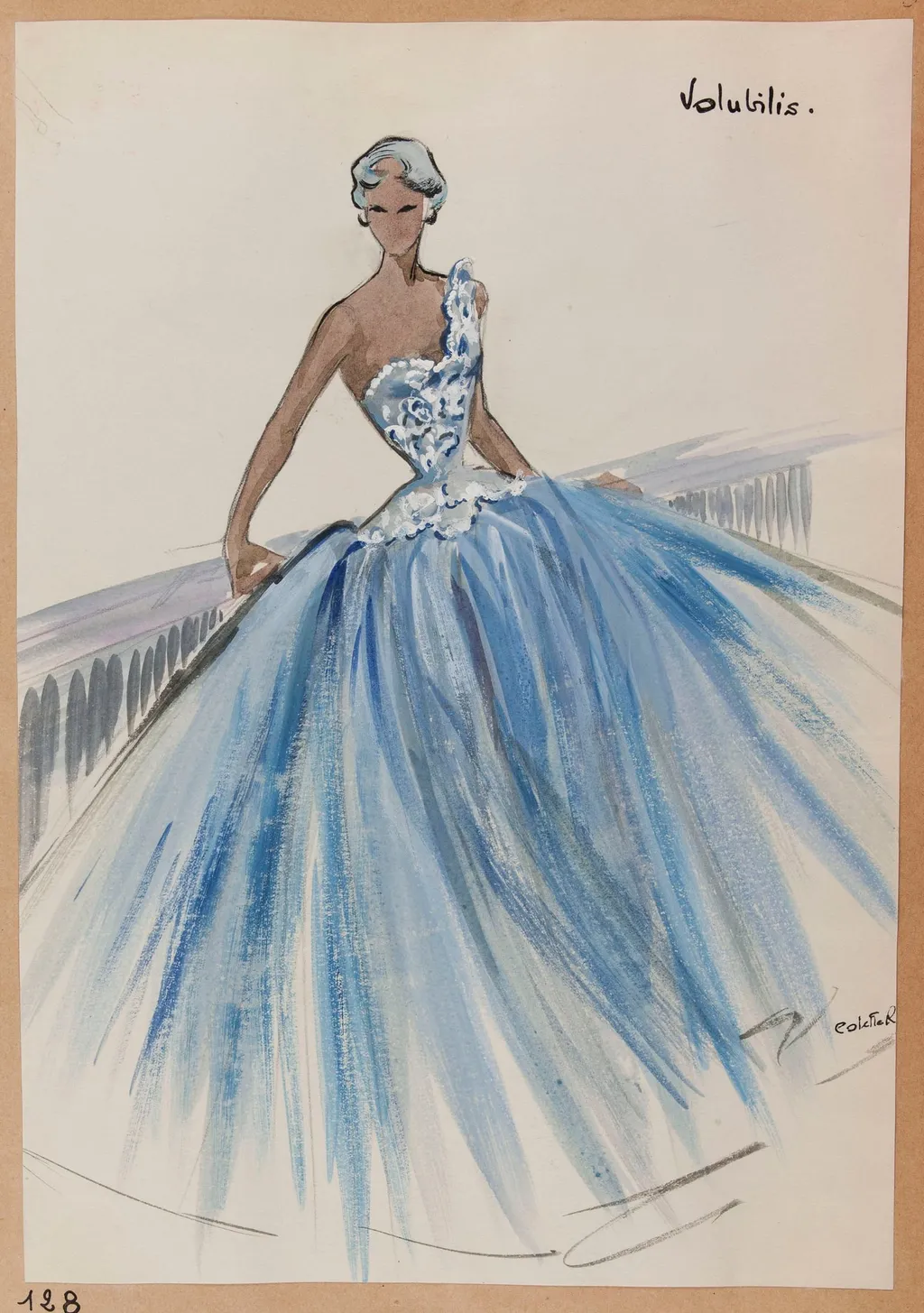
Volubilis is a drawing by Marie-Louise Carven. It dates from 1951 and is held in the collection of the Palais Galliera - Musée de la Mode de la Ville de Paris.
About this work
Overview
Though attributed to Marie-Louise Carven, the work is not a garment but a painting, possibly commissioned or inspired by her fashion aesthetic.
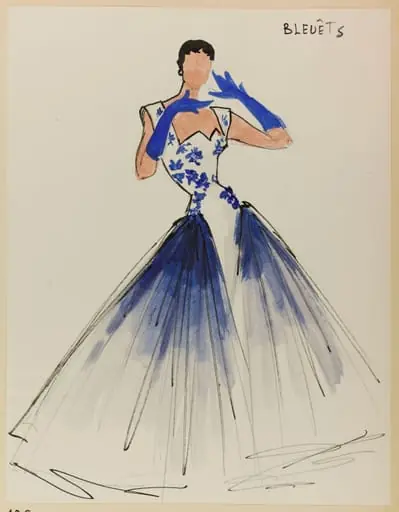
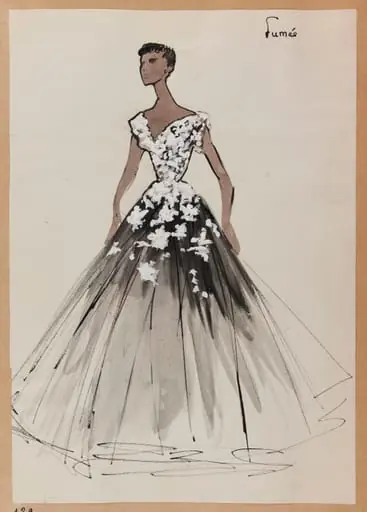
Created around 1951, *Volubilis* is a painted portrait of a woman in a blue ball gown adorned with white floral motifs. Though attributed to Marie-Louise Carven, the work is not a garment but a painting, possibly commissioned or inspired by her fashion aesthetic. It resides in the Museum of Ethnography, suggesting an interest in cultural representation through dress. The piece reflects Carven’s broader influence beyond textile design into visual culture.
Subject & Meaning
The subject is a woman standing on a balcony, gazing downward, her posture conveying quiet contemplation. Her elaborate gown, rendered with fine detail, anchors the composition and suggests a moment of stillness amid grandeur. The setting implies elevated social status, yet the downward gaze introduces introspection. The work may explore the tension between public presentation and private emotion, a theme resonant in mid-century portraiture.
Technique & Style
The painting emphasizes texture and light to render the gown’s fabric with subtle depth, using layered brushwork to suggest the sheen and volume of silk. The background is muted, allowing the dress to dominate visually. The figure’s updo and poised stance reflect 1950s ideals of elegance, while the composition’s simplicity—minimal architecture, restrained palette—focuses attention on form and materiality, echoing Carven’s design sensibilities.
History & Provenance
The painting entered the collection of the Museum of Ethnography at an unknown date, likely through acquisition or donation. Its attribution to Marie-Louise Carven remains unusual, as she was primarily known as a couturier, not a painter. It may have been created by another artist under her influence, or commissioned by her as a personal project. The museum’s holding suggests its significance as a cultural artifact linking fashion and visual art.
Context
In the early 1950s, Carven was pioneering accessible haute couture and one of the first French designers to launch a prêt-à-porter line. *Volubilis* emerges in this context of democratizing fashion, yet the painting itself remains a singular, non-commercial object. Its presence in an ethnographic museum hints at broader postwar interests in how clothing encodes identity, status, and cultural narrative beyond the runway.
Legacy
While Carven’s fashion legacy is well documented, *Volubilis* stands as a rare visual artifact connecting her aesthetic to fine art. It contributes to discussions on the permeability between fashion design and painting in mid-century Europe. The work’s preservation in an ethnographic context underscores its role as a cultural document—capturing not just a dress, but the social rituals surrounding it.
Artist & collection
Artist
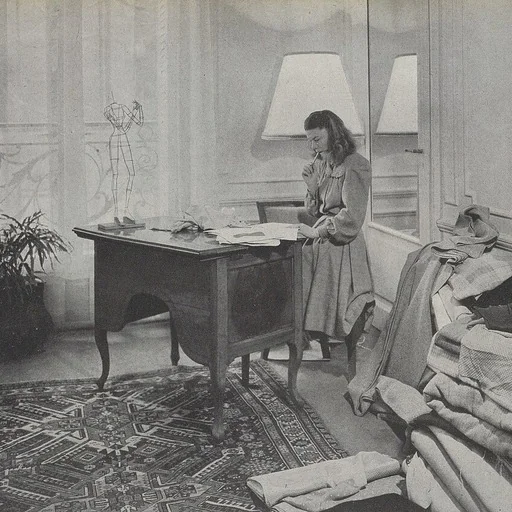
Marie-Louise Carven (31 August 1909 – 8 June 2015), born Carmen de Tommaso, was a French fashion designer who founded the house of Carven in 1945.
Museum
Palais Galliera - Musée de la Mode de la Ville de Paris
Continue through works from the same source collection.
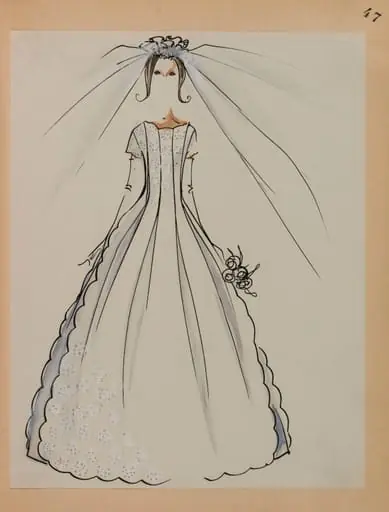 Robe de mariée festonnée et son voile
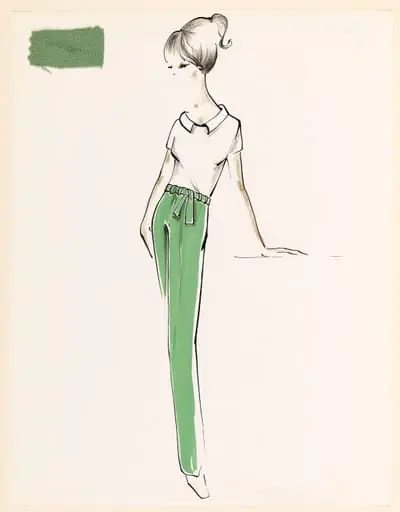 Haut blanc à manches courtes et pantalon vert à ceinture nouée
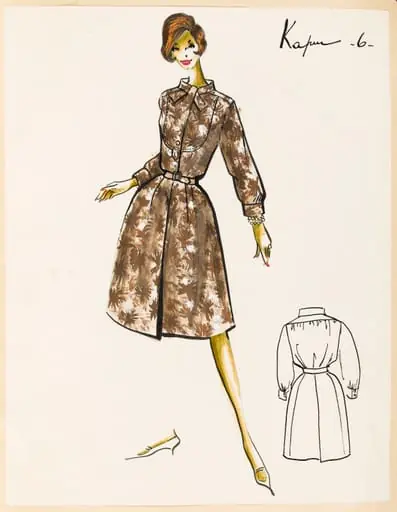 Kapur
Kapur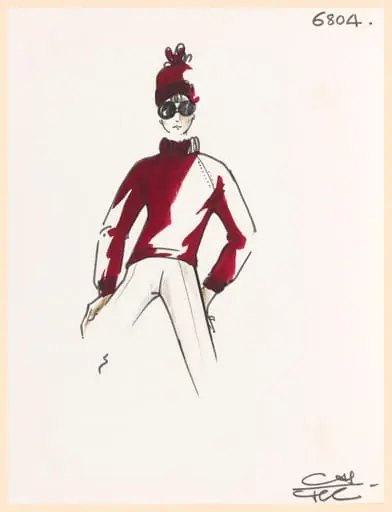 Pull-over à manches longues pourpre, bonnet assorti, pantalon et lunettes de soleil
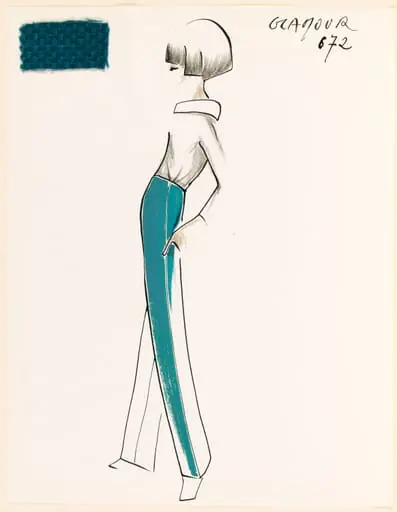 GLAMOUR
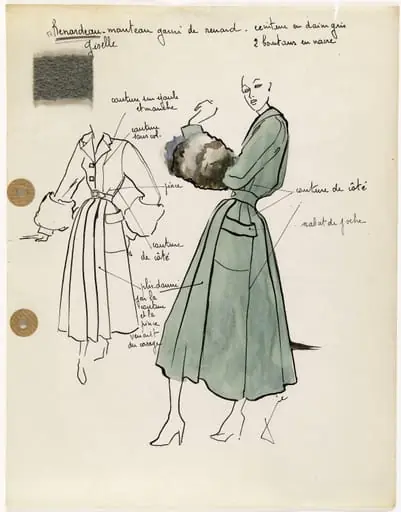 'Renardeau'
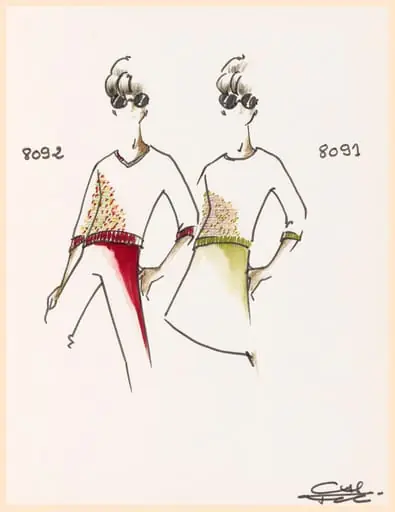 Pull-over à manches trois quarts et à encolure V à motifs multicolores, pantalon cerise et lunettes de soleil
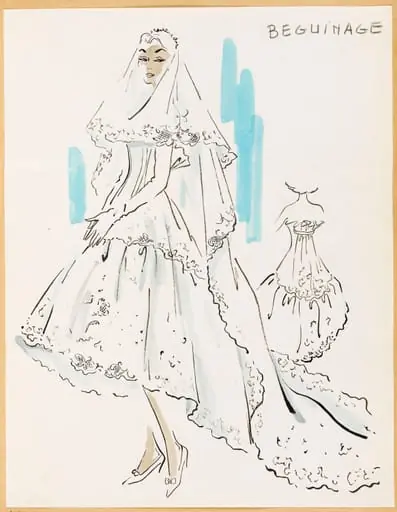 Béguinage