Artwork
Fleur blanche
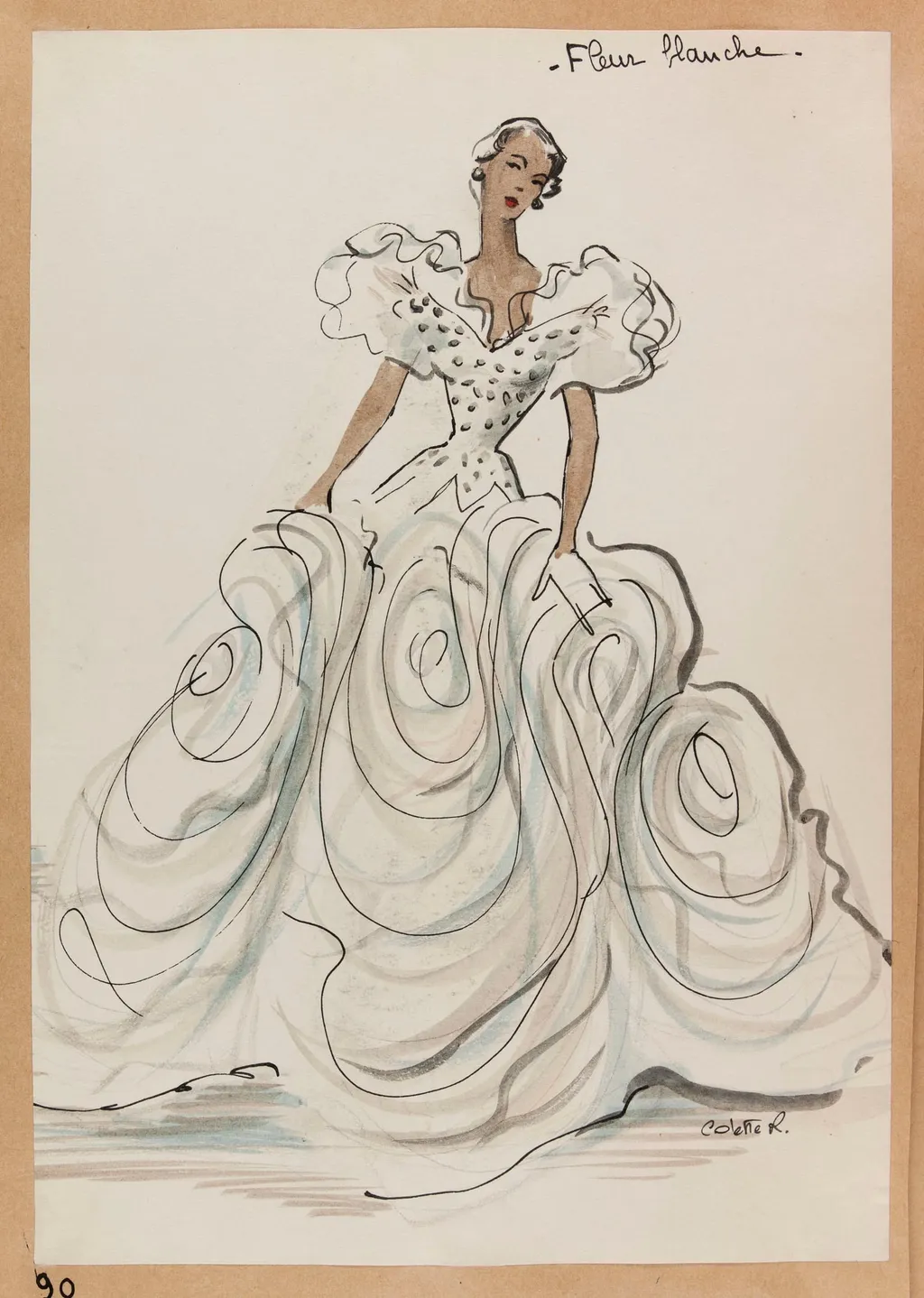
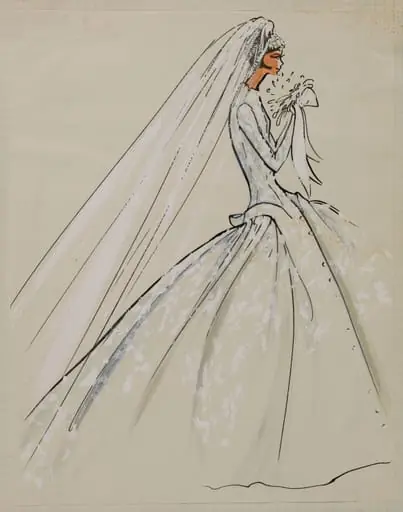
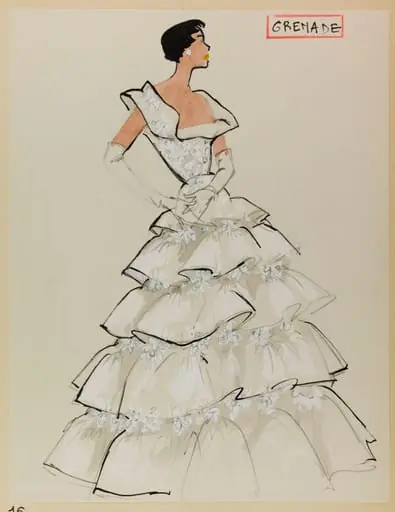
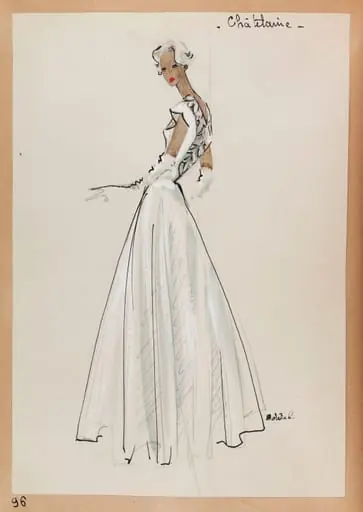
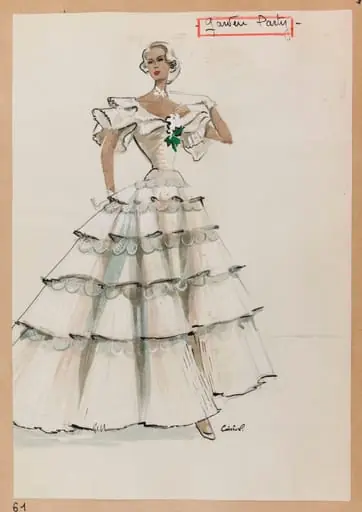
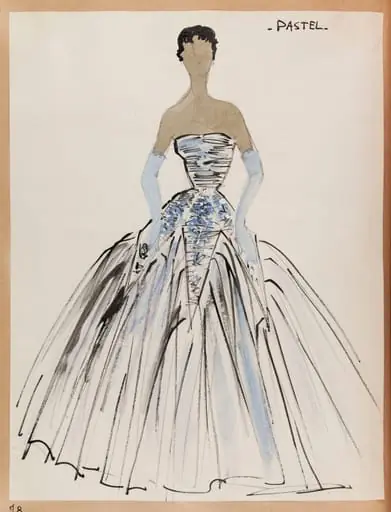
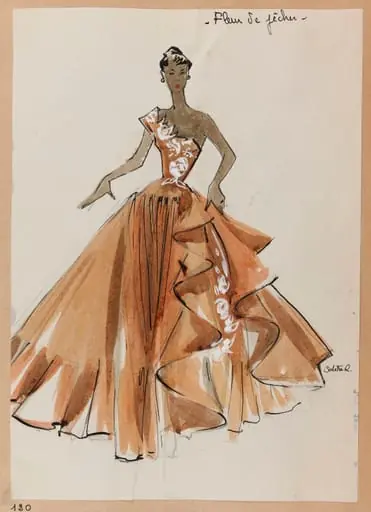
Fleur blanche is a drawing by Carven. It dates from 1951 and is held in the collection of the Palais Galliera - Musée de la Mode de la Ville de Paris.
About this work
Overview
Though labeled as an image, its execution suggests a deliberate fusion of fashion illustration and portraiture, reflecting mid-century aesthetic sensibilities.
Fleur blanche, dated around 1951, is a painted portrait attributed to the designer and artist Carven. It is part of the collection at the Museum of Ethnography. The work presents a solitary female figure in a stylized domestic setting, rendered with attention to textile detail and posture.
Though labeled as an image, its execution suggests a deliberate fusion of fashion illustration and portraiture, reflecting mid-century aesthetic sensibilities.
Subject & Meaning
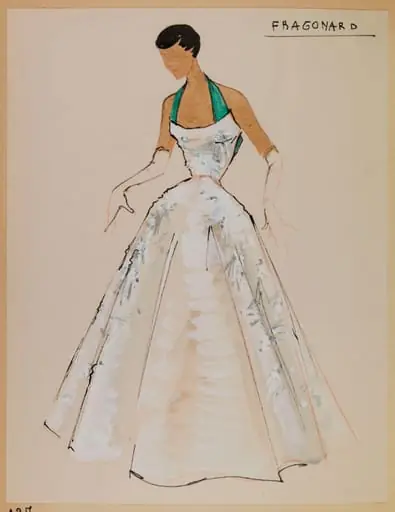
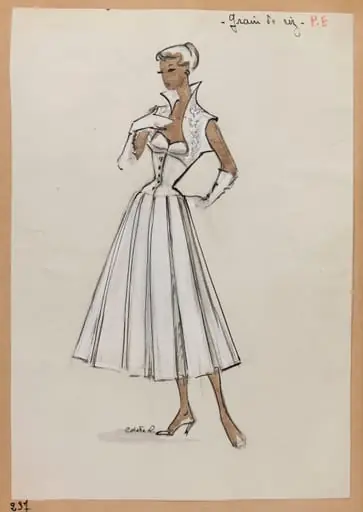
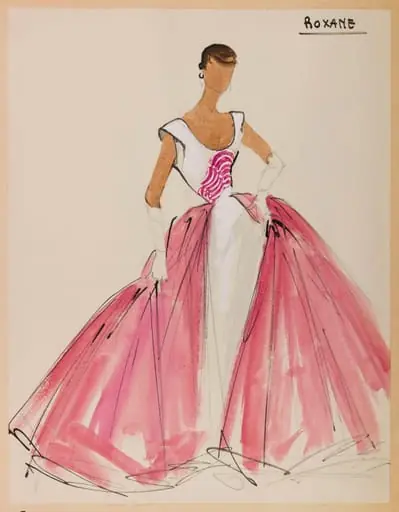
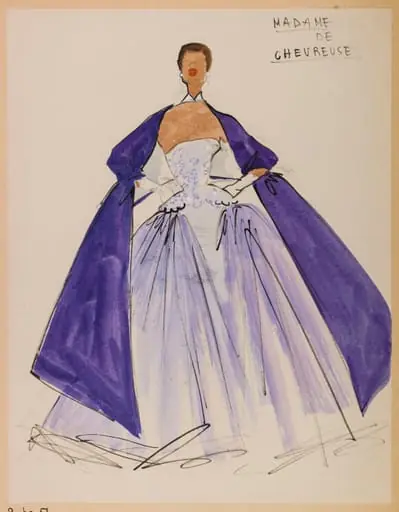
The subject is a woman dressed in a white gown with puffed sleeves and a V-neck, adorned with small circular patterns. Her pose, hand on hip, the other holding her skirt, suggests quiet composure rather than performance. The title, meaning 'white flower,' may allude to purity or fragility, but the figure’s grounded stance resists romantic idealization. The absence of context or narrative implies an emphasis on presence over story.
Technique & Style
The painting employs flat, even planes of color with subtle tonal shifts to suggest volume. The dress’s dotted pattern is rendered with precision, contrasting with the softer modeling of the skin and hair. Facial features are simplified, and the background is deliberately muted to focus attention on the figure’s form and attire.
The style leans toward illustrative realism, with minimal use of shadow or texture beyond the fabric’s decorative elements.
History & Provenance
Fleur blanche was created circa 1951, during Carven’s active period in fashion design. It entered the Museum of Ethnography’s collection in the latter half of the 20th century, likely as part of an effort to document fashion as cultural artifact. No documentation exists regarding its original commission or exhibition history, and its transition from private to institutional ownership remains unrecorded.
Context
In the early 1950s, Parisian fashion designers often blurred lines between clothing creation and visual art. Carven, known for elegant women’s wear, may have produced this work as a study or promotional piece. The painting reflects postwar ideals of femininity, refined, contained, and adorned, while aligning with broader trends in mid-century illustration that elevated everyday dress as subject matter.
Legacy
Fleur blanche remains a quiet example of how fashion design intersected with visual art in the mid-20th century. It is not widely reproduced or analyzed, but its inclusion in an ethnographic museum signals its value as a cultural document. The work contributes to understanding how designers conceptualized identity through clothing, beyond the runway or commercial catalog.
Artist & collection
Artist
These delicate ink-on-paper drawings capture the quiet poetry of everyday things: pinecones, reeds, apples.
Museum
Palais Galliera - Musée de la Mode de la Ville de Paris
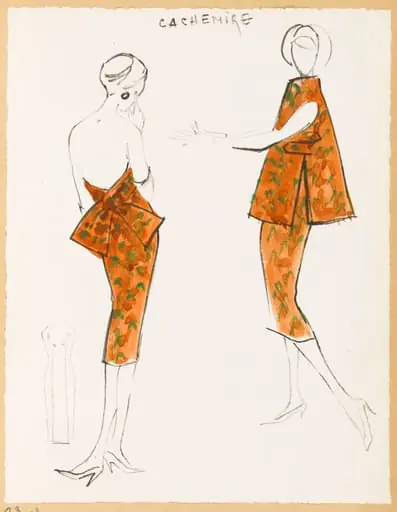
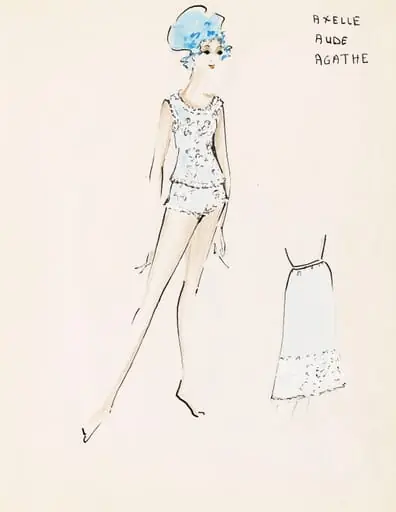
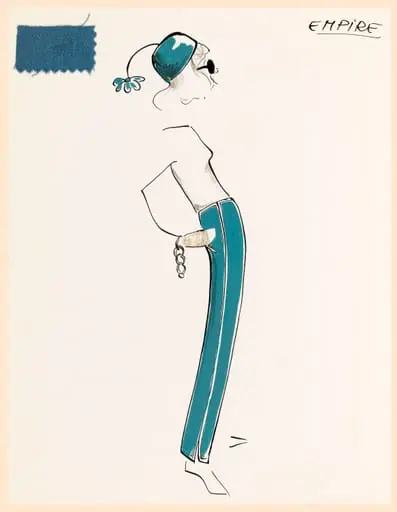
Continue through works from the same source collection.