Portrait of Isabella of Portugal
1450
oil
panel
From the collection of J. Paul Getty Museum
1450
oil
panel
From the collection of J. Paul Getty Museum
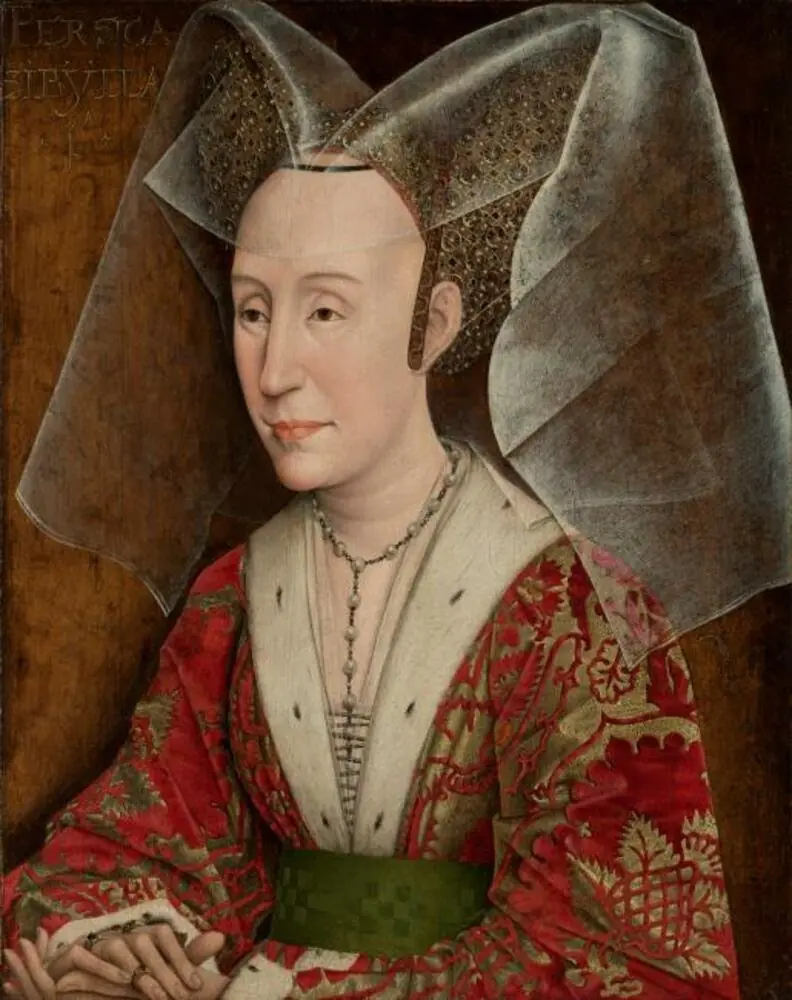
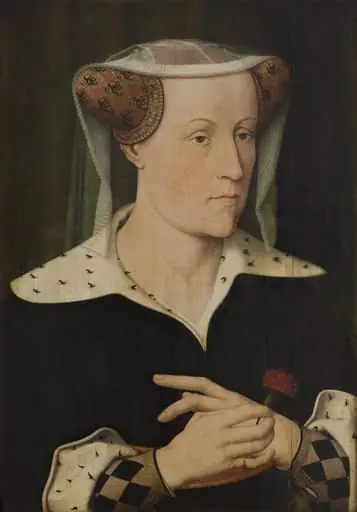
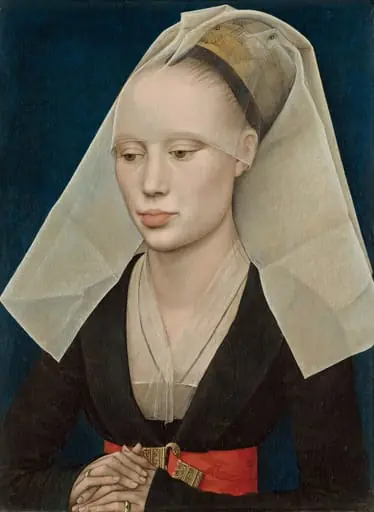
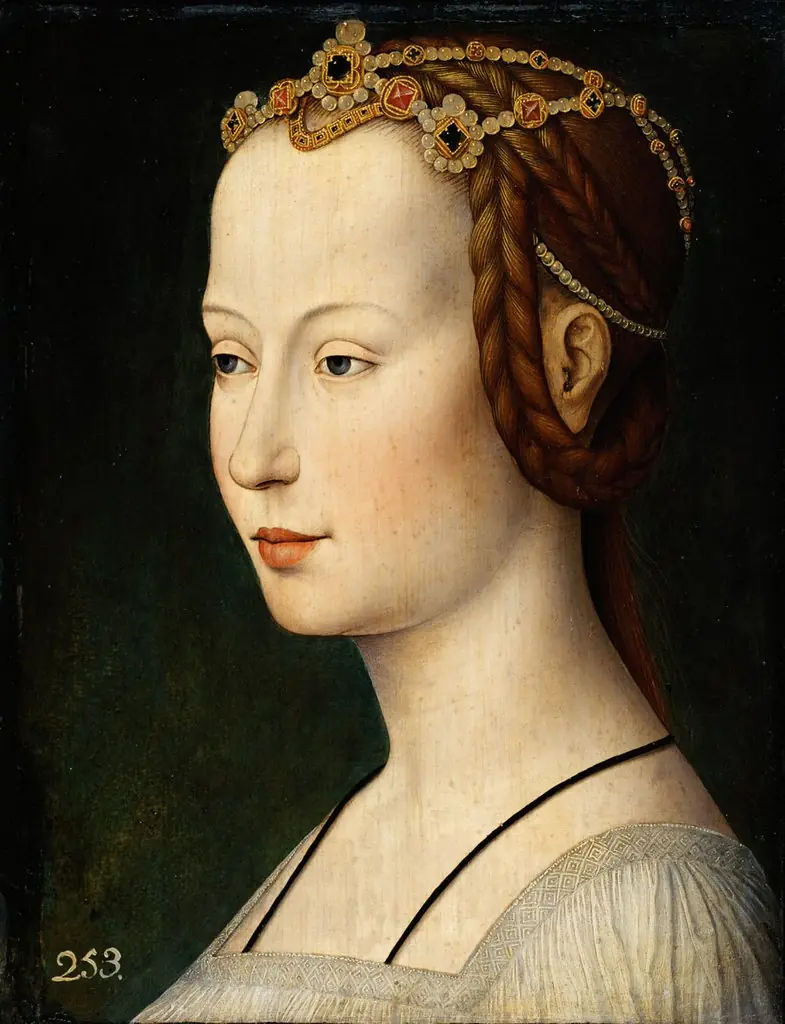
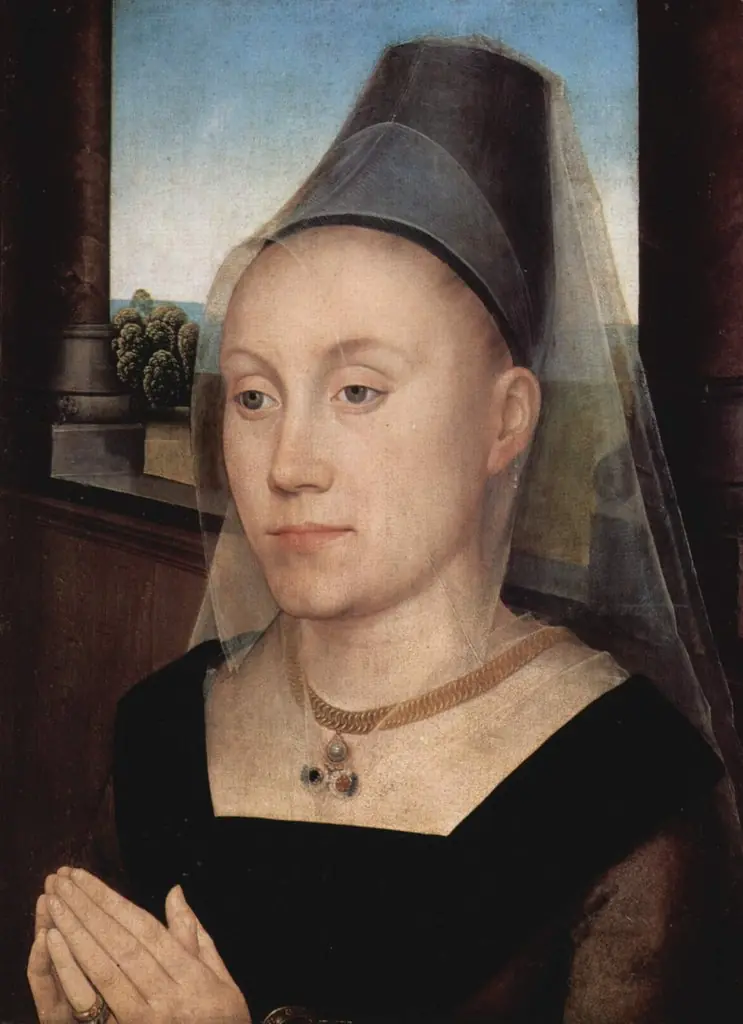
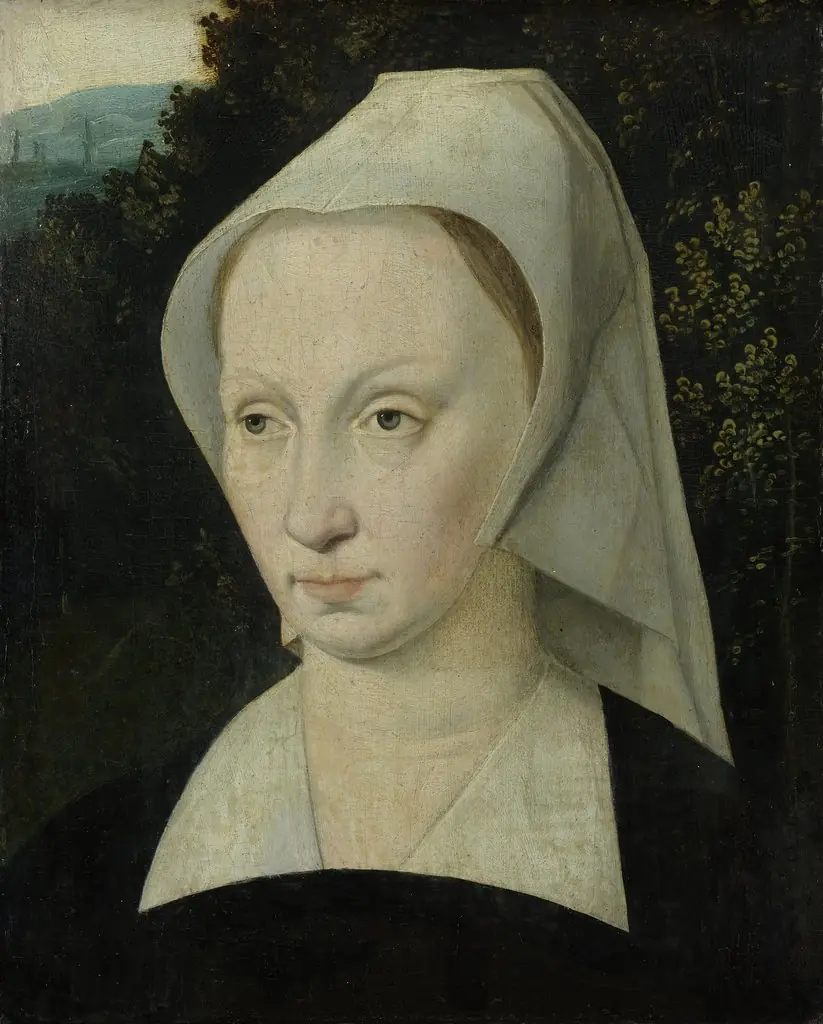
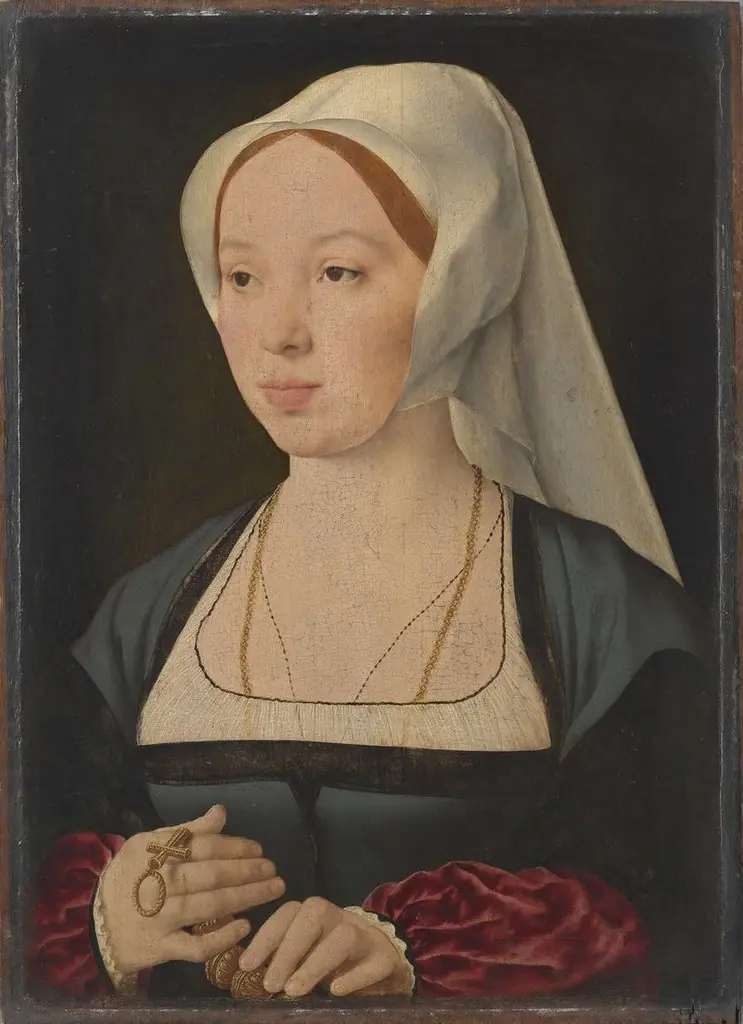
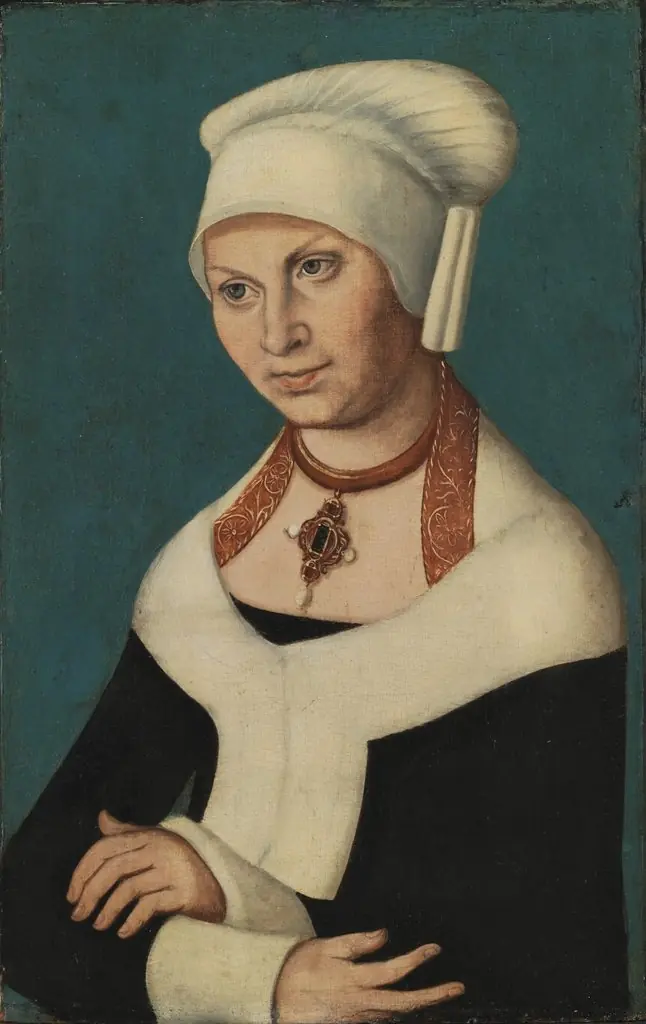
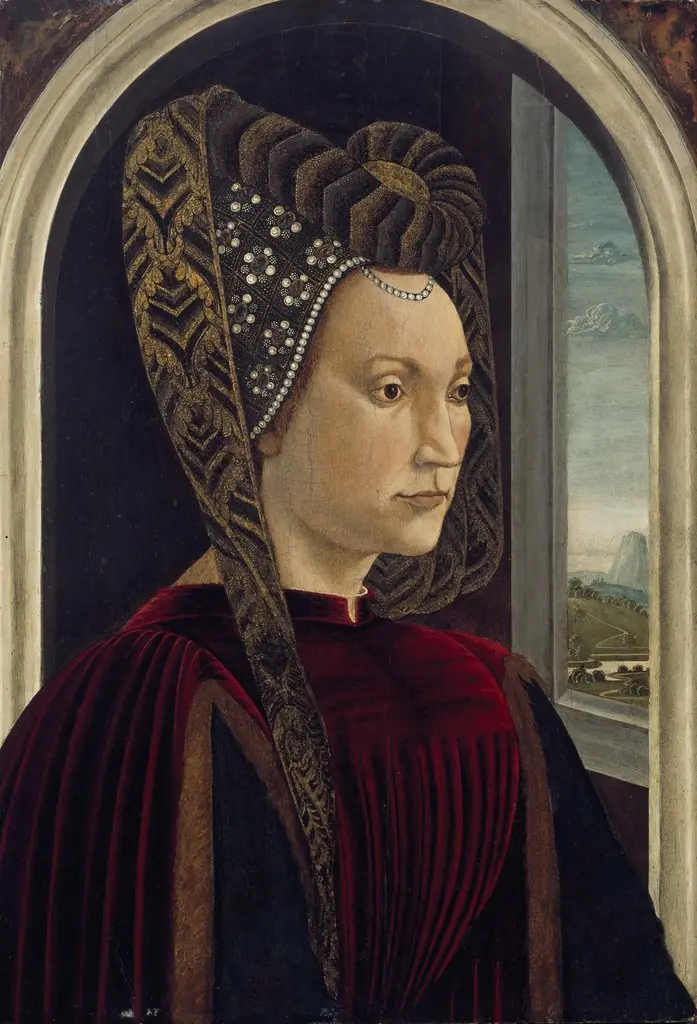
Portrait of Isabella of Portugal is a 1450 oil by Unknown, a Northern Renaissance work, held at J. Paul Getty Museum.
This painting features a woman with a solemn expression, her face slightly tilted to the left. She wears a red and gold robe with a white collar and a green belt, and her head is covered with a transparent veil. The background is a dark wood panel. The woman's attire and the style of the painting suggest a sense of elegance and refinement. The artist's use of color and composition creates a sense of depth and dimensionality.
The Portrait of Isabella of Portugal is a 15th-century oil-on-oak painting of Isabella of Portugal, Duchess of Burgundy, the third wife of Philip the Good. The portrait was probably completed by a member of Rogier van der Weyden's workshop, although it was earlier attributed to him. It dates to around 1450.
Source: wikipedia, available under CC BY-SA 4.0.
Isabella's expression is slightly mocking. She is dressed in an ornately decorated red and gold brocade dress, tightly pulled below at her waist by a green sash, although the artist did not match the brocade pattern on the sleeves. The high butterfly hennin and the rings on her fingers denote nobility. The duchess's fingers are elongated, typical of van der Weyden's style, yet this is believed to be a copy of an original van der Weyden portrait which is now lost. On the upper right is the inscription PERSICA SIBYLLA IA, which suggests it may have been one of a series of portraits depicting…
Source: wikipedia, available under CC BY-SA 4.0.
It is not known who owned the painting before 1629. It may have belonged to Alexandre d'Arenberg, Duke of Croy and Prince of Chimay, from the end about 1590 to 1629. It was bought by a dealer in 1883 and later sold to Adolph Carl de Rothschild a few years later; when he died in 1900, his son, Baron Maurice de Rothschild inherited the painting, and sold it to John D. Rockefeller in 1927. It stayed in the Rockefeller family until the Getty Center bought it in 1978.
Read the full account in the museum source.
Source: wikipedia, available under CC BY-SA 4.0.