Artwork
Death of Mary, space remaining after the lost relief: Mary Returns to Sleeping St Theophilus of Adana a Pact Signed at the Instigation of the Devil (carved obverse); Christ before Caiaphas, Carrying t
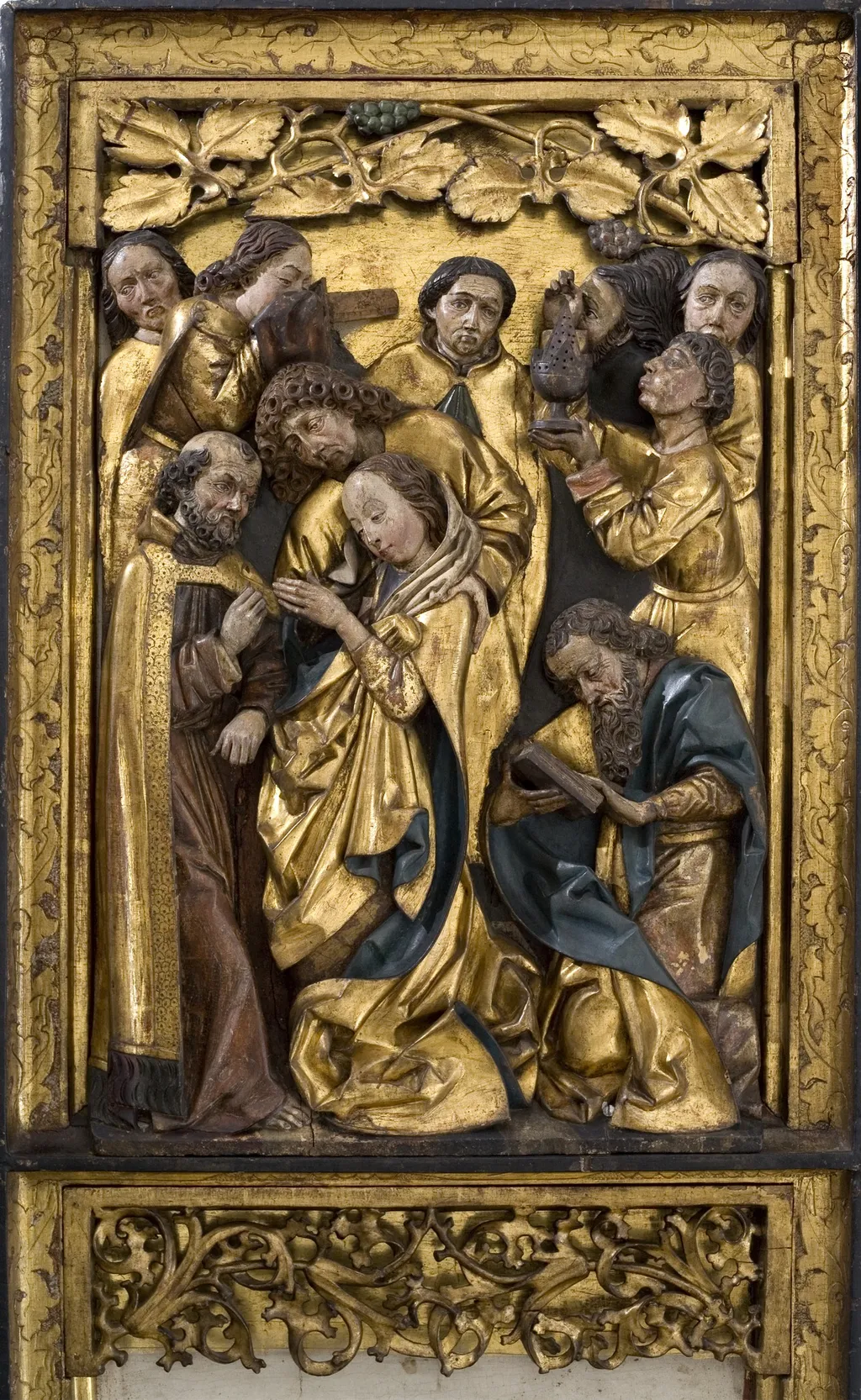
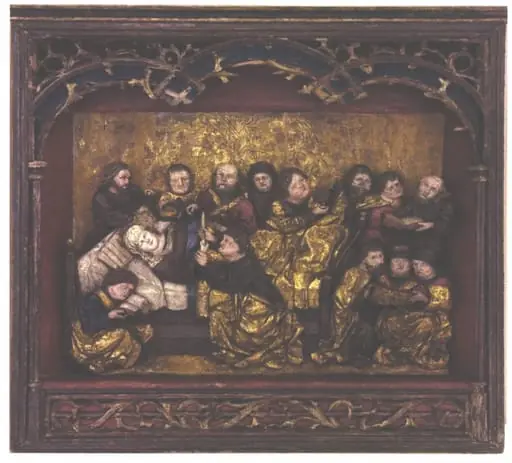
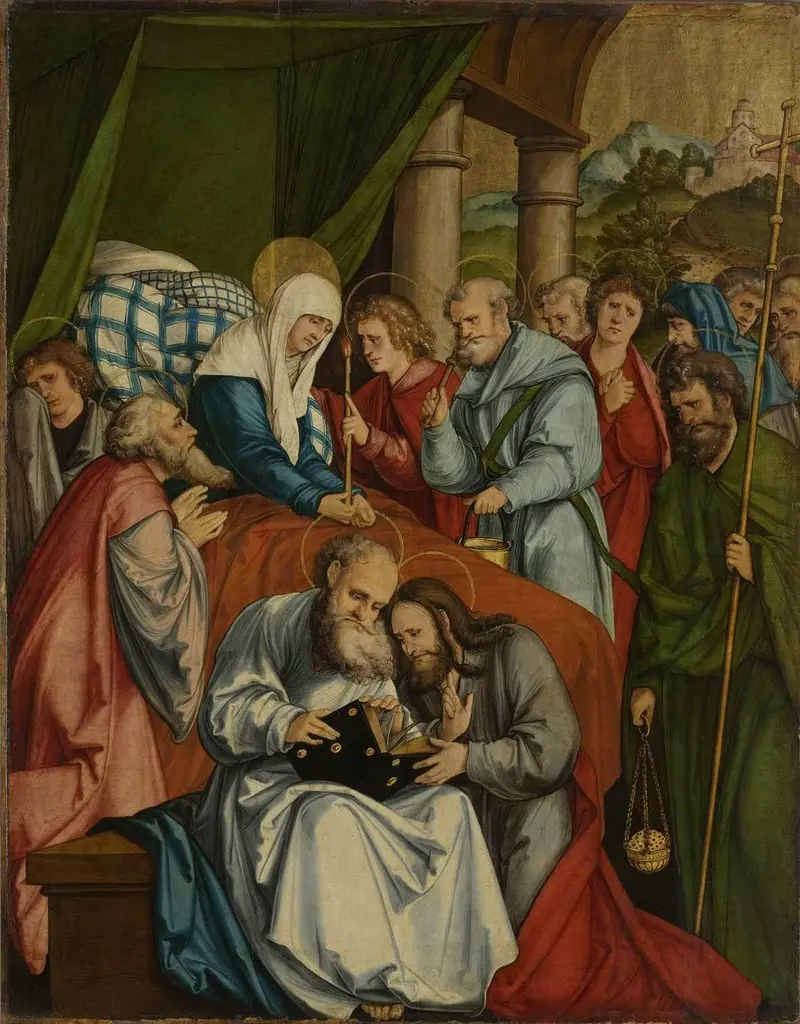
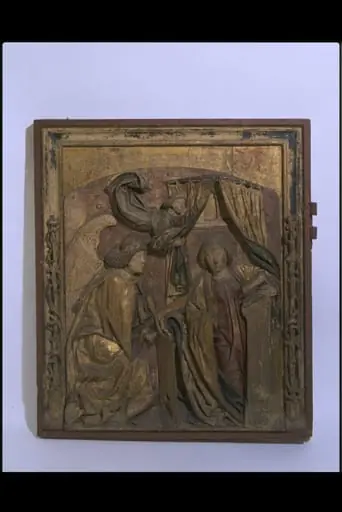
Death of Mary, space remaining after the lost relief: Mary Returns to Sleeping St Theophilus of Adana a Pact Signed at the Instigation of the Devil (carved obverse); Christ before Caiaphas, Carrying t is an unspecified painting by the Northern Renaissance artist Unknown. It dates from 1500 and is held in the collection of the National Museum in Kraków. This painting portrays the mourning of the Virgin Mary’s death, with a group of figures gathered around her lifeless form.
About this work
Overview
This painting portrays the mourning of the Virgin Mary’s death, with a group of figures gathered around her lifeless form.
This painting portrays the mourning of the Virgin Mary’s death, with a group of figures gathered around her lifeless form. The composition is structured with solemn stillness, emphasizing reverence through posture and gesture. A warm, golden background enhances the spiritual atmosphere, while chiaroscuro modeling gives the figures tangible volume and emotional weight, drawing focus to the central figure without overt drama.
Subject & Meaning
The scene depicts the Dormition of the Virgin, a moment of sacred transition rather than violent death. Attendees, including apostles and holy figures, hold symbolic objects like books and crosses, signaling their roles as witnesses and keepers of her legacy. The absence of overt anguish suggests acceptance of divine will, aligning with Eastern Christian traditions that emphasize Mary’s peaceful passage into eternal rest.
Technique & Style
The artist employs chiaroscuro to model forms with subtle gradations of light and shadow, lending three-dimensionality to the draped robes and faces. The golden background, though flat, contrasts with the modeled figures to isolate them spatially. Brushwork is controlled and precise, favoring clarity of form over expressive texture, reflecting a devotional intent rooted in late medieval iconography rather than naturalism.
History & Provenance
The painting was likely created in the late 13th or early 14th century, possibly in a Byzantine-influenced workshop in southern Italy or the Balkans. It may have originally been part of a larger altarpiece, with a carved relief now lost on the reverse side. Its survival suggests it was venerated in a monastic or cathedral setting, though its early ownership records remain undocumented.
Context
Produced during a period when Marian devotion was intensifying across Europe, the image reflects theological emphasis on Mary’s role as intercessor and model of humility. Its stylistic ties to Byzantine icons indicate continued influence from Eastern traditions, even as Western Gothic elements began to emerge. The composition avoids narrative complexity, favoring contemplative stillness suited to private prayer or liturgical use.
Legacy
Though not widely known today, the painting exemplifies a quiet, devotional mode of Marian imagery that persisted in regional workshops long after the rise of Renaissance naturalism. Its restrained emotion and symbolic clarity influenced later liturgical art in Orthodox and some Catholic communities, preserving an aesthetic of reverence over spectacle.
Artist & collection

 Domestic Scene
 Giacomo and Cardinal Marco, investing Andrea, Abbot of San Zeno, with his Benefice
 The Nymph of Fontainebleau
 Portrait of a Woman
 Madonna and Child with Saints in the Enclosed Garden
 Venus and Minerva
 Family Group of Four on Sofa
 Wall painting from Room H of the Villa of P. Fannius Synistor at Boscoreale
 Saint Stephen's Dispute with the Jews
 The Lamentation
 The Adoration of the Magi
 Saint Apostles (reverse: Christ – Man of Sorrows). The left panel of the retable from Stary Żywiec
 Adormirea Maicii Domnului
 The Ascension
 Kreuzaltar, Flügelaußenseite: Die Kaiserin Helena befragt die Juden und Kreuzigung Christi
 Christgartner Altar: Tod Mariens
 The Crucifixion
 The Miracle of Pentecost
 Saint Apostles (reverse: Our Lady of Sorrows). The right panel of the retable from Stary Żywiec
 Untitled