Artwork
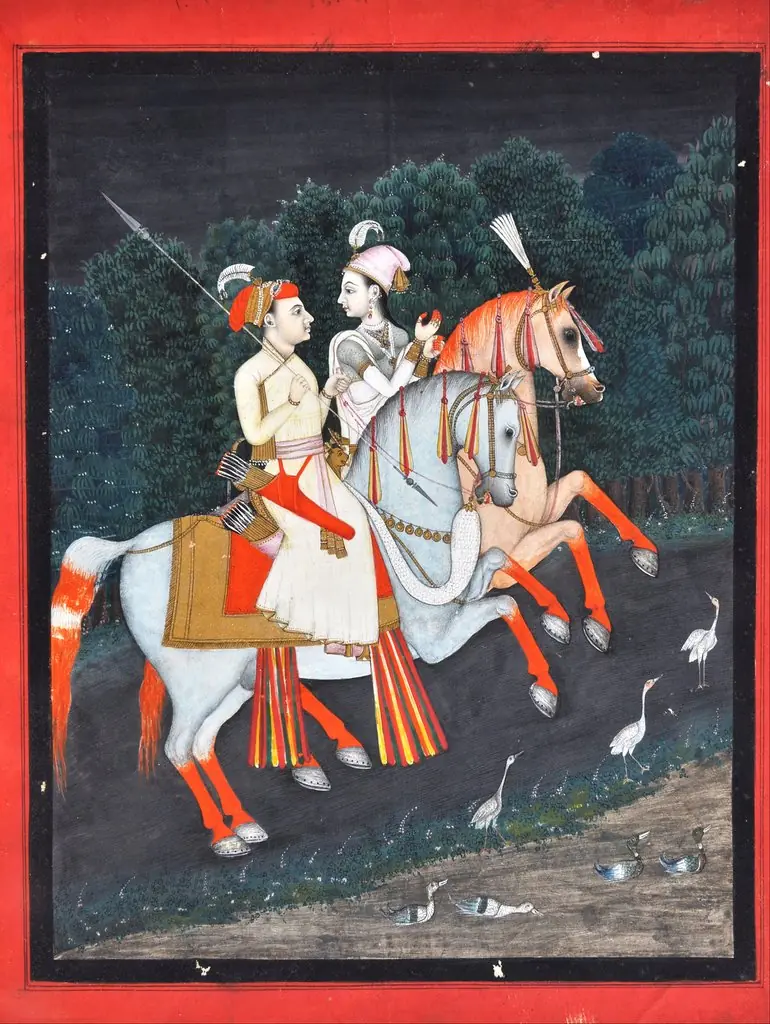
Chand Bibi playing Polo
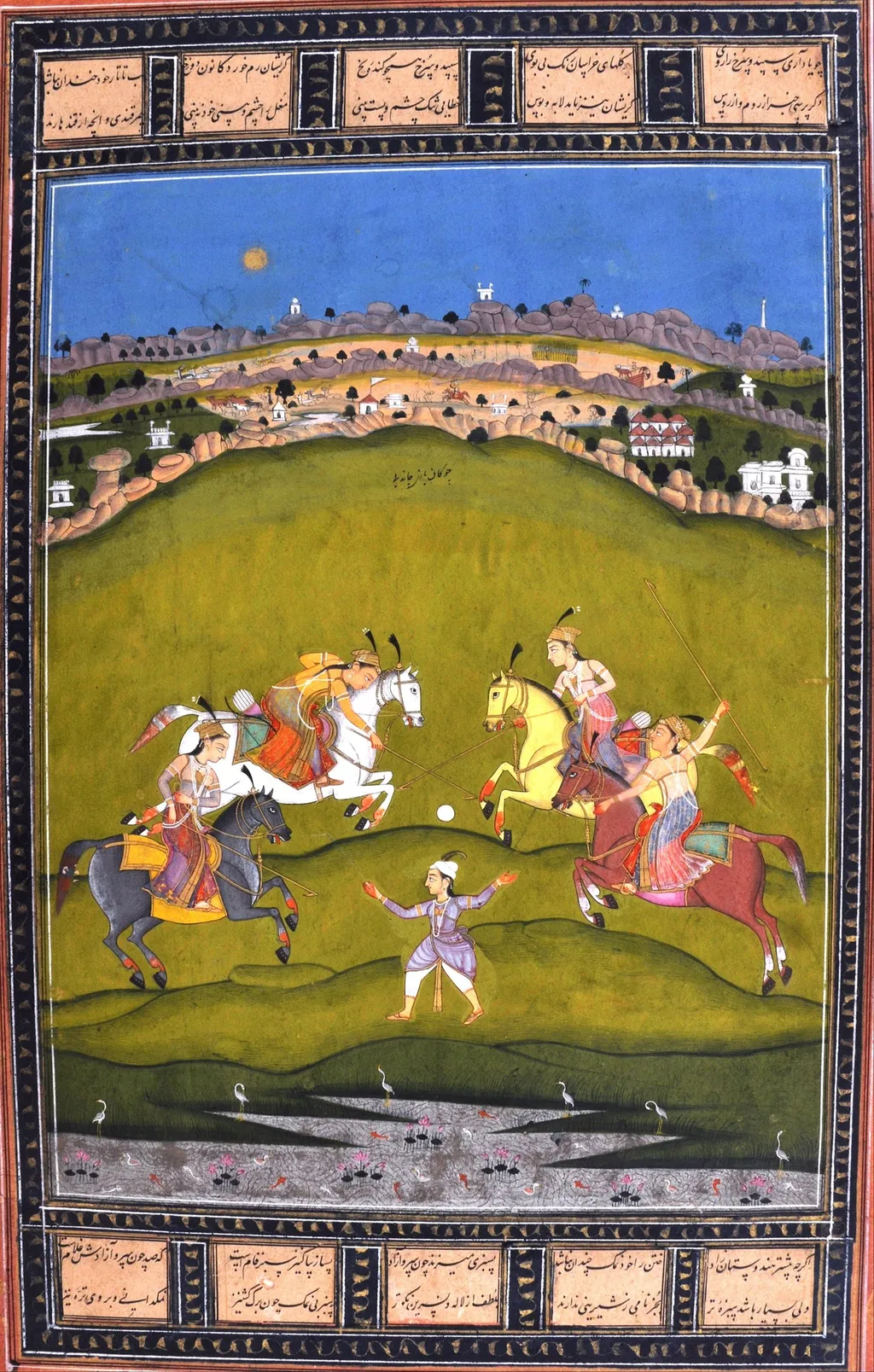
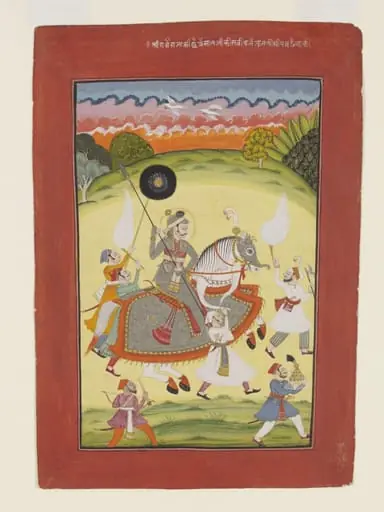
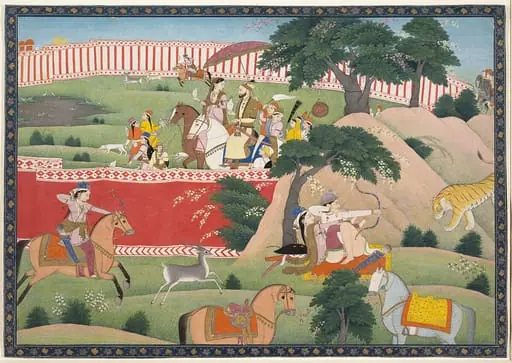
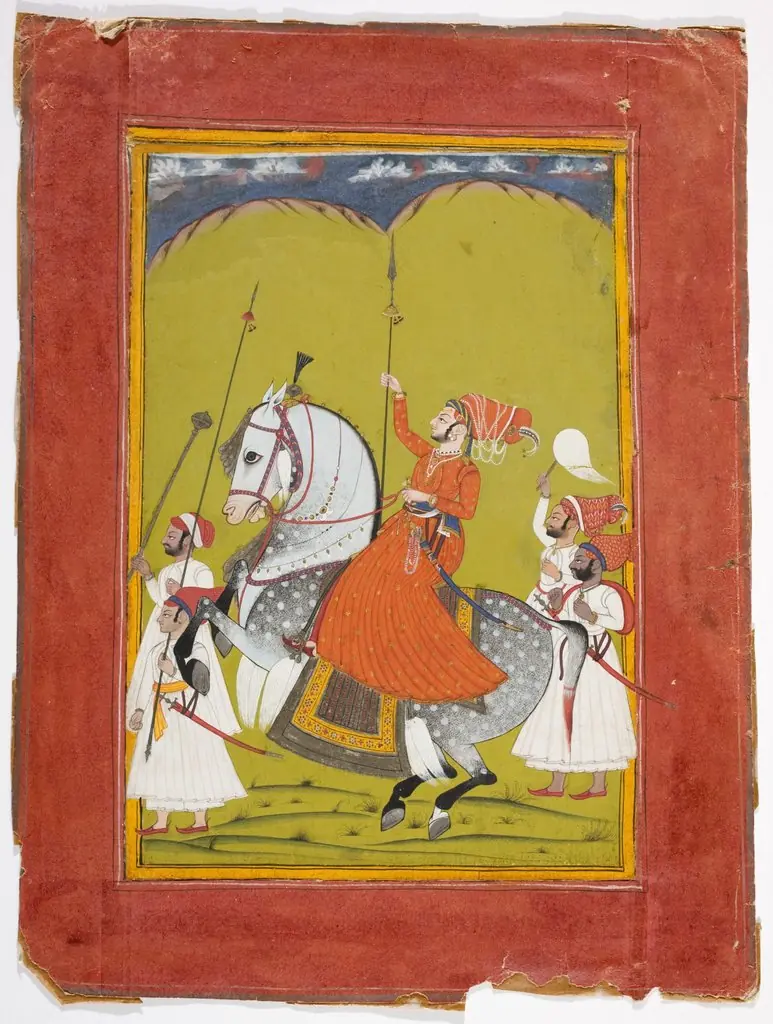
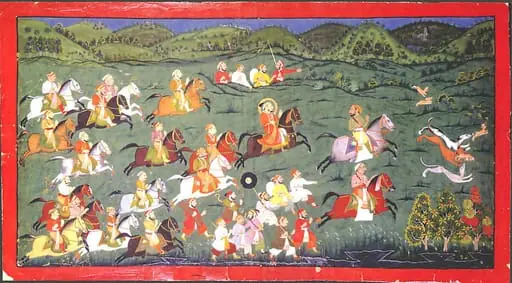
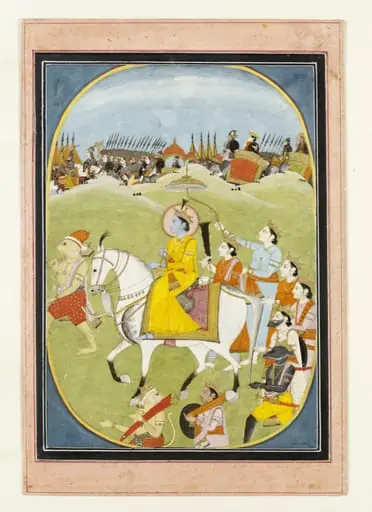
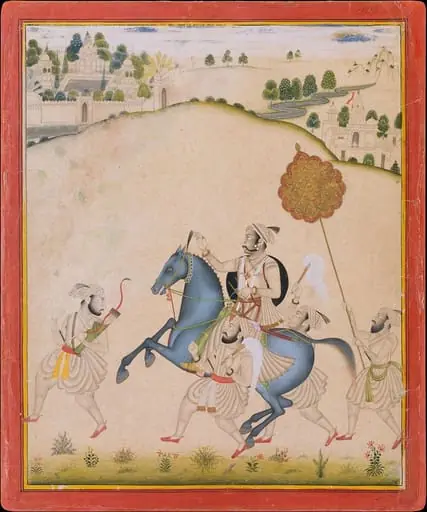
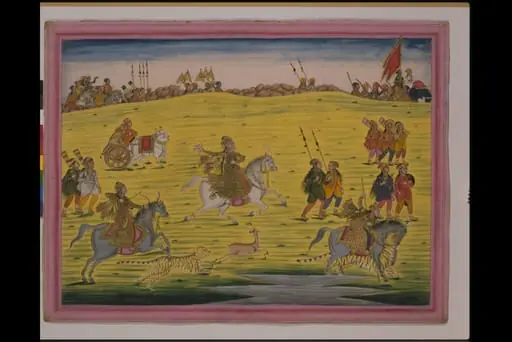
Chand Bibi playing Polo is an unspecified painting by Unknown. It is held in the collection of the National Museum. This painting depicts a dynamic polo match involving four riders on horseback, rendered in vivid detail.
About this work
Overview
The scene is set against a gentle landscape of rolling green hills and sparse trees, with distant structures hinting at a royal enclosure.
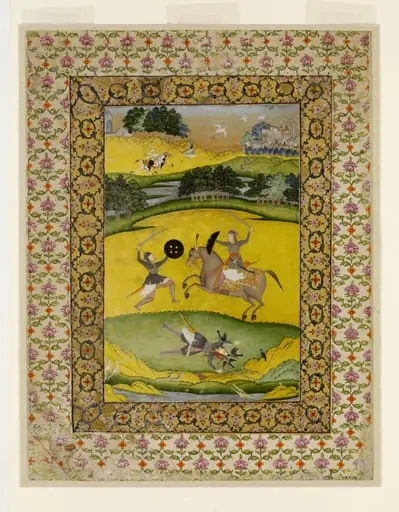
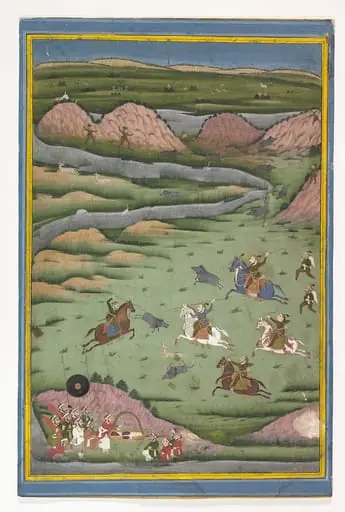
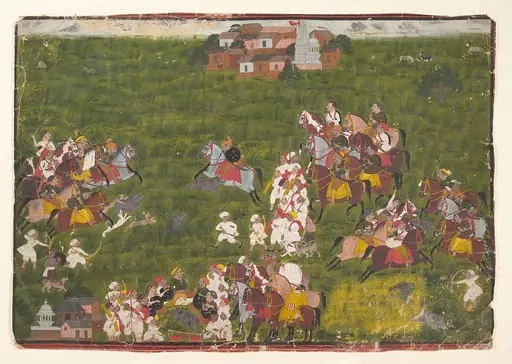
This painting depicts a dynamic polo match involving four riders on horseback, rendered in vivid detail. The scene is set against a gentle landscape of rolling green hills and sparse trees, with distant structures hinting at a royal enclosure. The composition emphasizes motion and color, with each figure and animal rendered in distinct hues and elaborate textiles, suggesting a courtly pastime rather than a military exercise.
Subject & Meaning
The scene portrays Chand Bibi, a prominent 16th-century ruler of Ahmednagar, engaged in polo—a sport associated with nobility and martial skill. Her participation challenges conventional gender roles of the period, signaling her authority and active role in courtly life. The presence of other riders implies a formal gathering, reinforcing the event’s ceremonial significance within the Deccan aristocracy.
Technique & Style
The work employs fine brushwork to capture intricate textile patterns, saddle embroidery, and the musculature of horses. Colors are rich and saturated, with careful attention to the sheen of fabrics and the texture of animal coats. The background is deliberately simplified, allowing the foreground action to dominate. Perspective is flattened, consistent with Deccani miniature traditions that prioritize narrative clarity over spatial realism.
History & Provenance
The painting originates from the Deccan region during the late 16th century, likely produced in the court of Ahmednagar. It entered the collection of the National Museum in New Delhi through documented acquisitions from royal or colonial-era holdings. Its survival reflects the continued appreciation of Deccani art, despite political upheavals that disrupted many regional ateliers during the Mughal expansion.
Context
Polo was a favored pastime among Deccan elites, blending recreation with displays of horsemanship and status. Chand Bibi’s depiction in this role aligns with historical accounts of her active governance and personal bravery. The painting reflects a broader cultural moment when Deccani courts cultivated distinct artistic identities, separate from Mughal norms, emphasizing local traditions, vibrant color, and female agency in public life.
Legacy
As one of the few surviving depictions of a female ruler engaged in sport, the painting offers rare visual evidence of women’s public roles in early modern India. It remains a key reference for scholars studying gender, court culture, and regional art in the Deccan. Its preservation in the National Museum ensures continued access for research and public engagement with non-Mughal Indian artistic traditions.
Artist & collection

 Domestic Scene
 Giacomo and Cardinal Marco, investing Andrea, Abbot of San Zeno, with his Benefice
 The Nymph of Fontainebleau
 Portrait of a Woman
 Madonna and Child with Saints in the Enclosed Garden
 Venus and Minerva
 Family Group of Four on Sofa
 Wall painting from Room H of the Villa of P. Fannius Synistor at Boscoreale