Artwork
Vishnu as the incarnation Kalki
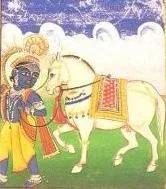
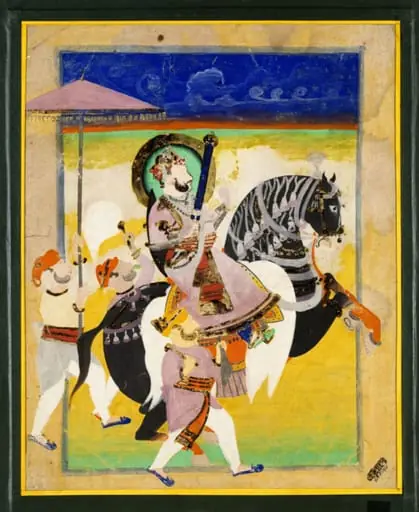
Vishnu as the incarnation Kalki is an unspecified painting by Unknown. It dates from 1850 and is held in the collection of the Victoria and Albert Museum. This painting depicts Vishnu's incarnation as Kalki, a figure from Hindu mythology associated with the end of the current cosmic cycle.
About this work
Overview
This painting depicts Vishnu's incarnation as Kalki, a figure from Hindu mythology associated with the end of the current cosmic cycle. The scene combines symbolic elements to convey Kalki's divine and prophesied role.
Subject & Meaning
Kalki, the tenth avatar of Vishnu, is shown ready to bring about the end of the Kali Yuga. The white horse symbolizes purity and the vehicle for his descent, while the halo denotes divinity. The red cloth may signify warning or the bloodshed associated with his mission.
Technique & Style
Executed with vivid colors on a green background, the painting blends natural and divine elements. The use of yellow for Kalki's robe and the horse's saddle, contrasted with the red cloth and accents, suggests a style influenced by traditional Indian miniature painting techniques.
Context
This work reflects the broader theme of avatars in Hindu art, emphasizing the cyclical nature of time and the intervention of the divine. It may have been created for devotional or educational purposes, illustrating key mythological narratives.
Legacy
As a representation of Kalki, the painting contributes to the visual legacy of Vishnu's avatars in art, educating viewers about Hindu eschatology and the role of Kalki in Hindu mythology.
Artist & collection

 Domestic Scene
 Giacomo and Cardinal Marco, investing Andrea, Abbot of San Zeno, with his Benefice
 The Nymph of Fontainebleau
 Portrait of a Woman
 Madonna and Child with Saints in the Enclosed Garden
 Venus and Minerva
 Family Group of Four on Sofa
 Wall painting from Room H of the Villa of P. Fannius Synistor at Boscoreale