Artwork
Untitled
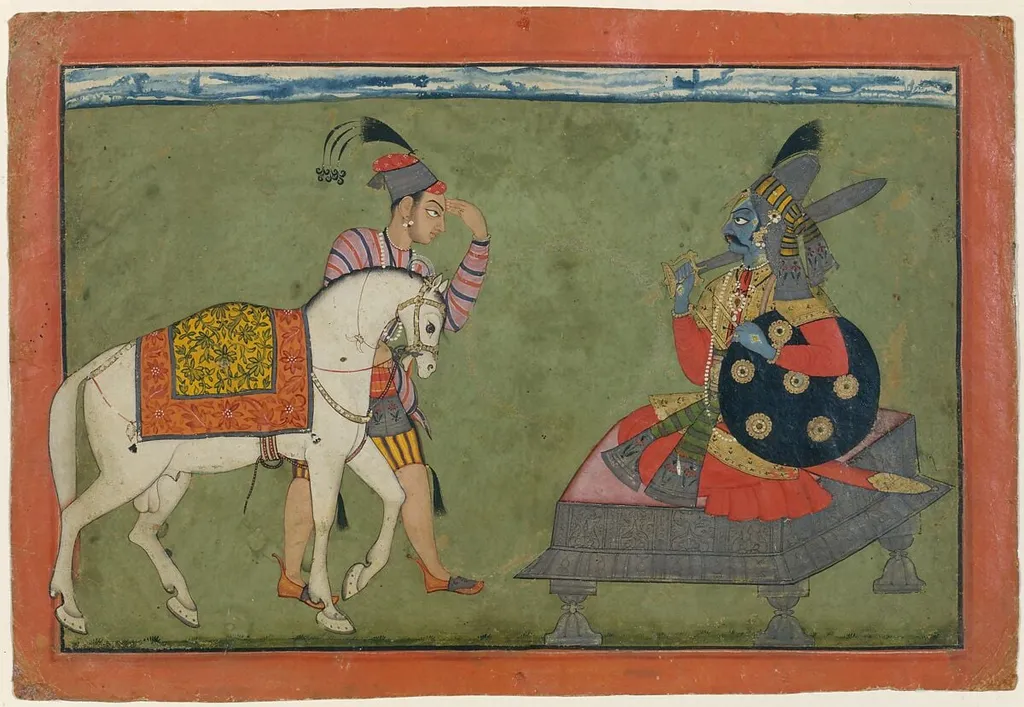
Untitled is a watercolor painting. It dates from 1705 and is held in the collection of the Metropolitan Museum of Art.
- Accession no.
- 1991.32.1
- Credit line
- Gift of Cynthia Hazen Polsky, 1991
About this work
Subject & Meaning
The use of gold and the specific combination of figures suggest a devotional purpose, characteristic of South Asian religious art from the early 18th century.
The work depicts the Hindu deity Vishnu, accompanied by a man and a horse, rendered in ink, opaque watercolor, and gold on paper. Created in India in 1705 by an anonymous artist, the painting belongs to the religious genre. The presence of Vishnu, a principal deity in Hinduism, alongside human and equine figures, establishes the piece's iconographic focus on divine narrative or worship.
The use of gold and the specific combination of figures suggest a devotional purpose, characteristic of South Asian religious art from the early 18th century. The imagery centers on the manifestation or presence of the deity within a scene involving human and animal companions.
Technique & Style
Executed in ink, opaque watercolor, and gold on paper, the work employs a layered technique characteristic of early eighteenth-century Indian devotional painting. The combination of metallic gold with saturated opaque pigments suggests careful sequential application, with the gold likely burnished to produce a luminous surface. The medium supports fine linear detailing alongside broad fields of color, a handling consistent with manuscript and devotional traditions of the period.
The composition depicts religious subject matter, specifically Vishnu accompanied by a horse and a male figure, indicating a narrative or iconographic function. The support of paper, combined with the use of opaque watercolor and gold leaf or shell-based gilding, points to a workshop practice aimed at producing richly ornamented devotional imagery.
History & Provenance
The work was created in 1705 in India and is attributed to an anonymous painter rather than a known artist. The painting is currently held in the collection of the Metropolitan Museum of Art, where it remains located. No further details regarding commission, intermediate ownership, or earlier provenance prior to its acquisition by the Metropolitan Museum of Art are documented in the available sources.
Context
The painting, dated 1705 and executed in ink, opaque watercolor and gold on paper, belongs to the religious genre of Indian art and portrays Vishnu alongside a horse and a man. Its anonymous authorship reflects the workshop traditions of early 18th-century Indian painting, linking such works to devotional practices in Mughal-influenced centres. The piece's inclusion in the Metropolitan Museum of Art's collection underscores its significance as a representative example of the period's artistic exchange and has prompted scholarly attention to the visual vocabulary of Hindu iconography in transregional contexts.
Overview
Untitled is a small painting executed with ink, opaque watercolor, and gold on paper. It depicts the Hindu deity Vishnu, identifiable by his blue skin, mounted on a white horse, traversing a vibrant red sky. Below, two figures in turbans are shown kneeling with hands raised in supplication. This work exemplifies the distinctive artistic traditions of the Basohli school.
Artist & collection

- Untitled
 Vishnu as Kalki
 Untitled
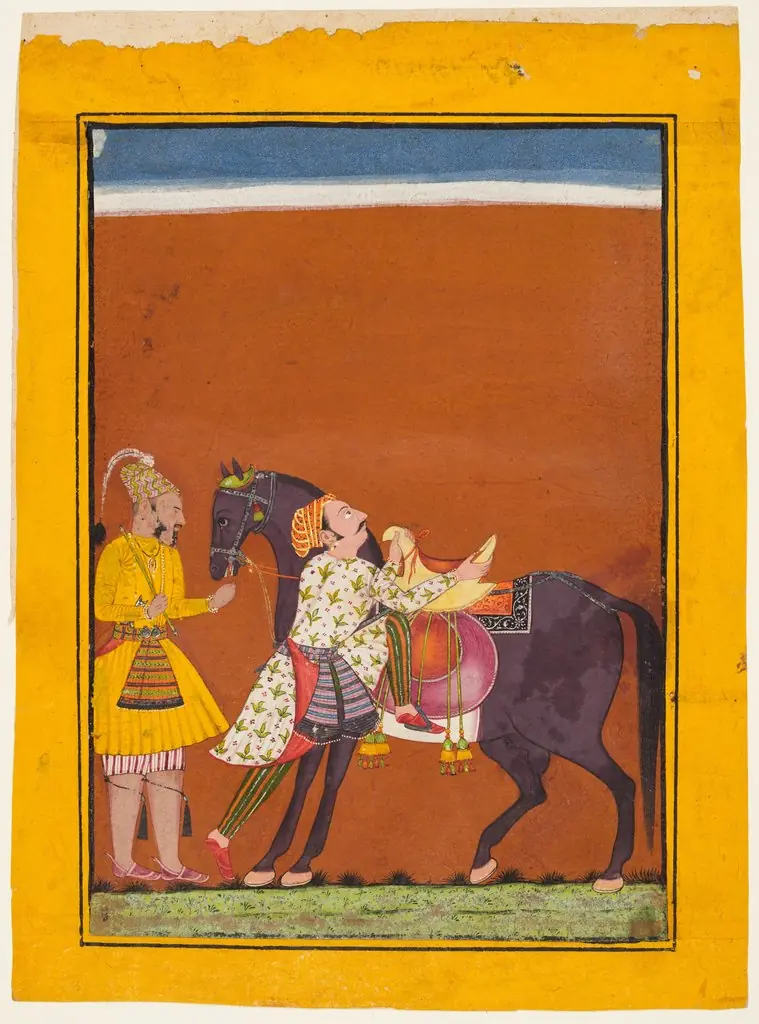 A Warrior Mounting a Held Horse: Saindhava Ragaputra of Shri, from a Chamba Ragamala
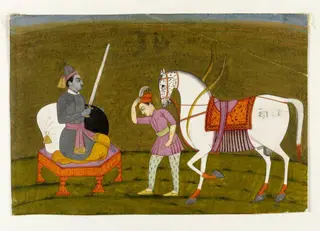 Kalki
Kalki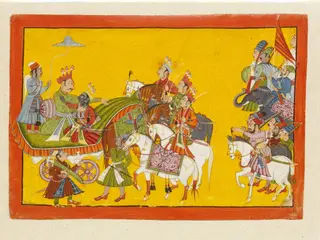 Dasaratha and Rama
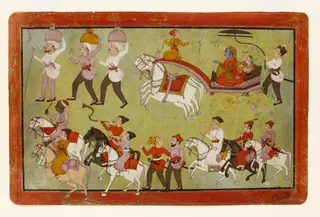 Rama and Sita
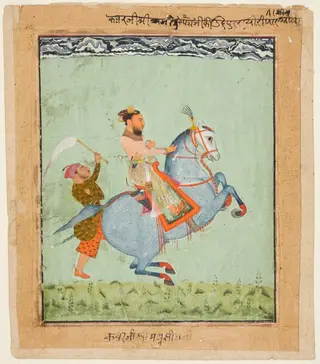 Prince Mathu Singh of Jatoli on a Blue Horse Riding to Udaipur
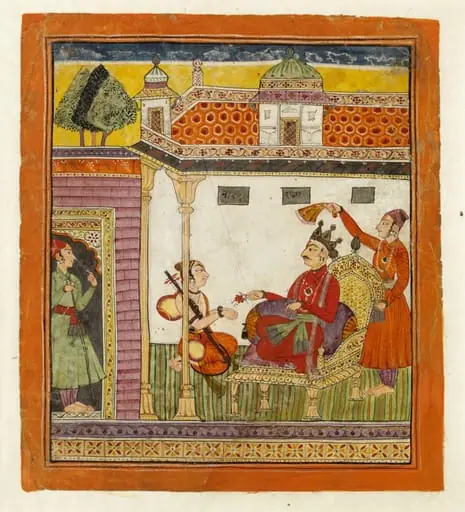 Mangala Raga
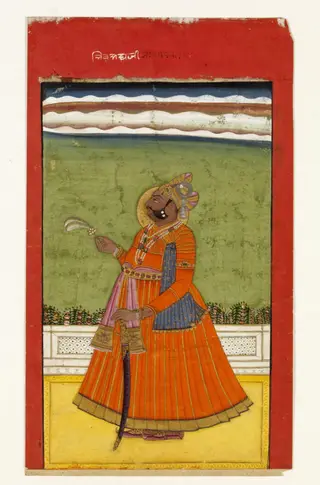 Raja Bhim Singh
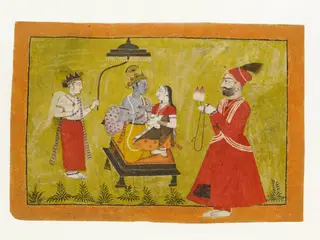 Raja Ajmer Chand of Bilaspur
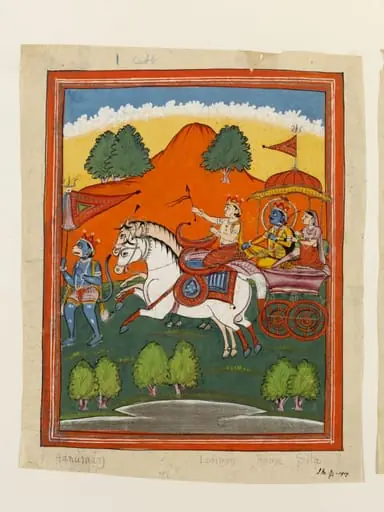 Rama, Sita, Hanuman and Lakshman