Artwork
Wahrsagerin: Vorderseite / Blumenstück: Rückseite
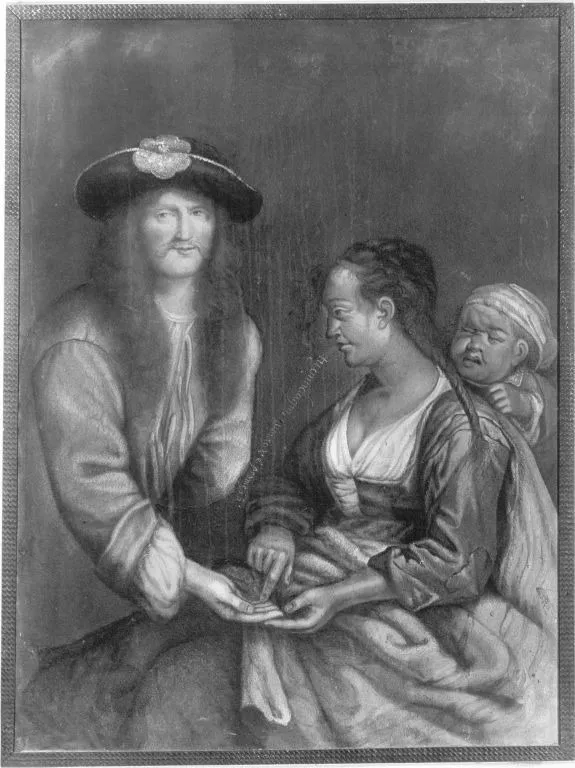
Wahrsagerin: Vorderseite / Blumenstück: Rückseite is an unspecified painting by Unknown. It dates from 1700 and is held in the collection of the Bavarian State Painting Collections.
About this work
Overview
The figures are rendered with restrained gestures, their expressions subdued, suggesting an atmosphere of quiet introspection rather than narrative action.
This double-sided painting presents two distinct compositions: a seer and her companion on the front, and a floral still life on the reverse. The front panel depicts a seated man and woman in intimate proximity, with a child partially visible behind the woman. The figures are rendered with restrained gestures, their expressions subdued, suggesting an atmosphere of quiet introspection rather than narrative action.
Subject & Meaning
The central figures appear engaged in a moment of ritual or divination, with the man holding an object—possibly a scroll or talisman—and the woman observing or interpreting it. The presence of a child implies familial or generational continuity. The scene resists clear allegory, instead evoking a private, almost sacred ritual, where meaning is implied through posture and stillness rather than explicit symbolism.
Technique & Style
The artist employs chiaroscuro to model forms with strong contrasts between light and shadow, anchoring the figures against a deep, receding background. Brushwork is precise yet unobtrusive, favoring tonal gradation over linear definition. The palette is muted, dominated by earth tones and dark hues, enhancing the somber mood and directing focus to the interplay of gesture and gaze between the figures.
History & Provenance
The painting’s dual-sided structure suggests it was created as a portable devotional or domestic object, common in certain Northern European traditions. Its survival in this condition is rare, as reverses were often painted over or lost. Early records indicate it was held in private collections in the Rhineland before entering institutional care in the 20th century.
Context
Produced in the late 15th or early 16th century, the work reflects regional devotional practices where mysticism and daily life intertwined. Similar imagery appears in illuminated manuscripts and small panel paintings of the period, often linked to lay piety or folk beliefs in prophecy. The absence of overt religious iconography distinguishes it from ecclesiastical works, pointing to a more personal, domestic context.
Legacy
Though not widely known in mainstream art history, the painting contributes to understanding how spiritual themes were expressed in intimate, non-monumental formats. Its preservation as a double-sided work offers insight into the material culture of the time, where utility and symbolism coexisted in objects meant for private contemplation rather than public display.
Artist & collection

 Domestic Scene
 Giacomo and Cardinal Marco, investing Andrea, Abbot of San Zeno, with his Benefice
 The Nymph of Fontainebleau
 Portrait of a Woman
 Madonna and Child with Saints in the Enclosed Garden
 Venus and Minerva
 Family Group of Four on Sofa
 Wall painting from Room H of the Villa of P. Fannius Synistor at Boscoreale
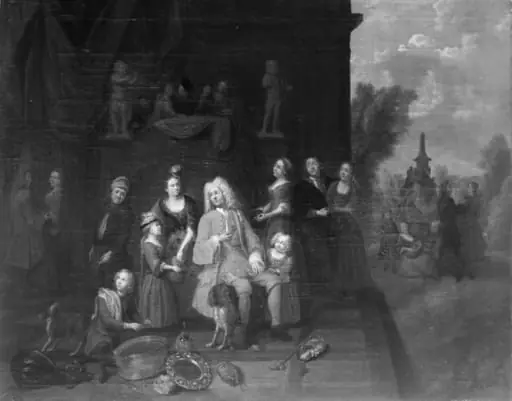 Portrait Group on a Terrace of a Park
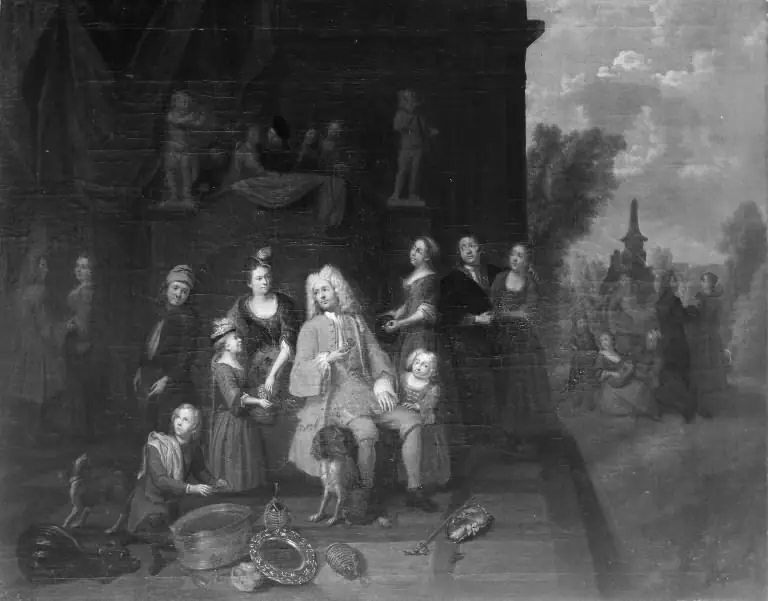 Portrait Group on a Terrace of a Park
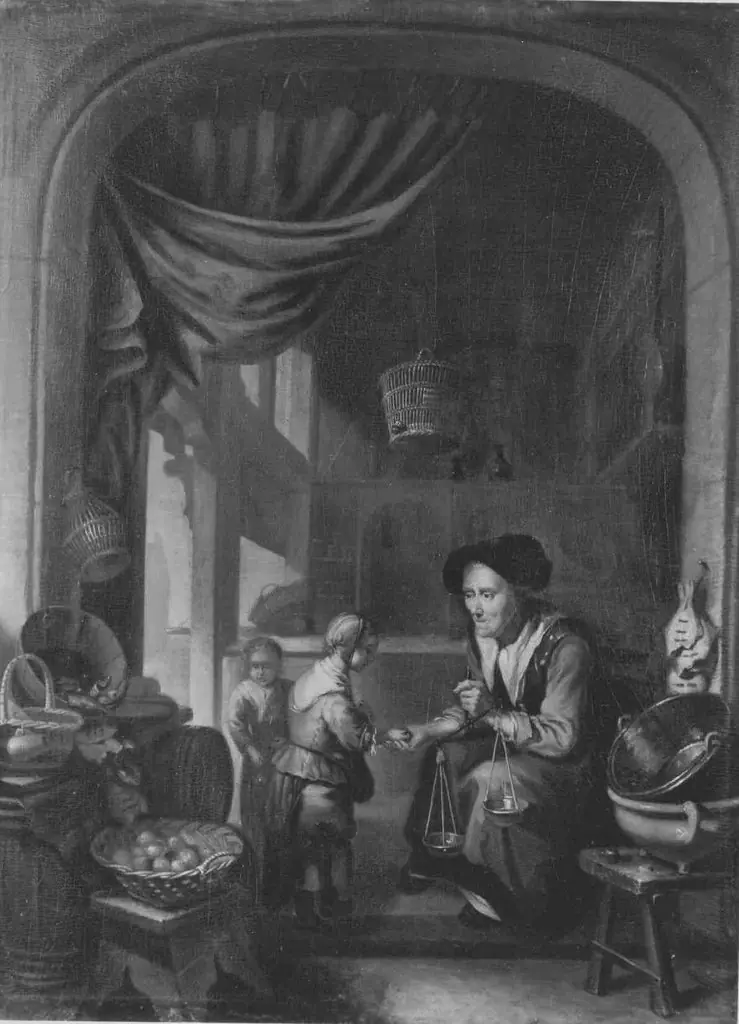 The Fruit and Vegetable Seller
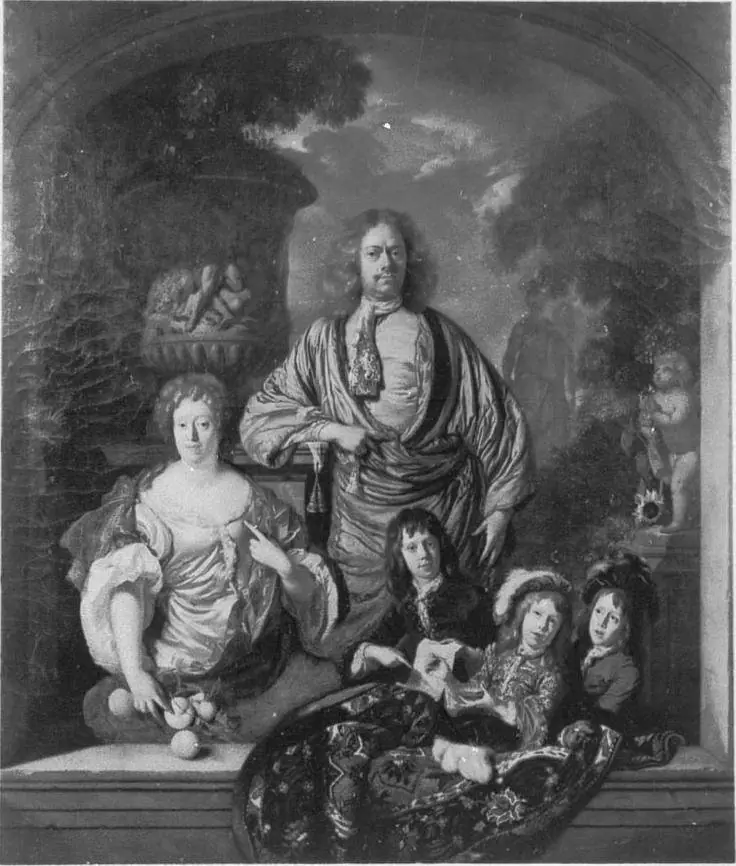 Portrait of a family
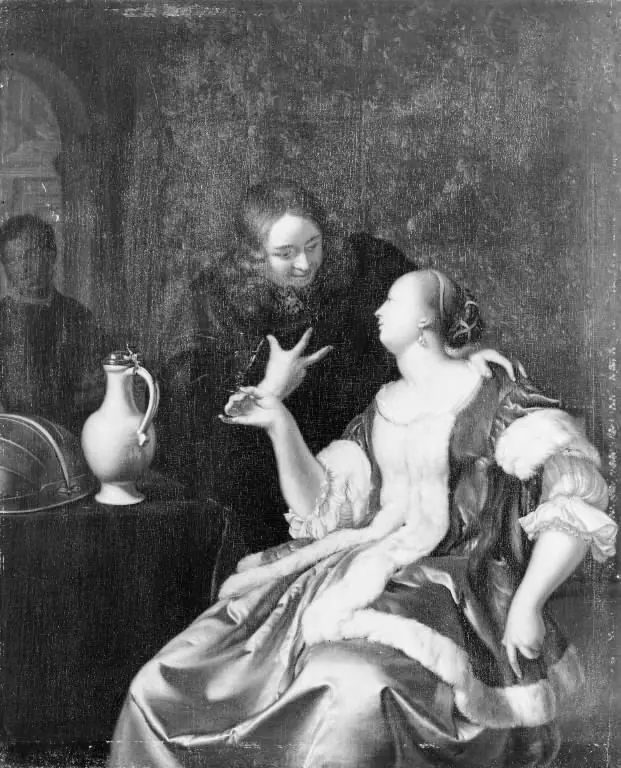 Couple Conversing
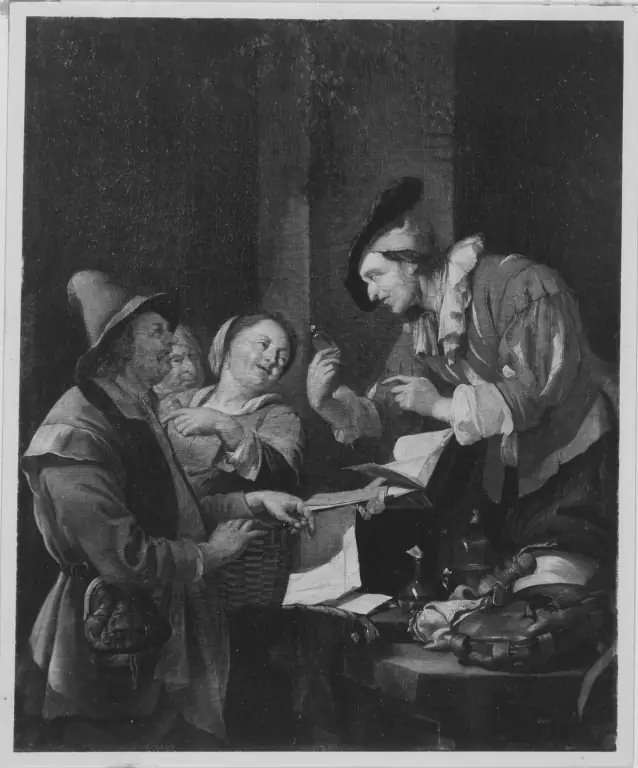 Quacksalber
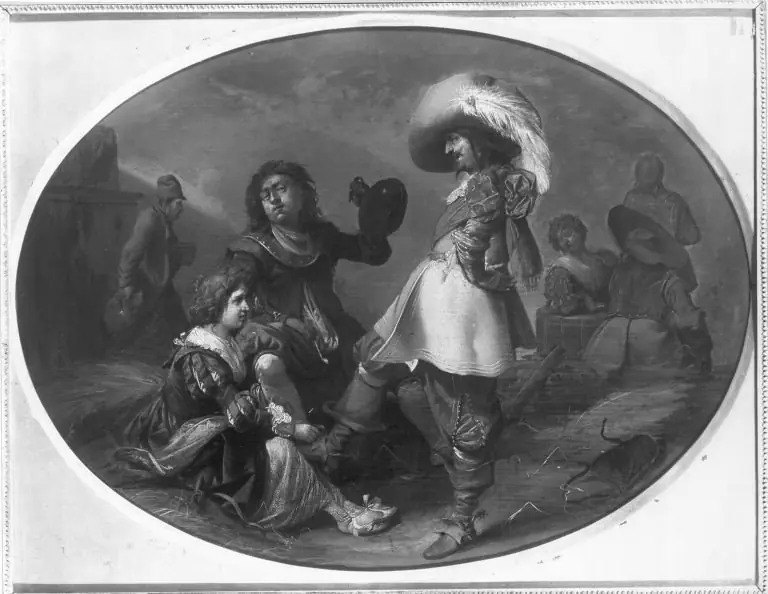 Company of an officer, soldiers and young women in a guardroom
 Company Making Music and Dancing on a Terrace
 Genrestück
 Company Making Music and Dancing on a Terrace
 Gadescene i København ved år 1800. En pige gør indkøb af grøntsager hos Amagerkonen
 Tanz in der Campagna