Artwork
Devi Shrine
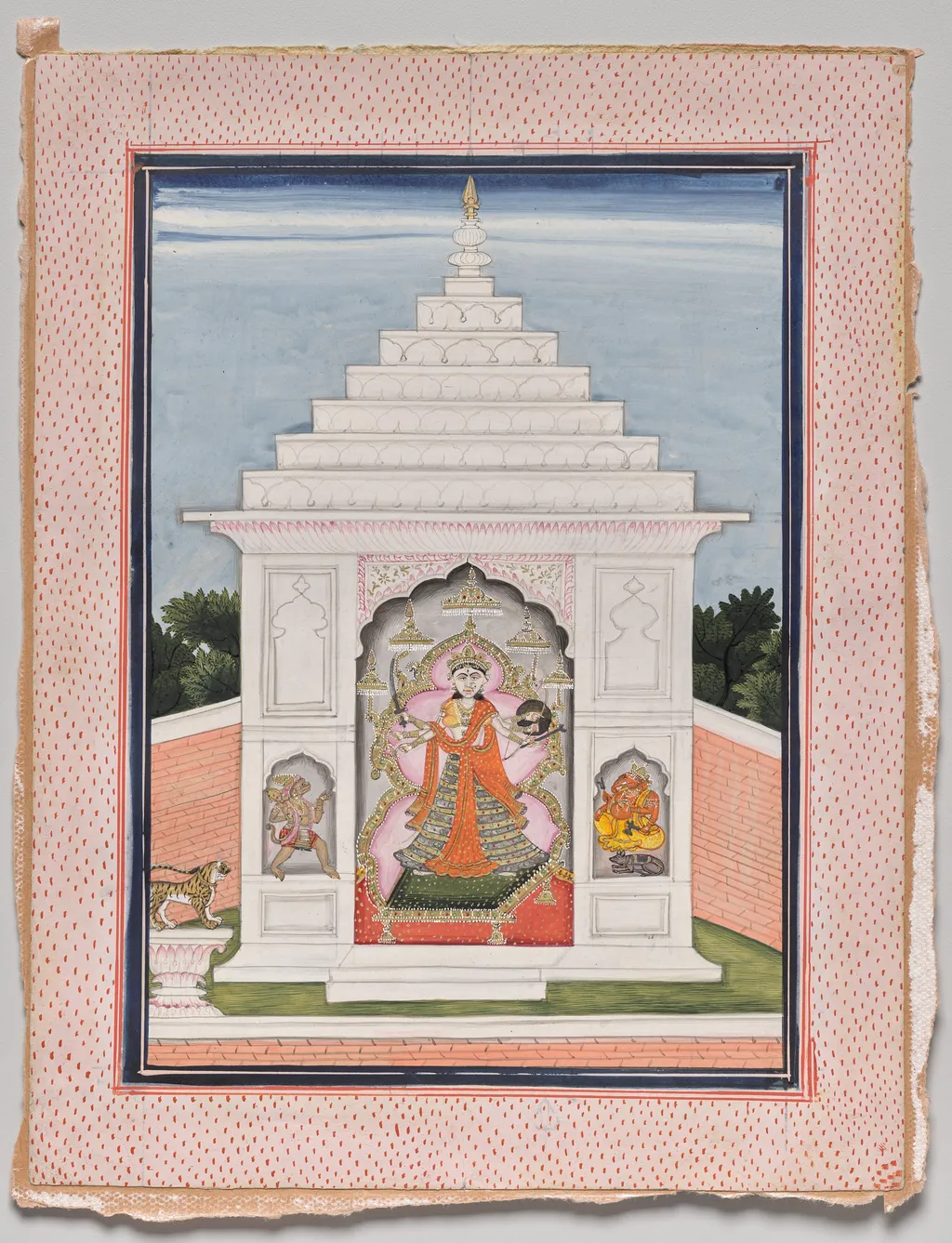
Devi Shrine is an unspecified painting by Unknown. It dates from 1810 and is held in the collection of the Cleveland Museum of Art.
About this work
Overview
The architecture features a white structure with a tall, gold-topped roof, green flooring, and a red wall bearing a tiger motif.
Devi Shrine is a painted depiction of a divine female figure within a temple setting. The figure stands centrally, adorned with gold jewelry and a radiant halo, holding a sword and a severed head. The architecture features a white structure with a tall, gold-topped roof, green flooring, and a red wall bearing a tiger motif. Trees frame the background, while a clear blue sky with soft clouds completes the scene. The work resides in The Cleveland Museum of Art.
Subject & Meaning
The central figure represents a goddess associated with power and protection, likely Durga or a similar deity from Hindu tradition. The sword and severed head symbolize the destruction of ego and evil, while the tiger, often linked to her iconography, reinforces her dominion over primal forces. The temple setting and halo affirm her sacred status. The composition conveys divine authority rather than violence, emphasizing spiritual triumph over chaos.
Technique & Style
The painting employs flat, decorative planes of color with minimal shading, characteristic of modern Indian miniature traditions. Bold outlines define forms, and rich hues—orange, red, gold, and green—are used symbolically rather than naturallyistically. The background is simplified, directing focus to the central figure. Details like jewelry and the finial are rendered with precision, suggesting influence from both folk and courtly artistic practices.
History & Provenance
The painting entered The Cleveland Museum of Art’s collection as part of a broader acquisition of South Asian artworks in the mid-20th century. Its origins are not fully documented, but stylistic elements suggest it was created in the latter half of the 1900s by an artist working within the revivalist Indian painting movement. No earlier provenance or artist signature is publicly recorded.
Context
Created during a period of renewed interest in Hindu iconography among Indian artists, Devi Shrine reflects a post-independence cultural reclamation of traditional themes. While rooted in ancient religious imagery, the work’s stylized form aligns with modernist tendencies in 20th-century Indian art, blending devotional subject matter with contemporary visual language to assert spiritual identity in a changing society.
Legacy
Devi Shrine contributes to a broader dialogue in modern Indian art about the reinterpretation of mythological figures. Its presence in a major Western museum underscores the global recognition of non-Western religious art as a legitimate subject for serious artistic engagement. The painting continues to serve as a reference point for discussions on gender, divinity, and visual symbolism in contemporary South Asian art.
Artist & collection

 Domestic Scene
 Giacomo and Cardinal Marco, investing Andrea, Abbot of San Zeno, with his Benefice
 The Nymph of Fontainebleau
 Portrait of a Woman
 Madonna and Child with Saints in the Enclosed Garden
 Venus and Minerva
 Family Group of Four on Sofa
 Wall painting from Room H of the Villa of P. Fannius Synistor at Boscoreale