Artwork
Scenes from the Life of Christ with Saints & Symbols
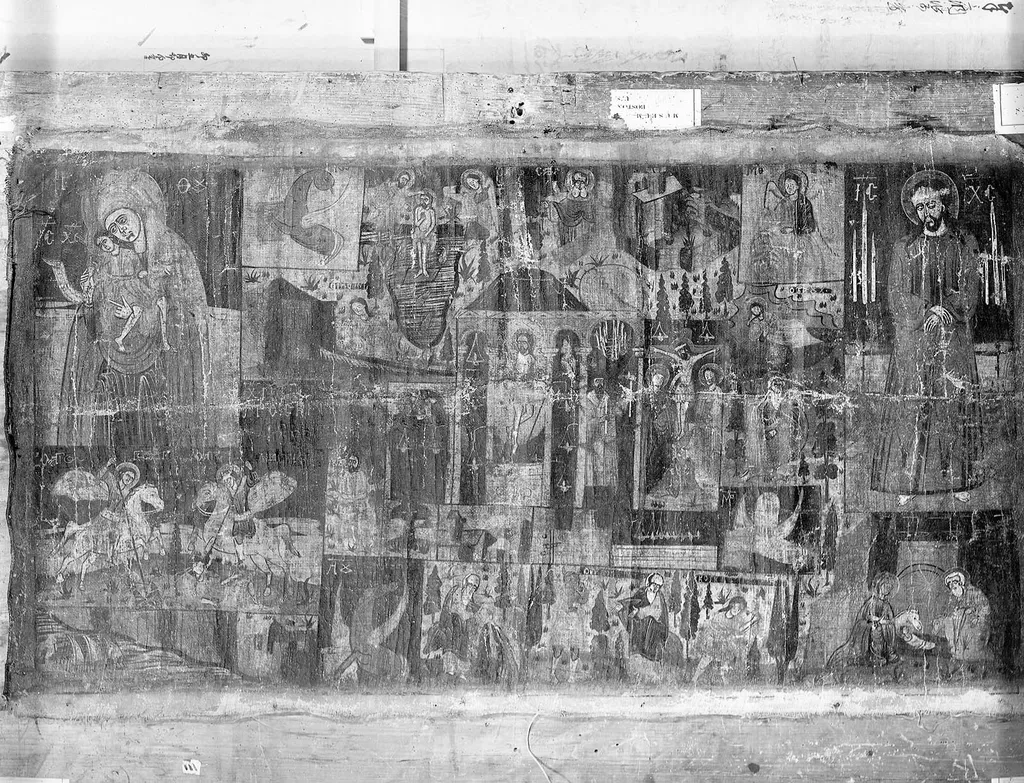
Scenes from the Life of Christ with Saints & Symbols is an oil painting by Unknown. It dates from 1806 and is held in the collection of the Museum of Fine Arts Boston. This oil painting presents a series of episodes from the life of Christ, organized in a structured grid.
About this work
Overview
The composition balances narrative clarity with decorative rhythm, using layered pigments to create depth and luminosity through traditional oil techniques.
This oil painting presents a series of episodes from the life of Christ, organized in a structured grid. Each panel isolates a distinct moment—such as the Nativity, Crucifixion, or Resurrection—while surrounding figures and emblems of saints reinforce spiritual themes. The composition balances narrative clarity with decorative rhythm, using layered pigments to create depth and luminosity through traditional oil techniques.
Subject & Meaning
The scenes depict key events from Christ’s life, arranged to guide contemplation of his divine mission. Saints flank the central narrative, their attributes signaling virtues or intercessory roles. Symbols like the lamb, dove, and cross appear as theological shorthand, anchoring each episode in doctrinal meaning. The arrangement invites viewers to move sequentially through sacred history, reinforcing liturgical memory.
Technique & Style
Oil paint was applied in multiple glazes to achieve rich color saturation and subtle transitions of light. Visible brushwork adds texture, particularly in drapery and halos, while underlying layers of pigment enhance luminosity. The method reflects late medieval or early Renaissance practices, where glazing allowed for both luminous skin tones and symbolic intensity without losing detail.
History & Provenance
The painting resides in the Museum of Fine Arts, Boston, though its earlier ownership and origin remain undocumented in public records. Its style suggests production in a Northern European workshop during the 15th or early 16th century, possibly for private devotion. No definitive records trace its path before entering the museum’s collection.
Context
Created during a period when devotional altarpieces and panel paintings were common in Christian homes and chapels, this work reflects the demand for portable, didactic imagery. Grid compositions like this were used to condense complex narratives into accessible formats, catering to lay piety and monastic instruction alike.
Legacy
Though not attributed to a known master, the painting exemplifies the enduring tradition of narrative religious art in oil. Its preservation allows study of regional techniques and devotional aesthetics from a time when visual storytelling was central to faith practice. It remains a quiet witness to the role of imagery in shaping spiritual experience.
Artist & collection

 Domestic Scene
 Giacomo and Cardinal Marco, investing Andrea, Abbot of San Zeno, with his Benefice
 The Nymph of Fontainebleau
 Portrait of a Woman
 Madonna and Child with Saints in the Enclosed Garden
 Venus and Minerva
 Family Group of Four on Sofa
 Wall painting from Room H of the Villa of P. Fannius Synistor at Boscoreale
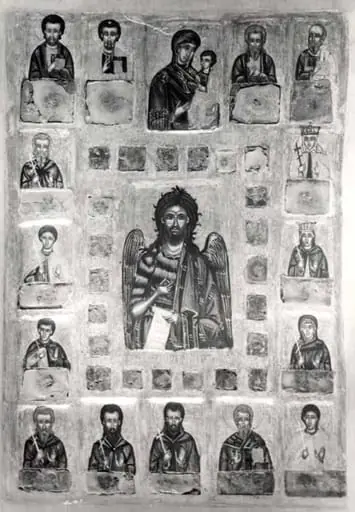 Sfântul Ioan Botezătorul înconjurat de Sfinți
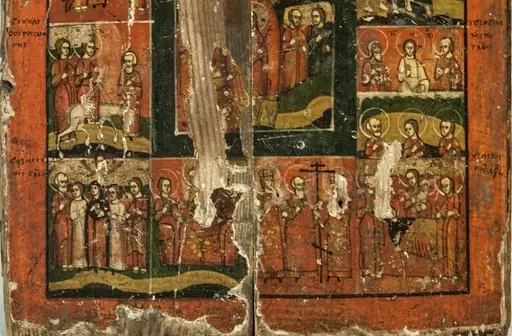 Compului
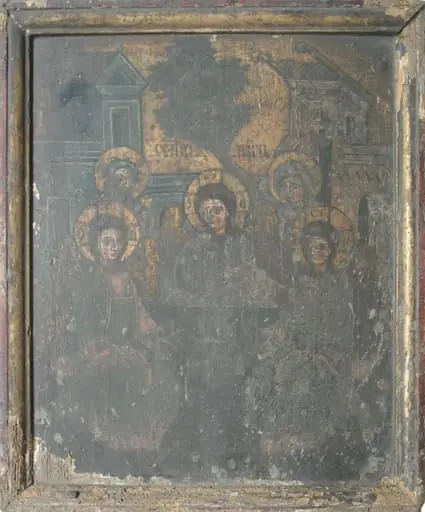 Cina de la Mamvri
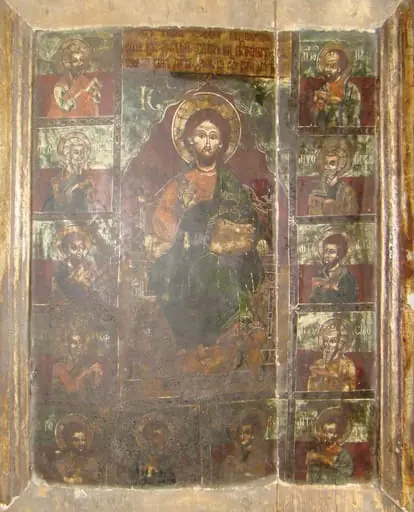 Iisus Hristos Pantocrator, înconjurat de apostoli
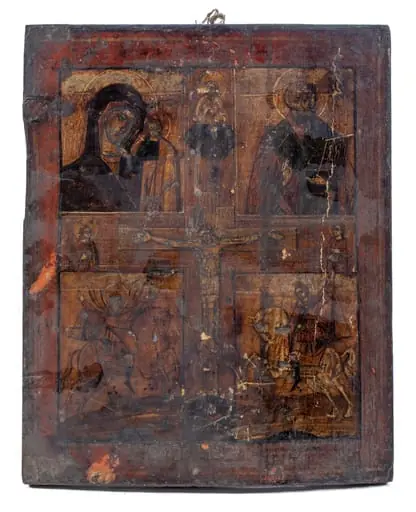 Răstignirea
 Untitled
 Gang nach Emmaus (?)
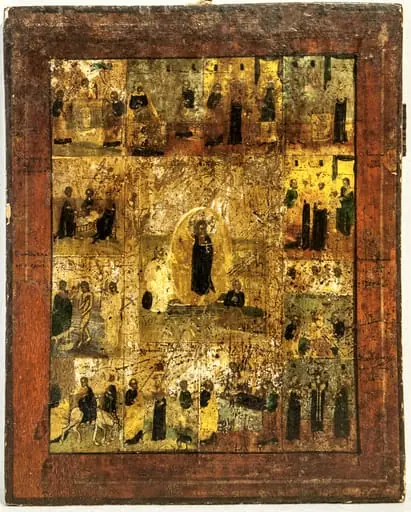 Compoziție complexă, (13 scene), centrată pe scena Învierii. Scena ridicării din mormânt a Mântuitorului, într-o mandorlă, lângă piatra mormântului, îngerul în veșminte albe, în fața pietri de mormânt probabil un soldat. În celelalte casete sunt reprezentate scene din viața lui Iisus Hristos și a Maicii Domnului, cu un număr redus de personaje (3 – 4, maxim 5): „Sfânta Treime”(ospitalitatea lui Avraam), Nașterea Fecioarei Maria”, „Intrarea Maicii Domnului în biserică(Ovidenia), „Buna Vestire”, „Nașterea lui Iisus Hristos”, Întâmpinarea Domnului(Stretenia), „Botezul lui Hristos” „Schimbarea la față” „Intrarea Domnului în Ierusalim”, „Înălțarea Domnului, Adormirea Maicii Domnului, „Înălțarea Sfintei Cruci”. Toate personajele au nimburi trasate cu alb.Desen schematic, trasat cu finețe, ușor dezordonat, ca și inscripțiile. Cromatica specifică, tonuri calde, brun, galben, roșu în contrast cu verde, albastru, negru, valorate de foița de aur. Chenarul lat, roșu(tipul de icoană krasnushka) Stratul pictural prezintă deteriorări, zgârieturi și lacune, deteriorări cromatice. Pictura se remarcă prin finețea execuției miniaturale.
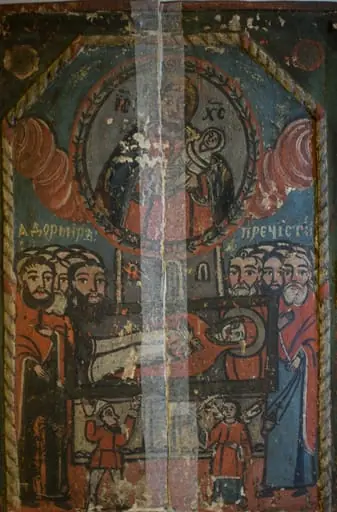 Icoa pre
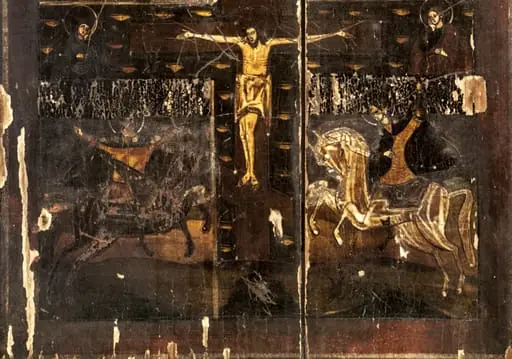 Răst
Răst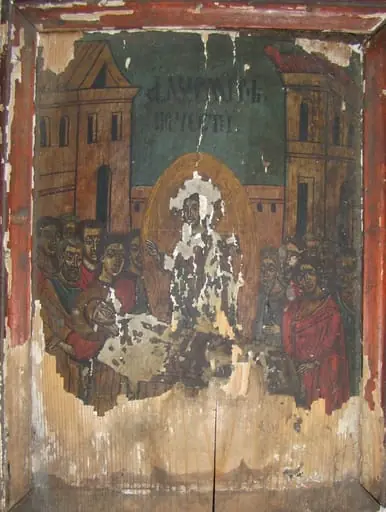 Adormirea Maicii Domnului
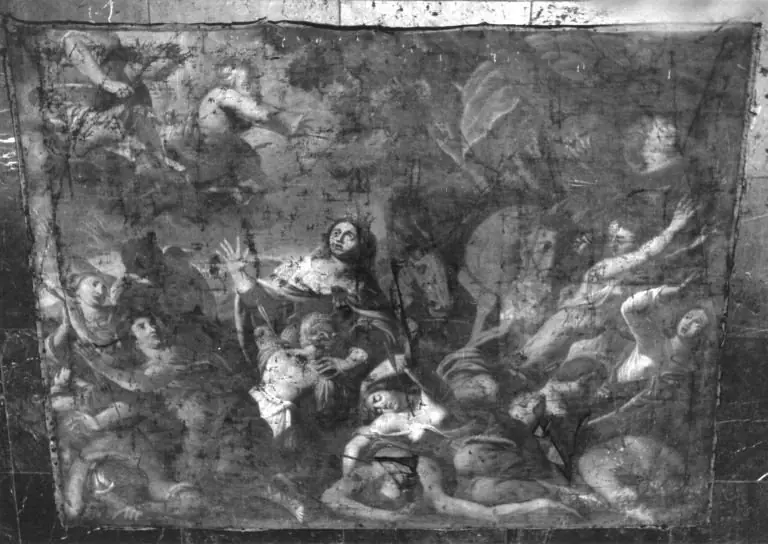 Die Kinder der Niobe