Artwork
Wild Strawberries and a Carnation in a Wan-Li Bowl
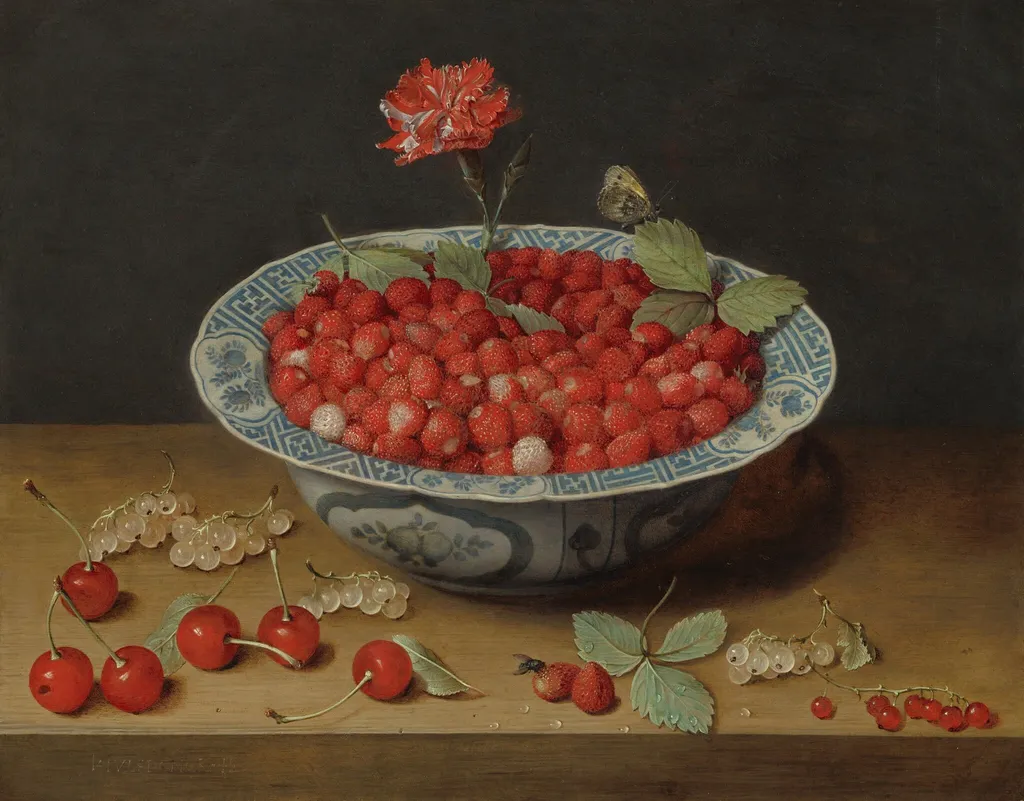
Wild Strawberries and a Carnation in a Wan-Li Bowl is an oil painting by the Baroque artist Jacob van Hulsdonck. It dates from 1620 and is held in the collection of the National Gallery of Art.
- Inscription
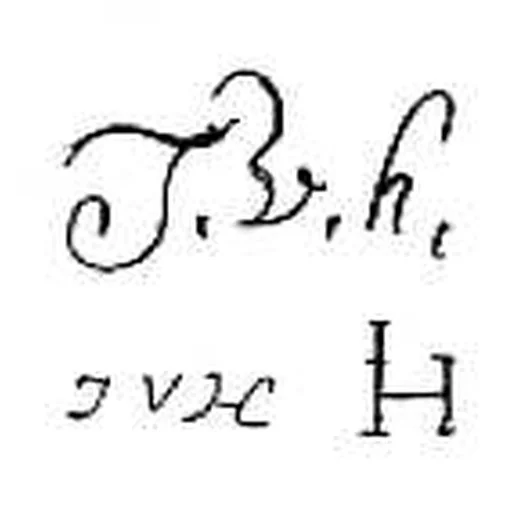
- Inscribed:lower left, IVH in ligature: IVHVLSDONCK. FE
About this work
Wild strawberries and a single carnation in a Kraak porcelain bowl, the kind of imported Wan-Li ware prized in Europe and a favorite prop in still life for its beauty and exotic origins. Jacob van Hulsdonck painted it in 1620 in oil on copper.
Technique & Style
The composition features wild strawberries and a carnation arranged within a Wan-Li bowl, identified as Kraak porcelain.
Executed in 1620, this still life by Jacob van Hulsdonck is an oil painting on a copper support. The work measures 28.3 by 36.2 centimeters. The composition features wild strawberries and a carnation arranged within a Wan-Li bowl, identified as Kraak porcelain.
The selection of copper as a substrate was a deliberate material choice often employed by Netherlandish artists of this period to achieve a smooth, luminous surface capable of rendering fine botanical details and the reflective qualities of ceramic glazes. The medium allows for the precise depiction of the fruit's texture and the porcelain's distinct patterns, characteristic of the artist's handling of light and surface variation in early seventeenth-century Flemish still life.
History & Provenance
The still life Wild Strawberries and a Carnation in a Wan-Li Bowl is dated to 1620 and was painted by Jacob van Hulsdonck in oil on copper. Its early commission and place of creation remain undocumented; the first verifiable owner appears in the 20th century, when the painting was handled by London dealer Leonard Koetser by 1963. It passed through Koetser again by 1967, then via Christie's London in 1966 to a private collector, Newhouse Galleries in New York, and by 1974 entered the collection of Robert H. Smith.
After Smith sold it in 1978 to Essoldo Fine Arts, the work moved through Essoldo to Galerie Julie Kraus, a German private collection by 1983, Charles Roelofsz in 1994, and Bob P. Haboldt & Co. in 1995. It appeared at Sotheby's London in 2000, 2009, and 2012 before being purchased by the National Gallery of Art, Washington, D.C., in 2012 with donated funds.
Legacy
The 1620 still life by Jacob van Hulsdonck entered the National Gallery of Art in Washington, D.C., in 2012 after passing through a documented chain of private owners, including Leonard Koetser, Robert H. Smith, and Essoldo Fine Arts. Its appearances in notable sales, including the 1963 Koetser autumn show and a 1995 New York display, drew sustained academic interest, reinforcing the artist's reputation as a master of composition and detail. The work's careful provenance record and recent museum acquisition have contributed to broader reassessments of Dutch and Flemish still life in museum narratives.
Overview
Jacob van Hulsdonck, a Flemish artist active in early 17th-century Antwerp, was instrumental in the evolution of still life painting. His work, Wild Strawberries and a Carnation in a Wan-Li Bowl, created around 1620, exemplifies the genre's meticulous attention to detail. This oil on copper piece presents a carefully arranged composition of fruit and flora, showcasing the artist's skill in rendering textures and light.
Subject & Meaning
The painting features a vibrant cluster of wild strawberries alongside a single carnation, meticulously placed within a distinctive Kraak porcelain bowl. This type of Chinese export ware, known for its blue-and-white patterns, was highly prized in Europe during the period. The inclusion of such exotic and luxurious items, alongside perishable natural elements, reflects the era's fascination with both the transient beauty of nature and global trade.
Context
Produced during the Dutch Golden Age, Hulsdonck's still life aligns with a broader artistic trend emphasizing precise, realistic depictions of both common household items and valuable imported goods. The choice of a Wan-Li (Kraak) bowl, popular for its aesthetic appeal and foreign origins, highlights the era's appreciation for material culture and the expanding world of commerce. The copper support further allowed for an exceptionally smooth surface, enhancing the illusionistic detail.
Own this work as a print
Artist & collection
Artist
Jacob van Hulsdonck or Jan van Hulsdonck (1582, Antwerp – 1647, Antwerp), was a Flemish painter who played a role in the early development of the genre of still lifes of fruit, banquets and flowers.

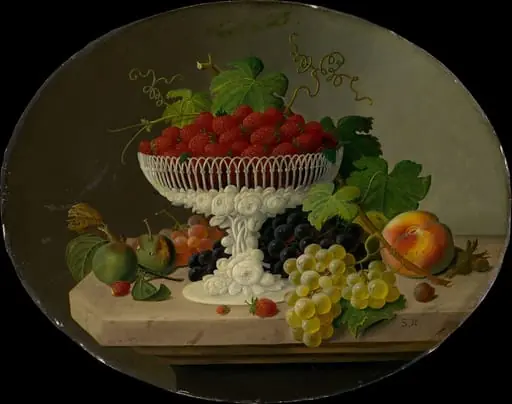 Still Life with Strawberries in a Compote
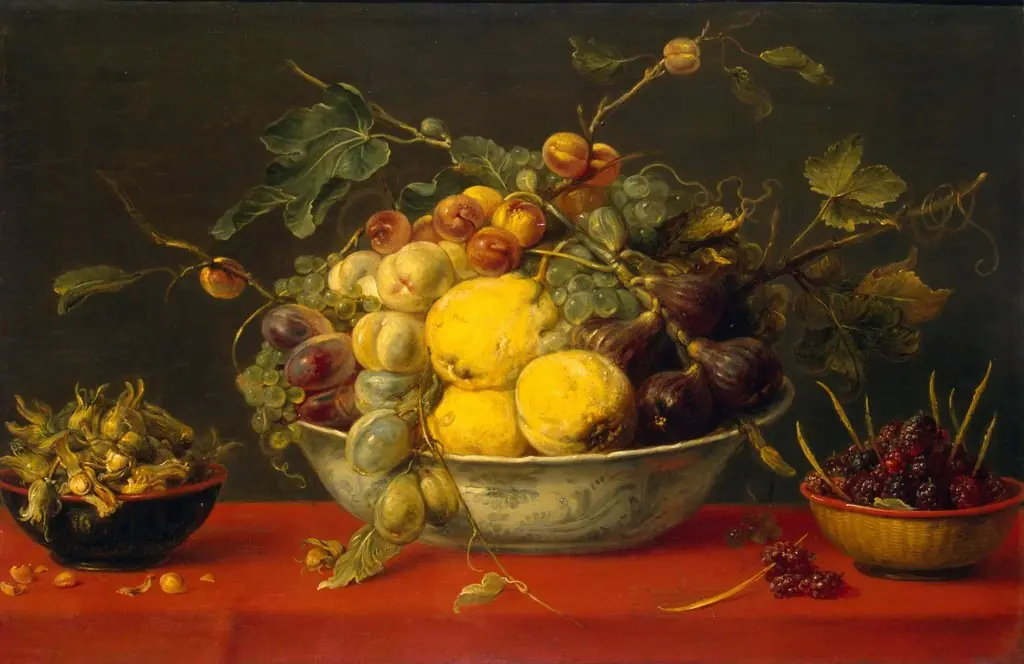 Fruit in a Bowl on a Red Cloth
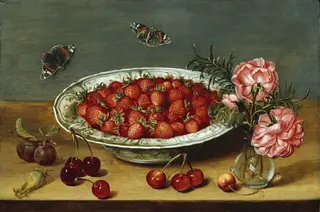 Still Life with Strawberries
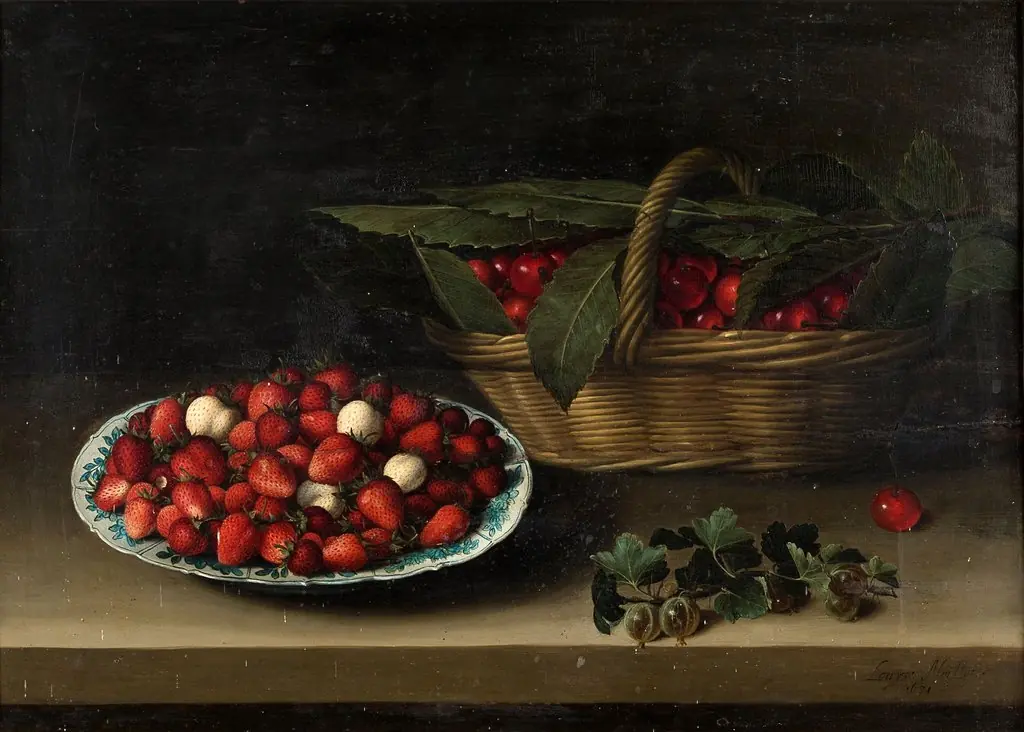 Still Life with a Bowl of Strawberries, Basket of Cherries, and Branch of Gooseberries
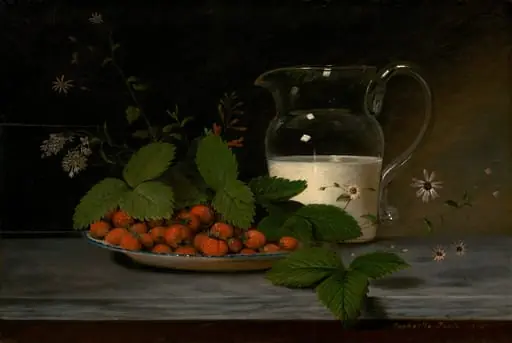 Strawberries and Cream
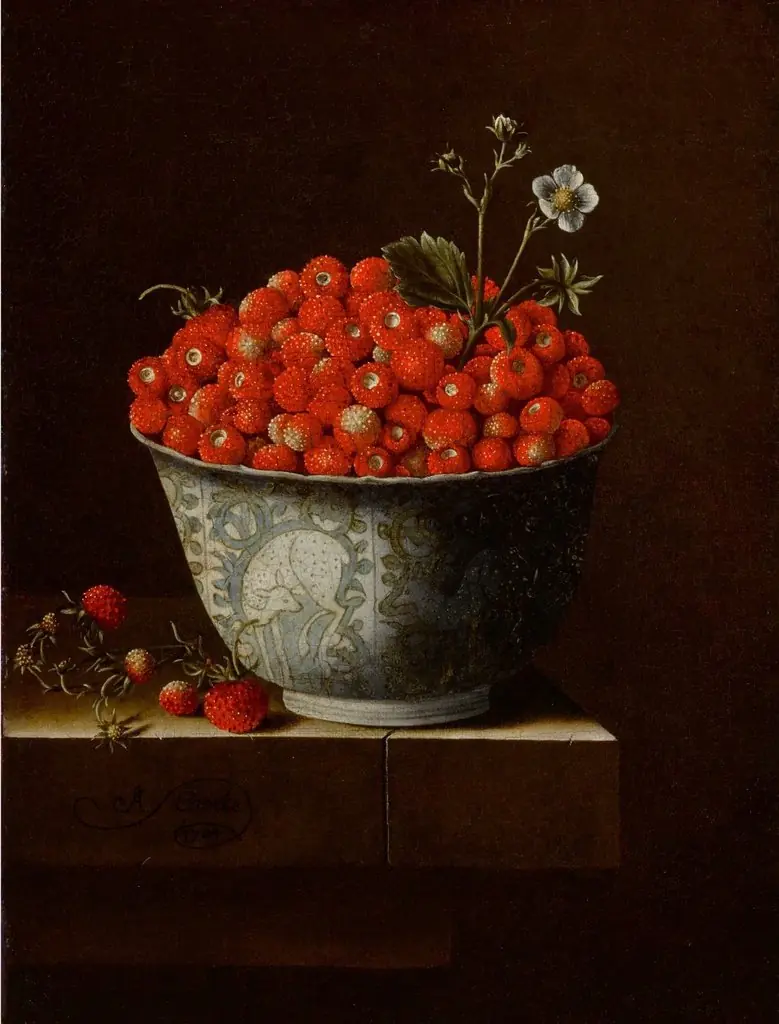 Still life of fraises-de-bois in a Wan-Li bowl upon a stone ledge
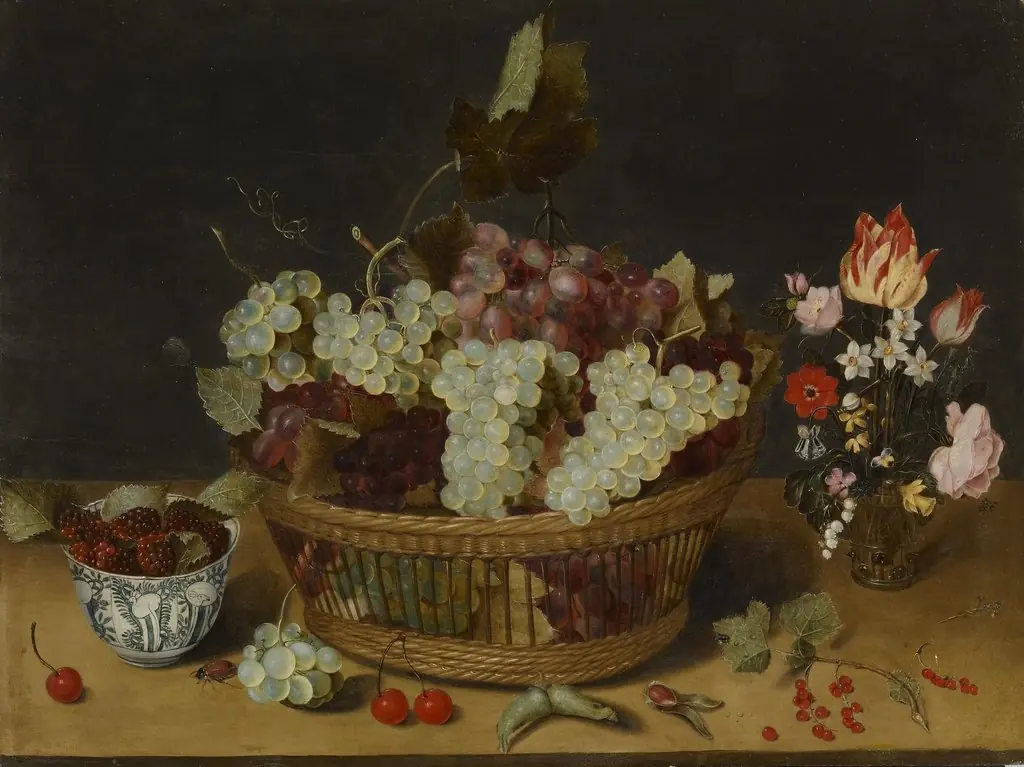 Still Life with Chinese Bowl and Vase of Flowers
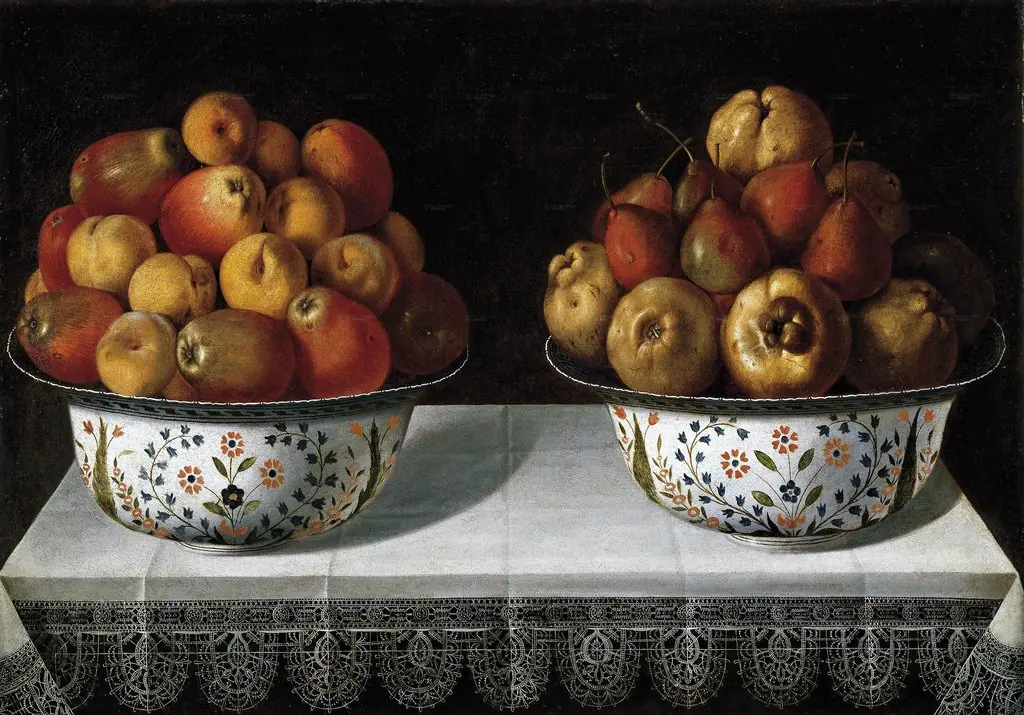 Two Fruit Bowls on a table
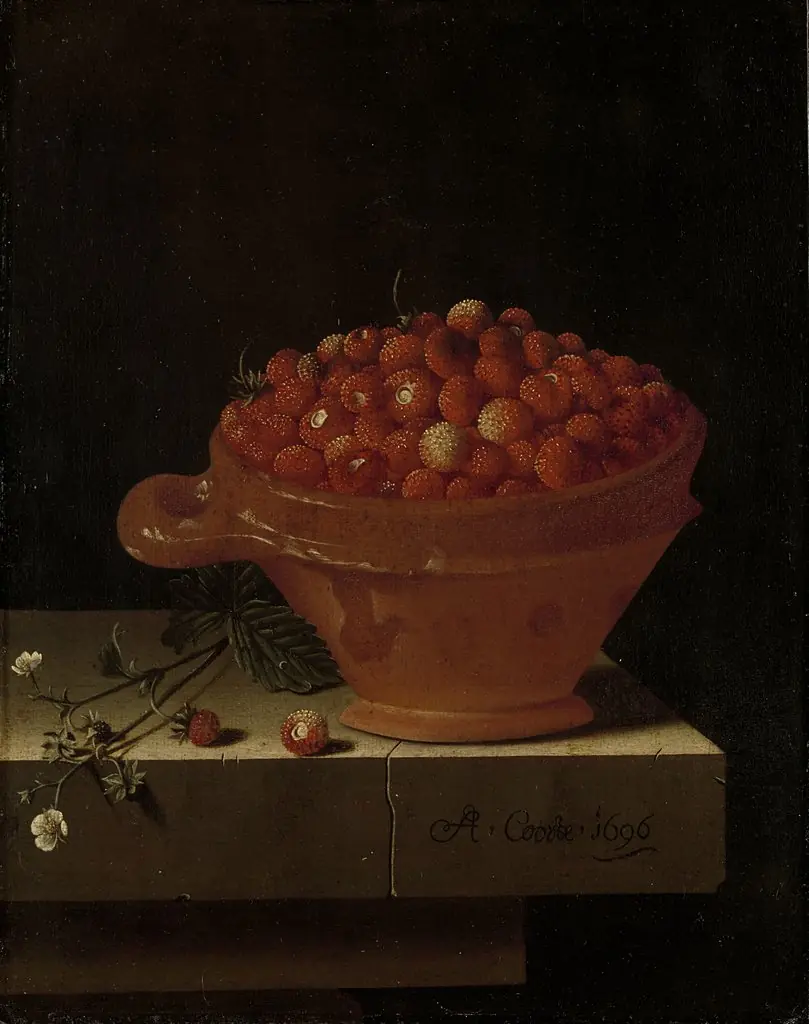 Een bakje aardbeien op een stenen plint
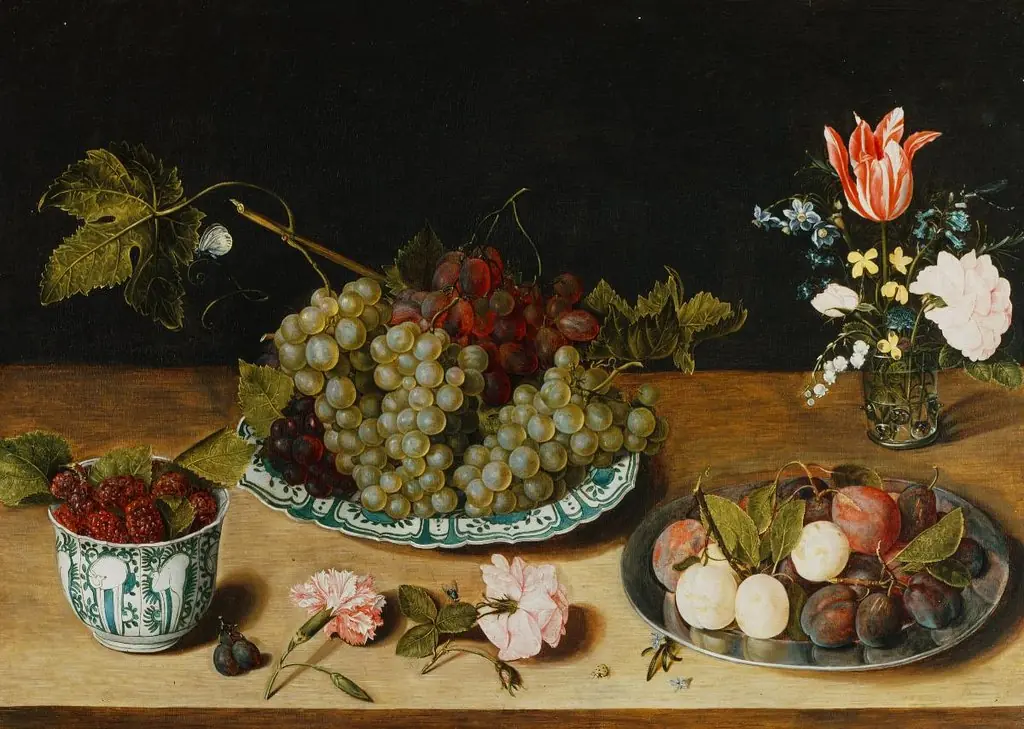 Stillleben mit Früchten und Blumensträusslein